

Can heavy timber really balance your home’s temperature naturally?
Yes—its dense structure absorbs heat by day and releases it slowly at night, acting like a silent thermal battery. Pair it with breathable insulation, and you’ve got year-round comfort without drama.
Why I Trust Timber: A Story From My Mountain Retreat
Five years ago, I built a small cabin in the Cascades using reclaimed Douglas fir. No HVAC. Just timber, wool insulation, and cross-ventilation. Winter mornings? Cool, but never cold. Summer afternoons? Sun-baked outside, perfectly calm within.
I’d sit by the frame, hand on the beam, feeling its warmth—like the tree was still alive, still giving. That’s when it hit me: the *symbolism of trees* isn’t just poetic. It’s physical. Resilience isn’t just metaphor—it’s mass, grain, and breath.
We wrote about that journey on *Silent Balance*, where we explore how materials shape not just spaces, but moods.
How a Fallen Tree Became My Home’s Thermostat
Last spring, a storm dropped a massive oak across the old driveway. Instead of hauling it away, I milled it. Those slabs now line my bedroom wall. At night, they release the sun’s kiss from hours before. It’s not magic. It’s memory—held in wood. Nature’s oldest greased chute: fall, transform, serve.
Quick Takeaways
- Incorporate heavy timber flooring and walls with layered insulation to maximize thermal mass and regulate indoor temperatures naturally.
- Use timber gaps, vents, and termite mound-inspired designs to promote passive airflow and natural cooling.
- Select dense, moisture-rich woods like oak or Douglas fir for better heat absorption and release.
- Seal and maintain timber with natural oils to ensure durability, moisture resistance, and consistent thermal performance.
- Combine timber with natural materials like cork or clay for enhanced insulation and humidity control.
How Can Heavy Timber Improve Your Home’s Climate Naturally?
Ever wonder why so many eco-friendly homeowners are turning to heavy timber to cozy up their spaces? It’s all about harnessing its natural superpowers.
Heavy timber offers excellent thermal mass, absorbing and slowly releasing heat—way better than synthetic options. Plus, it naturally provides solar shading, helping keep indoors cooler during blazing summers. Incorporating insulation properties into your home’s design enhances these benefits further.
Heavy timber’s thermal mass and natural shading craft cooler, sustainable indoor spaces summer after summer.
Need peace and quiet? Its acoustic dampening soothes noisy environments.
Using symbolism like strong trees invites growth and resilience into your home. Why not connect with nature’s wisdom?
Incorporate bark textures, twigs, or branches—your decor becomes more than style; it’s a statement of protection, renewal, and harmony with our environment. Wood grain patterns can enhance this effect by adding visual warmth and natural appeal.
How to Choose the Best Timber for Thermal Mass and Comfort
Choosing the right timber for thermal mass and comfort is like picking the perfect tree in a vast forest — it’s all about finding species that naturally soak up and release heat, keeping your home cozy. Dense woods like oak or Douglas fir serve as heat sinks, improving indoor air quality while adding aesthetic appeal. Ever wondered how your decor can symbolize growth, strength, or renewal? Incorporating natural elements like bark, twigs, or pinecones adds layered meaning and personality. Want a friendlier, energy-efficient space? Select timber with higher density, moisture content, and cellular structure. It’s a clever way to blend sustainability with style, turning your home into a living, breathing forest of comfort! Additionally, understanding reptile fogger systems can inspire ways to maintain optimal humidity levels, contributing to a healthier indoor environment.
What Are Effective Ways to Install Timber for Optimal Climate Control?
Getting timber installed in a way that maximizes its climate control magic is both an art and a science, and the secret lies in strategic placement and assembly.
Optimizing timber placement transforms your home into a living, breathing part of nature’s story.
- Place timber flooring carefully to promote airflow and thermal mass, helping you stay cozy or cool.
- Use wood walls with layered insulation behind them, boosting insulation and thermal storage.
- Incorporate gaps or vents that mimic termite mound strategies, facilitating passive airflow.
- Add symbolic touches like bark accents or twig motifs—these nods to nature strengthen your connection to growth and renewal.
- Selecting sustainable reclaimed timber in environmentally responsible sizes and types ensures optimal performance and environmental benefits, enhancing your climate regulation efforts.
How Do You Maintain and Adjust Timber Components Over Time?
Maintaining and adjusting timber components over time might sound like a chore, but think of it as nurturing a living piece of your home’s story—because, in a way, it is. To keep your timber’s material durability strong, follow a consistent maintenance schedule. Envision this:
| Scene | Feelings |
|---|---|
| Drying & sealing | Keeps moisture out, preserves strength |
| Spot inspections | Detects cracks early, avoids larger problems |
| Gentle cleaning | No harsh chemicals, just dust & a soft cloth |
| Proper ventilation | Keeps air moving, prevents mold |
| Refresher treatments | Reapply oil or stain, boost longevity |
Regular timber inspection is essential for identifying early signs of deterioration that could compromise your home’s structural integrity, especially when considering natural materials like raw bark sheets used for insulation. Proper maintenance ensures these natural components remain effective and durable over time.
How Can Combining Timber With Other Biophilic Materials Boost Efficiency?
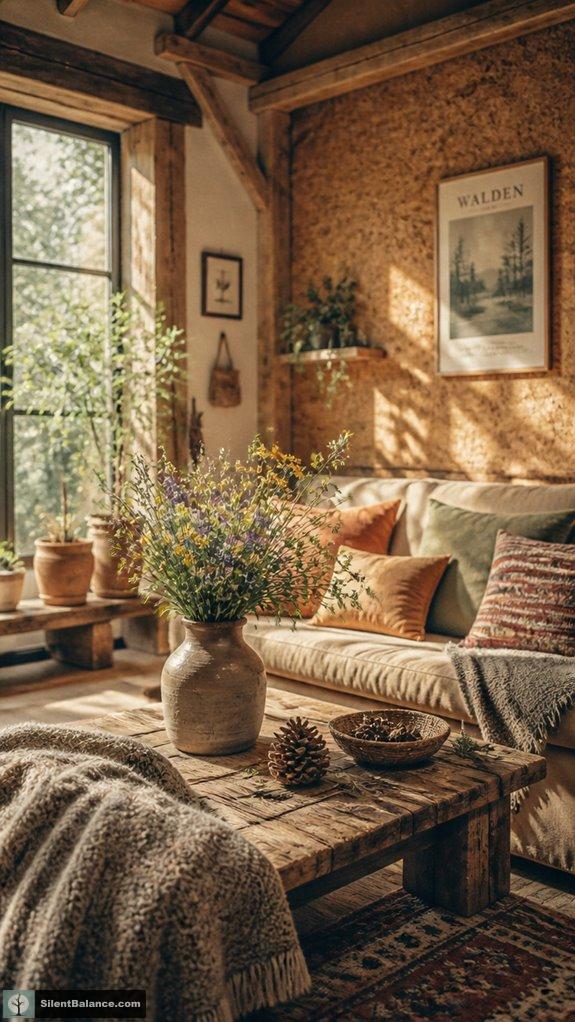
Ever thought about how blending timber with other biophilic materials can boost your home’s energy efficiency? Mixing elements like hemp, cork, or natural clay improves indoor air quality and brings harmony to your space.
Consider these tricks:
- Layering natural materials for *ideal* thermal mass and humidity control
- Using cork panels to boost insulation without sacrificing style
- Adding clay or mud finishes for better airflow and allergy reduction
- Incorporating branches or pinecones as decorative symbols of growth and renewal
Why not embrace nature’s symbols? Their rich meanings can awaken your space’s spiritual and energy potential—wholesome, clever, and energy-efficient!
What Are Simple Methods to Measure and Maximize Timber’s Thermal Performance?
Understanding how well your timber performs in regulating temperature doesn’t have to feel like rocket science. You can start with simple methods like using smart gauges to measure surface and ambient temperatures. Then, do some thermal calculations based on timber density, moisture content, and thickness. How can you maximize its performance? Opt for denser species like oak or Douglas fir, and maintain proper moisture levels for insulation. Here’s a handy table:
| Method | Tool/Approach | Goal |
|---|---|---|
| Measure surface temp | Smart gauges | Track heat absorption |
| Calculate thermal | DIY thermal calculations | Optimize timber placement |
| Maintain moisture | Hygrometer | Boost insulative qualities |
| Use dense species | Choose oak or Douglas fir | Increase thermal mass |
| Adjust thickness | Wall layering | Maximize thermal resistance |
Additionally, understanding the thermal performance of different timber types helps in making informed choices for natural insulation. Recognizing timber’s insulating properties can further aid in selecting the best materials for energy efficiency. Are your timber choices rooted in nature’s symbolism of growth, strength, and renewal?
Tree Symbolism
Envision walking into a room where every wooden beam and crafted piece tells a story rooted in ancient symbols—where the trees used in your décor carry meanings beyond beauty. Cultural symbolism and sacred trees deepen your space’s significance, offering more than just warmth and style. A deeper understanding of these trees highlights their symbolic significance, connecting your home’s design to themes of interconnectedness and spiritual growth. Consider:
- Oaks – symbols of strength, resilience, and knowledge.
- Pines – representing renewal, longevity, and hope.
- Willows – associated with healing and emotional balance.
- Cedar – signifying protection, purification, and divine connection. Historically, evergreen trees were used to counterbalance negative energy and symbolize life after death and hope for prosperity, aligning with their role in various winter solstice and Yule rituals. Using these elements elevates your home, transforming it into a sanctuary infused with timeless, spiritual energy. Don’t just decorate—embark on a cultural journey.
Custom-Engraved Wooden Coasters
If you’re on the hunt for a simple way to add personality and meaning to your daily routine, custom-engraved wooden coasters might just be your new favorite thing. These pieces showcase artistic craftsmanship, celebrating sustainable sourcing, and natural beauty. Envision hosting friends, each coaster telling a story of growth or resilience through engraved symbols or quotes. Need a thoughtful gift? These coasters turn ordinary moments into meaningful memories. Here’s a quick look at their charm:
| Feature | Benefits |
|---|---|
| Artistic craftsmanship | Unique designs, personal touch |
| Sustainable sourcing | Eco-friendly, supports forests |
| Natural symbolism | Growth, renewal, protection |
| Customization | Personal stories or initials |
| Practicality | Protects surfaces, lasts long |
Additionally, incorporating natural elements like wood into daily objects can promote a sense of warmth and comfort within your living space.
Hidden Wood-Based Technology Integration
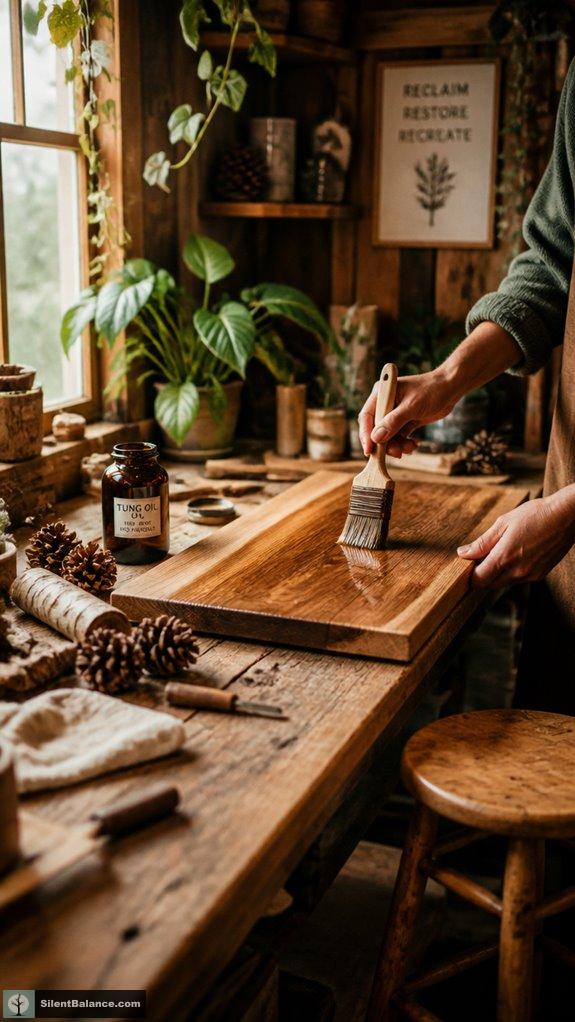
Hidden wood-based technology is transforming home decor in ways you mightn’t even notice at first glance. Think about eco-friendly finishes and sustainable sourcing. Here’s how:
- Smart finishes with natural oils improve insulation and are kind to the environment.
- Reclaimed timber shines light on sustainability, turning old trees into new features.
- Incorporating wood symbols like birch bark or pinecones adds spiritual layers—growth, renewal, strength.
- Innovative treatments let you harness thermal mass without sacrificing style.
Why not celebrate our natural roots? After all, trees carry stories of protection and resilience—perfect for mastering your space.
FAQ
How Does Moisture Content Influence Heavy Timber’s Insulating Capacity?
You should manage moisture content carefully, as moisture imbalance can boost insulation and mold resistance, but excess moisture may reduce heavy timber’s insulative capability, leading to potential mold growth and compromised indoor air quality, impacting your comfort and building health.
Can Heavy Timber’s Thermal Properties Vary With Different Wood Species?
Your mastery of heavy timber’s thermal properties depends on wood grain and curing process; denser grains and proper curing enhance heat absorption, retention, and release, consequently allowing different species to variably influence indoor temperature regulation and energy efficiency.
What Role Does Porosity Play in Timber’s Heat Absorption and Release?
Porosity effects in timber’s heat absorption and release are significant; higher porosity allows more air pockets, enhancing insulation and thermal regulation. Understanding timber porosity helps you optimize heavy timber’s natural capacity to stabilize indoor temperature efficiently.
Is There an Optimal Thickness for Maximizing Timber’s Thermal Mass Benefits?
Enhancing timber’s thermal mass is like tuning a fine instrument—an ideal thickness balances insulative power and flexibility. Typically, 4-6 inches maximizes heat absorption, storage, and release, boosting indoor comfort without compromising timber’s structural flexibility.
How Does Environmental Humidity Affect Timber’s Long-Term Thermal Performance?
You must monitor moisture migration, as high humidity causes timber to absorb water, reducing thermal performance. Proper climate adaptation strategies guarantee consistent long-term insulative benefits, maintaining stability and preventing mold, ensuring mastery over your heavy timber’s enduring thermal efficiency.
Summary
Incorporating timeless timber transforms your home into a warm, welcoming wonderland of wellness. With clever choices, conscious placement, and gentle maintenance, you amplify natural comfort and cut energy costs. Why not weave in symbolic touches like bark or pinecones, adding ancestral strength and soulful symbolism? Isn’t it exciting to create a cozy, carbon-conscious space that celebrates nature’s nurturing? Embrace the essence of trees—growth, grit, and grace—and turn your home into a sustainable sanctuary.
References
- https://matfllc.com/heavy-timber/heavy-timbers-5-thermal-benefits/
- https://www.designworldonline.com/using-wood-to-cool-a-house/
- https://extension.okstate.edu/fact-sheets/firewood-recommendations-for-using-firewood-as-an-indoor-heating-source-in-oklahoma-nrem-5154
- https://pmc.ncbi.nlm.nih.gov/articles/PMC10046122/
- https://www.govinfo.gov/content/pkg/CHRG-111hhrg53007/pdf/CHRG-111hhrg53007.pdf
- https://planetblue.umich.edu/campus/uploads/pccn_draft_report_all_comments_2021.pdf
- https://dot.ca.gov/-/media/dot-media/programs/environmental-analysis/documents/env/noise-effects-on-bats-jul2016-a11y.pdf
- https://www.oecd.org/content/dam/oecd/en/publications/reports/2009/04/the-bioeconomy-to-2030_g1gha07e/9789264056886-en.pdf

- 11 Best Luxury Sandalwood Candles for 2026 - June 19, 2026
- 11 Best Woven Wicker Gift Baskets for 2026 - June 19, 2026
- 11 Best High Powered Binoculars for 2026 - June 19, 2026
