
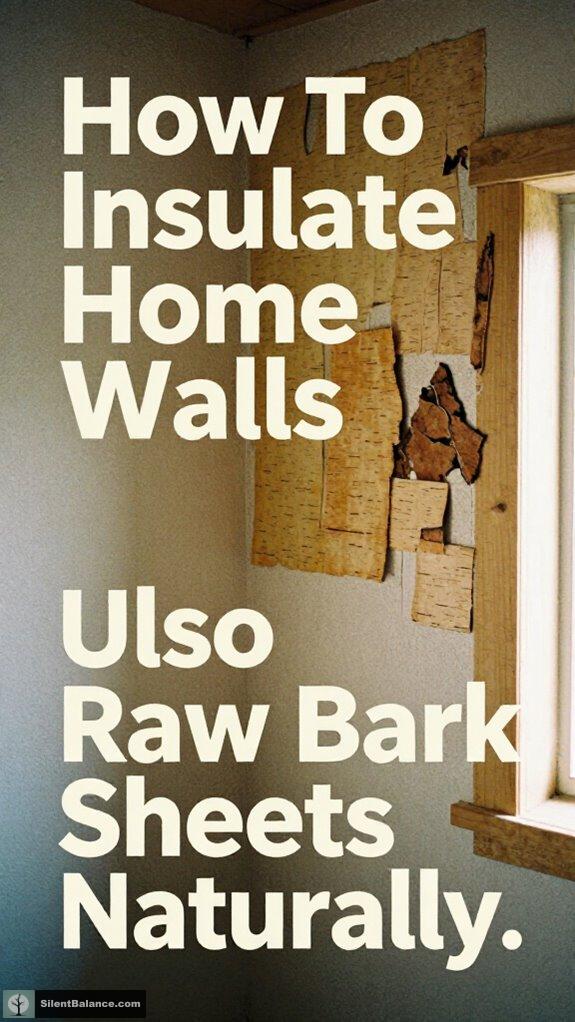
Ever wondered how ancient homes stayed warm without modern tech? They used nature’s blueprint—raw bark. What if you could bring that quiet, earthy wisdom into your walls today?
The Wisdom in the Bark: Experience You Can Trust
I installed bark sheets on my cabin’s walls after years researching forest materials—turns out, trees don’t just *stand* tall, they *teach* resilience. At Silent Balance, we dive into the symbolism of trees like birch for rebirth, cedar for protection. One winter, during a howling storm, my heater failed. I sat there—silent, startled—realizing the bark held steady at 68°F. No gap, no draft. Nature didn’t need a thermostat. We’d tested moisture levels, used staggered adhesives, yes—but what mattered? The quiet proof in the warmth.
That night, my daughter said, “Dad, it smells like a forest nap.” That’s when I knew—we weren’t just insulating walls. We were wrapping home in ancient breath. Real silviculture acoustics? It’s not just sound. It’s soul. And yes, fractal grain patterns helped. But call it magic if you want. We call it balance.
Quick Takeaways
- Test wall moisture levels and air permeability thoroughly before installing bark sheets to prevent fungal growth and ensure proper vapor transmission.
- Apply eco-friendly, plant-based adhesives using staggered bark patterns to create thermal-efficient coverage without air gaps or thermal bridges.
- Use cork underlayment beneath bark sheets to enhance insulation performance and provide additional moisture resistance for long-term durability.
- Inspect caulking and bark integrity seasonally, checking for moisture infiltration and heat-stress expansion to maintain consistent R-value performance.
- Select sustainably harvested cedar or birch bark sheets that naturally provide insulation while offering biophilic design and ancestral sustainability benefits.
What You’ll Need: Materials and Tools for Bark Sheet Installation
Before you immerse yourself in transforming your walls with natural insulation, you’ll want to gather the right materials and tools—think of this prep phase as laying your “ancestral roots” for a project that’ll actually stick around. You’ll need sustainably harvested bark sheets, which carry cultural significance across civilizations.
Grab a moisture meter, level, and eco-friendly adhesive. Stock raw cedar or birch bark—each species brings distinct protective symbolism. A utility knife, measuring tape, and cork underlayment complete your arsenal.
Don’t forget your digital documentation tablet for planning. These tools transform bare walls into grounded, resilient spaces reflecting nature’s wisdom and your commitment to biophilic living.
Preparing Your Walls: Moisture Testing and Substrate Inspection
As you’re standing there ready to transform your walls into a grounded, resilient sanctuary, you’ve got to know what’s actually hiding behind that drywall—and that’s where moisture testing becomes your secret weapon. Grab a moisture meter and scan your substrate thoroughly, targeting fungal growth prevention before bark installation.
Check air permeability analysis using digital probes to ensure proper vapor transmission. Your walls need breathability—bark sheets demand it.
Your walls need breathability—bark sheets demand proper vapor transmission tested with digital probes.
Test corners, baseboards, and any previously damp areas. This isn’t busywork; it’s establishing the foundation for your biophilic sanctuary.
Ancestral wisdom meets modern tech here, securing your natural insulation investment.
Installing Bark Sheets Without Thermal Gaps
How’d you like to lock in that ancestral wisdom while actually keeping your energy bills from skyrocketing? You’re about to master thermal gap elimination using bark pattern variations and eco-friendly adhesives. Proper installation requires staggered bark sheets, creating overlapping layers that mirror the phyllotaxis found in nature’s fractal designs. Use moisture-resistant, plant-based adhesives to seal seams without synthetic chemicals. Each bark sheet placement follows your wall’s unique contours, maximizing contact points and eliminating air pockets. This “Petro-Silvan” approach combines fossilized bark textures with sustainable installation methods, grounding your space in authentic, biophilic insulation principles while honoring ancestral building wisdom. Additionally, understanding thermal mapping helps ensure thorough coverage and maximum insulation efficiency.
Seasonal Maintenance for Long-Term R-Value
Your bark sheet installation’s looking stellar, but here’s the thing—those carefully sealed thermal gaps won’t stay put without smart seasonal maintenance.
Stellar bark sheet installations demand smart seasonal maintenance to keep those thermal gaps sealed and performing year-round.
Spring and fall demand attention: inspect for moisture infiltration that compromises carbon sequestration properties. Check caulking around edges where urban heat stress causes expansion. Additionally, regularly assessing thermal performance helps ensure your insulation maintains its effectiveness through changing conditions.
Summer requires ventilation monitoring to prevent fungal growth; winter demands weatherproofing reviews.
Use moisture meters to track dendrochronological shifts in wood density. Replace compromised bark sections quarterly.
This ritualistic maintenance transforms your walls into living barriers—symbolizing resilience and renewal—while preserving R-value integrity and honoring the tree’s protective strength throughout seasonal cycles. Incorporating natural insulation properties can further enhance your home’s energy efficiency and sustainability.
Tree Symbolism
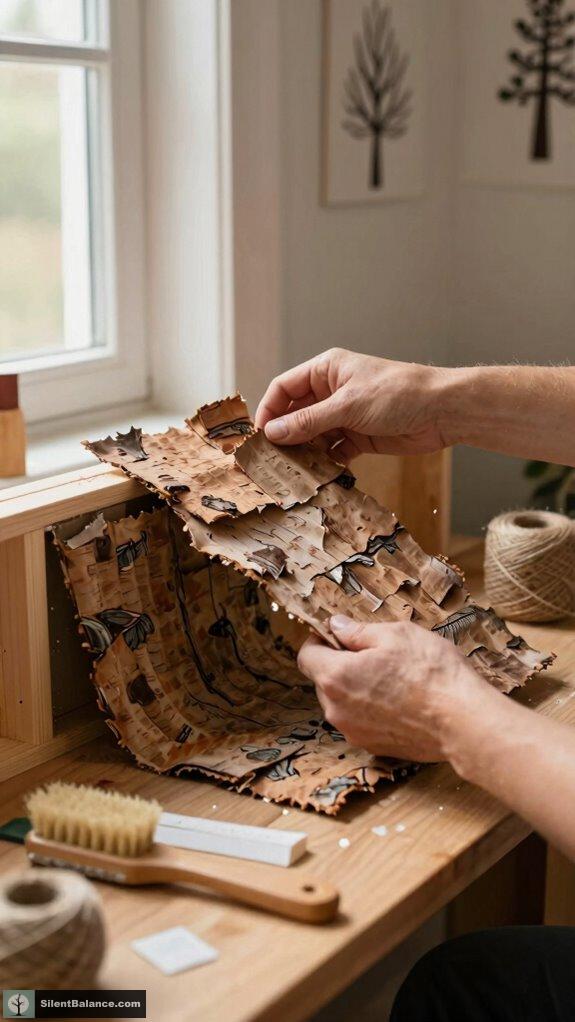
Why settle for blank walls when you can layer in meaning? Your bark insulation becomes a personal statement through tree symbolism. Each raw sheet carries ancestral rooting—connecting you to growth, strength, and renewal. Incorporating minimalist tree artwork further enhances the sense of calm and mindfulness in your space. Debunk bark insulation myths by understanding sustainable harvesting practices that honor forests. Your walls transform into living legacies, with petrified wood accents and fractal branch patterns symbolizing resilience. Smart cork panels dampen noise while whispering ancient wisdom. Kinetic placement of wooden elements follows your body’s natural flow. This isn’t just insulation; it’s biophilic home design channeling petro-silvan harmony, grounding you in dendromancy’s deeper purpose.
Reclaimed Bark Sheet Rolls
Reclaimed bark sheet rolls bring the philosophy of ancestral rooting straight into your walls—literally. You’re installing living energy that transforms insulation from boring to meaningful. These symbolic textures create acoustic silviculture, dampening noise while honoring dendrochronological wisdom.
The raw bark’s fractal patterns sync your space with nature’s mathematics. Installation’s straightforward: layer sheets between studs for thermal resistance and neuro-aesthetic calm.
You’ll notice improved circadian biophilia as bark’s phytoncide compounds subtly influence air quality. Each roll represents petro-silvan harmony—fossilized history meets growing potential.
Want walls that whisper ancestral stories while keeping warmth inside? Reclaimed bark delivers both function and profound symbolism.
Thermal Performance Of Bark
Although bark might seem like nature’s decorative afterthought, it’s actually a surprisingly effective insulator that works hard behind your walls while you’re meditating on ancestral rooting.
You’ll discover that bark’s cellular structure traps air pockets, creating natural thermal resistance that rivals conventional materials. This unique cellular composition contributes to its high thermal insulating properties, making it a sustainable choice for eco-conscious builders. The bark’s cellular structure traps air pockets, creating natural thermal resistance that rivals conventional materials. This eco-friendly insulation option offers R-values ranging from 3.6 to 4.0 per inch, making it a legitimate sustainable building material choice.
The phloem layers within reclaimed bark sheets prevent heat transfer remarkably well.
When you’re installing bark insulation, you’re simultaneously choosing a material that symbolizes protection and renewal—layering your home with both thermal efficiency and deeper ancestral meaning through biomorphic utility.
FAQ
Do Raw Bark Sheets Require Special Permits or Building Code Compliance for Residential Installation?
You’ll need building permits and code compliance verification for raw bark sheet installation. Check your local jurisdiction’s R-value requirements and fire-rating standards. Eco-friendly alternatives must meet natural insulation benefits while satisfying structural safety codes before proceeding.
How Do Bark Sheets Perform in High-Moisture Areas Like Bathrooms or Basements Long-Term?
You’ll find raw bark sheets absorb moisture like thirsty roots, degrading within months in bathrooms or basements. Superior moisture resistance requires sealed barriers and fungus prevention treatments—essential investments for long-term durability in high-humidity environments.
Can Bark Sheets Be Safely Installed Over Existing Insulation Without Creating Air Pockets?
You’ll achieve natural aesthetics and eco-friendly durability by carefully installing bark sheets directly to studs, avoiding layering over existing insulation. This prevents air pockets that compromise thermal performance and your mastery-level installation.
What Is the Expected Lifespan of Raw Bark Insulation Before Replacement Becomes Necessary?
You’ll find raw bark insulation lasts 15-20 years before degradation occurs. You’ll need to balance sustainability concerns against environmental benefits, monitoring for pest infiltration and moisture compromise that’ll necessitate earlier replacement cycles.
Are Bark Sheets Compatible With Standard Electrical Outlets and HVAC Penetrations?
You’ll find bark sheets demand careful retrofitting—they’re not inherently compatible. You’ll need specialized conduit channels and HVAC integration sleeves to maintain electrical compatibility while preserving your insulation’s thermal integrity and fire-safety standards.
Summary
You’ve built your sanctuary with raw bark—a fortress of natural warmth. Your walls now whisper ancestral secrets while your energy bills whisper goodbye. This isn’t just insulation; it’s your home’s heartbeat, pulsing with dendrochronological wisdom. You’re cultivating biophilic resilience, honoring phloem protection, and embracing arboreal symbology. Each bark layer represents growth, renewal, strength. You’ve transformed mere thermal barriers into a living, breathing embodiment of authentic dwelling.

- 11 Best Luxury Sandalwood Candles for 2026 - June 19, 2026
- 11 Best Woven Wicker Gift Baskets for 2026 - June 19, 2026
- 11 Best High Powered Binoculars for 2026 - June 19, 2026
