
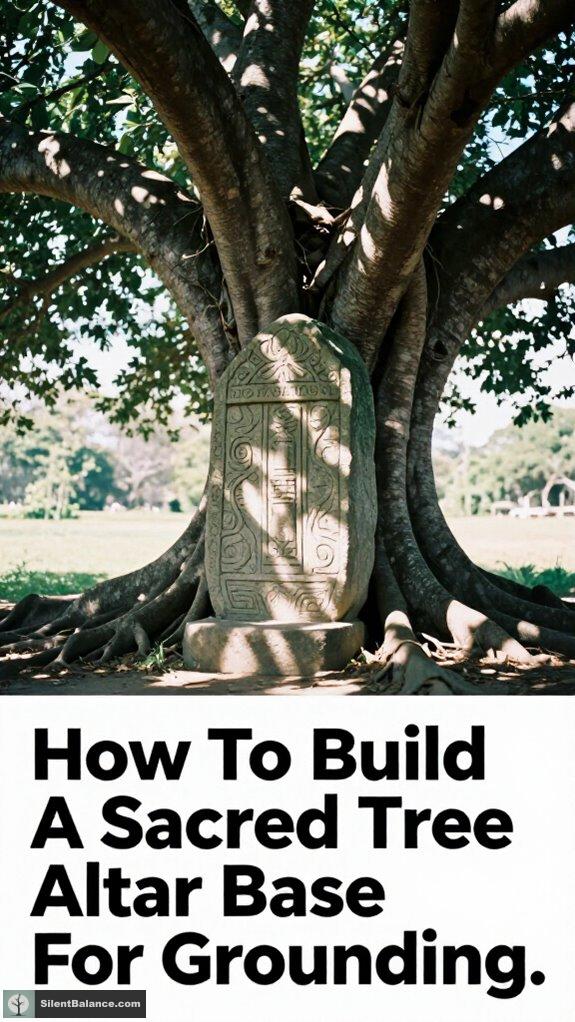
Pick a strong, stable wood like oak or cedar for your altar base—nature’s giving you a built-in grounding system. Cleanse the surface with lemon or smoke, then place it in a quiet, flat spot near a tree for extra earthy vibes. Arrange uncut stones in a circle, add a pinch of salt to clear negativity, and feel that stability click. Light some incense, leave a chocolate as an offering (yes, spirits love dessert), and speak your intention like you mean it. Roots don’t waver, and neither should your energy—anchor deep, stay solid, and let’s just say… the forest’s got more secrets where that came from.
Choose the Right Tree or Wood for Your Altar Base
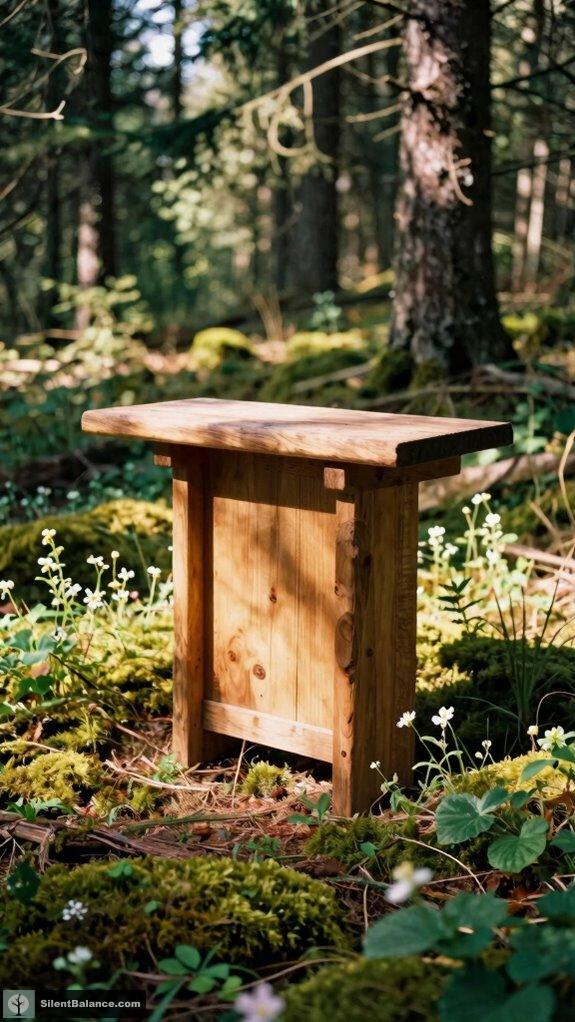
If you’re looking to lay the foundation for a powerful, grounding altar, picking the right wood isn’t just practical—it’s sacred work.
You feel it, right? The pull toward something deeper.
When you choose oak, you’re not just getting hardwood—you’re embracing Tree symbolism of strength, wisdom, and protection. Its Wood properties scream endurance.
Prefer serenity? Sandalwood’s calm energy cradles your spirit like a warm hug.
Cedar cleanses. Pine uplifts. Each wood whispers different magic.
Will your altar stand tall like Oak, or glow softly like Sandalwood?
Your choice shapes the soul of your space—so go ahead, pick your favorite tree ally. No pressure… just pure, woody vibes.
Cedar is naturally resistant to decay.
Cleanse and Prepare Your Altar Surface

#RemoveItems: Now’s the moment to handle each object like it’s going through spiritual customs.
- Pull every altar decoration, tool, or trinket off—yes, even that dusty crystal you forgot was there.
- Clean the bare surface counterclockwise with lemon or holy water—feel the old energy lift.
- Purify with smoke, salt, or candle light, then bless it forward, ready for fresh magic.
You wouldn’t host a dinner without setting the table, right? So why skip cleansing before candle placement? Let your altar breathe, realign, and shine.
This isn’t just cleaning—it’s sacred prep work. That wood you chose? It’s waiting for your touch, ready to ground your spirit. Make it count.
Regular cleansing helps maintain energetic clarity to support your spiritual practice.
Place Your Tree Altar in a Quiet, Stable Spot
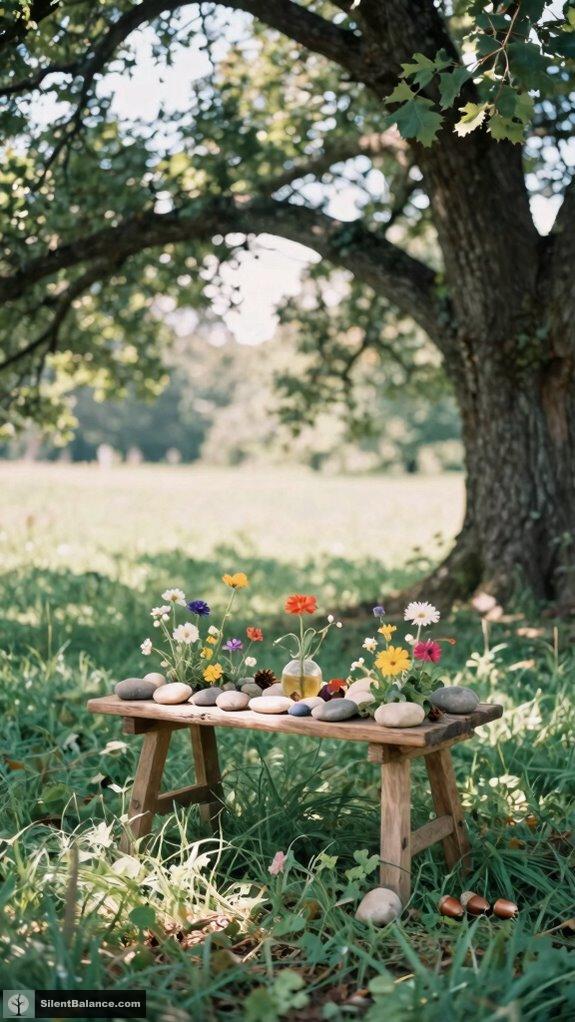
Now that your altar surface is squeaky clean and buzzing with fresh energy, it’s time to think about where you’re planting your sacred tree altar—literally and spiritually.
You want peace, right? Pick a spot that’s quiet, flat, and tucked away—somewhere a squirrel won’t knock it over during a acorn war. Avoid slopes; even a 10-degree tilt risks tipping. Press your foot down—no sinking! Solid ground means stability.
Near a sturdy oak? Perfect. It’s grounding and less prone to wildlife disturbance. Tree and Stand Selection
Shield it with boulders or trees for weather preparedness and calm. Thick woods muffle noise—nature’s soundproofing!
Why rush? This is *your* sanctuary.
Build a Natural Foundation With Stones and Salt
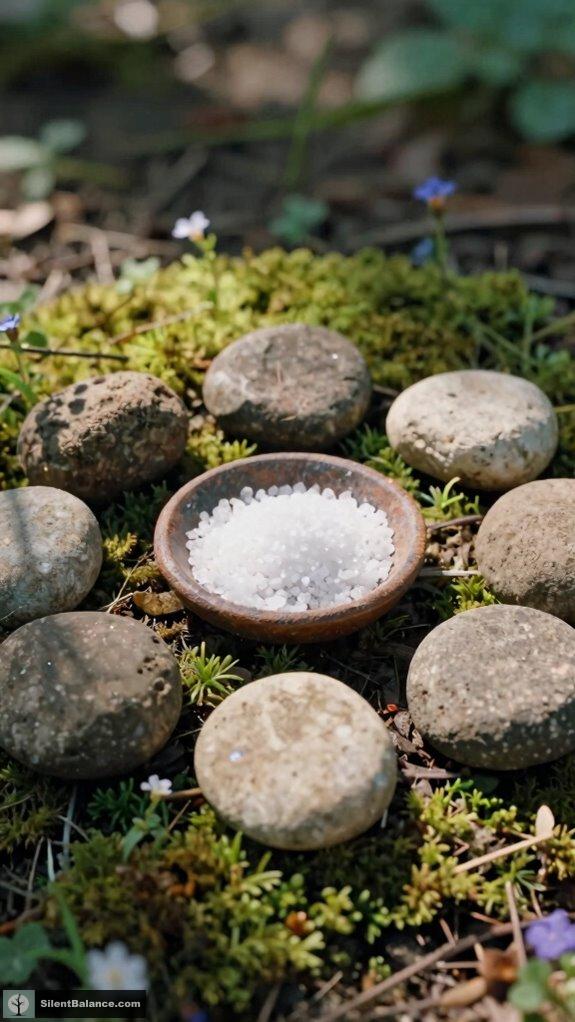
While you’re dreaming up your sacred tree altar, don’t just plop it down on bare dirt and call it a day—every great spiritual setup needs a solid foundation, and that’s where stones and salt step in like nature’s dynamic duo.
- Lay uncut stones with care—they hold ancient symbolism and keep energy grounded.
- Sprinkle salt or place a dish nearby; it’s pure ritual significance, clearing negativity.
- Combine them: stones in a circle, salt at the center, tied to earth and ancestry.
Feel the stability rise? That’s your altar waking up, rooted in truth, not trend.
This grounding practice aligns with the spiritual focus of honoring those who have passed beyond the veil, strengthening your connection to ancestors during sacred times like Samhain.
Activate Your Altar With Intention and Offerings
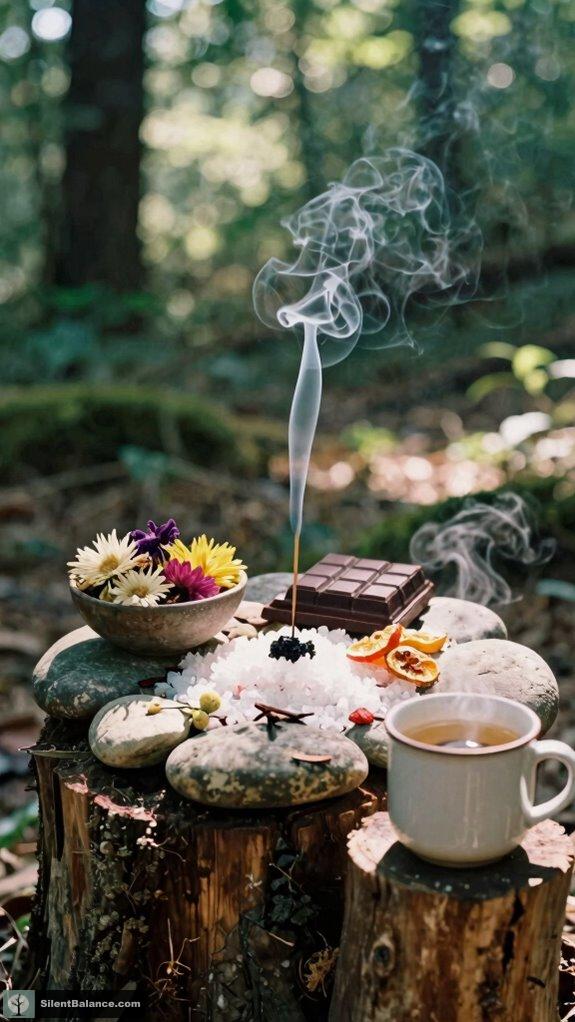
Since you’ve already anchored your sacred tree altar with stones and salt, it’s time to ignite its true power—because what’s a beautiful foundation without a spark of soul?
Breathe deep, center yourself, and set your intention clearly—what are you calling in? Whisper it aloud or write it down; let that purpose guide your offerings.
Light some incense, sip a warm herbal infusion, and slip into a Guided meditation to seal the connection.
Offer chocolate, dried fruit, or flowers—not because you have to, but because it feels right. Recall, spirit craves sincerity, not spectacle.
Roots Anchor Spirit to Earth
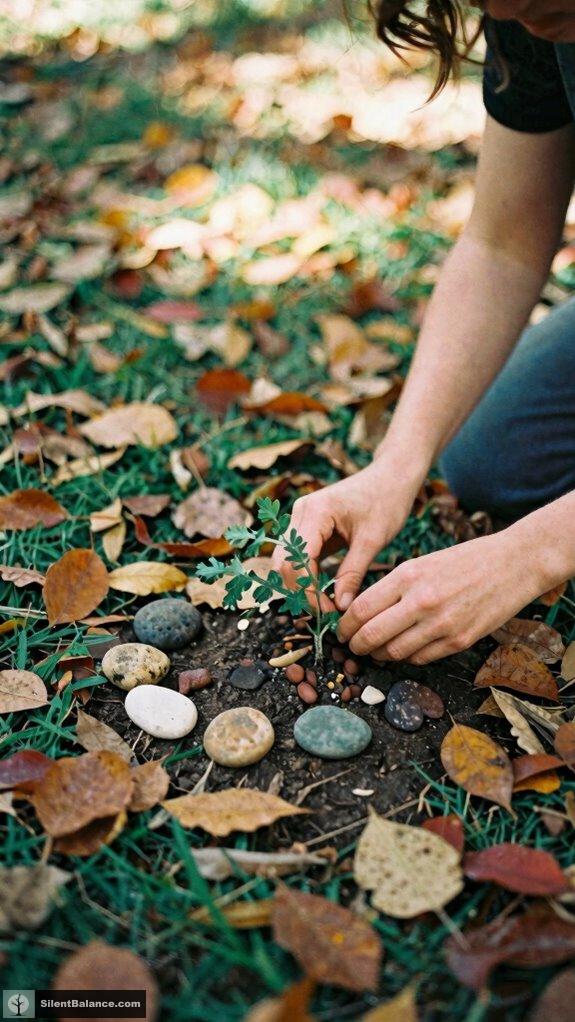
You’ve lit the incense, spoken your truth, and laid your offerings with care—your altar’s got soul, no doubt.
Now, let’s talk roots—real and symbolic. Root symbolism isn’t just poetry; it’s power. Your spirit needs anchoring, just like a tree.
Roots aren’t just in soil—they’re in silence, in service, in showing up when no one’s watching.
- Dig deep with grounding practices—kneel, breathe, connect.
- Let distractions slide like rain off broad leaves.
- Draw strength from quiet, steady sources, not flashy trends, such as the enduring resilience of palm trees in harsh environments symbolic resilience.
- Remember the significance of sacred trees in Islam (Tree of Life) as symbols of spiritual growth and endurance.
Shallow roots tremble in wind; yours? They’re fed by prayer, creativity, service.
You’re not just standing—you’re *rooted*. And hey, even ficus knows better than to chase thunder.
Carved Stone Beneath Roots
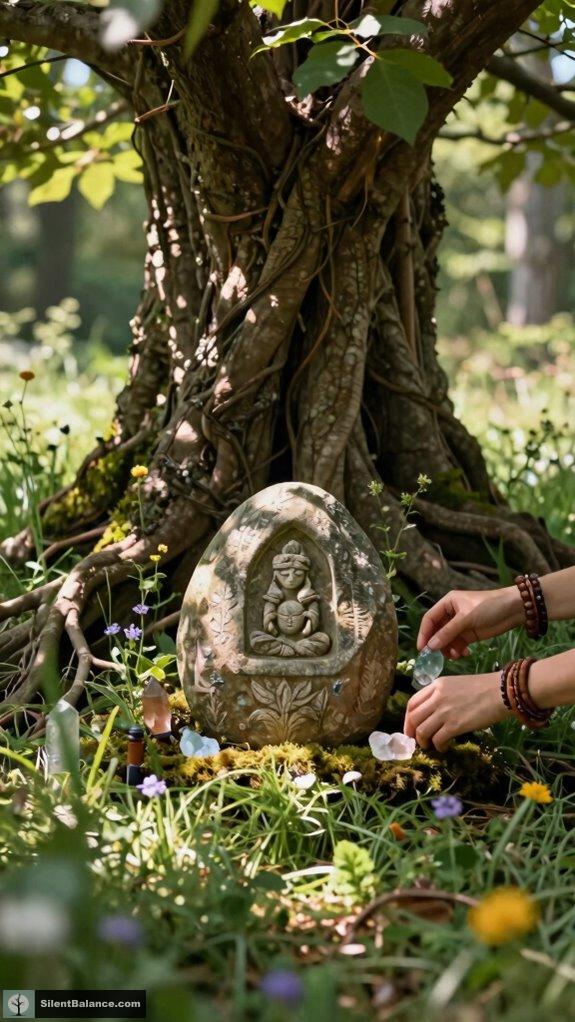
Even the mightiest tree needs something solid beneath it, so why should your spiritual base be any different?
You’re anchoring your sacred tree altar in power and meaning when you place a carved stone beneath its roots. Think of ancient Magdala’s quartzite block—1.8 feet wide, carved with Temple sanctity—or Jerusalem’s Foundation Stone, where sacred geometry meets sky and soil.
You’re not just building; you’re echoing holy designs, from Holy of Holies measurements to standing stones that marked God’s “I AM” moments. Cultural significance emphasizes the profound symbolism ancient cultures attributed to foundational stones and trees, linking physical and spiritual worlds.
This stone? It’s your altar’s heartbeat.
Literally and symbolically, it grounds your prayers like roots gripping bedrock—because even heaven needs a good foundation to grow from. Mycorrhizal communication illustrates how trees share nutrients and messages through underground networks, emphasizing the importance of a strong foundation for growth and connection.
FAQ
Can I Use Fallen Branches Instead of a Whole Tree Base?
Yes, you can use fallen branches as alternative bases. Fallen branches connect you intimately to nature’s rhythm, grounding you gently. They’re sacred, free, and full of story—just like you. Let them hold your altar, rooted in reverence, not roots.
Should I Bury the Altar Base or Keep It Above Ground?
You should keep the altar base above ground—80% of ancient traditions do too. It’s not just practical; it holds ceremonial symbolism and deep spiritual significance. Let it breathe, grounded in sight, where energy flows freely and you feel truly connected.
Is It Okay to Move the Altar Once It’s Activated?
yes, you can move your altar once it’s activated. just perform a gentle altar cleansing, honor the sacred space you’re shifting, and carry your intention with love—your connection stays strong, no matter where you place it.
Can Multiple People Use the Same Sacred Tree Altar?
you can share the altar with others—it’s meant for community sharing—but guard against spiritual contamination by setting clear intentions and cleansing regularly, so each connection stays pure, intimate, and sacred without energetic overlap or unintended entanglements disrupting your personal ground
Do I Need to Replace the Wood Over Time?
Do you feel the wood losing its hold on silence? You’ll replace it when decay shows—cracks, insects, softness. Honor ritual obstructions as signs. You’re tending more than wood; you’re guarding presence. Preserve with care, and it’ll last generations.
References
- https://www.ellengilbert.com/blog/build-an-ancestral-altar-in-7-easy-steps
- https://hoomanaspamaui.com/how-to-build-an-altar-for-sacred-connection/
- https://www.ecodisciple.com/blog/nature-altar/
- https://www.plantspiritmedicinewoman.com/wisdom/building-your-home-altar-sacred-space-for-daily-magic
- https://wemoon.ws/blogs/magical-arts/understanding-altars-what-is-an-altar-and-how-to-bring-altar-magic-into-my-life
- https://afropunk.com/2024/12/creating-space-healing-reflection-ancestral-altars-rituals-community-resilience/
- https://www.happyflame.com.au/blogs/news/sacred-space-creating-a-powerful-personal-altar
- https://eclecticwitchcraft.com/materials-for-altars-best-woods/
- https://www.shaolinmart.com/blogs/knowledge/altar-wood-ultimate-guide-to-choosing-sacred-altar-wood-for-spiritual-spaces
- https://intuitivelivingbykatevanhorn.substack.com/p/the-winter-altar-holiday-decor-for
- https://www.wicca.com/celtic/sacred-trees.html
- https://www.treesforcities.org/resources/sacred-trees
- https://land8.com/top-10-sacred-trees/
- https://otherworldlyoracle.com/how-to-cleanse-and-charge-altar/
- https://enchantedsolutionswa.com/blogs/enchanted-home/altar-cleansing-ritual-a-sacred-reset
- https://www.tenantsofthetreehouse.com/blogs/spells-rituals/why-you-should-cleanse-your-altar-regularly-and-how-we-cleanse-ours
- https://alphasisterspublishing.com/blogs/blogs/6-simple-steps-for-setting-up-your-altar-or-any-sacred-space
- https://www.outdoorlife.com/hunting/setting-treestands-best-locations-bow-season/
- https://www.youtube.com/watch?v=CGWQWDGxP0I
- https://www.deeranddeerhunting.com/content/blogs/dan-schmidt-deer-blog-whitetail-wisdom/the-best-places-to-hang-tree-stands-2

- 11 Best Luxury Sandalwood Candles for 2026 - June 19, 2026
- 11 Best Woven Wicker Gift Baskets for 2026 - June 19, 2026
- 11 Best High Powered Binoculars for 2026 - June 19, 2026
