

The Joy of Air Layering: Upholding Tree Symbolism with Every Cut
Air layering to propagate bonsai trees? Oh, it’s a love affair with nature. Imagine crafting a miniature masterpiece that embodies timeless symbolism.
When I embarked on my bonsai journey, I thought of the wisdom trees represent. They remind us of patience, resilience, and growth. With my blog, Silent Balance, I’ve shared my adventures and the magic of air layering. It’s like a secret recipe for cloning your dearest tree without the hassle of a laboratory!
Years ago, I air-layered my first Japanese maple—hands shaking, heart racing. I wrapped that precious branch in damp moss, and days turned into weeks. The thrill of seeing those new roots emerge made my heart swell. It was like a piece of my journey rooted in the earth, ready to grow anew.
Give air layering a try, and witness the transformation yourself. You’ll not only duplicate your favorite bonsai but also create a living homage to life’s symbolism. Who knew a little moss and patience could lead to such joy?
Quick Takeaways
- Air layering allows for the propagation of hard-to-root species, ensuring higher success rates for bonsai cultivation.
- This method creates a genetic clone, preserving desired traits and enhancing the aesthetic of the bonsai.
- It stimulates root formation while the branch remains attached, leading to a rapid mature appearance of the new plant.
- Air layering requires minimal equipment, making it a practical and efficient propagation technique.
- The process embodies patience and harmony with nature, reflecting the cultural significance of bonsai in Japanese and Chinese traditions.
Historical Significance of Air Layering in Bonsai Cultivation

When you plunge into the fascinating world of bonsai, you can’t ignore air layering—a propagation technique that’s been around since the days of ancient China and Japan. Isn’t it intriguing that this method paved the way for propagating exotic and tropical species we see today? Early bonsai masters cleverly used air layering to snag those hard-to-root trees without uprooting the entire parent plant. How brilliant is that? This technique not only creates a genetic clone of the mother plant but also enhances the nebari quickly, providing unique advantages in plant propagation. By employing this method, you also embrace the art of aesthetic bonsai formation, which is a key aspect of traditional bonsai practices.
Advantages of Air Layering Compared to Other Propagation Methods
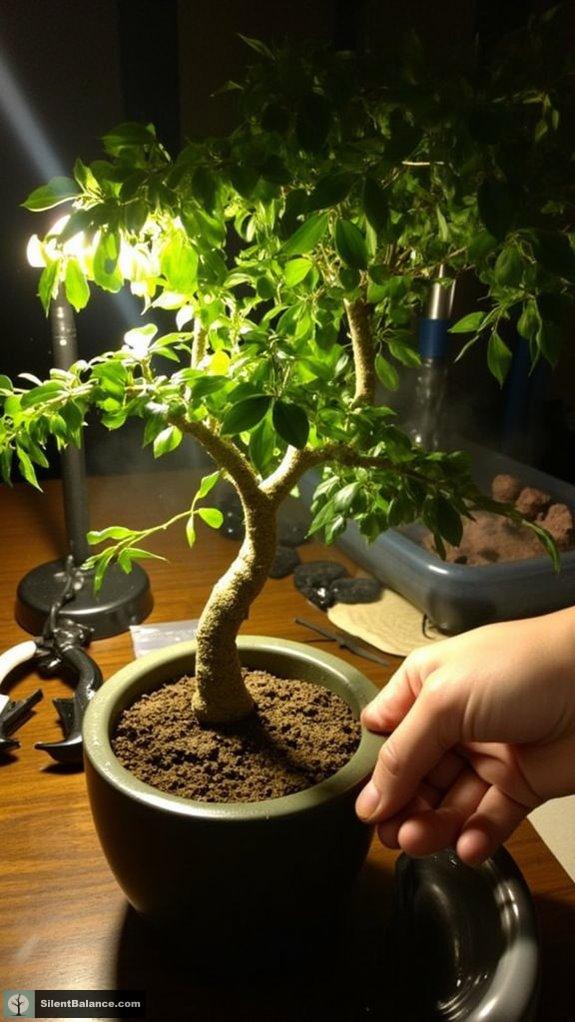
Though many propagation methods exist, air layering stands out for bonsai enthusiasts due to its remarkable advantages.
Have you ever wanted a stunning tree without the long wait of seeds? Air layering lets you root branches while they’re still attached, speeding up the process and allowing for that desired mature appearance—hello, thick trunks and impressive nebari! This method can be especially useful for seasonal care as it allows you to plan your propagation around the tree’s optimal growing periods.
Experience the joy of mature-looking bonsai faster with air layering—root branches while still attached for stunning results!
What’s even better? It works wonders for difficult species like Japanese maples and azaleas, giving you higher success rates with less stress. This technique is particularly beneficial for difficult-to-propagate varieties, ensuring you achieve a successful outcome.
Plus, you’re guaranteed genetic consistency; no unpredictable surprises here.
This method requires minimal equipment—sphagnum moss and plastic wrap, anyone?
Who knew propagation could be both practical and efficient?
Understanding the Biological Principles Behind Air Layering
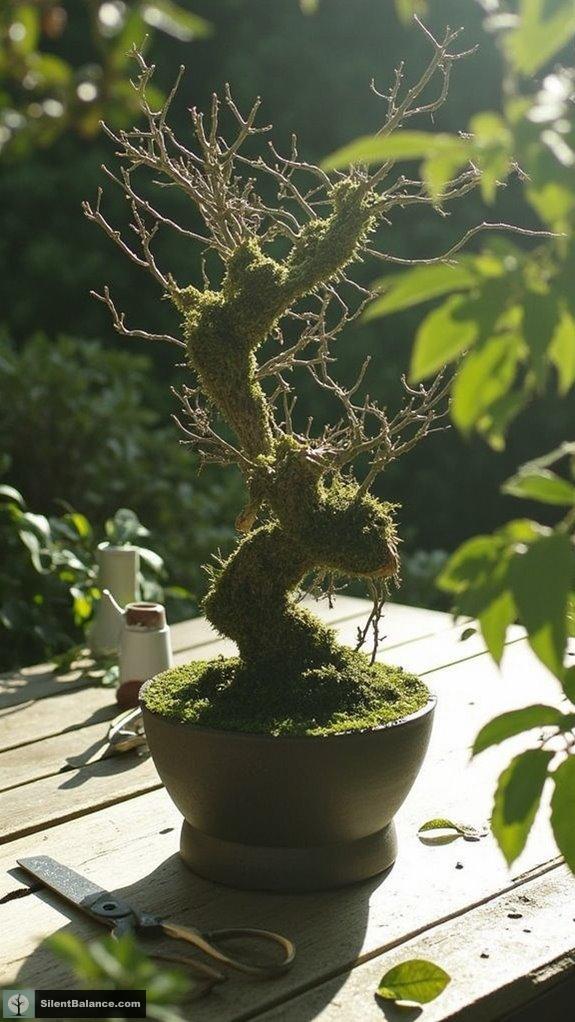
Understanding the biological principles behind air layering is fascinating, especially when you realize how trees go about their business of reproducing and thriving.
Did you know that when we girdle a branch, we fundamentally create a “phloem dead zone?” This clever trick prompts the tree to direct all its energy toward rooting above the wound—how innovative is that?
With xylem intact, the branch gets the hydration it needs while the auxins accumulate at the cut site, sparking new root formation.
It’s like giving our bonsai a reason to grow roots and stand on its own!
This method harnesses the tree’s amazing ability to heal, transforming a simple branch into a new, thriving bonsai clone, complete with its own personality. Who wouldn’t love that?
Additionally, the practice of air layering reflects the zen symbolism of bonsai, emphasizing patience and harmony with nature in every step of the propagating process.
Step-by-Step Guide to Successfully Air Layering Bonsai Trees

Air layering isn’t just a technique; it’s a thrilling journey toward creating your very own bonsai masterpiece!
Here’s a step-by-step guide to get you started:
- Select a healthy branch at least a year old, about 1/4 to 1/2 inch thick.
- Make precise cuts to girdle the branch, exposing the cambium. This is where the magic begins!
- Wrap the area with moist sphagnum moss and seal it in plastic. Trust me, your future roots will thank you!
Remember, patience is key. You’ll want to monitor moisture and guarantee your new growth gets the love it deserves.
It’s like being a bonsai parent!
Ideal Timing for Air Layering: When to Start
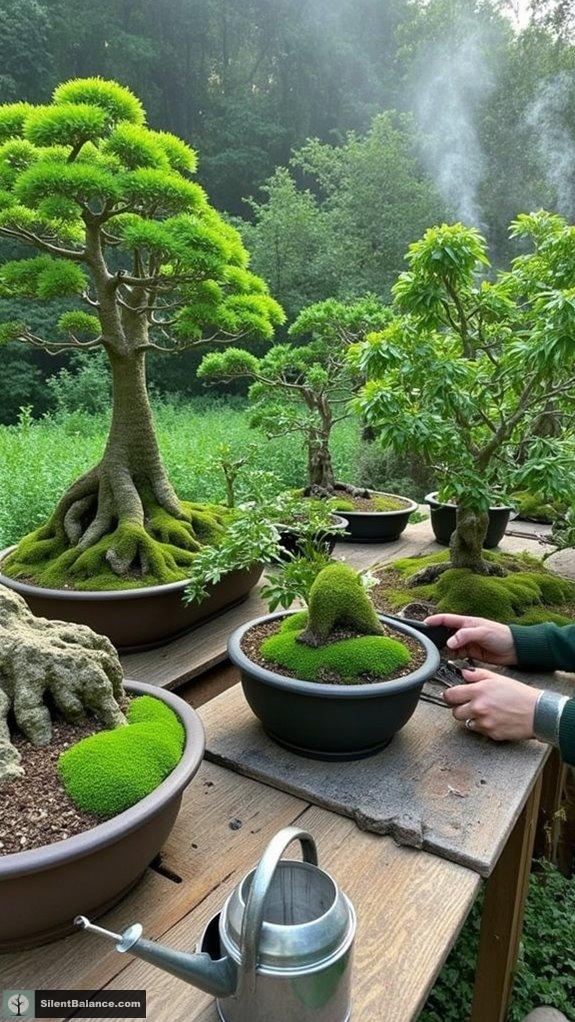
As spring rolls in and the days grow warmer, it’s the perfect time to think about air layering your bonsai trees.
Timing is everything, right? I usually start air layering around May, when my trees have settled in, and sap is flowing like it’s on a caffeine buzz.
You’ll want to make sure you kick off the process at least eight weeks before the first frost, so those roots can settle in before winter’s chill.
And for deciduous trees, look for that sweet spot after bud swell but before they go full leaf mode.
It’s all about grabbing that active growth phase!
Species Suitability for Air Layering in Bonsai Propagation
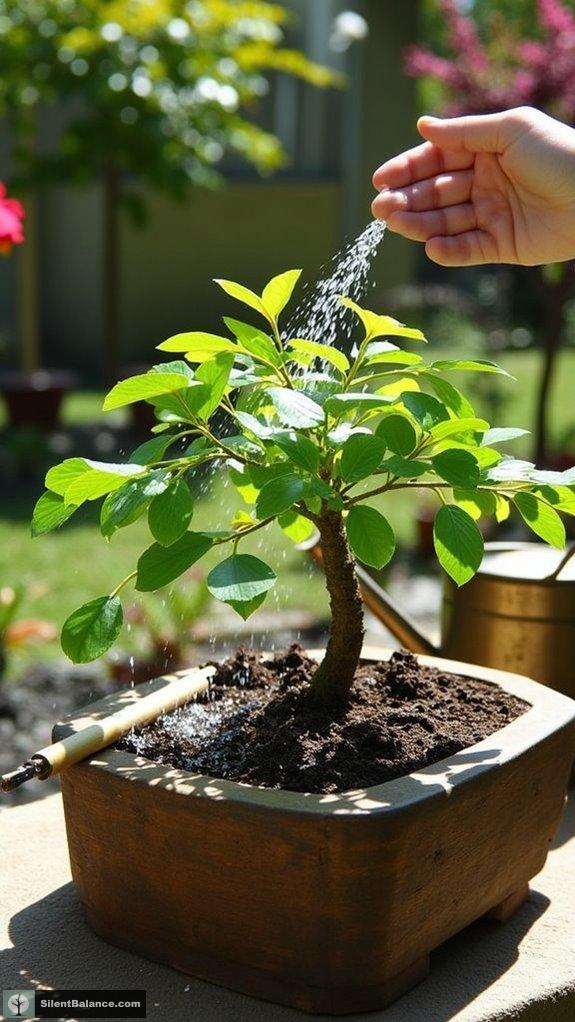
When it comes to choosing the right species for air layering your bonsai, you might find yourself pondering which trees will thrive with this propagation method.
Here are a few species that typically excel in air layering:
- Maples: They heal quickly and root effectively.
- Junipers: Known for their hearty tissue and reliable sap flow.
- Ficus: A tropical favorite that thrives year-round given adequate care.
Now, while most woody species can join the party, some simply won’t get with the program.
Hardwoods with thick bark or a slow sap flow often struggle. So, why not stick to the winners?
This method is all about choosing the right players to guarantee your bonsai dreams flourish!
Practical Benefits for Bonsai Enthusiasts
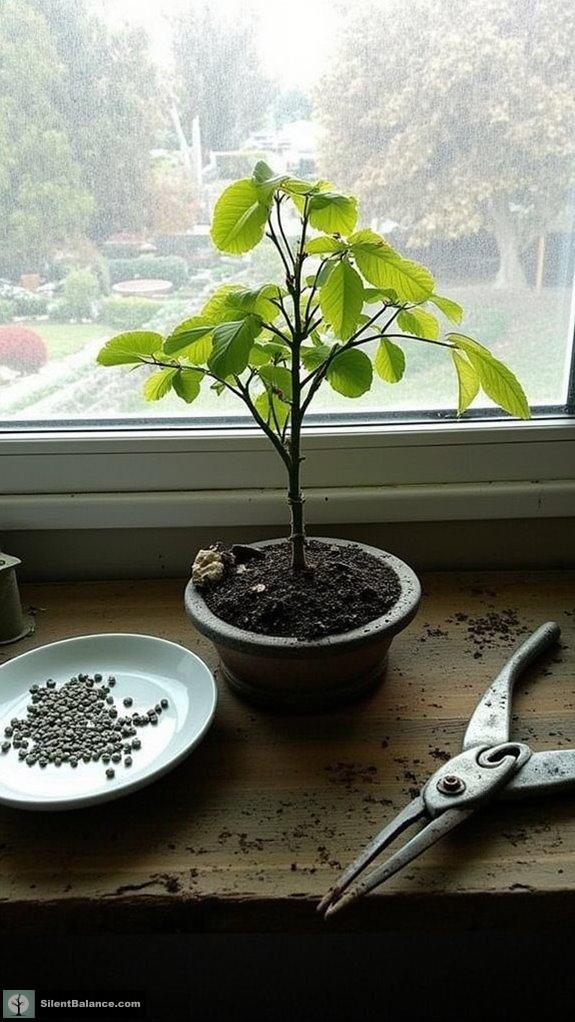
While you might be happily lost in the complex world of bonsai, it’s easy to appreciate the practical benefits that air layering brings to the table.
This technique delivers faster propagation, often yielding roots within months, not years. Who wouldn’t want that?
Plus, since air layers stay connected to their parent tree, they enjoy nutrients while developing roots, reducing stress.
As air layers remain attached to the parent tree, they benefit from essential nutrients, minimizing stress during root development.
You can clone your favorite specimens, ensuring those exquisite traits are preserved.
And the beauty? You can work with mature branches, creating impressive bonsai quickly without waiting ages for trunk thickness.
Get this—air layering doesn’t even need fancy equipment. Just basic materials outdoors!
Enhancing Aesthetic Qualities With Air Layering Techniques

Air layering can transform your bonsai practice like few other techniques, and I’m here to tell you why!
Imagine the possibilities of enhancing your tree’s aesthetic through:
- Controlled selection of exquisite branches showcasing unique movements.
- Rapid development of visually striking features, like a strong nebari.
- Preservation of those prized mature traits, making your bonsai a true masterpiece.
With air layering, you get to clone that beloved shape you’ve nurtured over the years.
You’re speeding up development while maintaining the artistic qualities that draw us in as bonsai enthusiasts.
So why settle for ordinary when you can elevate your craft?
Let air layering help you create not just trees, but living sculptures, filled with character and style, engaging both eye and soul!
Watering Frequency for Bonsais
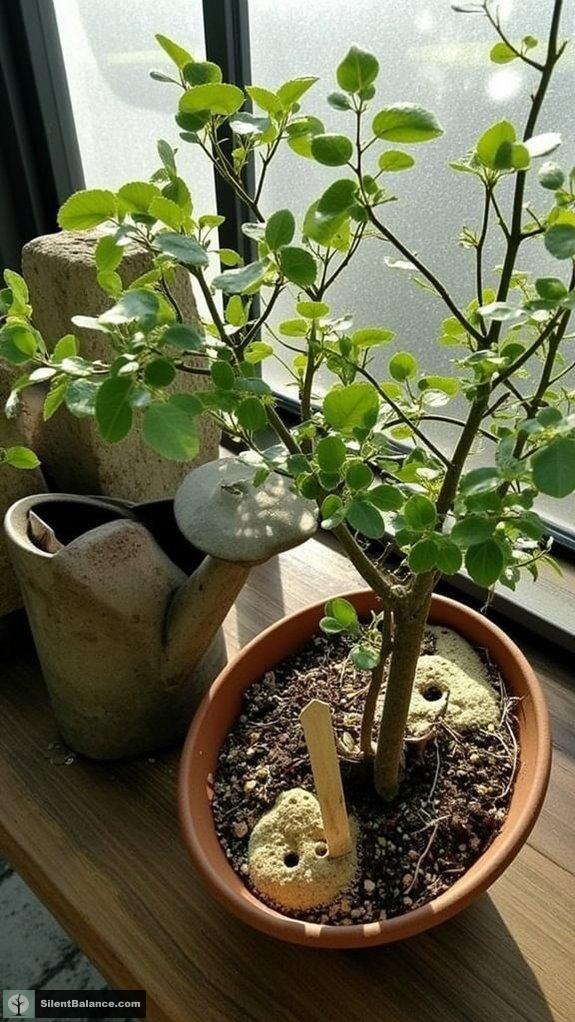
Mastering your bonsai’s watering frequency can be just as transformative as air layering techniques. You see, it’s not just about routine—it’s about reading your tree’s cues.
| Condition | Watering Frequency |
|---|---|
| Hot weather | Once or twice daily |
| Cool, humid days | Reduce considerably |
| Winter, frozen soil | Water sparingly, check roots |
| Established trees | Observe and adapt regularly |
Feel your soil! The top centimeter should dry slightly before you reach for the watering can. Avoid a rigid schedule, or you might drown your little friend. And hey, why not use a “marker” bonsai that dries out first? It’s like having a bonsai buddy system!
Cultural Significance of Trees
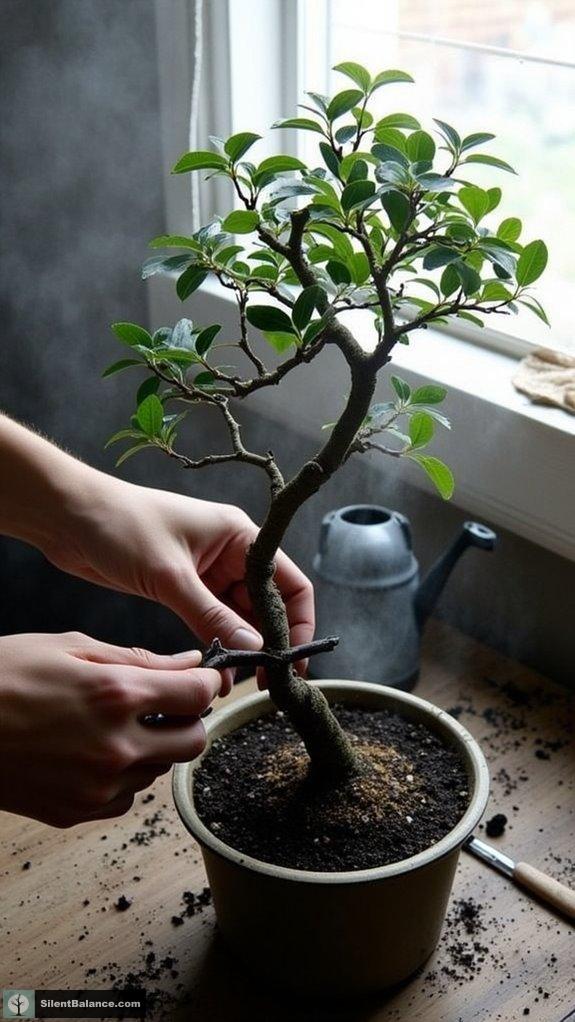
Cultural significance is woven into the very fabric of trees, especially when it comes to bonsai. These miniature marvels hold stories and wisdom from centuries past, influencing how we see nature and ourselves.
- In China, bonsai represented power and elite status.
- In Japan, they became symbols of Zen harmony, balance, and patience.
- Crafted with care, they reflect artistic mastery and spiritual ideals.
Isn’t it amazing how something so small can carry such weight?
Whether you’re shaping the gnarled branches in the hachi no ki style, or simply nurturing a young sapling, every bonsai tells a unique tale.
It’s like adopting a living piece of history, reminding us to savor life’s delicate journey!
Questions and Answers
Can Air Layering Be Done on Plants Other Than Bonsai Trees?
Air layering isn’t just for bonsai, my friend. This nifty technique works wonders on various woody plants like Ficus and Citrus.
Imagine turning that homely Rubber Tree into a thriving new specimen without cutting it off! It’s all about creating new roots while keeping your prized plant intact.
What Tools Are Needed for Successful Air Layering?
Oh, you want the secret sauce for air layering?
Well, let’s start with a sharp knife—think of it like your bonsai’s personal stylist, crafting those clean cuts!
A specialized air layering tool helps, too, making bark peeling a breeze.
And don’t forget sphagnum moss—nature’s sponge!
Twine will keep everything snug while rooting happens, and a little rooting hormone? That’s just the cherry on top.
Ready to become the bonsai whisperer?
How Often Should I Check the Progress During Air Layering?
Hey there!
When you’re air layering, check your progress every 1 to 2 weeks.
If you’re in warm, dry conditions, you might want to peek in twice a week—trust me, your moss will thank you!
Look for those glorious root strands after about 4 to 6 weeks, and stay vigilant for any signs of mold.
Recall, a happy layers’ a successful layer, so keep it moist but not soggy!
What Should I Do if Roots Don’t Develop?
Oh, it’s frustrating when roots don’t develop! If that’s happened to you, don’t despair—you’re not alone in this bonsai misadventure.
First, double-check if any cambium’s still intact; a careful re-girdling can work wonders.
Keep your moss nice and moist, and sprinkle on some rooting hormone for extra magic.
Patience is key, my friend; some plants take their sweet time.
Have you considered trying a more energetic branch next?
Is Air Layering a Completely Safe Technique for All Tree Types?
Is air layering completely safe for all tree types? Not really! While it’s a fantastic technique, it’s got its quirks. Some species just won’t play nice, and it might end up a rootless venture for you.
Plus, that classic “girdle” cut? Nail it, or risk a sad sap scenario. And, let’s face it, those delicate new roots need pampering, especially in freezing weather!
References
- https://www.clevelandbonsaiclub.org/2020/05/24/air-layering/
- https://www.youtube.com/watch?v=bIogcjtaQMw
- https://www.youtube.com/watch?v=8Lv1DqW9sxk
- https://bonsai4me.com/layering-techniques-for-bonsai/
- https://www.bonsainut.com/threads/the-science-of-air-layering.27034/
- https://adamaskwhy.com/2012/06/05/air-layering-a-brazilian-raintree/
- https://underhillbonsai.com/air-layering-and-a-twisty-ugly-tree/
- https://www.youtube.com/watch?v=CREGA3jxGJE
- https://forum.bonsaimirai.com/t/air-layer-success-story/10627
- https://www.bonsaiable.com/blog/air-layering-japanese-maple

- 11 Best Luxury Sandalwood Candles for 2026 - June 19, 2026
- 11 Best Woven Wicker Gift Baskets for 2026 - June 19, 2026
- 11 Best High Powered Binoculars for 2026 - June 19, 2026
