
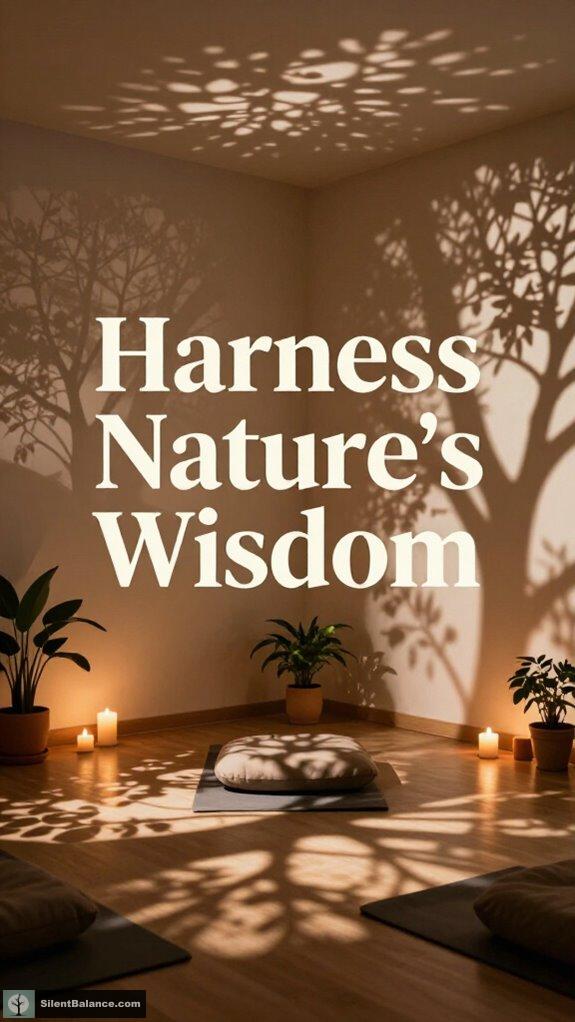
You’re sitting there, eyes closed, trying to *meditate*—while your brain scrolls like a chaotic Facebook feed.
What if the secret wasn’t inside your head… but outside your window?
I’ve chased silence for years.
Then one winter morning, I saw it.
A bare oak, backlit by dawn.
Its shadow stretched across my meditation cushion like a sacred glyph.
Twisted branches. Knotted silence.
Not a corpse of wood—no. A survivor.
That’s when I *got* the symbolism of trees.
Not metaphors. Teachers.
Silent Balance? That’s us.
We don’t *talk* about presence. We *stare* at bark until we feel it.
We collect pinecones like they hold secrets (they do).
Shadows? We welcome them like old friends with timely advice.
Real Shadows, Real Shifts
Once, during a panic spiral, I stepped onto my porch barefoot.
The maple’s evening silhouette wrapped around me like a warning *and* a hug.
In that split second—no effort, no mantra—my breath synced with the wind.
No app. No guru. Just tree shadow doing sacred, silent work.
Nature doesn’t fix you.
It reflects you.
And sometimes… that’s enough.
Quick Takeaways
- Incorporate natural tree symbols and shadow patterns into the meditation space to deepen connection and focus.
- Use controlled lighting to create dynamic shadows of branches and leaves for visual meditation aids.
- Arrange natural elements like bark and twigs to evoke the resilience and growth symbolized by tree shadows.
- Time lighting to mimic natural cycles—dawn, midday, dusk—to enhance emotional depth and tranquility.
- Utilize shadow play and silhouettes to foster spiritual awakening, resilience, and connection to nature during meditation.
What Is the Symbolism Behind Tree Shadows in Meditation?
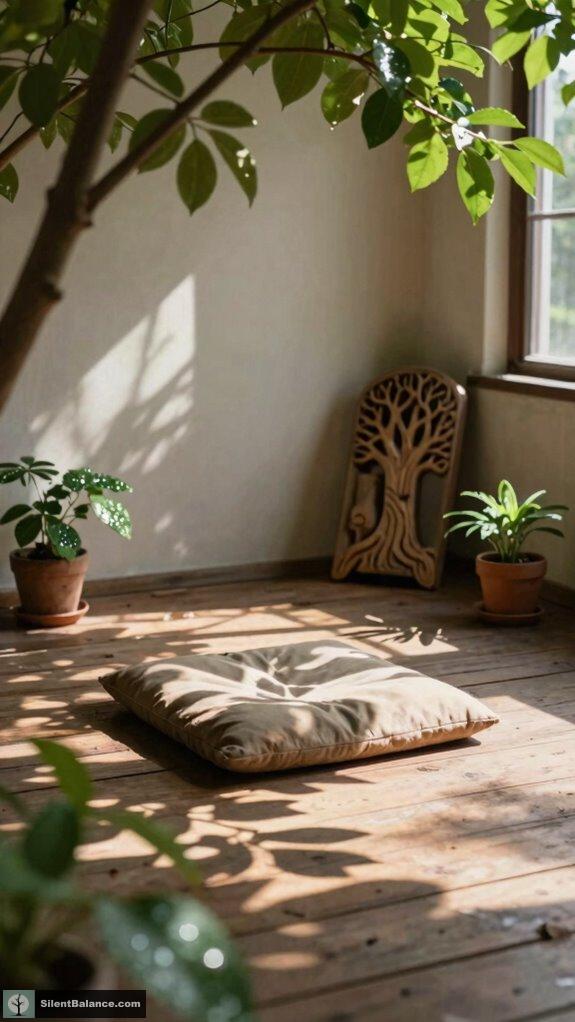
Have you ever noticed how shadows of trees stretch across the ground, changing with the sun’s dance?
In urban ecology, those shadows remind us of ancient symbolism—trees representing life, protection, and growth.
When shadows play on your meditation space, they symbolize a connection to nature’s cycle and your inner journey.
Do these flickering silhouettes evoke feelings of stability or renewal?
Using branches, bark textures, or wood carvings in your decor heightens this symbolism, grounding you in both history and nature.
Tree shadows aren’t just visual tricks; they’re powerful symbols for transformation, resilience, and the timeless dance between earth and spirit.
How to Prepare Your Space to Focus on Tree Shadows
Getting your space ready to focus on the beauty of tree shadows isn’t just about smudging out the clutter or rearranging furniture; it’s about creating an environment that invites those natural silhouettes to take center stage. To do this, think about incorporating elements that honor shadow symbolism—twigs, bark textures, and branches. Consider plush fabrics made from tree fibers or rustic wood accents to deepen the connection. Also, include symbols that evoke nature spirits—like carved bark or pinecones—fostering a sacred space for reflection. Incorporating the right zabuton meditation cushions can enhance comfort and facilitate deeper meditation sessions. Ask yourself: how can this space honor the wisdom of trees and their shadow stories?
Techniques to Deepen Your Focus on Tree Shadows
To truly deepen your focus on tree shadows, you’ll want to turn your attention to the subtle yet powerful ways light interacts with organic forms. Leafless symbolism reminds us of strength in vulnerability, revealing shadow depth and inner resilience. Focus on the contrast between light and dark, letting shadows evolve naturally. Embrace the delicate artistry involved in crafting hanging moss balls with tree spirit touches, enhancing the natural spirits that enhance your meditation space.
| Leafless Symbolism | Shadow Depth | Organic Reflection | Inner Growth |
|---|---|---|---|
| Resilience in vulnerability | Layers of meaning | Connection to nature | Personal renewal |
| Embrace simplicity | Hidden stories | Bare branches’ strength | Self-awareness |
| Stark beauty | Depth perception | Tree’s silent message | Emotional healing |
What stories do your shadows whisper? Can you feel the layered strength beneath?
Using Light and Time of Day to Enhance Tree Shadow Meditation
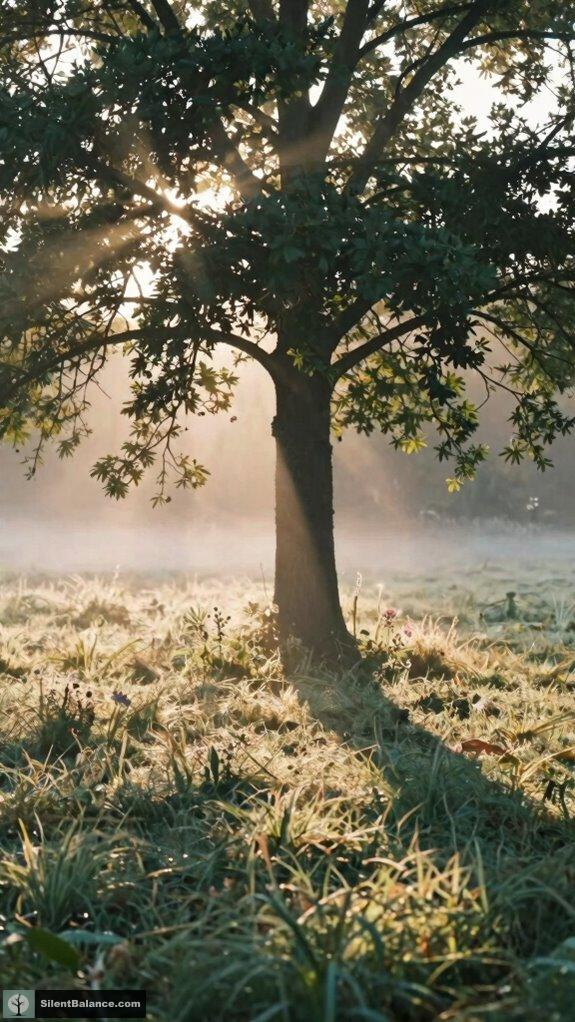
Lighting isn’t just about brightness or mood—it can transform your entire tree shadow meditation experience. As the sun moves through the day, shadows shift, revealing new shapes that mirror your inner growth.
Early morning light creates gentle, long shadows that invite calm, while the golden afternoon offers dramatic, bold silhouettes perfect for focused reflection. Incorporating the changing nature of shadows can deepen your understanding of natural rhythms and seasonal cycles.
Evening’s low, warm glow enhances tree symbolism, helping you tune out urban noise and modern art’s chaos. Do you notice how different times of day awaken different feelings?
Choose your moment wisely—each shift in light invites fresh perspective, renewal, and connection with the natural world’s ancient wisdom. Tree shadow variation throughout the day demonstrates how natural elements can deepen mindfulness practices.
Integrating Tree Shadows Into Sacred Rituals
Envision standing in a softly lit room as the shadows of twisted branches dance across your walls, creating a sacred tapestry of nature’s silent whispers.
You can weave tree shadows into your rituals, letting subtle shadow flickering and symbolic tree forms deepen your experience.
Why not position a branch sculpture or carve tree shapes into your walls? These natural patterns symbolize growth, resilience, and renewal.
Imagine the flickering shadows mimicking the cycle of seasons or the strength of bark pressing into your consciousness.
Wouldn’t incorporating elements like pinecones, bark, and root forms help you connect with nature’s wisdom on a more personal level?
Common Challenges and How to Overcome Them in Tree Shadow Practice
Dealing with challenges in your tree shadow practice is like steering through a dense forest—you might stumble upon some unexpected thorns and tricky roots. Challenging distractions, like passing shadows or background noise, can pull you away from your focus. Incorporating meditative techniques can help you regain clarity when distractions arise.
Inconsistent lighting, from flickering bulbs to shifting sunlight, can distort your shadow images. How do you stay grounded? Try controlling your space—use blackout curtains or soft, steady light sources.
Does the movement of tree shadows remind you of life’s ebb and flow? Embrace these hurdles as part of your growth; they highlight the importance of patience, grounding, and the deep symbolism of trees that anchor your meditation. Recognizing how heritage symbols, such as ogham, can enrich your practice also offers a meaningful connection to your roots.
Twisted, Leafless Tree Forms
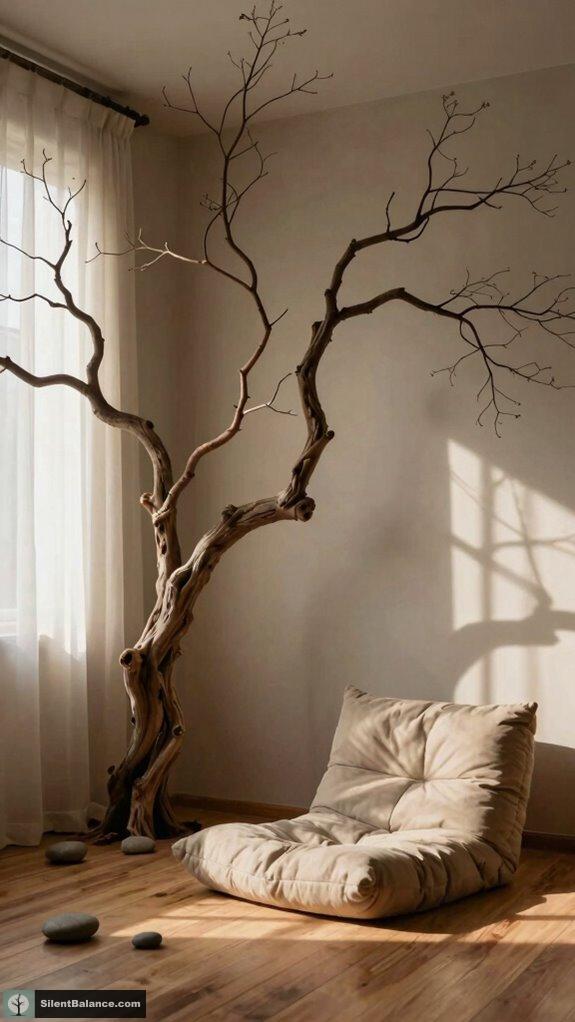
Have you ever noticed how some trees look like they’ve been through a weathered, mystical ordeal—twisted limbs, stark branches reaching out in wild, unpredictable shapes?
These twisted, leafless forms reveal ancient symbolism, embodying resilience, endurance, and transformation. They remind us that even when stripped bare, a tree holds deep botanical symbolism—strength in vulnerability, renewal after adversity.
Twisted, bare branches symbolize resilience and renewal, embracing vulnerability as a path to transformation and strength.
In your space, these haunting shapes can stir profound energy, connecting you to nature’s resilience and hidden wisdom.
Recognizing their cultural significance, these forms can serve as a powerful reminder of the enduring strength found in grounding energy and ancestral connections, inspiring a sense of stability and courage in your meditation practice.
Wouldn’t it be incredible to incorporate these wild forms into your decor, turning harshness into a sanctuary of growth and spiritual strength?
Twisted Branches Cast Shadow Patterns
When the sun hits twisted tree branches just right, they cast shadow patterns that are nothing short of mesmerizing.
These shadows tell stories—cultural interpretations and mythological symbolism—through their complex forms.
Are you noticing how each twist and turn in the shadow mirrors ancient tales of protection, resilience, or rebirth?
Consider adding branches that look like abstract art, blending history with your space’s energy.
| Cultural Interpretations | Mythological Symbolism | Shadow Pattern Ideas |
|---|---|---|
| Protection from harm | Boughs of life | Spirals, knots |
| Growth and renewal | Tree of life | Twisted limbs |
| Connection to ancestors | Guardianship | Branch loops |
| Spiritual awakening | Dream symbols | Jagged edges |
| Strength and resilience | Forest spirits | Interwoven shadows |
Let these patterns invite reflection, deepening your meditation with their silent stories.
Custom Shadow Projector Lights
Visualize transforming your space into a forest of shadows, where every flicker and fade tells a story. Custom shadow projector lights bring this to life, creating complex tree symbolism that echoes your roots connection. By incorporating stylish leaf patterns, you can enhance the natural ambiance and deepen your meditation experience. These lights cast lively, shifting silhouettes of twisted branches and delicate leaves, which deepen your meditation focus. Why settle for plain lighting when you can craft an environment that nurtures growth and strength? They turn your room into a sanctuary—a place to reflect on your life’s cycles. Have you ever considered how lighting can harmonize your inner world with nature’s wisdom? It’s like inviting a tiny forest into your most sacred space.
FAQ
Can Specific Tree Species Influence the Quality of Shadow Meditation?
Tree species shape shadow patterns like whispered secrets, drawing you closer into your meditation. Species with elaborate branches cast complex shadows, awakening your senses, deepening focus, and fostering a profound connection with nature’s living artwork.
How Does Ambient Forest Sound Affect Shadow-Focused Meditation?
Ambient forest sound deepens your shadow-focused meditation by enhancing the experience of light filtering through branches, making shadow movement feel more alive and intimate. You bond more closely with nature’s rhythms, enhancing your internal harmony.
Are There Recommended Positions to Enhance Shadow Clarity During Practice?
Position your light placement and shadow angles thoughtfully, aligning them to create striking, elongated shadows that dance on your walls, deepening intimacy with your space and enhancing clarity during meditation. Focus on gentle, precise placement, and clear angles.
How Can I Adapt Shadow Meditation for Small or Modern Spaces?
You can adapt shadow meditation by carefully adjusting shadow positioning with minimal space, using space modification like portable screens or corner lighting to create intimate, focused areas where shadows become your personal, calming sanctuary amid modern, small environments.
What Role Do Scent and Temperature Play in Shadow-Based Mindfulness?
Like a gentle tide, scent synchronization and temperature regulation guide you deeper into shadow meditation, fostering intimacy with your space. When you align these elements, they harmonize mind and body, anchoring your focus in a soothing, primal rhythm.

- 11 Best Luxury Sandalwood Candles for 2026 - June 19, 2026
- 11 Best Woven Wicker Gift Baskets for 2026 - June 19, 2026
- 11 Best High Powered Binoculars for 2026 - June 19, 2026
