
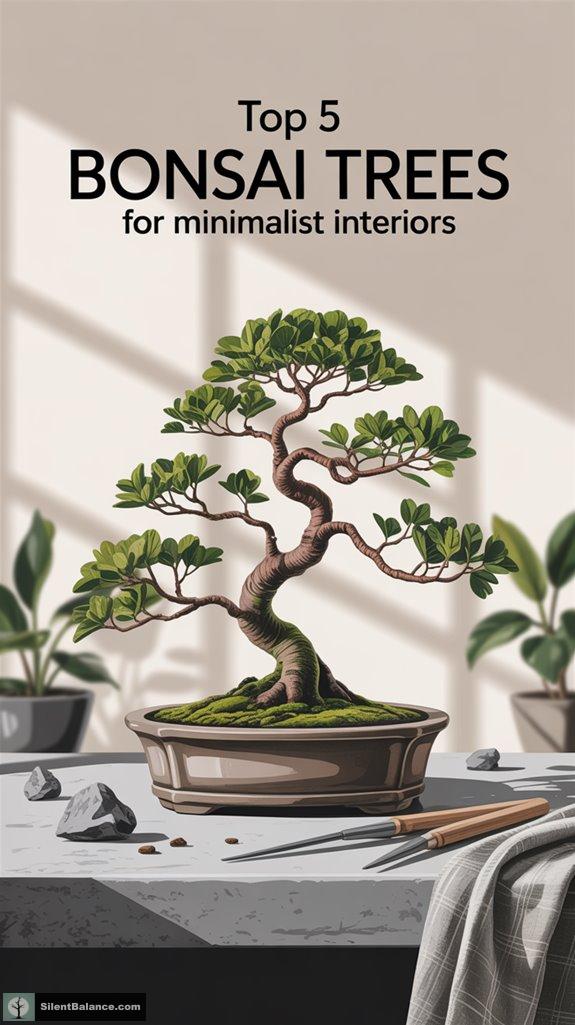
Elevate Your Minimalist Space with Bonsai Trees
Looking to elevate your minimalist space? Let’s talk about bonsai trees. They’re not just plants; they’re little whispers of nature in our modern lives.
I remember the first time I gifted a bonsai to a friend. It was a Liners Leaf—its elegant shape caught everyone’s attention. As we watched it transform their space, we realized how each tree carries its own symbolism.
At Silent Balance, we often delve into this meaning. Trees symbolize resilience and harmony, offering a nurturing touch to any décor.
Once, while tending to my own Rustic Tea, a sense of calm washed over me. The vibrant blooms gave me a moment of peace amidst a chaotic day. Bonsais aren’t just beautiful; they connect us to something deeper.
So, are you ready to invite serenity into your home?
Quick Takeaways
- Aralia Bonsai offers compact, gnarled trunks and feathery leaves, ideal for airy minimalist spaces while purifying the air.
- Linear Leaf Bonsai features slender leaves that create clean lines and serene spaces, complementing minimalist decor effortlessly.
- Fern Bonsai adds delicate texture and thrives in humidity, enhancing minimalist environments with vibrancy and tranquility.
- Leafless Coniferous Bonsai showcases striking forms and elegant branch architecture, promoting a sense of calm and artistic reflection.
- Rustic Tea Bonsai combines glossy leaves and seasonal blooms, fitting perfectly in tight spaces with a rustic yet minimalist aesthetic.
Aralia Bonsai: Airy Elegance for Your Space
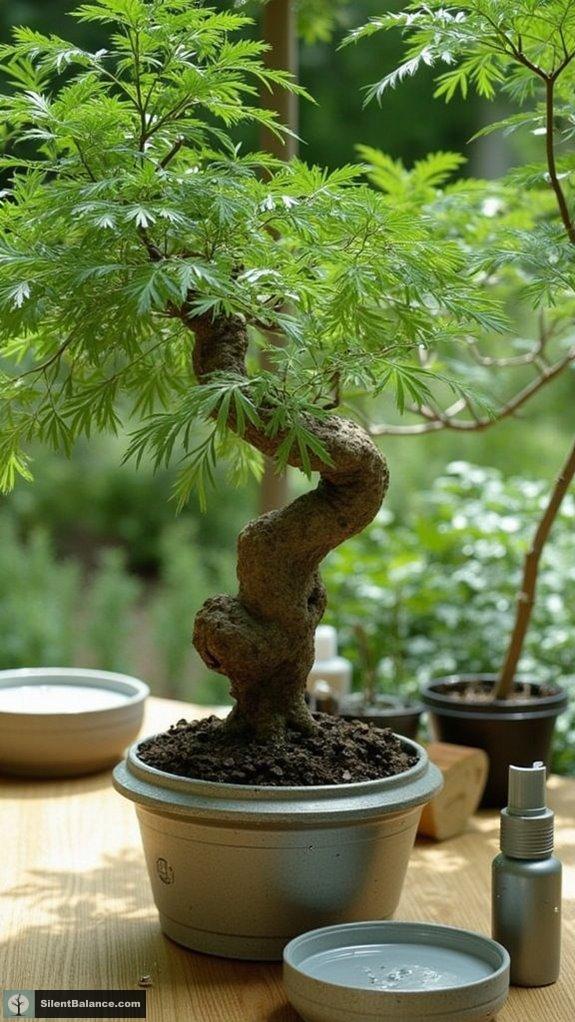
When it comes to infusing your space with a touch of nature’s elegance, the Aralia bonsai is nothing short of a showstopper! Its compact, upright growth and gnarled trunk give it an aged charm that screams sophistication. You’ll adore how its feathery leaves add an airy lightness, perfect for minimalist interiors. In many cultures, the bonsai represents spiritual growth, symbolizing patience and the beauty of nature’s artistry. Just keep in mind, it thrives in moderate to bright indirect light, so don’t roast it under harsh sun! Water it when the top half of the soil dries out—overdoing it can risk root rot. Plus, misting helps maintain that coveted humidity, making it an excellent choice for air-purifying plants.
Linear Leaf Bonsai: Simplicity and Structure
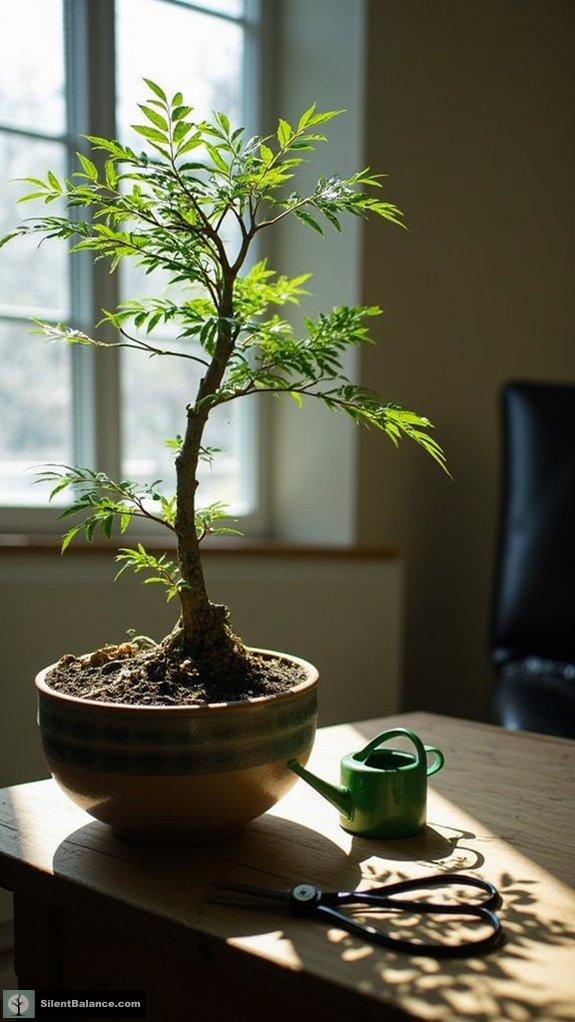
Linear Leaf Bonsai bring a revitalizing change into minimalist interiors, don’t they?
Their slender, elongated leaves offer a sleek aesthetic that fits perfectly into any modern space.
Here are a few reasons to contemplate adding them to your home:
- They enhance spatial openness with their clean lines.
- Their geometry complements minimalist decor beautifully.
- They come from coniferous evergreen species like pines and larches.
- They require minimal maintenance while delivering maximum impact.
Imagine a Japanese Black Pine’s distinctive shape or the Golden Larch’s golden foliage in your living room.
These beauties cast delicate shadows without cluttering your space, promoting calm and tranquility.
Why not embrace their structured elegance and elevate your interior design?
Your minimalist sanctuary deserves it!
Fern Bonsai: Delicate Textures for Minimalist Aesthetics
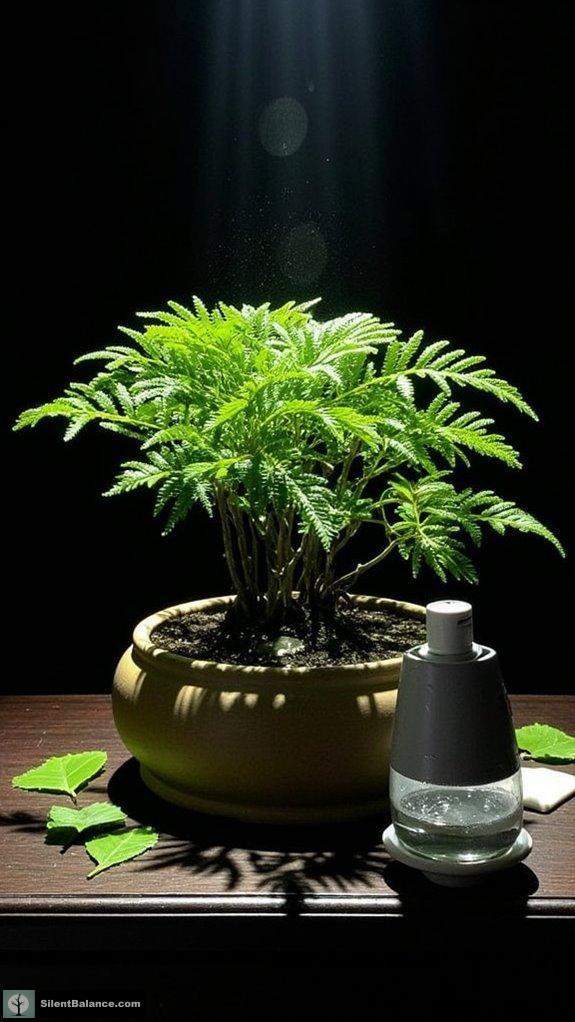
Fern bonsai are like the charming whisper of nature in a minimalist interior, adding delicate textures that pull me in every time I spot one.
Their feathery, light green foliage creates a soft contrast to the sharp lines around them, don’t you think?
The feathery, light green leaves of fern bonsai offer a soothing touch against stark surroundings, don’t you agree?
These little wonders thrive in humid nooks, needing about six hours of indirect sunlight—too much sun and they’d scorch like toast.
Regular pruning keeps their natural elegance intact, while a gentle misting guarantees they stay perky and vibrant.
Ever tried submerging the pot during watering? It’s like a spa day for your fern!
If you’re going for serene sophistication, consider incorporating a fern bonsai into your space; you won’t regret the invigorating touch it brings! Additionally, their spiritual significance can be comparable to the calming effects of nature, which enhances the ambiance of any minimalist setting.
Leafless Coniferous Bonsai: Form and Function
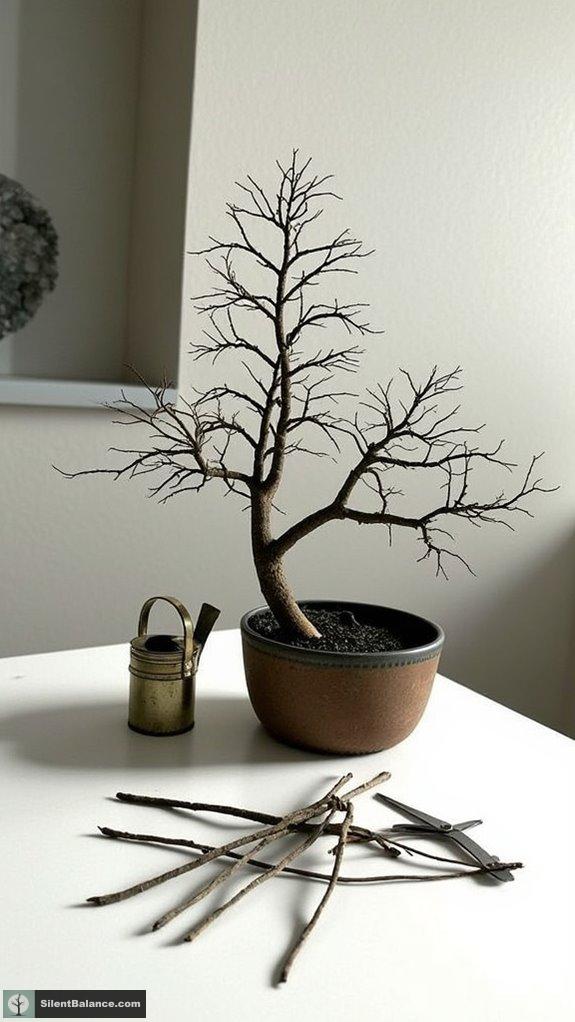
Leafless coniferous bonsai can be an enchanting addition to any minimalist interior, offering a unique blend of artistry and nature that’s hard to resist.
These graceful trees not only draw the eye but also elevate your space with their striking forms.
Here’s why they deserve a spot in your home:
- They highlight elegant branch architecture, showcasing beautiful lines.
- Leafless silhouettes create calm negative space, adding visual intrigue.
- Seasonal transformations enhance the artistic narrative of your bonsai collection.
- Minimal maintenance during dormancy keeps things effortless.
Incorporating these trees can also promote a sense of mindful meditation, as they encourage reflection and tranquility in your living space.
Whether it’s a larch or a bald cypress, these trees remind us that forgoing adornment can sometimes lead to the most innovative beauty.
Are you ready to bring this sculptural elegance into your life?
Rustic Tea Bonsai: Tidy Growth for Understated Decor
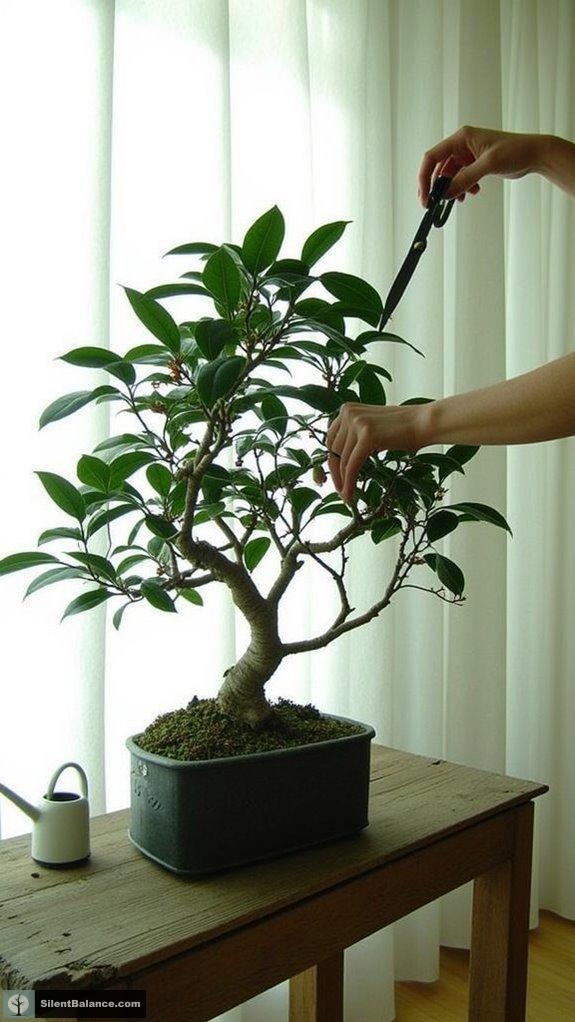
When it comes to bonsai that effortlessly fits into a minimalist interior, the Rustic Tea Bonsai holds its ground like a champion. With its glossy dark green leaves and charming clusters of year-round blooms, this tree elevates any space.
| Characteristic | Details | Why it Matters |
|---|---|---|
| Height | 6 to 14 inches | Perfect for tight spots |
| Blooming Season | Late spring to early summer | Seasonal allure indoors |
| Bark Texture | Greyish-beige, fissured | Adds rustic flair without clutter |
| Growth Habit | Tidy, upright | Fits minimalist aesthetics |
| Care Requirements | Bright light, moderate watering | Easy maintenance. |
Isn’t it time you brought one home? Embrace a piece of nature that’s chic, understated, and oh-so-sophisticated!
Watering Frequency for Bonsais
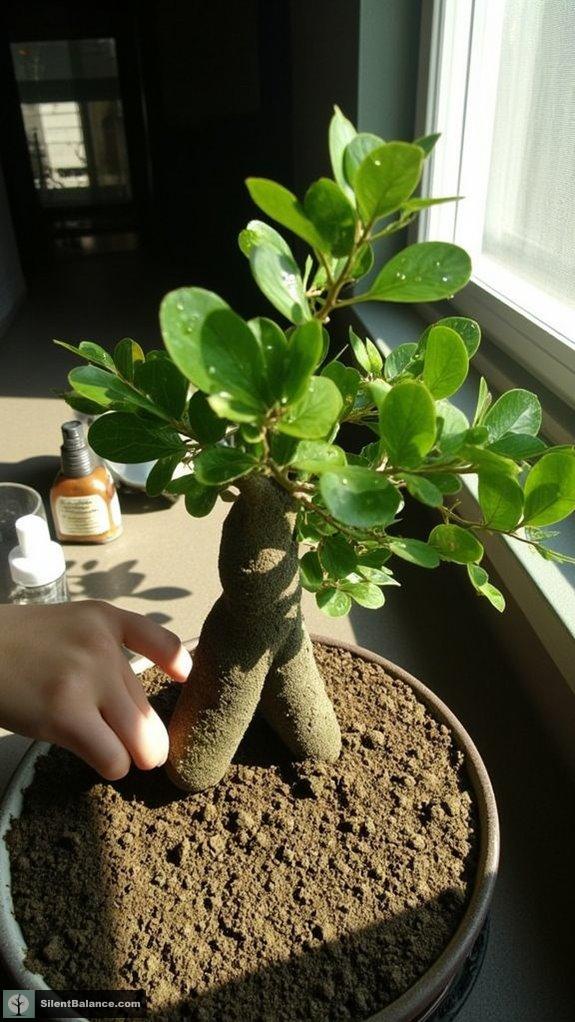
Bonsai care isn’t just about shaping those cute little trees; it also means getting the watering game just right.
Here’s how to master it:
- Check soil moisture manually—poke your finger or observe the soil’s color.
- Water thoroughly, ensuring it reaches the roots, but avoid standing water.
- Consider environmental factors—wind and temperature can change your watering needs.
- Don’t water on a fixed schedule; each bonsai has its unique thirst.
Cultural Significance of Trees
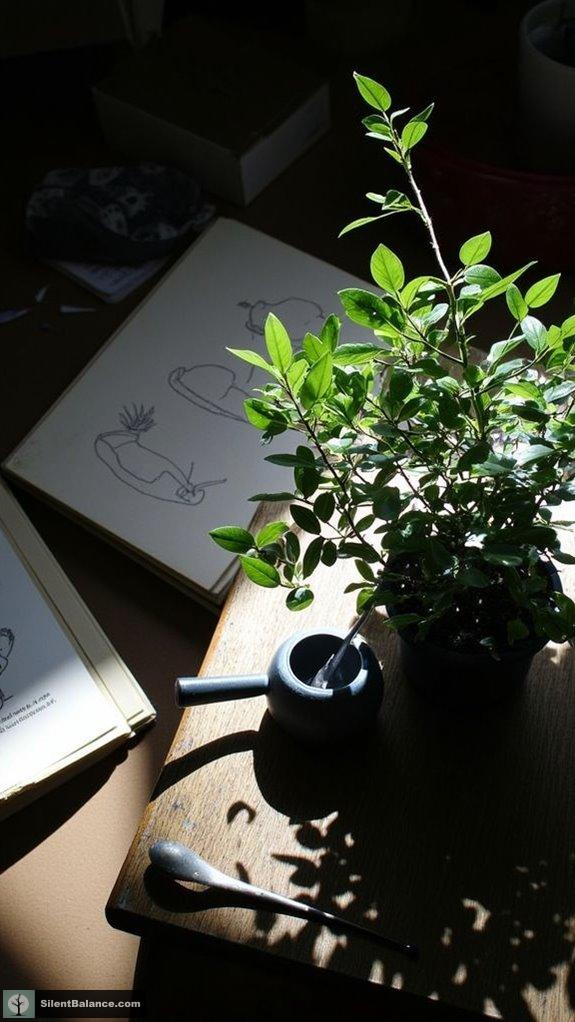
Trees have long been celebrated as powerful symbols in various cultures around the globe, and bonsai trees are no exception.
Formally known as *penjing* in China, these miniature wonders date back to the Han Dynasty. Envision a tiny cosmos in your living room, embodying harmony and peace.
With roots in Zen Buddhism, bonsai isn’t just about aesthetics; it’s about mindfulness and discipline too.
Ever heard of the *Hachi no ki*? This 14th-century play beautifully illustrates selflessness while featuring bonsai as a star.
The *Hachi no ki*, a captivating 14th-century play, reveals the deep selflessness intertwined with the beauty of bonsai.
When we embrace bonsai, we invite balance and respect for nature into our spaces.
Questions and Answers
How Much Sunlight Do Bonsai Trees Need Indoors?
Hey there!
When it comes to bonsai trees indoors, they generally need about 5 to 6 hours of sunlight daily. Think of it as their morning coffee—crucial for growth!
Some prefer direct rays, while others bask in bright, indirect light. If you can, aim for a sunny south-facing window; it’s like their favorite spa day.
But watch for signs of distress—dropping leaves, anyone? Adjusting light can make all the difference in your mini-tree’s happiness!
What Are the Best Pots for Bonsai in Minimalist Decor?
When selecting pots for bonsai in minimalist decor, I’m all about smooth, neutral materials.
Think cement-based pots—durable and chic, right?
Rectangular shapes are my go-to, creating that geometric clarity we love.
And those matte finishes? Perfect for avoiding distractions.
Don’t forget drainage holes, though—essential but discreet, just like me when I’m eavesdropping on bonsai gossip!
How Do I Prune My Bonsai Effectively?
Pruning your bonsai effectively? Oh, it’s both art and science!
First, grab your sharp concave cutters; trust me, dull tools won’t cut it.
Start with maintenance pruning, snipping away new growth to refine that beauty. Recall to respect apical dominance—let that main stem shine!
And don’t forget, less is more—slice off no more than a third at a time.
Ready to sculpt your mini masterpiece? Let’s do this!
Can I Use Artificial Lighting for My Bonsai Tree?
Absolutely, you can use artificial lighting for your bonsai! Think of it as giving your little tree a cozy sunbed.
LED grow lights are your best pals here, mimicking sunshine with their full spectrum magic. Aim for 12-15 hours of light daily.
Position those lights just 20-40 cm above your bonsai for ideal growth—like a loving overhead guardian.
What Pests Commonly Affect Bonsai Trees Indoors?
Indoor bonsai trees can face a range of pesky pests.
Spider mites love to party on the undersides of leaves, while aphids cluster like they’ve rented the place.
Whiteflies? They’re the annoying roommates that take flight when you disturb their mess.
Mealybugs hang out looking powdery, and let’s not forget about sneaky scale insects, all sucking away at your bonsai’s health!
Keeping a keen eye on your tree keeps these critters in check, don’t you agree?
References
- https://www.floweraura.com/blog/incredible-bonsai-plant-ideas-inspire-your-home-garden
- https://www.veronneau.com/en/trends/indoor-decor-trends/top-5-bonsai-tree-ideas/
- https://www.home-designing.com/2012/09/bonsai-in-interior-settings
- https://www.youtube.com/watch?v=9hTGCYYSOhk
- https://www.pinterest.com/ideas/minimalist-bonsai-tree-decor/948679200643/
- https://bloomscape.com/plant-care-guide/aralia/
- https://www.livelyroot.com/blogs/plant-care/how-to-grow-and-care-for-your-aralia-ming-stump
- https://paraisoplant.studio/blogs/plant-care/aralia-care
- https://www.happyhouseplants.co.uk/products/polyscias-fabian-bonsai-aralia-fabian
- https://bonsaistore.co/en-us/products/aralia-snowflake

- Bonsai Placement Benefits for Room Harmony - November 8, 2025
- Why Use Air Layering to Propagate Bonsai Trees? - November 8, 2025
- 15 Stunning Acorn Wood Wall Art Ideas - November 8, 2025
