
Bonsai trees aren’t just tiny plants; they’re living art forms packed with symbolism! From the fleeting beauty of cherry blossoms to the resilient ginkgo, each species tells a unique story. When designing your bonsai, think about balance and harmony—pruning and wiring can transform your tree into a masterpiece. Feeling inspired? Just envision a little piece of nature in your home, radiating peace while stirring curiosity. Stick around, and I’ll share even more fascinating perspectives!
Quick Takeaways
- Embrace the symbolism of Cherry Blossoms for their representation of life’s transience, enhancing emotional depth in bonsai design.
- Utilize wiring and pruning techniques to shape branches meticulously, reflecting patience and artistic expression in your bonsai.
- Incorporate the Chinese Elm for its harmony and resilience, symbolizing inner strength while enhancing the aesthetic appeal of your tree.
- Consider using Jade for its feng shui benefits, representing prosperity and abundance, making it a favorable choice for your bonsai.
- Integrate cultural significance by selecting unique species like Ginkgo, which symbolizes endurance, connecting the design to deeper spiritual meanings.
Historical Significance of Bonsai in Asian Cultures
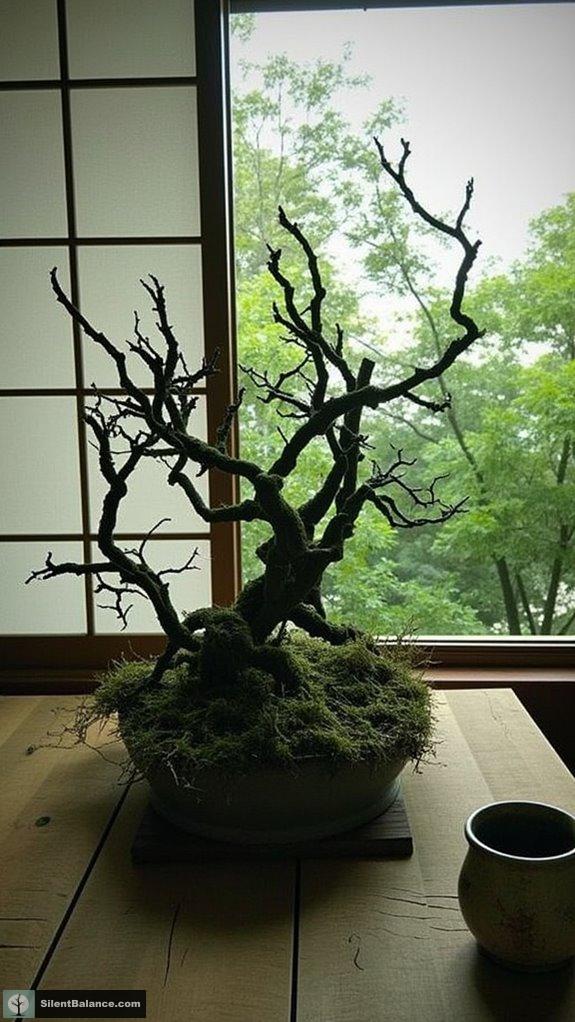
When you plunge into the world of bonsai, it’s hard not to be captivated by its rich historical significance in Asian cultures.
Envision this art form, originating over 2,000 years ago in China’s *penjing*, quietly setting forth on a journey to Japan with Buddhist monks. You can sense the whisper of meditation, as early bonsai possibly symbolized the Buddha in serene repose. The art of “pun-sai” began during this transformative era, showcasing a unique blend of art and spirituality that continues to inspire today. Bonsai is also often viewed as a symbol of harmony, representing the balance between nature and human craftsmanship.
Isn’t it fascinating how bonsai weaves itself into the fabric of Japanese society, becoming a status symbol intertwined with artistry?
Let’s embrace this legacy together; after all, bonsai isn’t just a plant—it’s a profound connection to our history!
Symbolism of Harmony and Balance in Bonsai
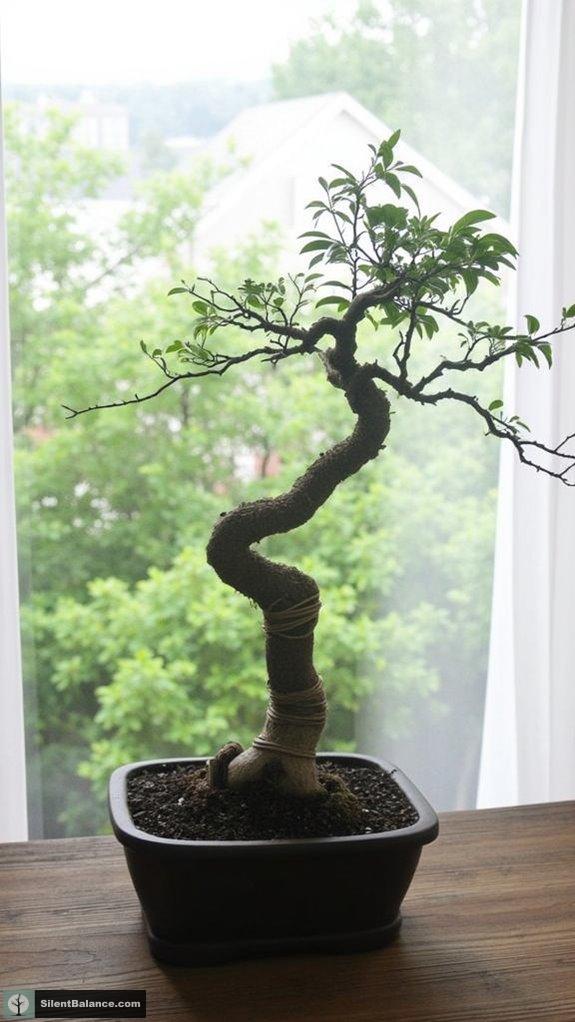
Harmony and balance effortlessly dance together in the alluring world of bonsai, representing much more than just aesthetic choices.
Isn’t it fascinating how each tiny bonsai reflects both nature’s wild heart and our gentle touch?
As I prune and wire, I’m merging patience with artistry, creating a visual zen garden where peace dwells. The transition from reverence for natural beauty in ancient texts to modern emotional symbolism reflects the enduring essence of bonsai in our lives. This practice illustrates the spiritual significance of Japanese and Chinese bonsai, both steeped in rich cultural meanings.
The trick? Finding that sweet spot between restraint and freedom, just like life itself.
When I look at that beautiful tree, it whispers the importance of embracing growth and even decay as parts of our journey.
Philosophical Reflections of Bonsai in Literature
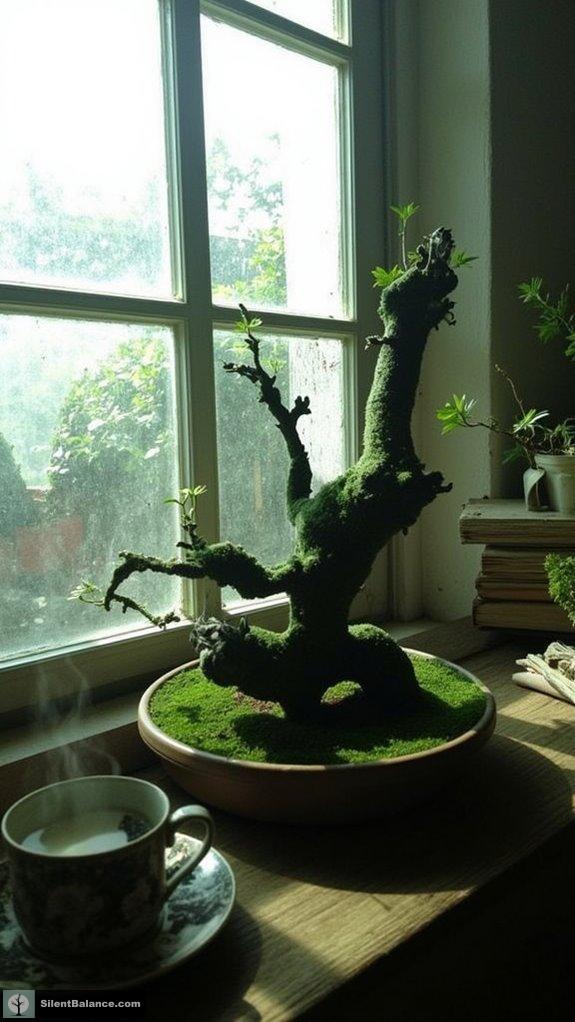
Diving into the world of bonsai literature is like peeling back the layers of a beautifully complex onion—there’s so much depth waiting just beneath the surface.
Have you ever noticed how bonsai often mirror our lives? They’re not just tiny trees; they’re metaphors for personal growth, resilience, and the tender intricacies of human relationships.
Writers have long embraced bonsai as symbols of patience and the art of nurturing beauty through challenges, much like our own journeys.
When we slice through the bark of this symbolism, we uncover reflections on simplicity and impermanence.
Artistic Techniques for Creating Bonsai
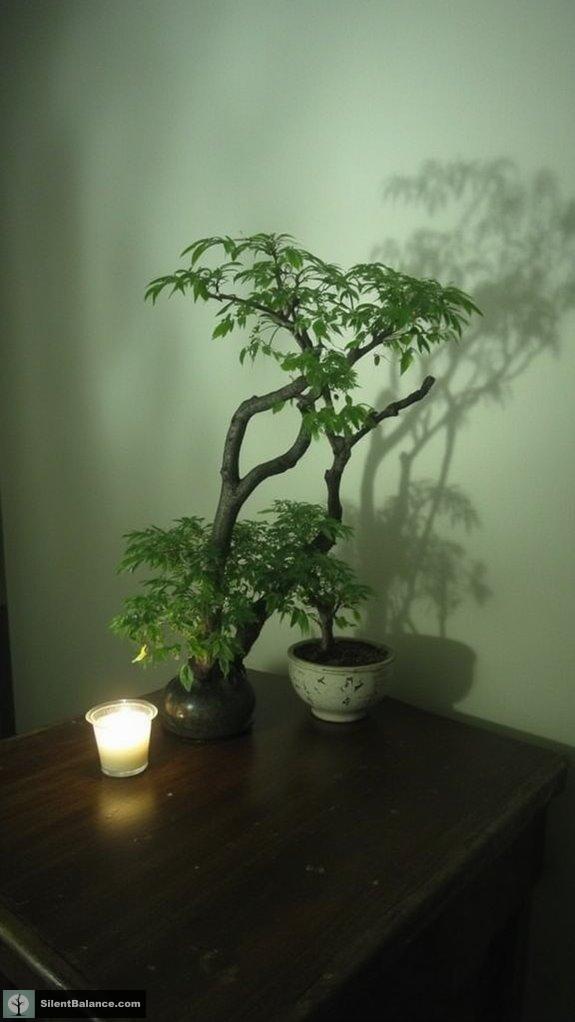
Bonsai isn’t just about nurturing a miniature tree; it’s an art form that invites creativity to flourish through careful technique.
I find that each step engages my imagination, shaping both the tree and my own artistry.
Here are some artistic techniques I adore:
- Wiring: Bend branches gently for desired shapes, being mindful of the wire type.
- Pruning: Maintain elegance with structural and maintenance pruning for a refined look.
- Clamping: Use screw-based clamps for stubborn branches—perfect for tough woods.
- Grafting: Integrate different species to enhance growth—like a delightful bonsai cocktail.
- Design Considerations: Sketching layouts helps visualize and improve my creative expression.
Isn’t it amazing how a little creativity can shape the world of bonsai?
Let’s embrace this beautiful journey together!
Cultural Practices and Traditional Uses of Bonsai
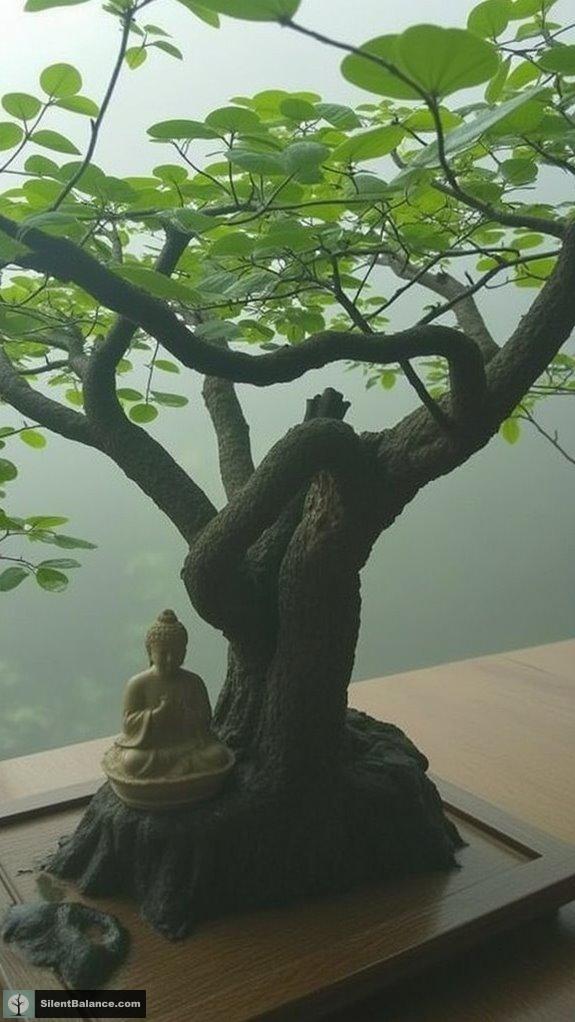
In the enchanting world of miniature trees, one discovers a tapestry of cultural practices and traditional uses that breathe life into bonsai.
Have you ever marveled at how these tiny marvels embody patience and artistry? Originating in China as symbols of status, bonsai made their way to Japan, where Zen monks shaped them into reflections of the universe.
Picture this: bonsai as a centerpiece during meditation, a rustic reminder of nature’s harmony.
In Japan, they’ve gone from elite status symbols to beloved family treasures, often gifted as tokens of goodwill.
Have you noticed the whimsical shapes? Each twist and prune whispers tales of resilience and beauty in imperfection.
Spiritual Associations With Different Bonsai Species
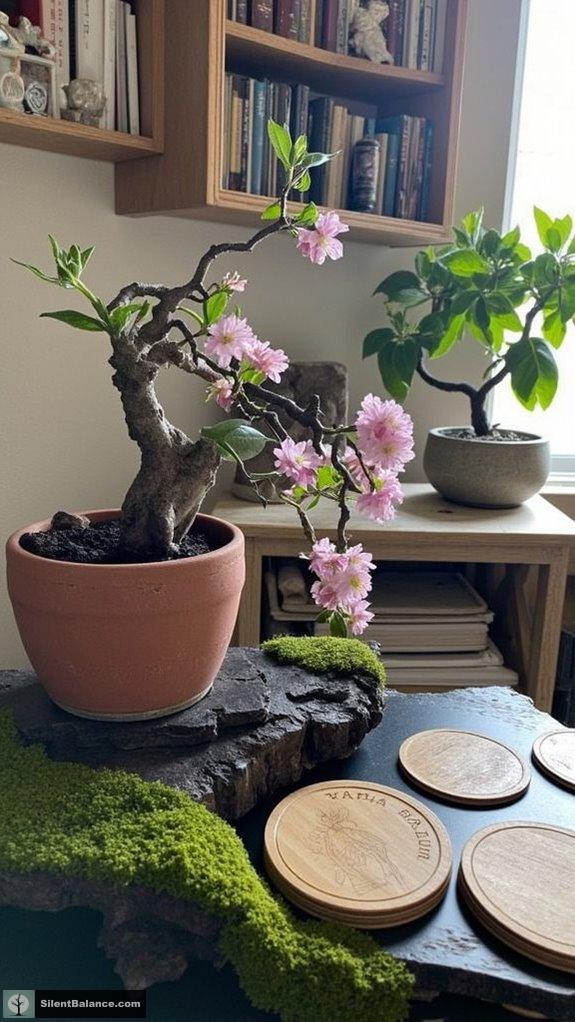
While you might think of bonsai primarily as enchanting miniatures gracing shelves, there’s so much more going on beneath their delicate leaves.
Each species is like a complex tapestry, weaving spiritual narratives into their existence.
- Cherry Blossom: Symbolizes the fleeting nature of life.
- Chinese Elm: Known as the “tree of harmony,” radiates inner strength.
- Cedar: A sacred plant associated with longevity and healing.
- Jade: Represents abundance and prosperity in feng shui.
- Ginkgo: Stands for resilience, reminding us of our own endurance.
Isn’t it fascinating how these trees embody life lessons?
Cultivating bonsai invites us to reflect on our own journeys and the beauty around us.
It’s a living reminder to cherish every moment.
Home Decor Ideas: Integrating Bonsai Into Your Space
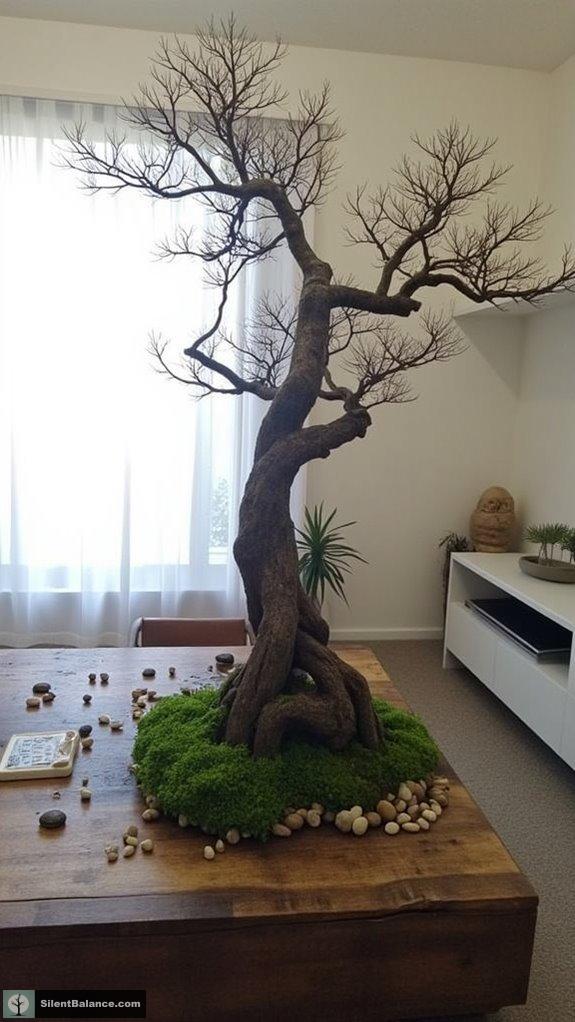
Transforming your home into a serene sanctuary often starts with the elements that breathe life into your space, and that’s where integrating bonsai becomes a delightful adventure.
Picture a large bonsai as a statement piece on your coffee table, effortlessly drawing attention and creating a calming atmosphere.
Have you considered that grouping three bonsai creates a charming “miniature forest,” adding layers without cluttering?
In modern and minimalist spaces, a small aralia bonsai can soften those harsh lines, and if you’re low-maintenance like me, faux bonsai with vibrant moss provides greenery without the fuss.
Accessorizing with pebbles or sand not only adds flair but infuses meaning.
Bonsai Tree Symbolism
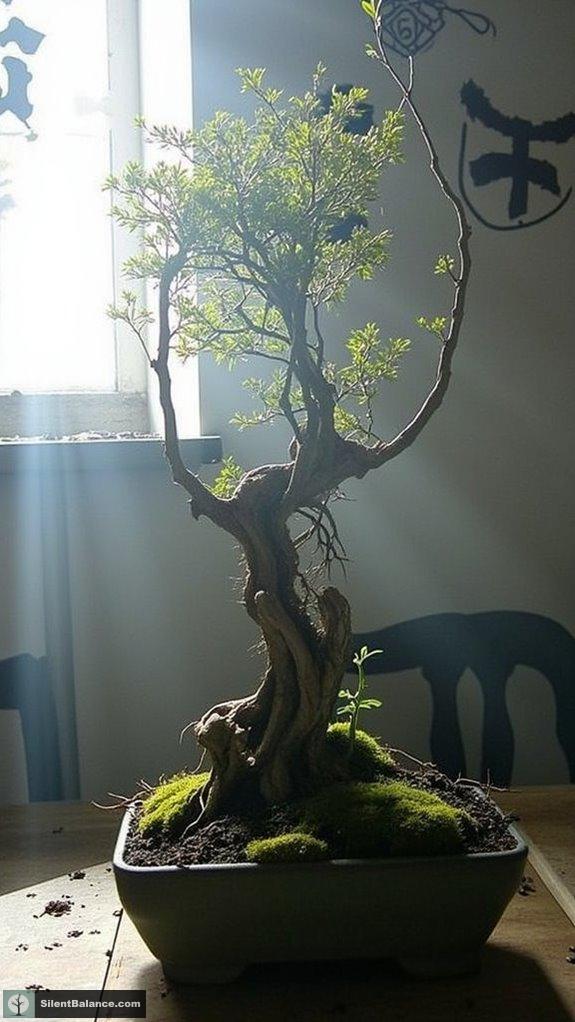
Envision a bonsai not just as a charming décor piece, but as a profound symbol woven into the fabric of history and philosophy.
These miniature trees whisper deep meanings, don’t they?
- Harmony and Balance: They mirror life’s delicate equilibrium.
- Patience: Cultivating them takes time, just like personal growth.
- Spiritual Growth: In Zen traditions, they act as meditation guides, inviting mindfulness.
- Status and Honor: Once the pride of royalty, they represent sophistication.
- Cultural Connection: Infused with Chinese and Japanese traditions, they embody a blend of nature and creativity.
Tree Symbolism
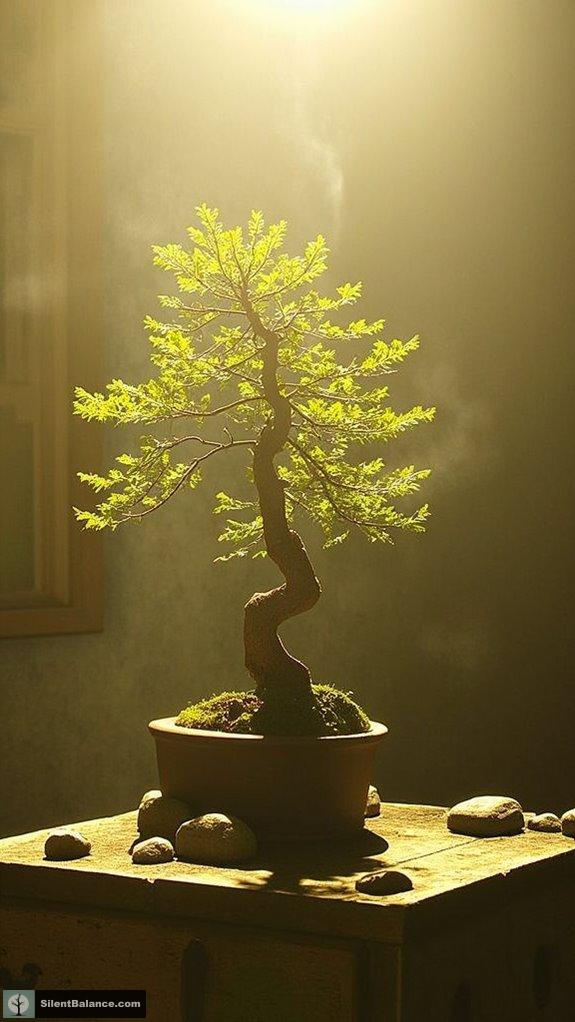
Trees, in their majestic glory, symbolize so much more than just towering giants. They embody our connection to the earth and sky, acting as a bridge to the cosmic order. Don’t you think that’s beautiful?
Here’s a peek into some of their fascinating symbolism:
| Tree Type | Symbolism | Cultural Significance |
|---|---|---|
| Acacia | Resurrection, eternal life | Egyptian mythology |
| Yggdrasil | Interconnectedness of universes | Norse cosmology |
| Aspen | Peace, communication with ancestors | Various European traditions |
When I gaze at a bonsai, I see resilience and personal growth. Each tiny branch reflects the eternal cycle of life, death, and rebirth. Doesn’t it resonate with our own journeys?
Questions and Answers
What Is the Best Soil Mix for Bonsai Trees?
When I care for my bonsai, I often mix 50% Akadama, 25% Pumice, and 25% Lava rock. This blend balances moisture and drainage perfectly, making my trees flourish while keeping their roots healthy.
How Often Should I Water My Bonsai Tree?
Did you know smaller bonsai need more frequent watering? I check my trees daily, watering only when the soil’s dry. Each bonsai has unique needs, so I tailor my care for their health.
When Is the Best Time to Prune Bonsai?
I’ve found that late winter to early spring is the perfect time for pruning bonsai. I watch for swelling buds, timing my cuts just right to promote healthy growth and keep my trees thriving.
Can Bonsai Trees Be Kept Indoors or Outdoors?
Bonsai trees are like our choices; each species thrives in its right environment. I’ve found that temperate ones flourish outdoors, while tropical varieties enjoy cozy indoor spaces, creating a harmonious balance in my home.
What Tools Do I Need for Bonsai Care?
For my bonsai care, I rely on essential tools like pruning scissors, branch cutters, and root shears. It’s crucial to keep everything sharp and clean, ensuring my little tree thrives beautifully. Do you enjoy this process too?
References
- https://mymodernmet.com/bonsai-tree-history/
- https://hookedonbonsai.com/bonsai-trees-in-literature-symbolism-and-significance/
- https://www.bonsaiempire.com/origin/bonsai-history
- https://www.tranquilplants.co.uk/blogs/news/bonsai-and-the-chinese-new-year
- https://www.bokksu.com/blogs/news/bonsai-the-delicate-art-of-japanese-miniature-trees
- https://gogonihon.com/en/blog/art-of-bonsai-in-japan/
- https://kokorocares.com/blogs/blog/bonsai-a-living-tradition-in-japanese-culture
- https://www.bonsaiempire.com/origin/
- https://www.bonsaidirect.co.uk/bonsai-tree-symbolism-tree-of-life-meaning/
- https://www.karmaandluck.com/blogs/news/bonsai-tree-meaning-benefits-history
- https://www.lovemybonsai.com/blogs/bonsai/the-art-of-bonsai-unlocking-the-timeless-beauty-and-serenity-of-miniature-trees
- https://bonsai2u.co.uk/the-meaning-of-bonsai/
- https://bonsairesourcecenter.com/the-definitive-guide-to-bonsai-tree-symbolism/
- https://www.deccanherald.com/opinion/the-symbolism-of-bonsai-1038432.html
- https://en.wikipedia.org/wiki/Bonsai_cultivation_and_care
- https://www.bbg.org/article/bonsai_styles
- https://www.pubs.ext.vt.edu/426/426-601/426-601.html
- https://www.bonsaiempire.com/basics/styling/
- https://www.bonsaiempire.com/origin/bonsai-styles
- https://avalonplants.com/blogs/news/the-art-of-bonsai-history-and-cultural-background

- Bonsai Placement Benefits for Room Harmony - November 8, 2025
- Why Use Air Layering to Propagate Bonsai Trees? - November 8, 2025
- 15 Stunning Acorn Wood Wall Art Ideas - November 8, 2025
