
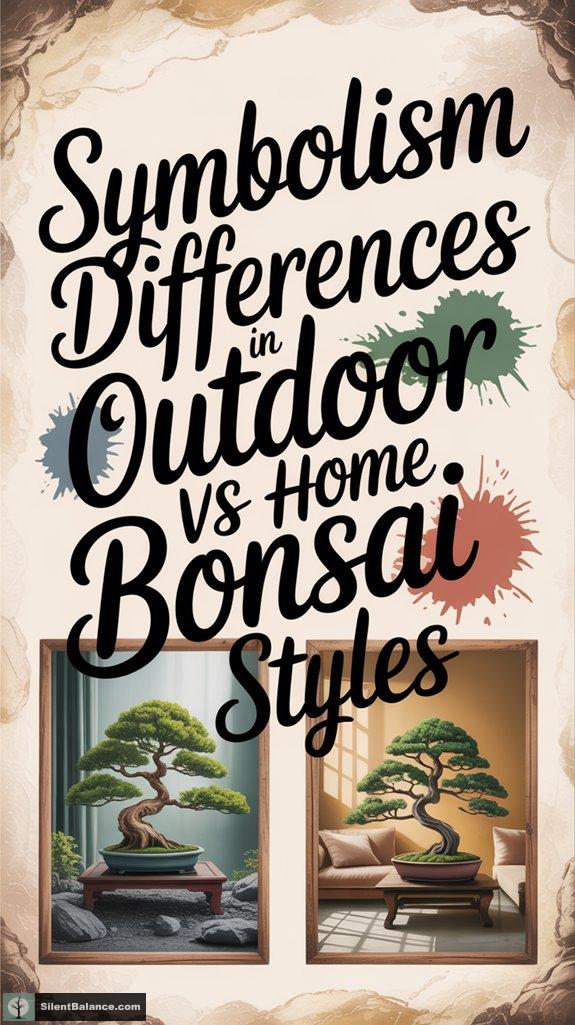
When it comes to bonsai, outdoor and indoor styles really express different vibes, don’t they? Outdoor bonsai embody resilience, thriving in nature’s twists and turns, while indoor bonsai ooze stability, growing under our careful watch. Think of outdoor bonsai as rough-and-tumble survivors, and indoor ones as pampered pets! Each one tells its own story—nature’s grit versus human nurture. Curious about how these distinct environments affect care and aesthetics? Let’s explore the fascinating world of bonsai further!
Quick Takeaways
- Outdoor bonsai symbolize resilience and strength, showcasing adaptation to harsh conditions and survival through natural elements.
- Indoor bonsai represent stability and nurture, reflecting a commitment to ongoing growth and a peaceful living environment.
- The environmental conditions differ significantly: outdoor bonsai thrive in nature, while indoor bonsai require controlled environments and constant care.
- Growth cycles also vary; outdoor bonsai undergo dormancy seasons for energy conservation, whereas indoor varieties grow continuously, risking metabolic stress without dormancy.
- Each bonsai style carries unique cultural significance, with outdoor species embodying wild beauty and indoor varieties symbolizing tranquility and the art of human cultivation.
Outdoor Bonsai: Symbolizing Natural Resilience
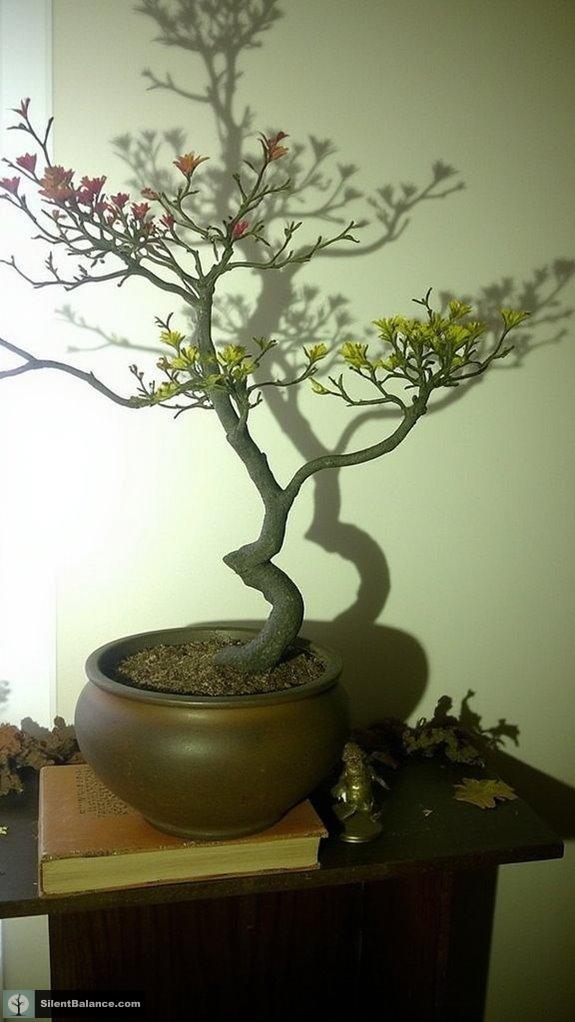
When you think of outdoor bonsai, what comes to mind?
I envision resilient little warriors, standing tall against fierce winds and torrential rains. Outdoor bonsai are more than just pretty plants; they symbolize natural resilience and the art of outdoor adaptation.
Take a sturdy Pine or a mighty Oak, for example. These trees showcase their ability to thrive in harsh conditions, with their shapes reflecting a beautiful struggle. Additionally, bonsai cultivation represents the complexities of modern themes, as these trees flourish in confined spaces, mirroring our own challenges. Their ability to endure reflects their spiritual significance deeply rooted in ancient philosophies.
Each twist and turn of their branches narrates a story of survival.
Isn’t it fascinating how they flourish in confined spaces, mirroring our own challenges?
These trees embody strength wrapped in elegance, harmonizing human craftsmanship with nature’s raw power.
Indoor Bonsai: Representing Stability and Nurture
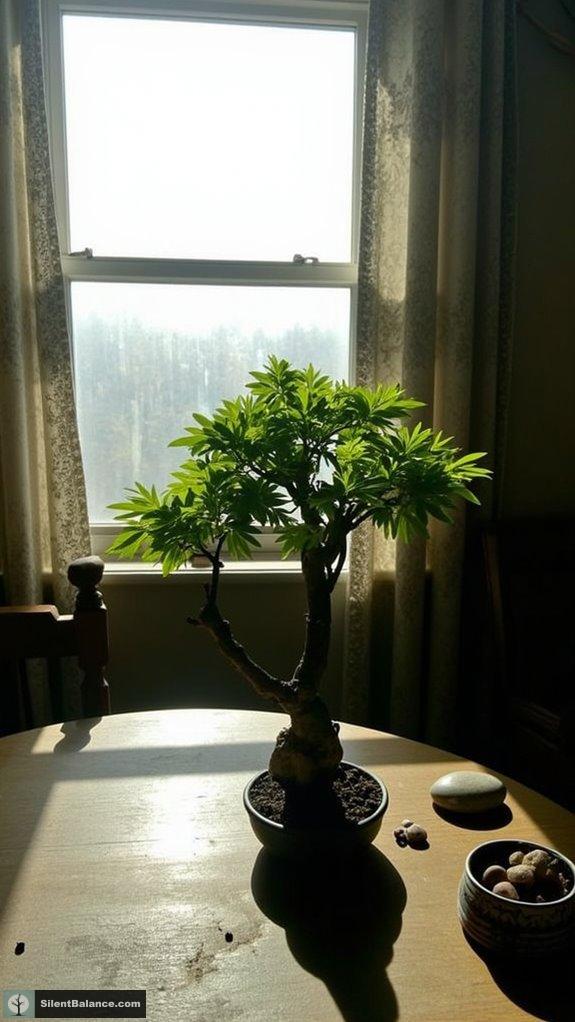
Indoor bonsai, with their meticulous silhouettes and vibrant life force, whisper tales of stability and nurture that many of us crave in our homes.
They symbolize so much more than just a plant; they’re a commitment to the nurturing process—our small, green companions.
Here’s what makes indoor bonsai a delightful addition to your space:
- They symbolize steadfastness, reflecting a stable life environment.
- Their potted nature represents anchoring amid chaos.
- Indoor bonsai showcase a delicate balance between nature and care.
- They encourage patience and ongoing growth, mirroring the ancient practice of cultivating bonsai.
- Finally, they embody mindfulness, resonating with the quest for inner peace.
Additionally, caring for these trees can promote eco-friendliness and sustainability, making them a responsible choice for your living space.
As you nurture them, aren’t you also nurturing your soul?
There’s magic in this indoor serenity!
Environmental Conditions: The Spirit of Nature vs. Human Control
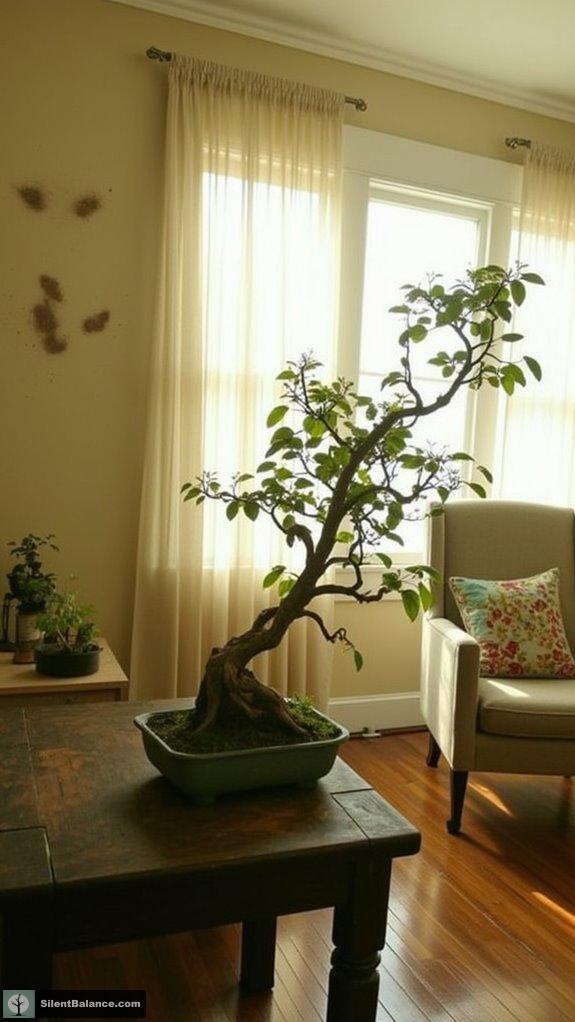
Embracing the charms of bonsai is like stepping into a living paradox where nature meets human vision.
Outdoor bonsai thrive in natural elements, enduring sun, rain, and wind. They dance with the seasons, adapting and showcasing resilience. Isn’t that a beautiful reflection of nature’s power?
Outdoor bonsai flourish in nature’s embrace, enduring the elements and reflecting the resilience inherent in the wild.
On the flip side, home bonsai reveal our human intervention, basking under filtered lights and protected from harsh weather. They embody our desire for control, fascinating yet slightly rebellious in their stable existence.
Consider the unique branch shapes of outdoor bonsai, sculpted by unfiltered forces. Can indoor counterparts truly replicate that raw beauty? Additionally, different cultures attribute deep symbolism to bonsai, reflecting a fusion of natural and artistic values.
In the end, bonsai offers a unique lens into our relationship with nature—stunning and complex, there’s charm in every twist and turn!
Growth Cycles: Dormancy in Nature vs. Continuous Indoor Growth
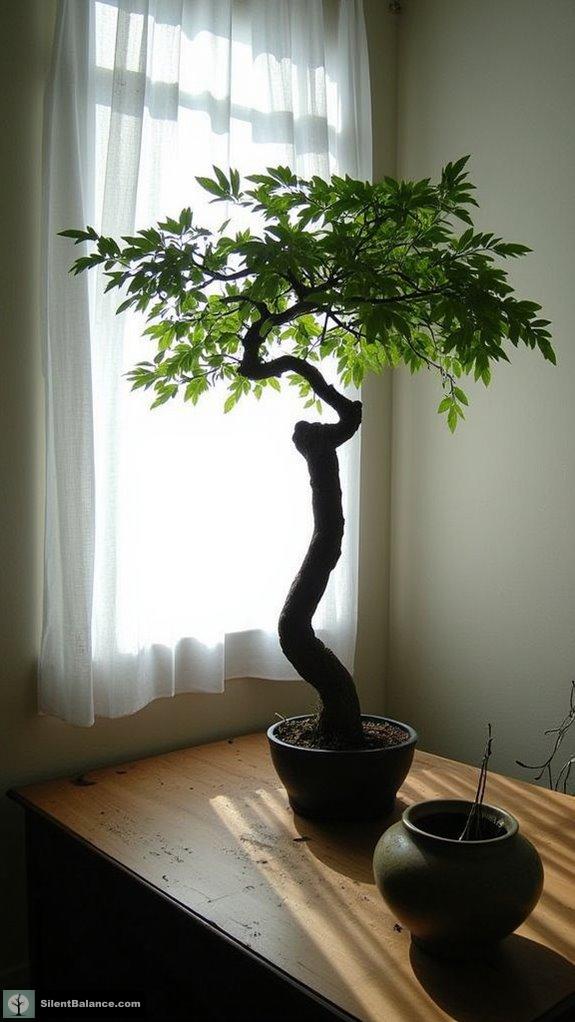
While it might seem counterintuitive, the growth cycles of bonsai trees can lead to some fascinating differences between outdoor and indoor varieties.
For instance, consider the dormant states of outdoor bonsai versus the continuous growth seen in indoor environments. It’s a real game changer, and here’s why:
- Outdoor bonsai need winter dormancy for survival.
- Dormancy effects include energy conservation, vital for the next growing season.
- Indoor trees, like ficus, skip dormancy and keep growing year-round.
However, they may face metabolic stress without those cold-induced breaks.
This can weaken them, making daily care essential.
Care and Attention: Harmony With Nature vs. Human Stewardship
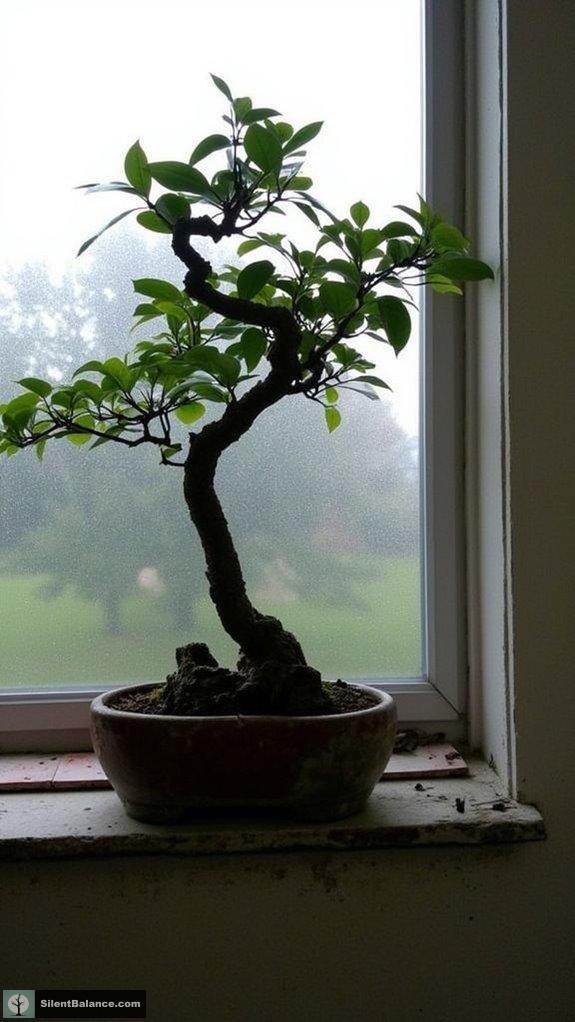
When you think about caring for bonsai, it’s easy to see how it blends the beauty of nature with our hands-on approach to cultivation.
Outdoor bonsai thrive in harmony with natural cycles, embracing seasonal changes like a cozy winter dormancy. Isn’t it beautiful how they adapt to the whims of rain and dew?
On the flip side, indoor bonsai need constant human intervention.
We’re the puppeteers, ensuring they get just the right light and humidity.
With every watering session, I’m reminded of my stewardship, keeping them flourishing despite the sterile indoor air.
Visual Aesthetics: Rugged Natural Forms vs. Polished Indoor Designs
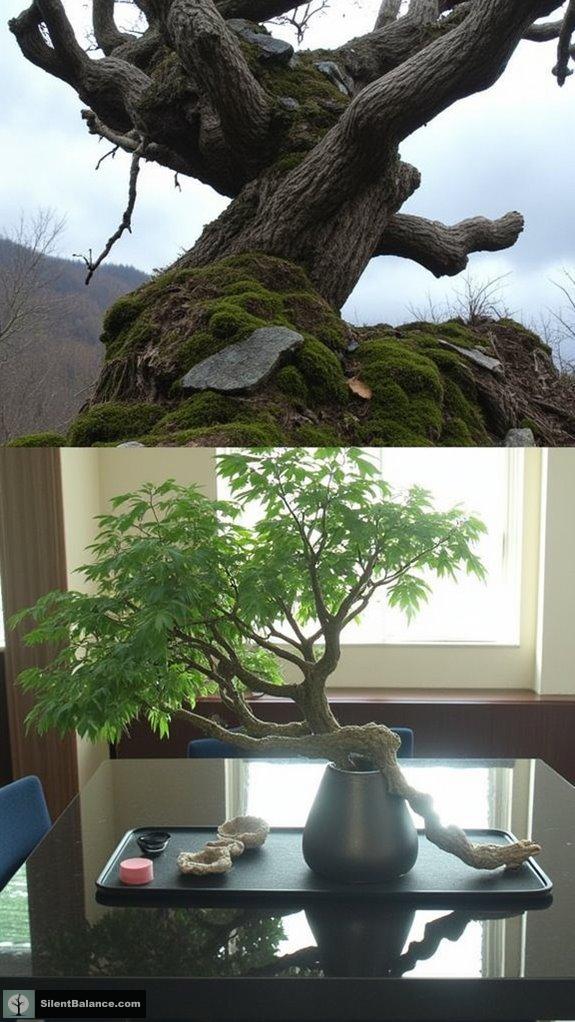
Enchanting both outdoor and indoor bonsai styles involves understanding their visual aesthetics, which tell tales of resilience and artistry.
Think about the contrasts:
- Outdoor bonsai flaunts rugged textures shaped by nature’s whims.
- Their forms mimic wild growth, showcasing survival’s grit.
- Indoor bonsai, in contrast, exudes polished elegance with refined curves.
- They reflect careful artistic design tailored for our spaces.
Each style speaks—outdoor shows raw endurance, while indoor radiates tranquility.
Cultural and Philosophical Reflections: Traditional Values vs. Modern Integration
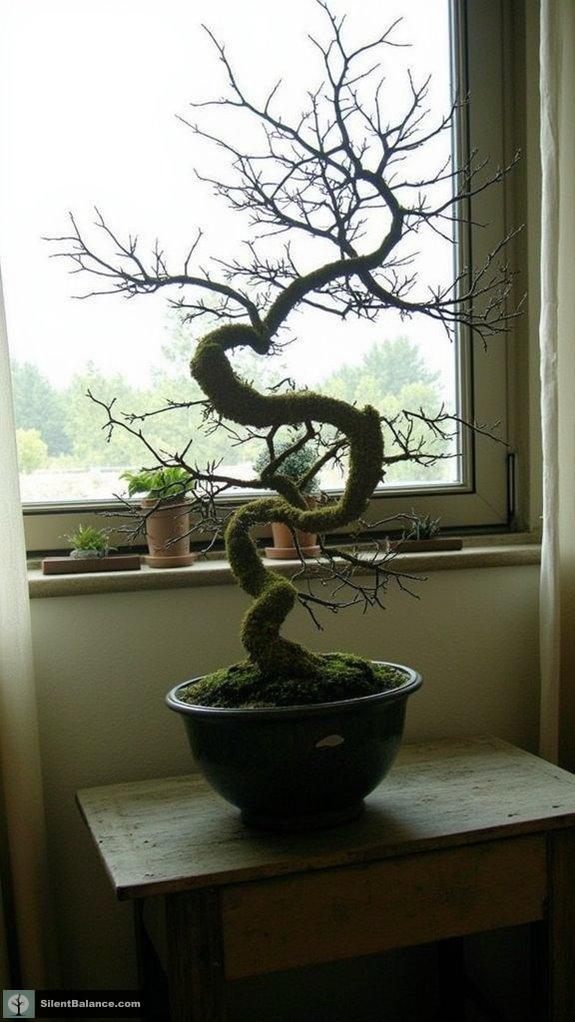
As we plunge into the fascinating world of bonsai, it’s essential to appreciate how cultural and philosophical reflections shape both outdoor and indoor styles.
Outdoor bonsai, steeped in cultural heritage, often showcases traditional values that celebrate the beauty of nature’s cycles, rooted in Zen’s mindfulness and wabi-sabi. Isn’t it incredible how these ancient practices still resonate today?
On the flip side, indoor bonsai embraces modern integration, mixing in global influences and a playful twist on aesthetics. Think about it: with easier maintenance and bold artistic expression, they fit snugly into our contemporary lives.
This tug-of-war between tradition and innovation isn’t just a trend; it sparks delightful conversations about authenticity and the progressing bonsai experience, don’t you think?
Tree Symbolism
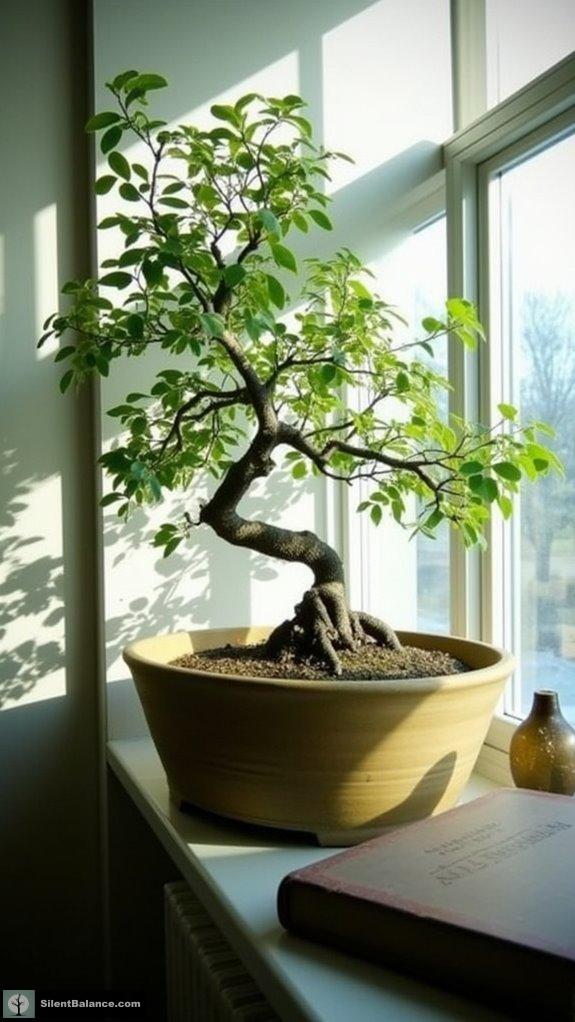
On the flip side, indoor bonsai take a softer approach, offering serenity and contemplation in our busy lives.
But outdoor bonsai, oh, they tell a different story. They’re the warriors of the plant world, maintaining their tree resilience through all four seasons. I can’t help but appreciate the artistry in their raw forms, which remind us of life’s complexities.
Here are some striking aspects of their symbolism:
- They endure harsh winters, showcasing endurance.
- Twisted branches signal strength over adversity.
- Seasonal changes embody birth, decline, and renewal.
- Their rugged beauty highlights nature’s persistence.
- Hardy species like junipers symbolize longevity and steadfastness.
Isn’t it amazing how these trees reflect the essence of resilience we all endeavor for?
Bonsai Tree Symbolism
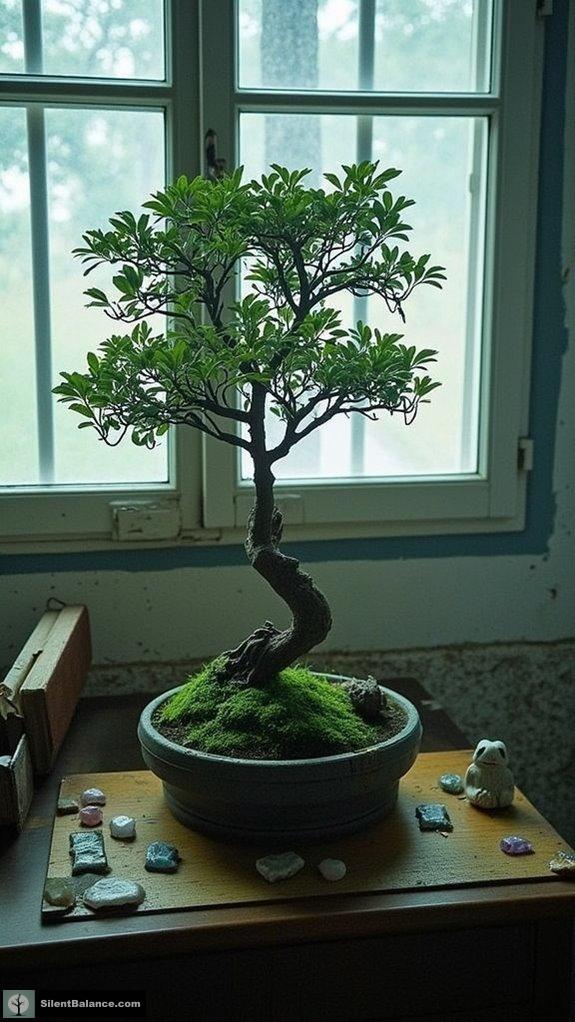
Bonsai trees aren’t just miniature replicas of larger trees; they’re living symbols, each with a story rooted deep in culture and meaning.
Let’s explore bonsai symbolism! Outdoor styles embody resilience, adaptability, and the vastness of nature’s cycles.
Can you envision nurturing a tree that echoes the strength needed to thrive in harsh conditions?
Meanwhile, indoor varieties focus on intimacy, peace, and emotional connections.
They can be like a three-inch therapist sitting on your desk.
Whether it’s a stately pine or a delicate azalea, each species speaks of balance and harmony, bridging cultural influences and offering wisdom passed down through time.
Isn’t it fascinating how these tiny wonders reflect our desires and aspirations?
Questions and Answers
What Tools Are Essential for Outdoor Bonsai Care?
To care for outdoor bonsai, I rely on pruning techniques for shaping, along with essential tools like watering guidelines to maintain soil moisture. These elements guarantee my trees thrive beautifully in their natural environment.
Can Indoor Bonsai Be Grown Outdoors Temporarily?
Ironically, I can’t believe growing my indoor bonsai outdoors temporarily is possible! By adjusting to outdoor sunlight and ensuring ideal indoor temperature at night, I’ve found it thrives better with this adventurous change of scenery.
How Often Should Bonsai Soil Be Changed?
I change my bonsai soil every couple of years, focusing on soil composition and moisture retention. Keeping the right balance guarantees healthy growth, so I regularly inspect for compaction and adjust my repotting routine accordingly.
What Pests Affect Outdoor Bonsai More Frequently?
Did you know that over 70% of outdoor bonsai face pest issues? For effective pest management in your outdoor environment, keep an eye out for spider mites, aphids, and vine weevils; they’re frequent troublemakers!
Are There Specific Fertilizers for Indoor Bonsai?
For my indoor care, I love using balanced liquid fertilizers and pellet types. They cater to my bonsai’s needs all year, ensuring vibrant growth and health. Experimenting with fertilizer types keeps my plants thriving!
References
- https://miyagibonsai.co.uk/blog/bonsai-basics/what-the-difference-between-indoor-and-outdoor-bonsai/
- https://bonsai2u.co.uk/different-types-of-bonsai-trees/
- https://www.youtube.com/watch?v=c2c9j-UjqMc
- https://www.bonsaidirect.co.uk/blog/new-indoor-bonsai-trees/indoor-vs-outdoor-bonsai-whats-the-real-difference/
- https://www.bonsaiempire.com/tree-species/indoor-bonsai
- https://hookedonbonsai.com/bonsai-trees-in-literature-symbolism-and-significance/
- https://www.moananursery.com/2025/07/30/the-art-care-of-bonsai/
- https://www.ourfriendlyworldpodcast.com/the-bonsai-tree-on-nature-and/
- https://www.bonsaidirect.co.uk/bonsai-tree-symbolism-tree-of-life-meaning/
- https://bonsairesourcecenter.com/the-definitive-guide-to-bonsai-tree-symbolism/

- Bonsai Placement Benefits for Room Harmony - November 8, 2025
- Why Use Air Layering to Propagate Bonsai Trees? - November 8, 2025
- 15 Stunning Acorn Wood Wall Art Ideas - November 8, 2025
