
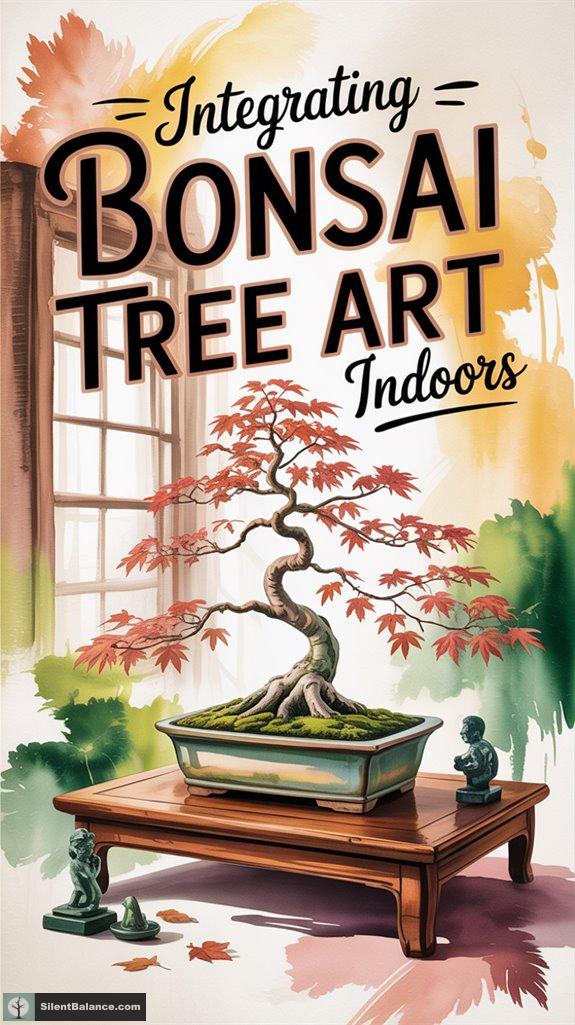
Transform Your Space with Bonsai Tree Art
If you’re ready to bring a touch of tranquility indoors, bonsai trees are your golden ticket!
Years ago, I stumbled upon a tiny Ficus at a local market. It was small yet held such presence. As I nurtured it, every trim and adjustment felt like a dance of creation. This connection deepened my appreciation for the symbolism of trees—roots firmly planted, branches reaching out.
On our blog, Silent Balance, I often share insights about this journey. Integrating bonsai not only brightens your space but also echoes life’s delicate balance.
Imagine placing your bonsai on a side table, its character drawing you in amid the chaos of everyday life. One evening, I watched the sun set through the leaves, and I knew I was home.
Dive into this art, and let your indoor oasis flourish. Each plant tells a story; what’s yours?
Choosing the Right Bonsai Species for Your Home
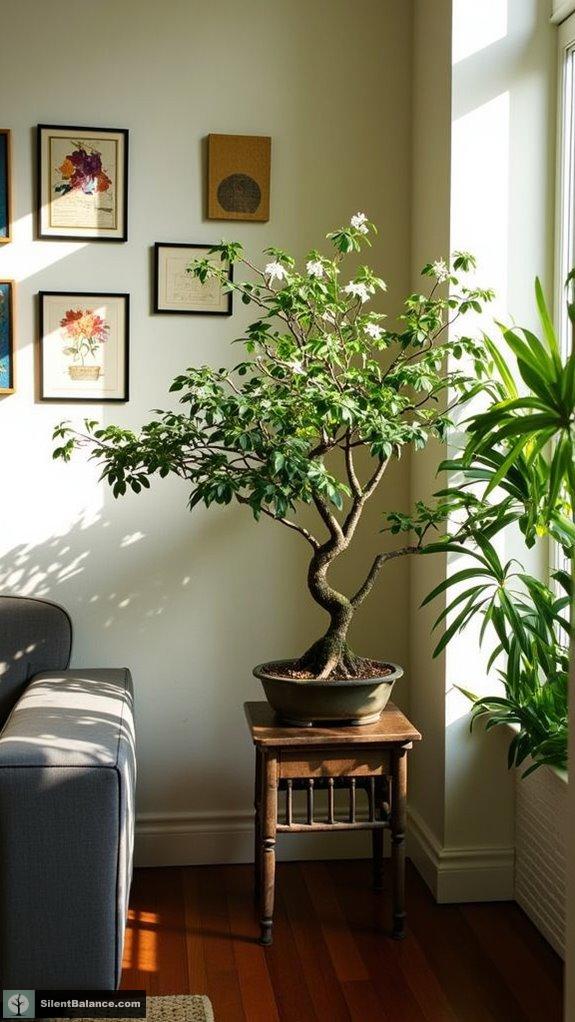
When it comes to picking the right bonsai species for your home, it’s almost like matchmaking—you’re looking for that perfect fit! Consider indoor species like the Fukien Tea with its cute flowers and shiny leaves. This species beautifully embodies the symbolism of serenity that zen bonsai represent. Or maybe the adaptable Ficus wrapped in unique leaf shapes is more your style. For a low-maintenance buddy, the hardy Jade Plant is a cute option. And who can resist the quirky Ponytail Palm? Drought-resistant species are particularly beneficial for ensuring your bonsai thrives indoors. These choices not only elevate bonsai aesthetics but also thrive indoors.
Creating a Focal Point With Bonsai Arrangements
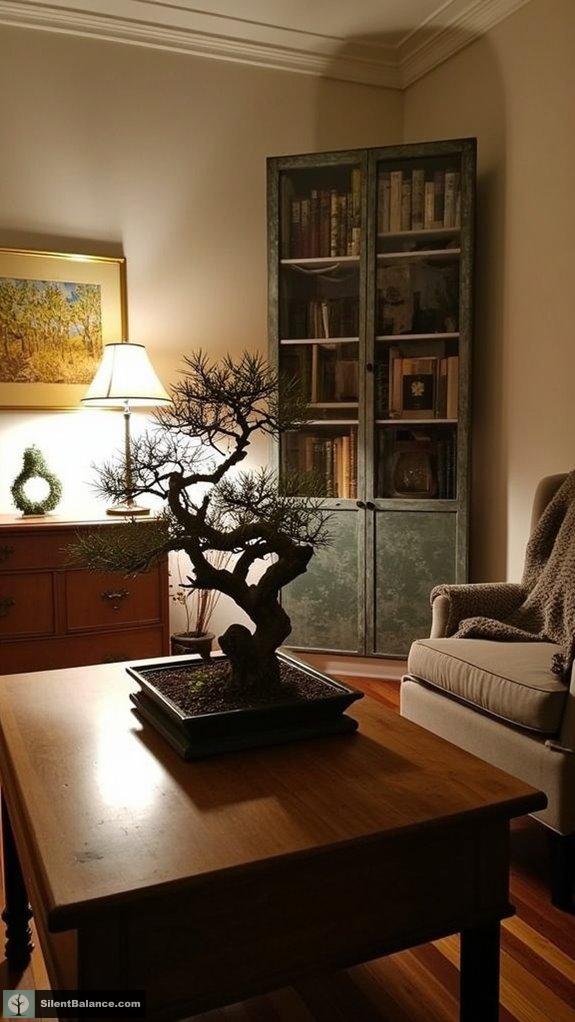
How can a tiny tree like a bonsai make such a big statement in your living space?
Focal positioning is key! I love placing my bonsai near entrances or in the living room—where it draws the eye like a magnet.
Artistic pruning not only maintains its shape, but it emphasizes that stunning trunk and branch curve. Regular pruning maintenance should be conducted to ensure the bonsai retains its charming appearance, as mastering indoor bonsai techniques can lead to more artistic shapes.
Use a shallow pot that complements the tree’s elegance, and don’t forget perfect lighting to enhance those textures!
Incorporating Bonsai Into Minimalist Design
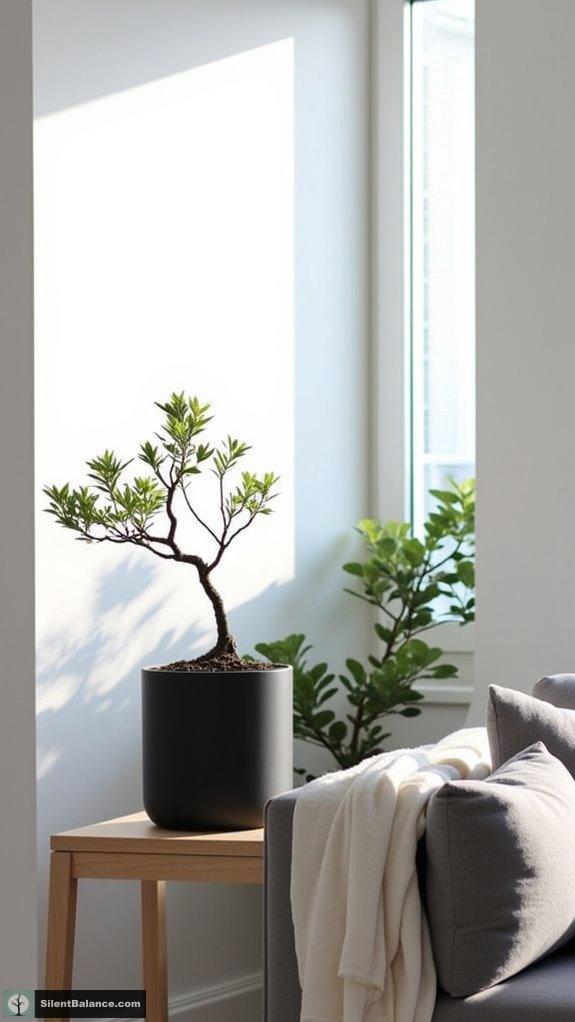
Bonsai adds that perfect touch of nature, and incorporating it into minimalist design can transform your space into a serene oasis.
By following minimalist principles, I choose linear bonsai shapes that feature elegant leaf toppers.
Embrace minimalist design with sleek bonsai shapes that showcase their exquisite leaf toppers.
For bonsai placement, think compact – ideal for side tables or corners. A sleek, matte planter in neutral hues complements their artistic flair while keeping clutter at bay.
These little green wonders can introduce visual movement, contrasting those straight lines typical of minimalist spaces.
Why not make your home a peaceful retreat with just one to three carefully placed bonsai? Trust me, it’s pure elegance.
Enhancing Bohemian Decor With Bonsai Trees
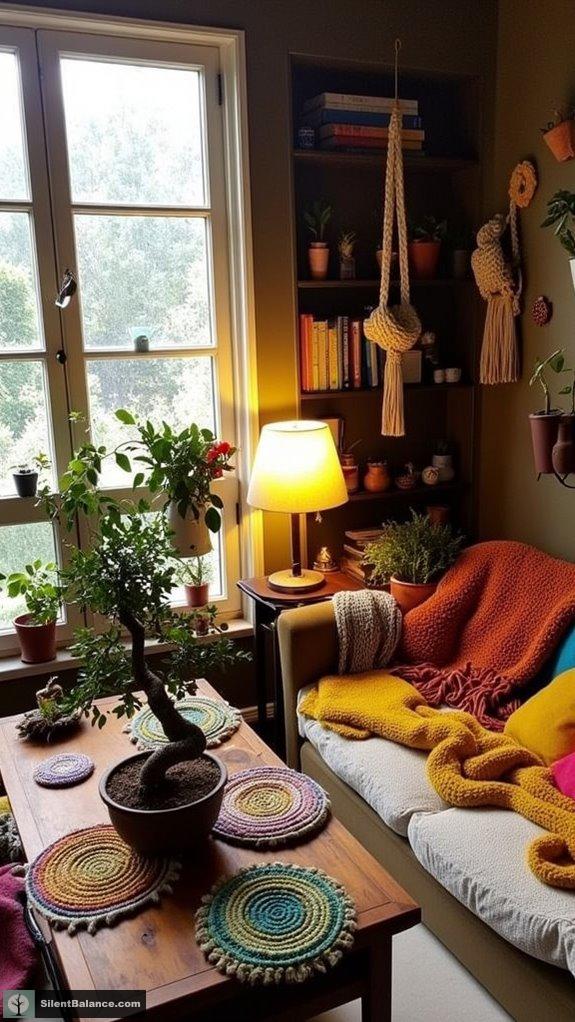
While you might think of bohemian decor as all about vibrant colors and eclectic mixes, incorporating bonsai trees takes your space to another level of charm and tranquility.
Imagine these miniature masterpieces, echoing bonsai aesthetics, enriching your layered textiles and vintage finds. Their organic shapes blend seamlessly with earthy tones, creating that delightful Bohemian synergy we all crave.
Position them near your macramé or colorful textiles for added visual interest and balance. These little living sculptures become conversation starters—a nod to multicultural artistry.
Who knew bonsai could serve such style while boosting your space’s tranquility? It’s time to let your home breathe!
Using Bonsai to Add Texture in Contemporary Spaces
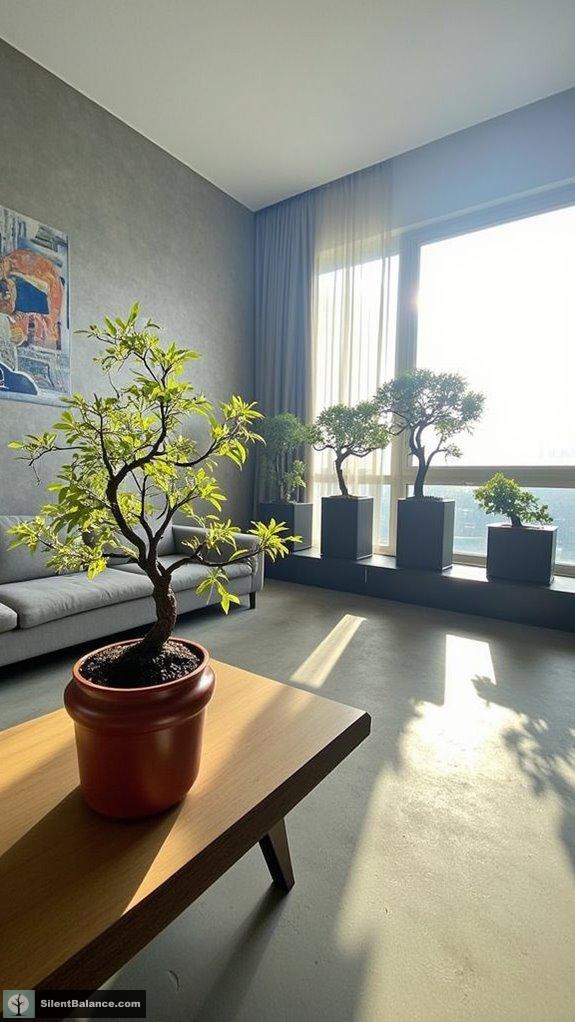
Incorporating bonsai trees into contemporary spaces isn’t just smart; it’s a purposeful way to enliven your home with texture and character.
Imagine the elaborate foliage of a bonsai juxtaposed against sleek glass or polished concrete. Doesn’t that spark joy? Their small scale fits snugly, achieving perfect texture balance without overwhelming your design.
Grouping several bonsais can create an enchanting miniature scenery, adding spatial depth that invites curiosity.
Plus, those linear branches perfectly align with minimalist vibes—who needs clutter? By allowing a touch of nature, you transform the ordinary into extraordinary—inviting life into otherwise sharp, angular spaces.
Ready to embrace this living art?
Styling Bonsai in Rustic and Natural Interiors
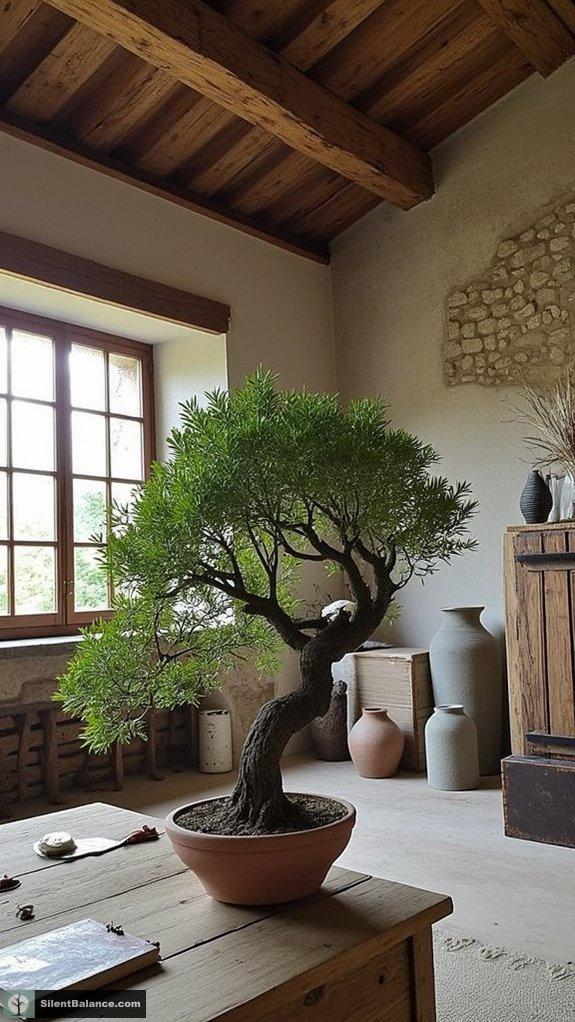
When it comes to styling bonsai in rustic and natural interiors, you really can’t go wrong by letting nature guide your choices.
Picture aged, gnarled trunks of bonsai types nestled in rough-hewn pots, echoing the rustic aesthetics of your decor.
Imagine the beauty of gnarled bonsai trunks resting in rustic pots, perfectly complementing your home’s earthy charm.
I love placing them near exposed beams or stone walls, creating texture harmony.
Want texture? Different leaf types—broadleaf or needle-like—add depth against distressed wood.
Consider incorporating weathered pots or even reclaimed wood stands to amplify that artisanal vibe.
In a space filled with handcrafted charm, these bonsai truly sing, don’t you think?
Ready to give it a try?
Balancing Color and Light With Indoor Bonsai
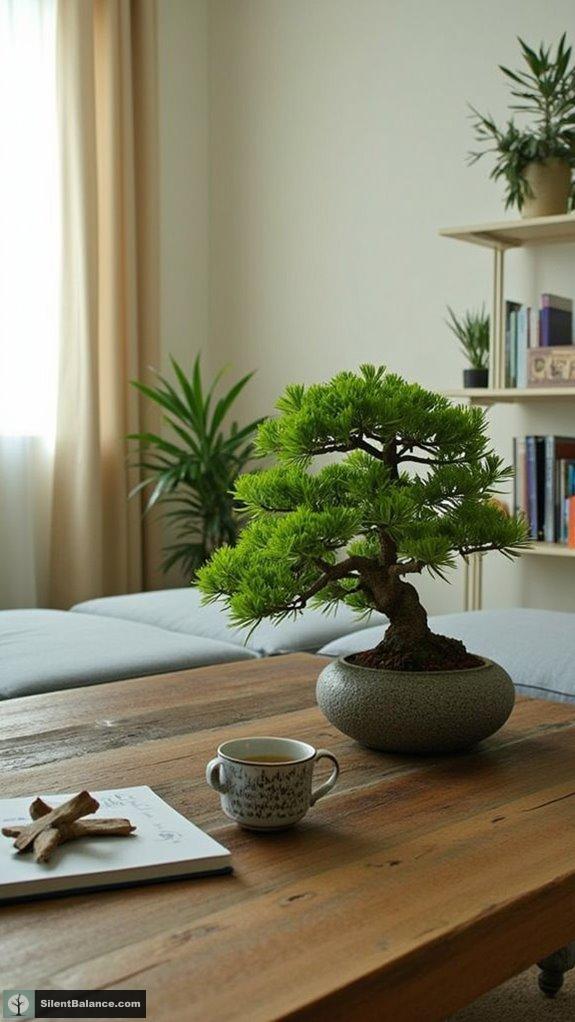
How do we strike the perfect balance between color and light with our indoor bonsai?
Well, it’s all about understanding the sweet spot between light color and ambient intensity.
Most bonsai crave 4-8 hours of bright, indirect light daily—think south-facing windows!
If the sun’s playing hide-and-seek in winter, full-spectrum LED grow lights can save the day, keeping our little green pals happy and vibrant.
Just watch for those pesky leggy branches—they scream “more light!”
By harmonizing your bonsai’s lighting with your room’s color palette, you’re not just growing a tree; you’re creating living art.
Let those leaves shine bright!
Caring for Your Bonsai as an Artistic Element
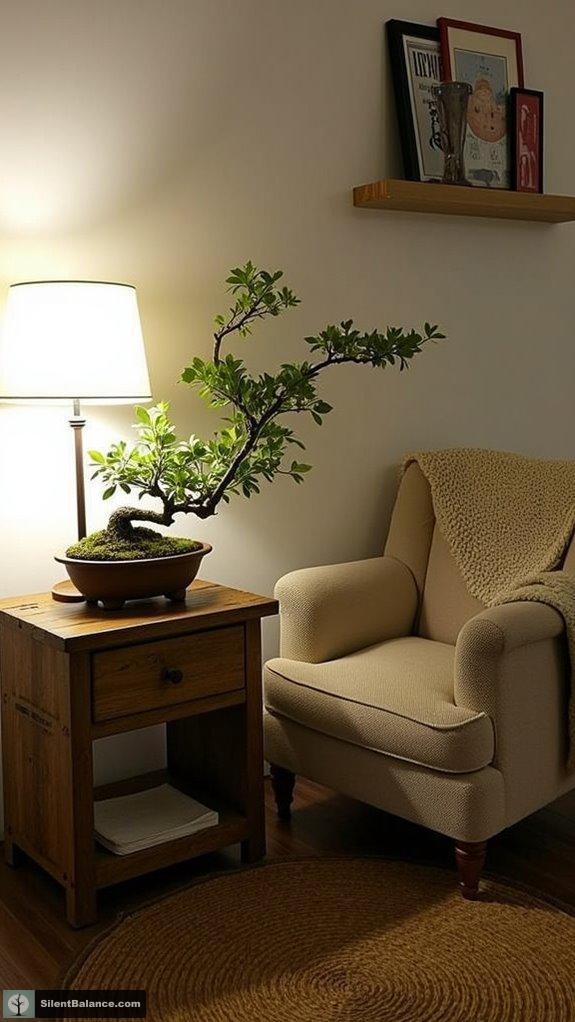
Creating a masterpiece with a bonsai feels like being part of an exclusive art club, doesn’t it?
To truly flaunt your bonsai’s artistic shape, consistent bonsai maintenance is essential.
Water it generously, keeping an eye on soil moisture. I swear by elevating humidity with a nifty humidity tray, turning your bonsai into a thriving art piece.
Regular pruning? Absolutely! Snip those shoots back to encourage fine ramification—it’s like a bonsai makeover.
Lastly, don’t forget fertilizing every two weeks. Balanced nutrition fuels that vibrant foliage, keeping your bonsai a stunning showstopper.
Ready to sculpt your indoor oasis? Happy bonsai crafting!
Bonsai Tree Symbolism
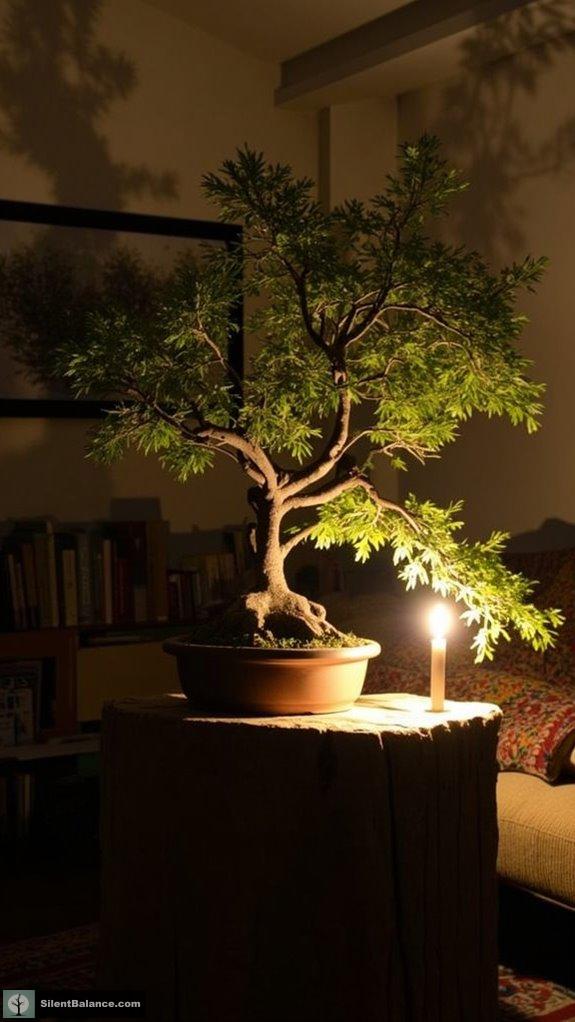
Bonsai trees aren’t just tiny plants—they’re living sculptures that hold deep symbolism and cultural significance.
These enchanting trees embody harmony, balance, and patience, inviting us to reflect on life’s intricacies.
Have you ever felt that connection? The art of shaping bonsai mirrors our need for balance, echoing in relationships, both personal and social.
They also play a role in spiritual connections, acting as focal points for meditation.
Plus, different species carry unique symbolic meanings, like the azalea, which symbolizes love and gentleness.
Ready to find your perfect bonsai companion? Let’s cultivate not just trees, but a deeper connection with nature!
Questions and Answers
How Often Should I Water My Indoor Bonsai Tree?
Like a 21st-century gardener, I’ve learned indoor bonsais thrive when I check my soil regularly. I water based on moisture levels, avoiding overwatering signs while using effective watering techniques for ideal health.
What Kind of Light Do Bonsai Trees Need Indoors?
Bonsai trees need bright, indirect sunlight for 4-8 hours daily. If natural light’s limited, I use artificial lighting to supplement. Monitoring sunlight exposure helps guarantee they thrive and avoid issues like leggy growth or leaf scorch.
How Can I Increase Humidity for My Bonsai Tree?
Want to elevate your bonsai’s health? I swear by creative misting techniques and humidity trays. They transform your indoor environment, boosting moisture levels and keeping your bonsai thriving, vibrant, and stunning. Let’s make it flourish!
When Is the Best Time to Repot My Bonsai?
When I repot my bonsai, I look for signs like bud swelling, indicating it’s time. Proper timing enhances root health, and I guarantee minimal stress by acting just before vigorous growth starts.
What Soil Mix Is Ideal for Indoor Bonsai?
For indoor bonsai, I mix Akadama, pumice, and lava rock, ensuring nutrient balance. Experiment with bark types for unique textures, while maintaining drainage and aeration. It’s innovative, essential for healthy growth in a confined environment.
References
- https://www.youtube.com/watch?v=kX3XNdR00J4
- https://www.gardenersworld.com/house-plants/indoor-bonsai-tree-care/
- https://www.allthingsbonsai.co.uk/bonsai-tree-care/indoor-bonsai-care/
- https://brusselsbonsai.com/recommended-care/
- https://www.youtube.com/watch?v=MbLOamsdpYU
- https://en.wikipedia.org/wiki/Indoor_bonsai
- https://hookedonbonsai.com/best-indoor-bonsai-for-beginners/
- https://bonsai4me.com/species-guides/
- https://www.youtube.com/watch?v=XYFuhGi3_eQ
- https://easternleaf.com/indoor-bonsai-trees-s/547.htm

- Bonsai Placement Benefits for Room Harmony - November 8, 2025
- Why Use Air Layering to Propagate Bonsai Trees? - November 8, 2025
- 15 Stunning Acorn Wood Wall Art Ideas - November 8, 2025
