

Choosing indoor or outdoor bonsai care is all about your lifestyle and space. Indoor bonsai, like Ficus or Jade, thrive in the comfort of stable warmth and bright light—think cozy south-facing windows. Outdoor species, such as Juniper, love a good chill and natural sunlight. Each has its quirks, from humidity needs to seasonal color changes, and understanding these can jazz up your bonsai game. Curious about the fascinating details behind care? Stick around!
Quick Takeaways
- Indoor bonsai thrive in stable temperatures and humidity, making them easier to care for in controlled environments.
- Outdoor bonsai benefit from natural sunlight and seasonal changes, promoting healthier growth and enhanced beauty.
- The choice between indoor and outdoor species significantly impacts longevity and specific care requirements.
- Indoor bonsai often have thicker leaves, while outdoor varieties experience seasonal color changes, offering different aesthetic appeals.
- Proper placement and environmental conditions dictate the health and vitality of both indoor and outdoor bonsai species.
Light Requirements: Indoor vs. Outdoor Bonsai
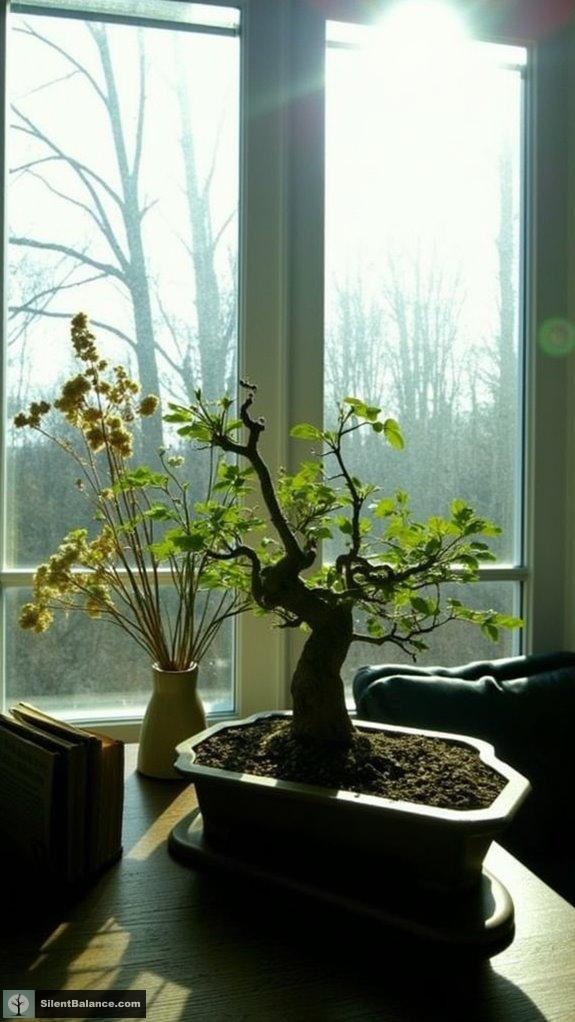
When it comes to bonsai care, understanding light requirements is essential, especially if you want your little green guys to thrive.
Outdoor bonsai bask in glorious, unfiltered sunlight, getting 5-6 hours of direct rays daily. Proper humidity levels are also crucial for their health, as they thrive in higher humidity environments.
Can your indoor bonsai compete with that? Not quite. They rely on directional light through a window, often yearning for those elusive UV rays. To keep them perky, I recommend 4-8 hours of bright, indirect light—as close to that south-facing window as possible.
Additionally, you can use LED grow lights for indoor bonsai to ensure they receive adequate light during darker days. Maintaining an ideal watering schedule is just as important to keep your indoor bonsai thriving.
And hey, don’t skip the grow lights, especially during darker days.
Balance is key, my friend! Who said bonsai couldn’t shine like the stars?
Humidity and Air Quality: Essential Factors
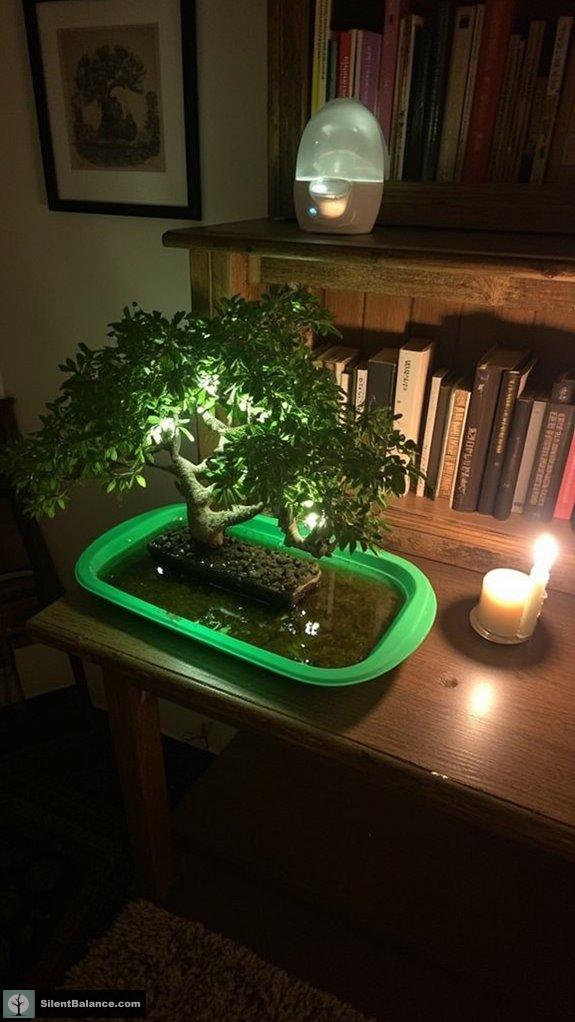
Indoor environments often play hard to get when it comes to humidity, especially during those dry winter months when heating systems rule our lives.
With indoor humidity often dipping below 40%, our bonsai can feel thirsty, causing stress. You want the magic number to be 40% to 50%, right? Choosing the right bonsai pot can also help promote optimal conditions for your tropical trees.
To boost humidity, I love using cool mist humidifiers or simply placing trays of water nearby. Misting those delicate leaves can be a game-changer too! Low indoor humidity can dry out plants quickly, emphasizing the importance of maintaining this crucial factor for your bonsai.
Just bear in mind, avoid those pesky heating vents—your bonsai will thank you.
Temperature Needs and Seasonal Adaptation
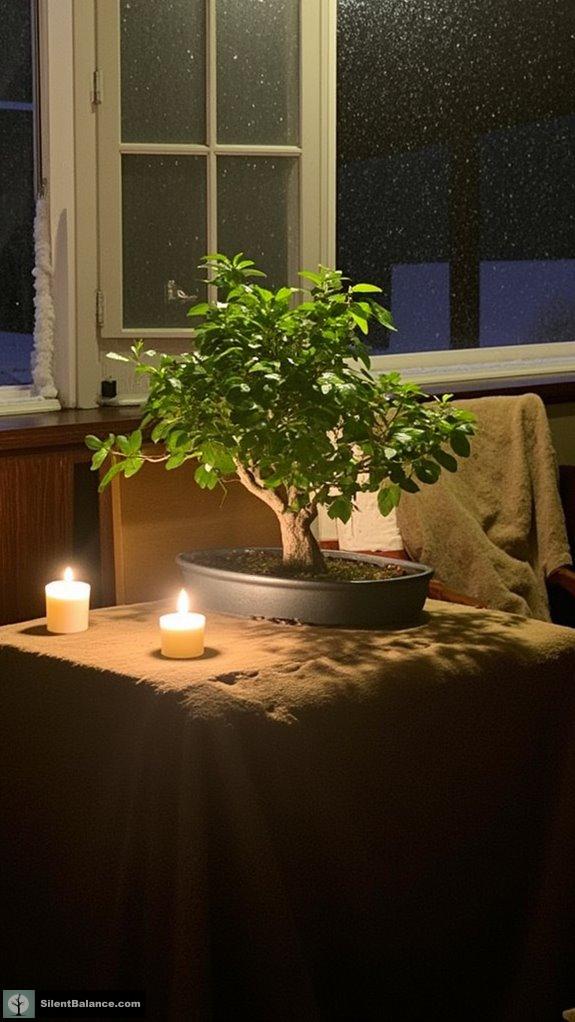
To keep your bonsai thriving, temperature matters more than you might think, especially as the seasons change.
Indoor species like Dwarf Jade prefer a cozy 65°F to 75°F during the day, while cooler nights mimic their natural habitats.
Ever try putting a tropical bonsai outside? They need at least 55°F, or they may throw a leaf-dropping tantrum!
And outdoor species? They love a chill to trigger dormancy—it’s like nature’s way of saying, “Take a nap!” Additionally, seasonal challenges can greatly affect the health and growth of your bonsai, influencing your care routine.
Suitable Species for Different Environments
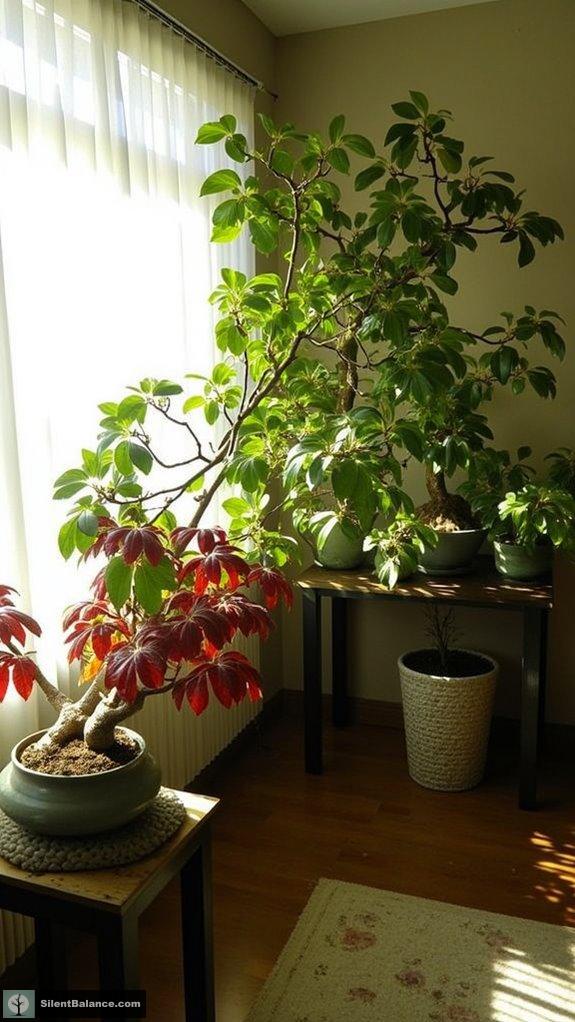
Choosing the right species for your bonsai setup can make all the difference in how well your little green friend thrives.
Picking the perfect bonsai species is crucial for your plant’s happiness and longevity.
For indoor environments, think Ficus or Jade—these beauties love stable warmth and low humidity.
But if you’re craving an outdoor spectacle, Juniper or Japanese Maple is your ticket. Don’t you just love those seasonal color changes?
Always consider that indoor bonsai often sport thicker leaves, while outdoor varietals shed for the seasons.
Watering and Maintenance Considerations
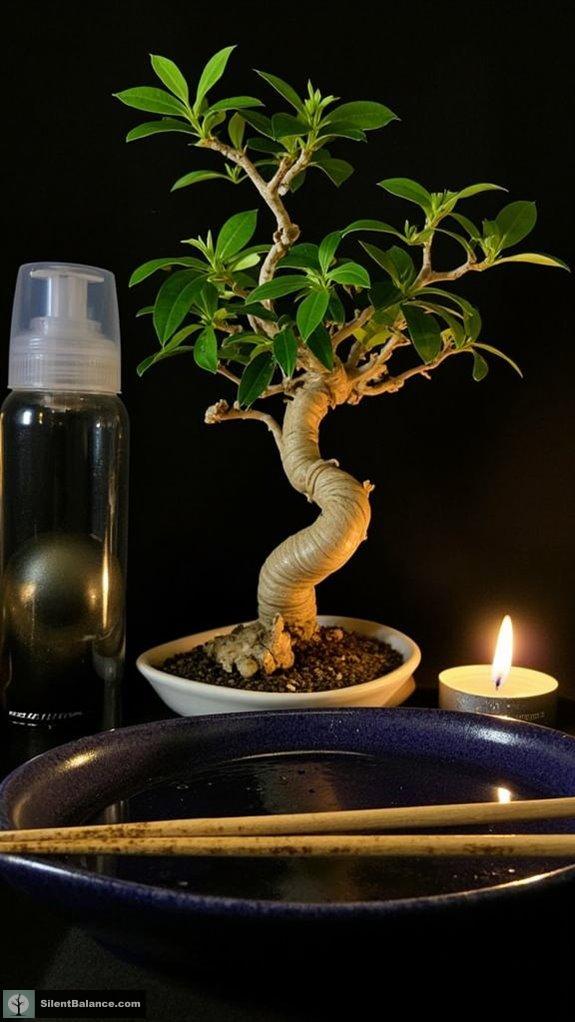
While discovering the delightful world of bonsai care, you’ll quickly learn that watering isn’t just a mundane task—it’s an art form!
When it comes to your little tree, think of it as a thirsty friend rather than a chore. You’ve gotta check that soil regularly and trust me, a quick chopstick poke can reveal all!
Just keep in mind, soaking the roots fully avoids stressed-out plants.
And hey—who doesn’t love a good misting? It’s like a spa day for your bonsai!
Bonsai Tree Symbolism
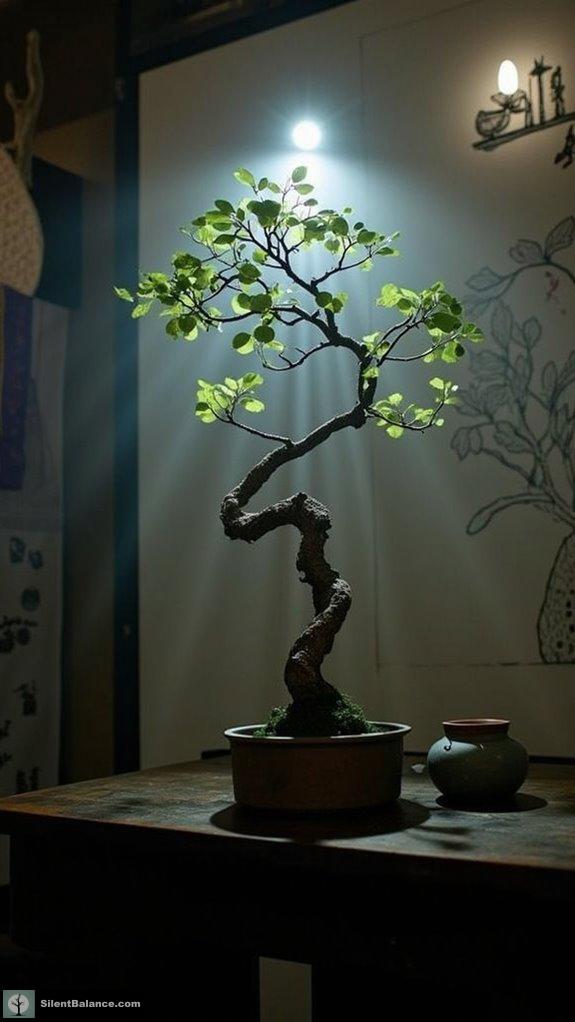
Bonsai trees, tiny powerhouses of symbolism, pack a profound punch when it comes to meaning and philosophy!
These miniature wonders originated in China over 1,300 years ago, transforming into an art form in Japan. Isn’t that intriguing?
Bonsai cultivation embodies patience, balance, and longevity. Each twist and turn of a branch symbolizes harmony—like finding your zen amid life’s chaos.
And guess what? They even teach us life lessons about growth and change.
Tree Symbolism
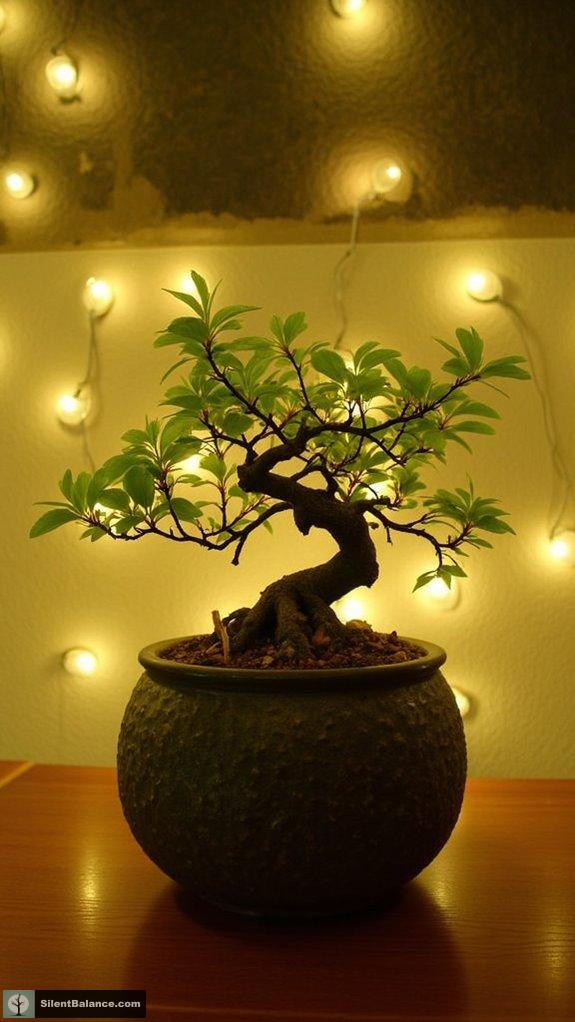
When you think of trees, the rich tapestry of symbolism they carry might just blow your mind.
Take bonsai, for instance—it’s not just a tiny tree; it’s like nature’s Zen master, teaching us patience and control.
These miniature marvels reflect harmony and balance, embodying life’s complexities in a delightful package.
Ever pondered how pruning a bonsai mirrors personal growth? Each snip forms your character, urging you to embrace diligence.
Plus, in many cultures, bonsai symbolizes peace, making them perfect decor pieces.
Questions and Answers
Can Bonsai Trees Bloom Indoors in Winter?
Can bonsai trees bloom indoors in winter? Absolutely! With the right care—bright light, humidity control, and appropriate watering—you can create a miniature paradise that blooms vibrantly, even when it feels like winter’s gripped the world outside.
How Long Do Bonsai Trees Typically Live?
Bonsai trees typically live between 50 to 100 years with proper care. I always focus on consistent maintenance—watering, pruning, and monitoring conditions—to help my bonsai thrive, sometimes reaching extraordinary ages beyond 300 years with dedication.
Are Bonsai Trees Safe for Pets?
I get it—you love your pets and don’t want to risk their safety. While some bonsai trees are toxic, many non-toxic options exist. Keep your bonsai out of reach, and monitor your pets closely.
What Tools Are Essential for Bonsai Care?
For effective bonsai care, I rely on a variety of tools: shears, concave cutters, bypass pruners, wire cutters, and rakes. Each one helps me maintain precision, promote healthy growth, and achieve stunning aesthetics in my bonsai trees.
Can I Grow Bonsai From Cuttings?
Absolutely, I’ve witnessed that cuttings can root within just a few weeks if done right. When I focus on healthy branches and ideal conditions, I’m in control of my bonsai’s growth journey.
References
- https://miyagibonsai.co.uk/blog/bonsai-basics/what-the-difference-between-indoor-and-outdoor-bonsai/
- https://www.bonsaidirect.co.uk/indoor-vs-outdoor-bonsai-whats-the-real-difference/
- https://brusselsbonsai.com/recommended-care/
- https://www.youtube.com/watch?v=c2c9j-UjqMc
- https://www.bonsaiempire.com/tree-species/indoor-bonsai
- https://bonsaiandbrewstudio.com/blogs/news/light-for-your-bonsai-tree
- https://www.bonsaiempire.com/blog/grow-lights
- https://bonsai2u.co.uk/how-much-sun-does-a-bonsai-tree-need/
- https://www.bonsaiempire.com/tree-species/outdoor-bonsai
- https://prairiestatebonsai.com/a-bonsai-close-up-on-indoor-tropical-bonsai/

- Bonsai Placement Benefits for Room Harmony - November 8, 2025
- Why Use Air Layering to Propagate Bonsai Trees? - November 8, 2025
- 15 Stunning Acorn Wood Wall Art Ideas - November 8, 2025
