
Bonsai isn’t just about cute, tiny trees; it’s a journey through spiritual symbolism and cultural stories! For example, in Chinese culture, bonsai (or penjing) represents balance and harmony, steeped in Taoism. Meanwhile, Japan’s Zen principles reflect a deep mindfulness in bonsai cultivation. Plus, twisted branches symbolize resilience and survival across different cultures. Isn’t that fascinating? Let’s just say, each little bonsai tells a tale. Stick around, and I’ll share more bonsai wonders!
Quick Takeaways
- In Chinese culture, bonsai (penjing) symbolizes good fortune and connection to nature, often gifted during New Year celebrations.
- Japanese bonsai reflects Zen principles, emphasizing mindfulness and the beauty of imperfection (wabi-sabi) in nature.
- Across cultures, bonsai embodies resilience, representing patient endurance through meticulous care and survival against adversity.
- Taoist philosophy influences bonsai aesthetics, highlighting harmony and the balance of Yin and Yang in nature’s design.
- Globally, bonsai serves as a symbol of artistic expression, bridging cultural divides and inspiring creativity in various art forms.
The Spiritual Essence of Bonsai in Ancient Chinese Culture
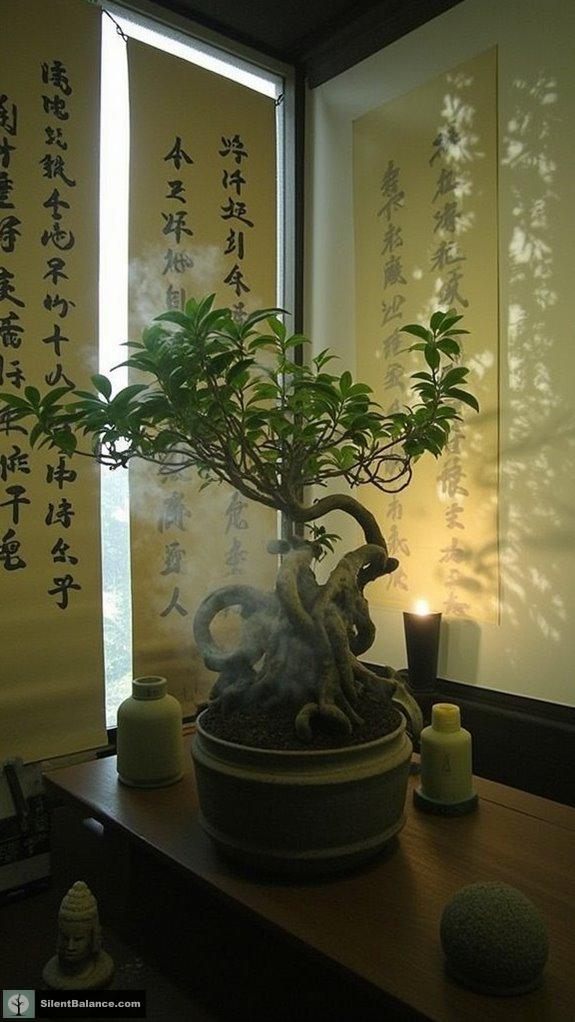
When you plunge into the world of bonsai, it’s hard not to feel a sense of calm wash over you, don’t you think?
In ancient China, bonsai, or penjing, wasn’t just a hobby; it was a spiritual journey. These miniature vistas conveyed balance and harmony, inviting meditation and reflection. Every twist in a tree’s trunk told a story—a nod to Taoism and Buddhism. Interestingly, bonsai’s influence spread beyond borders, intertwining with Japanese traditions as it evolved.
Imagine gifting a bonsai during Chinese New Year, symbolizing good fortune. Isn’t that a powerful connection to nature? The essence of trimming, binding, and shaping embodies self-discipline. Bonsai isn’t just art; it’s a spiritual practice that keeps us grounded, folks! As practitioners learned early techniques from Chinese horticulture, this craft fostered a deep appreciation for nature’s complexities.
Bonsai as a Reflection of Zen Principles in Japanese Society
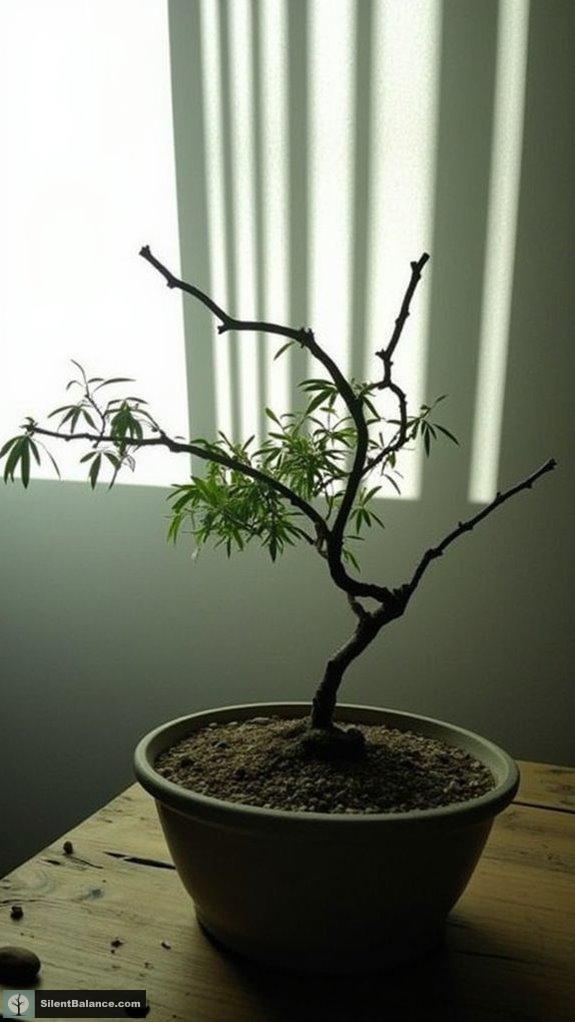
Bonsai isn’t just a craft; it’s a thread woven into the fabric of Japanese culture, reflecting Zen principles in beautiful, tangible ways.
When you cultivate a bonsai, you’re not just shaping a tree—you’re embracing active meditation. Each snip and twist encourages mindfulness, patience, and that oh-so-elusive calm. Additionally, the art of cultivation requires dedication and meticulous care, enhancing the practitioner’s connection with nature. Engaging in this practice not only fosters tranquility but also aligns with the core tenets of Zen, encouraging a harmonious balance between life and nature.
Ever heard of wabi-sabi? It’s all about finding beauty in imperfection.
Those quirky shapes and weathered bark? They’re reminders that life’s fleeting.
Symbolism of Resilience and Endurance Across Cultures
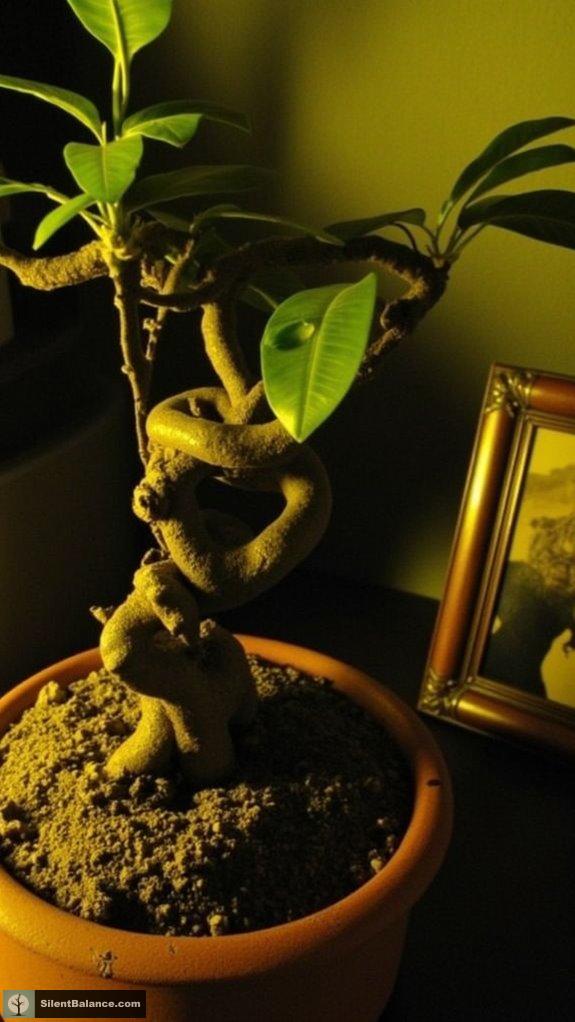
While you mightn’t think of a tiny tree as a powerful symbol, the resilience embedded in bonsai culture says otherwise.
These miniature marvels have thrived for over 1,300 years, showing us that even with careful shaping, they endure through adversity.
Ever heard the tale of the samurai sacrificing bonsai for warmth? It embodies sacrifice and grit.
The twisted branches? They shout, “I survived!”
The gnarled limbs declare their strength, a testament to resilience and survival against the odds.
Bonsai cultivators meticulously shape each tree, representing patient endurance and commitment.
Through every wire and cut, these little giants teach us about thriving in adversity. Even in a bonsai’s spiritual journey, the careful nurturing and shaping reflect our own paths toward growth and strength.
Isn’t that what we all aspire to achieve in our lives?
The Influence of Taoist Philosophy on Bonsai Aesthetics
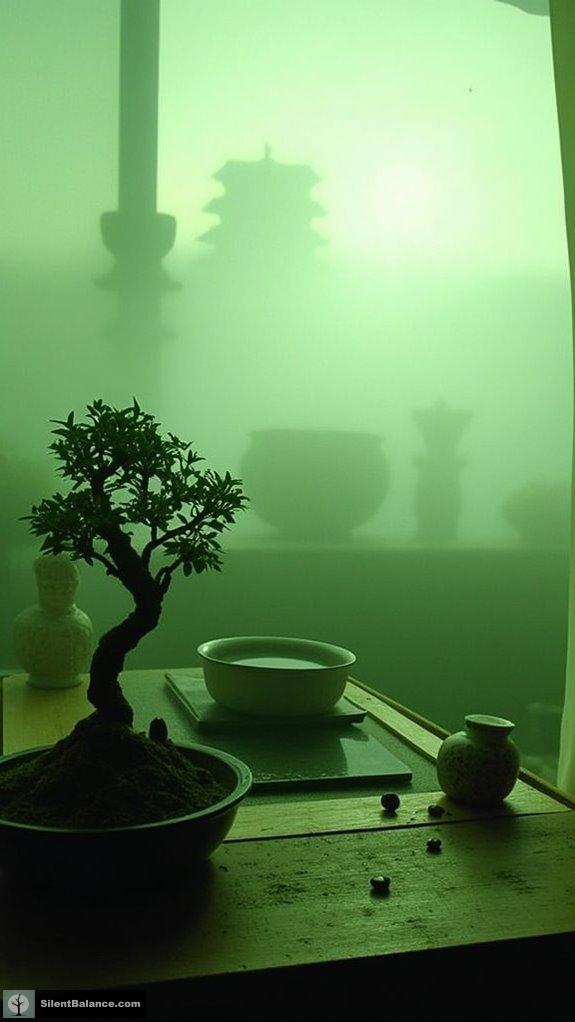
Harmony is at the heart of Taoist philosophy, and it plays a vital role in shaping the aesthetics of bonsai culture.
I mean, who doesn’t love a little balance, right? It’s all about mimicking nature effortlessly, creating spontaneous beauty that makes your heart skip a beat.
Think of the complex dance of Yin and Yang; it’s not just for philosophy class!
With bonsai, we cultivate tiny environments that echo their majestic full-sized relatives, each twist and turn telling a story.
Cross-Cultural Significance of Bonsai in Modern Artistic Expression
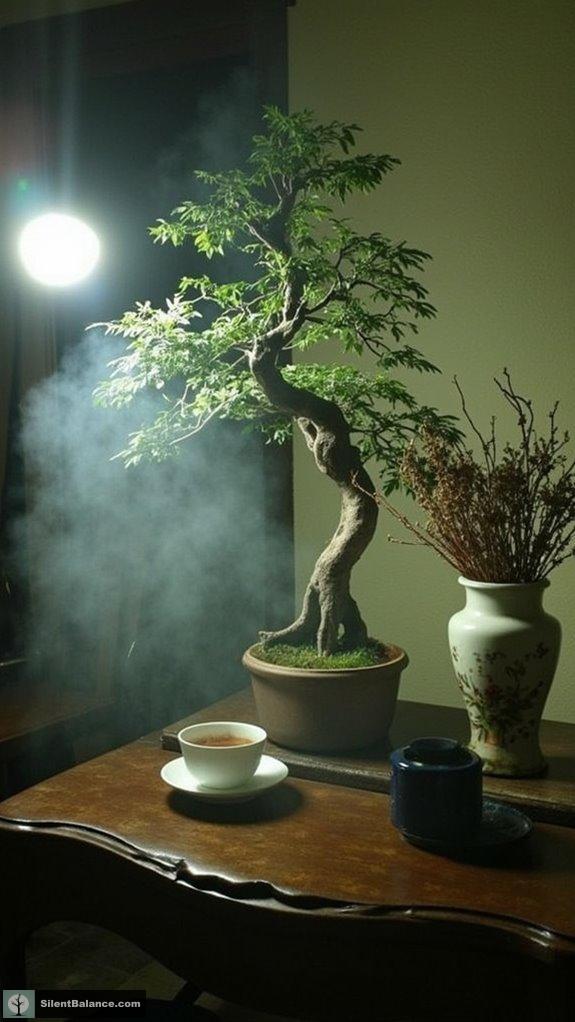
As we explore the world of bonsai’s cross-cultural significance, it’s truly fascinating how this art form has blossomed beyond its East Asian origins.
Who knew a tiny tree could zap creativity across continents?
A miniature marvel, bonsai inspires artistic expression worldwide, uniting creativity across diverse cultures.
Bonsai’s delicate charm shows up in everything from paintings to dance, embodying balance and harmony that resonates with all cultures.
Artists today aren’t just following tradition—oh no—they’re blending it with innovative styles, creating mini masterpieces that challenge perceptions.
Caught between nature and human touch, bonsai serves as a silent ambassador, fostering connections.
Isn’t it wonderful how something so small can bridge such vast artistic vistas?
Bonsai Tree Symbolism
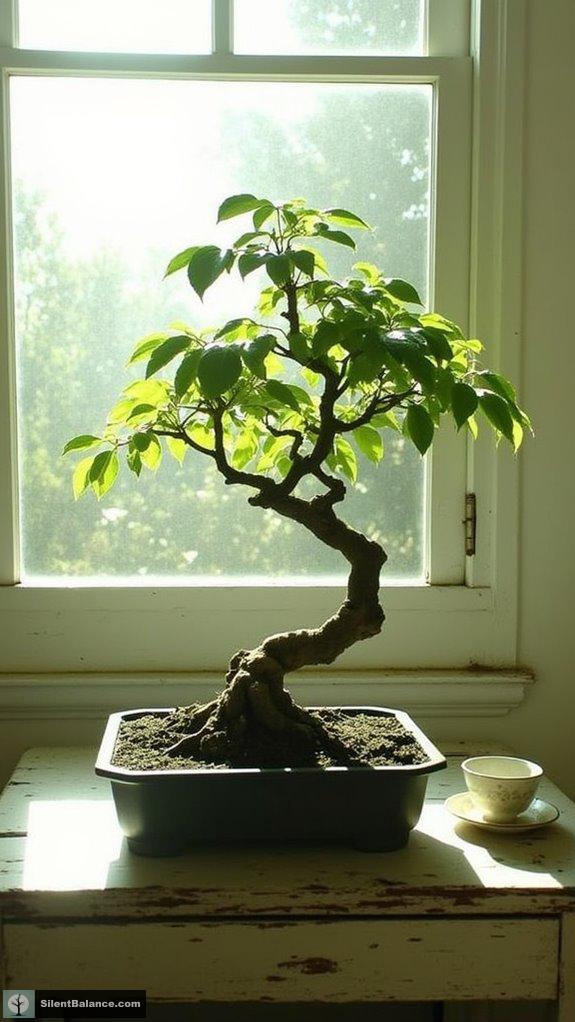
Bonsai trees aren’t just tiny marvels of nature; they carry profound symbolism that connects us to deeper philosophies.
Have you ever considered how these miniature masterpieces symbolize harmony and balance? Their carefully curated shapes reflect an equilibrium, merging masculine and feminine traits.
Plus, growing a bonsai isn’t just a hobby; it’s a lesson in patience. Each twist of wire and bend of branch takes time—much like life itself.
And let’s not forget the prestige they carry! Owning a bonsai can indicate refined taste.
Tree Symbolism
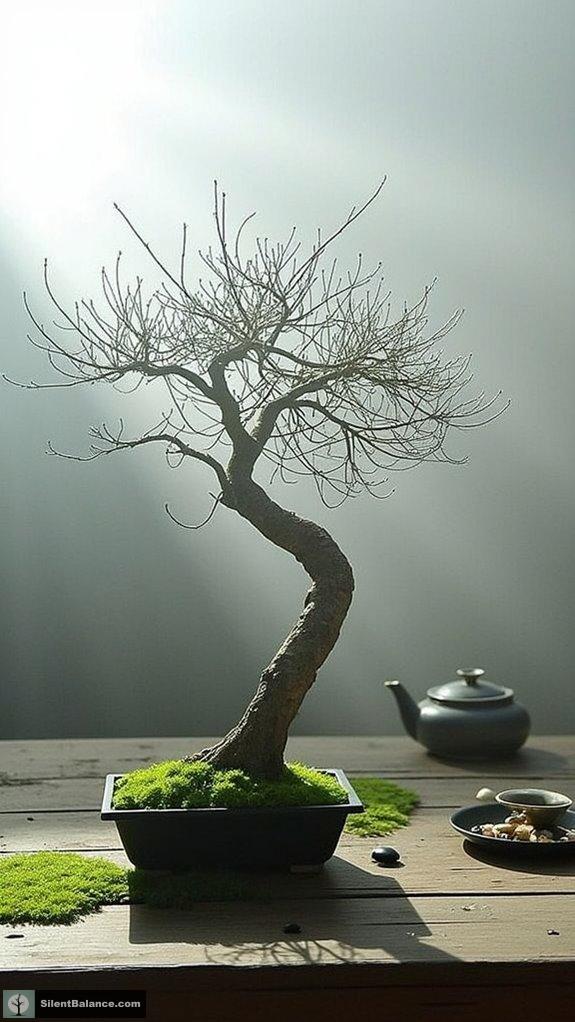
Trees are nature’s giants, standing tall as symbols of life, resilience, and connection across cultures.
Ever thought about the Baobab, called the Tree of Life? It champions strength and community in Africa.
Meanwhile, the Bodhi Tree in Buddhism embodies enlightenment—pretty powerful stuff!
And let’s not forget the iconic Oak, a European staple linked to wisdom and divine power.
We’ve got the Cherry Blossom too, gently reminding us of life’s fleeting beauty.
Questions and Answers
How Do Different Bonsai Styles Represent Unique Cultural Values?
They say, “You reap what you sow,” and bonsai styles truly reflect this. Each unique form embodies cultural values—Chinese penjing showcases nature’s complexity, while Japanese bonsai emphasizes simplicity, patience, and a deeper connection to existence.
What Role Did Bonsai Play in Ancient Chinese Literature and Poetry?
In ancient Chinese literature, bonsai symbolizes harmony and balance. I see it as a metaphor for personal growth and life’s complexities, beautifully linking nature with philosophical ideas that resonate deeply within me and guide my thoughts.
Are There Specific Bonsai Species Linked to Certain Cultural Traditions?
I’ve found species like Japanese Maple and Chinese Elm are closely tied to their respective cultural traditions, symbolizing beauty and wisdom. Choosing the right bonsai enriches my connection to these profound cultural meanings.
How Has Bonsai Influenced Contemporary Art Beyond Asia?
Like a refreshing change, bonsai’s influence on contemporary art transcends borders. I’ve seen it inspire innovative sculptures and performances, weaving tranquility into various mediums, blending tradition with modern expression while redefining nature’s beauty.
What Are the Common Misconceptions About Bonsai Cultivation?
I’ve found that many people mistakenly think bonsai are unique species or that they thrive without care. In reality, they need regular pruning and attention, just like any other tree, to flourish beautifully.
References
- https://miyagibonsai.co.uk/blog/bonsai-basics/meaning-of-bonsai/
- https://thunderstruckbonsai.com/a-little-bonsai-history-for-beginners/
- https://www.bonsaiempire.com/origin/bonsai-history
- https://deeperjapan.com/the-history-of-bonsai
- https://mymodernmet.com/bonsai-tree-history/
- https://www.ultra-unlimited.com/blog/the-ancient-art-of-bonsai-a-bridge-between-spirituality-ecology-and-global-appreciation
- https://www.karmaandluck.com/blogs/news/bonsai-tree-meaning-benefits-history
- https://www.lovemybonsai.com/blogs/bonsai/the-art-of-bonsai-unlocking-the-timeless-beauty-and-serenity-of-miniature-trees
- https://www.tranquilplants.co.uk/blogs/news/bonsai-and-the-chinese-new-year
- https://www.indoorgreens.in/blogs/free-press-journal-articles/unlock-natures-zen-how-bonsai-cultivation-brings-harmony-to-your-life

- Bonsai Placement Benefits for Room Harmony - November 8, 2025
- Why Use Air Layering to Propagate Bonsai Trees? - November 8, 2025
- 15 Stunning Acorn Wood Wall Art Ideas - November 8, 2025
