
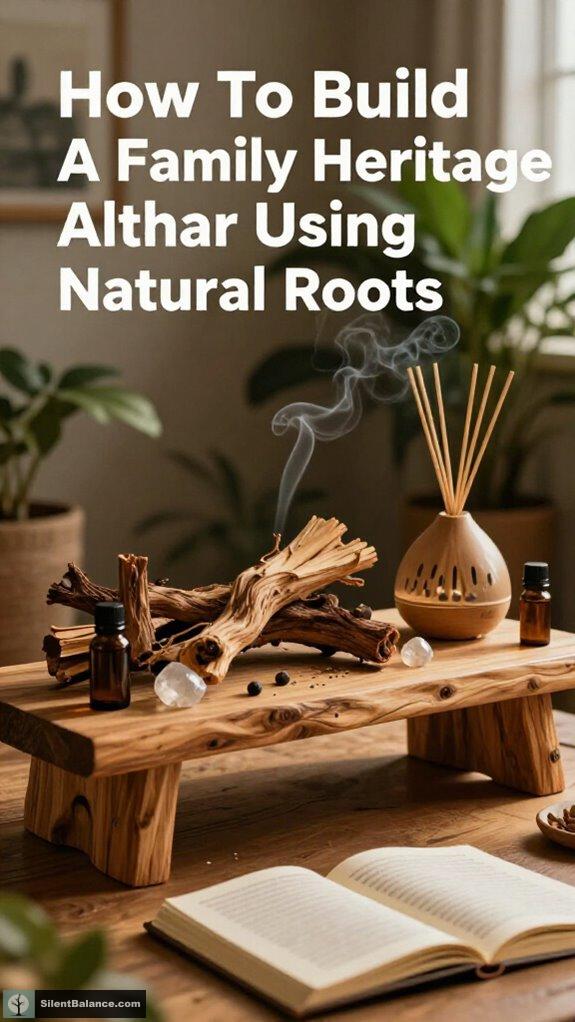
There’s magic in the quiet things.
Like roots twisted by time.
Like bark whispering old names.
A Family Tied by Roots, Not Just Blood
I built my first heritage altar after Grandma’s passing.
Found her favorite oak root near the creek—gnarled, stubborn, alive.
Placed it center.
Added pinecones she’d collected, one carved with Mom’s initials.
That’s when I *got* it—the symbolism of trees—how they remember, how they hold.
Roots = ancestry.
Bark = protection.
New growth = resilience.
Not just decor. Sacred shorthand.
We write about these quiet awakenings on Silent Balance.
Real moments. No performative spirituality.
Just earth, memory, and what grows when you stop rushing.
The Moment the Altar Spoke
Once, during a storm, the candle flickered out.
I relit it—grumbling.
But then noticed: droplets had formed a perfect ring around the altar.
No puddle. No damage.
Just a halo of water.
Felt like a nod.
Like, *“We’re still here.”*
Turns out, roots remember the way home better than we do.
Quick Takeaways
- Select complex roots and salvaged wood to symbolize growth, interconnectedness, and ancestral continuity.
- Incorporate bark, twigs, pinecones, and fossils to represent protection, resilience, and family heritage.
- Use natural motifs like trees of life and carved wooden figures to honor ancestors and spiritual growth.
- Arrange natural elements thoughtfully to create a visually balanced, meaningful display reflecting personal stories.
- Maintain the altar regularly with gentle cleaning and aromatics like cedarwood to preserve vitality and spiritual energy.
Why Roots and Wood Materials Are Key to Heritage Altars
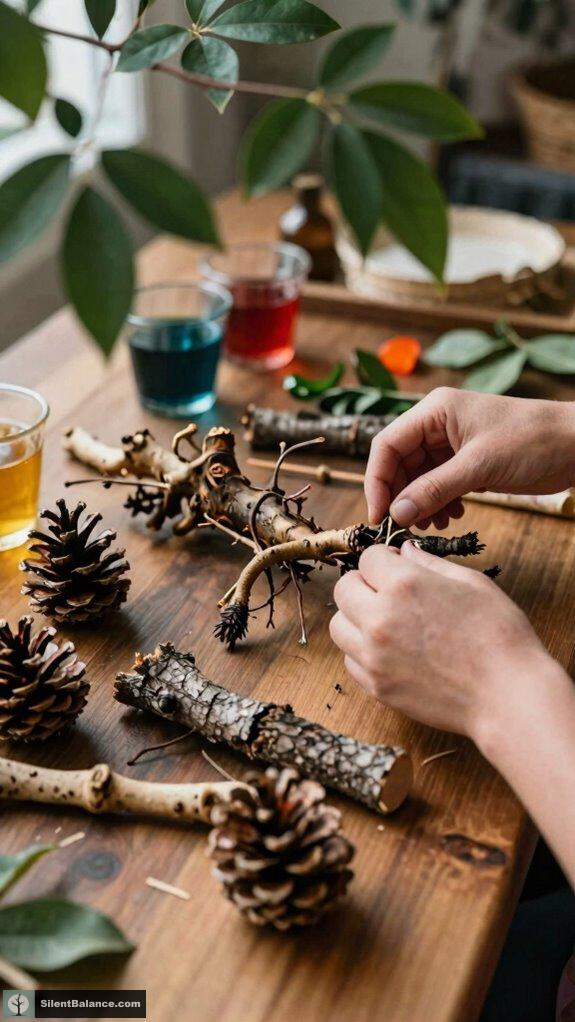
If you’re wondering why roots and wood materials hold such a special place in heritage altars, the answer is pretty rooted—pun intended—in their deep symbolism and tactile magic.
Wood and roots reflect connections, strength, and growth, tying you to nature and ancestry. Their soil composition, rich in organic matter, symbolizes life’s foundation, while botanical dyes highlight their natural beauty, further grounding your altar. Think of bark, twigs, or pinecones—each tells a story of renewal and resilience. Incorporating organic and natural materials can also enhance the authenticity and spiritual significance of your altar, making it more meaningful.
A nature-inspired aesthetic can also evoke a sense of harmony and balance, enriching your spiritual space with natural energy. Are you ready to add layers of meaning? Using these natural elements makes your space feel alive, connected, and infused with ancient wisdom, reminding you that you’re part of something bigger.
How to Choose the Right Roots and Wood for Your Altar
So, how do you pick the perfect roots and wood for your altar? Start by feeling the roots; look for complex root fractals—those twisting, recursive patterns that symbolize growth and connection. Incorporating salvaged timber blocks can add unique texture and history to your creation. Bark textures also matter—rough, deeply grooved bark can represent protection and resilience, while smoother surfaces may symbolize calm and renewal. Think about the story you want your altar to tell. Do you want roots that mirror your family’s tangled history or wood that speaks to strength and stability? Selecting the right wood grain patterns can enhance the natural beauty and symbolism of your altar. Choosing the right natural elements adds depth, turning simple decor into a meaningful homage to your heritage. Ready to embrace nature’s silent stories?
How to Design a Meaningful Layout With Symbols and Organic Elements
Designing a meaningful layout with symbols and organic elements might sound like a tall order, but it’s really about letting nature do the talking. You want to choose pieces that speak to your story—like reclaimed bark or raw twigs—all rich with cultural symbolism. Incorporating glowing nature elements such as softly illuminated moss or bioluminescent plants can add a captivating, sacred ambiance to your altar. Why settle for boring decor when each element can stand for growth, protection, or rebirth? Material selection is key — think textured wood, pinecones, or petrified roots. These organic touches create layers of meaning, inviting you to reflect on your roots and journey.
How to Incorporate Personal and Ancestral Symbols Into Your Altar
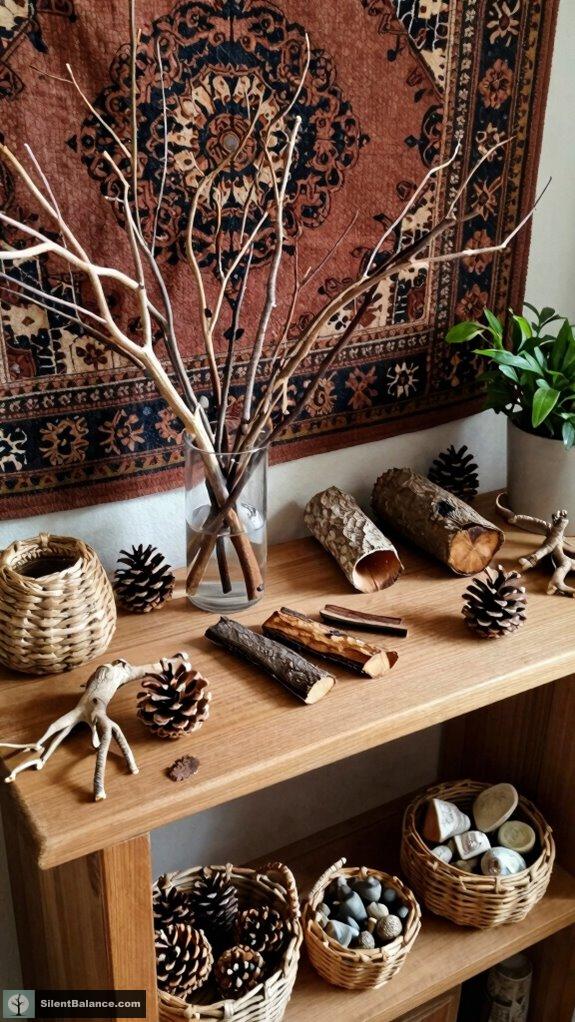
Incorporating personal and ancestral symbols into your altar isn’t just about pretty decorations—it’s about creating a sacred space that echoes your unique story and roots.
Think about using root symbolism—twigs, branches, or raw bark—to represent growth, resilience, and your family’s journey. Tree energy can be expressed with small carved pinecones or ancient wooden figures that honor your ancestors’ strength and wisdom.
Here is a quick guide:
| Symbol Type | Meaning & Placement |
|---|---|
| Twigs & branches | Growth, resilience, daily connection |
| Bark & wood | Protection, grounding, ancestral strength |
| Pinecones | Renewal, potential, life’s cycles |
| Roots & fossils | Deep heritage, stability, foundation |
| Tree-of-life motifs | Connection to everything, spiritual growth |
Adding natural elements like roots and fossils can also serve as a physical reminder of family heritage, deepening the connection to your ancestors. Incorporating natural materials into your altar can enhance the authenticity and grounding energy of your sacred space.
Best Practices for Caring for and Preserving Your Heritage Altar
Taking care of your heritage altar isn’t just about dusting off those meaningful pieces; it’s about respecting and nurturing the symbols that ground your personal and ancestral stories.
Did you know tree acoustics, the subtle sound vibrations in wood, can influence the energy of your space? Focus on root fractals—those endless, repeating patterns in bark and branches—which symbolize growth and resilience.
Keep your wooden artifacts free from moisture and dust so their natural symmetry and fractal beauty stay vibrant.
Ask yourself: How can these natural elements deepen my connection to my roots and help my ancestors’ stories flourish? This care keeps your altar alive and meaningful.
Essential Ritual Tools to Enhance Your Altar Practices
When you’re ready to elevate your altar practice, you’ll want to gather the right tools—these aren’t your average household accessories.
- Mycelium networks: These subtle fungal connections symbolize unseen support, much like your roots of heritage intertwining beneath the surface.
- Tree fractals: Fractal art or carvings capture the repeating patterns of branching growth—reminding you of personal evolution and interconnectedness.
- Organic bark and wood: Use bark pieces or reclaimed wood to anchor your altar in natural strength and ancestral wisdom.
- Branch and twig accents: Small, twisted twigs echo the complex, sacred geometry of tree fractals, adding layers of meaning.
Have you considered how these organic symbols connect you to your roots of heritage? Recognizing how natural patterns like fractals reflect self-similarity can deepen your understanding of personal and ancestral growth.
Tips for Personalizing and Maintaining Your Heritage Ritual Space
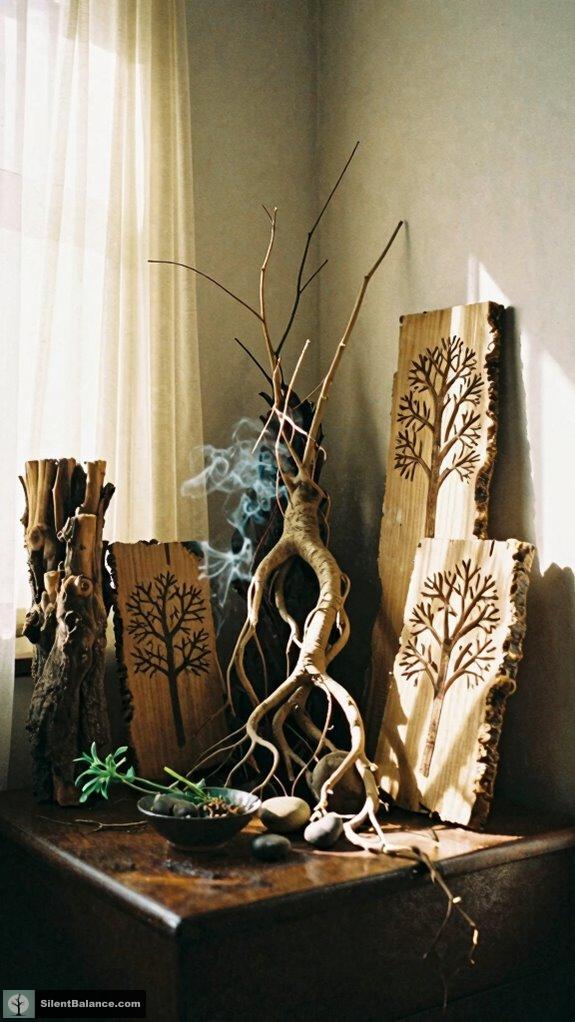
Getting your heritage ritual space all personalized and maintained might sound like a chore, but honestly, it’s about creating a sanctuary that truly reflects your roots and soul.
Think about incorporating tree fractals — those complex patterns that mirror growth, harmony, and life’s cycles.
Texture is key—bark textures add a tactile layer of authenticity, reminding you of strength and protection.
Ever wonder how a simple twig, or rough bark, can deepen your connection? Use natural elements like raw wood plaques, fractal carvings, or bark-inspired decor to make it uniquely yours.
Maintaining these touches keeps your space alive and meaningful, turning everyday into an ongoing tribute to your heritage.
Gnarled Branches Signify Resilience
Gnarled branches are more than just twisted twigs—they’re powerful symbols of resilience and endurance. Think of tree fractals, where each bend reflects life’s twists, and canopy symbolism, which reminds us of protection and growth. Spending time studying the texture and patterns of these branches can deepen your understanding of tree bark symbolism, emphasizing protection and perseverance. 1. Gnarled branches show how strength comes from life’s twists, not perfection. 2. They mirror fractal patterns, symbolizing infinite resilience. 3. Their rugged texture connects you to ancestors’ endurance. 4. Incorporating these in your altar invites canopy symbolism—protection and renewal.
Ever wonder how a twisted branch can embody your family’s resilience? These organic shapes carry stories of survival—perfect for grounding your heritage space with natural, meaningful symbols.
Ancient Tree Temple Relics
Ever wonder what secrets ancient trees might be hiding?
Ancient forest relics carry deep root symbolism, whispering stories of resilience and growth. These relics—twisted bark, petrified wood, knotholes—are more than decor; they’re symbols of strength, longevity, and your family’s story.
Adding these relics brings the forest’s ancient wisdom into your sacred space, making your altar a living, breathing memory. Mythological significance of trees can deepen the spiritual connection during this practice. Why not let nature tell your family’s story?
Cedarwood Aromatherapy Diffuser
Have you ever considered how a simple scent can bring your sacred space alive with meaning? Cedarwood aromatherapy diffusers are more than just pretty gadgets—they hold deep symbolism, perfect for tree meditation and mystical glyphs.
- They diffuse calming cedar oil, connecting you to tree symbolism of strength and grounding.
- The scent awakens your senses, making mystical glyphs pop with deeper meaning.
- It helps you channel the energy of ancient forests, inspiring renewal and protection.
- The gentle aroma creates a sacred space perfect for reflection, tying your family heritage to nature’s wisdom.
- Using cedarwood can also invoke tree spirit symbolism, deepening your spiritual connection through aromatic ambiance.
- Incorporating cedarwood into your space can also enhance your understanding of natural elements, fostering a more profound connection to the natural world.
FAQ
How Do I Select Roots That Symbolize Specific Family Values?
Visualize ancient sailors choosing roots like compass needles; you select based on family symbolism and root significance, feeling the natural textures and shapes, letting your intuition guide you to roots that embody your values, creating a heartfelt family narrative.
Can I Incorporate Live Plants Alongside Preserved Roots?
Yes, you can mix living greenery with preserved roots on your altar, creating a dynamic balance. Focus on root preservation, like using sealed terrariums, to honor your ancestors while nurturing living symbols of energy and ongoing family growth.
What Are Eco-Friendly Methods for Sourcing Authentic Roots and Wood?
You should prioritize sustainable harvesting and ethical sourcing by connecting with local artisans or certified eco-friendly suppliers. This deepens your connection to the roots, fostering trust and honoring the natural origins of your heritage altar.
How Often Should I Clean or Restore My Heritage Altar?
Like tending a sacred garden, you should gently clean your altar monthly, restoring its connection to family traditions and ancestral symbols. Regular care keeps the roots of heritage alive, nurturing your shared spiritual journey and honoring your ancestors’ legacy.
Are There Digital Tools to Document or Virtually Expand My Altar?
Yes, you can use digital preservation tools like AR apps and virtual altars to document and expand your heritage altar. These tools create intimate connections, allowing you to preserve memories and spiritual practices in a deeply personal, immersive way.

- 11 Best Luxury Sandalwood Candles for 2026 - June 19, 2026
- 11 Best Woven Wicker Gift Baskets for 2026 - June 19, 2026
- 11 Best High Powered Binoculars for 2026 - June 19, 2026
