

Transform your Japandi space with the enchanting presence of bonsai trees!
I remember the first time I placed a Bonsai in my living room. It was a resilient Ficus, much like me—a testament to overcoming challenges. I lovingly chose a simple ceramic pot, its minimalist design radiating calm. Over the years, I’ve learned that bonsai embodies the symbolism of trees; they are living art, connecting us to nature and grounding our spaces.
For more tips on integrating these beauties into your home, check out our blog, Silent Balance.
One evening, I sat with friends, sharing stories beside my Bonsai centerpiece. Between laughter and horizons of connection, we found solace in its quiet strength. It felt like the tree was listening. I realized—every bonsai tells a story, just like us. Embrace that narrative in your own Japandi haven.
The Serene Aesthetic of Bonsai in Japandi Design
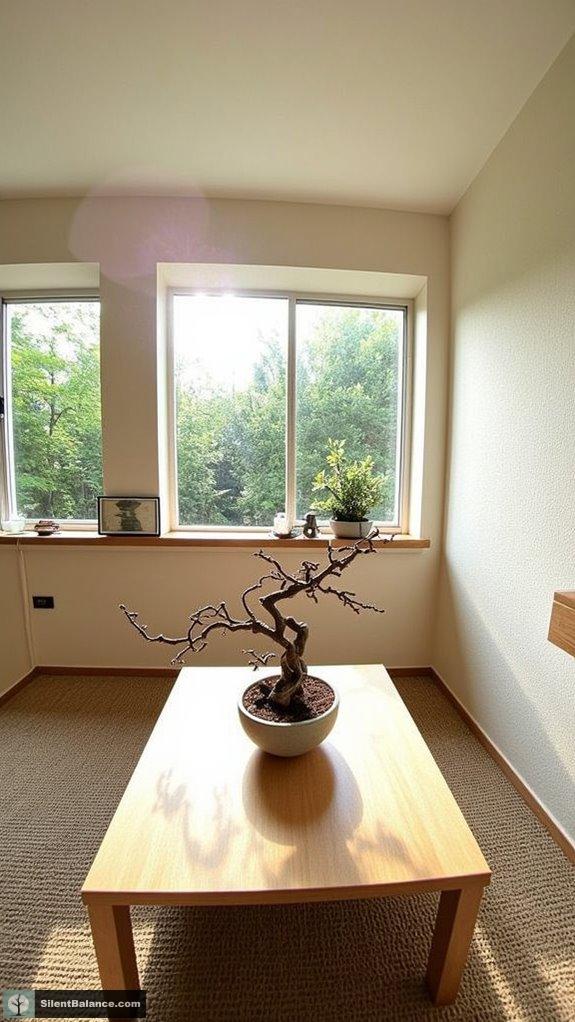
When you think of bonsai, you might picture those elaborate little trees, right?
But in Japandi design, they bring a serene aesthetic that truly resonates. Bonsai trees embody minimalist restraint, with their organic shapes and simplicity harmonizing beautifully with clean lines. Ever notice how intentional placement creates “negative space,” elevating tranquility? Each bonsai becomes a focal point—perfect for mindfulness moments. Using natural materials like unglazed ceramic or terracotta for pots adds authenticity. Plus, moss around the base? Total game changer! Effective use of negative space ensures that each bonsai not only draws the eye but also contributes to the garden’s overall calming effect. Moreover, these ancient bonsai symbolize spiritual significance in many cultures, reminding us of the deeper connection between nature and our inner selves.
Choosing the Right Bonsai Varieties for Your Space
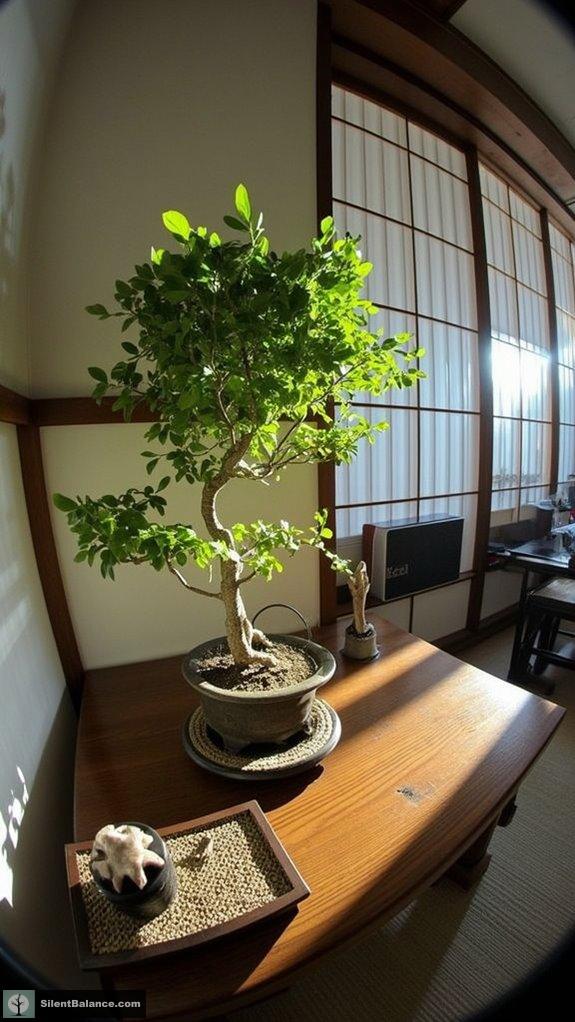
Choosing the right bonsai varieties for your space can feel a bit intimidating, but don’t worry—I’m here to help!
For Japandi style, I recommend the resilient Ficus, which thrives indoors like a pro. Bonsai symbolism often represents harmony and balance, making it an excellent choice for creating a tranquil environment. The Chinese Elm is another fantastic choice, flaunting its graceful branches and compact size. Tropical species adapt well to indoor environments, making them ideal for creating a serene atmosphere.
Got a little more space? Try the charming Fukien Tea, whose small leaves create a striking visual.
Let’s not forget about the Dwarf Jade—its succulent nature makes it perfect for low humidity.
Ultimately, think about what fits your space. Ready to add that touch of zen to your home?
Strategic Placement of Bonsai in Living Areas
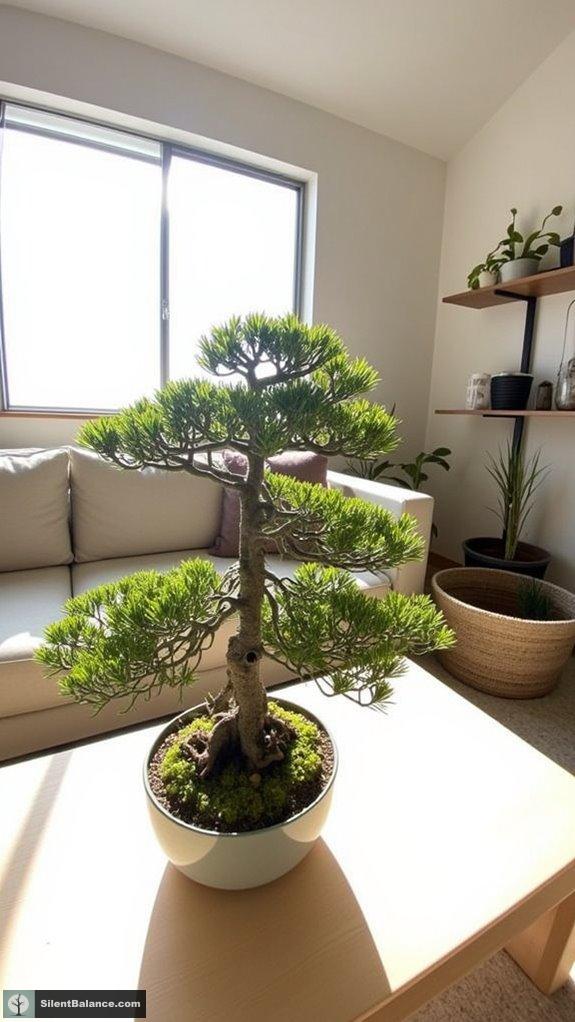
There’s something magical about a well-placed bonsai—it can breathe life into any living space!
By positioning your bonsai near a south-facing window, you’ll maximize its sunlight exposure, essential for healthy growth.
Who wants a sad, droopy bonsai, right?
Consider using decorative pots in neutral tones to complement the Japandi style, and let that beauty shine!
Setting it on a pedestal or coffee table as a centerpiece can truly elevate the room.
Don’t overcrowd it with knickknacks, though—two to three strategic elements will keep things elegant.
Keep in mind, a well-placed bonsai isn’t just decoration; it’s a lifestyle! Incorporating these decorative pots can enhance the harmony of your living space while aligning with the Japandi aesthetic.
Enhancing Zen Bathrooms With Bonsai Elements
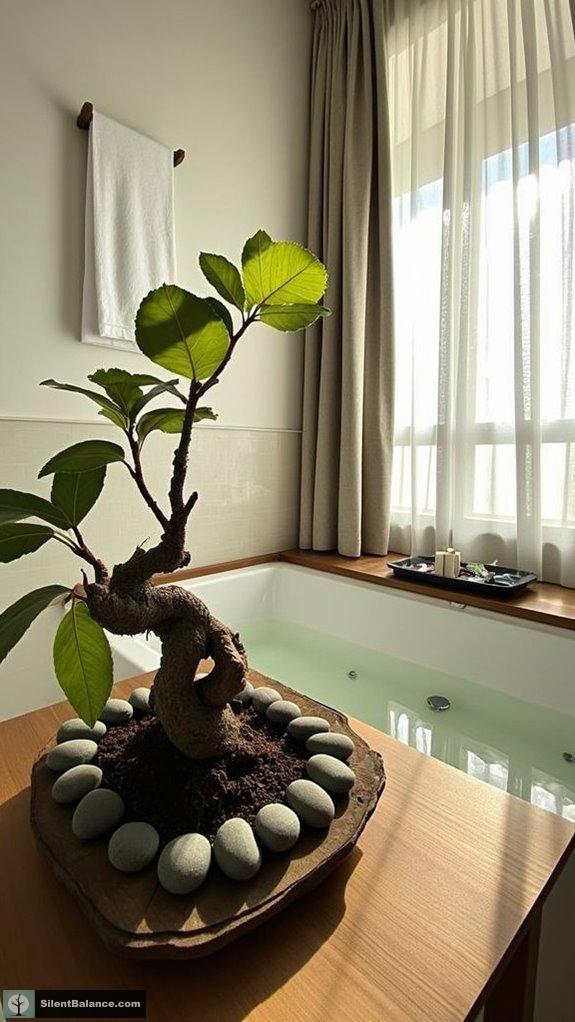
Creating a Zen bathroom that feels like a serene sanctuary isn’t just about the right fixtures; it’s also about integrating elements like bonsai trees that truly elevate the atmosphere.
Imagine a petite juniper gracefully perched on a natural wood shelf, its delicate branches whispering tranquility.
Position your bonsai near sunlight to enhance its growth and harmonize with nature.
Pair it with wooden accents and pebble textures for that Zen vibe.
And don’t forget, the gentle sound of water nearby amplifies its calming power.
Why not treat your bonsai care as a mindfulness ritual? This practice resonates with the idea of microcosm metaphors that reflect nature’s essence.
It’s a little slice of nature right in your bathroom!
Creating Tranquility in Bedrooms With Bonsai
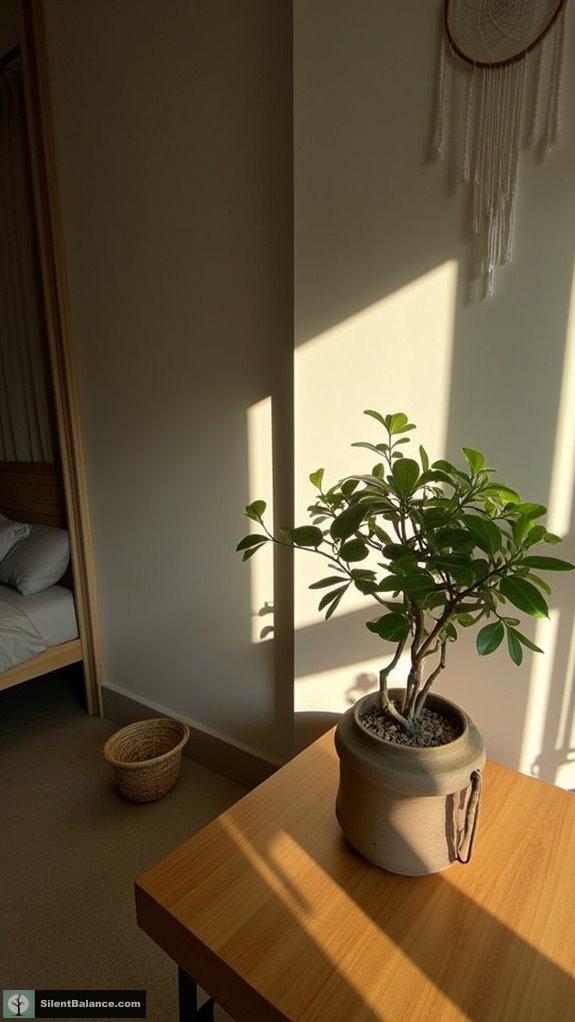
Envision stepping into your bedroom and feeling an immediate sense of peace wash over you, courtesy of a little green companion.
Plant a compact Ficus or Juniper near a sunlit window, where it can breathe in warmth and radiate tranquility.
A minimalist wooden side table creates the perfect stage for your bonsai, while muted pots blend seamlessly with Japandi’s neutral palette.
Why clutter the scene? Less is more—allow your bonsai to shine.
With soft, diffused lighting, you’ll enhance the serene vibe, transforming your space into a mindful retreat.
Embrace this living art, and let nature nurture your soul!
Integrating Bonsai in Indoor Zen Patios
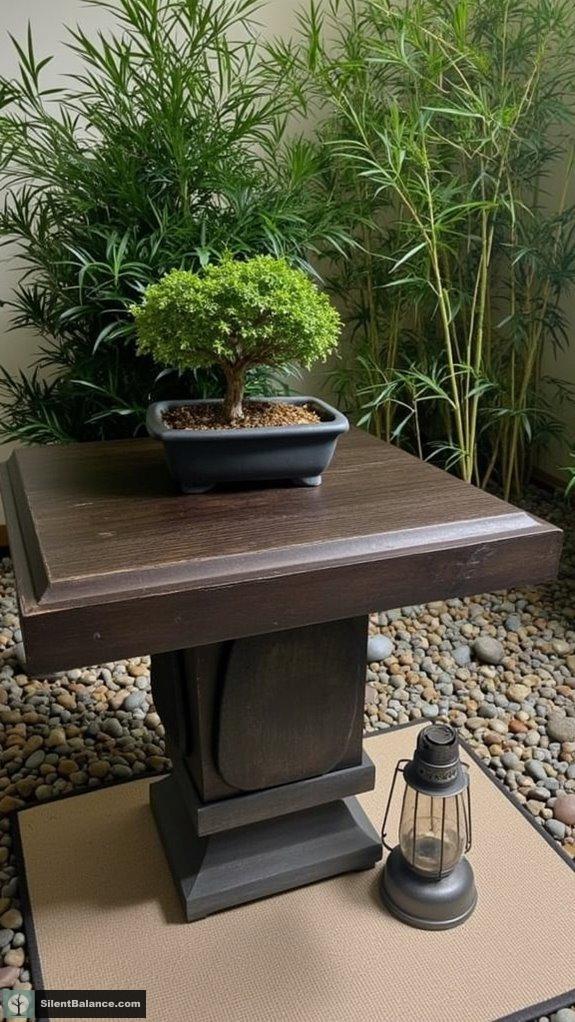
When you think about transforming your indoor space into a serene Zen patio, don’t you just picture an enchanting bonsai as the centerpiece?
Position your bonsai among gravel and stones to mimic tranquil water flow, and sprinkle raked sand around it to evoke gentle waves.
Pair soft bamboo or ornamental grasses to create harmonious movement that complements your bonsai’s structure.
And don’t forget some minimalist wooden accents to infuse warmth!
Color Palette and Material Harmony With Bonsai
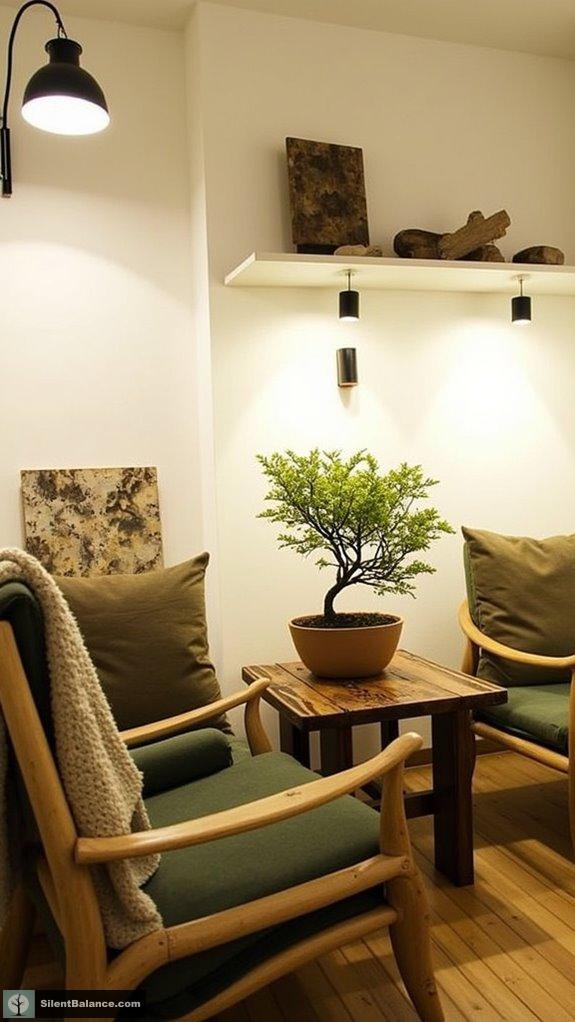
Color can breathe life into any space, and when it comes to integrating bonsai trees within a Japandi aesthetic, it’s all about finding that harmonious balance.
Emphasize neutral tones—think warm whites and earthy browns—while letting your bonsai shine as a verdant accent.
Consider using reclaimed wood for furniture; it echoes nature’s warmth and pairs beautifully with your green friend.
A splash of muted greens, maybe in textiles, will support the bonsai’s lively vibe without overwhelming your sanctuary.
Don’t forget, simple is key—adding touches of black metal guarantees a little drama, grounding the overall tranquil feel.
Ready to create an engaging Zen space?
Mindfulness and Patience: Caring for Your Bonsai
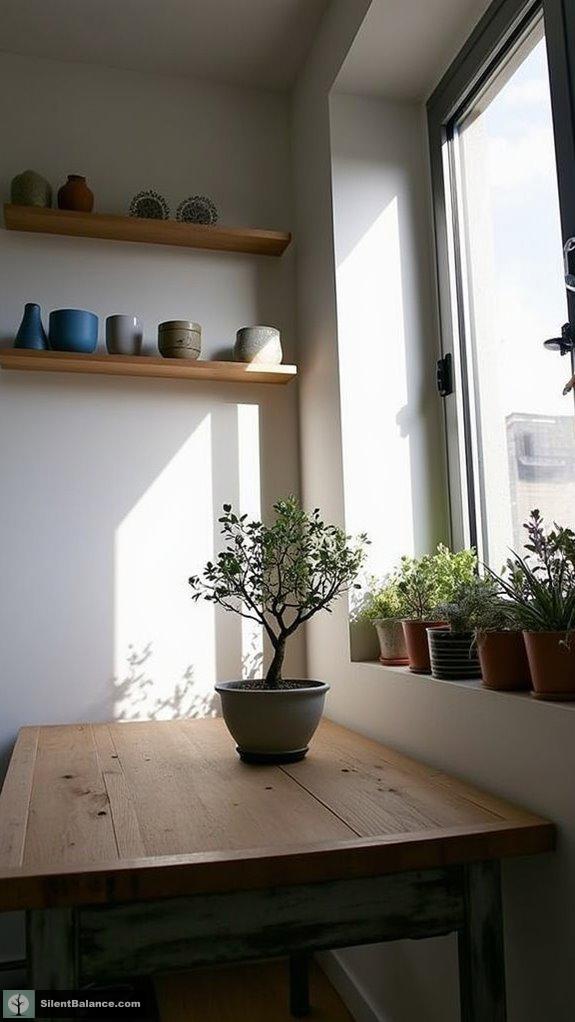
Caring for a bonsai is like forming a deep friendship—you can’t rush it.
Patience is your best companion in this journey. Regularly repotting every couple of years teaches you to respect the tree’s pace, while seasonal shaping demands commitment.
Ever notice how bonsai growth feels like watching paint dry? The magic happens slowly; fostering vigor with fertilization pays off in the long run.
Stay observant, too—recognize moisture levels, and you’ll dodge the overwatering trap.
Embrace the rhythms of care; the art of bonsai is a mindful dance, where each snip and sip has its purpose.
Isn’t that profound and beautifully complex?
Cultural Significance of Trees
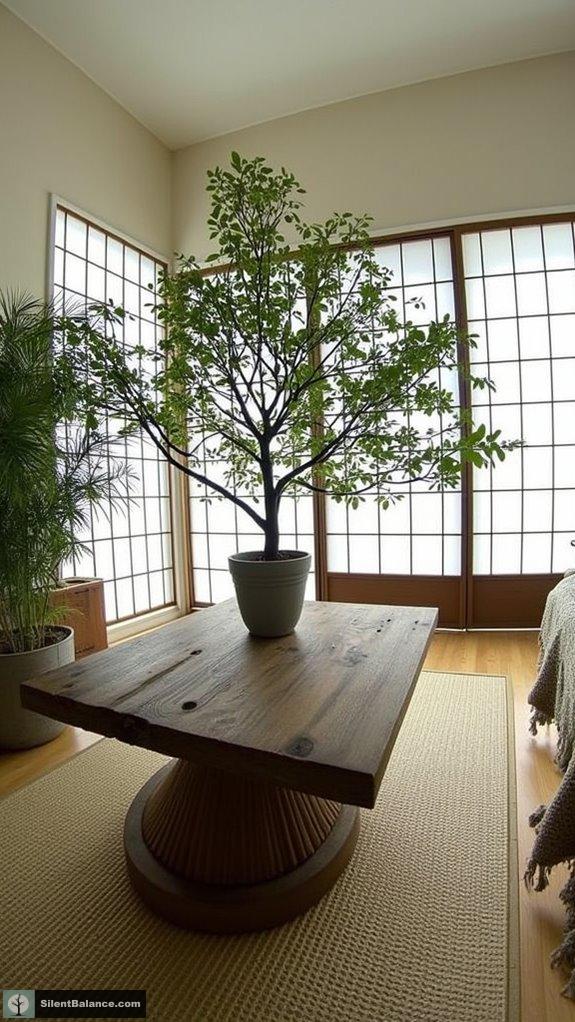
Trees aren’t just wooden giants; they’re living embodiments of culture, history, and philosophy, especially in the world of bonsai.
When I explore the cultural significance of these miniature marvels, I can’t help but marvel at three key points:
- History: Origination from ancient Chinese *penjing*, they’ve morphed through centuries of Japanese artistry and Zen influence.
- Symbolism: Bonsai represents harmony between humans and nature, echoing the poignant beauty of *wabi-sabi*.
- Identity: They’re both elite art and universal hobby, connecting diverse generations through communal cultivation experiences.
Doesn’t that just make you want to cultivate your own little universe?
Questions and Answers
How Do Bonsai Trees Purify Indoor Air Quality?
Visualize a tiny forest thriving in your living room, purifying the air like a gust of fresh spring air.
Bonsai trees are nature’s little air filter, absorbing harmful pollutants like formaldehyde while generously releasing oxygen.
They create a balanced indoor humidity through transpiration, making your space feel just right.
Who knew such miniature marvels could cleanse not just the air but also your mind?
It’s like bringing a pocket of zen into your home!
Can Bonsai Trees Survive in Low Light Conditions?
Absolutely, bonsai trees can survive in low light conditions, but it’s a delicate dance.
I’ve seen my Ficus and Jade thrive, even when sunlight’s a rare treat. They tolerate the gloom like seasoned pros.
Still, don’t let them languish in darkness! Light up their world with some artificial grow lights if necessary.
Keep in mind, a little UV love goes a long way for those leafy gems. Why not give them the best chance to flourish?
What Climate Is Ideal for Indoor Bonsai Care?
Visualize the serene beauty of a bonsai thriving in your home—a miniature world at your fingertips.
For indoor bonsai, a cozy climate between 65°F to 75°F is golden. Are you keeping them too close to a heater? That’s a no-go!
High humidity boosts health, too, so consider humidity trays or a little misting.
Recall, it’s all about that delicate balance; a little extra care can turn a struggling bonsai into a masterpiece.
How Often Should Bonsai Trees Be Watered?
When it comes to watering bonsai trees, it’s all about timing and touch! I check the soil regularly; if it feels slightly dry, it’s my cue to water.
No strict schedule here—my trees’ needs change with the seasons.
In scorching heat, I might need to water daily!
And hey, don’t drown them. A little hydration goes a long way—too much can be a real bummer for those delicate roots.
Happy growing!
Are There Bonsai Species That Require More Sunlight?
Envision basking in a sun-soaked garden, where your bonsai trees stretch toward the sky, each one a little green trophy.
Yes, some species crave more sunlight! Junipers, for example, demand full sun, ideally 12 to 15 hours a day.
Ever tried nurturing a Ficus bonsai? They prefer bright, filtered light instead of brutish direct sun.
References
- https://www.youtube.com/watch?v=Wxyq0RsJZLs
- https://www.happyhouseplants.co.uk/blogs/houseplant-blog/what-is-japandi-houseplant-styling
- https://quietminimal.com/japandi-plants/
- https://www.pinterest.com/ideas/japandi-tree-indoor/961997587102/
- https://www.veronneau.com/en/trends/indoor-decor-trends/top-5-bonsai-tree-ideas/
- https://edwardgeorgelondon.com/how-to-create-a-stockholm-inspired-japandi-garden/
- https://www.bonsainut.com/threads/basic-bonsai-styling-principles-where-do-they-come-from.28112/
- https://global.fujioh.com/2025/06/01/japandiindoorplants/
- https://www.youtube.com/watch?v=SrVSp44_8S4
- https://www.vieveinteriors.com/blog/japandi-interior-design-style

- 11 Best Luxury Sandalwood Candles for 2026 - June 19, 2026
- 11 Best Woven Wicker Gift Baskets for 2026 - June 19, 2026
- 11 Best High Powered Binoculars for 2026 - June 19, 2026
