

The Perfect Pot for Your Bonsai
Choosing the right pot for your urban bonsai can take your display from ordinary to extraordinary.
I remember the first time I picked out a pot for my bonsai. I thought, “How hard can it be?” I quickly found myself lost among different styles.
After countless trips to the local nursery, I realized the symbolism of trees runs deeper than aesthetics. It’s about creating a balance that resonates with life. My journey inspired posts on our blog, Silent Balance, where I share tips on minimalist design.
Consider a deep pot for those taller trees. It not only lends stability but allows their roots to flourish.
Trust me, a chic ceramic or concrete pot keeps focus on your leafy friend. Plus, those neutral colors? They’re pure magic against lush greens!
So, next time you’re selecting a pot, remember: it’s more than just a vessel. It’s a commitment to growth and beauty.
Essential Characteristics of Minimalist Bonsai Pots
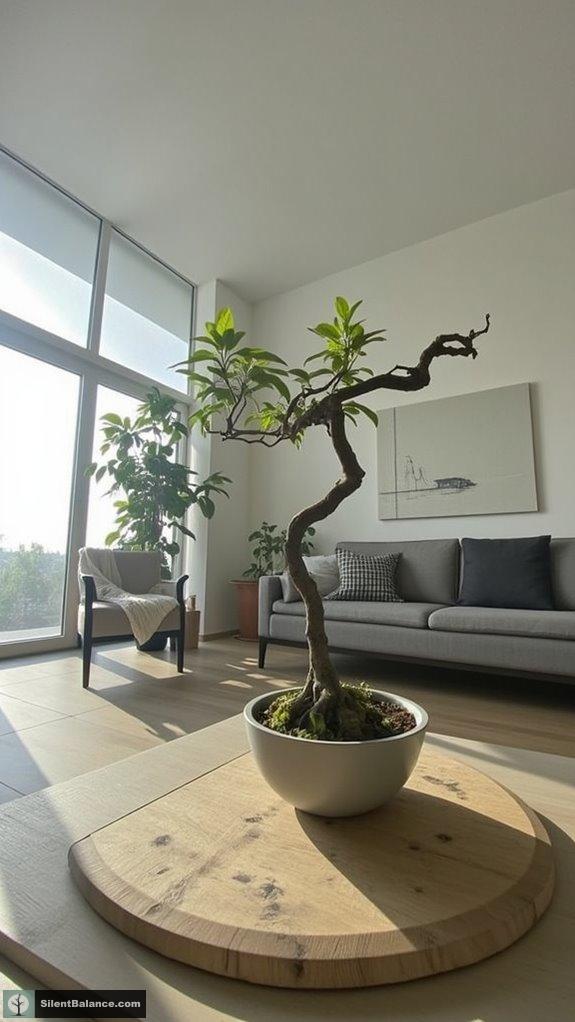
When it comes to minimalist bonsai pots, there are a few essential characteristics that really make the magic happen.
First off, choose a pot that complements your tree’s form without stealing the spotlight. A low-profile design enhances elegance, while a rectangular shape suits formal upright trees—think of it as a tailored suit! Furthermore, these pots are crafted using traditional techniques, ensuring that each piece reflects unique craftsmanship. Integrating bonsai trees into Mediterranean interior design can elevate the aesthetic and bring a touch of nature indoors.
And let’s not forget size; a pot should be about two-thirds the height of your tree for that perfect visual harmony.
Plus, color is key—neutral tones let your bonsai shine.
Choosing the Right Materials for Urban Interiors
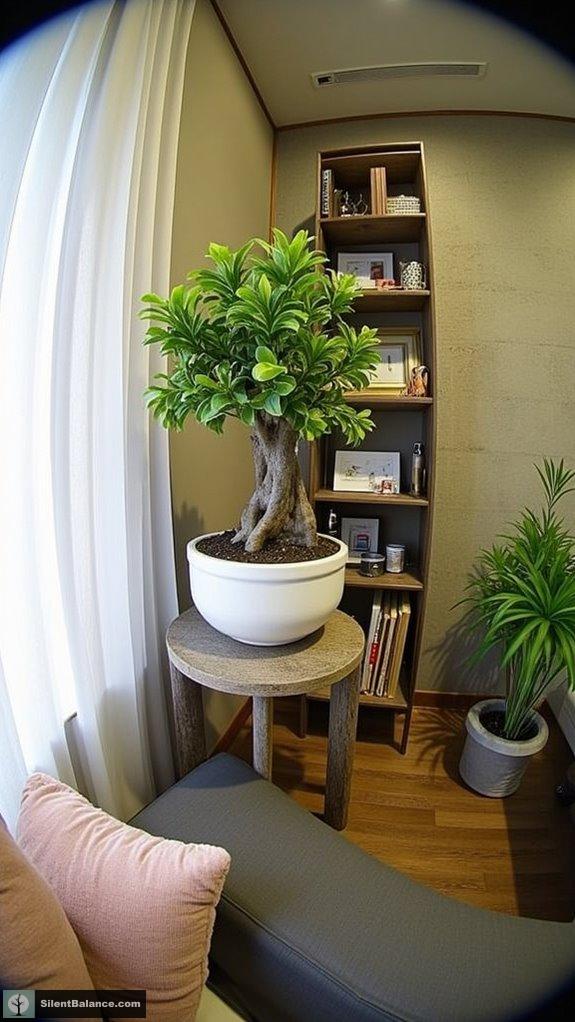
While you might think any old pot will do, choosing the right materials for your urban bonsai isn’t just about looks—it’s a game changer for your tree’s health too! Ideally, pots made from high-quality materials like ceramic or concrete help maintain optimal moisture levels. I mean, who wants a wilting beauty, right? Consider classic ceramic for its breathability or rugged concrete for that chic industrial vibe. Additionally, make sure your container includes drainage and wiring holes to ensure your bonsai thrives in its urban home.
Plastic may lighten your load, but let’s face it—no one’s got time for toxins! And don’t shy away from custom pots; they can blend function and flair like no other. Your bonsai deserves a home that harmonizes with your urban aesthetic, so let’s give it the best!
The Role of Color and Texture in Minimalist Pot Design
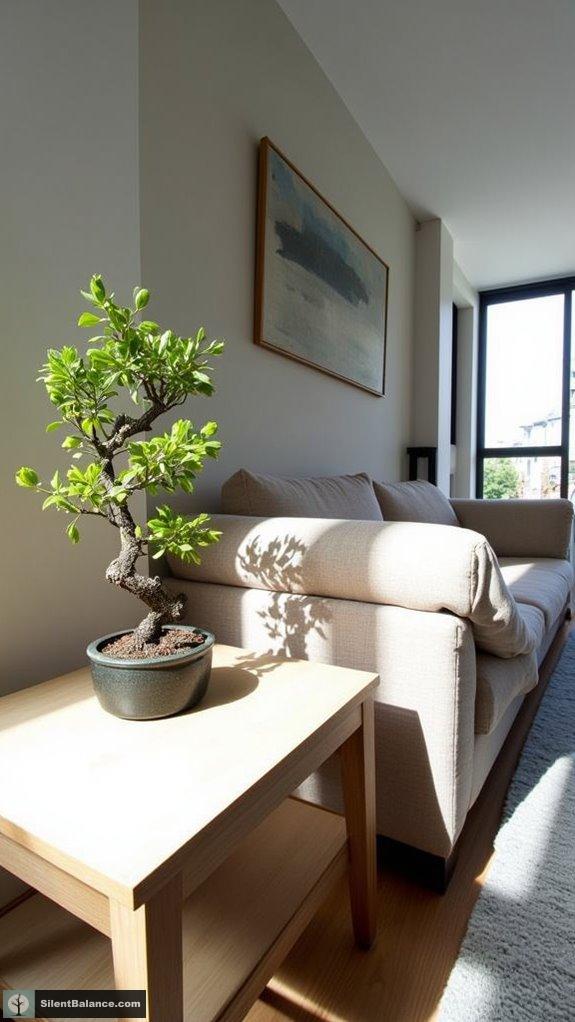
The right color and texture in minimalist pot design can truly elevate your bonsai display, transforming it from ordinary to extraordinary.
Think about it: neutral pots in white or gray bring out the rich hues of your tree, while earthy terracotta can evoke that organic vibe we all love.
Textures matter too! A smooth finish screams modern sophistication, but don’t overlook slightly rough surfaces that prevent glare; they whisper nature’s charm.
Can a minimalist pot really redirect attention to your precious bonsai? Absolutely!
Choose wisely, and your display won’t just hold a tree, but tell a story—your story. Additionally, the choice of pot style can reflect the intended symbolism of the bonsai, whether it’s about resilience or tranquility in an urban setting.
Impact of Pot Shape on Bonsai Aesthetics
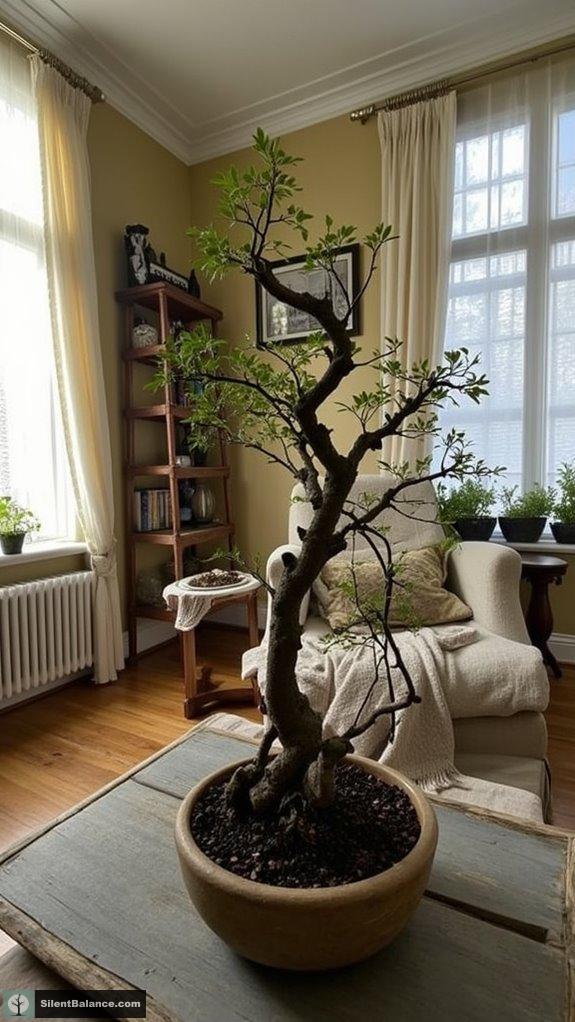
Pot shape plays a vital role in shaping the visual dynamics of your bonsai exhibition, and I can’t stress that enough!
Imagine a tall, elegant tree in a deep, narrow pot—pure symmetry. Now picture a low-growing beauty perched in a broad, shallow pot, emphasizing its natural form. Can you see the balance? The right pot complements your tree’s style, whether it’s a traditional upright or a rebellious cascade.
Don’t forget the emotional vibes! Is your pot exuding stability with its squareness or flowing with its roundness?
In bonsai, the pot’s shape isn’t just functional; it’s the unsung hero of your aesthetic narrative!
Lightweight Options for Easy Mobility and Display
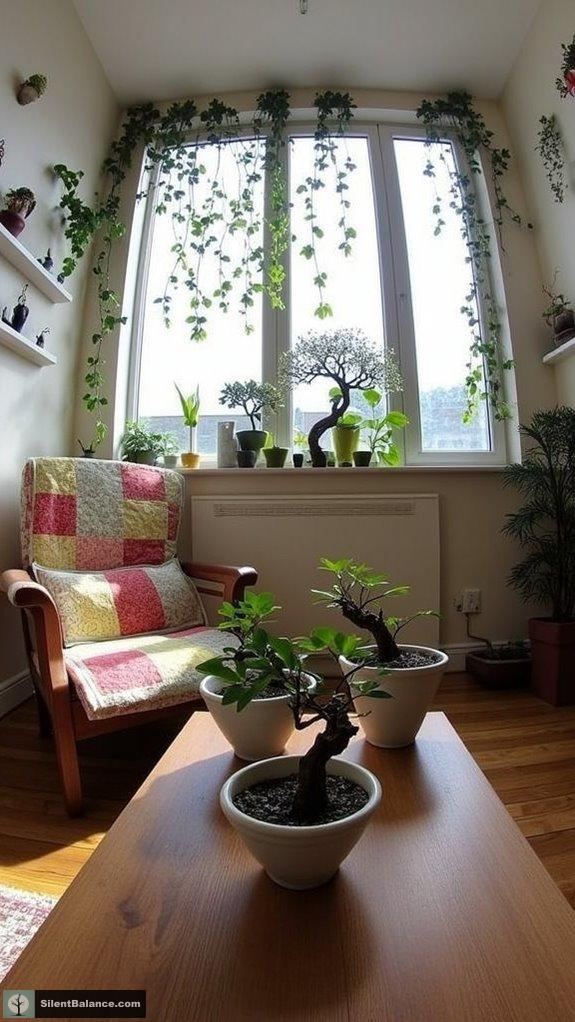
Choosing the right lightweight pots can make all the difference when you’re trying to create the perfect urban bonsai display.
Lightweight plastics are your best friends here, letting you transport your prized bonsai with minimal strain.
Imagine a 6″ unglazed oval pot weighing just one pound—perfect for your small treasures!
Look for tapered designs; they’re eye-catching and use less material.
And don’t forget those essential drainage holes—they’re like a bonsai’s air conditioning!
So, why not dabble with modular designs?
They’ll let you rearrange your aesthetic effortlessly, turning an ordinary space into a bonsai oasis!
Incorporating unique bonsai pot styles can elevate the overall visual appeal of your display!
Isn’t that the dream?
Incorporating Natural Elements Into Urban Spaces
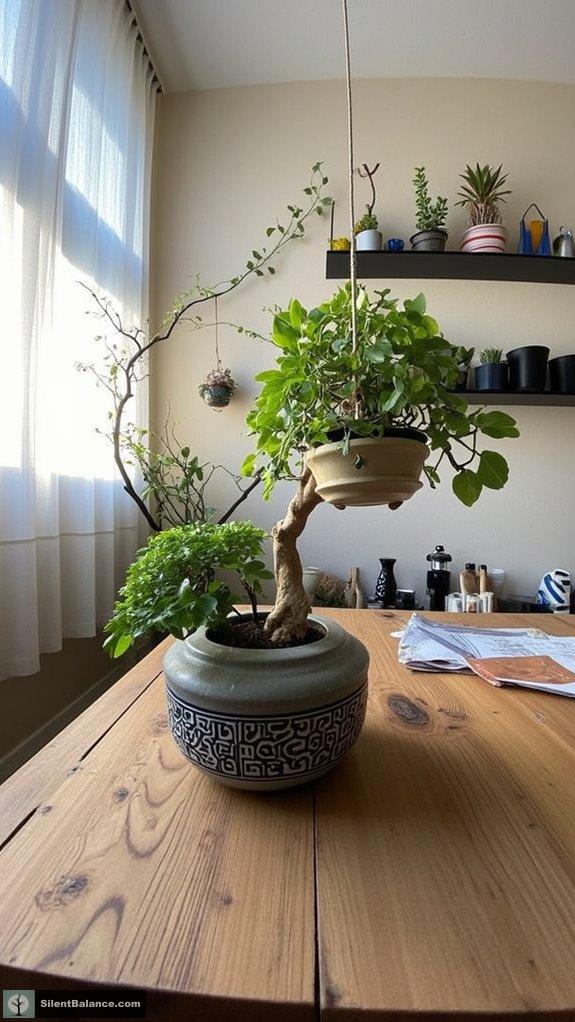
When you think about bonsai in the urban jungle, it isn’t just about the pots; it’s the whole environment they inhabit. Embracing natural elements enhances our bonsai displays and harmonizes them within their concrete surroundings.
Here’s what to examine:
- Utilize sunlight exposure, drainage, and existing vegetation.
- Incorporate water features like fountains for auditory appeal.
- Choose native species for environmental resilience.
- Support pots with stones or utilize urban walls for structure.
- Mimic woodland ecosystems with layered arrangements for aesthetic and ecological balance.
Integrating these aspects takes your bonsai game to the next level, making your urban oasis come alive!
Finding the Balance Between Function and Form
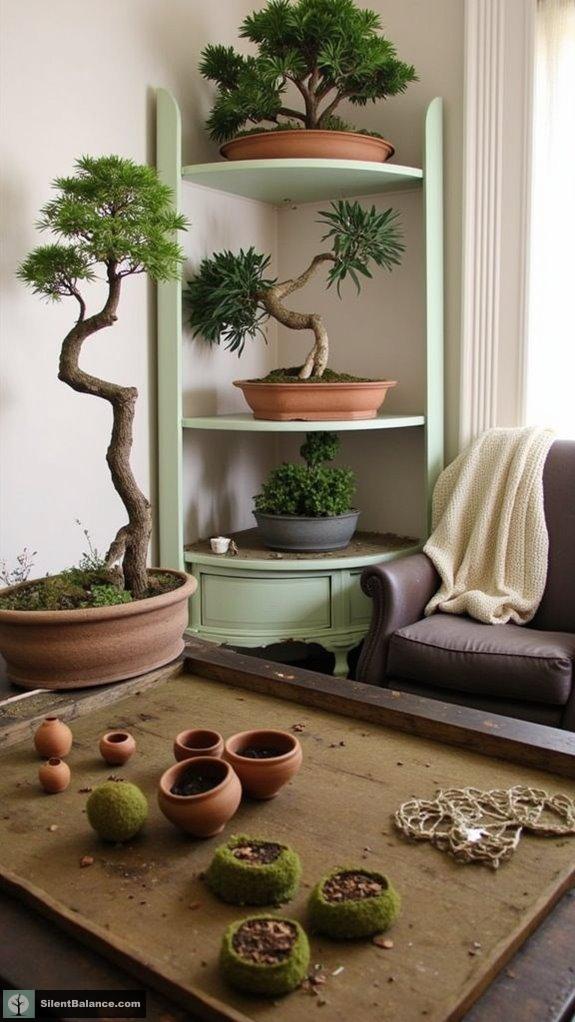
Finding the right balance between function and form in bonsai pots is like walking a tightrope—it requires finesse and a keen eye for detail.
Are you aiming for that perfect harmony? Keep in mind, the pot material affects not just aesthetics but root health too. Classic stoneware is your go-to.
And let’s not ignore drainage holes—vital for preventing waterlogging.
The pot’s dimensions should reflect the tree’s stature. Think proportion! Oversized pots can dwarf your minis, while too-small ones risk root crowding.
Cultural Significance of Trees
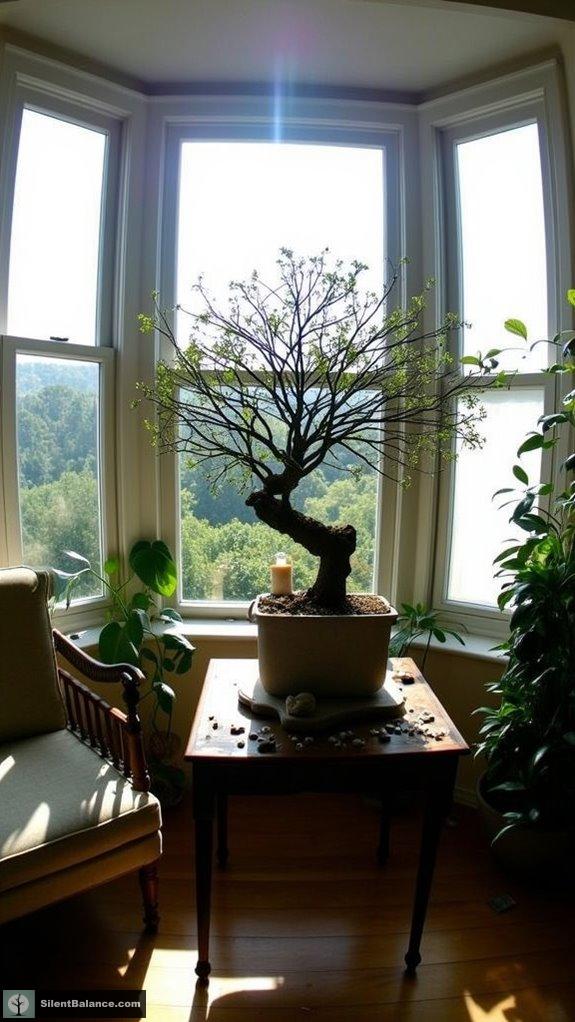
Cultural significance breathes life into the trees we cherish, turning them into much more than mere plants in our urban environments.
Have you ever realized how trees are woven into our heritage? They’re much more than decoration; they symbolize:
- Life, growth, and renewal across cultures
- Specific species with spiritual or mythological meanings
- Living monuments reflecting historical events
- Wisdom and strength in folklore
- Gathering spaces for community celebrations
In bonsai, we honor these narratives through meticulous artistry and care.
Isn’t it fascinating how a tiny tree can bridge our history and nature? Each bonsai tells a story, and I can’t get enough!
Questions and Answers
What Is the Best Pot Size for Beginners?
Choosing the right pot size is key for beginners. I’ve found that a pot height matching the trunk thickness creates visual balance.
Aim for about two-thirds of the tree’s height for width. Keep in mind, a pot that’s too big makes your bonsai throw a growth party—no thanks!
These classic ceramic beauties help with drainage, too.
How Often Should I Repot My Bonsai Tree?
So, how often should you repot your bonsai tree?
Well, if it’s a young one, think every 1-2 years.
An older tree? Maybe every 3-5 years.
But keep an eye on those roots! If they’re circling or popping out of the drainage holes, it’s time for a little spa day.
Don’t forget: fresh soil is key, and repotting in early spring is ideal.
Your bonsai will thank you with lush growth!
Can I Use Regular Garden Soil in Bonsai Pots?
You’d think using regular garden soil for bonsai pots would be a shortcut, right? Well, think again! It compacts like an overstuffed suitcase, suffocating those precious roots.
Instead, opt for that specialized bonsai mix—Akadama, pumice, and lava rock create a breathable paradise for your tree. Trust me, your bonsai will thrive!
Plus, can you envision stunted growth? That’s just heart-wrenching! So, let’s keep our bonsais happy and healthy with the right ingredients!
What Pots Are Safest for Indoor Bonsai Displays?
When choosing pots for indoor bonsai, I always go for durable glazed ceramic. It balances moisture retention and breathability, keeping my little trees happy.
Plus, one or more drainage holes are non-negotiable—nobody wants a soggy rootball!
Have you ever seen a bonsai topple over from a flimsy pot? Not pretty! So, stability’s key.
Recall, earthy tones and unique shapes can enhance that tranquil vibe, making your display feel alive.
How Can I Protect Bonsai From Winter Temperatures?
Protecting your bonsai from winter temperatures is like wrapping your favorite sweater around a chilly friend—it’s all about insulation.
I recommend tucking your bonsai snugly into mulch beds or partially burying their pots to keep roots cozy. If you’ve got space, a cold frame works wonders!
Don’t forget to check moisture levels, as dormant trees still need some hydration.
What’s your strategy for keeping those little beauties thriving during the frosty months?
References
- https://www.bonsaiable.com/blog/pots-for-bonsai-trees
- https://www.bonsaiempire.com/basics/bonsai-care/choosing-pots
- https://potsplantersandmore.com/blog/bonsai-101-choosing-planting-and-caring-for-your-tiny-tree/
- https://easternleaf.com/bonsai-trees/bonsai-pots/
- https://www.gobbs.org/urban collecting.htm
- https://www.spiritjapan.com/products/low-profile-bonsai-pot
- https://abanahomes.com/blogs/news/bonsai-pots-the-ultimate-guide-for-beginners
- http://bonsai-keramik.com/en/teorie.html
- https://bonsaitreelive.weebly.com/blog/discover-the-best-unique-bonsai-pots-for-your-collection
- https://www.veronneau.com/en/trends/indoor-decor-trends/top-5-bonsai-tree-ideas/

- 11 Best Luxury Sandalwood Candles for 2026 - June 19, 2026
- 11 Best Woven Wicker Gift Baskets for 2026 - June 19, 2026
- 11 Best High Powered Binoculars for 2026 - June 19, 2026
