
Unlocking the Secrets of Bonsai Care
Caring for a bonsai tree can feel like a riddle wrapped in a green enigma. But trust me, the journey can be tremendously rewarding.
Years ago, I received a tiny juniper bonsai as a gift. It seemed frail, hidden in a delicate pot. Yet, with patience and love, I learned the symbolism of trees: resilience and harmony. It turned into a cherished companion, reflecting not only my dedication but also the growth of my spirit.
Our blog, Silent Balance, dives into the essence of bonsai care. It covers everything from soil types to proper watering techniques. Let’s face it: bonsai isn’t just trendy; it’s about nurturing life and patience.
Speaking of patience, I vividly recall the day I mistakenly overwatered my juniper. It drooped, and I panicked. But I learned a vital lesson. One small misstep doesn’t define your journey. It’s about making corrections with a gentle hand.
Bonsai care is a dance—understanding moisture levels, pruning for health, and embracing the artistry of growth. You have the power to transform your own tiny forest!
Quick Takeaways
- MYTH: Bonsai trees thrive in minimal sunlight; FACT: They require ample light, with specific needs varying by species for optimal growth and health.
- MYTH: Bonsai only need watering when soil appears dry; FACT: Regular soil moisture checks are essential to meet the tree’s hydration needs effectively.
- MYTH: Pruning is only for aesthetics; FACT: Pruning promotes health by enhancing airflow and stimulating new growth essential for overall vitality.
- MYTH: Any soil will work for bonsai; FACT: Proper soil mixes with organic and inorganic components are crucial for drainage and root health.
- MYTH: Bonsai are grown from genetically small trees; FACT: They are regular-sized trees carefully cultivated and maintained to stay small through various techniques.
The Importance of Soil Type for Your Bonsai
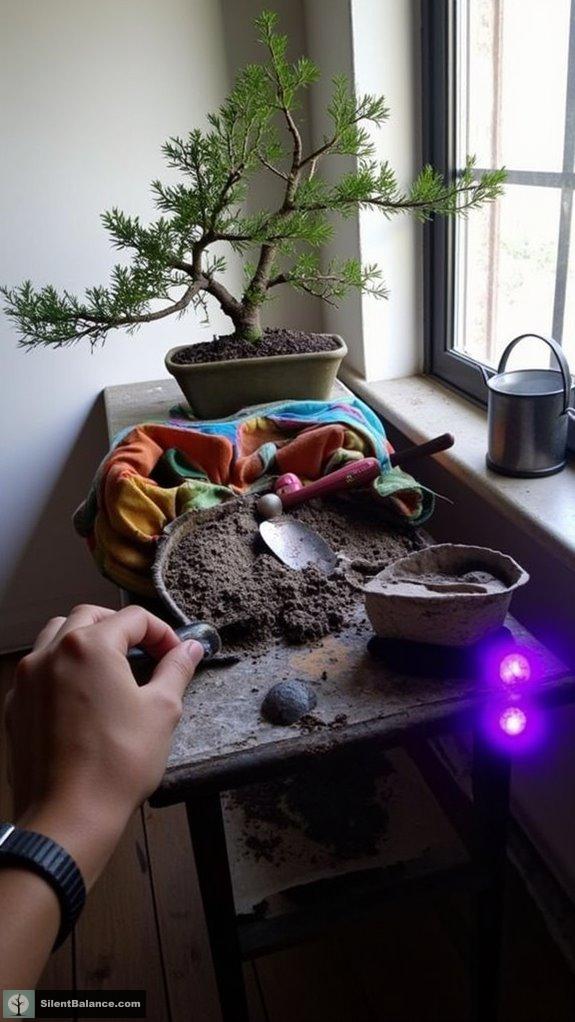
When it comes to caring for your bonsai, the soil you choose is like a cozy home for your tree, and trust me, it’s essential!
Think of soil as the foundation of a bonsai’s health. A mix of organic goodies like leaf mold and inorganic wonders like pumice and akadama really sets your tree up for success. To ensure your bonsai thrives, it’s crucial to select a soil that facilitates drainage without clogging while maintaining air spaces for healthy roots. The perfect soil mix for indoor bonsai trees often includes the right balance of materials to optimize nutrient retention and drainage.
Soil is the backbone of your bonsai’s well-being; a perfect blend of organic and inorganic materials creates thriving roots!
Wanna keep those roots happy? You need the right particle size; pines love it coarse, while flowering bonsais crave retention.
Got your drainage and aeration correct? Fantastic! If not, bye-bye, root rot!
Watering: Frequency vs. Soil Moisture
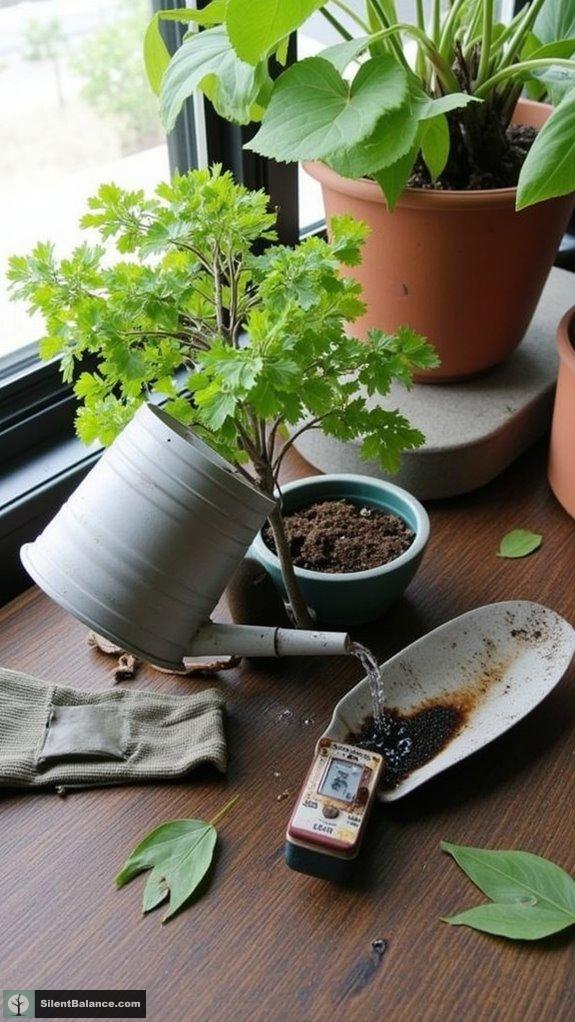
Here’s a nifty table to help you recall:
| Soil Moisture Indicator | Action Needed |
|---|---|
| Dark, cool soil | Chill, no watering needed |
| Light, warm soil | Time to hydrate! |
| Dry pockets detected | Deep soak required! |
I love the tactile dance of checking moisture—feeling that earthy texture and evaluating the soul of my bonsai! Trust me, it’s an art, not a chore! Remember, striking a balance in watering practices is essential for the health and vitality of your bonsai. During summer, bonsai usually require more frequent watering due to increased evaporation rates, so always monitor their needs closely.
Fertilizer Choices: Myths and Reality
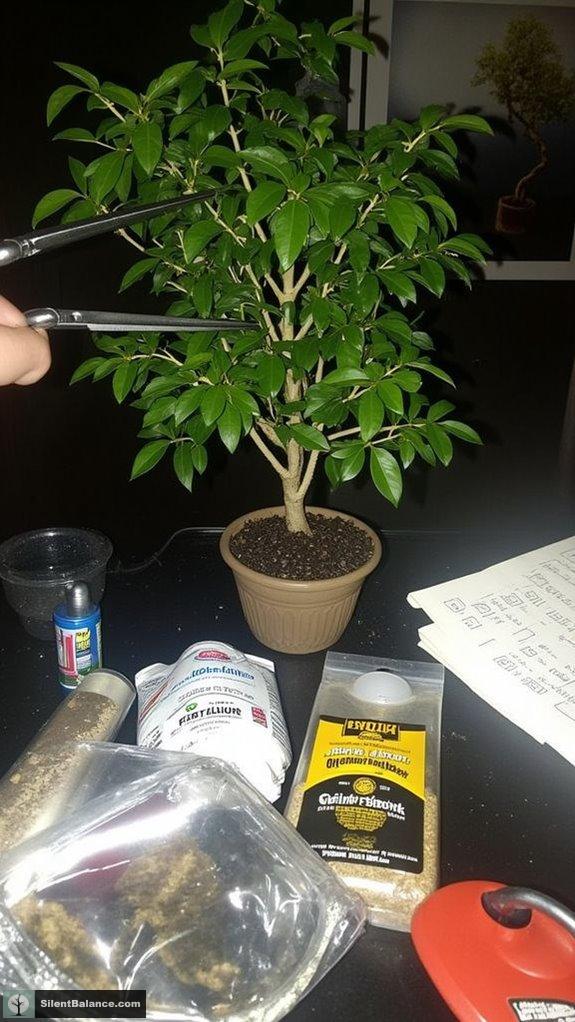
Why do we often hear conflicting advice about bonsai fertilizer? It’s a jungle out there in the bonsai world!
You’ve got organic fertilizers, slow-releasing nutrients, and potential odors to take into account. Meanwhile, chemical fertilizers deliver quick boosts but watch out for those fertilizer burns!
Let’s chat about NPK ratios. High nitrogen might sound great for spring, but too much can lead to a wild, noodle-like mess.
Balanced ratios, like 6:6:6, keep things in check while lower ones prepare your bonsai for dormancy. Additionally, the symbolism of bonsai in various cultures often emphasizes the importance of nurturing growth and balance, which is why balanced care in fertilizer is essential for maintaining these miniature trees‘ health.
And don’t get me started on foliar feeding! Sure, it’s a quick fix, but it can’t replace root feeding.
Pruning Practices for Indoor and Outdoor Bonsai
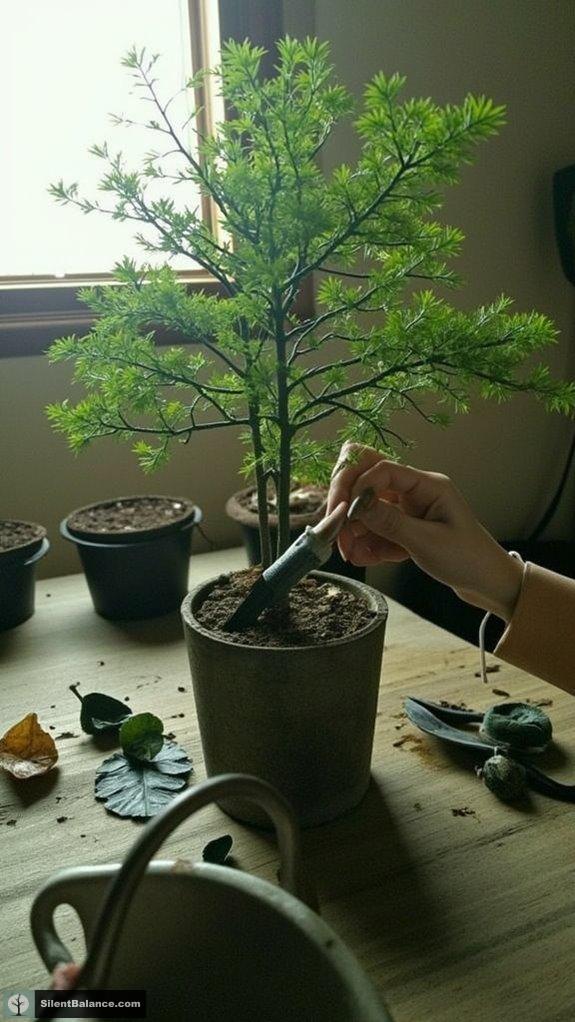
As you immerse yourself in the fascinating world of bonsai, you’ll quickly discover that mastering pruning techniques is essential for keeping your miniature tree flourishing and fabulous.
Here are some cool practices to reflect on:
- Pinch those tips: Encourages bushy growth and shape.
- Thin out: Enhance airflow and light penetration.
- Head back: Control branch size with precision cuts.
- Sanitize tools: Keep diseases at bay while ensuring clean cuts.
- Root prune wisely: Especially during repotting, to stimulate feeder roots.
Indoor bonsai need more TLC due to their cozy environment, while outdoor ones thrive on seasonal changes.
Think of it as a dance, where well-timed steps lead to a healthier, happier bonsai!
Are you ready to take the plunge?
Seasonal Care: How Environmental Factors Influence Care
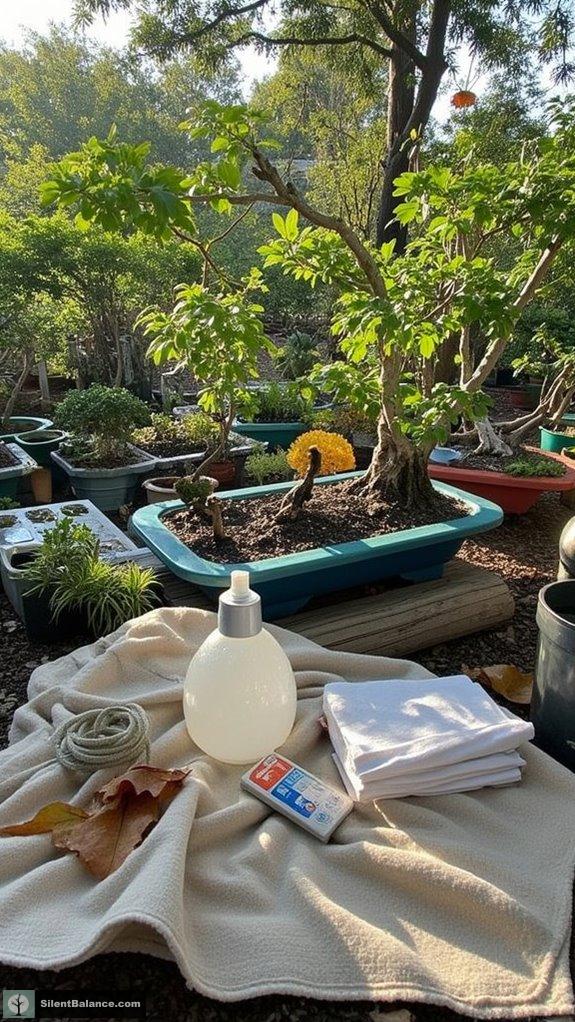
While the beauty of bonsai lies in its delicate artistry and miniature grandeur, caring for these little gems can feel like traversing a nature-themed obstacle course throughout the seasons.
In winter, I’ve learned to drape frost cloths over my outdoor bonsai, as it’s like giving them a cozy blanket. Water less frequently, but don’t let the soil go dry; nobody likes a thirsty tree!
Spring kicks off the excitement—time to repot and let those roots breathe as they spring to life.
As summer rolls in, I’m misting my indoor beauties, keeping them cool and hydrated.
Fall nudges me to slow down; I never fertilize late. It’s all about respecting their dormancy.
After all, bonsai care isn’t just maintenance; it’s a passionate dance with nature!
Ideal Placement for Healthy Growth
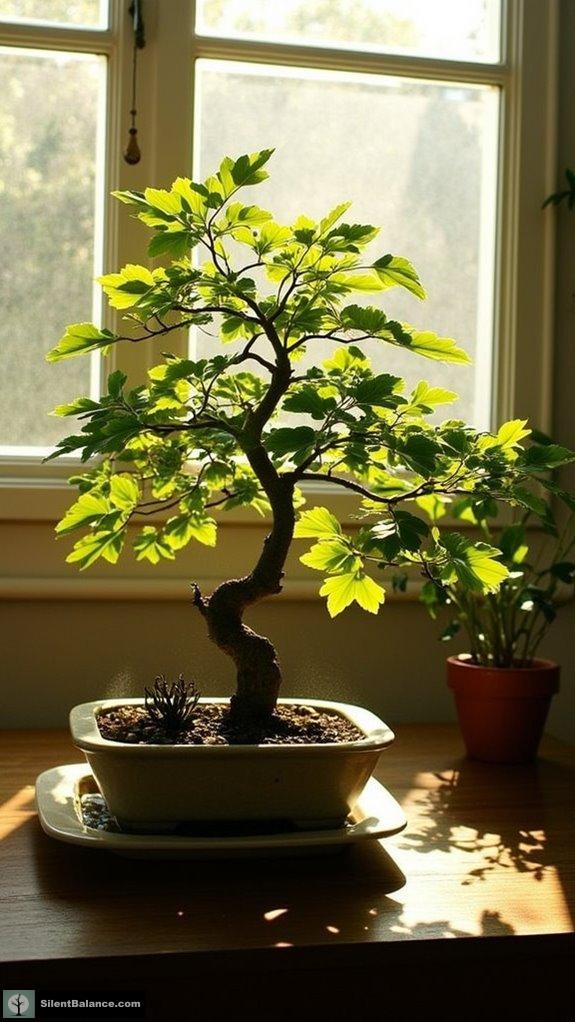
Finding the perfect spot for your bonsai can feel like playing musical chairs at a botanical dance.
To keep your little tree thriving, consider these tips:
- Opt for a south-facing window to soak up intense sunlight.
- Avoid placing it too far from the light, or risks reduced growth loom large.
- Ensure it gets four to six hours of direct sun, like a sunbather on a glorious beach day.
- Use humidity trays or mist it regularly to combat dry indoor air, as bonsai love moisture.
- Shift outdoor bonsai to slightly shaded spots during peak summer heat to prevent leaf burns.
Bonsai placement isn’t just about aesthetics; it’s essential for a happy, healthy tree!
Where’s your bonsai claiming its throne?
Common Misconceptions About Bonsai Maintenance
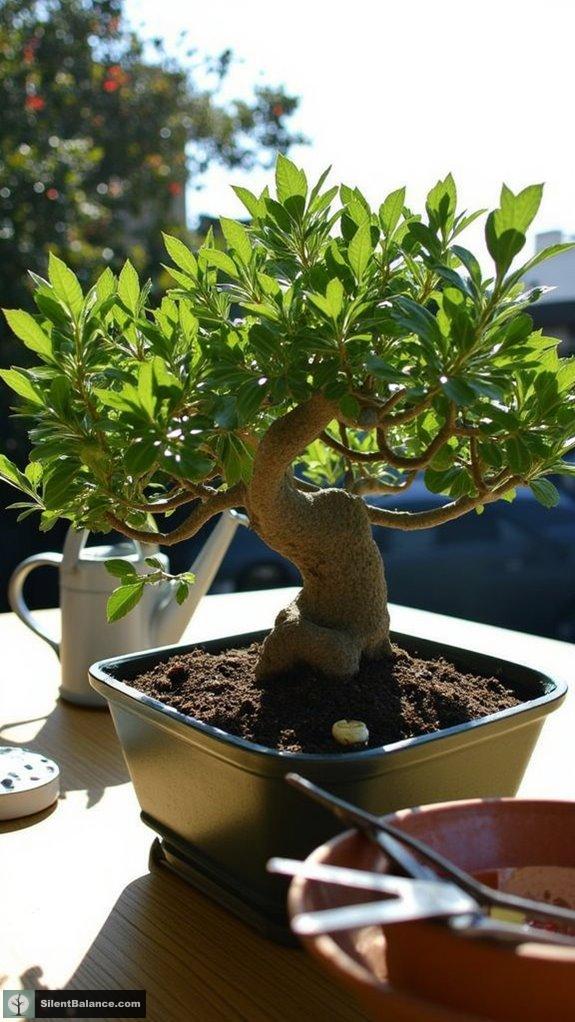
When it comes to bonsai maintenance, many folks are quick to label these miniature trees as high-maintenance divas, but that’s a myth worth debunking.
In reality, bonsai care can be invigoratingly straightforward with a little know-how and consistent practices.
You don’t need specialized soil or constant trimming—just a good drainage mix and thoughtful pruning to maintain that perfect shape.
Watering? Simply check the soil moisture. When the top inch is dry, it’s time for a drink.
And let’s be honest: bonsai aren’t houseplants meant for year-round indoor living. Most need their outdoor seasonal vibes!
Balancing Aesthetics and Bonsai Health in Home Decor
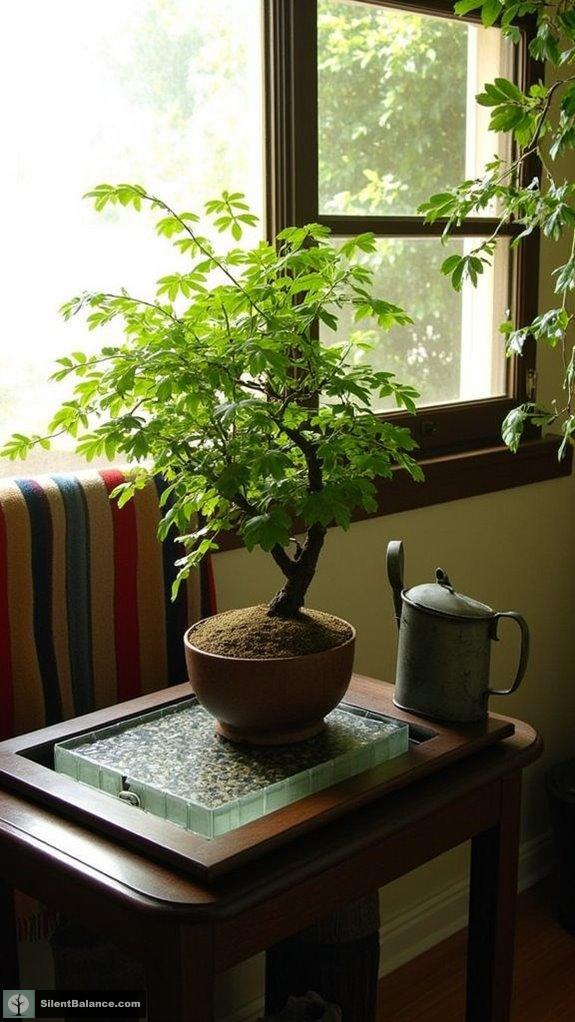
Balancing aesthetics and bonsai health in home decor can feel like walking a tightrope—one misstep and your cherished tree’s thriving health might be at stake!
To create a stunning setup while keeping your bonsai happy, consider these tips:
- Position near a south-facing window for ideal light.
- Avoid spots too close to heat sources, like TVs or fireplaces.
- Use humidity trays to maintain moisture levels.
- Group bonsai in areas with naturally high humidity, like bathrooms.
- Rotate your little guys outdoors when the weather’s favorable.
Watering Frequency for Bonsai
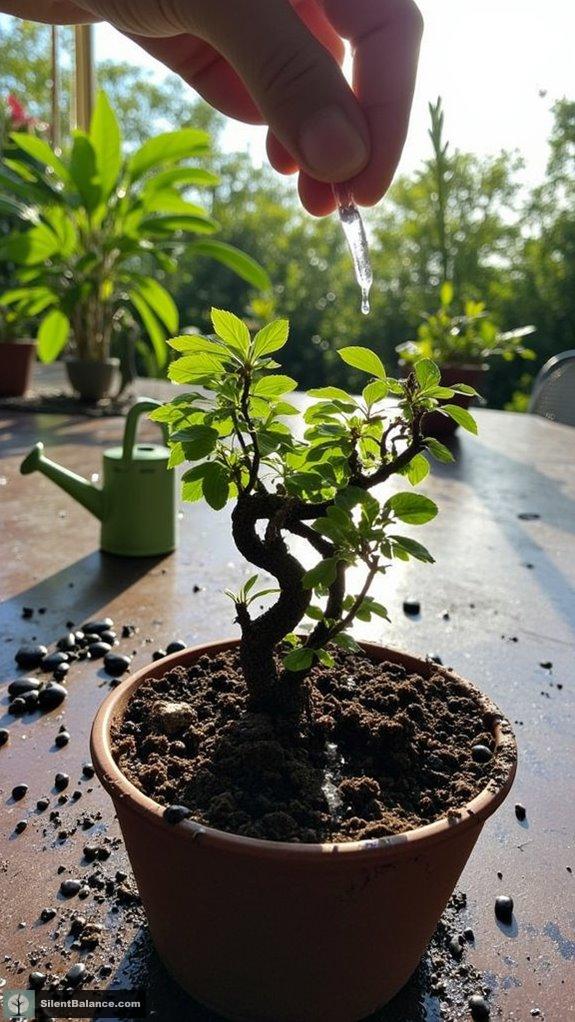
Caring for a bonsai tree doesn’t just stop at finding the perfect spot in your home; understanding its watering needs is essential for maintaining its health and vibrancy.
Here’s the scoop: I only water my bonsai when the soil’s dry to the touch, tossing out any rigid schedules. Overwatering? That’s a big no-no!
When summer sizzles, I keep my eye on environmental factors like heat and wind—remember, they can make my little green buddy thirsty.
A smaller pot? More frequent watering, please! I also make sure to soak the soil thoroughly so every root gets a drink.
Cultural Significance of Trees
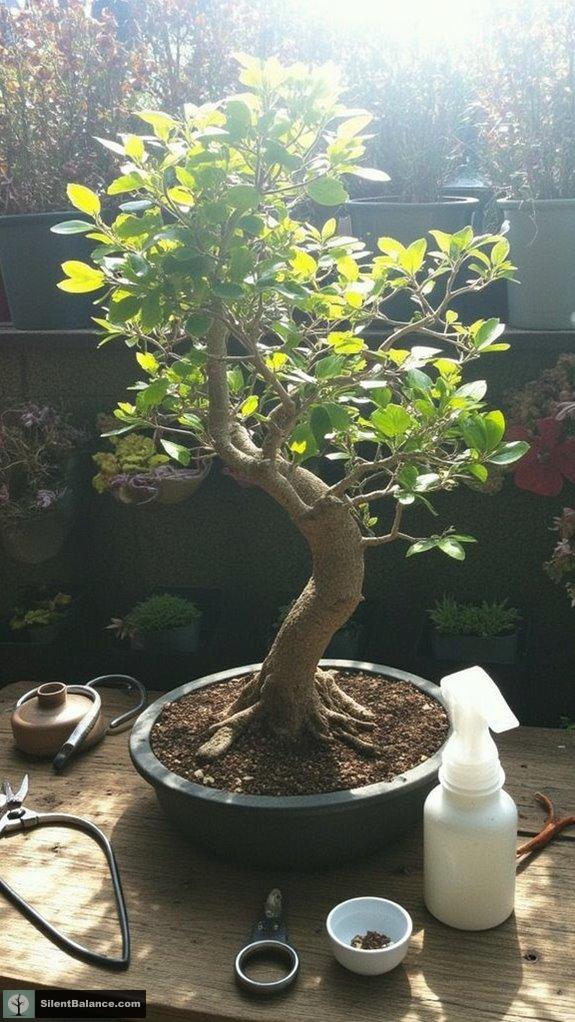
While many folks may not realize it, trees hold a wealth of cultural significance that stretches far into history, particularly in the domain of bonsai.
Have you ever thought about how deeply rooted bonsai is in various cultures? Here are a few fascinating tidbits:
- Bonsai originated over 1,300 years ago in China as a status symbol.
- The term hachi no ki highlights the artistic evolution in Japan.
- Bonsai embodies Zen principles, representing harmony and balance.
- It serves as a meditative object in traditional tea ceremonies.
- These miniature wonders taught me patience and resilience in artistry.
Questions and Answers
Can I Use Regular Potting Soil for My Bonsai?
Can I use regular potting soil for my bonsai? Honestly, it’s a bit like trying to put a square peg in a round hole!
Regular potting soil loves to hold moisture, which bonsai just can’t stand. I’ve learned the hard way that their roots crave good drainage and aeration, so I opt for bonsai soil mixes instead.
Why risk root rot? Let’s keep our little leafy friends healthy and thriving, shall we?
How Can I Tell if My Bonsai Needs More Water?
Ever felt like your bonsai is giving you the silent treatment?
To figure out if your little tree needs a drink, check the soil. If it’s crumbly or pulls away from the pot, it’s thirsty!
Wilting leaves? That’s a cry for help, too.
But beware of soggy soil; that’s a sign of drowning!
Understanding your bonsai’s needs isn’t just watering—it’s bonding.
Is There a Specific Temperature for Optimal Bonsai Growth?
For most bonsai, you’re aiming for that sweet spot of 20°C to 30°C (70°F to 85°F).
Too hot? Say hello to heat stress and crispy leaves.
Too cold? Well, that’s a chilly reception below 10°C (50°F).
Think of it this way: bonsai thrive like celebs in a comfy climate.
Can you keep the temp stable? You’ll have a happy little tree and avoid the drama of temperature tantrums!
Can Bonsai Trees Survive in Low Light Conditions?
Absolutely, bonsai trees can survive in low light!
Believe it or not, species like Ficus and Jade are low-light champions. They thrive indoors, soaking up artificial light like pros and forgiving a little neglect.
Ever tried using fluorescent lights? They’re a game changer for bonsai lovers!
Just think: great foliage with less light—what a win!
Should Bonsai Trees Be Kept Indoors or Outdoors Year-Round?
Should bonsai trees be kept indoors or outdoors year-round?
Let’s face it, most bonsai are outdoor warriors craving that fresh air and seasonal magic, not some cozy living room! These green gems thrive when exposed to the elements, especially in winter dormancy.
Now, if you’ve got a tropical buddy, keep it cozy indoors away from frost.
Balance and consistency are key—just like in life, right?
What do you say, ready to give your bonsai the best life?
References
- https://bonsai2u.co.uk/everything-need-know-about-outdoor-bonsai-tree-care/
- https://www.bonsai-shop.com/en/care
- https://www.kew.org/read-and-watch/top-ten-bonsai-tips
- https://www.rhs.org.uk/plants/types/trees/bonsai
- https://www.allthingsbonsai.co.uk/bonsai-tree-care/indoor-bonsai-care/
- https://www.allthingsbonsai.co.uk/bonsai-tree-care/a-discussion-on-bonsai-soil/
- https://www.bonsaiempire.com/blog/bonsai-soil-requirements
- https://bonsai4me.com/an-introduction-to-bonsai-soils/
- https://www.bonsaiempire.com/basics/bonsai-care/bonsai-soil
- https://www.youtube.com/watch?v=YqnGG6GZKAE

- 11 Best Luxury Sandalwood Candles for 2026 - June 19, 2026
- 11 Best Woven Wicker Gift Baskets for 2026 - June 19, 2026
- 11 Best High Powered Binoculars for 2026 - June 19, 2026
