
Bonsai trees: the little wonders that embody love, growth, and harmony. They’re not just plants; they’re heartfelt treasures.
I remember the first bonsai I ever gifted. It was a tiny Ficus, wrapped perfectly in a rustic pot. My friend, going through a tough patch, found solace in nurturing it. She texted me photos of its progress. Each leaf unfurling symbolized her healing.
At Silent Balance, we explore the profound symbolism of trees. A bonsai serves as an ever-present reminder that patience leads to beauty.
A while back, I gifted a bonsai to my grandmother, who had always cherished gardening. Her delight was palpable as she nurtured it. Watching her tend to that little tree, I realized the true magic of bonsais—how they mirror our lives. Each twist in their branches narrates a story of resilience. It’s nature’s way of echoing our journeys.
Quick Takeaways
- Bonsai trees symbolize harmony and balance, making them profound gifts reflecting meaningful relationships.
- They represent love and care from the giver, fostering connections and personal growth.
- Gifting a bonsai encourages mindfulness and nurturing, reminding recipients of patience and dedication.
- Different species, like the Chinese Elm or Olive, carry unique meanings, enhancing the gift’s significance.
- Bonsai trees connect individuals to nature, emphasizing the importance of environmental preservation and ecosystem health.
The Essence of Harmony in Bonsai Trees
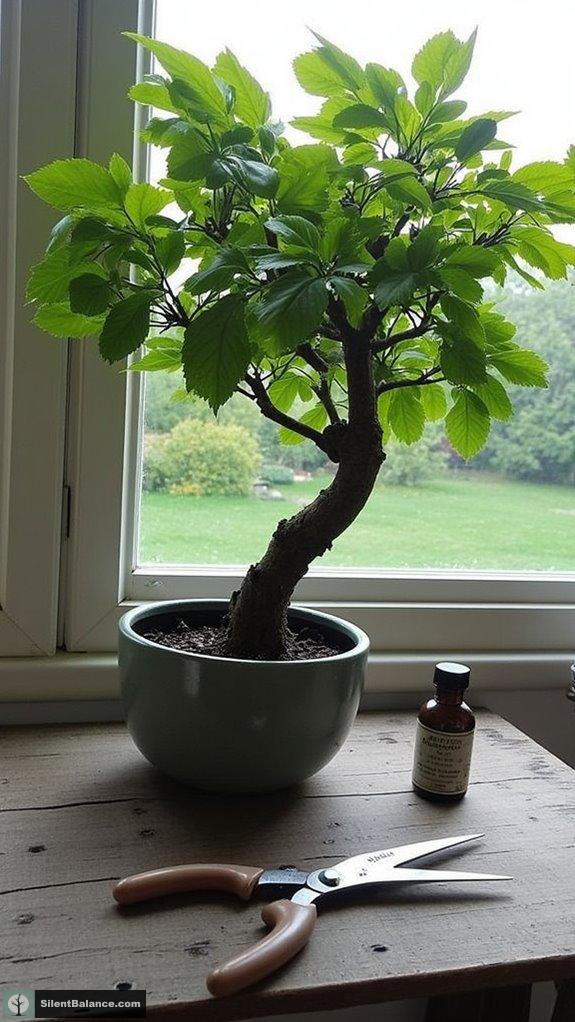
When you think about bonsai, you might picture those meticulously pruned little trees sitting on a shelf, but there’s so much more depth to this art—it’s about cultivating harmony, both within the tree and our own lives.
Originating from ancient Japan and China, bonsai embodies balance, just like a well-crafted haiku. The Japanese term even means “planted in a pot,” making it a tiny universe of serenity. Engaging in bonsai tree meditation allows practitioners to connect with their inner selves, fostering a sense of inner peace.
Bonsai, rooted in ancient traditions, encapsulates balance and tranquility, creating a serene universe within its pot.
Have you heard of the Chinese Elm? It’s known as the “tree of harmony,” representing wisdom and balance. Additionally, the art of bonsai reflects a commitment to eco-friendly practices, encouraging connections with nature.
Bonsai isn’t just a hobby; it’s a spiritual practice, urging us to reflect, nurture, and grow.
Love and Care Through Bonsai Cultivation
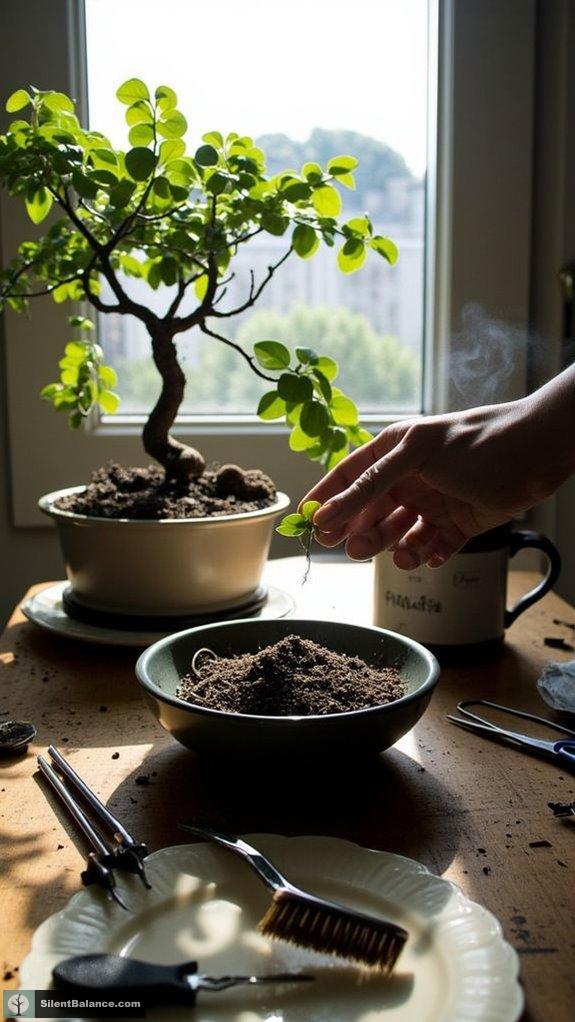
Bonsai cultivation isn’t just about nurturing a miniature tree; it’s a genuine act of love that grows deeper with every trim and twist.
Think of regular pruning and wiring as your intimate chats with this little green companion; it needs your attention.
Ever felt the thrill of untangling roots during repotting? That’s putting in the work to minimize trauma, kind of like handling a delicate relationship. Proper growing environment is crucial for bonsai health, ensuring your efforts yield a thriving plant.
Ensuring a healthy soil mix is like crafting the perfect environment for growth. It’s not just about avoiding root rot; it’s about building a solid foundation, don’t you think?
Creating a care routine feels like establishing rituals that cultivate mindfulness and gratitude.
The Virtue of Patience in Bonsai Growth
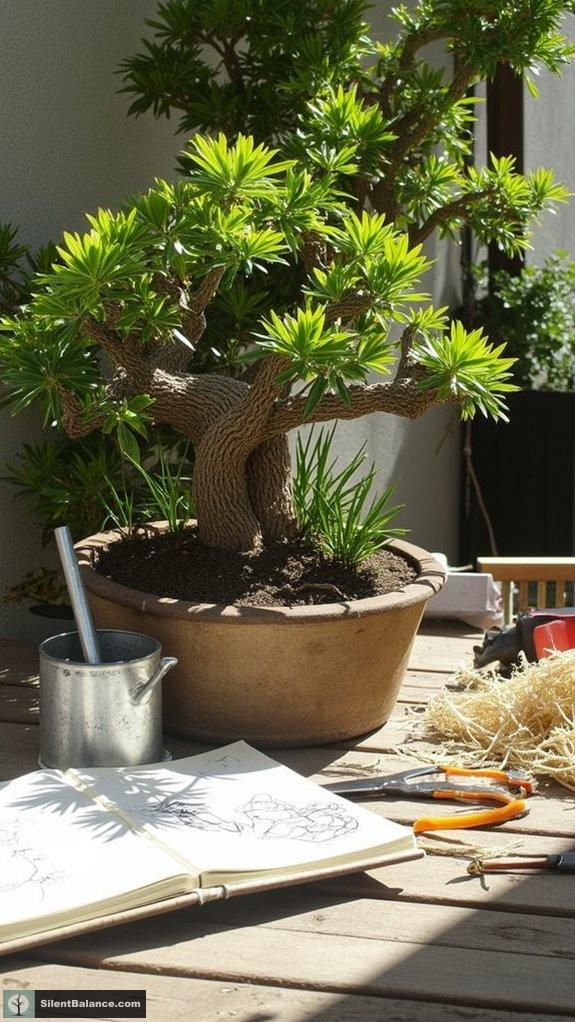
Cultivating a bonsai isn’t just an art; it’s a test of patience that can push even the most level-headed among us to the edge.
Have you ever gently wrapped a branch with raffia, only to realize you need to loosen it again months later? Yeah, bonsai care isn’t for the faint-hearted!
Pruning requires thoughtful strategy—cut too much, and you might doom your tree.
I’ve marveled at how subtle changes shape the bonsai over years, revealing its character gradually.
And don’t get me started on watering! Checking soil moisture daily feels like a job in itself. Proper soil moisture is essential for the health of the bonsai, making this daily task even more critical.
Yet, these challenges immerse us in nature’s clock, where true beauty blossoms slowly.
Who knew patience could be so rewarding and downright fun?
Historical and Cultural Significance of Bonsai
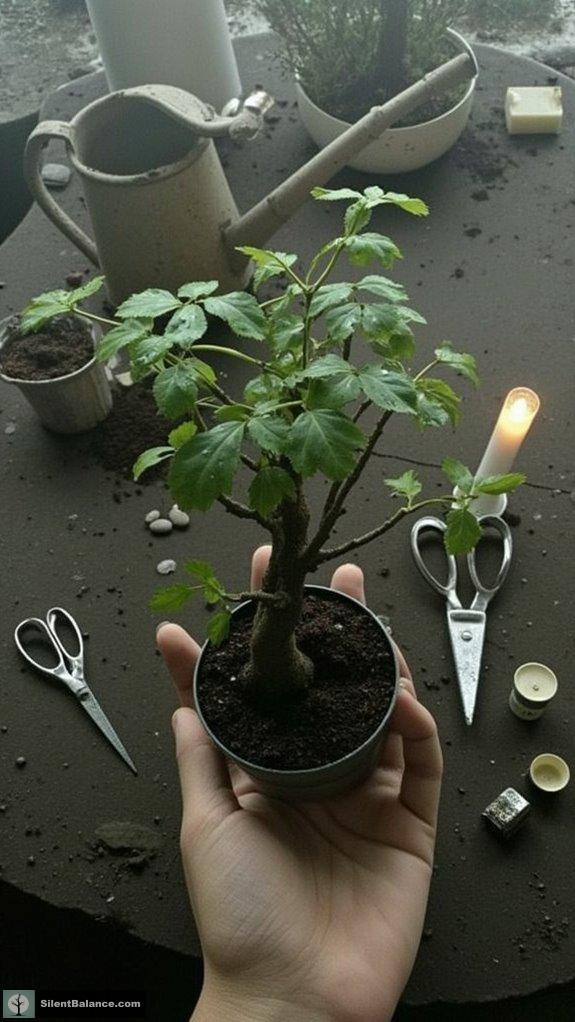
After spending hours nurturing my bonsai, I can’t help but reflect on its deep historical roots and vibrant cultural significance.
Did you know bonsai traces back to the Han Dynasty in China around 210 BC? Those early miniature settings reminded me of complex art forms, showcasing trees with gnarled roots that could tell stories of mythical dragons!
Bonsai’s journey began in ancient China, weaving together art and nature with every gnarled root telling tales of dragons.
Then, Japan embraced bonsai, transforming it into an elegant expression of Zen aesthetics. Envision a single tree in a pot, symbolizing the universe—talk about profound!
Moreover, the symbolism of bonsai emphasizes the delicate balance of nature and life, further enriching its cultural importance.
Bonsai in Literature: A Symbol of Growth and Balance
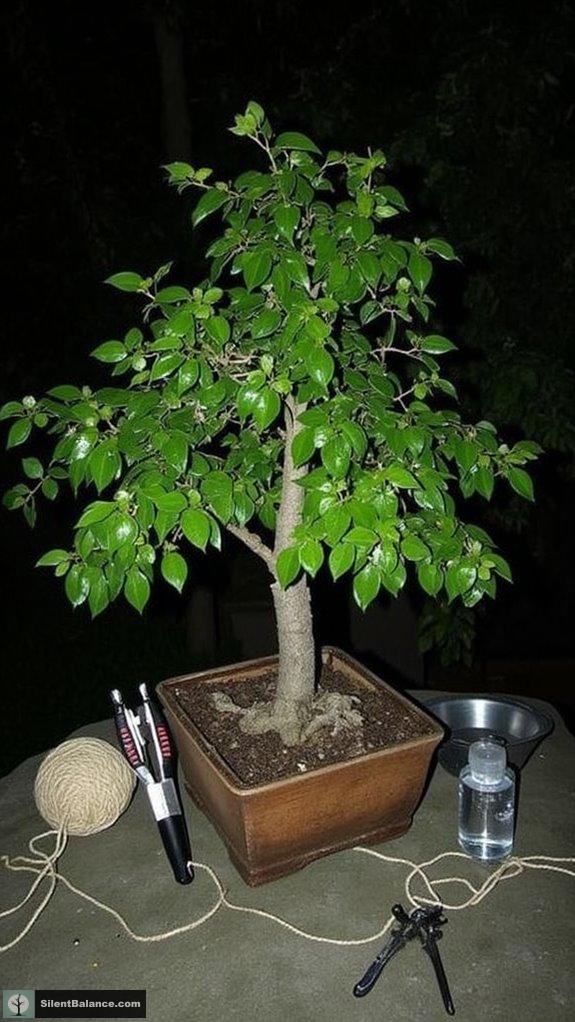
While many people admire the beauty of bonsai trees, few truly grasp their significance as symbols of growth and balance in literature.
Bonsai frequently appear in texts that explore personal development, showcasing how our lives, much like these miniaturized marvels, require care and patience to flourish. They embody not just growth but the delicate dance of restraint and nurture.
| Bonsai Symbol | Literary Framework | Themes Explored |
|---|---|---|
| Balance | East Asian classics | Harmony in nature and humanity |
| Transformation | Modern novels | Growth through adversity |
| Patience | Poetry | Inner tranquility and discipline |
Have you ever considered how pruning a bonsai mirrors our need for self-discipline? Isn’t it fascinating how these tiny trees can encapsulate profound life lessons?
Choosing Meaningful Bonsai Species as Gifts
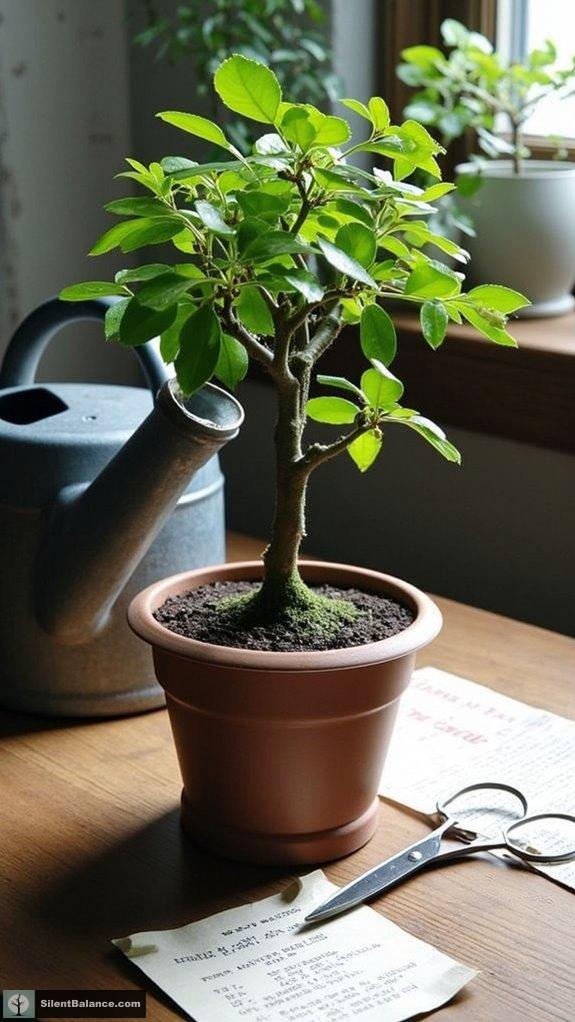
When you think about gifting a bonsai tree, it’s not just about picking any little plant off the shelf—it’s about selecting something truly special that speaks to the recipient’s heart and life journey.
For beginners, I recommend the Chinese Elm. It’s hardy, adaptable, and oh-so-forgiving.
If your friend’s a seasoned enthusiast, reflect on the beauty of a Japanese Maple or the complex art of Juniper.
Each species carries its own story: the Olive represents peace, while the flowering Fukien Tea shouts renewal.
Don’t forget to reflect on their environment too—indoor species like Ficus thrive in stable climates, while outdoor beauties like Juniper soak up the sun.
In bonsai culture, it’s all about harmony and nurturing a lasting bond, right?
Bonsai Trees as Living Art and Decor
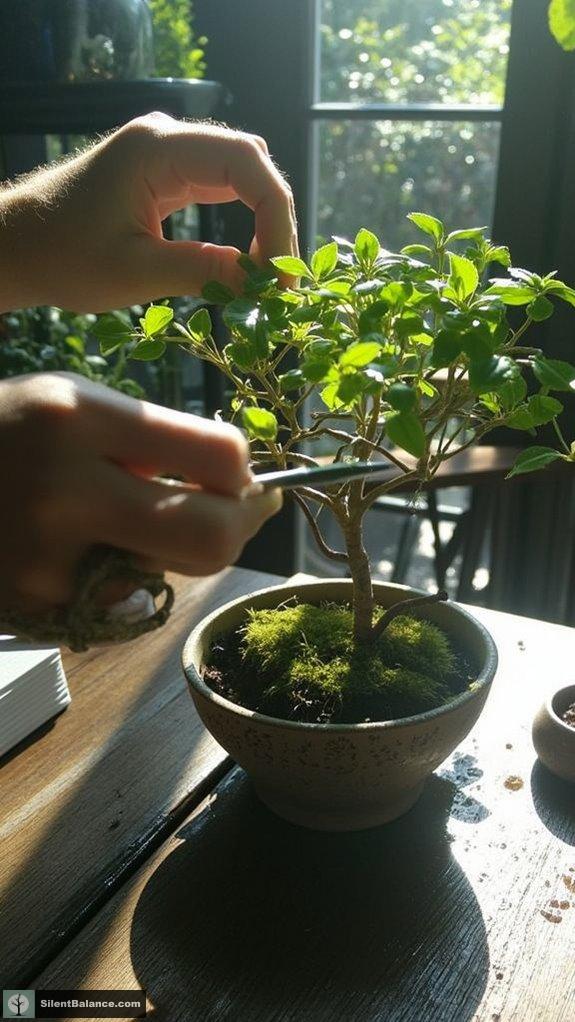
Bonsai trees aren’t just plants; they’re miniature masterpieces that transform any space into a gallery of living art.
Aren’t you intrigued by how these dynamic creations can elevate your decor? Here’s why bonsai can be the perfect choice:
- Proportion and Balance: Their design exquisitely mirrors nature, capturing the essence of mature trees in a small scale.
- Interactive Art: Every trim and twist is a dance of artistry, making your bonsai an developing sculpture that changes over time.
- Environmental Benefits: These green beauties enhance air quality while reducing stress—talk about multitasking!
- Unique Aesthetic: With various styles reflecting natural scenery, your bonsai isn’t just decor; it’s a conversation starter.
Are you ready to bring a piece of nature into your home?
Nurturing Bonds Through Bonsai Gifting
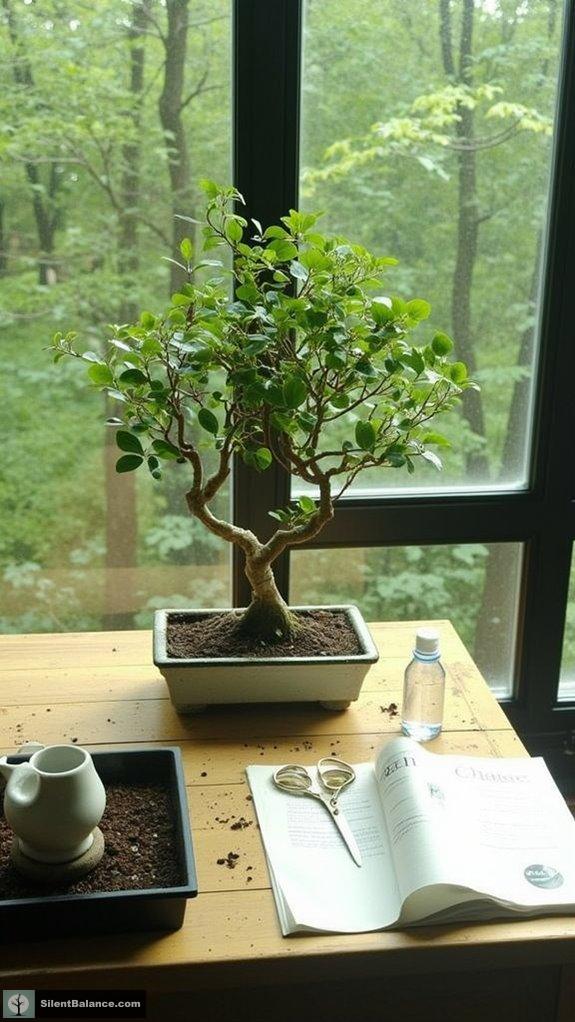
Envision gifting something that’s not just a present, but a living symbol of your relationship. A bonsai tree, my friend, is like that—an complex dance of patience and harmony, reflecting a bond that grows with care.
These miniature marvels aren’t just aesthetic; they embody determination and resilience. Recall, each twist and bend tells a story, much like your journey together.
Think about it—gifting a Chinese Elm symbolizes inner strength, while a Fukien Tea whispers sweet courage. It’s personalized affection wrapped in a little leafy package!
As you nurture this living gem, you’re reminded of the importance of patience in love.
So, why not cultivate not just roots, but also connections that flourish?
Fabulous, right?
Watering Frequency for Bonsai
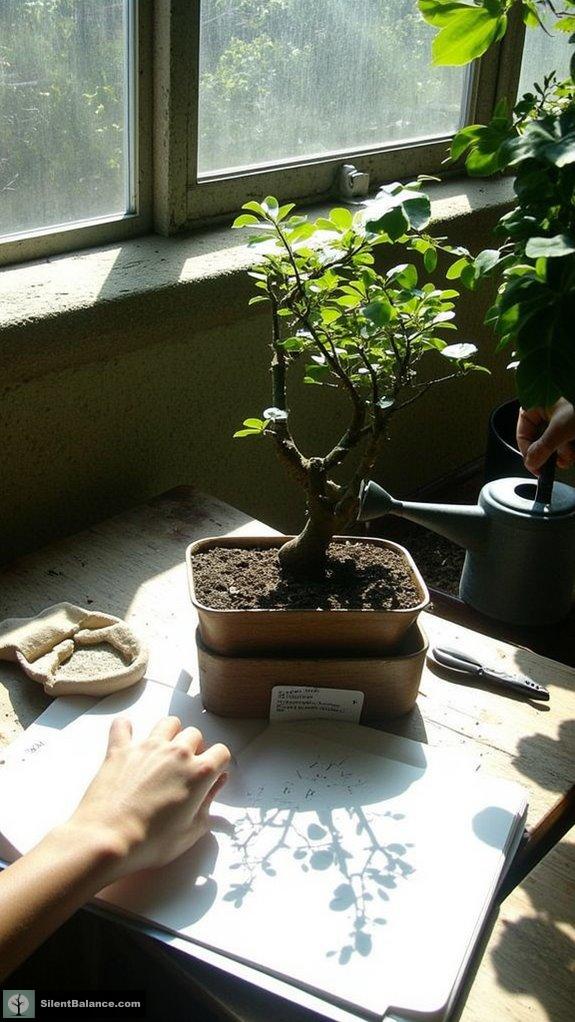
How often should you water your bonsai? Well, that depends on a few tricksters: the tree species, pot size, and the current season.
Forget fixed schedules; bonsai are like people—they have unique needs!
Here’s a quick guide to keep your little tree happy:
- Feel the Soil: Water only when it feels dry to the touch.
- Observe Your Environment: If it’s hot, you might need to water daily—or even three times!
- Check Your Pots: Smaller pots drain faster, so keep an eye on those.
- Listen to Your Tree: Changes in health and seasons might whisper adjustments in your watering routine.
Embrace the artistry of bonsai care, and your green friend will thrive!
Cultural Significance of Trees
While it might seem like trees are merely large plants, they hold profound cultural significance that connects much deeper to our lives and beliefs.
Think about it: trees are our ancient storytellers, linking heaven and earth, embodying life, growth, and, yes, even immortality!
Take the Bodhi Tree, for instance. It saw Buddha’s enlightenment.
The Bodhi Tree stands as a sacred witness to Buddha’s enlightenment, embodying profound spiritual awakening.
Or the mighty Oak, revered by Celts as a fortress of strength. They’re not just decorative; they’re spiritually rich!
Ever heard of the Tree of Life? Across cultures, it symbolizes our connection to one another.
Questions and Answers
How Long Does It Take to Grow a Bonsai Tree?
Growing a bonsai tree? Buckle up, because it’s a journey! Typically, you’re looking at 5 to 10 years to cultivate a mature specimen.
In the early stages, you’ll focus on trunk thickness—think of it as its teenage growth spurt. Fast growers, like elms, can speed the process, while slow-pokes, like pines, need patience.
Want a little trick? Heavy fertilizing can enhance that sapling growth. So, ready to dig in?
What Is the Best Bonsai Tree for Beginners?
So you’re diving into the world of bonsai, huh? Exciting!
For beginners, I’d recommend the Kishu Juniper.
It’s super hardy, versatile, and can handle a bit of wiring, making it a perfect little canvas for your artistic flair.
Plus, don’t overlook the Chinese Elm—it’s got that gorgeous fall color and responds well to styling.
Both are easy to care for, so you won’t find yourself in a panic over them!
Can Bonsai Trees Survive Indoors?
Absolutely, bonsai trees can survive indoors!
I’ve found that tropical and subtropical species, like Ficus or Fukien Tea, thrive best. Just think of your bonsai as a little diva needing bright light, humidity, and the right temperatures.
You’ll want a sunny spot, ideally near a south-facing window.
And don’t skimp on watering—nobody likes a thirsty tree!
If you give them the TLC they deserve, they’ll flourish—trust me! 🌱
What Tools Are Essential for Bonsai Pruning?
So, you’re ready to plunge into bonsai pruning? Grab your concave cutters, and let’s slice through those branches!
Without ‘em, you’re just hacking away like a lumberjack at a picnic.
Knob cutters are a must for those pesky knots—no one likes a flawed showpiece.
And don’t forget your pruning saw! It’s essential for thicker branches.
Got your general shears handy? Perfect! They’ll keep your bonsai looking fab.
Ready to make it a masterpiece?
How Often Should Bonsai Trees Be Repotted?
Hey there, bonsai buddy!
So, how often should you repot those lovely little trees? Generally, younger bonsai need a refresh every 1-2 years, while older ones—like wise old sages—can go 3-5 years or even longer, depending on their vibe.
If you see roots circling like they’re training for a marathon, it’s time! Trust me, giving them some new soil is like a spa day for your tree. Your bonsai will thank you!
References
- https://www.bonsaidirect.co.uk/bonsai-tree-symbolism-tree-of-life-meaning/
- https://mymodernmet.com/bonsai-tree-history/
- https://hookedonbonsai.com/bonsai-trees-in-literature-symbolism-and-significance/
- https://bonsai2u.co.uk/the-meaning-of-bonsai/
- https://www.underthetinytree.com/blog/the-beauty-of-japanese-bonsai-trees-a-cultural-and-artistic-tradition
- https://www.karmaandluck.com/blogs/news/bonsai-tree-meaning-benefits-history
- https://www.lovemybonsai.com/blogs/bonsai/the-art-of-bonsai-unlocking-the-timeless-beauty-and-serenity-of-miniature-trees
- https://www.youtube.com/watch?v=L1FDfwyjkrs
- https://en.wikipedia.org/wiki/Bonsai_cultivation_and_care
- https://bonsaitonight.com/how-to-grow-bonsai-from-seed-or-cutting/

- 11 Best Luxury Sandalwood Candles for 2026 - June 19, 2026
- 11 Best Woven Wicker Gift Baskets for 2026 - June 19, 2026
- 11 Best High Powered Binoculars for 2026 - June 19, 2026
