
Bonsai tree designs are like nature’s own art gallery, and I’m thrilled to share 7 timeless styles inspired by Japanese aesthetics! You’ll find the regal Formal Upright (Chokkan) showcasing symmetry, while the Informal Upright (Moyogi) dances with gentle curves. Want drama? Check out the Slanting (Shakan) and its defiance against gravity. Each tree tells its own story, from the elegant Cascade (Kengai) to the beautifully imperfect Wabi-Sabi. Curious about how they symbolize deeper meanings and emotions? Just wait!
Quick Takeaways
- The Formal Upright (Chokkan) design symbolizes strength and harmony, showcasing a regal trunk structure with balanced branches.
- The Informal Upright (Moyogi) captures nature’s gentle curves, featuring an S-shaped trunk that represents movement and unique beauty.
- The Slanting (Shakan) style embodies resilience through its dramatic trunk angles and robust root systems, reflecting nature’s adaptability.
- The Cascade (Kengai) design mimics trees clinging to steep cliffs, symbolizing endurance while highlighting elegance through upward bending trunks.
- The Wabi-Sabi concept celebrates asymmetry and simplicity, transforming imperfections into art and embodying the beauty of life’s quirks.
Formal Upright (Chokkan): The Strength of Symmetry
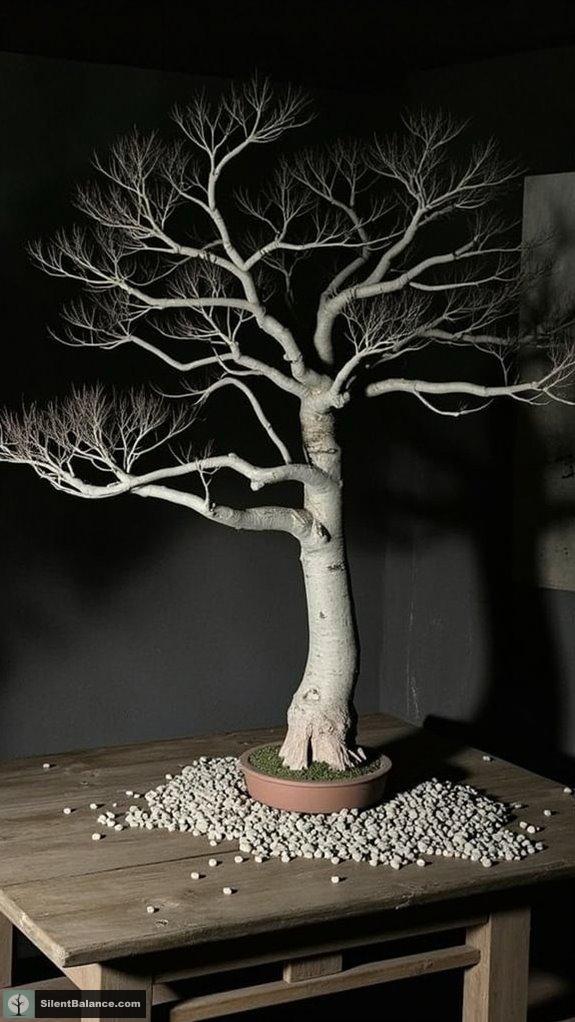
When it comes to bonsai, the Formal Upright style, or Chokkan, stands out as a tribute to strength and symmetry, and honestly, it’s a classic for a reason.
The chokkan characteristics deliver a visual feast with that straight, unwavering trunk symmetry, giving it an almost regal vibe. You know what I love? The branch arrangement, where each one emerges evenly from both sides, creates a harmonious silhouette that’s pure bliss to behold.
Plus, the balanced root structure sprawls radially, providing stability—like a well-rooted philosopher teaching you about life! This style, which emulates the harmony between nature and creativity, isn’t just pretty; it symbolizes resilience, reflecting how nature thrives in open spaces. Ancient bonsai trees often carry deep spiritual significance, reminding us of the connection between life and longevity. Can you resist the charm of a tree that embodies both beauty and strength?
Informal Upright (Moyogi): Nature’s Gentle Curves
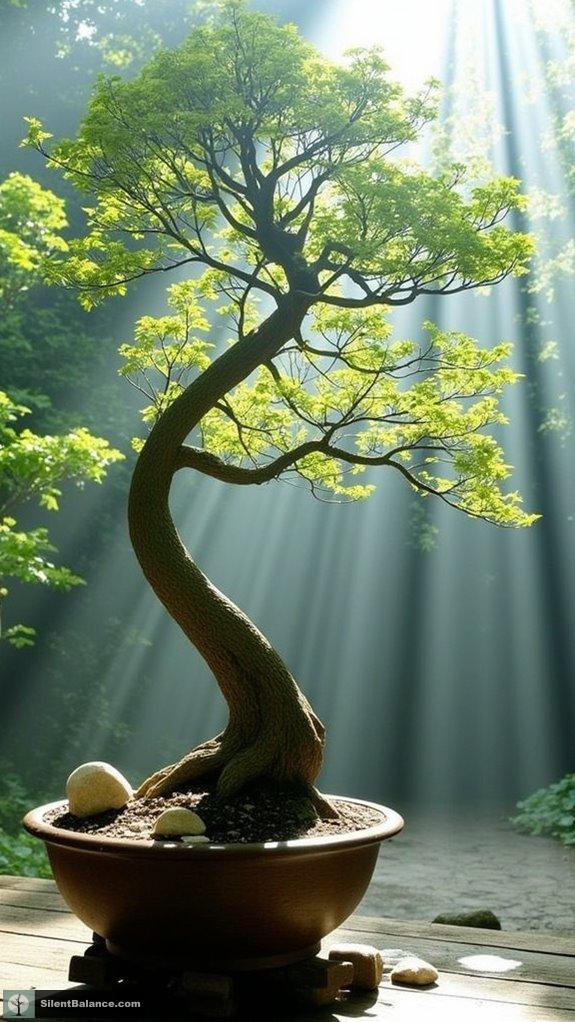
Bonsai enthusiasts often find themselves mesmerized by the Informal Upright style, or Moyogi, where nature’s gentle curves take center stage. This enchanting style captures the essence of trees shaped by environmental forces over time.
Here’s what makes Moyogi so intriguing:
The Moyogi style captivates with its graceful curves and unique aesthetics, celebrating nature’s beauty and resilience.
- Trunk Curvature: Those gorgeous “S” shaped curves evoke a sense of movement and balance.
- Branch Dynamics: Alternate branches dance along the curves, adding layers of visual interest.
- Root Structure: A robust root base that anchors the tree guarantees stability, keeping it steady as it reaches for the sky. Healthy trees with robust root systems are more responsive to training, which enhances their ability to thrive during bonsai tree meditation.
- Natural Aesthetics: The style mimics nature’s imperfections, making each tree uniquely beautiful.
Slanting (Shakan): Embracing the Wind
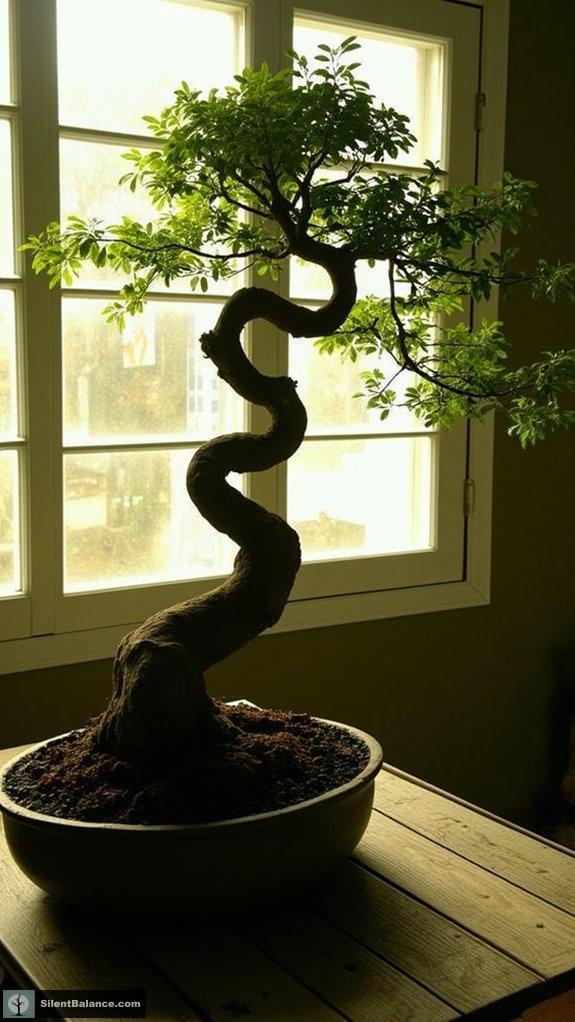
As you immerse yourself in the world of bonsai, you’ll quickly discover the striking beauty of the Slanting style, or Shakan, which embraces the wind like an artist yielding to inspiration.
This style masterfully employs slanting techniques, with trunks leaning at a dramatic angle, as if defying gravity itself. The root systems develop robustly on the slanted side, anchoring this living artwork in place.
Have you ever seen a tree that seems to dance with the wind? That’s Shakan! It tells a story of resilience and adaptability, reflecting nature’s struggles through its elegant lines.
Choosing the right species, like the Japanese Maple or Black Pine, enhances your artistic expression, blending nature’s wondrous environmental inspiration with your creative vision.
Cascade (Kengai): The Dance of Descent
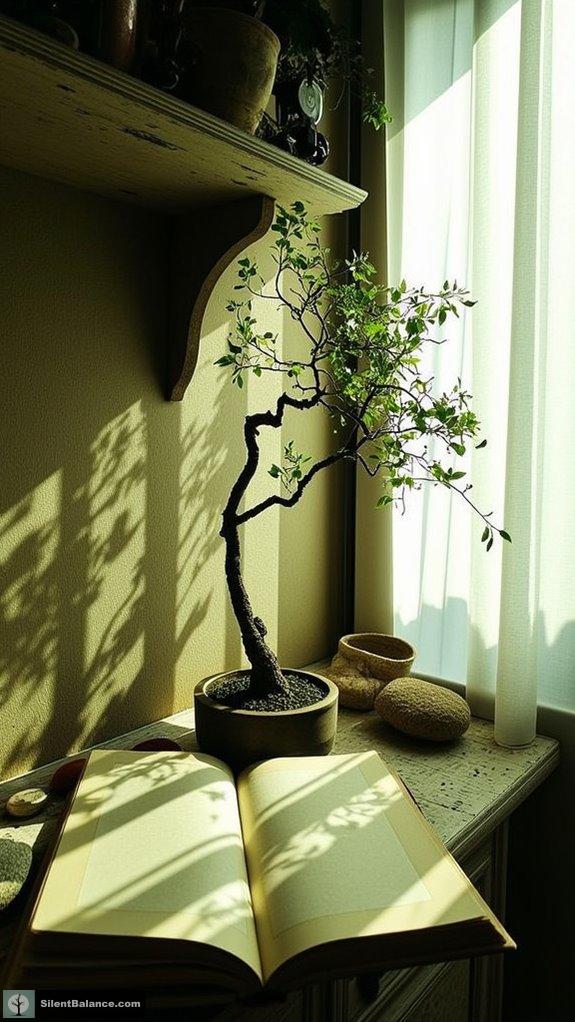
Envision gazing at a stunning cascade bonsai, its trunk gracefully bending downwards, almost like it’s performing a ballet en pointe. This mesmerizing form, known as Kengai, truly embodies nature’s resilience, mirroring trees that cling to steep cliffs.
With its cascading beauty, this style enchants bonsai enthusiasts for several reasons:
The captivating Kengai style enchants bonsai lovers with its striking elegance and powerful symbolism of endurance.
- The dramatic downward flow creates a striking visual narrative.
- It symbolizes endurance, reminding us of life’s challenges.
- Balance is key, blending struggle with elegance.
- Species choice guarantees resilience under bending stress.
Caring for a cascade bonsai involves finesse—wiring, pruning, and repotting to reveal that breathtaking descent. Additionally, the spiritual journey of bonsai reflects the deeper philosophical symbolism inherent in its forms.
Ready to embrace the artistry of Kengai and let your bonsai dance?
Forest (Yose-ue): Harmony in Community
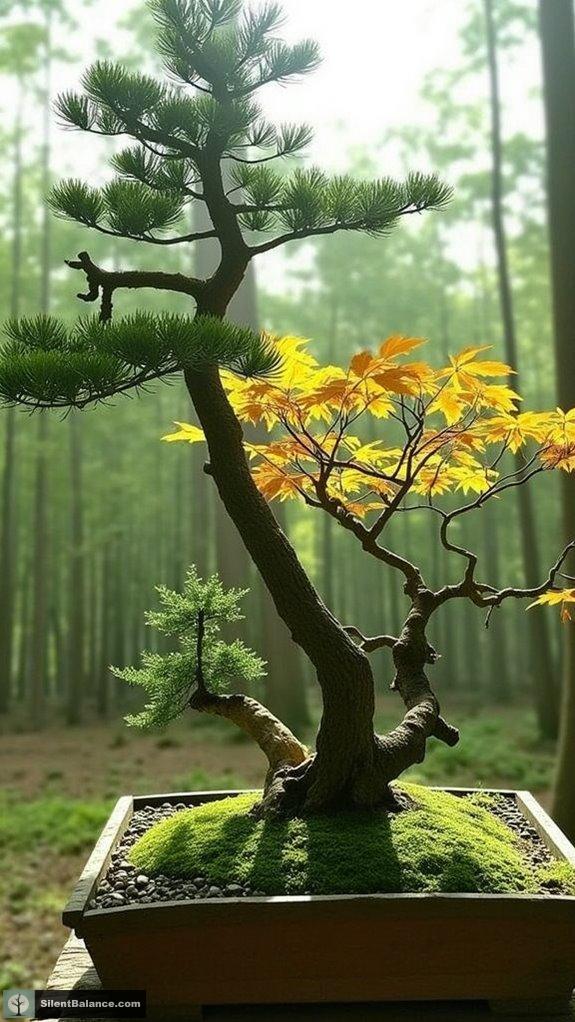
Creating a stunning forest bonsai, or Yose-ue, can feel like crafting a miniature world where nature comes alive right before your eyes.
In this enchanting style, I arrange three or more trees together to mimic the grandeur of a forest. Imagine this: staggered heights and varying trunk thicknesses, all delicately placed to showcase tree harmony. Honestly, there’s something magical about those odd-numbered clusters—it’s like nature’s own rulebook!
As I experiment with species like pines or maples, I focus on forest growth, ensuring a cohesive look while allowing for subtle diversity.
Watching these trees support one another reminds me that community is the heart of both bonsai and life. After all, who wants a straight line when nature thrives in delightful chaos?
Wabi-Sabi: The Beauty of Imperfection
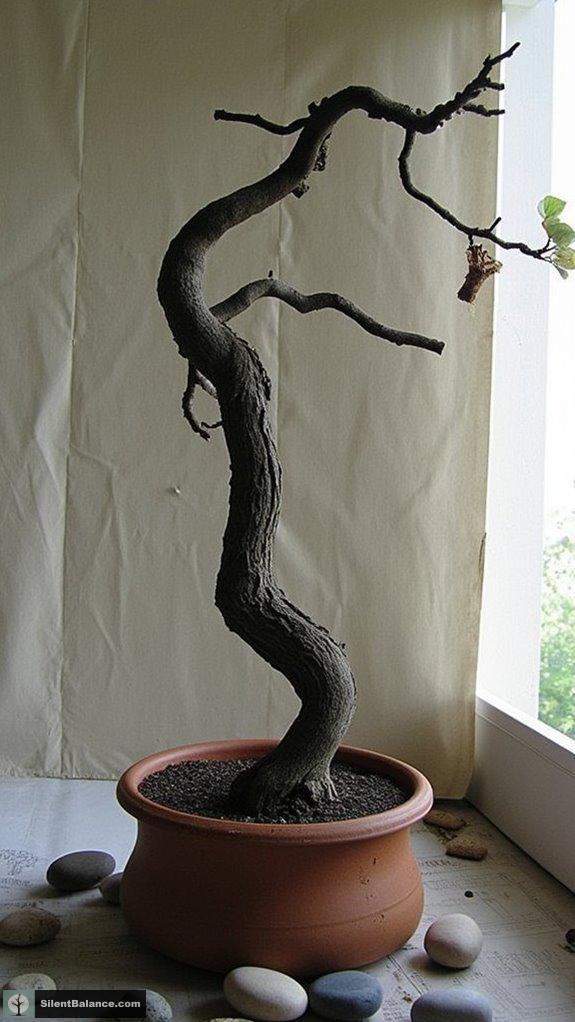
Wabi-sabi isn’t just a concept; it’s a way of soaking in the beauty of life’s little quirks, and when it comes to bonsai, it’s absolutely mesmerizing.
Embracing the wabi-sabi philosophy means celebrating our acceptance of imperfection.
Envision this:
- Asymmetry that tells a story, showcasing authenticity.
- Simplicity that reveals hidden elegance beyond clutter.
- Naturalness that draws us into spontaneity and purity.
- Tranquility that wraps us in calm moments of acceptance.
Isn’t it invigorating to appreciate a bonsai’s weathered trunk or a quirky branch?
These imperfections transform the tree into a living piece of art, reminding us that true beauty lives in life’s less-than-perfect moments.
Seasonal Reflections: Traditional Species in Bonsai Design
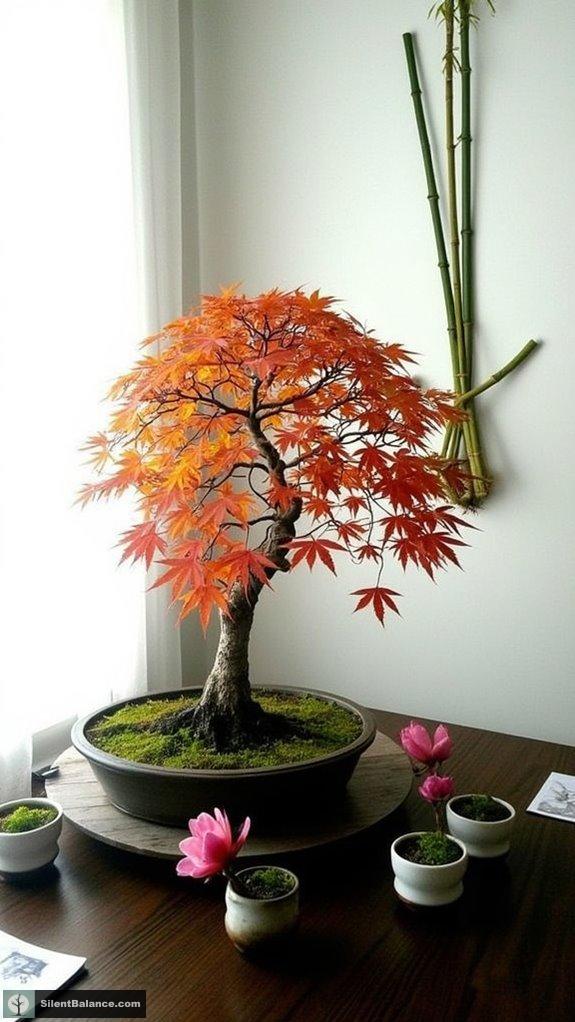
Bonsai design isn’t just about shaping trees; it’s a celebration of nature’s rhythm through the seasons.
Embracing traditional bonsai varieties, I find unique beauty in species that reflect seasonal aesthetics. For instance, the Japanese Maple dazzles with vibrant autumn colors, screaming impermanence and renewal. Meanwhile, the resilient Japanese Black Pine adapts effortlessly, showcasing subtle needle variations year-round.
Ever tried styling a Bristlecone Pine? Its endurance through seasons adds a level of fascination that’s hard to resist.
And let’s not forget flowering bonsai—who doesn’t love a blooming Azalea in spring?
These enchanting differences remind me that bonsai isn’t just art; it’s nature’s way of reminding us to savor every fleeting moment. Don’t you love that?
Tree Symbolism
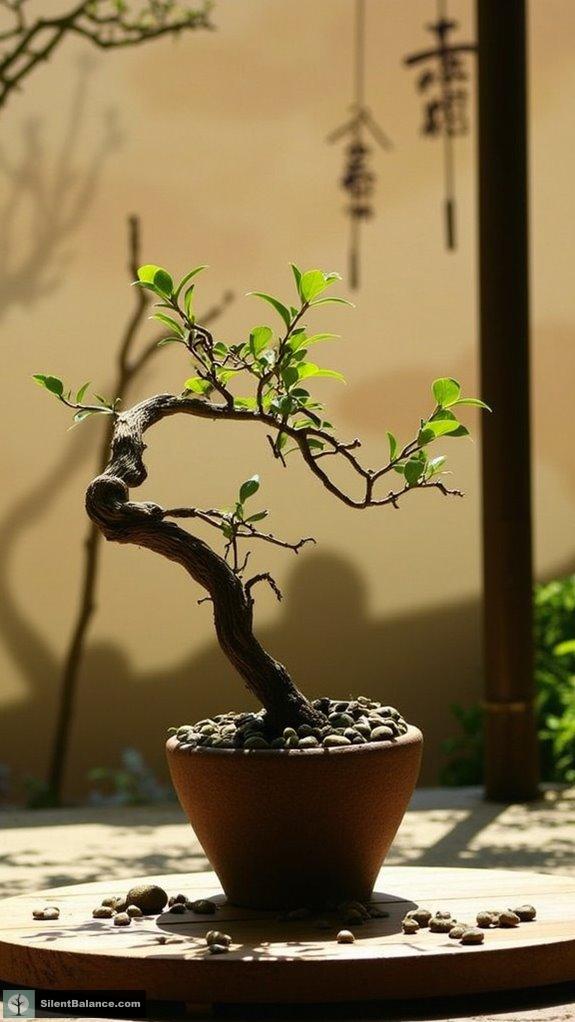
In the world of bonsai, tree symbolism resonates deeply, as these miniature marvels aren’t just a feast for the eyes but a mirror reflecting our values and emotions.
Have you ever considered the profound tree meanings behind these little green wonders? Here are some artistic interpretations that might just inspire you:
Explore the deep symbolism of bonsai, where each tiny tree tells a captivating story of growth and resilience.
- Balance and harmony, central to Zen philosophy.
- Patience and diligence crafted through careful cultivation.
- The interconnectedness of nature and human nurture.
- Personal growth and resilience captured in every twist and turn.
Each bonsai holds a narrative, whispering lessons of resilience and beauty.
So, whether you’re a seasoned pro or just starting, let these symbols guide your journey.
Who knew a tiny tree could carry such weight?
Bonsai Tree Symbolism
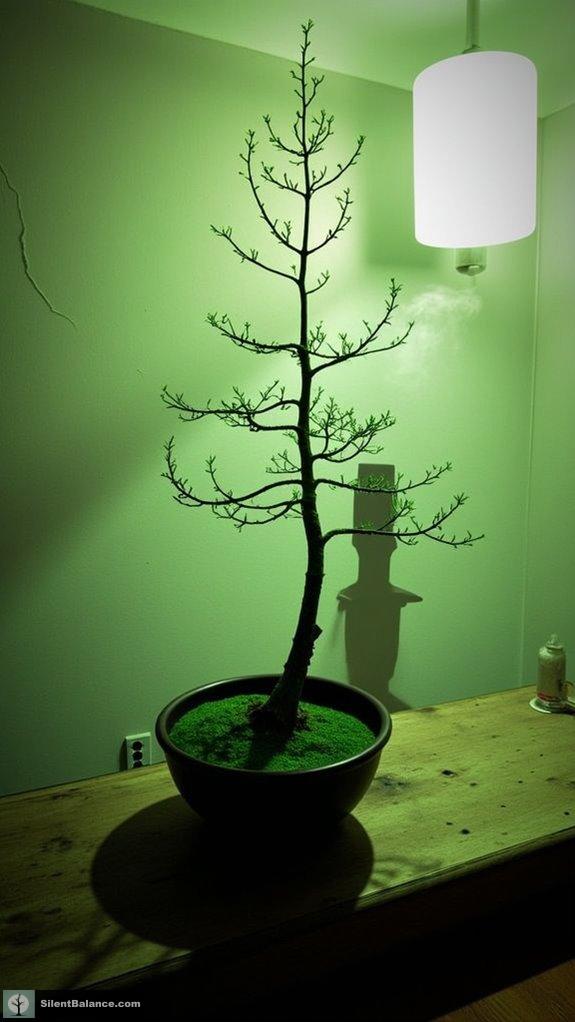
When it comes to bonsai, the symbolism wrapped around these miniature trees is nothing short of fascinating.
These vibrant little wonders exemplify balance and harmony, echoing nature’s delicate dance. Cultivating a bonsai isn’t just about pruning; it’s a lesson in patience and resilience—so, when’s the last time you practiced that?
Bonsai mindfulness encourages us to slow down, fostering a meditative quality amidst chaos. Each twist of wire or snip of a leaf reminds us of life’s transitory nature.
And let’s not forget the beautiful femininity found in azaleas—the perfect mix of strength and vulnerability.
Questions and Answers
What Tools Are Essential for Bonsai Tree Care and Maintenance?
Envision shaping a miniature forest. I use pruning tools like shears and concave cutters, mastering wire application for artful bends. These essentials transform my bonsai into living sculptures, each leaf a tribute to careful innovation.
How Long Does It Take for a Bonsai Tree to Mature?
Maturing a bonsai tree takes considerable time! The maturity timeline varies based on growth factors like species and care techniques. I’ve found that patience truly pays off in cultivating a beautiful, thriving bonsai masterpiece.
Can Any Tree Species Be Used for Bonsai Art?
envision a painter’s palette; not every tree species suits bonsai art. While common bonsai species like junipers stand out, selecting tree types involves balancing adaptability and character to create unique miniature masterpieces in your collection.
What Are the Best Soil Types for Bonsai Trees?
When I choose bonsai soil, I focus on perfect soil composition for ideal health. I balance drainage requirements with materials like akadama, pumice, and lava rock, ensuring my bonsai thrive with excellent aeration and moisture retention.
How Often Should Bonsai Trees Be Watered and Fertilized?
When watering and fertilizing my bonsai, I always consider water quality and seasonal adjustments. I check the soil daily, adjusting my routine to maintain ideal health, ensuring my little tree thrives throughout the year.
References
- https://www.bonsaiempire.com/origin/bonsai-styles
- https://www.bokksu.com/blogs/news/bonsai-the-delicate-art-of-japanese-miniature-trees
- https://en.wikipedia.org/wiki/Bonsai
- https://wazakurajapan.com/blogs/news/introduction-to-japanese-bonsai-and-wabi-sabi
- https://www.pinterest.com/ideas/traditional-japanese-bonsai-style/902310932209/
- https://onehometherapy.com/top-bonsai-tree-styles-to-transform-your-garden/
- https://cincinnatibonsai.org/bonsai-tree-style-guide
- https://www.bonsai-bci.com/index.php/component/tags/tag/formal-upright-style-chokkan-tachi-gi
- https://www.bonsaiable.com/blog/formal-upright-bonsai
- https://www.bonsaiable.com/blog/informal-upright-bonsai

- 11 Best Luxury Sandalwood Candles for 2026 - June 19, 2026
- 11 Best Woven Wicker Gift Baskets for 2026 - June 19, 2026
- 11 Best High Powered Binoculars for 2026 - June 19, 2026
