
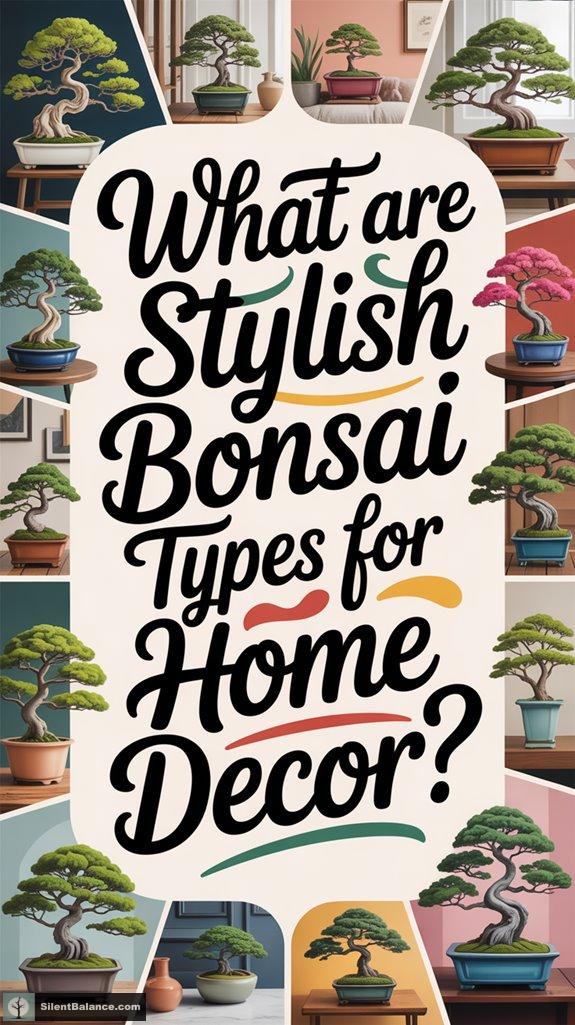
If you’re looking to elevate your home decor, stylish bonsai species can be a game changer! I absolutely adore the Ginseng Ficus for its low-maintenance charm, while the Japanese Maple never fails to dazzle with its seasonal color. For smaller spaces, the Chinese Elm and Boxwood are total showstoppers. Plus, the striking shape of the Ficus Retusa and the delicate blossoms of the Japanese Flowering Cherry add an artistic flair. Curious about more bonsai types that can spruce up your space?
Quick Takeaways
- Ginseng Ficus is a stylish choice, known for its low maintenance and ability to thrive in varied home settings.
- Japanese Flowering Cherry adds breathtaking blossoms, symbolizing friendship and enhancing decorative aesthetics.
- Ficus Retusa features intriguing roots, providing an artistic twist to indoor decor.
- Azalea’s vibrant blooms deliver a burst of color, making it a stunning ornamental addition to any space.
- Japanese Maple showcases striking seasonal colors, adding visual interest throughout the year in your home.
Popular Bonsai Species for Home Settings
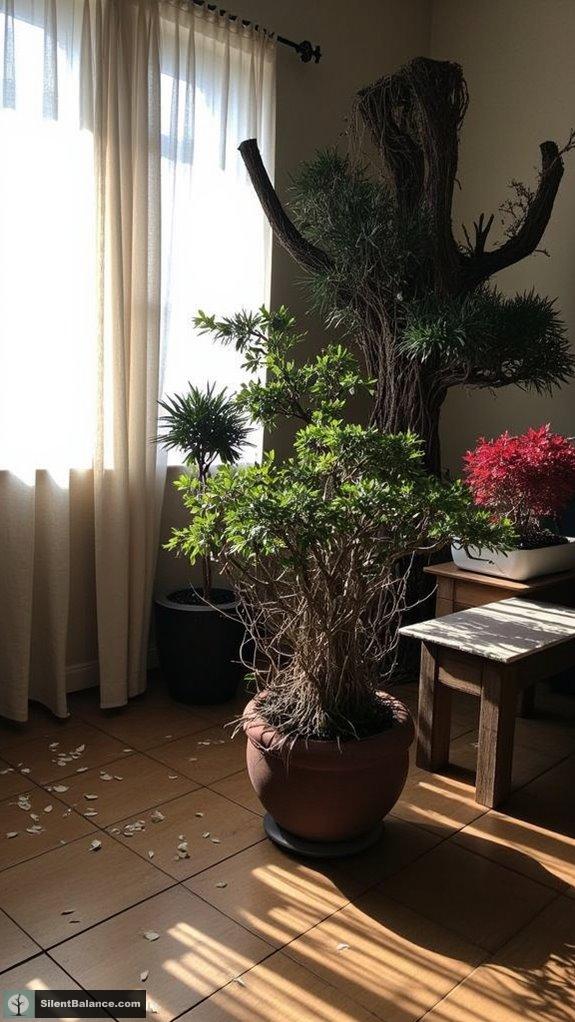
When it comes to home decor, few plants pack the punch of bonsai trees.
Let’s talk about popular species you can easily showcase indoors.
The Ginseng Ficus is a low-maintenance marvel, thriving almost wherever you place it. Green companions enhance your environment, providing not only beauty but also improved air quality.
The Ginseng Ficus effortlessly flourishes in various settings, making it an ideal choice for any indoor space.
Looking for stunning color? Consider the Japanese Maple, with its striking red or green leaves transforming with the seasons.
Don’t overlook the Weeping Fig, known for its tangled roots that create a unique silhouette.
Curious about flowering options? The Serissa, or “Tree of a Thousand Stars,” blossoms throughout the year, adding life to your space.
Ready to embrace bonsai beauty? Let’s get growing!
Indoor Bonsai Trees Ideal for Small Spaces
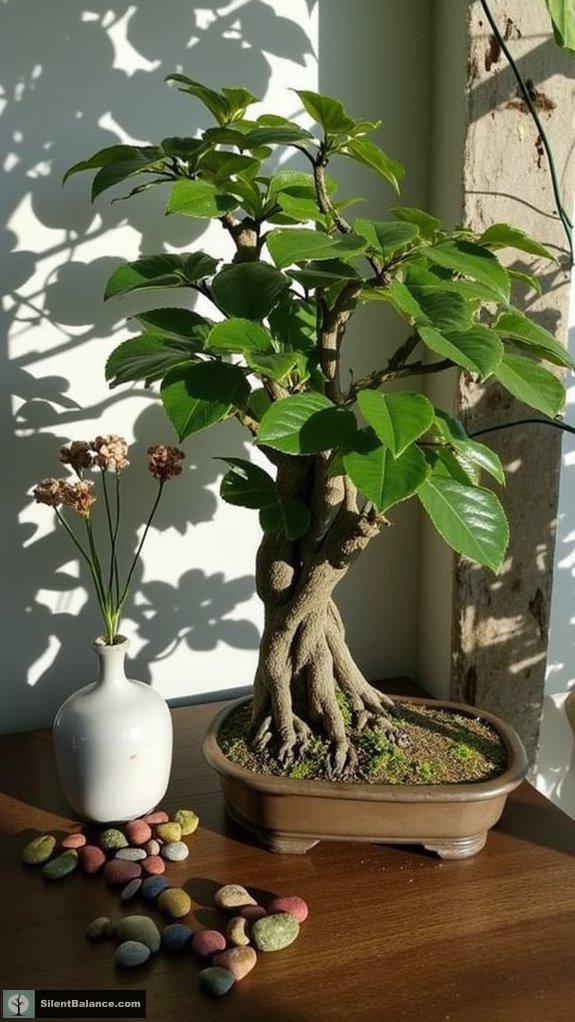
Finding the right indoor bonsai for your compact living space can feel like searching for a needle in a haystack, but luckily, the perfect pint-sized tree is just around the corner!
Consider the Ficus bonsai for its hardiness, or the charming Chinese Elm with its refined branching. For tight spots, Boxwood’s dense foliage shines. Want flowers? The Carmona’s got you covered with petite blooms! Japanese-inspired miniature bonsai landscapes often highlight the natural beauty of these trees, making them even more appealing.
Additionally, many indoor bonsai species like the Jade Bonsai thrive in these cozy corners due to their resilience and low maintenance needs. And don’t overlook the Dwarf Pomegranate, which brings seasonal flare with its tiny fruits.
With these delightful options, you’ll transform your small space into a serene sanctuary. Who knew thriving greenery could fit so snugly in your home?
Easy-to-Maintain Bonsai for Busy Lifestyles
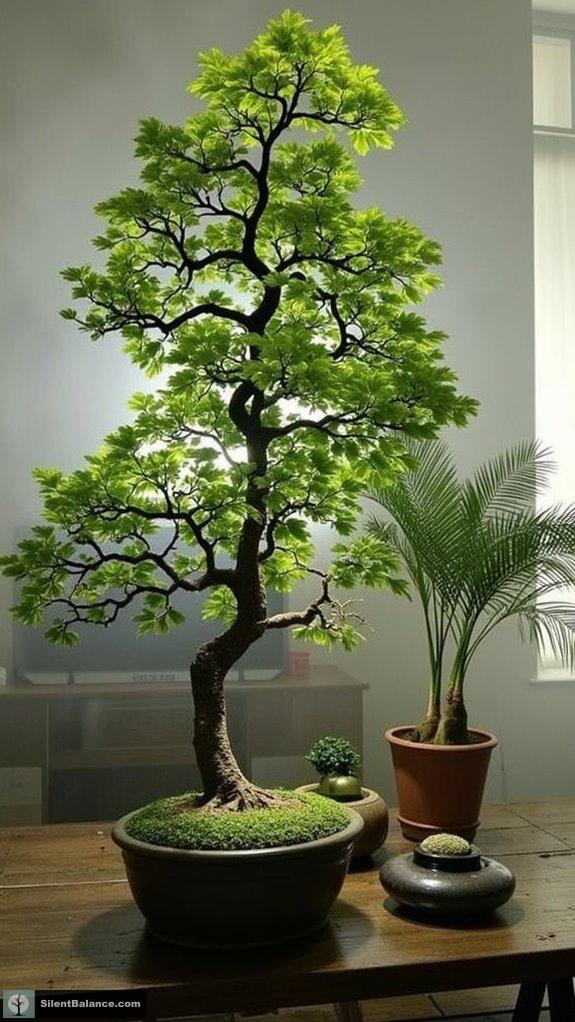
Every busy person deserves a slice of tranquility, and what better way to achieve that than with a low-maintenance bonsai?
Take the Chinese Elm, for instance—it’s adaptable and pest-resistant, making it my go-to for stress-free care.
The Ficus is equally forgiving, thriving even when I forget to water it (oops!).
Then there’s the easy-going Ponytail Palm, perfect for beginners like me, since it thrives on neglect.
Want a succulent? The Jade Bonsai requires minimal water and attention.
With these beauties, I keep my space stylishly zen without adding to my busy life—who wouldn’t want that? Additionally, these bonsai types often embody spiritual significance in Japan and China, fostering a sense of peace and mindfulness in everyday living.
Ornamental Bonsai for Visual Appeal
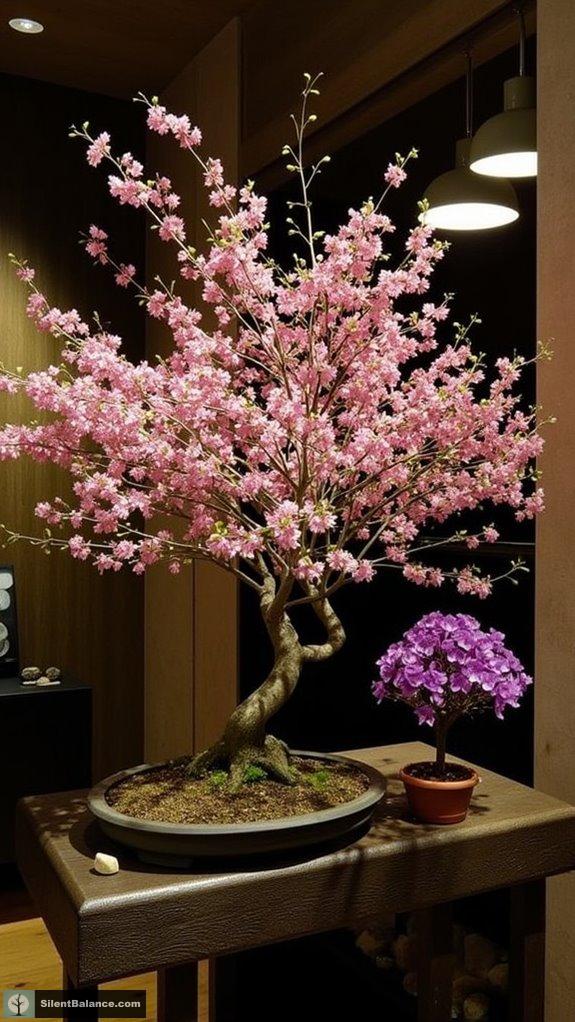
Ornamental bonsai can truly transform your living space into a serene oasis, showcasing nature’s artistry right at home.
Imagine a Japanese Flowering Cherry, with its delicate blossoms symbolizing friendship, or perhaps an Azalea, bursting with vibrant blooms.
A Ficus Retusa adds an intriguing twist with its thick, ginseng-like roots.
Do you want drama? Consider a Japanese Black Pine, elegantly shaped with its striking needle clusters.
The best part? These botanical beauties bring artistic flair without overwhelming your space—perfect for those in control! Additionally, choosing bonsai species rich in symbolism and meaning can deepen your connection to nature in your décor.
Which striking species will you welcome into your home to elevate your decor game?
Adapting Bonsai Trees for Indoor and Outdoor Environments
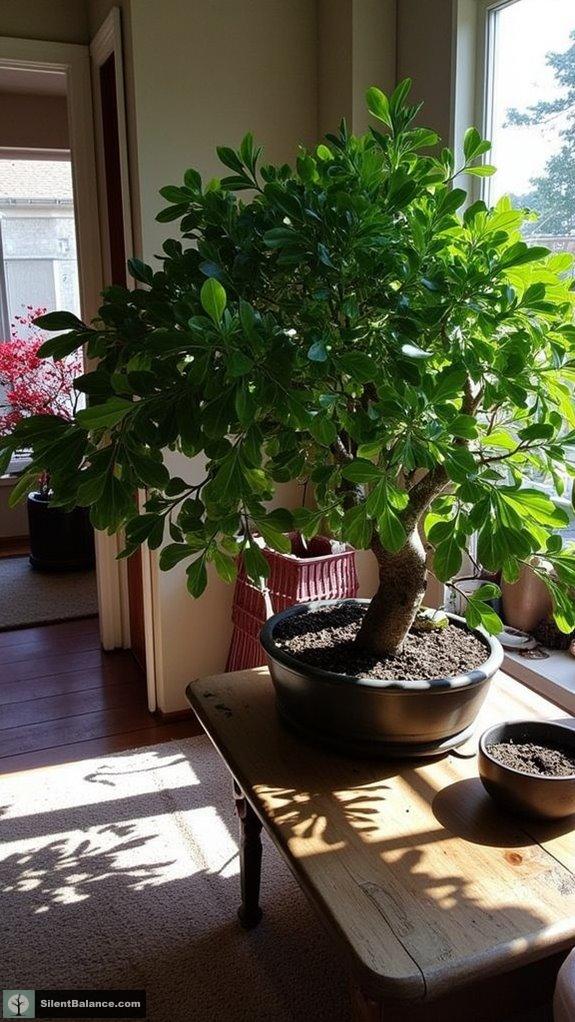
Bringing the beauty of bonsai into your home isn’t just about picking a stunning fig or a charming azalea; it’s also about knowing where your leafy friends are going to thrive best.
Want an easygoing indoor bud? Ficus is your go-to! It loves those cozy living room vibes.
For a low-maintenance indoor plant, the Ficus shines—perfectly suited for your cozy living room atmosphere.
For outdoor action, consider a Japanese maple or a rugged pine that munches on the sun and seasonal changes.
Don’t forget, thriving means understanding light and watering needs—like keeping the indoor humidity just right!
Bonsai Tree Symbolism
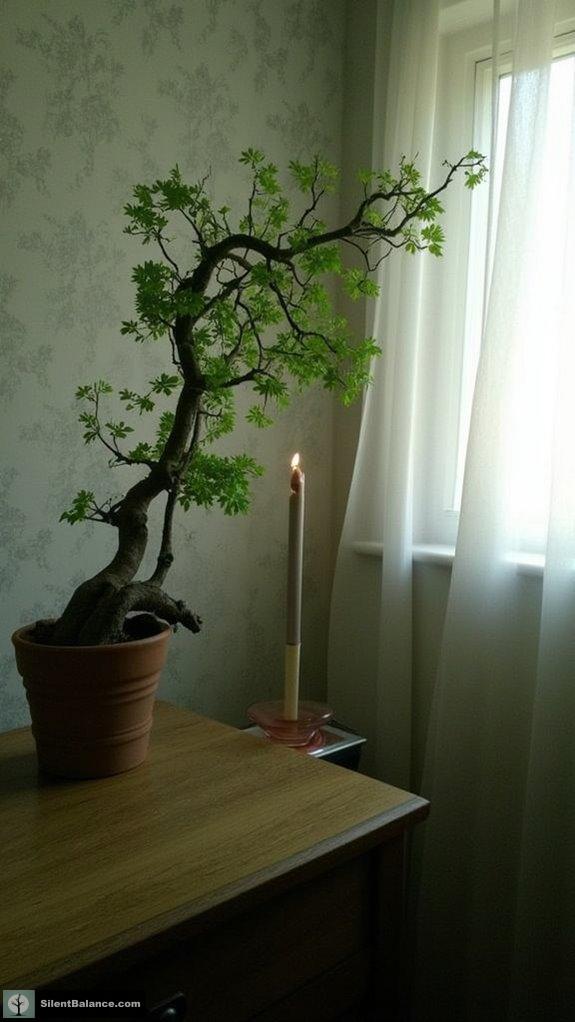
Bonsai trees aren’t just about their stunning aesthetics; they’re like little living philosophies wrapped in greenery.
They symbolize so much more than decor—I mean, they practically whisper life lessons to us.
Here are three key symbolisms behind bonsai trees:
- Harmony and Balance: Their elaborate branches remind us of the delicate balance in life.
- Patience: Cultivating a bonsai can take years, teaching us about mindful care and persistence.
- Resilience: Those twisted branches, shaped with intention, reflect how we mold our own lives through effort.
Tree Symbolism
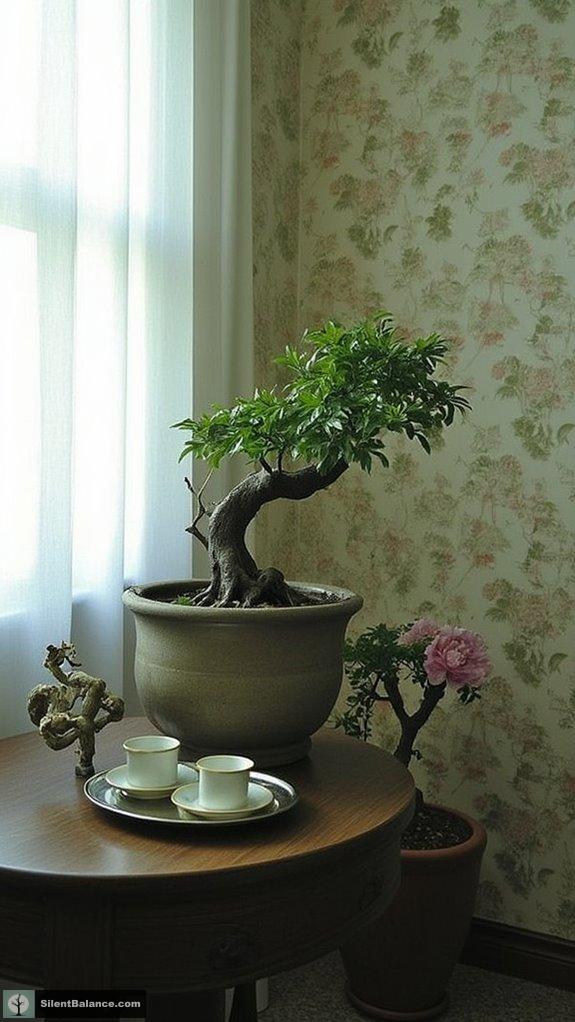
When it comes to tree symbolism, it’s fascinating how much meaning can be packed into those tiny, complex forms.
Take the Jade Bonsai, the so-called “money tree”—who wouldn’t want financial good fortune in their home? It’s perfect for business openings, bringing harmony alongside wealth.
Then there’s the Ficus Bonsai, embodying unity and new beginnings—ideal for those of us embracing change.
And don’t overlook the Cherry Blossom; it reminds us to relish life’s fleeting moments.
Each bonsai tells a story of resilience and beauty, inviting us to cultivate our environments just like we cultivate our dreams.
How’s that for greenery with purpose?
Questions and Answers
How Do I Choose the Right Pot for My Bonsai?
When I choose a pot for my bonsai, I consider the tree’s size, shape, and bark texture. I aim for harmony, ensuring the pot supports growth without overshadowing the tree’s beauty with its design.
What Tools Are Essential for Bonsai Care and Maintenance?
To care for bonsai effectively, I’ve found essential tools include pinching and pruning shears, branch cutters, and wire cutters. Maintaining these tools is just as important to guarantee precise, clean cuts for my trees.
Can I Propagate Bonsai Trees Easily at Home?
Can I propagate bonsai trees easily at home? Absolutely! I’ve found taking cuttings and rooting them in water or soil is quite rewarding. Just keep them shaded, moist, and patient—that’s where the magic happens!
How Often Should Bonsai Be Fertilized for Optimal Growth?
I fertilize my bonsai every 2 to 4 weeks during the growing season. This keeps them healthy and vibrant. I’ve noticed that adjusting based on growth signals really enhances their overall stamina, too.
What Is the Best Lighting Condition for Different Bonsai Species?
I’ve found that lighting varies for bonsai types. Tropical ones thrive in bright, indirect light, while junipers need full sun. I recommend adjusting indoor setups based on species to maximize growth and overall health.
References
- https://www.1800flowers.com/articles/flower-facts/types-of-bonsai-trees
- https://thursd.com/articles/10-best-bonsai-plants-for-your-home-according-to-bonsai-specialists
- https://easternleaf.com/indoor-bonsai-trees-s/547.htm
- https://www.herons.co.uk/Indoor-Bonsai-Trees/
- https://www.bonsaify.com/blogs/news-and-more/bonsai-tree-species-that-can-live-on-your-office-desk
- https://www.veronneau.com/en/trends/indoor-decor-trends/top-5-bonsai-tree-ideas/
- https://thevietpotter.com/blogs/bonsai/bonsai-decoration-ideas
- https://bonsai-tools.muragon.com/entry/343.html
- https://www.homesandgardens.com/gardens/easiest-indoor-bonsai-trees-for-beginners
- https://www.lovemybonsai.com/blogs/bonsai/7-indoor-bonsai-trees-that-thrive-in-low-light-environments

- 11 Best Luxury Sandalwood Candles for 2026 - June 19, 2026
- 11 Best Woven Wicker Gift Baskets for 2026 - June 19, 2026
- 11 Best High Powered Binoculars for 2026 - June 19, 2026
