
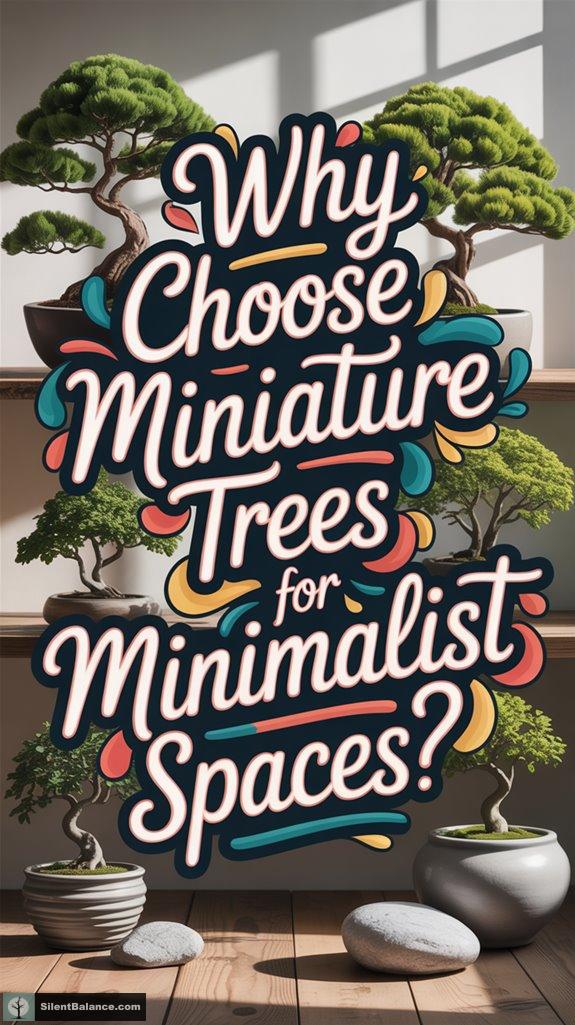
Why Miniature Trees are the Perfect Addition to Minimalist Spaces
Imagine creating a serene oasis in your otherwise sleek and modern home.
Miniature trees are not just decor; they’re symbols of growth and harmony. I realized this when my own bonsai thrived in a corner of my home. Watching it flourish became my daily reminder to pause amidst the chaos!
At Silent Balance, our journey into finding beauty in simplicity led us to embrace these living sculptures. They breathe life into our spaces without overwhelming us.
With their low-maintenance nature, they seamlessly fit into busy urban lifestyles. Trust me; you’ll wonder how you ever lived without one!
Quick Takeaways
- Miniature trees enhance the aesthetic appeal of minimalist interiors by adding natural beauty without overwhelming the space.
- Their compact size allows for easy placement in tight spots, making them ideal for small apartments and rooms.
- They improve indoor air quality and promote tranquility, contributing to overall well-being and comfort in urban environments.
- Lower maintenance requirements make them suitable for busy individuals or beginners, with simple care and watering needs.
- Miniature trees symbolize growth and harmony, fostering mindfulness and personal reflection in minimalist settings.
The Aesthetic Appeal of Miniature Trees in Minimalist Spaces
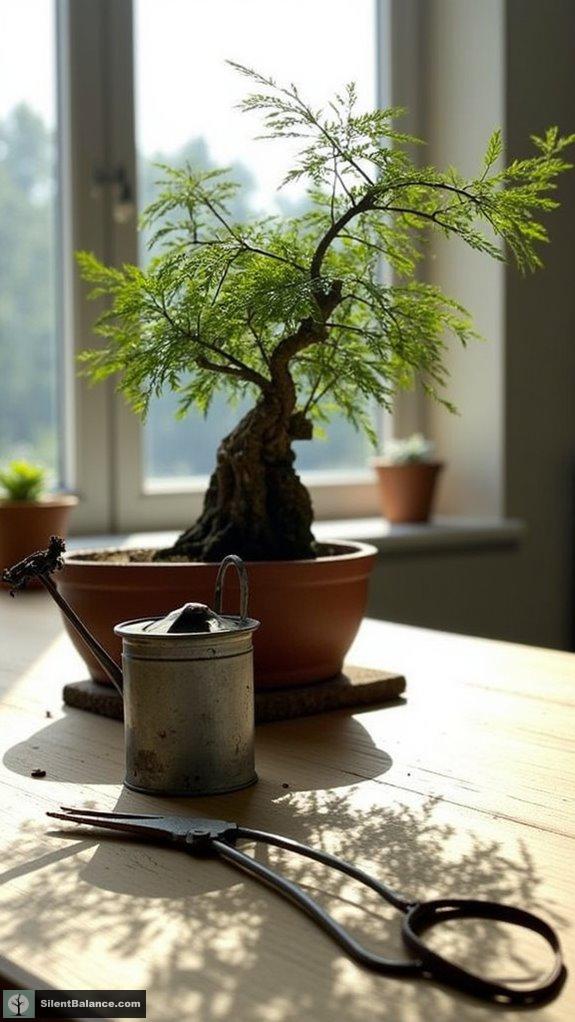
When it comes to decorating a minimalist space, you might think that less truly means less, but have you ever considered how miniature trees can turn that notion on its head?
These little wonders, with their clean lines and uncluttered shapes, effortlessly complement streamlined interiors. Imagine a bonsai perched on a simple stand, serving as a living sculpture that captures the eye without overwhelming the scene. Ficus or juniper varieties offer elegant textures that softly balance the starkness often found in minimalist design. Plus, their natural beauty introduces an organic touch, inviting warmth into austere spaces. Who knew a tiny tree could embody the principles of mindfulness and intentional living? The ritual of observing and nurturing your bonsai helps foster a deeper appreciation for the intricate care that outdoor bonsai trees require.
Additionally, maintaining a regular care routine for these trees becomes a meditative activity, enhancing your connection to the space. It’s all about quality over quantity, right?
Space Optimization: Making the Most of Limited Areas
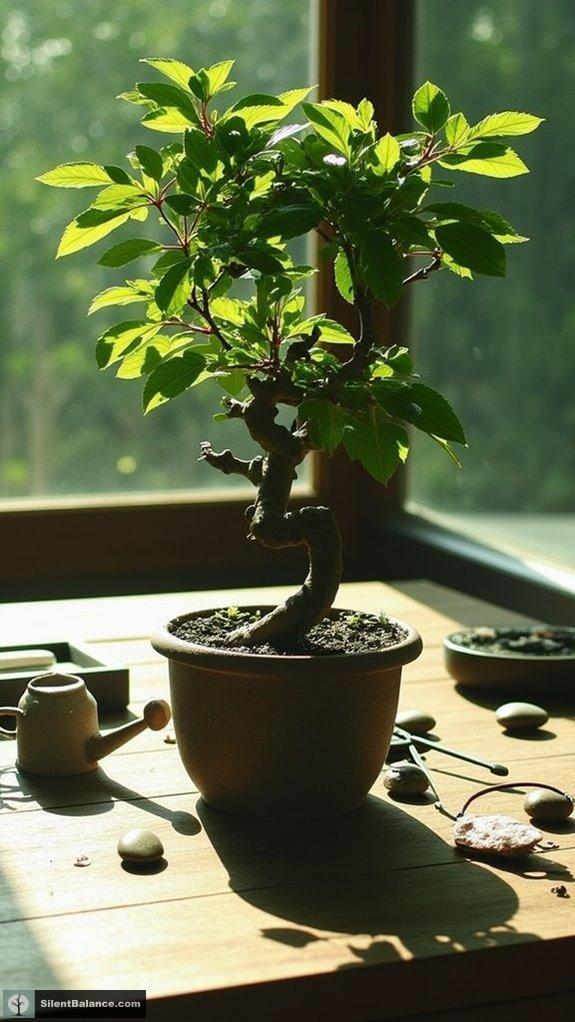
As you navigate the delightful challenge of optimizing space in your minimalist haven, keep in mind that tiny trees can work wonders without overwhelming your aesthetic. These little wonders provide unique benefits that punch above their weight in limited areas. Incorporating ancient bonsai practices can further enhance your mindfulness experience while caring for these plants.
Here’s a quick comparison of their advantages:
| Benefits | Details |
|---|---|
| Efficient Footprint | Occupy less floor area, perfect for tight spots. |
| Air Quality Improvement | Absorb CO2, release oxygen, and trap dust. |
| Visual Softness | Create subtle boundaries without bulky partitions. |
| Easy Maintenance | Require less water and minimal pruning—say goodbye to fuss! |
Why not embrace their charm? These compact botanicals lend an inviting touch while freeing up precious space, and hey, they even bring a sense of serenity! Additionally, they can enhance thermal comfort in urban environments by improving outdoor thermal comfort, isn’t that a win-win?
Symbolism and Meaning Behind Miniature Trees

Miniature trees aren’t just pretty additions to your space; they’re vibrant symbols packed with meaning and history.
Take the Redwood Sequoia, for example—its towering presence is a reminder of growth and strength, urging us to reach for our potential. How inspiring is that?
Then, there’s the bonsai, which showcases harmony and balance, fostering that Zen state we all secretly crave. With its slow, deliberate growth, it teaches us patience, because, let’s face it, everything worthwhile takes time. The process of cultivating a bonsai reflects the deep symbolism behind bonsai trees, illustrating the artistry and devotion required in nurturing life.
Whether it’s a gift of resilience or a focal point that invites introspection, these tiny trees embody more than just aesthetics.
They serve as living canvases, enhancing our spaces while nurturing our spirits. Isn’t that a beautiful idea?
Maintenance Ease for Busy Urban Dwellers
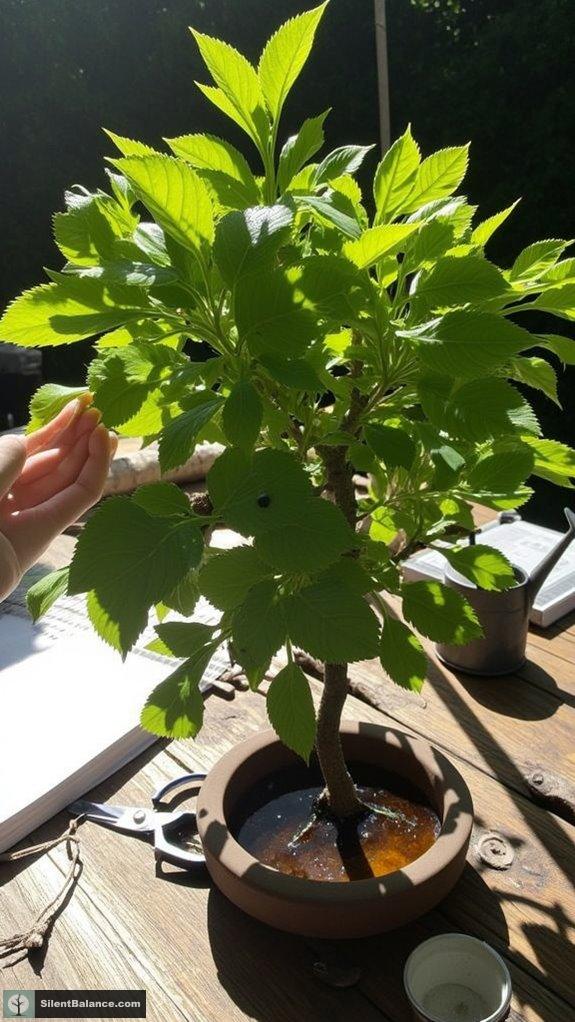
Caring for miniature trees in busy urban environments is surprisingly manageable, especially when compared to larger garden varieties.
With their compact root systems, I find that these little green wonders thrive on frequent but moderate watering—perfect for those of us hustling through life.
Miniature trees flourish with regular watering—ideal for busy lifestyles seeking a touch of green amidst the hustle.
Plus, controlled irrigation systems make watering a breeze, reducing waste and cost.
Regular pruning? Simple. Just grab your shears, as miniature trees welcome a bit of shape without needing fancy tools.
And let’s not forget pest management—smaller size means easier monitoring and quicker treatments.
Who doesn’t love a clean, tidy little bonsai without the hassle?
Enhancing Indoor Environments With Miniature Trees
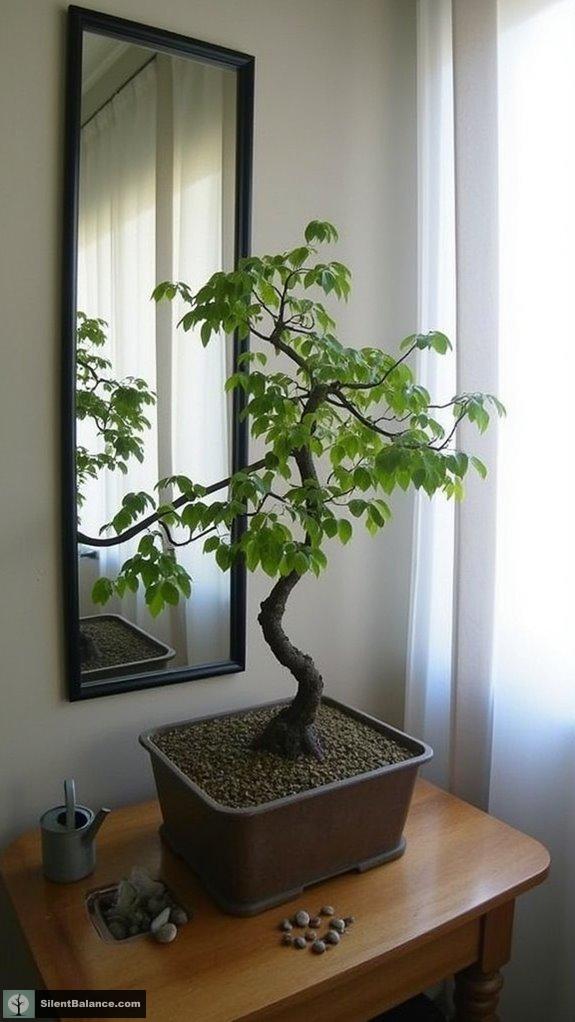
Transforming your indoor environment with miniature trees isn’t just about adding a bit of green; it can revolutionize your space and mood.
Imagine filling your room with clean air, thanks to these little oxygen factories that filter toxins and boost overall air quality. Isn’t that a refreshing change?
Plus, their compact size means they can cozy up in corners or on your desk without stealing your precious space—talk about minimalist magic!
And let’s not forget their calming vibe; it’s like having a mini zen garden on your windowsill.
Cultural Significance of Bonsai in Contemporary Design
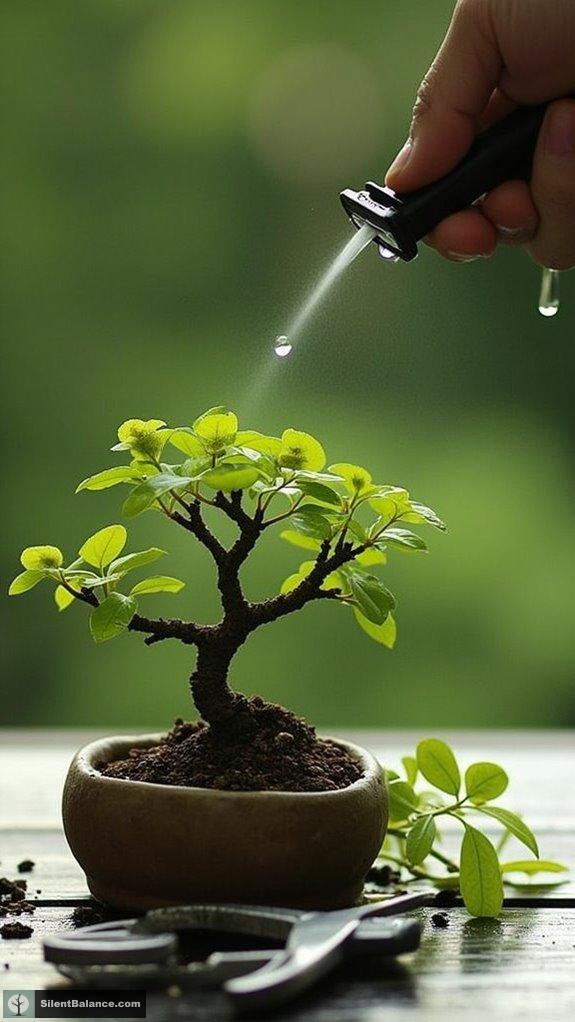
Indoor spaces are more than just mere walls and furniture; they’re canvases for expression and personal style.
Incorporating bonsai into your design isn’t just about aesthetics; it’s a dance of culture, philosophy, and history. Can you feel the Zen vibes yet?
Bonsai weaving culture, philosophy, and history transforms your space into a sanctuary of Zen and mindfulness.
This ancient art, born from penjing, marries nature and artistry in such a compact way! Each twist and turn of those delicate branches reflects life’s balance and resilience.
When we showcase bonsai, we’re not just decorating; we’re embodying centuries of Japanese culture and mindfulness.
And let’s not ignore wabi-sabi—the acceptance of imperfection. It turns those little quirks into charming focal points!
Prune Regularly for Shape
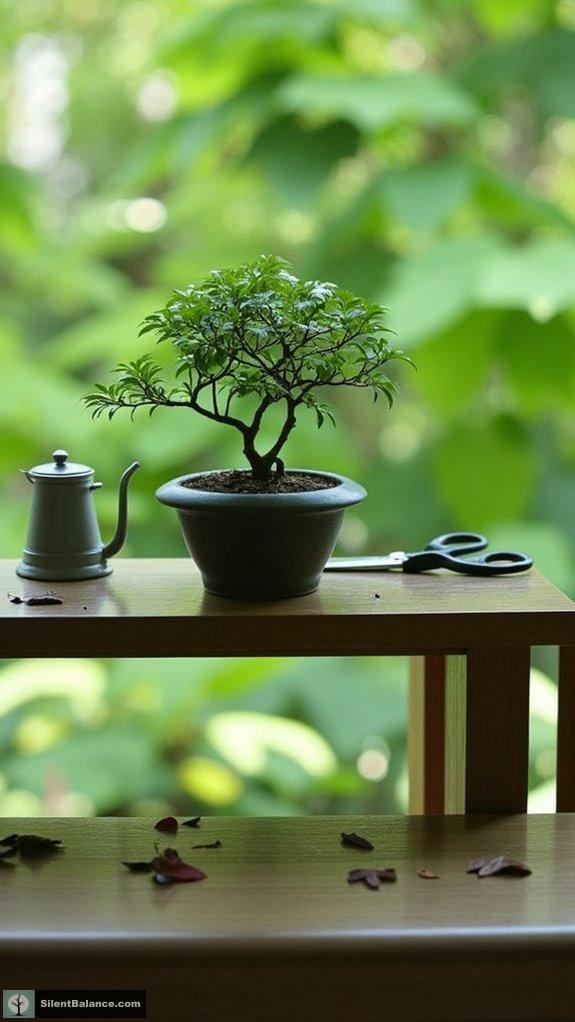
When you embrace a bonsai in your space, one of the most exhilarating challenges is shaping it through regular pruning. You see, each snip and clip doesn’t just style your mini tree; it promotes health and structure.
Are you ready to jump in? Start with a clear plan on how you want your tree to look. Heading cuts can coax fuller growth, while pinching encourages that compact bushiness we adore.
But be careful—overdoing it can stress your bonsai and ruin its vibe.
The best time for a trim? Late winter, right before growth kicks off.
With sharp tools and a keen eye, you can sculpt a masterpiece that fits perfectly in your minimalist oasis. Now, how cool is that?
Cultural Significance in Traditions
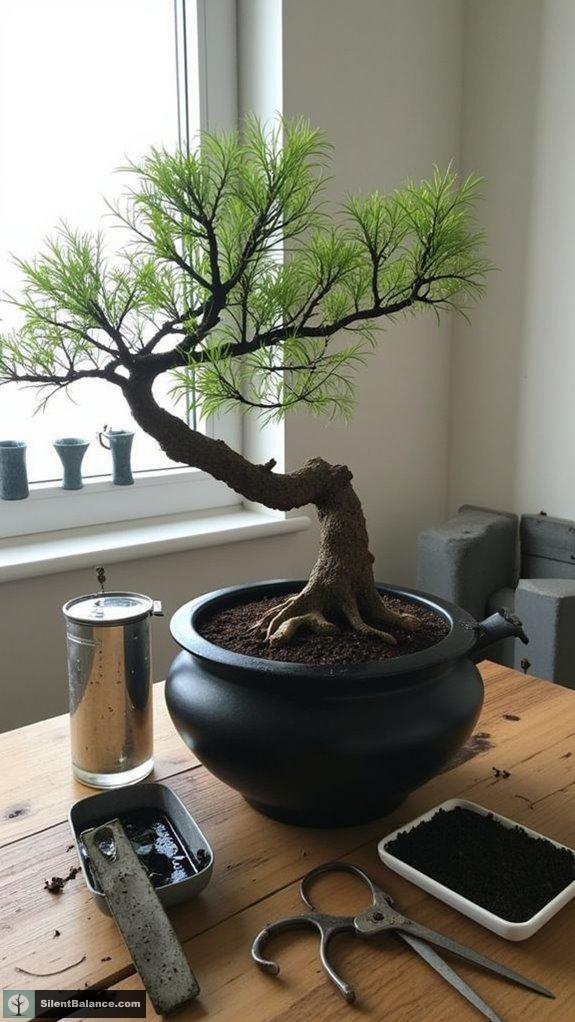
As I reflect on the artistry of bonsai, it’s clear that these miniature trees hold deep roots in cultural traditions and philosophies.
Did you know bonsai culture originated in ancient China around 700 CE? Initially named “pun-sai,” it was a pastime of the elite, embodying harmony and diligence.
Bonsai, originating in ancient China as “pun-sai,” reflects the harmony and diligence of its elite practitioners.
These little natural wonders also made their way to Japan during the Kamakura period, transforming into a distinct art form that embraces the Japanese principle of *wabi-sabi*—celebrating imperfection and simplicity.
Through literature and rituals, bonsai became more than just plants; they symbolize spiritual balance and endurance.
Isn’t it fascinating how these tiny trees encapsulate vast philosophies, inviting us to explore our own relationship with nature and patience?
Who wouldn’t want that artistic magic in their minimalist space?
Questions and Answers
What Types of Miniature Trees Are Best for Beginners?
Did you know that the *Acer circinatum*, or Vine Maple, can thrive in partial shade while adding vibrant fall color to your surroundings?
As a beginner, I’d suggest starting with low-maintenance choices like the River Birch ‘Little King’. Compact and sturdy, it fits nicely in small spaces.
Thinking of going compact? How about the Star Magnolia for stunning early blooms?
Trust me, these beauties deliver joy without demanding too much time. What’s not to love?
How Do Miniature Trees Affect Local Wildlife?
You might be surprised, but miniature trees play a critical role in our urban ecosystems. They’re like tiny wildlife hotels!
With snug tree cavities, they provide perfect nesting spots for squirrels and owls.
Plus, these little green giants offer essential food like fruits, nuts, and seeds for local critters.
Isn’t it cool that something so small can support diverse species?
Miniature trees really are the unsung heroes of our neighborhoods! Who knew, right?
Can Miniature Trees Thrive Indoors?
Can miniature trees thrive indoors? Absolutely! Just picture a cozy corner bursting with a Ficus bonsai or a dwarf citrus tree, both reveling in their indoor spotlight.
They need 6 to 12 hours of bright light daily, so a south-facing window’s a must! With a little TLC—think humidity, well-draining soil, and that occasional pruning—they’ll flourish, and who doesn’t want homegrown fruit? It’s a fab way to add life without cluttering up your space. Want in?
What Is the Best Soil for Miniature Trees?
When deciding on the best soil for my miniature trees, I find a mix of composted bark, pumice, and organic matter is a game changer.
Think 3:2:1 ratios! A well-draining blend creates a happy environment for those fine roots, preventing pesky root rot.
I also love tossing in some grit for extra drainage—it’s a win-win.
What’s your go-to mix? Let’s keep our little green buddies thriving!
Do Miniature Trees Require Special Fertilizers?
Absolutely, miniature trees do require special fertilizers! Think of them as the picky eaters of the plant world.
I love using a balanced fertilizer like 10-10-10 in early spring; it’s perfect for giving them a nutrient boost without overdoing it.
Make sure to keep those young roots happy with diluted water-soluble options, too!
Just bear in mind—less is often more. Your mini green friends will thank you with lush canopies and vibrant leaves!
References
- https://greenvistava.com/best-small-trees-for-smaller-spaces-northern-virginia/
- https://www.lovetoknow.com/home/garden/dwarf-trees
- https://allaroundarbor.com/the-pros-and-cons-of-planting-dwarf-trees-for-landscaping/
- https://extension.uga.edu/publications/detail.html?number=C999&title=great-plants-under-20-feet-for-small-spaces
- https://www.countryliving.com/gardening/g36876891/low-growing-trees/
- https://mossamigos.com/blogs/moss-community/minimalist-plants
- https://www.evergreentrees.com.au/blogs/plant-care-tips/the-best-feature-trees-for-small-areas
- https://www.gardengatetrees.com/blog/10-beautiful-and-compact-landscaping-trees-for-small-spaces
- https://www.gardeningknowhow.com/ornamental/trees/small-trees-for-front-yards
- https://mulhalls.com/garden-home/blog/our-favorite-small-trees-to-layer-into-the-landscape/

- Bonsai Placement Benefits for Room Harmony - November 8, 2025
- Why Use Air Layering to Propagate Bonsai Trees? - November 8, 2025
- 15 Stunning Acorn Wood Wall Art Ideas - November 8, 2025
