

Unlock the Magic: Why Companion Plants Matter in Bonsai Displays
Choosing the right companion plants for your bonsai is like adding seasoning to a fantastic dish. They not only beautify your space but also imbue it with the symbolism of trees—think resilience, balance, and harmony.
I still remember the day I paired my first bonsai with a delicate fern. The transformation was stunning. The fern seemed to whisper, “You’re not alone on this journey.” It was a moment of personal growth.
At Silent Balance, we delve into the layers that companion plants add to bonsai displays. They can create a serene oasis while improving air quality. Talk about a double win!
Ultimately, these leafy companions lift spirits and reveal hidden barriers. And let’s be real, who doesn’t want their bonsai to radiate the vibrant energy of its partners? Join us as we explore these enchanting plant relationships!
Quick Takeaways
- Companion plants symbolize personal growth, enhancing the bonsai tree’s significance through stages of evolution and balance.
- They foster mindfulness and deeper self-awareness, connecting the caretaker with nature’s soothing presence.
- Symbolic companion plants improve air quality, creating a tranquil environment that supports relaxation and well-being.
- Their aesthetic appeal complements bonsai displays, adding seasonal color and reflecting the natural rhythm of life.
- Spiritual narratives associated with companion plants serve as mentors, guiding individuals in uncovering unrecognized barriers during their growth journey.
Enhancing Personal Growth Through Symbolism
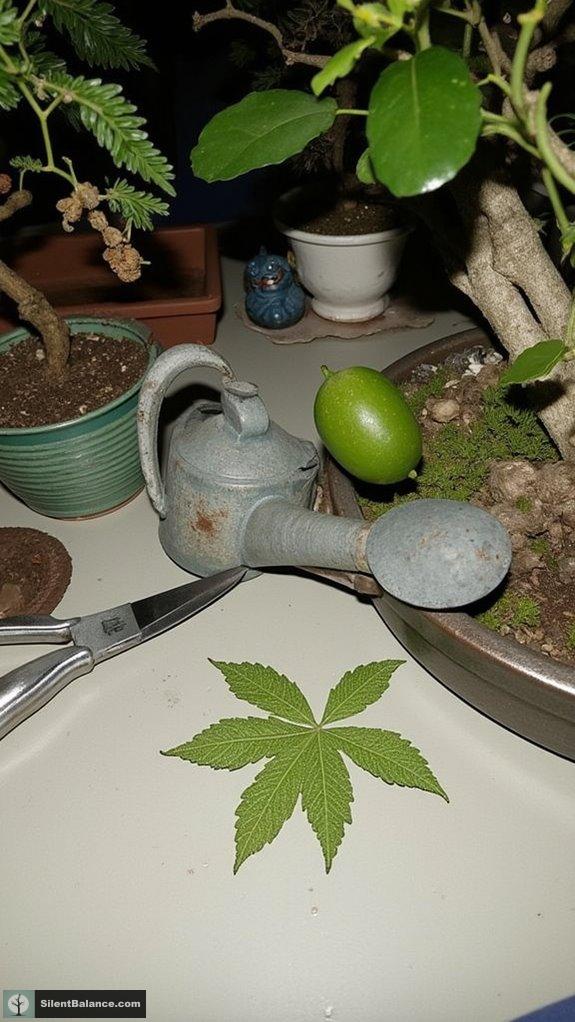
When I choose companion plants for my bonsai displays, I can’t help but feel a sense of excitement, almost like unearthing hidden treasures of personal growth. These symbolic plants represent stages of my own personal evolution, mirroring the ever-changing life cycles of bonsai. Selecting companions that emphasize balance and harmony acts like a gentle reminder to embrace the beauty of imperfection, a key element in the Japanese wabi-sabi philosophy. It’s like collecting mini mentors in my garden, each one embodying resilience and adaptability. Did you know that trees like the Bodhi Tree symbolize the ultimate spiritual awakening? Don’t you find that nurturing these green buddies encourages mindfulness? They pull me into the moment, inviting deeper self-awareness. Additionally, it’s fascinating how each bonsai tree is unique due to its cultivation, carrying the same magical and healing properties as its larger counterparts, thereby enhancing the symbolic significance of nature. Together, these plants create a vibrant microcosm of nature that fosters my ongoing journey of growth and transformation.
The Role of Patience in Bonsai Cultivation
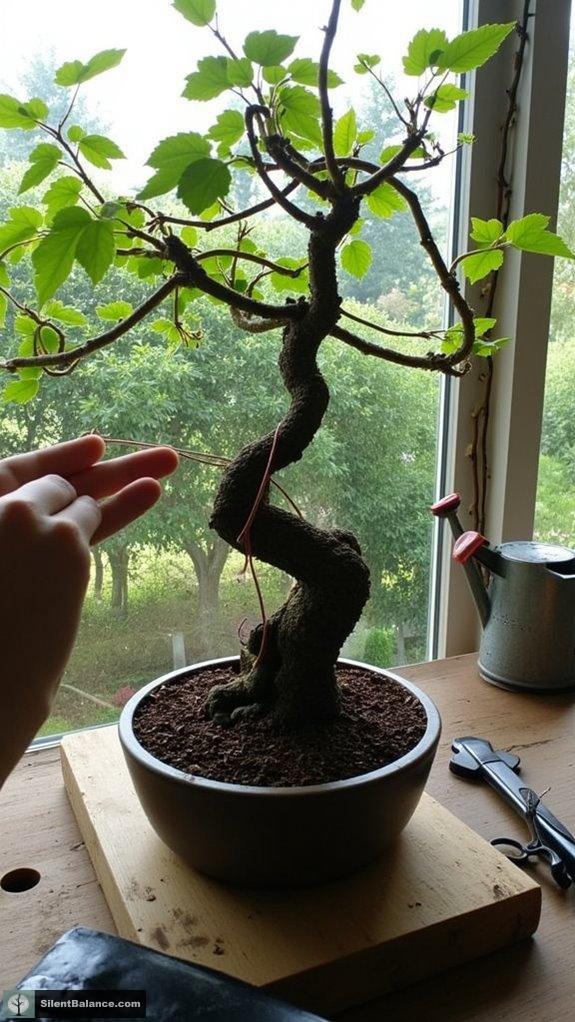
Patience serves as the backbone of bonsai cultivation, and let me tell you, it’s a virtue that pays off in spades!
When I first dipped my toes into bonsai, I learned quickly that shaping these living works of art isn’t a race; it’s a marathon! Each tree needs years—sometimes decades—before it reveals its full glory. The spiritual symbolism of bonsai, representing balance and harmony, additionally underscores the importance of Long-term growth of the tree, which requires a deep understanding of its needs and careful nurturing throughout its life cycle.
With a long-term vision, I found that truly appreciating the bonsai journey means accepting that patience rewards my efforts over time.
From wiring branches gently to evaluating soil moisture daily, every interaction demands careful observation. Every meticulous action contributes to the tree’s spiritual journey, reinforcing a caregiver’s connection to the ancient bonsai tradition and its significant meanings.
Creating a Tranquil Living Environment
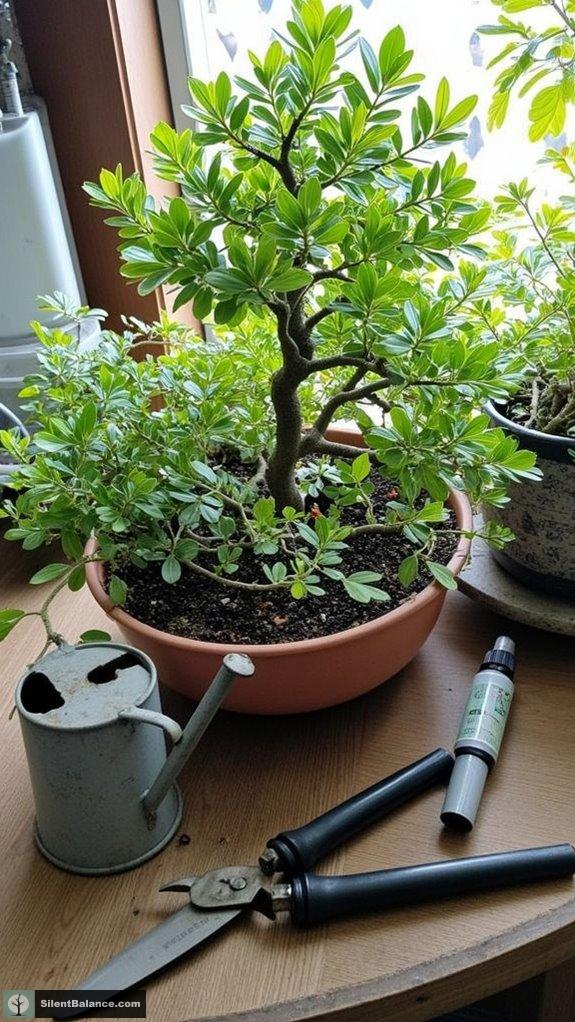
Creating a tranquil living environment doesn’t just happen by chance; it’s a careful orchestra of elements, where each player contributes to a greater harmony. Have you ever noticed how bonsai and their companion plants can transform a room into an oasis of calm? By improving air quality and balancing humidity, they create an inviting space for relaxation. Embracing nature through cultural tree meanings also enhances the spiritual ambiance of a home.
| Element | Benefit | Impact |
|---|---|---|
| Bonsai | Natural air purification | Enhanced indoor comfort |
| Companion Plants | Moisture retention | Tranquil atmosphere |
| Combined Benefits | Diverse plant health | Better breathing and relaxation |
Incorporating these green companions not only enriches our lives but also takes our indoor comfort to a whole new level. Why not invite a bit of nature into your space?
Spiritual Connections With Companion Plants
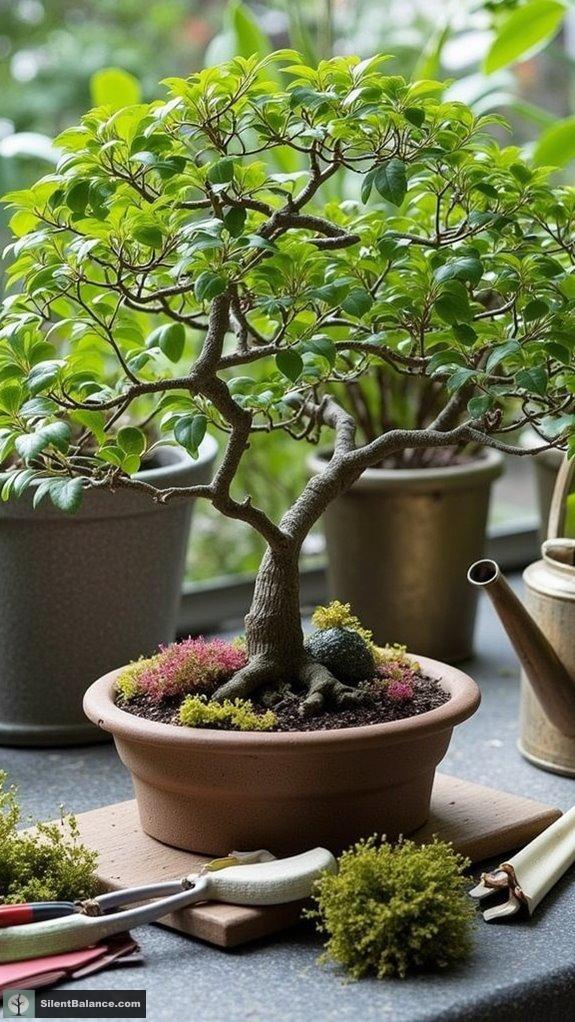
Spirituality is a fascinating dance of energy and intention, and when it comes to bonsai displays, companion plants play a vital part in that choreography.
These spiritual mentors resonate with our personal energy, guiding growth while revealing unrecognized barriers we might be hiding behind.
Take the Serissa, for example—it’s not just a bonsai, it’s a badge of well-being and prosperity, enhancing our display’s positive vibes.
Each companion plant brings specific spiritual narratives, like healing or tranquility, aligning perfectly with the Zen principles we cherish.
Aesthetic Appeal and Environmental Benefits
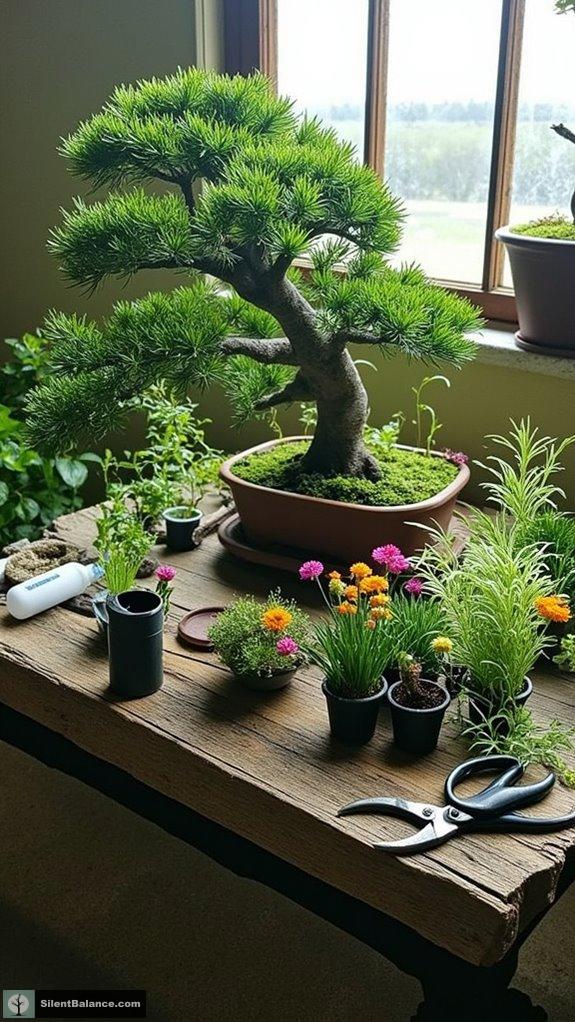
Bonsai displays aren’t just about the tree; they’re a whole ecosystem, and companion plants play a starring role in that vibrant scenery. They create aesthetic harmony that dazzles the eye, making every display a feast for our senses.
Think about it: slender grasses beside a tall bonsai or seasonal blooms adding a dash of color reflect the natural rhythm of life.
But it’s not just about looks! These companions greatly enhance our environmental impact, attracting pollinators like bees and butterflies, and creating mini-ecosystems.
Plus, they improve air quality and support humidity levels, making our indoor spaces feel like a breezy day in the forest.
Why not elevate your bonsai experience with these green allies? It’s a win-win for beauty and Mother Nature!
Strengthening Relationships Through Gifting
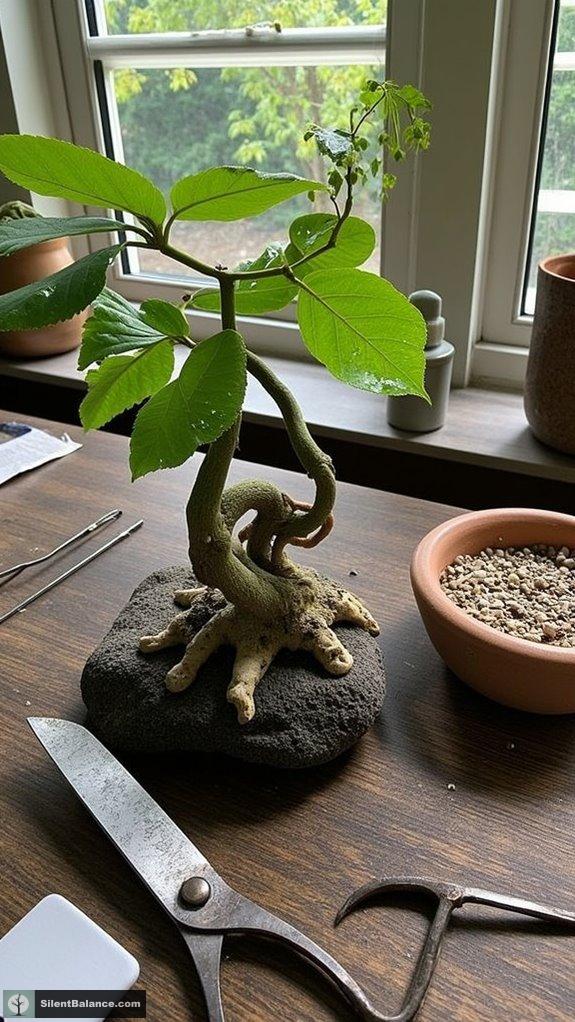
When you think about deepening relationships, have you ever considered the unique gift of a bonsai tree?
These living symbols embody patience, harmony, and growth, making them perfect for strengthening relationship bonds. Gifting a bonsai isn’t just a trend; it’s a symbolic gesture that shows your commitment to nurturing a connection over time.
Bonsai trees embody patience, harmony, and growth—perfect symbols for nurturing and deepening relationships over time.
Imagine presenting a friend with a stunning Ficus—that beauty will last decades, serving as a constant reminder of your care and investment in one another.
The process of bonsai cultivation mirrors relationships, requiring dedication and mindfulness.
Tailoring Your Display With Species-Specific Meanings
Crafting a stunning bonsai display isn’t just about selecting the star of the show; it’s equally important to contemplate those trusty companion plants that can elevate the entire arrangement.
Think about these three factors to enhance your display:
- Symbolic Color: Choose flower colors that resonate with the bonsai’s message—like pink azaleas for passion.
- Growth Habits: Pair plants that visually complement each other; a low-growing fern contrasts beautifully with an upright juniper.
- Species-Specific Meanings: Select companions that embody qualities matching your bonsai’s, creating a cohesive narrative of tranquility or resilience.
Mindfulness and Stress Relief in Daily Life
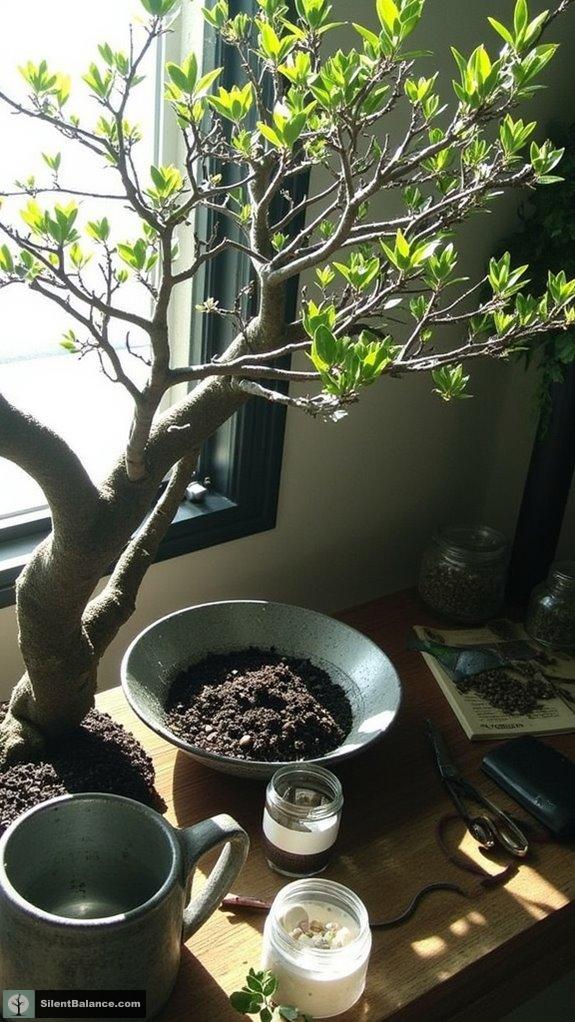
Life’s hustle can sometimes knock the wind out of us, can’t it? I mean, who hasn’t felt the weight of stress creeping up, right?
That’s where mindfulness practices come into play, turning our frantic saplings into serene bonsai.
Just think about it—practicing mindfulness can reduce stress levels remarkably, often by 14% in just ten days! It’s like giving your brain a gentle prune, snipping away the chaos.
These moments of focused breathing aren’t just for the zen masters; they enhance our concentration and emotional regulation, making our daily grind a whole lot smoother.
Prune Branches for Optimal Shape
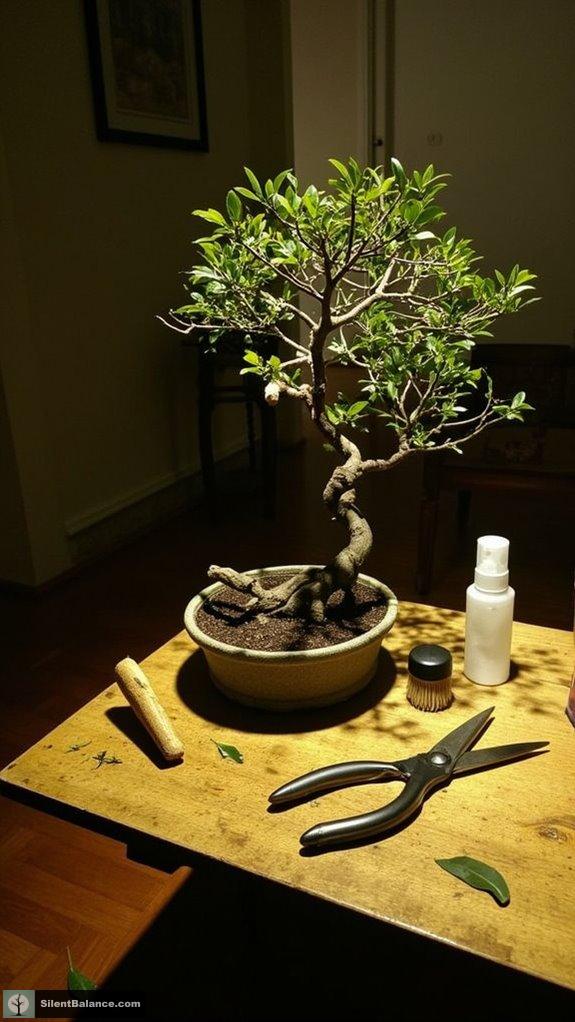
Pruning branches isn’t just a chore; it’s like giving your Bonsai a stylish haircut that transforms its entire vibe.
Here’s how I approach it:
- Assess Branch Density: I always check for overcrowded areas needing thinning, allowing light to penetrate and air to circulate.
- Choose Pruning Techniques: Maintenance pruning keeps the tree’s shape, while structural pruning defines those bold lines we love.
- Timing Matters: I prune during the growing season, ensuring my Bonsai has time to flourish post-touch-up.
Questions and Answers
How Do I Choose the Right Companion Plants for My Bonsai?
Choosing the right companion plants for my bonsai is all about creating aesthetic balance and color harmony.
I look for dwarf perennials that won’t overshadow my prized tree but add a splash of life. Ever considered low-growing mosses or succulents? They’re perfect!
Plus, matching their seasonal rhythms can transform your display effortlessly. So, what’s not to love about this mini ecosystem?
It’s like a tiny, enchanting forest right on my shelf!
Can Companion Plants Affect the Growth of My Bonsai?
Can companion plants chow down on your bonsai’s growth? You’d be surprised!
The right companions can offer sweet benefits, like growth enhancement through improved microclimates and nutrient balance.
Think of it as a bonsai buddy system—while they share resources, they can also create a cozy environment.
However, don’t let them go rogue! Some might hog nutrients or water, stressing your precious tree.
Are There Any Bonsai Species to Avoid in Companion Planting?
When it comes to companion planting, some bonsai species can be tricky due to disease resistance and root compatibility issues.
I’d steer clear of tropical trees like ficus when pairing with temperate species—they just don’t mix well!
Also, don’t forget the pesky ones, like Juncus maximowiczii, which can release allelopathic chaos, potentially harming your bonsai’s roots.
How Often Should I Water Companion Bonsai Plants?
When it comes to companion bonsai watering frequency, I’ve got a few tips for you.
If you’re outside, water daily before 11 am to guarantee moisture retention—you don’t want thirsty plants wilting on you!
For indoor buddies, every 3–4 days will do, but keep your finger on the pulse of that soil moisture.
Recall, happy roots equal happy leaves! Who doesn’t want that lush green vibe, right?
Keep it fresh and adventurous!
Where Can I Find Symbolic Meanings for Specific Bonsai Species?
If you’re hunting for symbolic meanings of specific bonsai, you’re in luck!
Some fantastic resources are online bonsai guides that explore the rich symbolism behind each species.
For instance, have you ever wondered why a ficus represents new beginnings?
The connections to philosophies like Zen Buddhism and feng shui make it even cooler!
Summary
Choosing symbolic companion plants for your bonsai is like crafting a personal narrative in a vibrant living book. Each plant tells a story of growth, patience, and harmony, enhancing both your display and your inner serenity. So, why not mix up your bonsai’s family tree with these leafy friends that resonate with your spirit? Immerse yourself in this enchanting world, and let the green thumb magic unfold; your bonsai and your heart will thank you!
References
- https://www.karmaandluck.com/blogs/news/bonsai-tree-meaning-benefits-history
- https://www.bloomsybox.com/blog/posts/the-symbolism-behind-gifting-a-plant
- https://abanahomes.com/blogs/news/top-15-benefits-of-bonsai-plants-that-will-make-your-life-awesome
- https://kyari.co/blogs/news/bonsai-plants-benefits
- https://hookedonbonsai.com/bonsai-tree-for-office/
- https://naturallybalanced.org/en/bonsai/
- https://www.bonsaidirect.co.uk/health-and-well-being-tree-gifts-meaning/
- https://www.homesandgardens.com/gardens/art-of-bonsai
- https://www.miningjournal.net/life/house-to-home/2025/02/be-patient-and-dont-be-intimidated-by-growing-a-bonsai-tree/
- https://learn.nebonsai.com/bonsai-skills/bonsai-tree-care-expert-tips/

- Bonsai Placement Benefits for Room Harmony - November 8, 2025
- Why Use Air Layering to Propagate Bonsai Trees? - November 8, 2025
- 15 Stunning Acorn Wood Wall Art Ideas - November 8, 2025
