
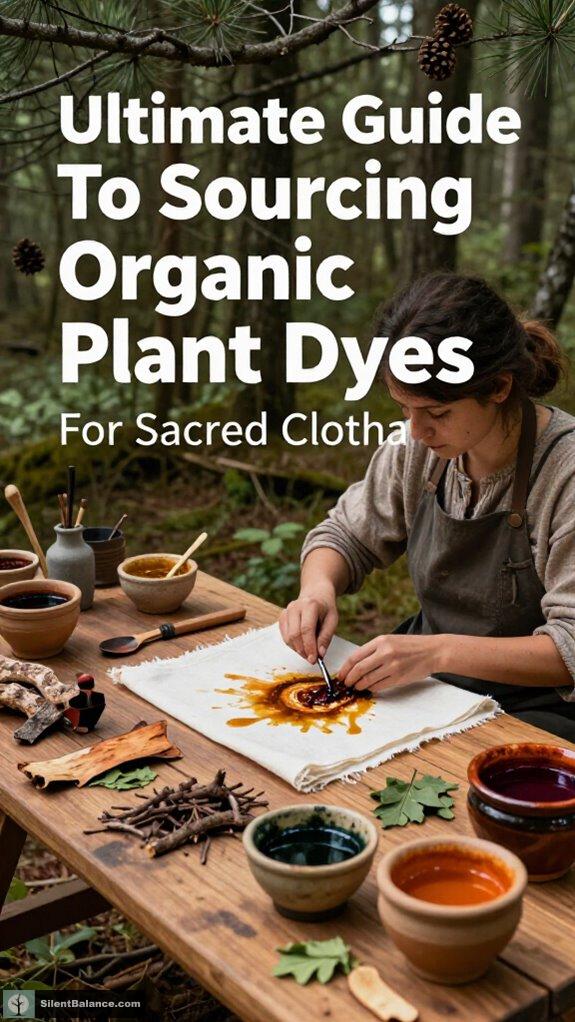
Ever held a cloth that felt alive? Like it remembered sunlight, rain, and whispered prayers?
I did.
In Oaxaca, an elder handed me a scrap dyed with avocado pits and wild cochineal.
“No store-bought soul here,” she said.
That moment reshaped my craft.
Now, I only use what grows with intent.
Bark for grounding. Roots for memory. Pinecones for renewal.
The symbolism of trees isn’t poetic fluff—it’s ancestral code.
On my blog, *Silent Balance*, I share how each hue tells a story.
Not just *how* to dye—but *why*.
Because sacred cloths aren’t made.
They’re remembered.
When the Dye Runs Deeper Than Color
Once, I cut a sliver of birch bark—just enough.
Felt a pang, like I’d overstepped.
Next morning, the tree had fallen. Not my fault, maybe.
But I stopped harvesting for a year. Now I ask first.
And I listen.
That respect? It shows in the dye.
Silent Balance is where I unpack these quiet lessons—no dogma, just roots.
Quick Takeaways
- Source dyes from reputable eco-conscious suppliers and specialty stores prioritizing sustainable harvesting and ethical practices.
- Identify botanical sources like oak bark, walnut hulls, madder root, and pinecones for authentic, symbolism-rich dyes.
- Practice reciprocal harvesting, respecting plant health and ecosystem balance to ensure long-term sustainable sourcing.
- Store dyes in airtight, opaque containers away from sunlight to preserve vibrancy and colorfastness.
- Verify authenticity through colorfast tests and comparison with synthetic dyes to ensure genuine organic coloration.
How Can You Identify Authentic Organic Plant Dyes?
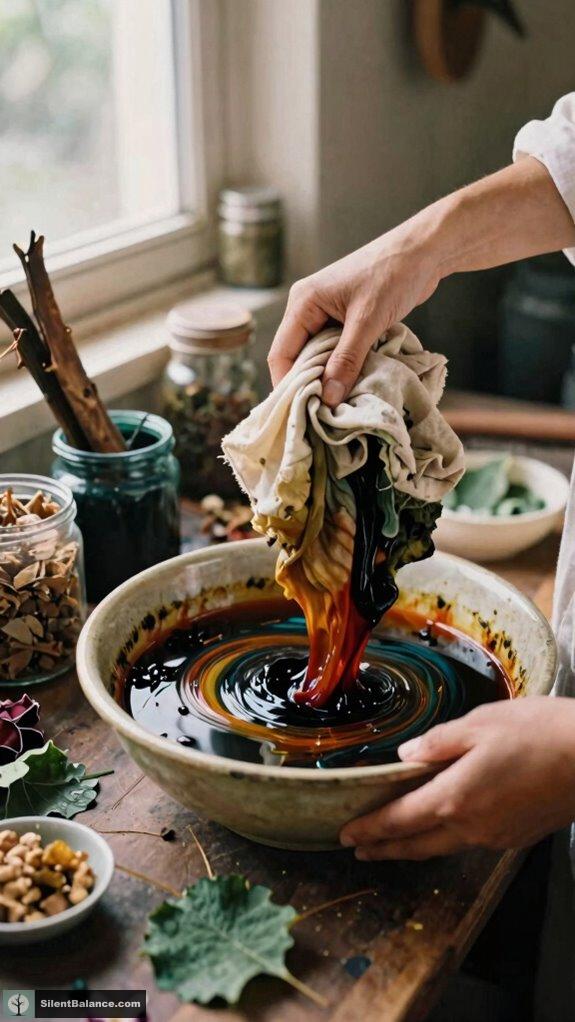
Ever wonder how to know if those vibrant, earthy colors are the real deal—authentic organic plant dyes or just cheap imitations? It’s easier than you think! Start with colorfast testing: brush a small, hidden area to see if the hue stays true after rinsing.
Compare it to synthetic dyes, which often fade or bleed easily. True plant dyes reveal rich, layered tones created by tree bark, pinecones, and roots—reflecting growth and resilience.
When choosing sacred cloths, don’t just chase brightness—seek depth and authenticity, so your textile truly carries the symbol of renewal and strength rooted in nature’s wisdom.
Which Plants and Natural Sources Provide Sacred Dyes?
Many of the sacred dyes that carry deep symbolism come straight from our forest friends—trees and their parts.
Ever wondered which plants fuel the vibrant stories behind dye color symbolism?
Discover the plants behind dye colors and the rich symbolism they carry through history.
- Bark from oak and walnut trees, representing strength and wisdom, produce rich browns and deep shades.
- Twigs and sprigs of eucalyptus or cedar, creating calming green hues and symbolizing protection.
- Pinecones and seed pods, offering warm golden or ochre tones, signifying growth and renewal.
- Roots of madder or ginseng, used for fiery reds, embodying passion and significance rooted in plant folklore.
Utilizing natural plant sources not only enhances the authenticity of your sacred textiles but also aligns with the spiritual symbolism embedded in these dyes, strengthening the connection between nature and craft.
How to Harvest and Prepare Plant Materials Sustainably
When it comes to harvesting plant materials for sacred dyes, the key is to do it thoughtfully and sustainably—think of it as giving back to the forest rather than just taking from it.
Wild foraging and sustainable harvesting mean you respect the plants and their environment. Are you gently plucking leaves, bark, or pinecones at the right time, or are you causing harm?
Remember, trees like oak and cedar carry deep symbols of strength and renewal. Using their bark or twigs in your crafts isn’t just practical—it’s a nod to ancestral roots.
Treat your plant gathering as a sacred, reciprocal dance with nature. The forest appreciates it. Incorporating sustainable harvesting methods ensures that these plant sources remain healthy and available for future rituals and crafts. Being mindful of plant collection practices helps preserve these vital ecosystems.
Extraction and Application Methods for Sacred Dyes
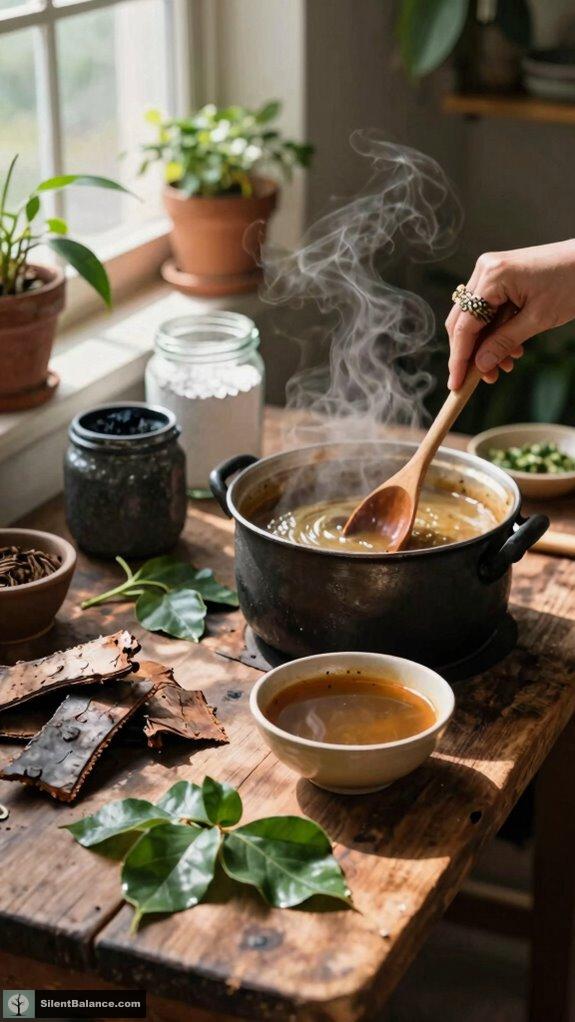
Extracting and applying sacred dyes from trees is like performing a delicate ritual, blending science with ancient wisdom.
Herbal dye chemistry reveals how plant tannins and flavonoids create vibrant hues.
You’ll soak bark, leaves, or branches in water or alcohol to extract their essence, then strain to isolate the color.
Thinking about synthetic dye alternatives? They’re quick, but often miss the soul that organic methods gift us.
Consider:
- Gentle simmering or cold-pressing to access deeper pigments
- Using natural mordants like alum or iron for enriching hues
- Incorporating symbolic tree elements—pinecones, roots—for spiritual meaning
- Applying dyes with mindful intention, enhancing connection to your sacred space.
Where to Source High-Quality Organic Dyes and Supplies
If you’re serious about sourcing high-quality organic dyes, the best place to start is online specialty suppliers and eco-conscious craft stores focused on natural, tree-based pigments. These sources respect the mythic dye origins and cultural dye symbolism, helping you connect deeply with the history behind each hue. Supporting watercolor tree tattoo ideas can also inspire your connection to natural dyes and their vibrant, sacred qualities. Additionally, seeking out suppliers who prioritize sustainable harvesting practices ensures that your materials are ethically sourced and environmentally friendly.
How to Ensure the Purity and Longevity of Your Sacred Dyes
Ensuring your sacred dyes stay pure and long-lasting isn’t just about storing them in a cool, dark spot—though that helps. It’s about understanding the magic behind those organic pigments. To keep their essential chemical stability and vibrant colorfastness, you need to perform colorfastness testing regularly. Incorporating dimmable smart bridge kits into your workspace can help you monitor and adjust lighting conditions for optimal preservation.
Some tips:
- Use pH-balanced additives to preserve purity
- Rely on natural fixatives like alum or iron mordants
- Store dyes in airtight, glass containers away from sunlight
- Conduct periodic testing to guarantee color integrity over time
Why settle for dull when your sacred cloths can shine with meaningful, lasting hues?
After all, isn’t your spiritual journey worth vibrant, enduring colors?
Ancient Bark Carvings Reveal Symbolism
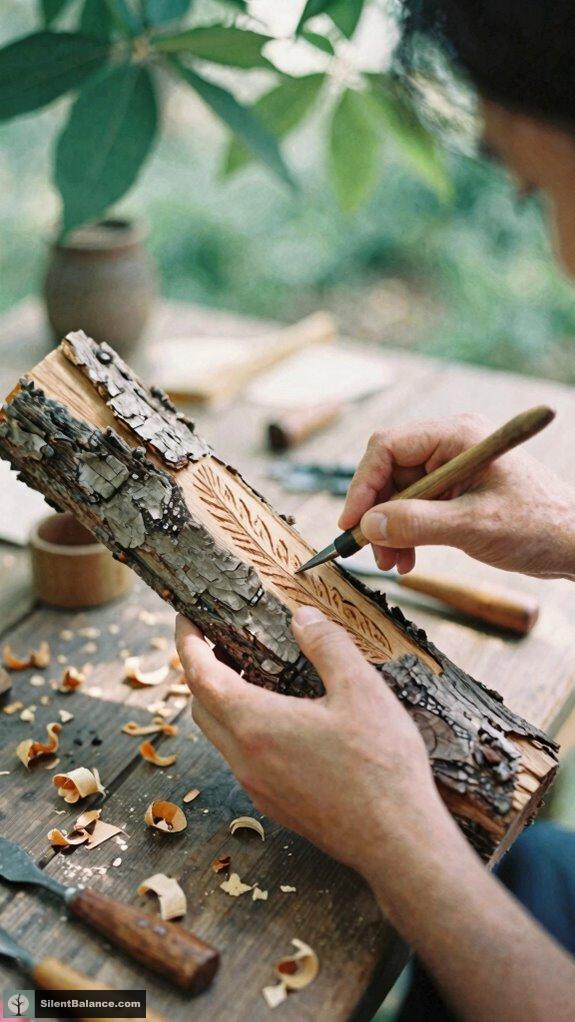
Picture uncovering ancient secrets carved into the rough surface of bark—sounds intriguing, right? These carvings reveal rich symbols tied to mystical symbolism and sacred traditions.
When you study detailed patterns etched into old bark, you’re reconnecting with traditions that honor nature’s language. Each line might tell stories of protection, growth, or renewal—like a secret code passed through generations. These symbols often reflect spiritual awakening and interconnectedness celebrated in various Buddhist practices, emphasizing the symbiotic relationship between humanity and nature.
Isn’t it amazing how tree bark can carry such deep meaning? Using these symbols in your home decor adds layers of spiritual depth. Think of bark carvings as nature’s own sacred texts, whispering stories of strength, resilience, and harmony—simple, yet profoundly powerful. Tree symbolism can serve as a bridge to deeper mindfulness in your living space.
Healing Properties of Bark-Derived Dyes
Diving into bark-derived dyes reveals more than just beautiful colors—these natural pigments pack powerful healing properties that go beyond aesthetics.
They carry deep Bark color symbolism, connecting you to ancient Earth energies, and Tree spirit associations that honor natural protection, strength, and renewal.
Consider these benefits:
- Promoting emotional balance and calm.
- Enhancing your connection to nature’s wisdom.
- Supporting physical healing and immune strength.
- Deepening your spiritual grounding through tree symbolism.
Ever wonder how a simple bark dye can boost your well-being? By incorporating bark pigments into sacred cloths, you’re tapping into centuries of healing traditions, rooted in the sacred stories of trees. The symbolism of branches often signifies growth, reaching, and the interconnectedness of life, which can inspire your spiritual journey.
INK BLEEDING PREVENTION TECHNIQUES can also help preserve the integrity of intricate bark-dyed patterns by ensuring the pigments stay precisely in place.
Natural Dyeing Tools and Pigments
If you’re into creating sacred cloths or just want to sprinkle some tree mythology into your home, knowing your natural dyeing tools and pigments is a game-changer. Tree mythology and botanical symbolism breathe life into every brush stroke—think bark, twigs, and pinecones representing strength, growth, or protection.
Want your colors to tell a story? Use bark-derived dyes or crushed leaves for deep greens and earthy browns. Tools like wooden brushes or ceramic pots connect you to ancient crafts.
Ever thought about how the fractal patterns of a pinecone or the flowing curves of branches could add symbolic depth to your textiles? Wear your tree wisdom proudly! Carefully selecting botanical symbols can enhance both the aesthetic and spiritual significance of your sacred cloths.
FAQ
How Do Seasonal Changes Affect the Vibrancy of Sacred Plant Dyes?
Seasonal variations may challenge dye stability, but with proper mordants and climate control, you can maintain sacred plant dyes’ vibrancy. Embrace the subtle shifts, allowing nature’s cycles to deepen your cloth’s spiritual resonance.
Can Sacred Dyes Be Personalized With Spiritual Symbols or Patterns?
You can personalize sacred dyes through symbol integration, using techniques like resist dyeing, embroidery, or stamping to infuse meaningful spiritual symbols and patterns, creating intimate, unique cloths that resonate deeply with your inner journey and ancestral roots.
What Ethical Considerations Are Involved in Sourcing Endangered Plant Materials?
You must tread lightly, like a whispered prayer, ensuring Endangered Harvesting avoids harm, while Ethical Certification shines like a guiding star, safeguarding delicate plants, respecting their spirit, and honoring Mother Earth’s sacred balance in your sacred creations.
How Do Atmospheric Conditions Influence Dye Fixation During Sacred Cloth Dyeing?
Climate impact and humidity effects directly influence dye fixation during sacred cloth dyeing; you feel the atmosphere’s moisture level, which determines how well dyes bond. Adjust your techniques accordingly, embracing the intimate dance between environment and tradition.
Are There Eco-Friendly Alternatives to Traditional Chemical Mordants in Sacred Dyeing?
You can embrace eco-friendly alternatives like natural mineral mordants and plant-based fixatives, weaving deep connection into your sacred dyeing. These options soften your process, creating vibrant, enduring colors that honor tradition and nurture Mother Earth’s sacred balance.

- 11 Best Luxury Sandalwood Candles for 2026 - June 19, 2026
- 11 Best Woven Wicker Gift Baskets for 2026 - June 19, 2026
- 11 Best High Powered Binoculars for 2026 - June 19, 2026
