

Unlocking the Secrets of Bonsai Seed Propagation****
When I first delved into bonsai cultivation, I didn’t just see it as planting seeds; I found a world of symbolism in trees.
Each tiny seed carried the potential for life, a story waiting to unfold. It’s about nurturing hope and fostering patience. Our blog, Silent Balance, dives deep into this art form and its cultural significance.
As I meticulously cold stratified my seeds, I was reminded of the winter I spent with my grandmother, looking out at the ancient oak in her backyard.
It symbolized resilience, a lesson passed on through generations. Those moments taught me more than just gardening; they instilled a profound respect for nature.
Now, I eagerly share those experiences with others, blending knowledge with love for these graceful beings. So let’s grow together!
Quick Takeaways
- Utilize cold stratification by refrigerating seeds in peat moss to break dormancy and enhance germination rates for specific bonsai species.
- Apply warm stratification by keeping seeds at around 70°F to encourage optimal growth in various bonsai varieties.
- Implement scarification techniques to soften tough seed shells, promoting hydration and faster germination.
- Ensure the planting depth for seeds does not exceed 1/8 inch, optimizing conditions for seedling emergence.
- Maintain proper humidity levels with humidity trays and adjust watering based on seasonal needs for healthy bonsai development.
Seed Preparation Techniques
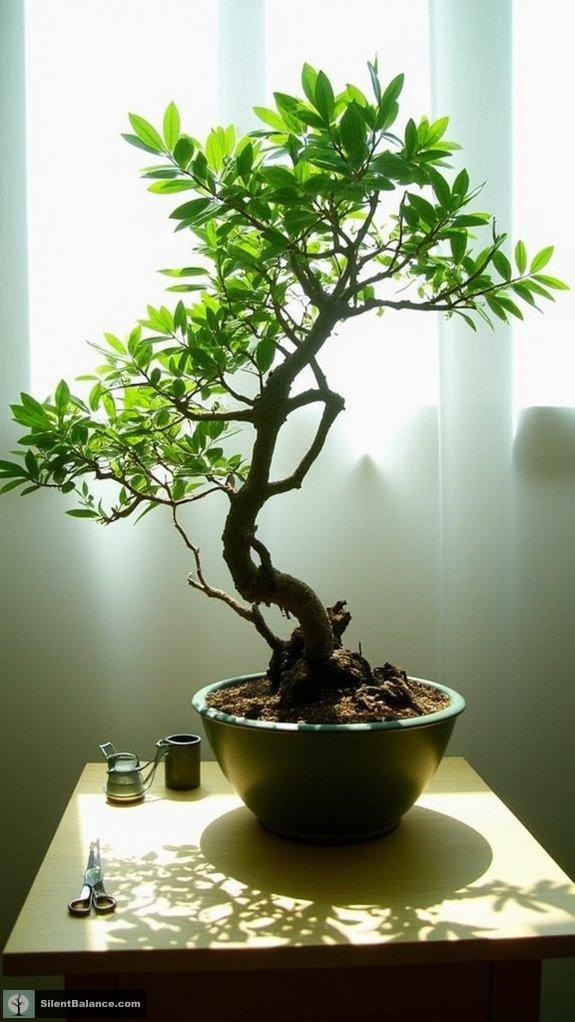
When you immerse yourself in the fascinating world of bonsai, understanding seed preparation techniques is key to nurturing your little green masterpieces.
Take cold stratification, for instance—it mimics winter chills, breaking down seed dormancy. You’ll be chilling seeds in peat moss, and yes, the fridge is your new best friend. Specific preparations for seeds like Flame Tree require soaking for 24-48 hours in warm water, enhancing their chances of sprouting.
Cold stratification is essential for breaking seed dormancy; just chill those seeds in peat moss—the fridge is your ally!
Or how about warm stratification? Envision giving seeds a cozy spring break at around 70°F!
Then there’s scarification—more than a tongue twister! Gently nicking those tough shells helps them hydrate and germinate.
Label your stratification containers—trust me, forgetting which seed goes where’s an amateur move.
Soil Selection and Preparation
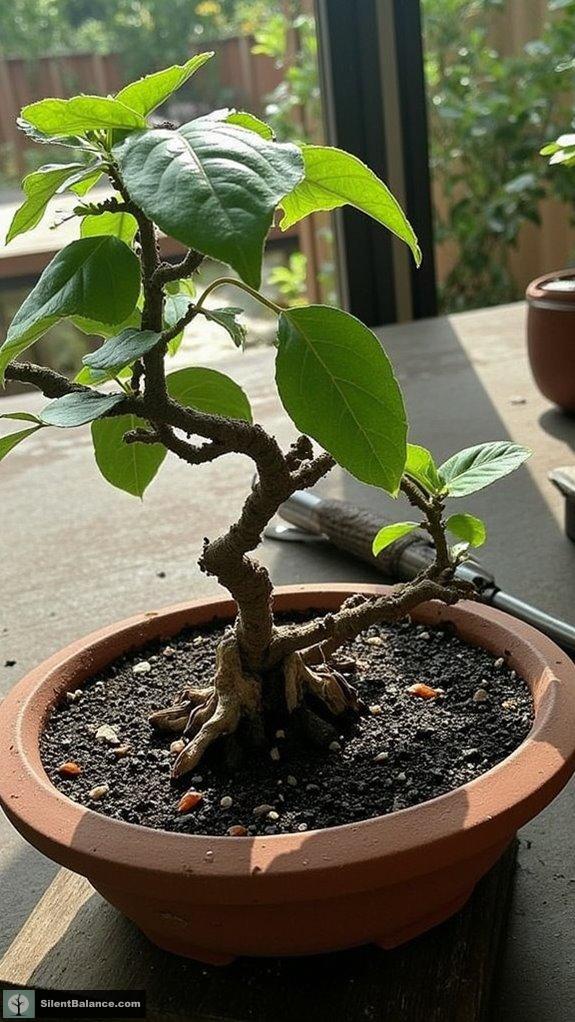
Soil selection and preparation might sound like a chore, but it’s one of the most exciting parts of bonsai cultivation, trust me! The right mix sets the stage for your tree’s success. Think of it as the bonsai’s foundation. Here’s a quick guide to help you navigate soil components:
| Component | Function | Ratio Example |
|---|---|---|
| Akadama | Water retention | 50% for deciduous trees |
| Pumice | Nutrient retention | 25% for conifers |
| Lava Rock | Aeration and drainage | 25% for tropicals |
Pre-wet your akadama for the best results, and don’t forget to sift out the dust. The balance between moisture retention and drainage is critical for bonsai health, so ready to build that perfect mix and watch your bonsai thrive?
Planting Depth and Layout

Planting depth and layout can feel like the secret recipe for success in bonsai cultivation, and believe me, it’s all about getting it just right!
For most seeds, sticking to a depth of no more than 1/8 inch works wonders; it lets those little guys breathe and germinate quickly.
Now, if you’re planting a Brazilian Rosewood, a quarter inch is perfect—just don’t compress the soil too much!
When it comes to seeds like Flames trees, you can venture a tad deeper, up to half an inch, but keep in mind—shallow is the name of the game!
Less is more, right? Keeping soil loose allows roots to stretch out.
The concept of the Tree of Life from Egyptian mythology highlights the importance of nurturing plants, symbolizing growth and renewal.
With a little finesse, you’ll turn those tiny seeds into stunning bonsai art!
Watering and Humidity Control
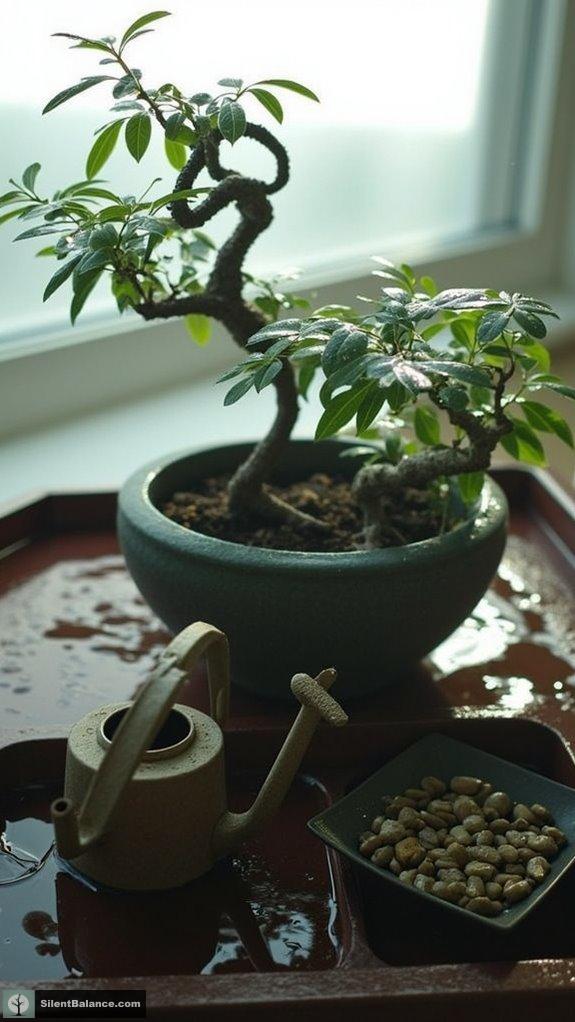
Watering is the lifeblood of bonsai care, and if you’re like me, you want to give your little green friends the royal treatment they deserve!
Keeping humidity in check is equally important for their health. Have you thought about how that impacts your bonsai’s day-to-day vibe?
Here are some tips that I’ve found invaluable:
- Use humidity trays—it’s a game changer for maintaining moisture levels.
- Rotate your watering methods based on species and environmental conditions to avoid over or under-doing it.
- Monitor that root ball—bubbling is a clear sign that it’s time to hydrate!
- During the seasons, adjust your watering frequency and volume to match the tree’s needs and prevent stress.
Post-Germination Care and Early Training
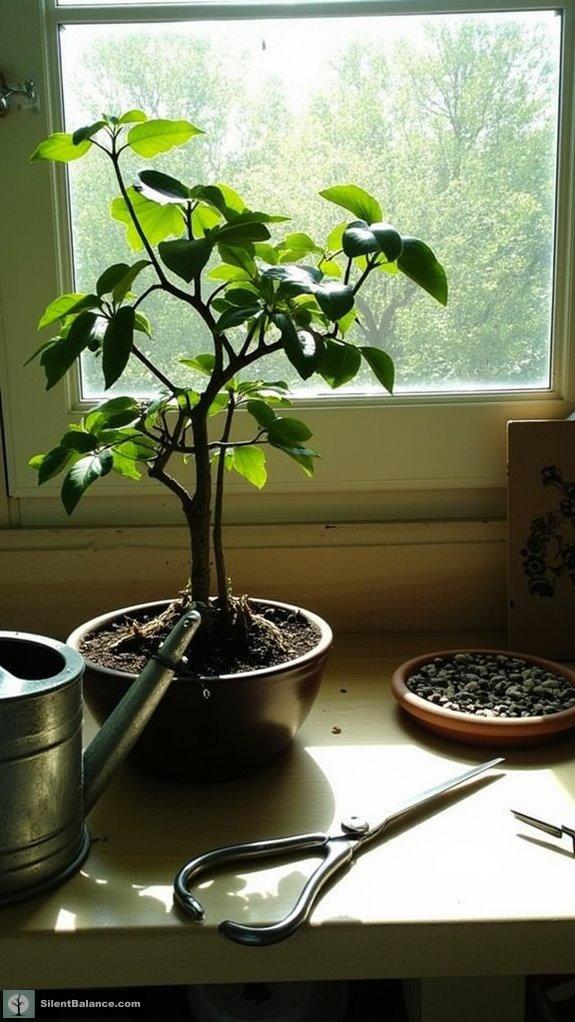
Once your seeds have germinated, it’s time to roll up your sleeves and plunge into the exciting world of post-germination care and early training.
Let’s talk repotting—this is essential for happy, healthy roots. I usually repot every 1-3 years, trimming about one-third of those roots to maintain balance.
Don’t forget to clear away old soil gently; we want no damage here!
Now, light exposure matters. For my seedlings, I make certain they bask in a few hours of direct sunlight daily. Depending on the species, you might need to adjust their cozy spot!
With early structural training, I start shaping by gently pruning new shoots at just the right moment. Who doesn’t want their bonsai to impress? Additionally, regular light exposure can help mimic the conditions seen in their native environments, promoting robust growth.
Prune Branches Regularly
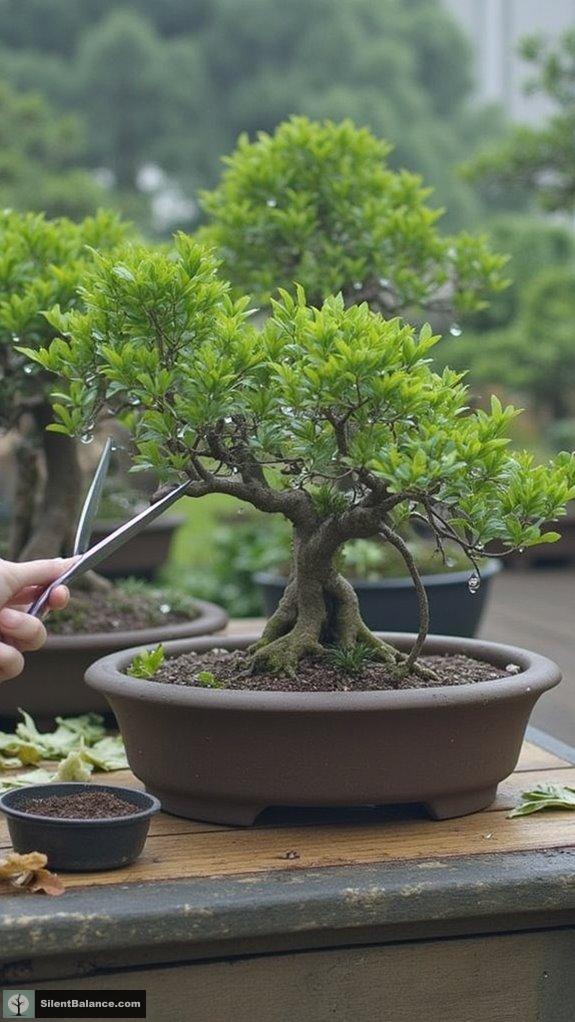
Keeping your bonsai healthy doesn’t end with post-germination care; regular pruning of branches is just as essential.
I can’t stress enough the importance of understanding two main types of pruning:
- Maintenance pruning for shaping and fine-tuning, trimming those pesky new shoots.
- Structural pruning for crafting the overall form, shaping the masterpiece.
Trust me, a well-timed prune, ideally in early spring, helps balance growth and encourages robustness.
I mean, who doesn’t want a lush, vibrant bonsai, right?
Cultural Significance of Trees
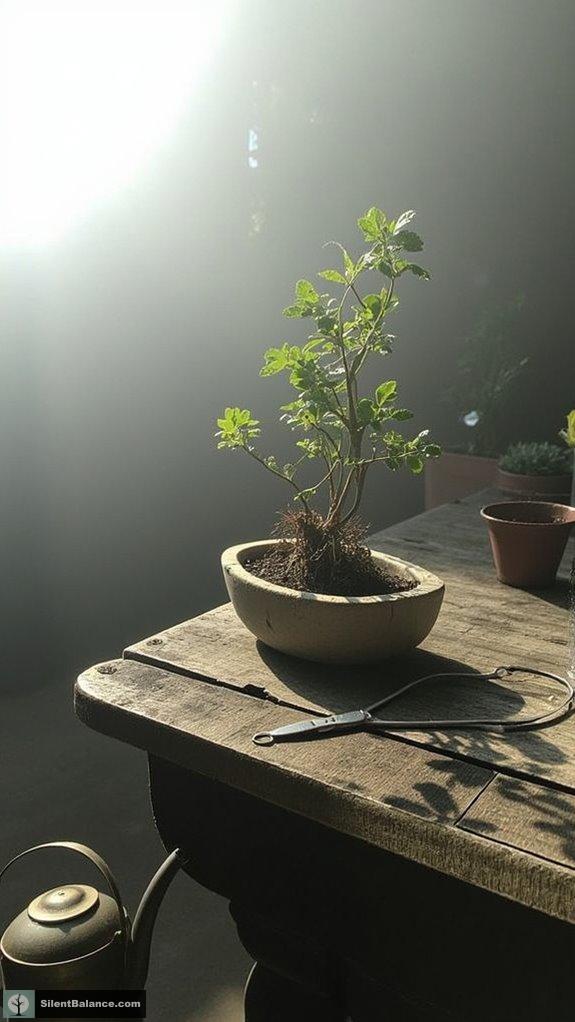
Trees have always fascinated me, especially when you peek into their cultural significance.
Take the Bodhi Tree, for instance—Buddha’s go-to spot for enlightenment. Talk about a sacred hangout!
The Bodhi Tree, where Buddha found enlightenment, stands as a timeless symbol of sacred reflection.
Oak trees, revered by the Celts and Greeks, symbolize strength, while the Banyan tree in Hinduism is all about immortality. Ever heard of Yggdrasil? It’s the Norse World Tree connecting all nine domains—seriously poetic stuff!
In bonsai culture, I often ponder how each tiny tree whispers stories of resilience and interconnectedness.
When we prune our bonsai, are we not also honoring these ancient legacies?
Questions and Answers
What Types of Seeds Are Best for Bonsai Cultivation?
When it comes to bonsai cultivation, I swear by species like the Japanese Red Maple and Hinoki Cypress. Their miniature traits and vibrant aesthetics make them irresistible!
Ever tried the Japanese Trident Maple? Its unique leaves add flair to any collection.
And don’t overlook the Coastal Redwood for its evergreen charm!
Trust me, using high-quality seeds guarantees your little trees have the best shot at thriving.
Ready to dig in? Let’s grow!
How Long Does It Take for Bonsai Seeds to Germinate?
So, how long does it take for bonsai seeds to germinate? Picture waiting for the perfect avocado to ripen—tantalizing yet torturous!
Most seeds sprout within a month under ideal conditions, but some can take up to three months. Factors like temperature, moisture, and even a little scarification can help speed things up.
Rekindle, patience is your best friend here! Have you got the time to nurture those tiny warriors into stunning bonsai? I sure hope so!
Can I Use Regular Garden Soil for Bonsai Seeds?
Instead, grab a well-draining mix.
Think akadama, pumice, or a sandy blend—your little seeds will thank you.
Keep it airy, and watch them thrive!
Trust me, it’s a game-changer!
What’s the Best Time of Year to Start Bonsai Seeds?
So, plant your seeds in late summer to early autumn for a cozy dormancy through winter.
This mimics their natural cycle, ensuring they’re primed to sprout come spring.
Trust me, your trees will thank you.
Plus, who doesn’t love a good head start on their bonsai journey?
How Often Should I Check for Pests During Seedling Growth?
I recommend checking your seedlings weekly for pests, because these little guys can sneak up on you.
Trust me, a couple of hours each week is worth it!
Use a 5X hand lens to spot those hard-to-see critters.
Keep an eye out for leaf discoloration or webbing—nobody wants a spider mite party in their nursery.
Stay vigilant, especially during high-risk seasons.
Your bonsai will thank you for it!
References
- https://www.shopgardenrepublic.com/blogs/blog/garden-republics-guide-to-bonsai-seed-sowing-and-care
- https://www.youtube.com/watch?v=JBD3Pt5TJWM
- https://www.instructables.com/Starting-a-Bonsai-From-Seed/
- https://www.bonsaiempire.com/forum/repotting-and-soil/16328-best-soil-for-seed-propagation
- https://www.youtube.com/watch?v=7YhvVDB_b_0
- https://www.bonsaiempire.com/forum/basic-techniques/8451-i-need-advice-on-growing-bonsai-from-seeds
- https://www.youtube.com/watch?v=YgQgd5sxFw8
- https://www.gardeningknowhow.com/houseplants/bonsai/bonsai-soil-requirements.htm
- https://bonsai4me.com/an-introduction-to-bonsai-soils/
- https://www.bonsaiempire.com/blog/bonsai-soil-requirements

- Bonsai Placement Benefits for Room Harmony - November 8, 2025
- Why Use Air Layering to Propagate Bonsai Trees? - November 8, 2025
- 15 Stunning Acorn Wood Wall Art Ideas - November 8, 2025
