
To keep your bonsai trees thriving, I’ve found seasonal watering and fertilizing routines are key! In spring, I check the soil moisture with the finger test and apply diluted balanced fertilizer every few weeks. Summer’s all about pruning and vigilant watering, while autumn calls for serious trim jobs and adjusting moisture levels as temps drop. When winter hits, I keep watering gentle and reduce fertilizer. Curious how to tailor care for specific species? Stick around, and I’ll share more!
Quick Takeaways
- Check soil moisture regularly; water when dry an inch down to ensure proper hydration across all seasons.
- Apply diluted balanced liquid fertilizer every few weeks during spring and summer for robust growth.
- Prune bonsai in autumn and summer to maintain shape and health while preventing overcrowding.
- During winter, reduce fertilizer to once a month and adjust watering to prevent overwatering in dormancy.
- Tailor care schedules based on specific bonsai species needs, ensuring optimal conditions for growth and health.
Spring Watering and Fertilizing Techniques
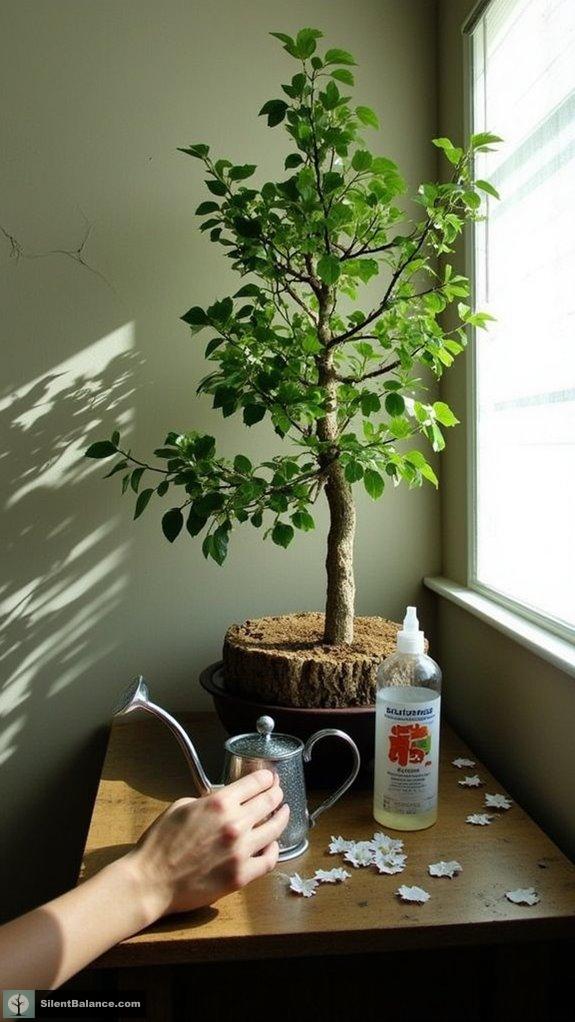
As spring rolls in and the temperatures start to rise, I can’t help but get excited about giving my bonsai a little TLC. This season, spring watering is essential for awakening those beautiful buds. I always use the finger test—just poke the soil. If it’s dry an inch down, it’s time to hydrate.
Now, when it comes to spring fertilization, I swear by a balanced liquid fertilizer. Just a diluted mix every few weeks does wonders, boosting growth while keeping my tree’s health in check. Different bonsai species may require specific soil types to effectively absorb these nutrients, enhancing their vitality.
Think about it: Isn’t it thrilling to watch your bonsai thrive with just a little love, water, and nutrients?
Summer Maintenance Practices
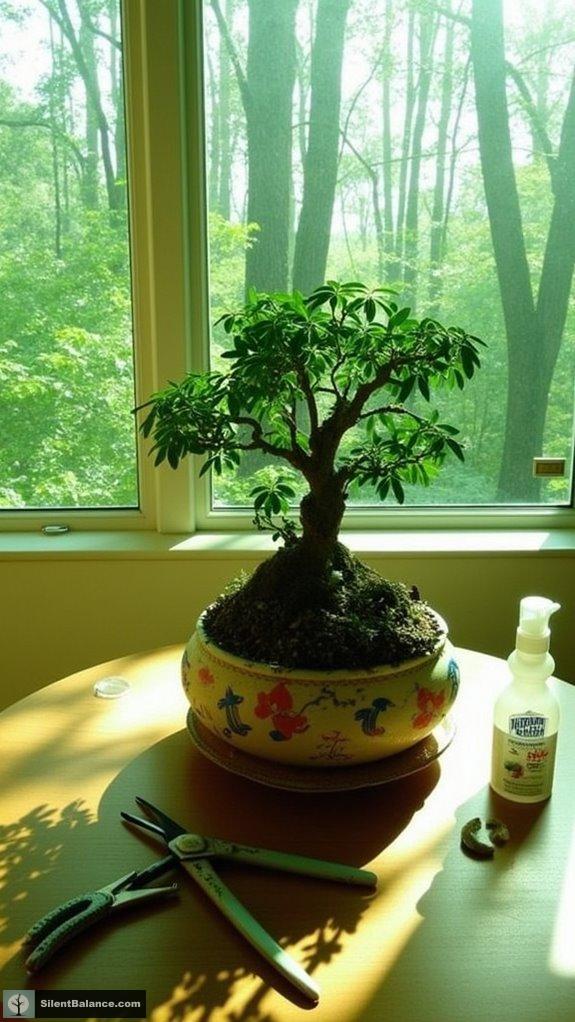
When the summer sun starts blazing, I know it’s time to switch gears in my bonsai care routine. This season brings unique challenges, but I’ve got my trusty strategies to keep my little trees thriving.
Here’s what I focus on:
Here’s my summer bonsai care mantra: pruning, pest control, and diligent watering to keep my trees thriving!
- Summer Pruning: I keep a sharp pair of shears handy. I’m diligent about snipping back new growth to maintain shape and stimulate branching. It’s like a haircut but way more meaningful!
- Pest Control: I inspect my bonsai regularly for critters. A quick spray with neem oil can save my trees from a buggy demise.
- Water Management: I adjust my watering schedule to prevent drying out. Depending on the heat, daily checks are essential; no bonsai deserves to be parched!
Additionally, choosing the right unique bonsai pot styles can enhance the aesthetics of your trees while providing necessary drainage.
Let’s conquer summer together!
Autumn Care Tips for Bonsai
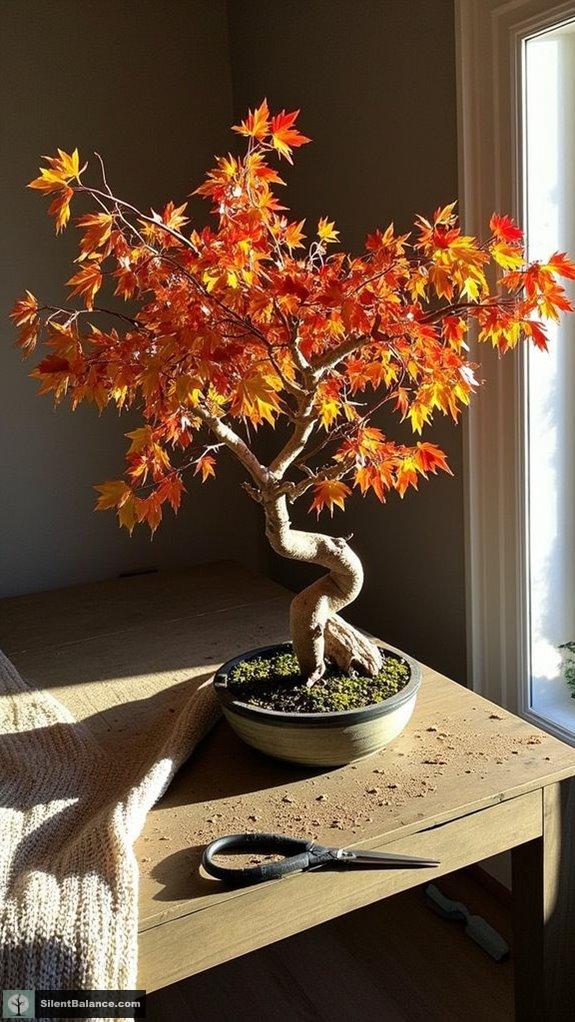
October’s chill creeps in, nudging me to refocus on my bonsai care regimen.
With the leaves starting to drop, it’s time for some serious autumn pruning. I can almost hear the trees whispering for a trim—don’t you just love that intimacy?
Pruning now helps promote healthy growth before they slip into autumn dormancy.
I make meticulous cuts, removing dead or overgrown branches, allowing air and light to penetrate.
It’s like a gentle haircut, keeping them stylish for the winter ahead.
Make sure you keep an eye on watering frequency as temperatures drop.
And hey, if you’ve got a favorite tool for this process, what’s stopping you from pampering your bonsai?
Treat them like the gentle creatures they are! Additionally, ensure you adjust your watering frequency to match the changing temperature to prevent overwatering during this transitional period.
Winter Watering and Fertilizing Strategies

The cozy winter months call for a slightly different approach to watering and fertilizing our beloved bonsai. It’s all about ensuring winter hydration while respecting their dormant phase.
Winter care for bonsai requires a gentle touch for hydration while honoring their restful state.
Here are my top three strategies:
1. Check Soil Moisture****: I usually stick my finger in the soil—if it’s dry an inch down, it’s time for a drink.
Keep in mind, bonsai don’t need too much in winter!
2. Reduce Fertilizer: During this sleepy season, I focus on dormant feeding, using a diluted, balanced fertilizer only once a month.
3. Observe Temperature: I keep an eye on the temperature fluctuations; warmer indoor air can dry them out faster than you’d think!
Winter is the time to pamper your bonsai while letting them rest. Happy cultivating!
Adapting Schedules to Specific Bonsai Species
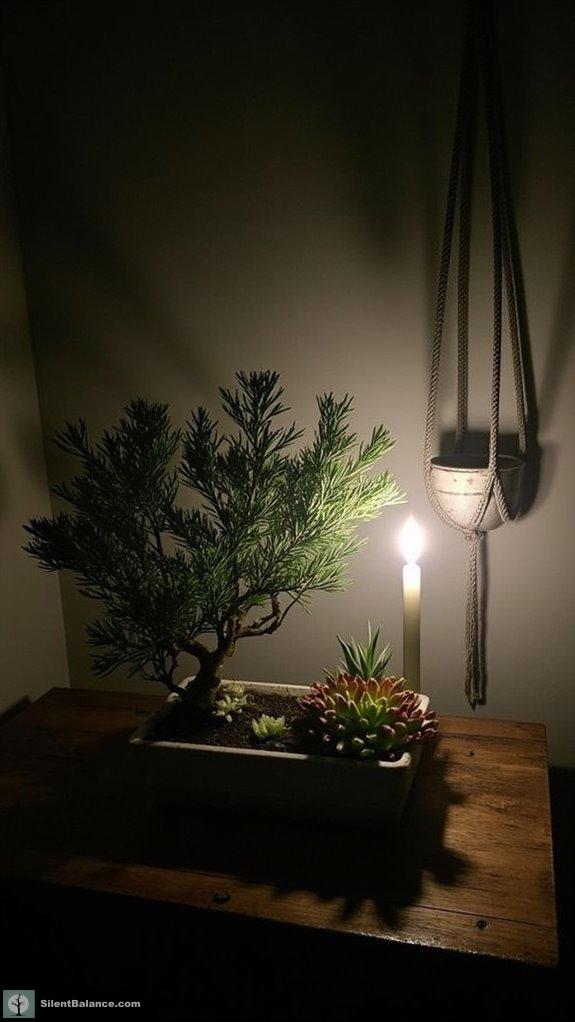
As I plunge into the world of bonsai, I can’t help but marvel at how each species has its own quirks and calendar.
When you’re nurturing your little tree, you’ve got to cater to its species specific needs. Much like a fussy houseguest, a juniper loves its soil dry and airy, while a ficus craves moist conditions.
Finding those ideal conditions is key; it’s like giving your bonsai a cozy blanket.
So, get to know your tree’s watering and fertilizing rhythm, and don’t hesitate to tweak your schedule as the seasons shift.
After all, nothing says “bonsai master” like a perfectly pruned pine that’s thriving in its personalized paradise, right?
Who wouldn’t want to brag about that?
Bonsai Tree Symbolism
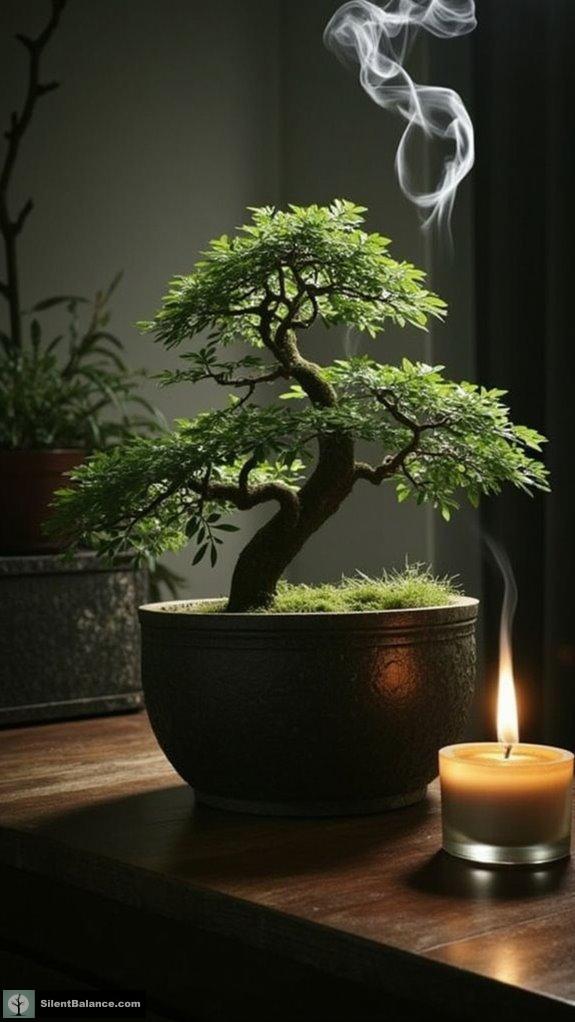
Ah, the deep-rooted symbolism of bonsai trees—it’s quite a fascinating topic!
There’s so much to explore in their cultural significance and spiritual meaning.
Here are three intriguing points about bonsai symbolism:
- Resilience: These miniature masterpieces represent strength and endurance, thriving despite their constrained environment.
- Harmony: They’re a celebration of balance and tranquility, reflecting the delicate relationship between nature and nurture.
- Longevity: Bonai trees symbolize a connection to the past, often passed down through generations, signifying wisdom and growth.
Ever thought about how a tiny tree can carry such profound meaning?
It’s incredible how much power lies within these little wonders, isn’t it? As you care for your bonsai, bear in mind, you’re nurturing more than just leaves!
Tree Symbolism
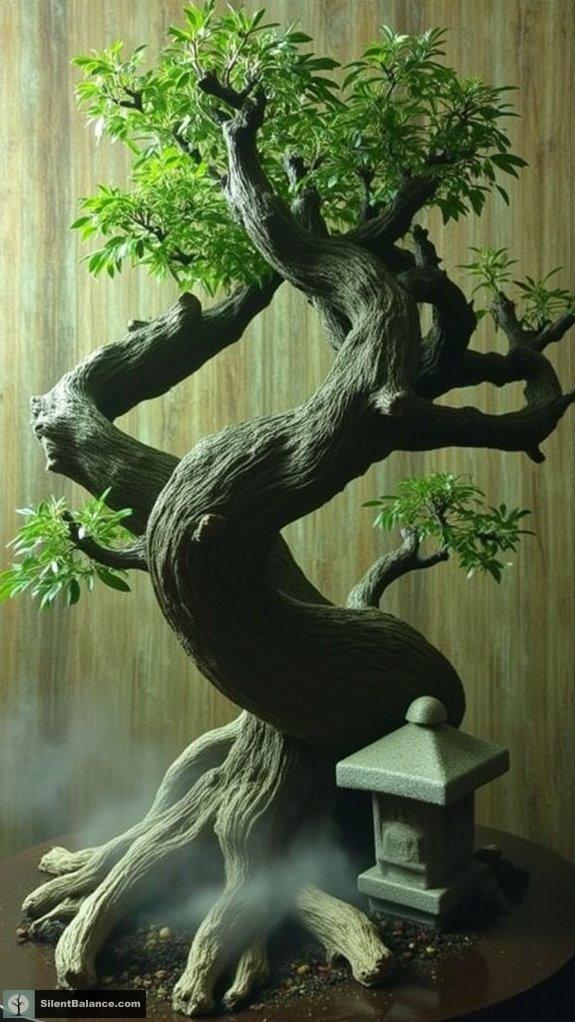
Trees often serve as nature’s magnificent storytellers, conveying rich symbolism across cultures and time.
Have you ever stopped to think about the cultural significance of trees? From the sturdy oak symbolizing strength to the graceful cherry blossom representing the fleeting nature of life, each tree has its own story.
In bonsai culture, these miniature trees embody not just beauty but also spiritual meaning. They represent patience and harmony with nature, teaching us about balance in our busy lives.
Questions and Answers
How Often Should I Prune My Bonsai Tree During Each Season?
When it comes to pruning my bonsai, I stick to a seasonal rhythm.
In spring, I do a major prune to encourage new growth, using precise pruning techniques.
During summer, I selectively trim for shape, while in fall, I tidy things up to prepare for winter dormancy.
Winter? A light touch is all that’s needed.
Each season offers unique considerations, so I stay attentive. After all, who wouldn’t want a masterpiece in mini form?
What Type of Water Is Best for My Bonsai Trees?
When it comes to quenching your bonsai’s thirst, rainwater’s my secret weapon. It’s like nature’s own miracle potion, low in minerals and just right for delicate roots.
You wouldn’t want tap water packed with chlorine and minerals wreaking havoc, would you?
Collecting rainwater is simple and totally worth it.
How Can I Tell if My Bonsai Needs More or Less Water?
Envision your bonsai tree as a delicate dancer, needing just the right rhythm of water to thrive.
To tell if your bonsai needs more or less water, feel the soil moisture. If it’s dry and pulling from the sides, it’s thirsty.
Leaf droop is another telltale sign, like your bonsai waving its little arms saying, “Help!”
Keep a close eye, and you’ll master the art of hydration in no time!
Can I Use Regular Garden Fertilizer for Bonsai Trees?
You might be tempted to grab that regular garden fertilizer for your bonsai, but it’s not a one-size-fits-all solution.
I prefer organic fertilizer; it nourishes without risking the delicate balance of my little tree’s ecosystem.
Chemical fertilizers can be harsh, often overloading the roots. Have you ever seen a bonsai go “haywire”? That’s what can happen!
So, let’s stick to specialized products, ensuring our bonsai are healthy and thriving!
Happy pruning!
How Do Environmental Factors Affect My Bonsai’s Watering Schedule?
When it comes to my bonsai’s watering schedule, I often wonder how environmental factors play a role. Just think about it—humidity levels and temperature fluctuations can really shake things up!
In drier environments, I’ve noticed my trees drying out faster, requiring more frequent watering.
Conversely, higher humidity means I can take it easy.
Isn’t it fascinating how the natural world keeps us on our toes? I’ve learned to adapt, and so can you!
Summary
Caring for bonsai trees is like nurturing a tiny forest in your living room—it’s a rewarding journey every step of the way! By following seasonal watering and fertilizing schedules, you’re not just keeping your little green friends alive; you’re making them thrive.
So, whether you’re a seasoned bonsai aficionado or just dipping your toes, recollect: attentive care is key. Got questions? Immerse yourself in the delightful world of bonsai, and let’s grow together!

- Bonsai Placement Benefits for Room Harmony - November 8, 2025
- Why Use Air Layering to Propagate Bonsai Trees? - November 8, 2025
- 15 Stunning Acorn Wood Wall Art Ideas - November 8, 2025
