
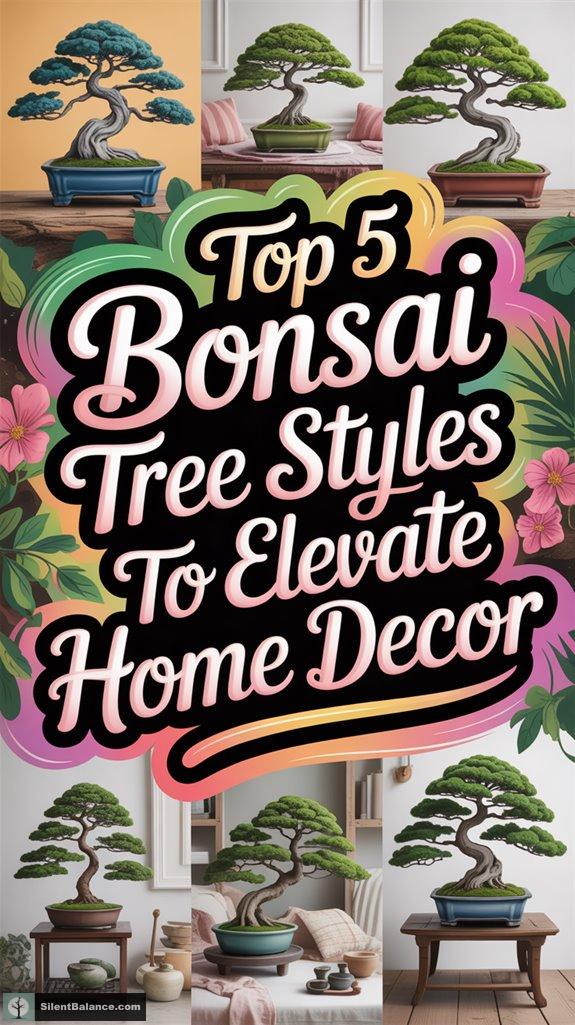
When it comes to elevating your home decor with bonsai, you’ve got some stunning options! Start with the elegant Formal Upright (Chokkan) style; it’s all about tall, tapering trunks that scream sophistication. If you’re feeling a bit artsy, the Informal Upright (Moyogi) is those gentle curves and S-shapes that bring nature indoors. And don’t overlook the dramatic Cascade (Kengai) or the rugged Windswept (Fukinagashi); they add that adventurous flair. Ready to master the bonsai game and learn some insider tips?
Quick Takeaways
- The Formal Upright (Chokkan) style enhances minimalist decor with its elegant, symmetrical tapering trunk.
- Informal Upright (Moyogi) style offers graceful curves, bringing natural beauty and artistic flair to indoor spaces.
- Cascade (Kengai) style adds drama to home decor, showcasing resilience with its trunk dipping below the pot’s rim.
- Semi-Cascade (Han-Kengai) style represents survival while providing a balanced visual with its downward-angled trunk and horizontal branches.
- Windswept (Fukinagashi) style embodies nature’s power, featuring dramatically slanted trunks that create a rugged yet captivating aesthetic.
Formal Upright (Chokkan) Style
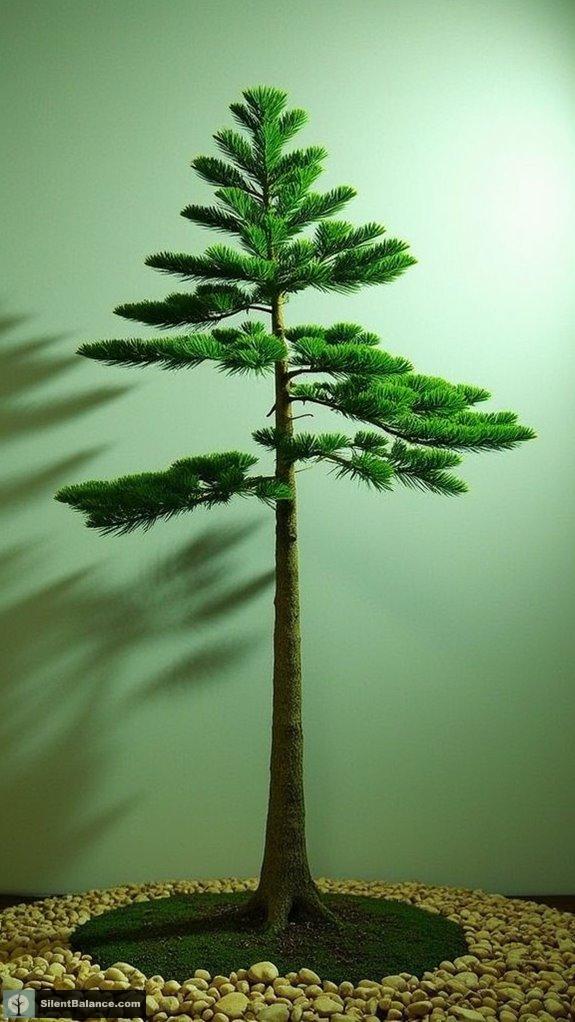
When it comes to bonsai, the Formal Upright, or Chokkan style, is like the well-dressed gentleman of the plant world—tall, elegantly tapered, and undeniably striking.
This majestic style features a straight trunk that tapers beautifully, starting wide at the base and narrowing as it reaches for the sky. The elegant shape reflects the essence of minimalist living, reminding us that simplicity can be profoundly beautiful.
Imagine branches that’re perfectly symmetrical, diminishing in size from bottom to top, like a refined staircase.
You might think about adding a Japanese Cedar; it’s a natural fit with its conical shape.
In order to achieve the desired effect, it’s important to focus on trunk tapering, as this adds to the overall elegance of the bonsai.
Doesn’t that narrow silhouette evoke serenity?
As you cultivate your Chokkan, keep in mind: maintaining that pristine vertical form is key, and trust me, your decor will thank you for the visual poetry it brings!
Informal Upright (Moyogi) Style
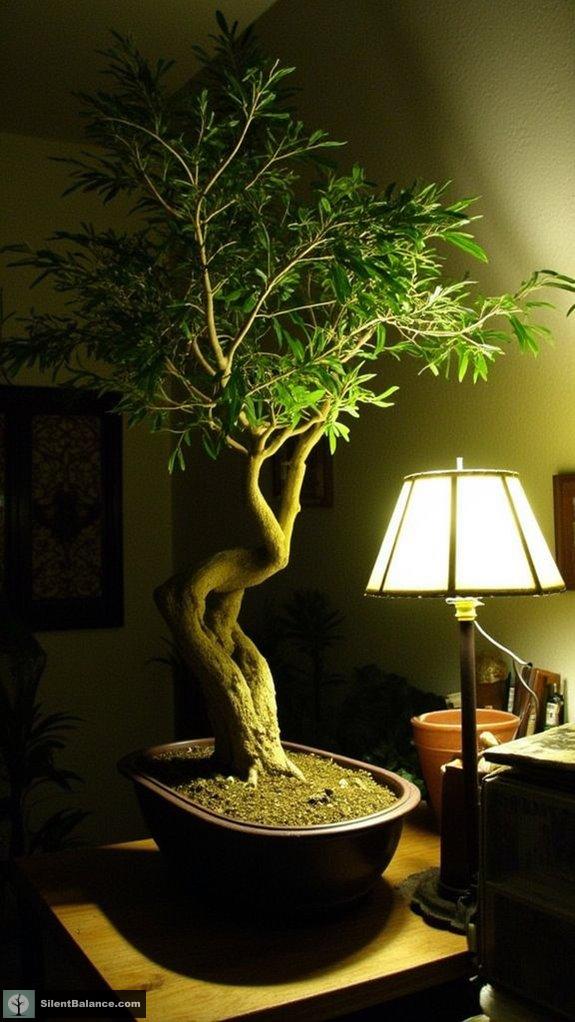
The Moyogi style, often considered the whimsical artist of the bonsai world, showcases a delightful dance of gentle curves and graceful lines. Doesn’t it feel like each twist of the trunk is telling a story? This style, favored in indoor bonsai designs, reflects a unique expression of nature’s beauty in confined spaces.
With its S-shaped design and beautiful bends, this style captures the essence of nature’s artistry, inviting us to feel connected. The branches—oh, they don’t just sprout; they emerge like shy dancers, alternating sides to create a visually compelling silhouette.
Imagine admiring an Oak or Juniper, perfectly proportioned to enhance your space. This style is particularly known for its curved trunk which enhances the dynamic yet majestic appearance, adding to its overall aesthetics.
This approachable style isn’t just for seasoned pros; it’s a welcoming embrace for newcomers too. So, why not let a Moyogi bonsai breathe life into your decor?
It’s nature’s gentle reminder that beauty thrives in simplicity.
Cascade (Kengai) Style
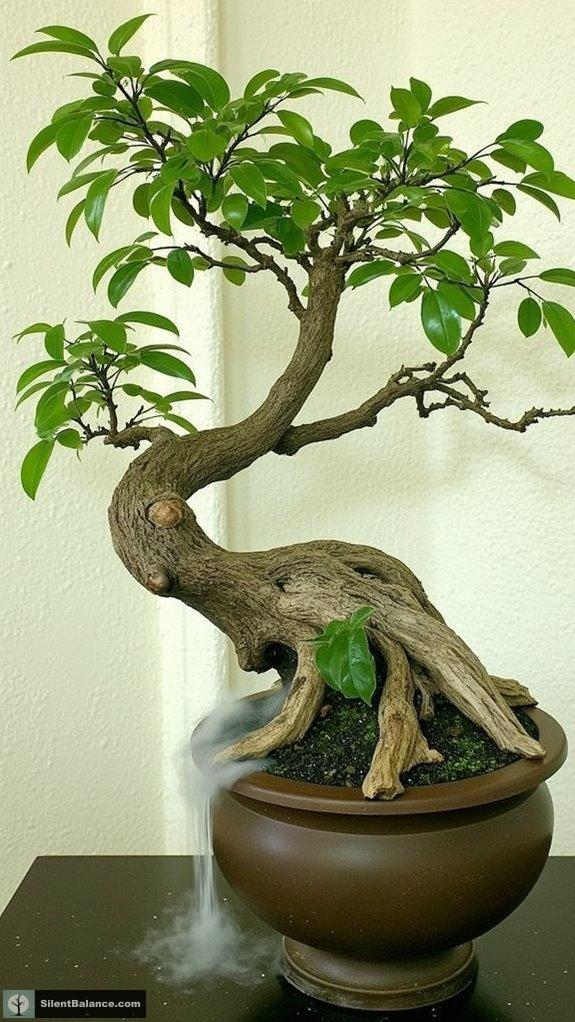
Have you ever gazed upon a cascading tree that seems to defy gravity? The Cascade, or Kengai style bonsai, whispers tales of resilience, evoking images of trees clinging tenaciously to steep cliffs or mountainsides.
The trunk dips gracefully below the pot’s rim, embodying the beauty of struggle against the elements. With branches that explore horizontally, this style brings a natural balance that captivates the eye.
Caring for a Kengai isn’t for the faint of heart, as you must coax it into submission—bending its will through careful wiring and pruning.
And let’s not forget the drama it brings to your decor! Why not add a cascade to your collection and let it inspire your space with its breathtaking elegance?
Semi-Cascade (Han-Kengai) Style
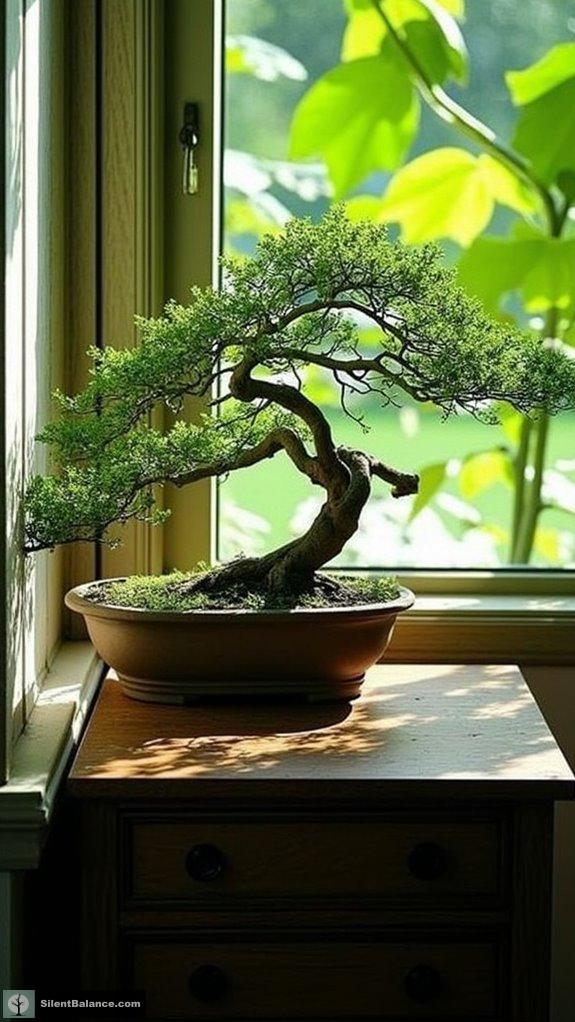
Envision a tree that gracefully bends, its trunk soaring over the edge of a pot, yet never quite plunging into the depths below. That’s the Semi-Cascade (Han-Kengai) style!
This remarkable bonsai embodies a resilient spirit, mimicking trees clinging to cliffs or riverbanks. With a trunk angled between 0° to 45° below horizontal, it captures life’s challenges beautifully.
Here’s a quick breakdown of its alluring features:
| Feature | Semi-Cascade (Han-Kengai) |
|---|---|
| Trunk Position | Angles down but stays above pot base |
| Branch Direction | Horizontal, stabilizing the visual flow |
| Suitable Species | Junipers, pines, flowering trees |
| Pot Requirements | Deep, heavy pots to counterbalance weight |
| Visual Impression | Evokes survival in harsh natural conditions |
Isn’t that captivating? This art form resonates with nature’s resilience, bringing a touch of wild beauty into your home.
Windswept (Fukinagashi) Style
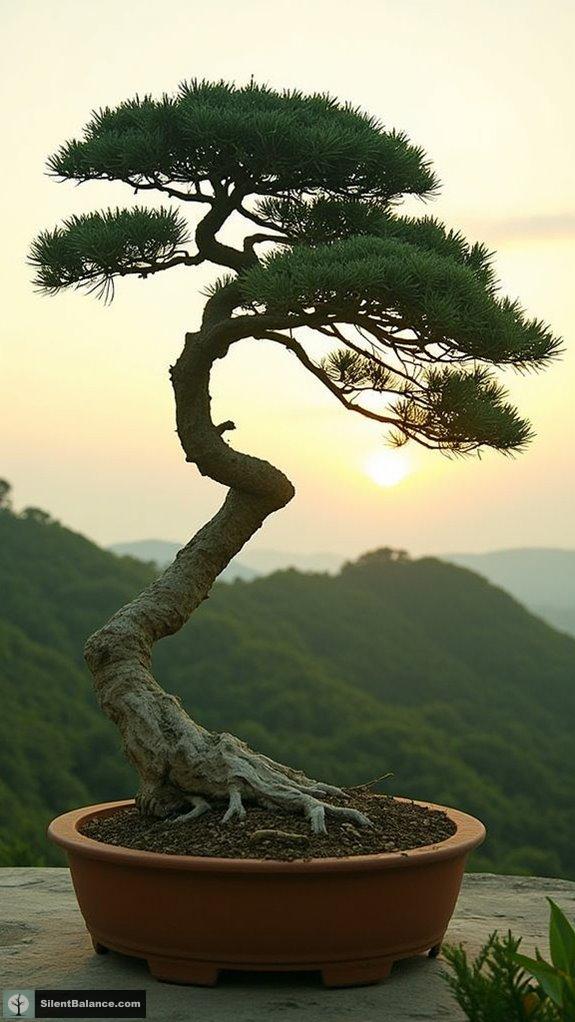
Moving from the resilient elegance of the Semi-Cascade (Han-Kengai), let’s explore the exhilarating world of the Windswept (Fukinagashi) style.
Picture a tree defiantly bending against relentless winds, its trunk dramatically slanted between 60 and 80 degrees. Isn’t that just mesmerizing? The branches, leaning asymmetrically, seem to narrate a story of survival against the elements.
I love how the foliage pads appear compact, adding character, while the ruggedness resonates with coastal cliffs or mountain ridges.
Creating this stunning bonsai involves careful pruning and wiring, coaxing the tree into an inspired flow.
Have you ever tried it with a juniper or a pine?
The beauty lies not just in tranquility but in the power of nature’s dance, don’t you think?
Bonsai Tree Symbolism
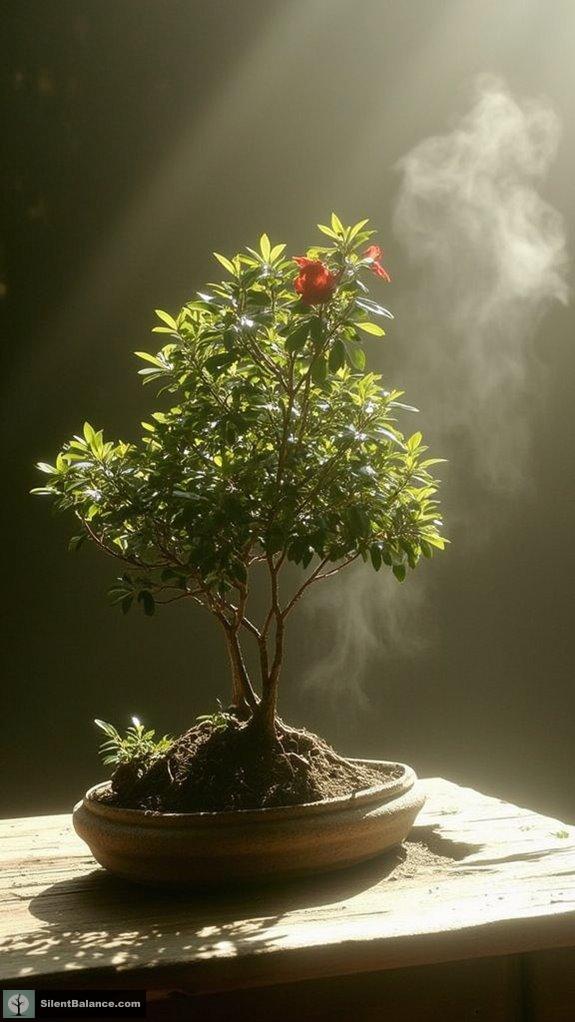
Bonsai trees aren’t just beautiful miniatures; they’re vessels of profound meaning and emotion. Each tiny tree tells a story of harmony and balance, showcasing the delicate dance between nature and human artistry.
When you tend to a bonsai, you engage in a cultivating conversation with life itself. Isn’t that intriguing?
These living sculptures embody simplicity and layered beauty, reminding us that less is often more. They inspire calm and mindfulness, inviting serene contemplation amidst our busy lives.
Also, did you know that different species carry unique vibes? For example, the azalea bonsai embodies feminine beauty and passion. Isn’t it fascinating how these little wonders can mirror our own journeys?
In nurturing bonsai, you cultivate not just trees but personal growth, too.
Tree Symbolism
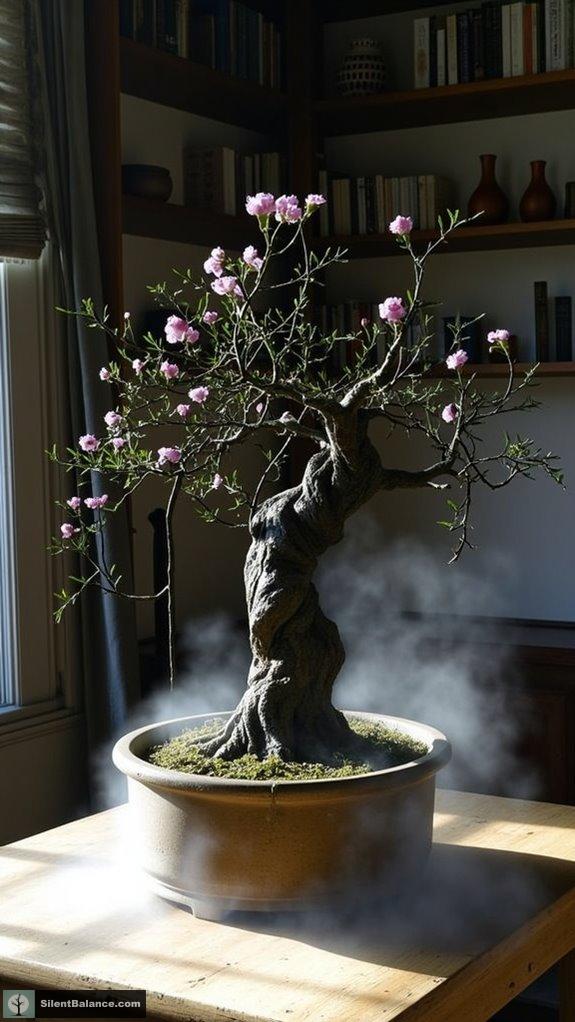
While many might see trees as mere fixtures in our environment, they actually carry rich symbolism that speaks to our emotions and beliefs.
Take the cherry blossom, for instance—beautiful yet fleeting, it reminds us of life’s transience. How poetic is that?
Then there’s the mighty oak, standing tall and strong, symbolizing endurance and protection. It’s like nature’s superhero!
In some cultures, trees even serve as spiritual bridges, connecting us to the past and the afterlife.
I often think about the incredible Baobab, representing community and resilience. Isn’t it fascinating how trees tell these stories?
Questions and Answers
How Do I Care for My Bonsai Tree Indoors?
Caring for my indoor bonsai is a delicate dance between light and water. I nurture it with bright sunlight and humidity, ensuring it thrives while avoiding extremes. It truly becomes a cherished companion in my home.
What Pots Are Best for Bonsai Trees?
When choosing pots for my bonsai, I love ceramic for beauty and moisture retention. Unglazed clay pots breathe well, while plastic is practical. It’s all about matching the pot to my tree’s needs.
Can Bonsai Trees Survive in Low Light?
Sure, bonsai trees can survive in low light, like finding comfort in a cozy nook during winter. I’ve discovered that species like Ficus and Jade flourish even when sunlight feels more like a fading memory.
How Often Should I Water My Bonsai?
I water my bonsai whenever the soil feels dry to the touch. It’s essential to check regularly, especially in hot weather or windy conditions, as I adjust my routine based on how thirsty my little tree gets.
What Fertilizers Are Suitable for Bonsai Trees?
Picture nurturing a tiny forest in your hands; I love using organic fertilizers like Biogold and balanced NPK mixes. They feed my bonsai’s spirit, ensuring it thrives beautifully, season after season, just like our connection.
References
- https://www.1800flowers.com/articles/flower-facts/types-of-bonsai-trees
- https://www.trustbasket.com/blogs/how-to-grow/12-spectacular-bonsai-styles-to-uplift-your-home-decor
- https://green-bonsai.com/blogs/bonsai-articles/the-10-most-popular-bonsai-trees-at-green-bonsai-in-2023
- https://housefresh.com/bonsai-trees/
- https://decoholic.org/the-most-beautiful-bonsai-trees/
- https://www.bonsaiable.com/blog/formal-upright-bonsai
- https://cincinnatibonsai.org/bonsai-tree-style-guide
- https://hookedonbonsai.com/bonsai-styles-and-soil-preferences-from-cascading-to-formal-upright/
- https://www.bonsaiempire.com/origin/bonsai-styles
- https://www.bonsainut.com/threads/style-list.40386/
- https://www.flobflower.com/en/blog/green-lifestyle/bonsai-styles-moyogi-or-informal-erected
- https://www.bonsaiable.com/blog/informal-upright-bonsai
- https://orchidrepublic.com/blogs/news/discovering-different-bonsai-styles
- https://cincinnatibonsai.org/cascade-kengai
- https://longwoodgardens.org/blog/2023-05-17/beauty-bonsai-styles
- https://wazakurajapan.com/blogs/news/learn-about-cascade-and-semi-cascade-bonsai-styles
- https://www.bonsai-bci.com/index.php/component/tags/tag/semi-cascade-style-han-kengai
- https://www.bbg.org/article/bonsai_styles
- https://www.japanesemaplebonsai.com/glossary/what-is-fukinagashi-in-bonsai/
- https://www.bonsaiable.com/blog/juniper-bonsai-styles

- Bonsai Placement Benefits for Room Harmony - November 8, 2025
- Why Use Air Layering to Propagate Bonsai Trees? - November 8, 2025
- 15 Stunning Acorn Wood Wall Art Ideas - November 8, 2025
