

When it comes to placing your bonsai in the office, think bright and indirect! I like to position mine near a south-facing window to soak up as much light as possible. Make sure it gets 12-14 hours of that cozy glow daily. And don’t forget to rotate it every couple of weeks—bonsai love to strut their stuff evenly! With a little creativity, you can create a serene space that also boosts your mental vibe. Curious about the perfect humidity?
Quick Takeaways
- Position bonsai near south-facing windows to maximize indirect sunlight exposure.
- Maintain at least 4 to 8 hours of light daily, utilizing reflective surfaces if needed.
- Rotate bonsai every couple of weeks to ensure even growth and balanced light distribution.
- Use humidity trays to maintain optimal moisture levels, especially in dry office environments.
- Choose bonsai species adaptable to indoor conditions, such as Ficus or Chinese Elm, for better styling and health.
Ideal Light Conditions for Office Bonsai
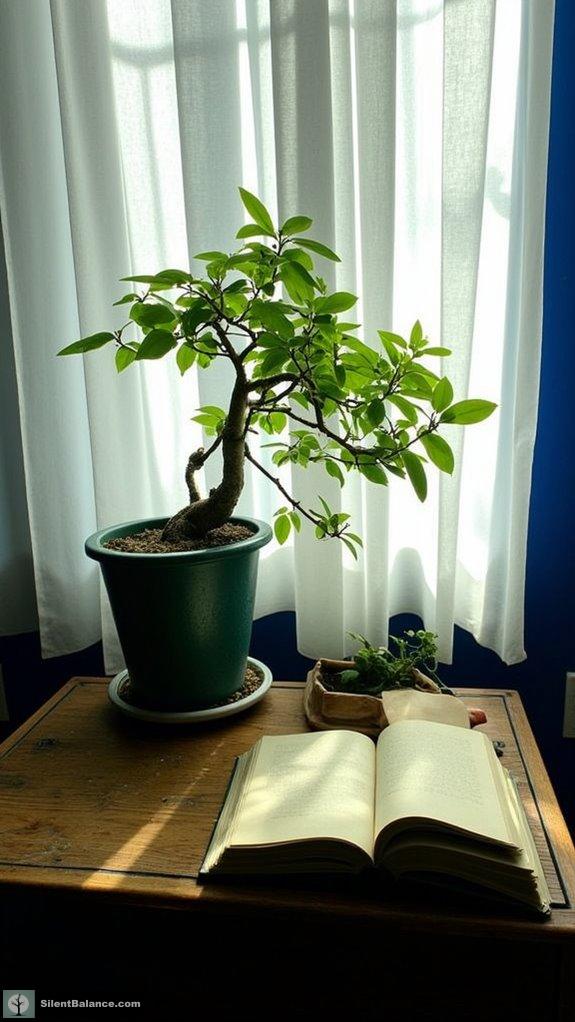
When you think about your office bonsai, don’t underestimate the power of proper lighting! Trust me, these little green wonders thrive on bright, indirect sunlight for about 12-14 hours each day.
Sure, you might be tempted to place your bonsai near a south-facing window, but that direct sunlight during peak hours can lead to leaf burn. Ouch!
Instead, consider using full-spectrum LED grow lights positioned just about 12 inches above to mimic that ideal light duration. Optimal temperatures for bonsai range from 60°F to 75°F, so maintaining a consistent climate in the office is essential for their health. Additionally, leaf health may decline if the bonsai does not receive adequate light exposure.
And keep in mind, rotating your bonsai every couple of weeks is key for balanced growth.
Humidity and Temperature Needs for Healthy Growth
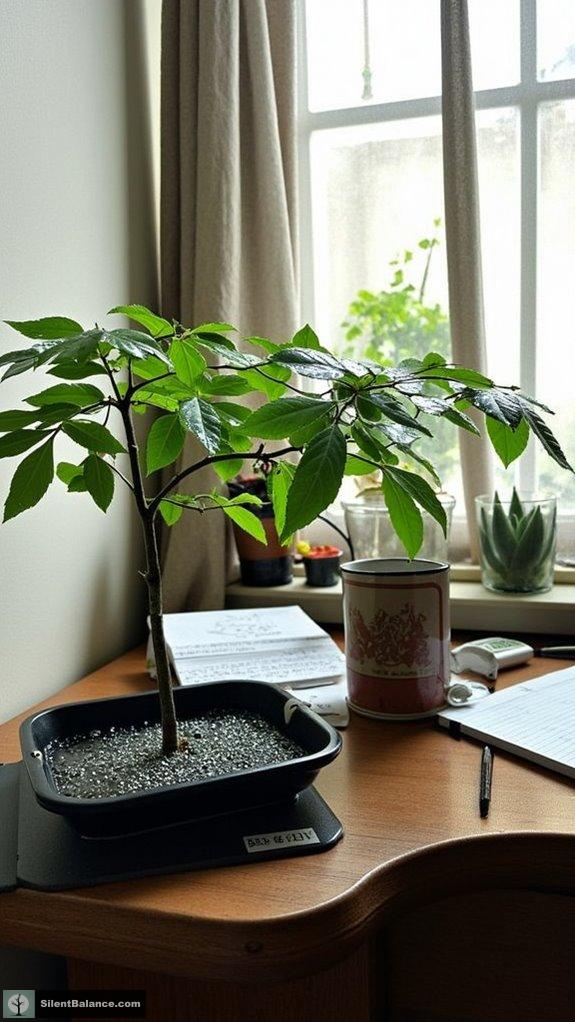
After ensuring your office bonsai gets the right amount of light, the next thing on our checklist is humidity and temperature.
Let’s keep things growing strong! Most bonsai thrives in humidity between 40% to 60%, while the darlings of the tropics, like the Fukien Tea, crave 50% to 70%. Remember, higher humidity levels help the Fukien Tea bonsai maintain its vibrant foliage. To achieve optimal growth, consider incorporating humidity trays to provide a consistent moisture source for your plants.
You might be asking, “But how do I manage that in a dry office?” Simple! A humidity tray or a quick misting will do wonders.
As for temperature, a cozy range of 60°F to 75°F is ideal.
Avoid placing your bonsai near those drafty vents, unless you’re aiming for a leaf drop extravaganza!
Let’s embrace humidity control and temperature management, so your bonsai can flourish, not flounder!
Choosing the Right Bonsai Species for Indoor Spaces
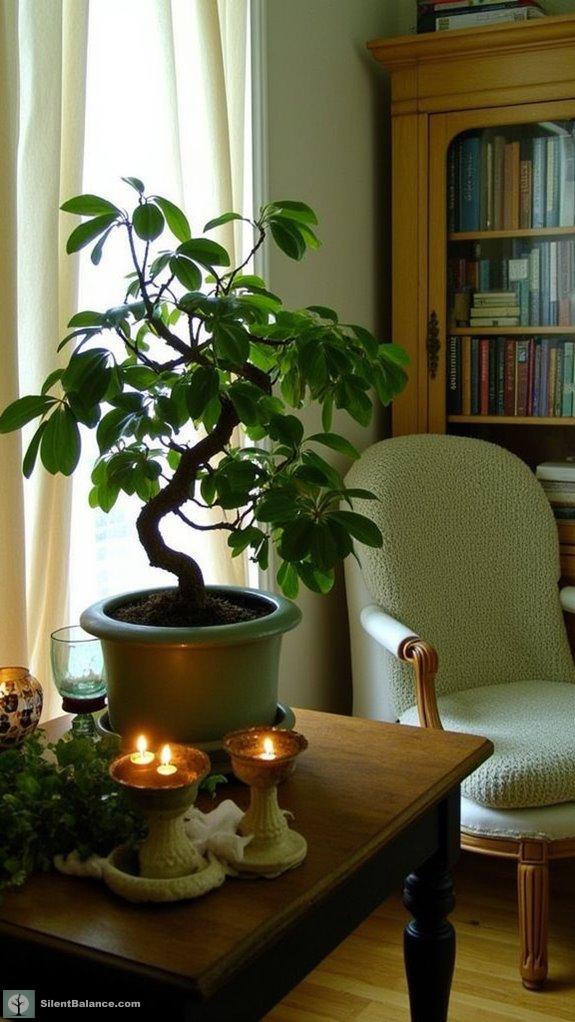
Choosing the right bonsai species for your indoor space is essential because not all bonsai are created equal—some thrive in the cozy confines of our homes while others might throw a temper tantrum at the sight of artificial lighting.
Selecting the ideal bonsai for your indoor oasis is crucial, as some flourish indoors while others prefer natural light.
Here are three species that excel indoors:
- Ficus Bonsai – This resilient gem thrives in low humidity and can take a few artistic liberties in styling.
- Chinese Elm – With elegant branches, it adapts to various light and humidity, making it a versatile choice.
- Jade Bonsai – Its thick, succulent leaves make it a drought-tolerant option for the forgetful waterer.
Additionally, choosing the right indoor bonsai can enhance the symbolism of resilience that these plants often convey in indoor styles compared to their outdoor counterparts.
Strategic Placement for Maximum Light Exposure
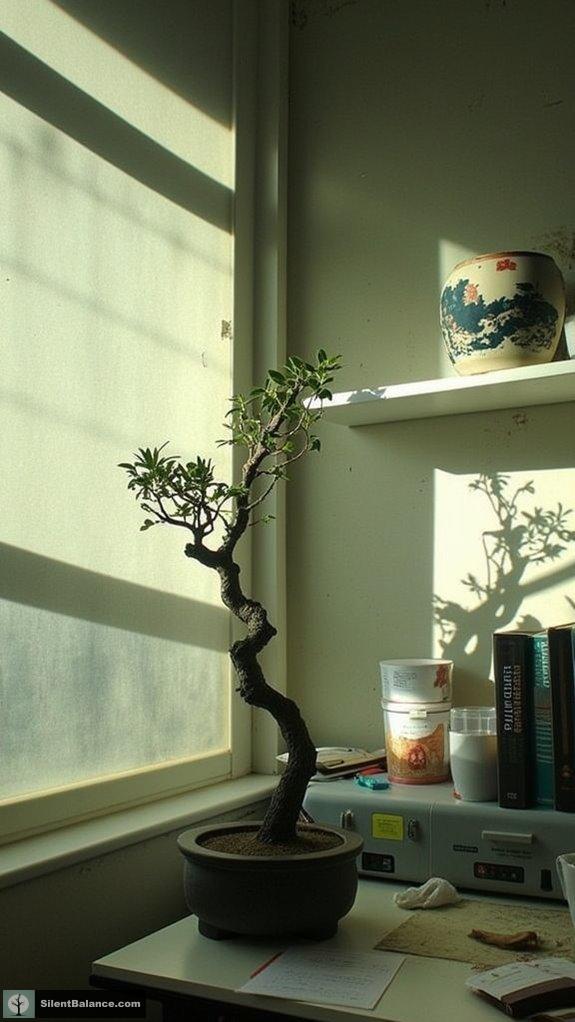
While your bonsai might look fabulous no matter where you place it, strategically positioning it for maximum light exposure can truly make a world of difference in its growth and overall health.
I personally make it a point to place my bonsai near south-facing windows, ensuring it soaks up those glorious rays for at least 4 to 8 hours a day.
To keep things balanced, I rotate my bonsai every week or two; it’s like giving it a new view!
And don’t overlook reflective surfaces! A nearby light shelf can amplify indirect sunlight, making your bonsai feel like it’s on a tropical vacation.
Keep in mind, consistent light exposure equals happy, thriving trees. So, how’s your little green friend doing in its current spot?
Care Routine Adjustments Based on Placement
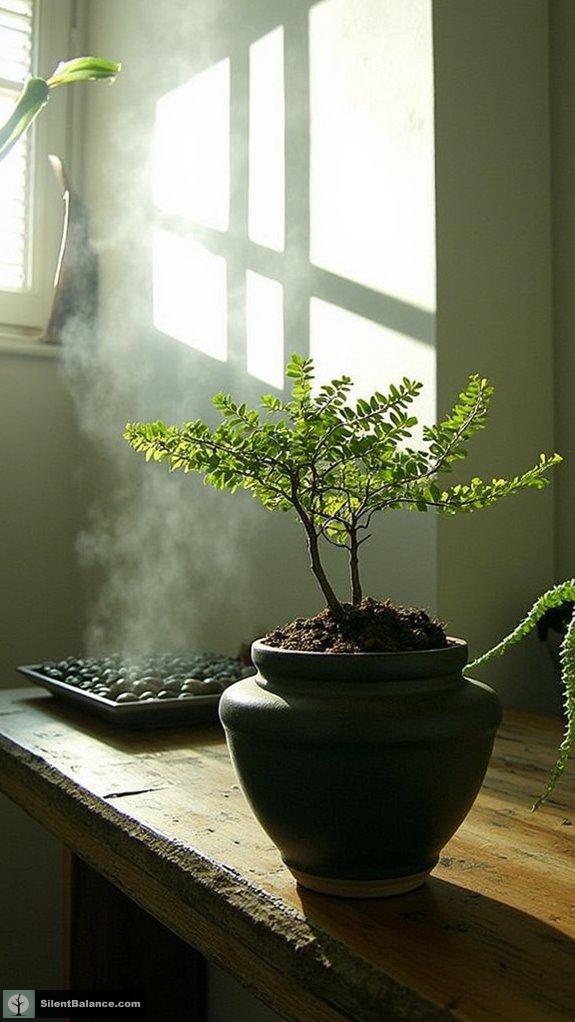
To get the most out of your bonsai, it’s essential to tweak your care routine based on its placement—trust me, it can make quite the difference!
Maximize your bonsai’s potential by adjusting your care routine according to its location—small changes lead to big results!
Proper watering techniques and airflow management are key to a thriving bonsai.
Here’s what I recommend:
- Check soil moisture regularly, especially if your bonsai is by a window or air vent; you don’t want a soggy mess or a parched little tree!
- Adjust your watering frequency—if it’s near heating units, expect to water more often, and don’t forget deep soaking when necessary.
- Use pebble trays or humidifiers for those dry spots, as they boost humidity and keep your bonsai happy.
Stay attentive, and your bonsai will flourish like a champ!
Enhancing Office Aesthetics and Wellbeing With Bonsai
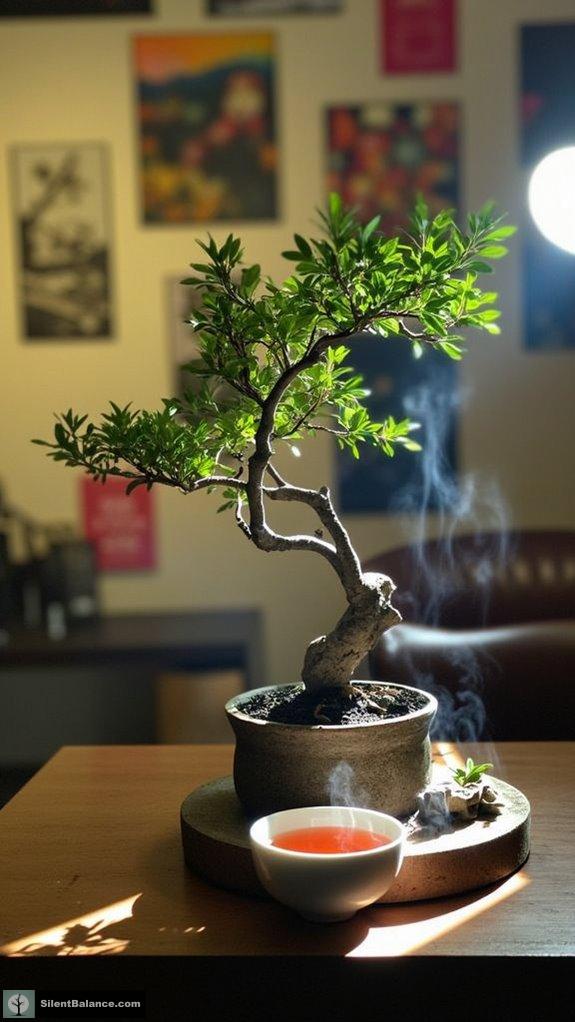
There’s something undeniably enchanting about the presence of a bonsai tree in an office setting. These miniature wonders offer a unique blend of artistic flair and natural beauty, creating visual harmony that uplifts our workspace.
Have you noticed how a well-placed bonsai can transform the aesthetic? Following basic design principles, such as balance and focal points, enhances that office vibe, easing stress and sparking creativity.
Plus, bonsai’s compact size makes them perfect for tight spaces; they’re the ideal blend of form and function.
Recall, regular engagement with your bonsai isn’t just care—it’s nature therapy, a small but mighty lift for our mental wellness.
Bonsai Tree Symbolism
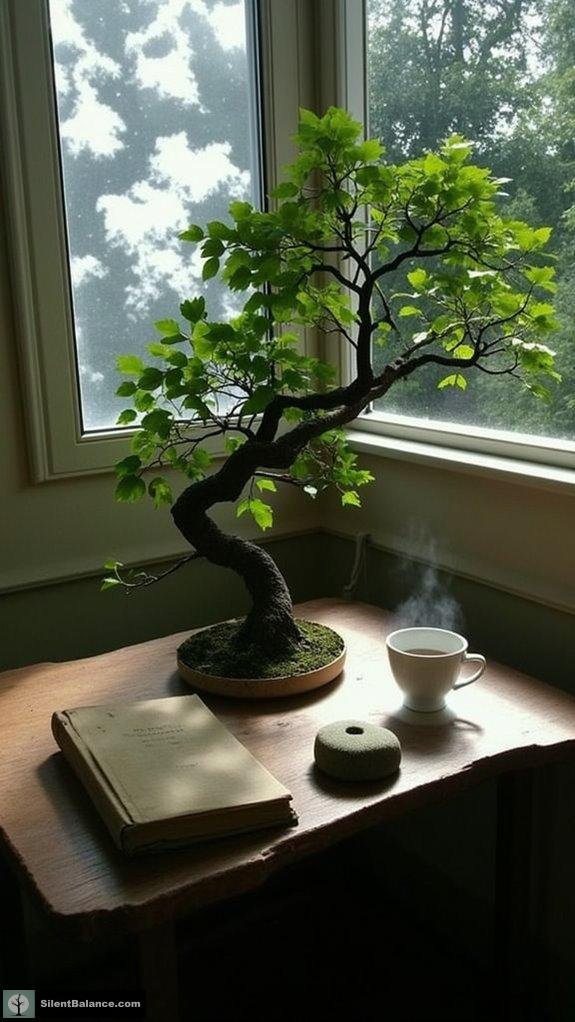
Bonsai trees aren’t just aesthetic enhancements; they’re rich in symbolism and meaning that can truly elevate our office environment.
Why should we embrace their presence?
Here are three thought-provoking bonsai meanings to ponder:
Three profound meanings of bonsai to inspire mindfulness and balance in our daily lives.
- Harmony and Balance: Every bonsai embodies a delicate dance, reminding us to find equilibrium in our busy lives.
- Cultural Significance: With roots in ancient traditions, these miniature trees serve as bridges between past wisdom and modern innovation.
- Spiritual Connections: Engaging with bonsai fosters mindfulness, guiding us toward relaxation and inner peace.
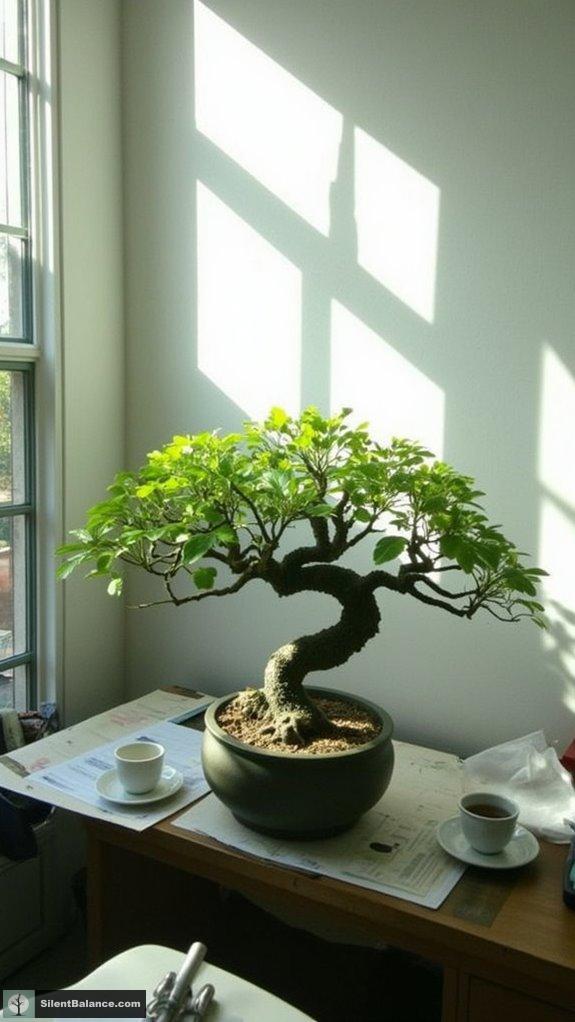
The enchanting world of bonsai tree symbolism is as layered as the art itself.
Ever wondered why we cherish these miniature wonders? Their symbolic meaning stretches back over 1,300 years, rooted in harmony and balance.
Those twisted trunks and delicate branches? They embody nature’s resilience and remind us of life’s beautiful imperfections.
Picture this: a carefully shaped bonsai reflects our own journey—cultivating patience and endurance through challenges. It’s a gentle nudge toward mindfulness and inner peace, something we could all use in our busy lives.
And let’s not forget the spiritual aspects! Each species resonates differently, carrying unique bonsai attributes that connect with our own stories.
Isn’t that just fascinating? A perfect conversation starter in any office, right?
Questions and Answers
How Often Should I Rotate My Bonsai for Even Growth?
Envision my bonsai as a dancer, twirling gracefully. I rotate it every 1-2 days for balanced growth patterns and ideal sunlight exposure. This way, my tree thrives, showcasing its stunning, vibrant leaves year-round.
Can I Use Regular Potting Soil for My Bonsai Tree?
I wouldn’t use regular potting soil for my bonsai. Instead, I explore potting soil alternatives and bonsai soil mixes that guarantee proper drainage and aeration, essential for my tree’s health and growth.
What Size Pot Is Best for Office Bonsai?
When it comes to pot size, think outside the box! I’ve found that choosing a slightly larger pot guarantees good drainage, which helps keep our office bonsai healthy and thriving in those tight spaces.
How Do I Know if My Bonsai Is Healthy?
I check my bonsai’s health by observing leaf color—bright and even indicates liveliness. Also, I inspect root health; firm roots signal strength, while mushy ones suggest overwatering, screaming for immediate attention to guarantee my bonsai thrives.
Are There Any Specific Pests That Affect Indoor Bonsai?
Yes, I’ve encountered pests like aphids and spider mites on my indoor bonsai. Pest identification’s essential, so I regularly inspect leaves. For prevention methods, I maintain humidity and use insecticidal soap when needed.
References
- https://www.idyl.co.in/blogs/blog/bring-the-serenity-of-nature-to-your-workspace-a-guide-to-caring-for-bonsai-trees-in-office-environments
- https://hookedonbonsai.com/bonsai-tree-for-office/
- https://www.bonsaiempire.com/basics/bonsai-care/position
- https://www.bonsainut.com/threads/indoor-bonsai-for-office-environment.30262/
- https://www.bonsaify.com/blogs/news-and-more/bonsai-tree-species-that-can-live-on-your-office-desk
- https://www.hortipower.com/blogs/news/ultimate-bonsai-plant-care-guide-expert-tips-and-benefits-of-grow-lights
- https://bonsai2u.co.uk/choosing-bonsai-tree-for-office/
- https://www.bonsainut.com/threads/what-bonsai-can-i-get-for-my-office-that-will-only-see-florescent-lights.10580/
- https://miyagibonsai.co.uk/blog/bonsai-care/does-a-bonsai-tree-need-direct-sunlight/
- https://bonsaiandbrewstudio.com/blogs/news/bonsai-temp-humidity

- Bonsai Placement Benefits for Room Harmony - November 8, 2025
- Why Use Air Layering to Propagate Bonsai Trees? - November 8, 2025
- 15 Stunning Acorn Wood Wall Art Ideas - November 8, 2025
