
Debunking Bonsai Myths: Getting to the Root of Care
Bonsai care often feels like navigating a myth-laden wilderness.
I remember my first tree—an awkward little Ficus. Friends insisted I needed extravagant soil mixes. Turns out, simple is better. Akadama and pumice work wonders!
The symbolism of trees in our lives is profound. They represent strength and harmony. It’s not just about the aesthetics; it’s about nurturing connections.
At Silent Balance, we aim to peel back those misconceptions.
Every trim, every watering, every moment spent is a lesson. Like that sunny day when I left my Juniper outside too long. Lesson learned: the right conditions make all the difference!
Together, let’s embrace the beauty of bonsai care, one story at a time.
Quick Takeaways
- Many believe only high-end soil is necessary, but a well-draining mix of akadama, pumice, and lava rock is crucial for bonsai health.
- It’s a myth that indoor bonsai don’t require specific care; they need stable temperature and humidity to thrive, unlike outdoor varieties.
- Some think garden soil is acceptable; however, it poses a risk of root rot and should be avoided for bonsai cultivation.
- Pruning is often misunderstood; proper timing and technique are essential for shaping bonsai and promoting healthy growth.
- Wiring is viewed as unnecessary by some, but it is vital for bending branches and achieving the desired bonsai form.
Understanding the Nature of Bonsai Growth
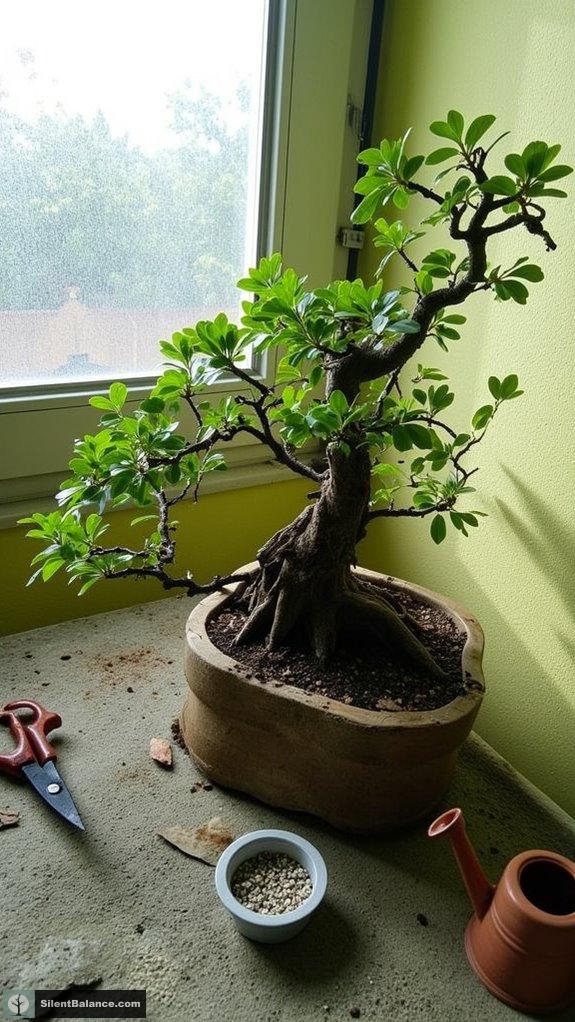
When it comes to bonsai growth, I’ve got to say—it’s a fascinating journey through two distinct phases: Development and Refinement.
In the Development stage, you’re really piling on the energy, fertilizers, and heavy-duty groundwork. Think of it as the bonsai boot camp, where your tree builds its trunk, roots, and branch structures. Trunk thickening occurs more rapidly when the tree is in the ground or larger training pots. This phase illustrates the importance of continuous growth as the foundation for a healthy bonsai.
It’s like sculpting—art meets nature!
Once you shift to the Refinement stage, it’s all about control. This phase is where you get artistic, directing energy to those delicate tertiary branches and making leaf size shrink like magic.
Have you ever tried shaping a tree with just scissors? Sounds intimidating, doesn’t it?
But with patience and practice, you’ll turn a little sapling into a stunning masterpiece!
Debunking Soil Myths for Bonsai Success
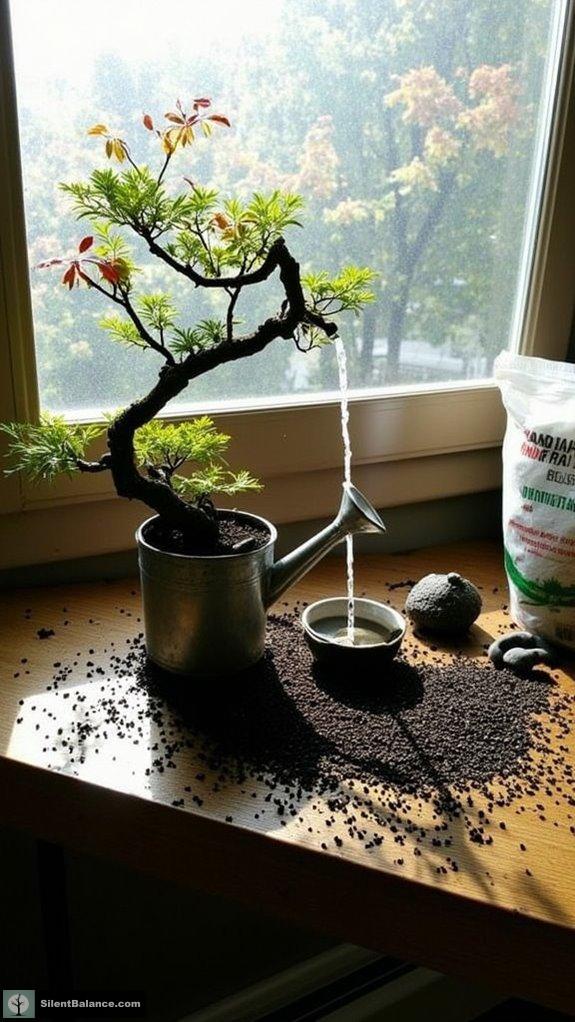
While many enthusiasts believe that bonsai thrive solely in unique, high-end soils, the reality couldn’t be further from the truth.
Bonsai success isn’t just about fancy soils; it’s all about drainage and the right mix.
What truly matters is a well-draining soil mix that nurtures your tiny tree. Here’s what you need to know:
- Mixing akadama, pumice, and lava rock is the sweet spot for most bonsai.
- Adjust your ratios! Deciduous trees love 50% akadama, while coniferous types prefer a balanced 33% each. Indoor vs outdoor bonsai can also influence your choice of soil formulation.
- Forget garden soil! It’s a root rot nightmare waiting to happen.
Additionally, remember that well-draining soil is sufficient for bonsai health.
The Truth About Pruning Practices
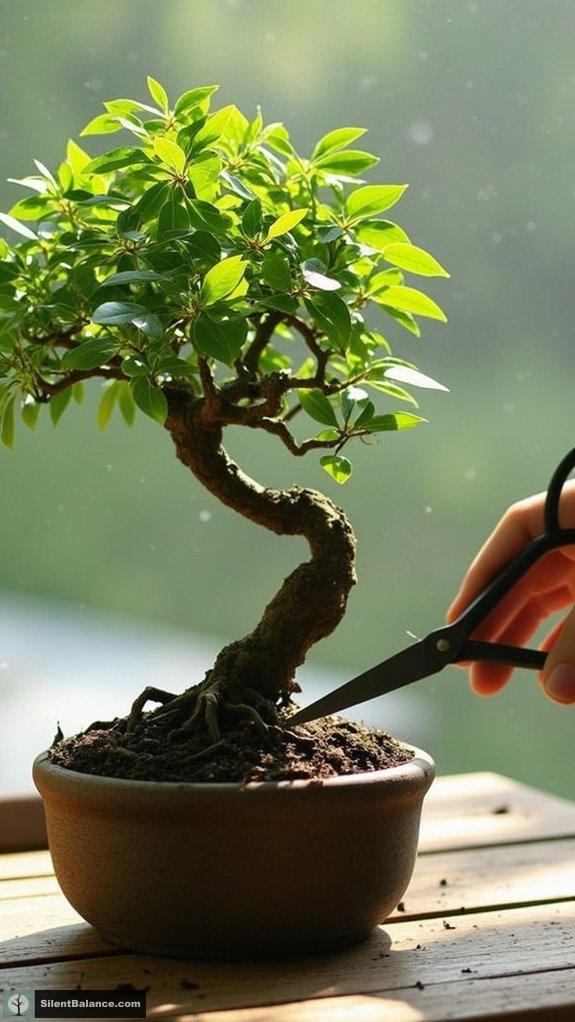
Pruning your bonsai isn’t just a chore; it’s an art form, a dance between you and your little green companion.
With maintenance pruning, you refine its shape, keeping that bonsai swag looking balanced.
Then there’s structural pruning, which, let’s face it, is a commitment; it reshapes the tree’s form and dreams of a stunning silhouette.
Ever tried leaf thinning? It’s like giving your bonsai a haircut—removing one leaf from each pair can boost sunlight and airflow.
Catch the right timing, ideally early spring or late fall, to let your tree recover without stress.
Recollect, friends, don’t go overboard—keeping it under one-third foliage removal at a time keeps your bonsai healthy while you strike that perfect harmonious groove! This careful approach relates to the symbolism of bonsai, which emphasizes the balance between artistry and nature.
Unveiling the Reality of Indoor vs. Outdoor Bonsai
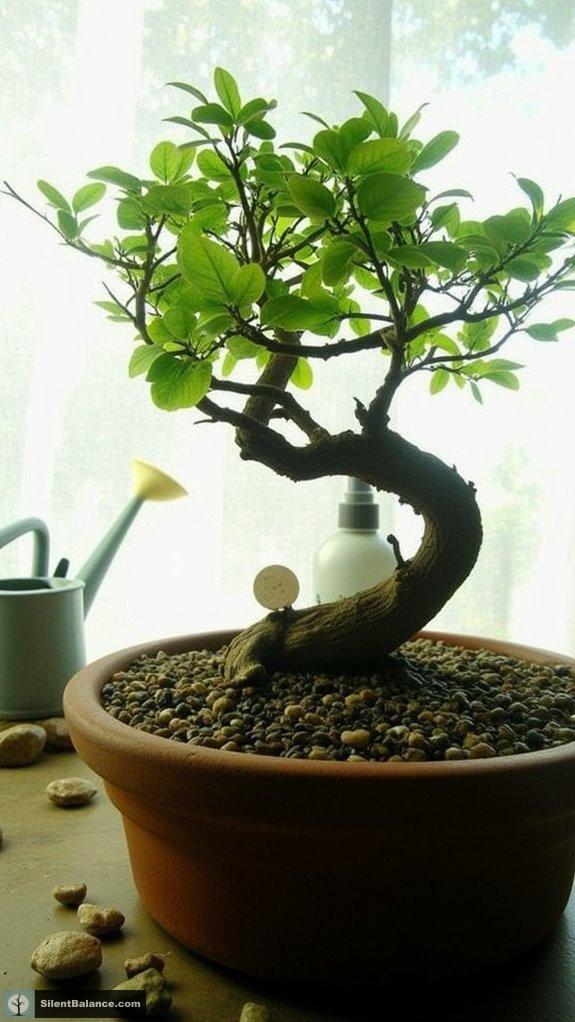
Whether you’ve got a cozy nook filled with sunlight or a spacious backyard that basks in seasonal glory, choosing between indoor and outdoor bonsai can feel like a mini existential crisis for plant lovers.
Here’s what you should know:
- Indoor bonsai, like Ficus, thrive in stable climates, needing steady temps and humidity.
- Outdoor gems, such as Juniper and Pine, flourish under nature’s wild whims—sunshine, rain, and seasonal shifts.
- Light matters! Indoor bonsai often struggle with lower light levels, while outdoor varieties soak up glorious, all-directional sunlight.
Simplifying Bonsai Care for Enthusiasts
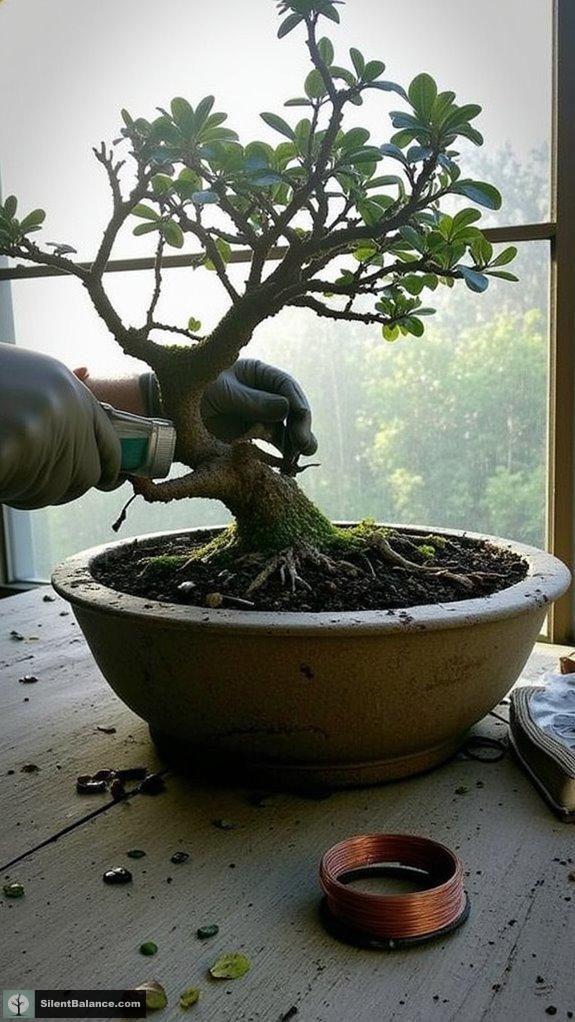
Caring for bonsai doesn’t have to feel like rocket science; in fact, it can be an enjoyable journey into the art of miniaturization.
Caring for bonsai is a delightful adventure, turning mini trees into masterpieces with your own hands.
Let’s start with potting. When you gently lift your tree from its container—careful, now—you preserve that essential main stem. Clean those roots, and don’t be shy about trimming long ones to keep growth in check!
Pruning? That’s your magic touch. Grab those concave cutters, and shape away!
Ever tried wiring? It’s a game-changer for bending branches into a perfect pose.
And hey, fertilizer is key; think of it as your bonsai’s power-up drink.
Watering Frequency Guidelines
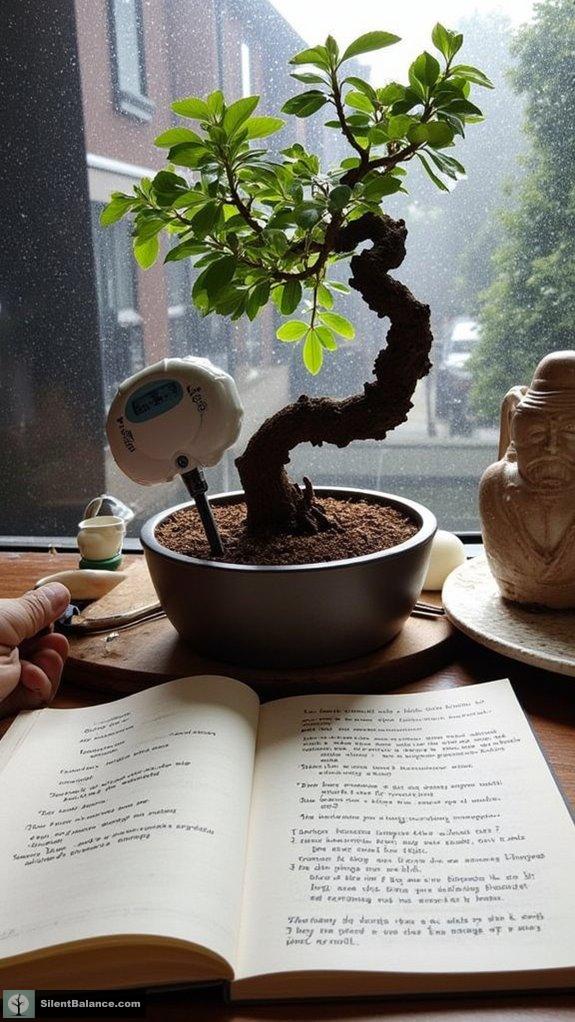
Getting the watering frequency just right can feel like a balancing act, especially when your bonsai is begging for attention. So, how do I nail it? Here are a few key points to keep in mind:
- Check the soil moisture—water when it’s slightly dry, not drenched.
- Consider the climate and pot size—if it’s a scorcher, I might need to water 2-3 times a day, especially for smaller pots.
- Adapt to seasonal changes—reduce watering in winter, but don’t let that soil go bone dry!
Embrace these guidelines, and your bonsai will thrive, standing tall like the master it’s meant to be.
Keep in mind, there’s no one-size-fits-all in bonsai care. Just like us, each tree has its own personality!
Cultural Significance of Trees
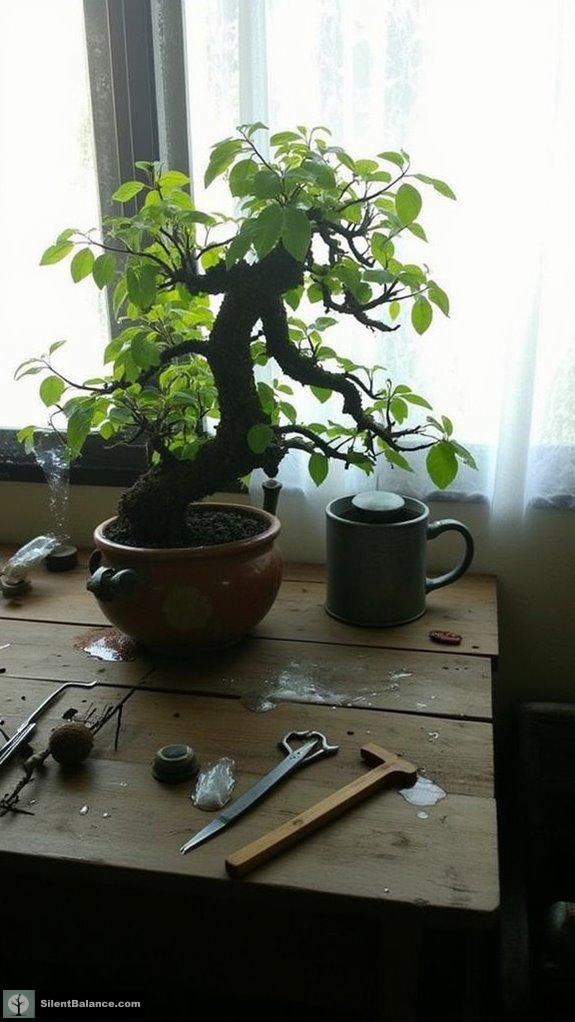
Trees have always held a prominent place in our hearts and cultures, serving as symbols of life, wisdom, and resilience.
Think about it: bonsai isn’t just a plant; it’s a piece of history. Emerging from ancient Chinese *penjing* traditions, this art form traveled to Japan, landing in the hands of Zen monks who infused it with profound meaning.
Ever heard of *wabi-sabi*? It celebrates beauty in imperfection, capturing nature’s spirit in a tiny pot.
Bonsai trees embody harmony, teaching us patience as we nurture their growth. When displayed in a *tokonoma*, they exude prestige and artistry.
So, if you’re thinking of starting your bonsai journey, keep in mind, you’re cultivating more than a tree; you’re embracing a rich cultural legacy.
Why not get started today?
Questions and Answers
Can Bonsai Trees Be Grown From Seeds?
Can bonsai trees be grown from seeds? Absolutely! Picture tiny seeds, nestled in rich soil, bursting with potential. While it’s slower than snagging a nursery sapling, the journey’s rewarding. You’ll nurture fragile seedlings, guard them against pests, and dance their growth into shape. It takes patience—3-5 years of care, but isn’t the art of bonsai about cultivating both tree and soul? So, ready to commence on this leafy adventure with me?
What Are the Best Types of Pots for Bonsai?
When it comes to choosing pots for bonsai, I’ll tell you, it’s an art form in itself!
Ceramic pots are classics, offering great moisture retention with that stylish glaze—perfect for winter vibes.
Unglazed clay pots breathe beautifully, while plastic pots are lightweight for those of us always on the move.
Got a conifer? Go for earthy tones!
But if you’re into tropical bonsai, vibrant pots just might be your jam.
What’ll you choose?
How Do Pests Affect Bonsai Health?
Pest pandemonium can perilously compromise your bonsai’s beauty!
These sap-sucking squatter bugs, like aphids and spider mites, suck the life right out, leaving leaves limp and lifeless.
Ever noticed tiny webs or notchy leaves? That’s a cry for help!
Regular inspections and prompt treatments can maintain those miniature marvels and keep ’em thriving.
Can Bonsai Survive Winter Outdoors?
Can bonsai survive winter outdoors? Well, that depends!
If your bonsai’s hardy enough, it might brave the cold, but shallow pots don’t offer much insulation.
I typically stash mine in a cozy cold frame to keep them safe from frost. And hey, make sure to water sparingly—they’re pretty sleepy during dormancy! So, why not check your little greenery’s hardiness zone before you let it face the frigid winter winds?
Are There Bonsai Competitions or Exhibitions?
The bonsai world buzzes with excitement at competitions and exhibitions.
There’s the prestigious Kokufu-Ten in Japan, where the elite shows off their masterpieces.
Don’t forget Europe’s The Trophy, built for innovation and skill!
Then there’s the AABC National Bonsai Convention in the U.S., a treat for enthusiasts.
These events are like a grand buffet of inspiration—who wouldn’t want a taste?
References
- https://mybonsaiworld.com/debunking-common-myths-about-bonsai/
- https://www.yorkshirebonsai.co.uk/blogs/advice-guides/exploding-5-myths-around-bonsai-trees
- https://hookedonbonsai.com/bonsai-misconceptions-and-myths/
- https://www.schoolofbonsai.com.au/post/bonsai-myths-debunked-separating-fact-from-fiction
- https://www.mistralbonsai.com/en/myths-and-legends-of-bonsai/
- https://www.natesnursery.com/fundamentals-of-bonsai-stages-of-bonsai/
- https://hookedonbonsai.com/how-to-grow-a-bonsai-from-seedlings/
- https://www.mistralbonsai.com/en/pine-bonsai-trees-of-1-or-2-growth-stages/
- https://bonsaimirai.com/blog/pinching-vs-pruning
- https://www.youtube.com/watch?v=yipjOk3HsrI

- Bonsai Placement Benefits for Room Harmony - November 8, 2025
- Why Use Air Layering to Propagate Bonsai Trees? - November 8, 2025
- 15 Stunning Acorn Wood Wall Art Ideas - November 8, 2025
