
If you’re looking to create a Japanese-inspired miniature bonsai scene, think of balance and harmony. Picture an unglazed pot for your conifer, which encourages breathability, paired with a serene arrangement of odd-numbered plants. Embrace asymmetry—no boring symmetry here! Use pathways that curve like a gentle stream, inviting the eye to explore. Add depth with layers of foliage and negative space, creating tranquility. Intrigued? There’s so much more to discover about the artistry of bonsai!
Quick Takeaways
- Embrace asymmetry in your landscape to reflect natural beauty, characteristic of traditional Japanese gardens.
- Use odd numbers of bonsai elements, such as trees and stones, for visual balance and harmony.
- Incorporate negative space around bonsai to create breathing room and enhance the overall composition.
- Arrange paths and plants in curvilinear forms to mimic the flowing lines found in Japanese landscapes.
- Choose ceramic or unglazed pots for bonsai to maintain moisture while complementing the aesthetic of your miniature garden.
Choosing the Perfect Pot for Your Bonsai
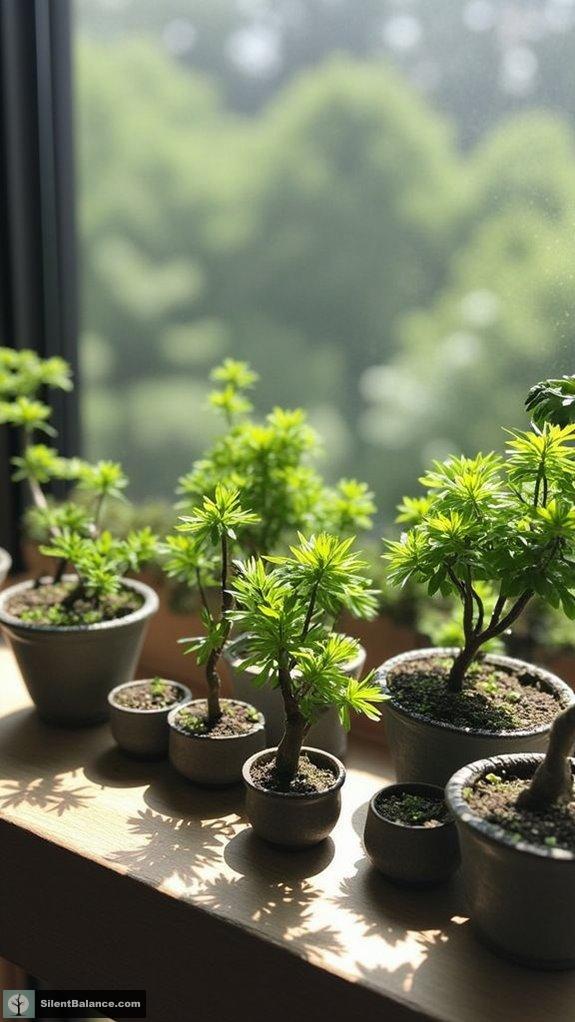
When it comes to choosing the perfect pot for your bonsai, you might find yourself wondering—just how important is this decision?
Let me tell you, it’s vital! The right pot size lets your tree’s roots oxygenate without feeling cramped. A pot that’s two-thirds the height of your upright bonsai strikes the right balance. Regular repotting with root pruning is necessary to maintain root ball size and keep your bonsai healthy.
Choosing the right pot is crucial for your bonsai’s health and growth—opt for one that’s two-thirds its height!
And don’t forget about material selection! Ceramic and porcelain pots not only look stunning, but they also manage water beautifully. If you’re nurturing conifers, go for unglazed; it’s like giving them a refreshing change.
Essential Pruning Techniques for Miniature Landscapes
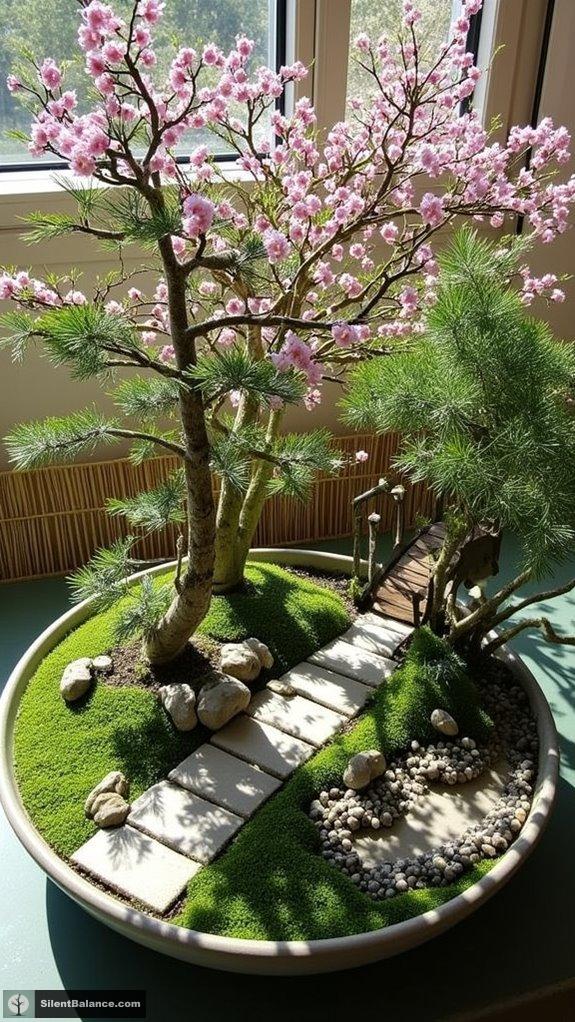
Here are three fun, effective pruning techniques to keep in mind:
- Pinching and Tip Pruning: Snip the tips of new growth to promote denser foliage and a more compact shape. It’s like a little haircut for your tree!
- Thinning: Remove select branches to improve light and airflow. This prevents overcrowding, and we all know how messy that can get!
- Structural Pruning: Make bold cuts to establish the frame of your bonsai. Just don’t forget, less is more—don’t prune more than a third of the foliage at once!
Additionally, ensure you understand seasonal bonsai watering needs to keep your tree healthy as you prune. With proper foliage management, your miniature masterpiece will thrive!
Wiring and Shaping for Natural Aesthetics
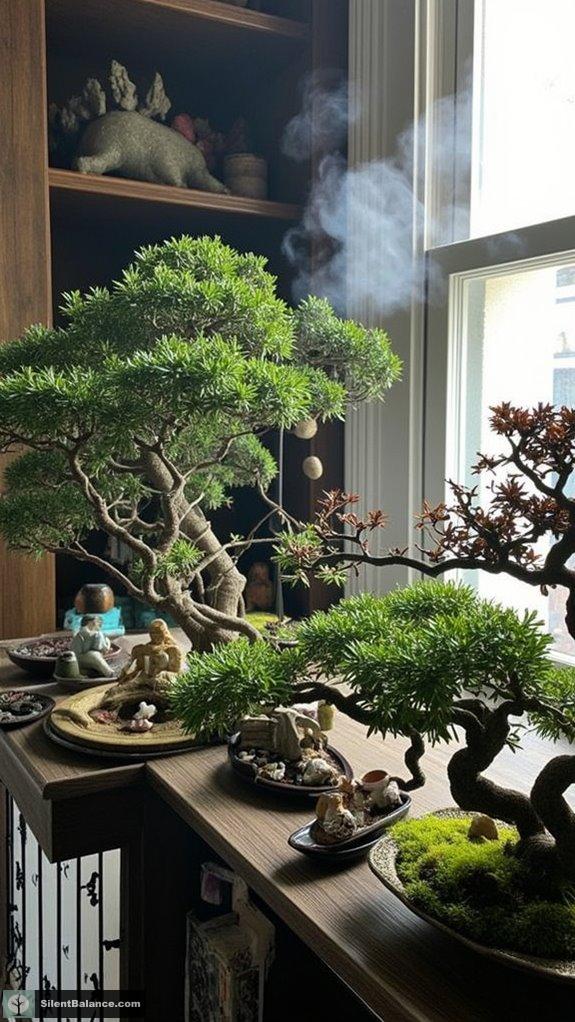
Mastering the art of wiring and shaping your bonsai can feel like crafting a living sculpture, don’t you think?
When I think about effective wiring techniques, I envision a dance of branches, bending softly to create natural aesthetics. It’s all about the finesse!
I start with quality wire—aluminum or copper, choosing about one-third the thickness of the branch.
Wrap it at a 45° angle, and don’t be shy about gradually bending those branches to mimic wild nature’s beauty.
Wrap the wire at a gentle 45° angle, gracefully bending branches to echo the beauty of nature.
Just keep in mind, no tight wraps, as we want good sap flow!
And the key? Monitor your twists, giving those branches room to breathe while promoting fuller inner growth.
After all, isn’t bonsai about imbuing life into miniature terrains?
Crafting a Balanced Landscape Composition
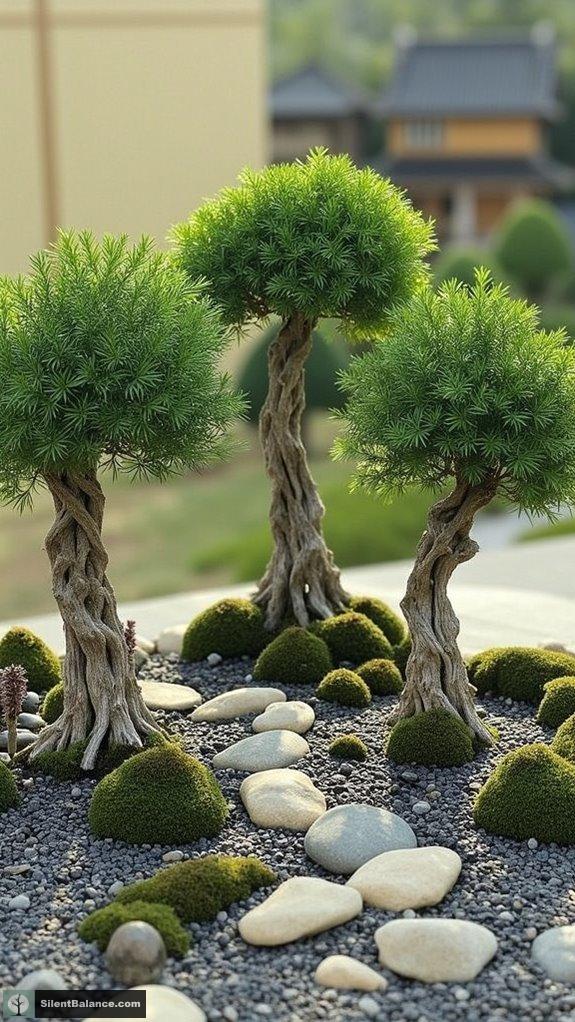
While I may not have a green thumb in the garden, crafting a balanced scenery composition for bonsai has become my creative playground.
Embracing asymmetry techniques is essential, and I’ve learned that those irregular groupings evoke an enchanting natural harmony. Bonsai represents the deep symbolism of harmony and balance in various cultures, which I find inspiring in my designs.
Here are three tips that have guided my journey:
- Use odd numbers of elements—three or five stones work wonders for visual interest.
- Don’t shy away from negative space; it’s just as crucial as the occupied areas, creating breathing room in your design.
- Arrange paths and plants in curvilinear forms to mimic Mother Nature’s artistry.
Seasonal Care and Growth Rhythms for Bonsai
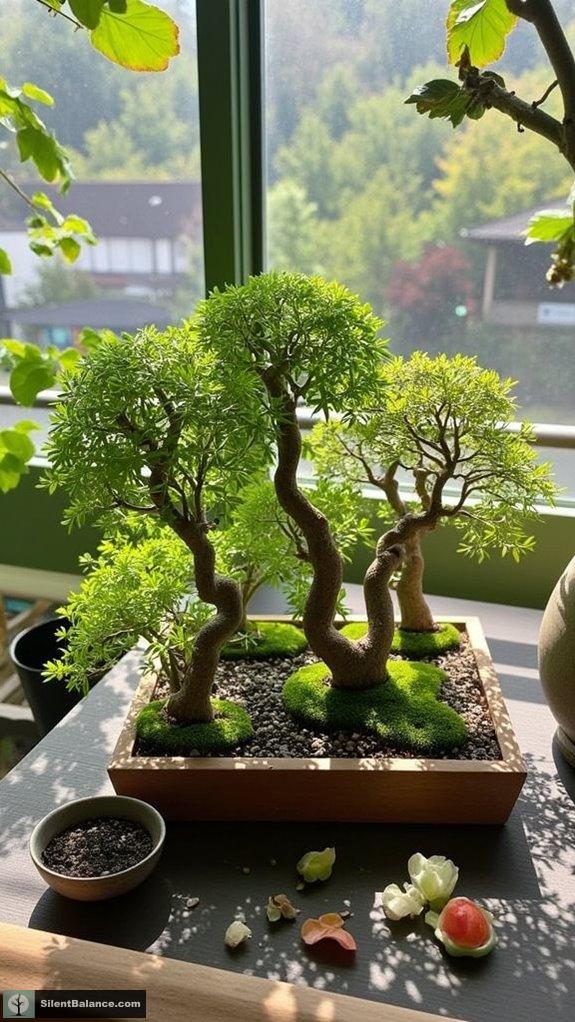
When the seasons shift, so do the rhythms of care and growth for our beloved bonsai trees, don’t you think?
In winter, we embrace dormancy care; protect bonsai from frost by tucking them away in a cozy greenhouse or beneath frost cloths.
Reduced watering keeps those roots happy, while avoiding pruning and fertilizing respects their natural rest cycle.
As spring approaches, it’s time for repotting and root pruning—up to 60%! That’ll kick-start new growth cycles, just as we ramp up our watering and fertilization.
Summer shines bright, requiring daily attention, while fall beckons us to gradually ease off on watering before winter settles in. Additionally, different species of bonsai can have varying light requirements which can influence their growth throughout the seasons.
Tree Symbolism
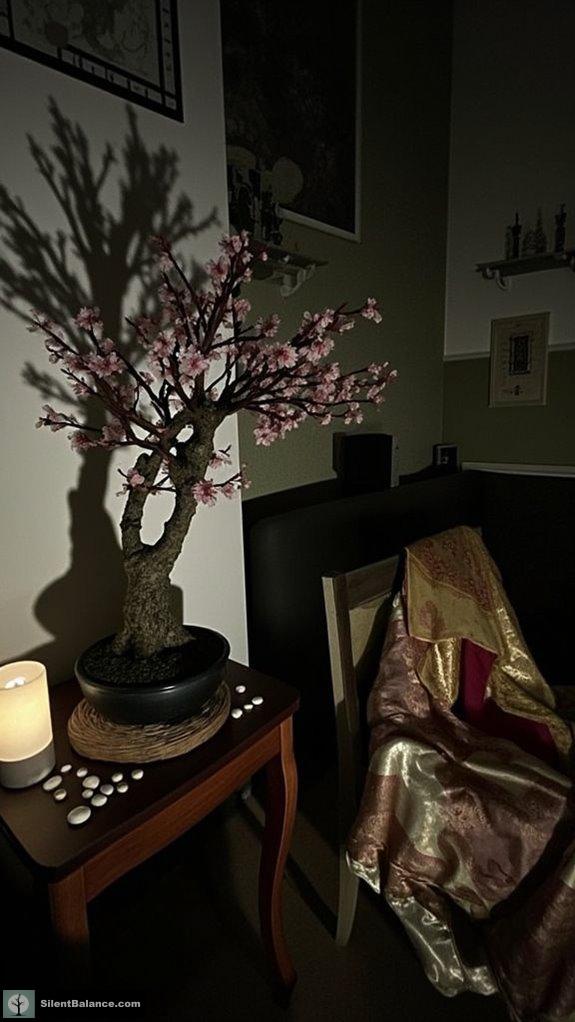
The world of bonsai isn’t just about tiny trees; it’s rich with meaning and symbolism that resonates deeply with anyone who takes the time to engage with these living artworks.
Bonsai transcends mere horticulture; it offers profound meaning and a connection to the beauty of life itself.
Each tree variety carries its unique cultural significance, from the abundance of jade bonsais to the perseverance of ginkgo bonsais.
Here are three fascinating tree varieties and their meanings:
- Ficus Bonsai: Represents new beginnings and positivity, perfect for those looking to embrace change.
- Cherry Blossom Bonsai: Captures the ephemeral beauty of life, reminding us to cherish each moment.
- Azalea Bonsai: Embodies feminine beauty and harmony, making it a beautiful addition to any home.
Bonsai Tree Symbolism
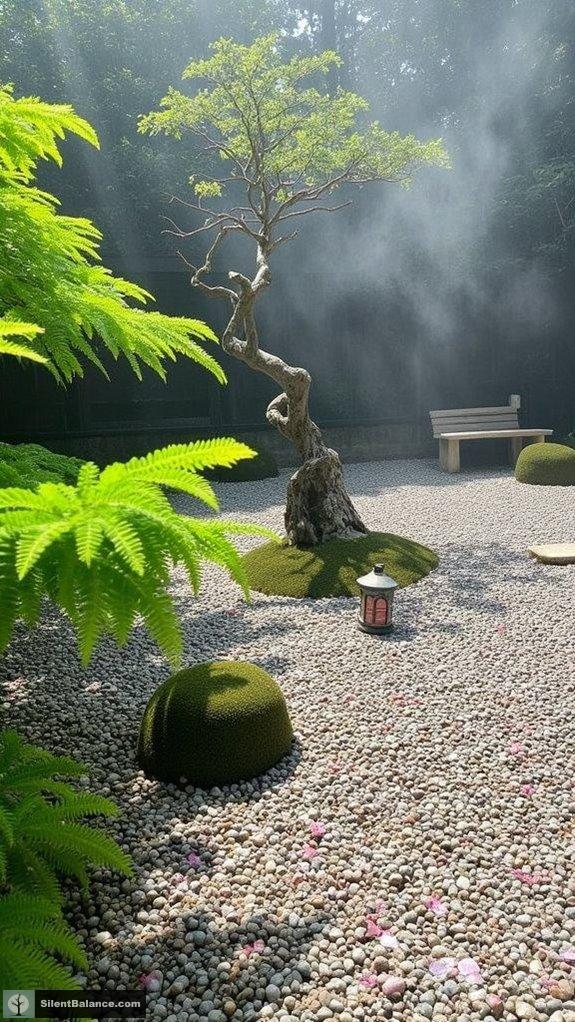
Jumping from the fascinating meanings behind individual tree varieties, let’s get into the broader strokes of bonsai tree symbolism.
Bonsai isn’t just a cute little tree; its bonsai significance runs deep. Each miniature marvel reflects harmony, peace, and balance, embodying Zen Buddhist principles.
Think of it as a spiritual guide, teaching patience and meditation through the art of cultivation. Ever noticed how a twisted trunk represents resilience? It’s like life, shaping destiny through intentional effort.
With species like the Azalea, we see a celebration of feminine strength—so delicate yet powerful, right?
In gifting bonsai, you’re not just handing over a plant; you’re bestowing hopes for balance and strength.
Curious about how they mirror life’s actual chaos? Immerse yourself, and get inspired!
Questions and Answers
What Are Common Mistakes to Avoid in Bonsai Landscaping?
When I scenery with bonsai, I always avoid common mistakes like underwatering, which leads to yellowing leaves. I also focus on mastering pruning techniques, ensuring each cut fosters healthy growth and enchanting artistic shapes.
How Do I Choose the Right Soil for Bonsai?
When I choose soil for my bonsai, I prioritize soil types that guarantee excellent drainage essentials. Balancing Akadama, pumice, and lava rock creates ideal moisture retention while preventing root rot. Experiment to find what works best!
Can I Use Artificial Plants in My Bonsai Landscape?
I’ve found artificial plants can truly enhance scenery aesthetics without the hassle of upkeep. They provide a versatile, practical option, allowing me to create unique miniature bonsai sceneries that bring beauty and creativity into my space effortlessly.
What Are the Best Tools for Bonsai Maintenance?
When I maintain my bonsai, I rely on sharp pruning shears and concave branch cutters. By mastering innovative pruning techniques and unique styling methods, I create stunning designs that truly showcase my miniature trees’ beauty.
How Do I Propagate Bonsai Trees for My Landscape?
I embrace innovative propagation techniques like cuttings and layering. It’s thrilling to cultivate bonsai trees, enhancing my scenery’s aesthetics while nurturing the beauty of nature. Let’s explore the artistry behind growing these miniature wonders together!
References
- https://musubikiln.com/blogs/journal/keshiki-bonsai-create-your-own-miniature-landscape
- https://www.bonsaigalinou.com/en/blog/japanese-garden-n54
- https://www.bokksu.com/blogs/news/bonsai-the-delicate-art-of-japanese-miniature-trees
- https://www.youtube.com/watch?v=XXpQSKkT0CE
- https://forum.bonsaimirai.com/t/japanese-bonsai-garden-influence-for-landscaping-around-home/10589
- https://www.bonsai-shop.com/en/bonsaipots/selection
- https://www.bonsaiable.com/blog/pots-for-bonsai-trees
- https://bonsaitonight.com/2010/01/08/pot-selection-redux/
- https://www.youtube.com/watch?v=dwqMAC59aq8
- https://www.bonsaiempire.com/basics/bonsai-care/choosing-pots

- Bonsai Placement Benefits for Room Harmony - November 8, 2025
- Why Use Air Layering to Propagate Bonsai Trees? - November 8, 2025
- 15 Stunning Acorn Wood Wall Art Ideas - November 8, 2025
