
Caring for bonsai trees is like being a nurturing artist—it’s all about balance! You’ve gotta maintain humidity between 40-60% and pick a spot that gets 12-14 hours of light daily; a sunny window is perfect. Watering? Stick your finger in the soil: if it’s dry an inch down, it’s thirsty time! Don’t forget to keep an eye on those drooping leaves; they’re whispering for help. Stick around, and I’ll share more on outdoor tips and bonsai symbolism!
Quick Takeaways
- Maintain indoor humidity levels between 40-60% and use a pebble tray or misting in dry environments.
- Position bonsai near a window for optimal natural light, ensuring 12 to 14 hours daily.
- Check soil moisture regularly and water thoroughly to encourage healthy roots and prevent stress.
- Prune bonsai during appropriate seasons to maintain shape and aesthetic balance in your space.
- For outdoor bonsai, ensure well-draining soil and balanced sunlight exposure for optimal growth.
Understanding Indoor Bonsai Needs
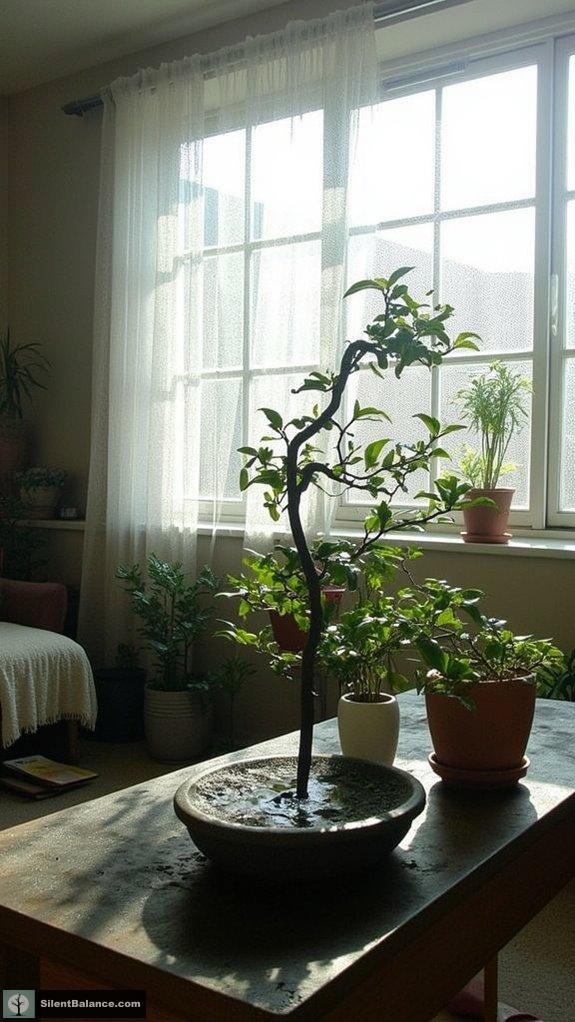
When it comes to nurturing indoor bonsai, understanding their unique needs is absolutely essential, especially if you want your miniature masterpiece to thrive.
First off, let’s chat about humidity levels. Most indoor bonsai crave around 40-60% humidity. If your air’s as dry as a desert, consider a pebble tray or misting to keep them happy.
And then there’s temperature ranges—ideally, you want between 60°F to 75°F for your little green friends. You wouldn’t want them to experience a sudden cold snap, right? Additionally, it’s important to maintain a proper seasonal watering schedule to ensure optimal health for your bonsai throughout the year.
Ideal Lighting Conditions for Indoor Bonsai
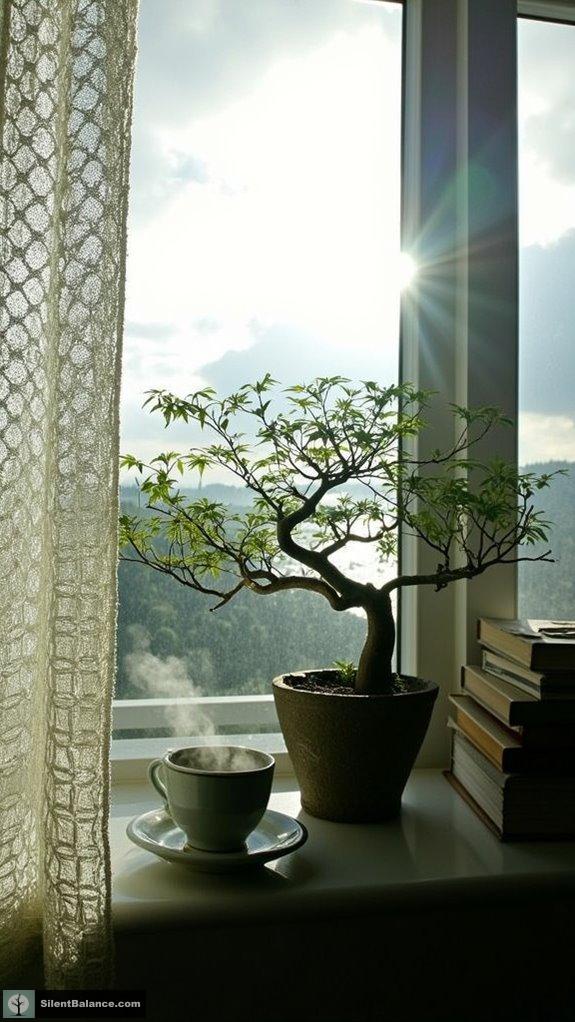
Getting those lights just right can make all the difference for your indoor bonsai.
I can’t stress enough how important it’s to find that sweet spot when it comes to lighting. Your bonsai craves natural light, so placing it near a window is key.
Finding the perfect lighting is crucial—your bonsai thrives on natural light, so keep it near a window!
But, let’s face it—some of us live in places with sunlight scarcity. That’s where artificial light swoops in like a superhero.
Using grow lights will help guarantee your green friend gets the proper light duration it needs, generally around 12 to 14 hours daily. They can also provide optimal photosynthesis conditions that mimic natural sunlight.
Adjust your window placement and experiment with angles; it’s amazing how a slight shift can change the game.
Keep in mind, a happy bonsai is a well-lit bonsai, and trust me, they’ll thrive when given the right light!
Watering Techniques for Indoor Bonsai Trees
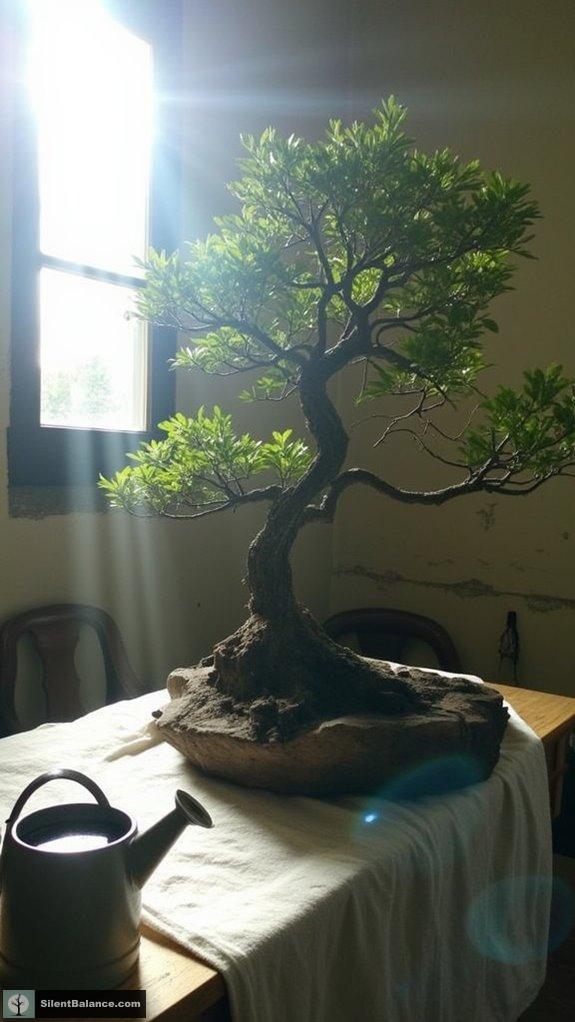
Instead of following a rigid schedule, I suggest you tap into that good ol’ intuition. Your indoor bonsai will thrive when you pay attention to soil moisture and adjust your watering frequency accordingly.
Here’s how I keep my little green friends happy:
- Check the Soil: Stick your finger about an inch deep. Dry? It’s time to water.
- Water Thoroughly: Verify the water seeps through the drainage holes. You don’t want your bonsai drowning!
- Consistency is Key: While I don’t abide by strict timelines, water when your bonsai shows signs of thirst, like drooping leaves.
Trust me, developing a feel for your bonsai’s needs is the best way to nurture a thriving masterpiece! Additionally, many ancient bonsai trees carry spiritual significance that enhances the mindfulness of caring for these remarkable plants.
Placement Options for Indoor Bonsai
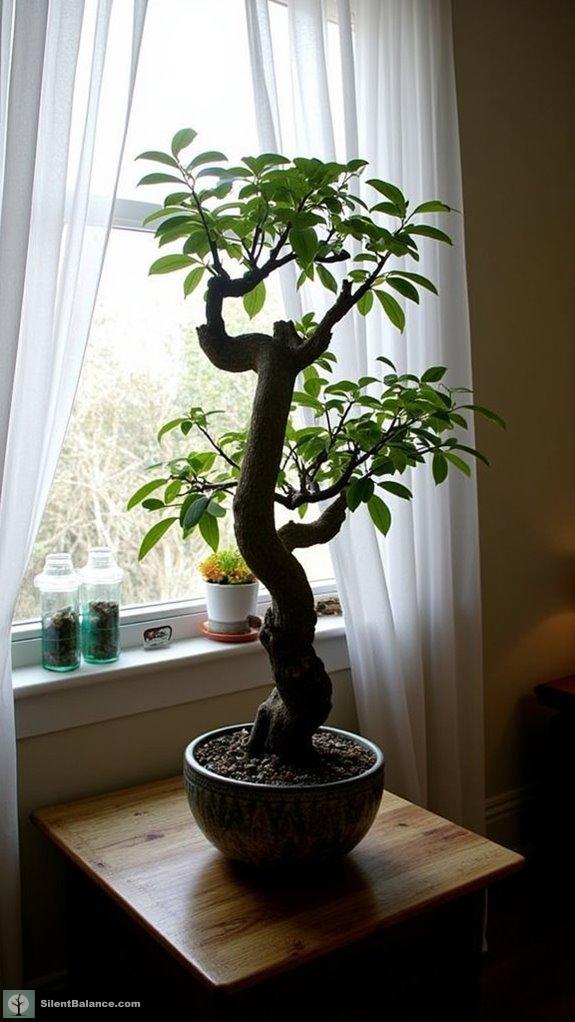
Ever wondered where the best spot for your indoor bonsai is?
Finding the right placement can make all the difference! You’ll want to take into account humidity levels, as most bonsais adore a little moisture in the air.
Keep them away from drafts, too, since temperature fluctuations can stress them out.
Don’t forget about soil requirements; a well-draining mix is essential for happy roots. The potting materials should support what’s best for your particular species.
Air circulation matters as well; a well-ventilated area can promote growth and health.
Finally, keep an eye on your fertilization schedule.
Outdoor Bonsai Care Essentials
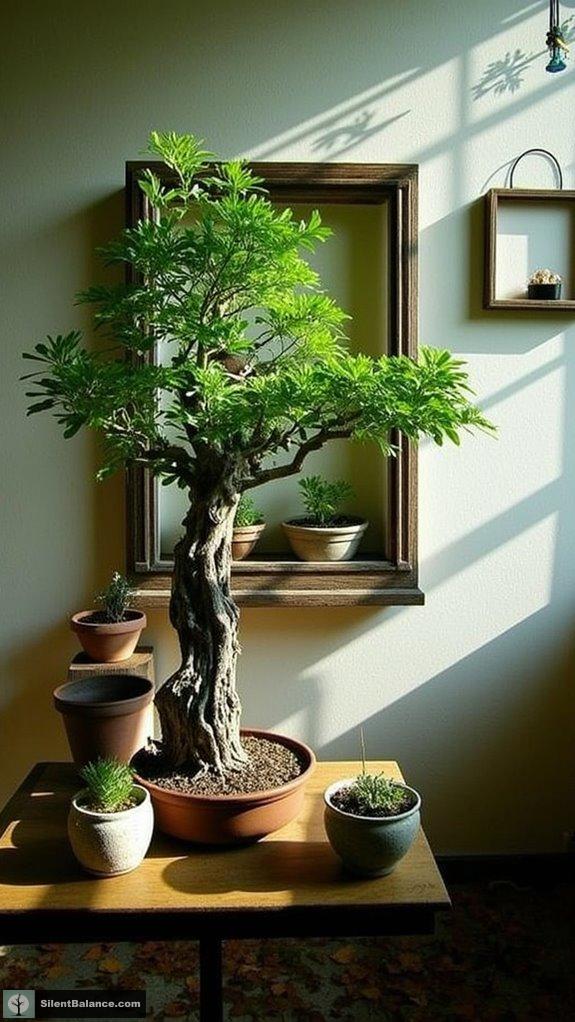
When you decide to embrace the world of outdoor bonsai care, you’re starting on a journey that blends art with nature. It’s a delightful mix where you become both creator and curator.
Here are three essentials to keep your outdoor bonsai thriving:
- Sunlight: Position your bonsai to soak up the right amount of sun. Not too much, not too little—think of Goldilocks!
- Soil: Use a well-draining mix. Nobody wants soggy roots, right?
- Seasonal Pruning: Maintain your tree’s shape and health by pruning during the right seasons.
With attention to outdoor aesthetics, you control your bonsai’s fate. Recall, it’s more than just a hobby; it’s a tiny world you nurture!
Seasonal Considerations for Outdoor Bonsai
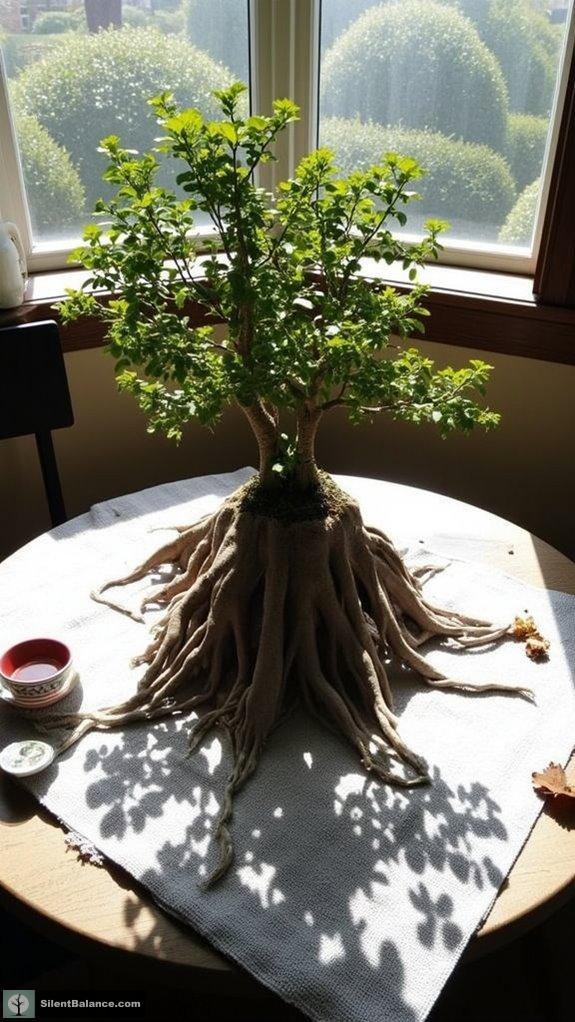
As we continue this bonsai journey, it’s time to chat about the changing seasons and how they play an essential role in keeping our outdoor bonsai healthy and happy.
Winter care is all about protection. You wouldn’t want your prized tree to freeze its leaves off, would you? Move them to a sheltered spot and check for moisture.
Now, let’s talk summer pruning. Ah, the art of snipping! This isn’t just a trend; it’s how we maintain our bonsai’s shape. You’ll want to thin out those growths and allow light to penetrate.
A well-pruned tree is like a well-groomed bonsai celebrity, isn’t it?
Embrace the seasons, and your bonsai will thrive, dazzle, and keep you entertained along the way!
Choosing the Right Spot for Outdoor Bonsai Display
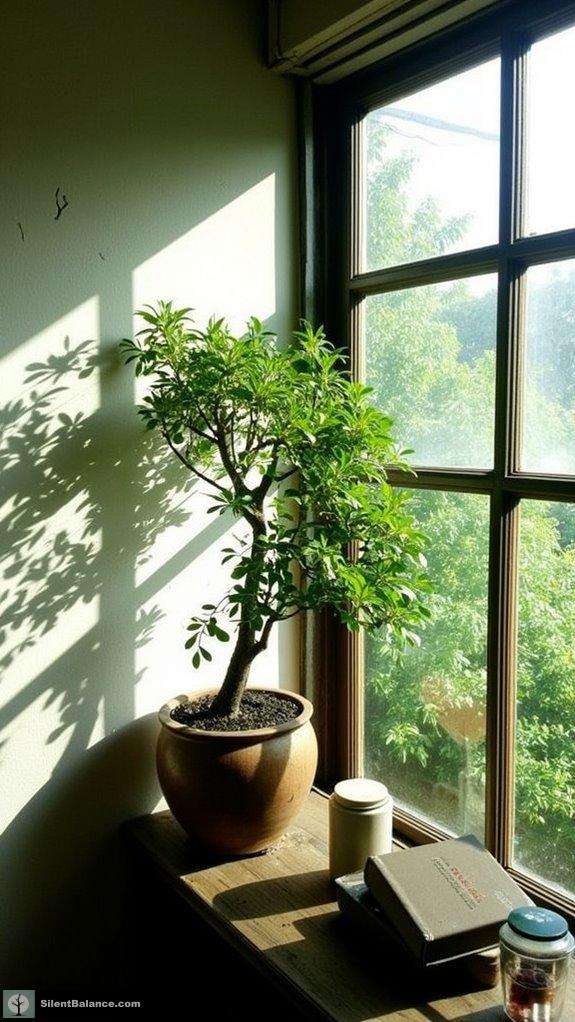
Have you ever wondered where the ideal spot is to showcase your outdoor bonsai?
It’s essential to contemplate a few key factors to guarantee your little green masterpiece thrives.
- Sunlight Exposure: Your bonsai needs at least four to six hours of sunlight daily, so think about placing it where it can soak up those rays without burning.
- Wind Protection: Look for a sheltered area, like near a wall or under a tree’s dappled shade, to shield your bonsai from harsh gusts that can dry it out.
- Accessibility: Position it somewhere you can easily admire and tend to it—bonsai love attention!
Finding the right spot not only boosts your plant’s health but also gives you a place to connect with your bonsai artistry.
Bonsai Tree Symbolism
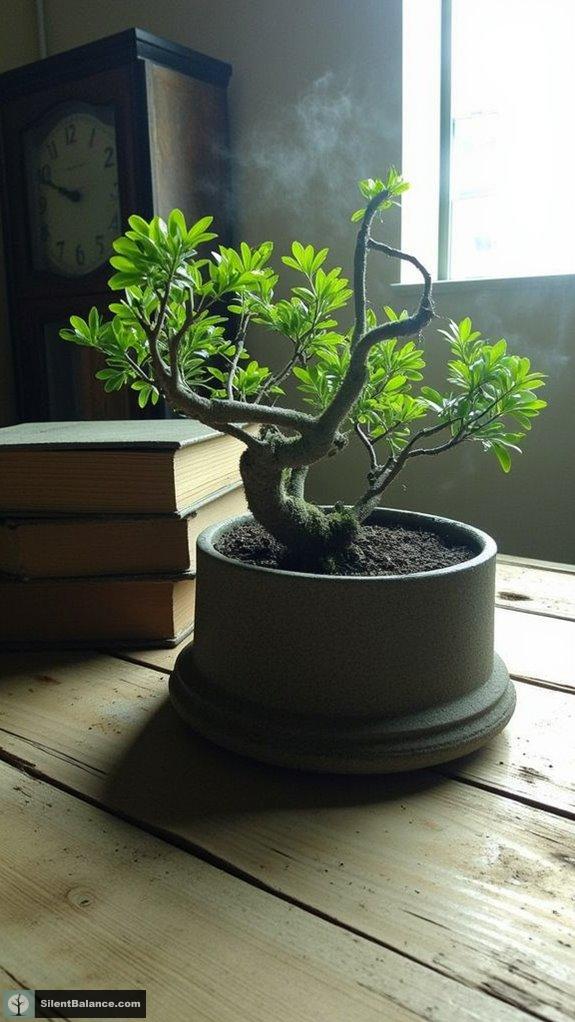
Bonsai trees hold a profound symbolism that intertwines beauty, serenity, and patience in their miniature forms.
Isn’t it fascinating how each tiny tree can communicate such deep messages?
First off, their growth symbolism reminds us that life is all about the journey, not just the destination.
Watching a bonsai evolve teaches us the importance of nurturing, patience, and resilience in our own lives.
Observing a bonsai’s journey imparts valuable lessons on nurture, patience, and the strength to endure life’s challenges.
Additionally, these exquisite creations serve as a serenity representation.
They’re like having a piece of nature’s calm right in your living space.
Each twist and turn of their branches reflects harmony, offering a respite from our chaotic world.
Tree Symbolism
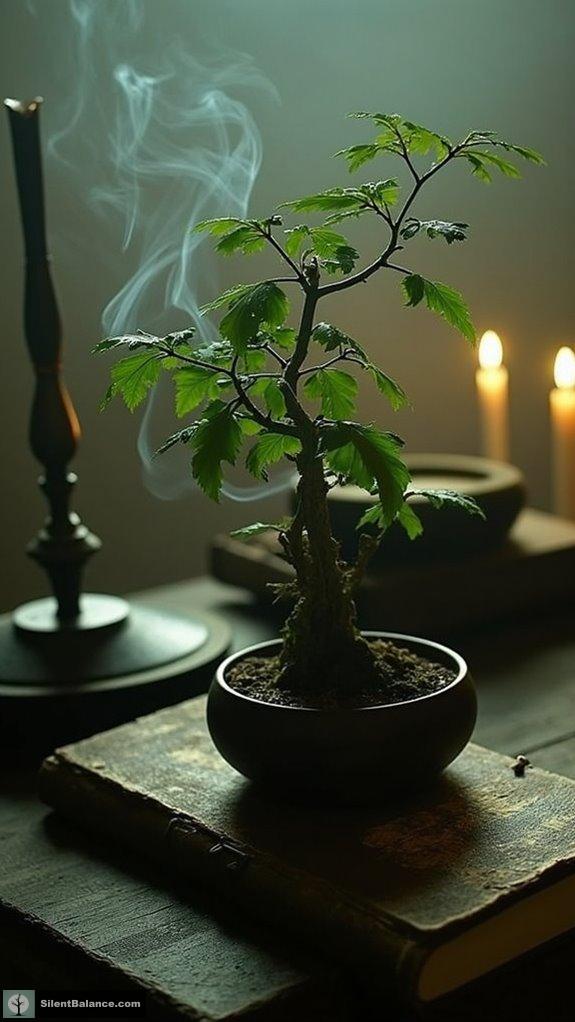
Trees, those magnificent giants of nature, symbolize much more than we might realize.
When it comes to bonsai, their symbolism can have personal significance and reflect cultural meanings.
Here are three powerful ideas to ponder:
- Resilience: Bonsai embody the ability to thrive against all odds; it’s a reminder of your strength during tough times.
- Balance: The meticulous pruning and shaping of bonsai represents harmony—in life and nature, something we all crave.
- Legacy: Owning a bonsai can connect you to generations, as these trees are often passed down, embodying family history.
Each bonsai tells a unique story—what will yours say?
Embrace the life lessons these trees offer; they might just help you navigate your own path!
Questions and Answers
Can Bonsai Trees Live for Over a Hundred Years?
When you hear about bonsai longevity, it’s often jaw-dropping.
Some historical bonsai have lived for over a hundred years, with a few even reaching stunning ages like 800 years! Isn’t that wild?
It’s all about the care and the right environment.
So, if you’re dedicated and a bit patient, your little tree can become a legendary companion.
Who wouldn’t want that epic story to tell, right?
How Often Should I Fertilize My Bonsai Tree?
Fertilizing your bonsai tree can really make a difference in growth. I typically use organic fertilizer during the ideal seasons—spring and summer are prime time!
It’s essential to follow the specific instructions for your fertilizer type, too, as some require different dilutions.
Are you ready to give your bonsai some tasty nutrients? Just keep in mind, a little goes a long way, and over-fertilizing can turn that tree into a hyperactive little creature!
What Tools Are Essential for Bonsai Maintenance?
When it comes to bonsai maintenance, the right tools can make you feel like a pro.
I’d say you can’t miss out on sharp pruning shears, because those snips help you master your pruning techniques like a true artist.
A good watering can with a fine spout? Essential!
It guarantees every inch of your bonsai’s soil gets just the right moisture according to your watering schedule.
Ready to elevate your bonsai game? Let’s dig in!
Can I Use Regular Soil for My Bonsai Tree?
Think of your bonsai tree like a fine wine—it needs the right soil to flourish.
Regular soil? It’s like serving a gourmet dish on paper plates. Instead, look for well-draining soil types designed for bonsai care, mixing akadama, pumice, and lava rock. This combo guarantees essential air and moisture reach the roots.
How Do I Know if My Bonsai Tree Is Unhealthy?
Wondering if your bonsai’s feeling under the weather? Look for leaf discoloration signs like yellowing or dropping leaves. They can be real red flags!
Check the roots too—if they’re mushy or smelly, you might’ve root rot on your hands.
Trust me, prevention is key! Keep an eye on your little tree, and don’t be afraid to dig a little deeper if something seems off.
After all, it’s your bonsai buddy!
Summary
Caring for bonsai trees is a delightful journey, like nurturing a tiny forest right in your home. Whether you’re finding the perfect light or crafting the ultimate watering routine, keep in mind this isn’t just a hobby; it’s nearly a zen art. So go ahead, embrace your inner bonsai master! After all, as they say, good things come in small packages—especially when those packages have roots, twisty trunks, and a sprinkle of patience!

- Bonsai Placement Benefits for Room Harmony - November 8, 2025
- Why Use Air Layering to Propagate Bonsai Trees? - November 8, 2025
- 15 Stunning Acorn Wood Wall Art Ideas - November 8, 2025
