
When it comes to watering bonsai trees, timing’s everything! In spring, I soak the soil so it’s damp but not soggy, using a narrow-spouted watering can for control. Summer calls for daily checks; water when the top inch dries out. As autumn rolls in, I dial back to avoid over-saturation, especially if leaves drop. Winter’s thin air means less water—every couple of weeks is just fine. Curious about how climate plays a role? There’s more to uncover!
Quick Takeaways
- In spring, ensure soil is slightly damp and water thoroughly to promote root growth without over-saturation.
- During summer, check soil moisture daily and water when it is dry about an inch below the surface.
- In autumn, reduce watering frequency and monitor moisture closely as humidity decreases in preparation for dormancy.
- Water less frequently in winter, checking soil moisture every couple of weeks to avoid overwatering during dormancy.
- Always adapt watering routines based on climate, humidity, and sunlight exposure to keep bonsai healthy year-round.
Spring Watering Techniques
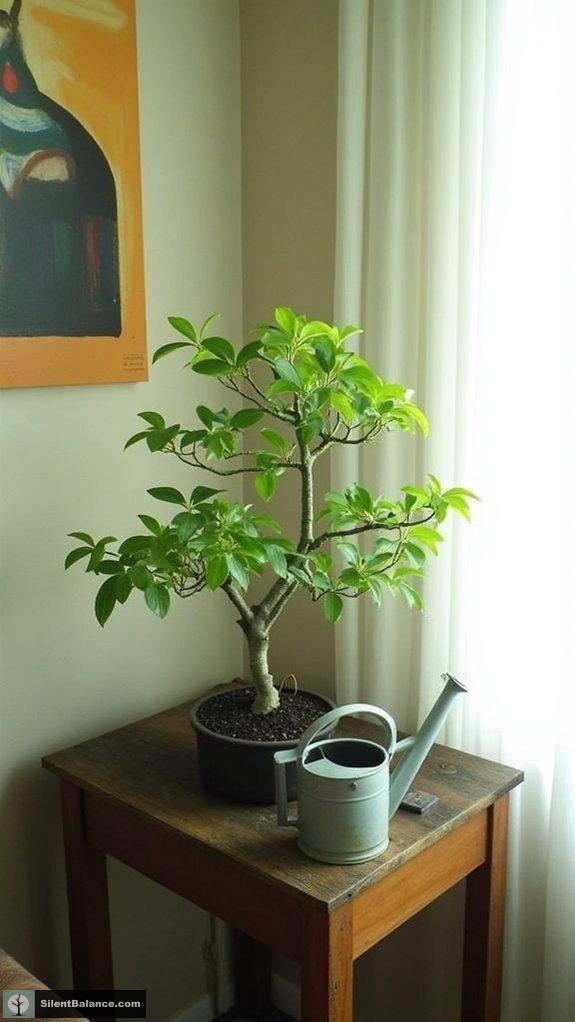
Ah, spring—the season when our bonsai buddies awaken from their winter slumber. As I plunge into spring watering techniques, I can’t stress enough the importance of spring moisture for our leafy friends.
First off, let’s check the soil; it should feel slightly damp but not soggy, like a sponge that’s been squeezed just right.
Check the soil: it should feel like the perfect sponge—slightly damp, never soggy!
When watering, focus on those roots. They crave attention after a long dormancy, so gentle, thorough soaking encourages healthy growth.
I prefer a watering can with a narrow spout, as it gives me control—better angle, better aim!
Ever considered misting? It’s a little like sending your bonsai on a spa day, providing humidity that those roots absolutely adore.
Happy bonsai tending!
Summer Watering Guidelines
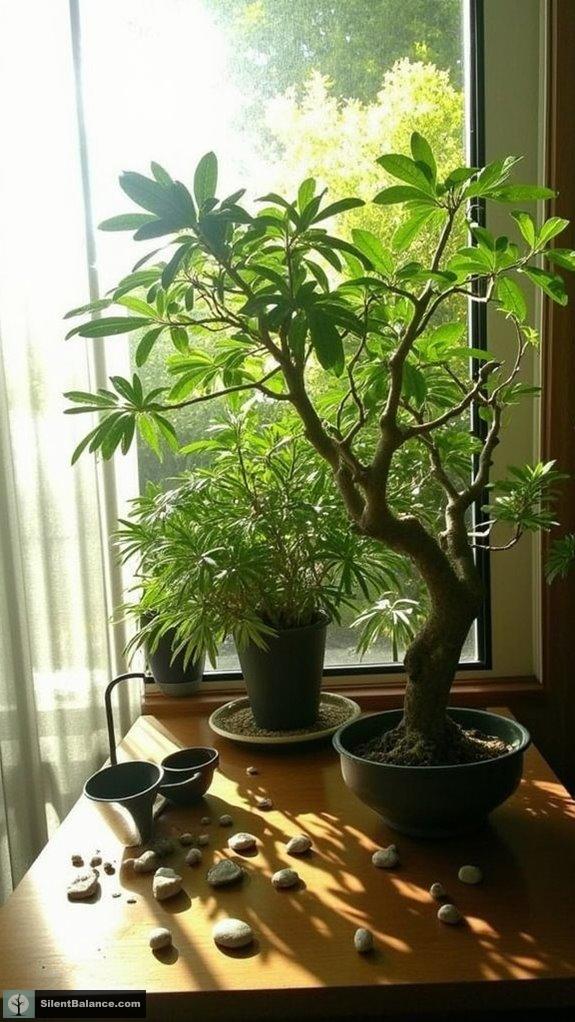
When summer rolls around, it’s like throwing a garden party for your bonsai, and trust me, they’re ready to soak up that sunshine.
As the temperatures rise, you might notice your bonsai’s thirst increases, thanks to summer humidity pushing those watering frequencies up!
Make it a habit to check the soil daily; it’s the ultimate way to assert your control.
Is it dry an inch down? Time to give it a good soak!
Watering in the early morning or late afternoon helps prevent evaporation, keeping that liquid gold where it’s needed. Additionally, just like the ginkgo tree symbolizes longevity and resilience, ensuring your bonsai gets the right amount of water will support its growth and vibrancy throughout the season.
Autumn Watering Considerations
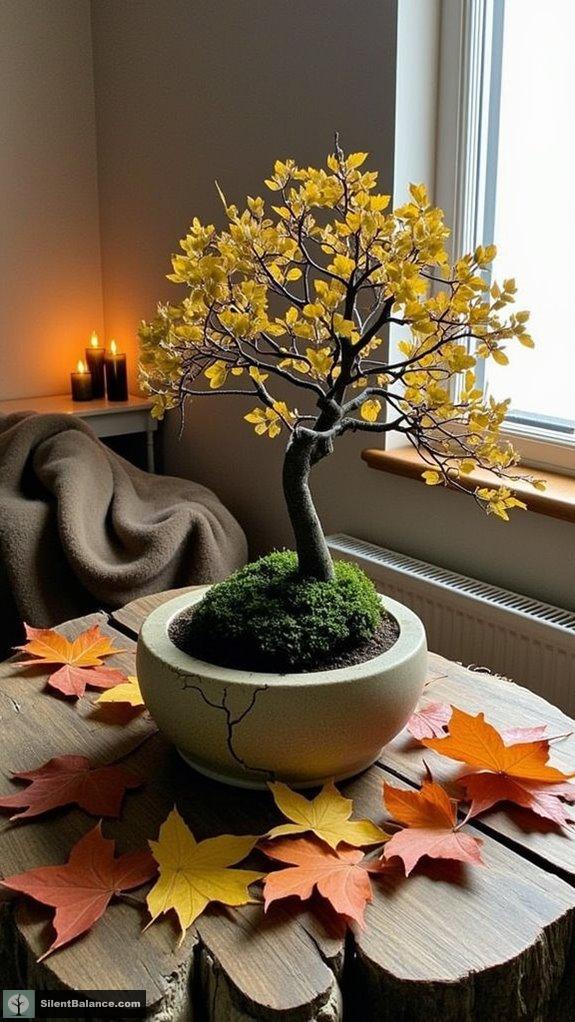
How do you know when to adjust your bonsai’s watering routine for autumn?
As the air turns crisp and autumn humidity drops, your bonsai’s needs change. You won’t want to water them like it’s still summer—trust me, they’ll thank you for it.
Check that soil moisture; give it a poke. If it feels damp an inch below the surface, hold off a bit longer before watering again.
Remember, your little tree isn’t just a plant—it’s a life force that thrives on precision. You’re not just watering; you’re nurturing your bonsai’s well-being.
During this time, reduce fertilizer applications since your bonsai is entering its dormant growth phase, which helps prevent nutrient buildup in the soil.
Watch for leaf drop, too. That’s your bonsai’s way of crying out for a hydration tweak.
Stay observant, and you’ll keep your tree healthy and vibrant through this colorful season.
Winter Watering Adjustments
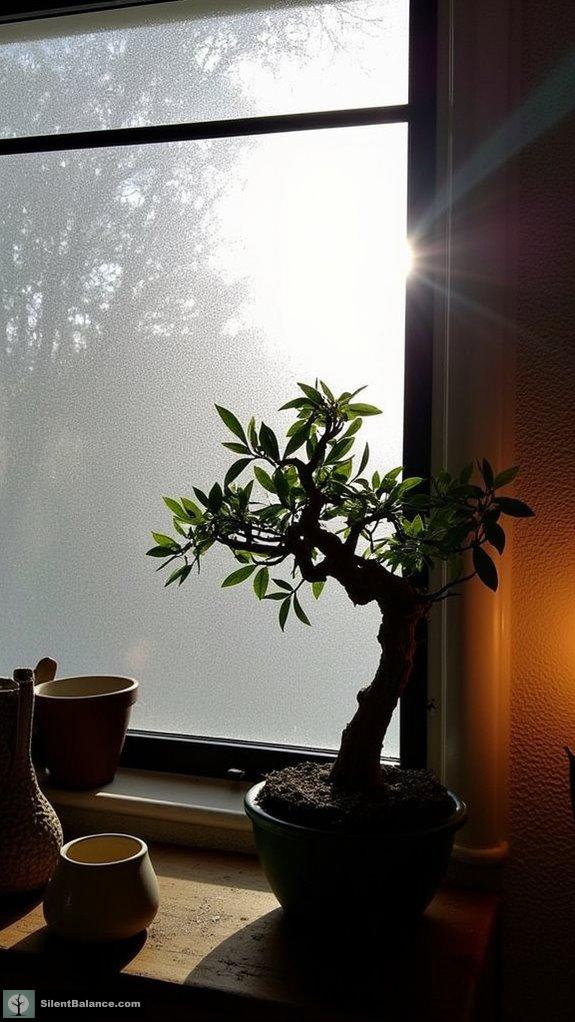
As the temperatures drop and the scenery transforms into a winter wonderland, your bonsai’s watering needs hit the reset button.
During winter dormancy, your tree isn’t gobbling up water like a hungry hippo. Instead, it’s in a holding pattern, so you’ll want to adjust accordingly.
I usually check the soil moisture every couple of weeks—yes, I really do! A quick finger test helps me gauge if it’s time to water; just poke your finger about an inch into the soil.
If it feels dry, give it a sip, but if it’s still moist, let it be.
Keep in mind, overwatering can be a bonsai’s worst enemy during these chilly months. Cultural differences in bonsai care may influence how frequently one waters their trees in different climates, but keeping an eye on moisture will guarantee your little tree stays cozy all winter long!
Factors Influencing Seasonal Watering
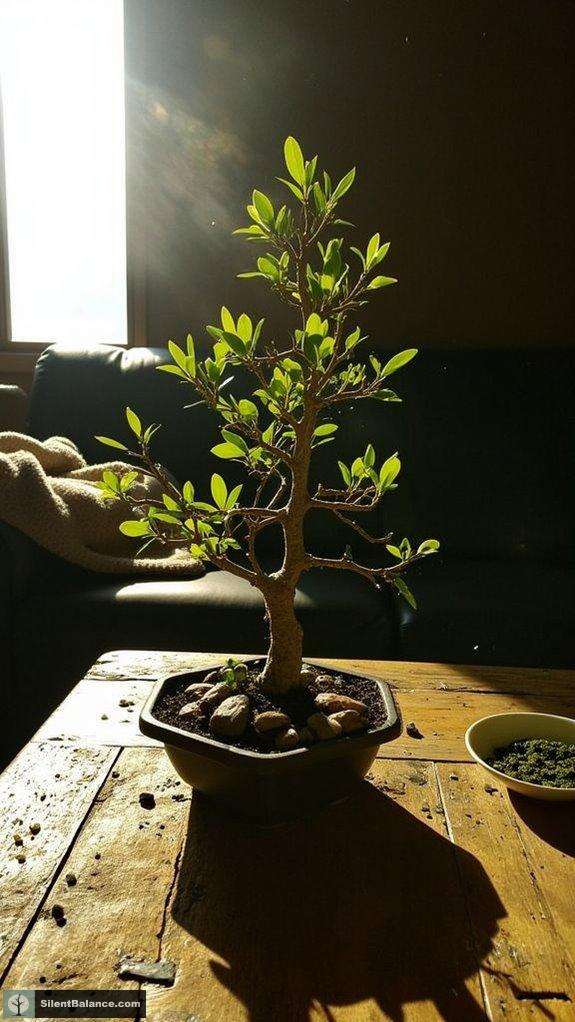
Understanding the factors influencing seasonal watering isn’t just about sticking to a schedule; it’s like deciphering a complex puzzle that brings your bonsai to life.
You see, water absorption isn’t uniform across seasons. The roots are like tiny sponges, keenly drinking in moisture. Yet, climate impact plays a huge role—hot summer days dry that soil fast.
Have you ever checked your soil’s moisture level? It’s a game-changer! During summer, I’m vigilant, adjusting my routine based on whiffs of humidity or the length of sunshine.
Pay attention! In fall or spring, you’ll find your bonsai’s needs change. It’s a delicate dance, isn’t it? Learning these subtleties helps you take control, ensuring your cherished tree thrives through every season.
Bonsai Tree Symbolism
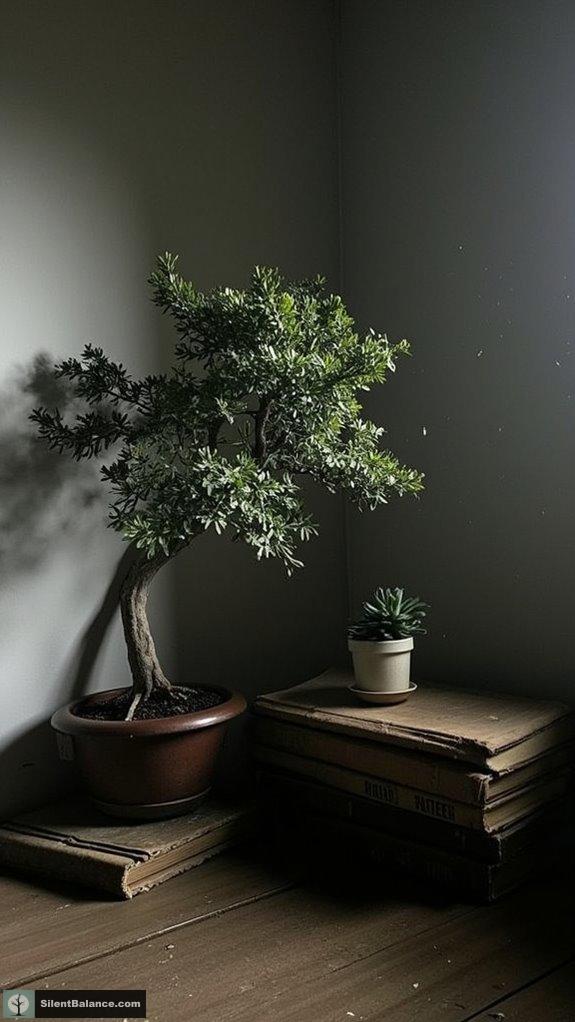
Bonsai trees aren’t just miniature plants; they’re vibrant symbols steeped in rich traditions and meanings.
Their growth significance speaks volumes, representing perseverance, harmony, and balance in life. Isn’t it fascinating how a simple tree encapsulates profound cultural meanings?
Bonsai trees beautifully symbolize perseverance, harmony, and life’s balance, embodying profound cultural meanings in their delicate forms.
When you prune, you’re not just shaping the plant; you’re nurturing its spirit. Each twist in its trunk tells a story of resilience—like that perfect “shari” or driftwood effect. You can almost hear the whispers of ancient artisans guiding your hands.
Isn’t it your turn to wield that control over this living art? Embracing bonsai culture means embracing patience and mindfulness.
Just think of the pride when you witness your tree flourish, embodying a legacy that transcends generations. How cool is that?
Tree Symbolism
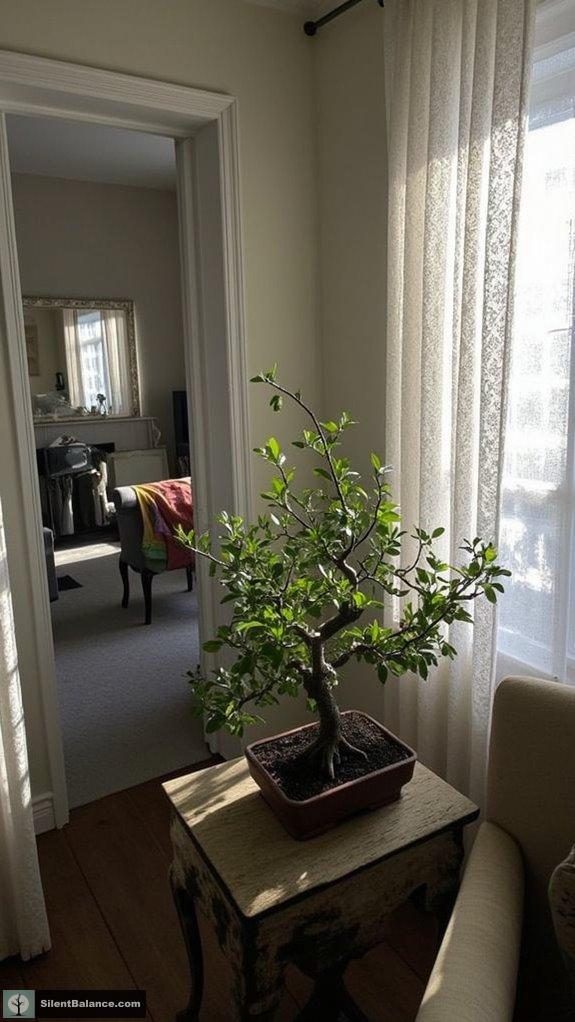
The world of tree symbolism opens up a fascinating universe filled with rich meanings and stories. Each bonsai tree carries its own cultural significance, whispering tales of wisdom, strength, and resilience.
Don’t you love how a simple little tree can embody the essence of life itself? For instance, the pine represents longevity, while cherry blossoms signify the beauty of fleeting moments.
In my journey, I’ve discovered that these aesthetic values enhance not just the visual appeal of bonsai but deepen our emotional connections.
Have you ever noticed the power of a well-placed bonsai in a room? It creates an atmosphere charged with serenity and focus.
Questions and Answers
How Often Should I Mist My Bonsai Trees?
How often should you mist your bonsai trees? Well, it really depends on your humidity levels, but I usually like to mist every few days.
Using effective misting techniques, I observe my trees closely; if the leaves look a bit droopy, it’s time for a spritz!
If you’re in a drier climate, you might feel like a mini rain god, keeping those beautiful bonsais happy and thriving!
What’s not to love about that?
Can I Use Tap Water for My Bonsai?
Picture a clear stream gently lapping against the roots of your bonsai, a world where perfection reigns. Yes, you can use tap water, but let’s chat about tap water quality first.
If yours is soft and low on chlorine, you’re golden!
Remember to let it reach room temperature before watering. Cold water can shock those delicate roots.
What Type of Soil Retains Moisture Best?
When it comes to moisture retention, I’ve found that a well-balanced soil composition is key.
You’ll want a mix of akadama, pumice, and lava rock. This combo not only keeps your bonsai happy but also prevents that dreaded soggy bottom.
Have you ever seen roots drowning? It’s a sad sight!
Trust me, this mix skillfully retains moisture without waterlogging, giving your little green buddy the perfect home.
Happy bonsai gardening!
Is Watering Frequency the Same for All Bonsai Species?
If I’d a dollar for every time someone asked about watering frequency, I’d have a nice little bonsai collection!
Honestly, it’s not a one-size-fits-all deal. Different species characteristics dictate how often I water.
For instance, a Juniper prefers drier soil while a Ficus thrives in moisture. Knowing these quirks is essential for great bonsai care.
How Do I Know if My Bonsai Needs Watering?
How do I know if my bonsai needs watering?
Well, I keep an eye on root health, my bonsai’s lifeline!
I often use a moisture gauge; it’s like a little magic wand for soil.
If the reading dips into the red, it’s time to give those thirsty roots a drink.
You can also poke your finger into the soil; if it feels dry an inch down, your bonsai’s waving a tiny flag for help!
Summary
In wrapping up, watering wisely will work wonders for your beloved bonsai. By mastering the methods for each season, you’ll cultivate a thriving tree that truly tells a tale. So, whether it’s spring’s sprightly sips or winter’s wily watering ways, embrace the bonsai balance. After all, a happy bonsai is a harmonious bonsai! Are you ready to let your miniature masterpiece flourish? Immerse yourself in that season with style, and watch your bonsai reach new heights of beauty!

- Bonsai Placement Benefits for Room Harmony - November 8, 2025
- Why Use Air Layering to Propagate Bonsai Trees? - November 8, 2025
- 15 Stunning Acorn Wood Wall Art Ideas - November 8, 2025
