

Dark forests mirror your inner shadows because they’re like a canvas for your hidden fears and repressed emotions. As you navigate those twisting paths, you’re confronted by your inner monsters—growing pains, right? Think of the enchanted woods as a space for transformation. Each trial you face there sharpens your resilience, just like leveling up in a tattoo apprenticeship. So, why not embrace the chaos? Stick around, and you just might uncover some deeper truths about yourself.
Quick Takeaways
- Dark forests symbolize the hidden fears and repressed emotions within us, mirroring the landscapes of our inner chaos.
- The twisting paths of forests represent the buried emotions we must confront to achieve personal growth and healing.
- Encountering shadows in dark woods parallels the necessity of facing our weaknesses and fears to avoid empowering our inner demons.
- Forests act as settings for transformative trials that challenge our resilience, reflecting the mental toughness needed to confront our shadows.
- The archetypal themes of danger and renewal in dark forests resonate with universal human experiences, highlighting the connection between nature and personal identity.
The Archetype of the Enchanted Forest: Hidden Fears and Inner Monsters
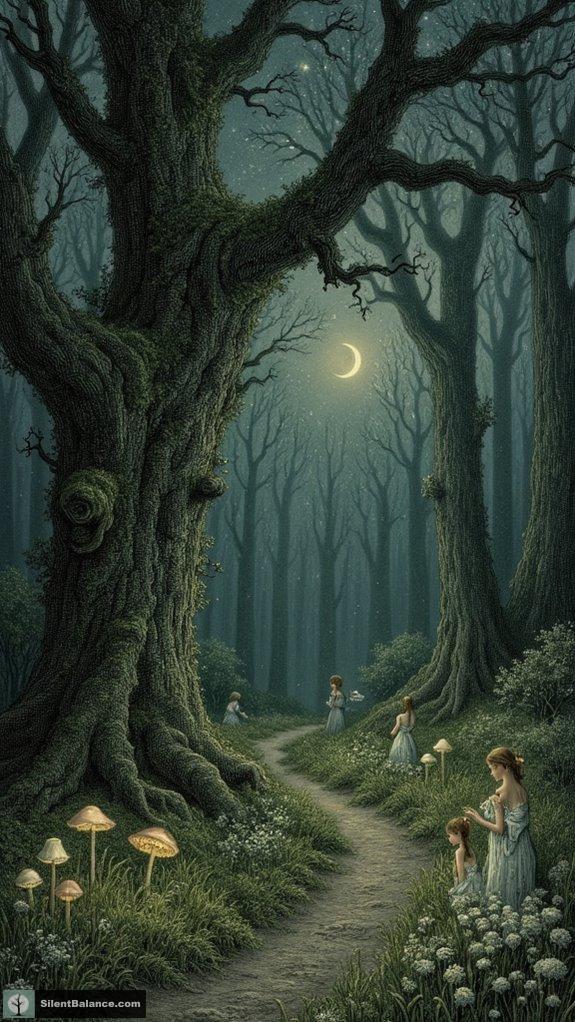
When you step into an enchanted forest, it often feels like you’re walking straight into the pages of a fairy tale, right? That sense of wonder masks a deeper truth—this forest mirrors your hidden fears and repressed emotions. Think about it; it’s a battleground for your inner monsters. As you wander through the twisting paths, each shadow could represent an emotion long buried, begging to be faced. It challenges you to confront what you usually avoid, to grab power over those lurking thoughts. Ever notice how a beautiful glade risks leading you straight to darkness? This duality’s what makes the enchanted forest a powerful symbol, urging you to embrace your inner chaos for true growth. The experience in these woods often reflects the model of the Hero’s journey, as you must navigate not only the physical landscape but also the emotional terrain of your psyche. Additionally, like the ginkgo tree, which symbolizes longevity and resilience, your journey through the forest encourages personal growth and transformation. Are you ready to take that leap?
The Hero’s Journey: Confronting Shadows in the Dark Woods
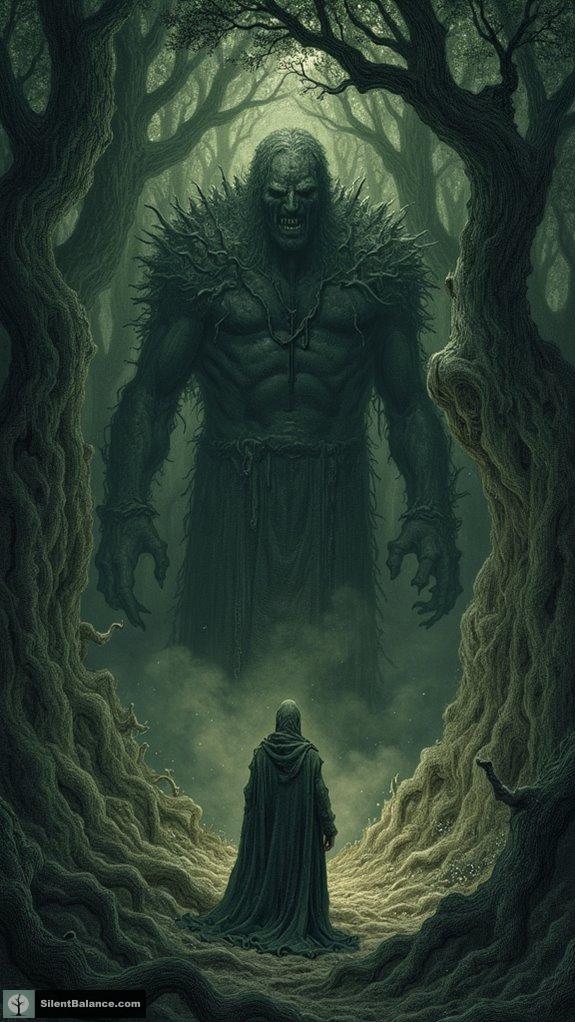
As you venture deeper into the dark woods of your psyche, you’re not just wandering; you’re beginning the essential phase of the Hero’s Journey, where facing your shadows isn’t just wise—it’s downright necessary.
This isn’t a cupcake party, folks; it’s a Shadow Encounter. You meet those repressed fears and weaknesses face-to-face, pushing through the thick underbrush of your inner confrontation.
Sure, it’s uncomfortable, but do you really want to keep feeding those nasty inner demons? In fact, confronting these shadows is akin to the symbolism of trees in literature, signifying the complex emotional experiences we navigate while seeking growth and resilience.
Transformation Through Trials: Growth Within Wilderness
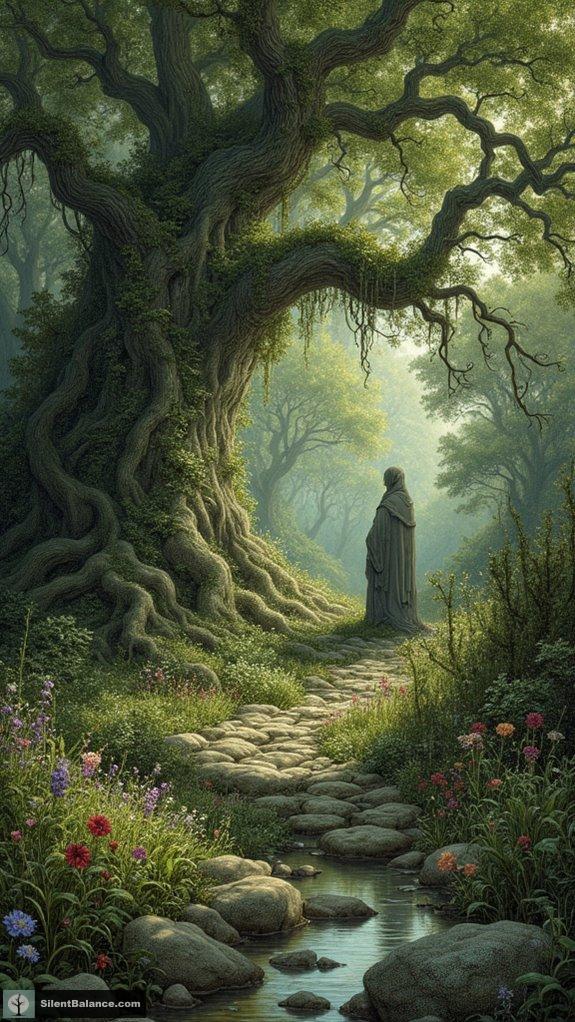
Venturing into the wild isn’t just about escaping the grind—it’s where you tackle trials that spark real transformation. Each wilderness therapy experience becomes a battleground for personal resilience, pushing you through nature challenges that ignite emotional growth.
Are you ready to face the elements? Adventure learning unfolds as you navigate unpredictable environments, building mental toughness along the way. These transformative experiences mirror your inner challenges, reflecting the grit needed for life’s toughest moments.
Imagine overcoming a steep hike or mastering a tricky canoe maneuver. These physical feats amplify your confidence, empowering you to confront fears head-on.
In the wilderness, you join a tribe, enhancing social skills, camaraderie, and trust—essentials for a fulfilled life. The Bodhi tree teaches meditation and mindfulness, symbolizing interconnectedness of all living beings in nature. So, are you game?
Tree Symbolism: Roots of the Psyche and Branches of the Self
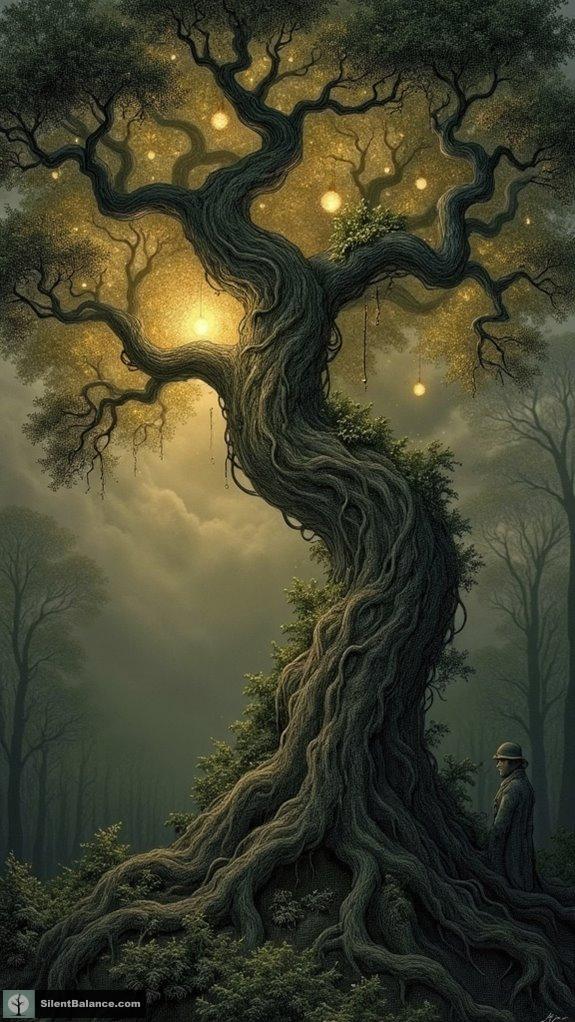
Think of trees as the inked canvases of the natural world, each mark and groove telling a story of growth and transformation.
Their tree roots dig deep into the earth, providing stability and grounding for your core self.
As you explore your identity, consider how your self branches reach out toward the sky, connecting you to your higher aspirations.
Each branch represents facets of your personality, forming a balanced entity where strength meets nurture.
Like a skilled tattoo artist, you ink your journey on this natural canvas, blending conscious and unconscious elements into a powerful story.
Embrace your inner forest, where the roots nurture your psyche, while self branches manifest your growth and individuation.
The tree’s role as a mother tree within the ecosystem emphasizes its sacred connection and rejuvenating influence on the environment.
Ready to tell your tale?
Collective Unconscious: Universal Themes in Dark Forest Narratives
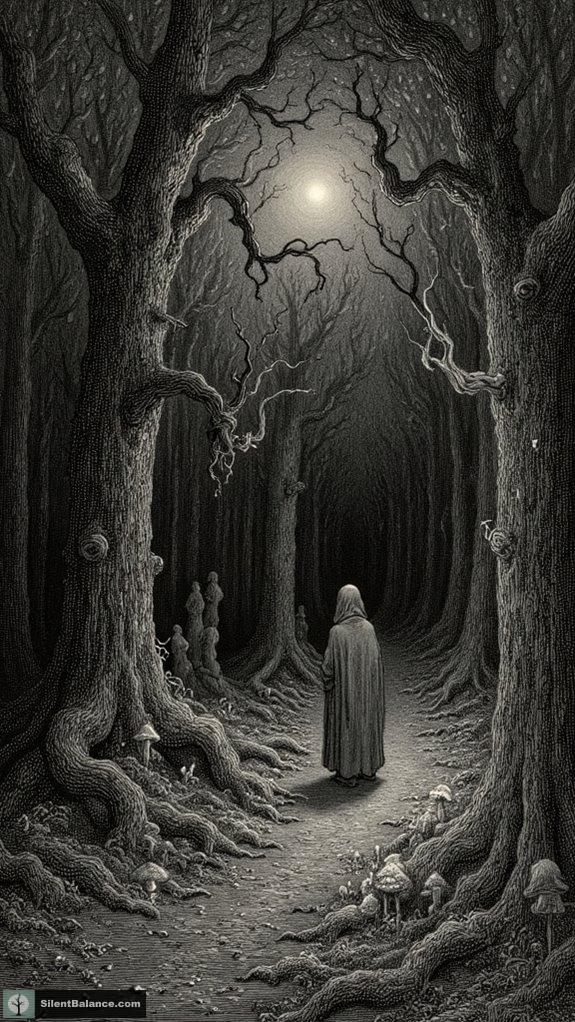
Dark forests can feel like the ultimate metaphorical playground where our deepest fears and wildest aspirations collide, right?
These ancient woods tap into our collective memories, showcasing universal narratives that resonate across cultures.
Think about it: throughout history, perilous journeys through dark forests have represented the trials we all face—confronting our shadows in search of transformation.
Archetypes emerge from these narratives, reflecting our instinctive patterns, pushing us to explore the unknown terrain of the psyche.
The darkness may seem intimidating, but it’s also a space of potential renewal, where we can encounter life’s challenges that demand resilience and inspire growth.
Shadow Aspects in Dark Forest Themes
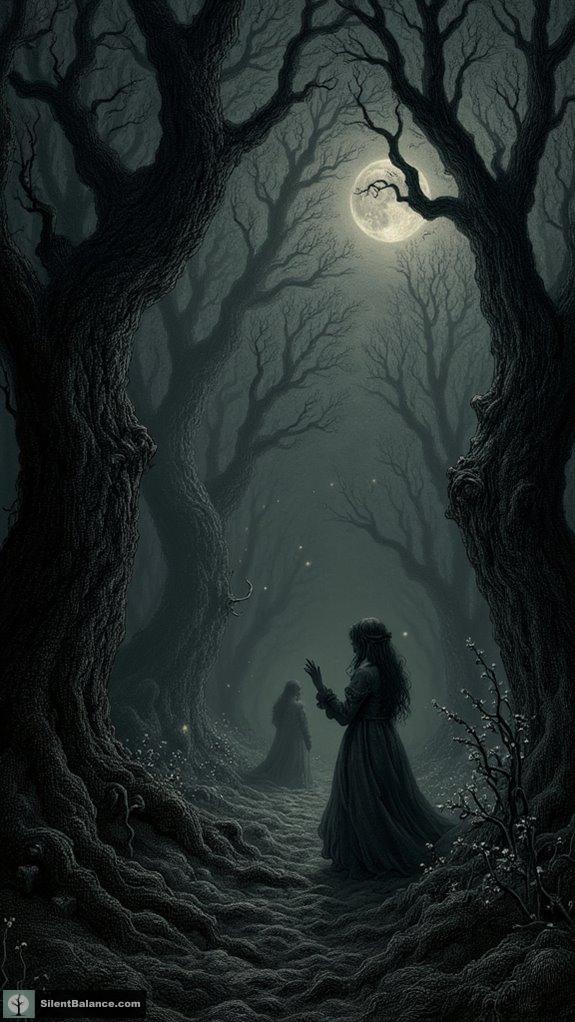
Stepping into the murky depths of dark forest themes, you’ll find that shadows cast their spell in more ways than one.
These narratives dig deep into shadow trauma, revealing the psychological turmoil lurking beneath the surface. What drives characters into moral ambiguity? Often, it’s survival—the instinct to protect oneself at any cost, even if that means sacrificing ethics.
You’ll witness betrayal and deception that speak to inner conflicts, blending fear and desperation.
As these characters grapple with their inner demons, you’re challenged too; how do you navigate your own shadows?
The dark forest pushes you to confront these elements, forcing you to choose between the light of morality and the shadows of self-preservation.
Embrace the complexity; it’s where true power resides! Trees and their symbolism in Buddhism serve as a profound reminder of the interconnectedness of our inner struggles and the journey towards self-awareness.
Dark Forest Archetypes in Fairy Tales
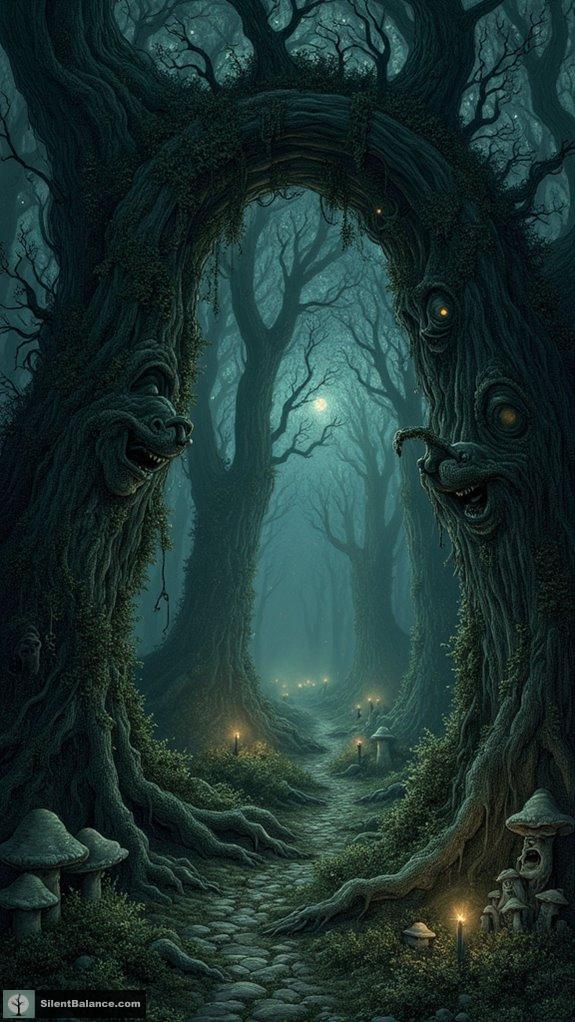
When you plunge into fairy tales, it’s hard to miss how frequently forests play pivotal roles, acting as gateways to transformation and self-discovery.
These dark forest archetypes, rich in forest folklore, embody danger and mystery, forcing you to confront your deepest fears. Think of Hansel and Gretel or Little Red Riding Hood—each journey through treacherous woodlands brings trials that awaken latent strength and wisdom.
In magical realism, these enchanted woodlands serve as a battleground, where monsters represent the shadows lurking within you. As you traverse these thematic landscapes, you might find echoes of psychological horror techniques that blur the lines between fear and personal awakening.
As you navigate through these heroic terrains, you’re not just following the protagonist; you’re battling your inner demons.
Questions and Answers
How Can Dark Forests Symbolize Modern Psychological Struggles?
Dark forests symbolize modern psychological struggles by acting as a symbolic representation of our tangled thoughts and emotions.
Think of it like negotiating a dense thicket—confusing, intimidating, and often overwhelming.
You’re wrestling with anxiety and confusion, and those dark shadows? They reflect your inner turmoil.
Instead of turning back, embrace that challenge!
What if moving through those shadows is where the healing starts?
It’s all about steering through the wild current of your psyche, one step at a time.
What Role Do Dark Forests Play in Understanding Human Anxiety?
Picture yourself lost in a dark forest—your heart racing, anxiety creeping in. That’s where darkness therapy enters the scene, helping you face those wilderness fears head-on.
By tackling the unknown in controlled settings, you strengthen resilience and learn to dance with your shadows. Isn’t it empowering to transform anxiety into a journey?
Just like a tattoo, each experience adds depth to your story, creating a masterpiece out of those hidden struggles.
Do Dark Forest Narratives Appear Across Different Cultures?
Dark forest narratives pop up across cultures, woven with rich cultural symbolism and archetypal themes.
Think of tales from Norse myths to Sumerian epics, all featuring these mysterious woods where heroes confront the unknown.
It’s all about bravery, transformation, and facing inner fears.
You can almost see the ink splotches of those stories on the skin of our shared human experience, don’t you think?
These forests challenge us to dive deep, finding strength in the shadows.
How Can Confronting Inner Shadows Facilitate Personal Growth?
Did you know that over 80% of people have unresolved inner conflicts?
When you face your shadows, you kickstart powerful shadow integration, fueling your personal transformation.
By confronting those hidden fears and desires, you not only rise above emotional turmoil but also release latent strengths within yourself.
Embracing your darker traits boosts your authenticity and deepens connections with others.
Ready to ink your journey of growth? Let’s get to work!
What Is the Significance of Darkness in Folklore and Fairy Tales?
The significance of darkness in folklore and fairy tales is immense, right? It’s where mythological significance meets narrative archetypes. You plunge into shadows, facing your fears, and reflecting on human nature’s complexity.
Think of tales like *Hansel & Gretel*—dark settings amplify stakes, pushing you to confront adversity. Isn’t that empowering? These stories challenge societal norms, merging grittiness with moral lessons, and that’s where real growth happens.
Forge your path through those dark woods!
References
- https://en.wikipedia.org/wiki/Dark_forest_hypothesis
- https://empirics.asia/the-dark-forest-theory/
- https://www.ystrickler.com/the-dark-forest-theory-of-the-internet/
- https://www.youtube.com/watch?v=8-frnQvEw6U
- https://orbitaltoday.com/2023/11/15/dark-forest-hypothesis-fiction-or-law-of-the-space-jungle/
- https://kjlandscapeplaceandenvironment.photo.blog/2020/03/28/the-heroes-journey-and-a-psychological-perspective/
- https://www.woodlands.co.uk/blog/flora-and-fauna/the-fairytale-forest-–-a-source-of-symbolism/
- https://symbolreader.net/2013/04/14/the-symbolism-of-the-forest/
- https://pmc.ncbi.nlm.nih.gov/articles/PMC7840507/
- https://en.wikipedia.org/wiki/Enchanted_forest

- Bonsai Placement Benefits for Room Harmony - November 8, 2025
- Why Use Air Layering to Propagate Bonsai Trees? - November 8, 2025
- 15 Stunning Acorn Wood Wall Art Ideas - November 8, 2025
