

Traditional bonsai pots aren’t just pretty little houses for your miniature trees; they’re steeped in history and artistry. Each pot tells a tale, showcasing materials like durable Tokoname clay or glossy Celadon, which impact both beauty and function. Did you know round pots symbolize unity, while vibrant colors like deep green promote tranquility? Plus, regional styles add flair, from complex Chinese motifs to sleek Japanese designs. Curious about how texture and patterns play a role? Stick around!
Quick Takeaways
- Traditional bonsai pots, rooted in ancient origins, reflect the cultural evolution and significance of bonsai as an art form.
- Various materials, like Tokoname clay and celadon, influence pot durability, aesthetics, and drainage, enhancing the bonsai’s overall health.
- The shape and size of pots convey different meanings, with round pots symbolizing unity and rectangular pots representing stability.
- Color selection in bonsai pots, from earthy tones to vibrant hues, carries symbolic meanings, influencing the overall emotional resonance of the display.
- Regional variations highlight unique designs, with Chinese pots featuring intricate motifs, while Japanese styles emphasize simplicity and harmony in aesthetic balance.
Historical Significance of Bonsai Pots
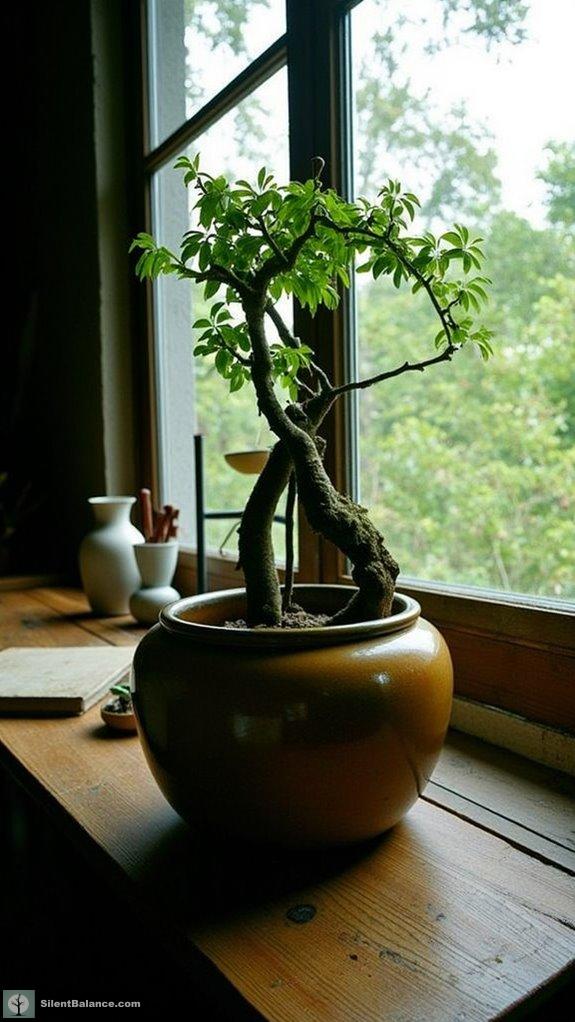
When you immerse yourself in the world of bonsai pots, you’re not just looking at clay and glaze; you’re stepping into a rich history that dates back centuries.
Immerse yourself in bonsai pots and discover a captivating history that transcends time and artistry.
These pots have ancient origins that mirror the cultural evolution of bonsai itself. Did you know that in Japan, these vessels were originally used for practical purposes, but evolved into art forms reflecting aspiration and serenity?
Envision the artisans, crafting these pieces with precision, each curve telling a story.
So, whether you’re a seasoned pro or just starting, understanding the significance behind these pots adds depth to your bonsai journey.
You’re not merely nurturing a plant; you’re safeguarding a slice of history, and that’s pretty cool, right?
Take a moment to appreciate that magic!
Materials Used in Traditional Bonsai Pot Design
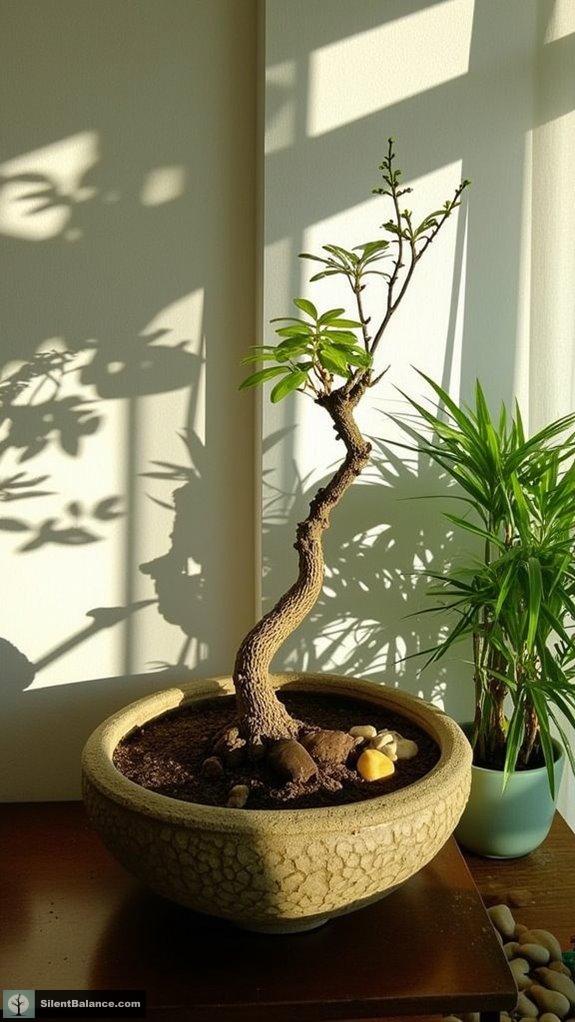
Bonsai pots, those charming little vessels, aren’t just pretty faces; they’re crafted from a variety of materials that each tell their own tale of tradition and artistry.
When diving into pot materials, you’ll encounter several clay types like stoneware and earthenware. Each one’s unique porosity influences drainage, a vital element for vigorous root growth.
Ever heard of “Tokoname”? This esteemed Japanese clay lends a rustic charm while ensuring durability.
Or what about celadon? Its glossy finish brings an air of elegance that some bonsai aficionados can’t resist.
Choosing the right pot isn’t just functional; it’s personal! Remember that different materials can also enhance the overall aesthetics of the space, allowing you to create a harmonious decor scheme. Which material speaks to you? The right vessel doesn’t just hold plants; it embodies a connection to nature and culture.
Happy pot hunting!
Shape and Size: Cultural Considerations
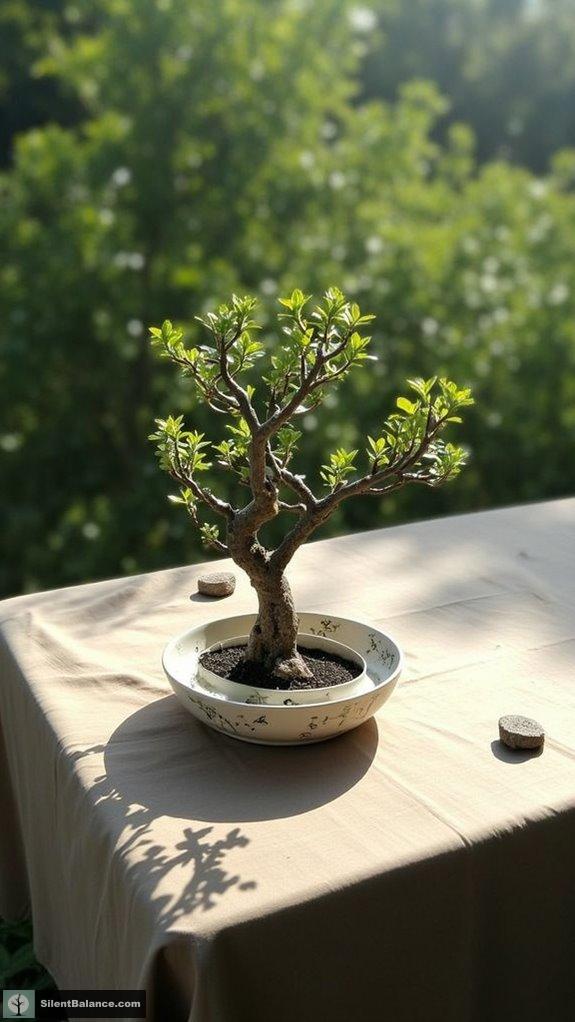
The shape and size of a bonsai pot play an essential part in the overall aesthetics and health of your miniature masterpiece.
The choice of bonsai pot shape and size is crucial for both aesthetic appeal and the well-being of your miniature tree.
Think about it: a round pot can symbolize unity, while a rectangular one often conveys stability—these are cultural shapes that speak volumes.
When I select a pot, I’m not just playing around; I’m considering size significance too. A smaller pot restricts root growth, emphasizing strength and control, while a larger one can stretch the limits of your creativity.
Ever thought about how a deeper pot might amplify your tree’s potential? It’s about finding that balance, so your bonsai feels at home and thrives wonderfully!
Interestingly, the design of Japanese versus Chinese bonsai reflects different philosophical approaches to nature and balance, which can influence pot selection.
Choosing wisely can literally make or break your bonsai experience. What shape’s calling your name today?
Color Symbolism in Bonsai Pot Selection
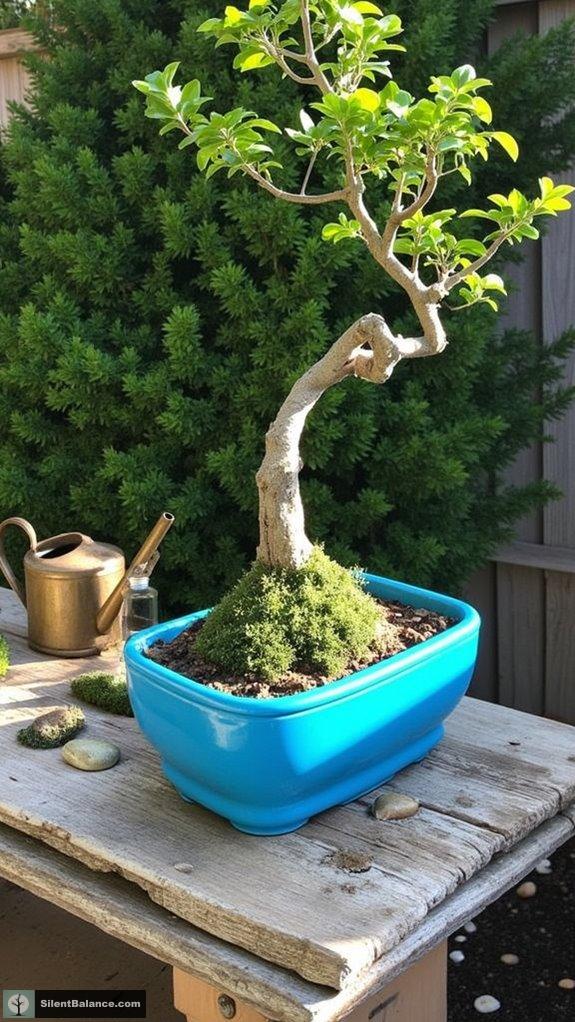
Choosing the right color for your bonsai pot isn’t just a matter of aesthetics; it can evoke emotions and resonate with cultural meaning.
Think about it—each color has its own vibe, or let’s call it “color meanings.”
For instance, earthy tones like terracotta enhance those natural pot aesthetics, grounding the tree in its essence.
Conversely, vibrant blues or reds can energize your space, radiating positivity.
Now, aren’t you curious about how a deep green pot might echo tranquility?
You’re not just picking a color; you’re making a statement, reflecting your personal style. Additionally, selecting outdoor containers thoughtfully can further elevate your bonsai’s presentation and overall health.
Regional Variations in Bonsai Pot Styles
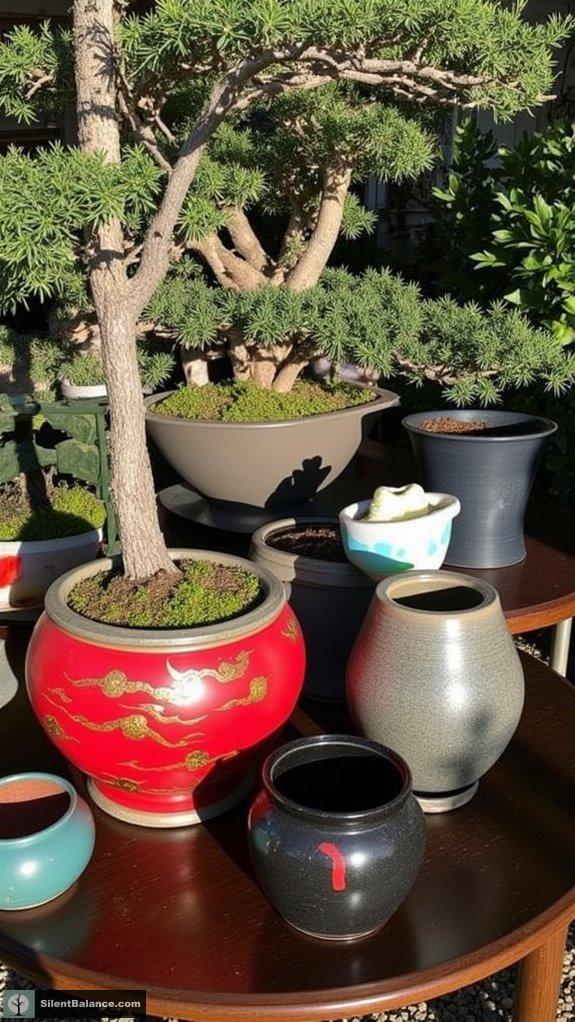
When it comes to bonsai pots, the world is full of surprises—each region puts its own spin on design.
Take a moment to appreciate the craftsmanship and cultural influences that shape these stunning containers:
- Chinese pots often feature detailed, symbolic motifs, showcasing their history.
- Japanese pots focus on simplicity, with an emphasis on harmony and balance.
- Korean styles highlight subtle elegance, using muted colors and smooth glazing techniques.
- Western influences blend traditional designs with modern aesthetics, creating unique interpretations.
- Southeast Asian designs bring vibrant colors and playful forms into the mix.
Whether you’re drawn to classic ceramic techniques or modern interpretations, understanding these regional differences helps you appreciate bonsai artistry even more.
What’s your favorite style?
The Role of Texture and Patterns in Design
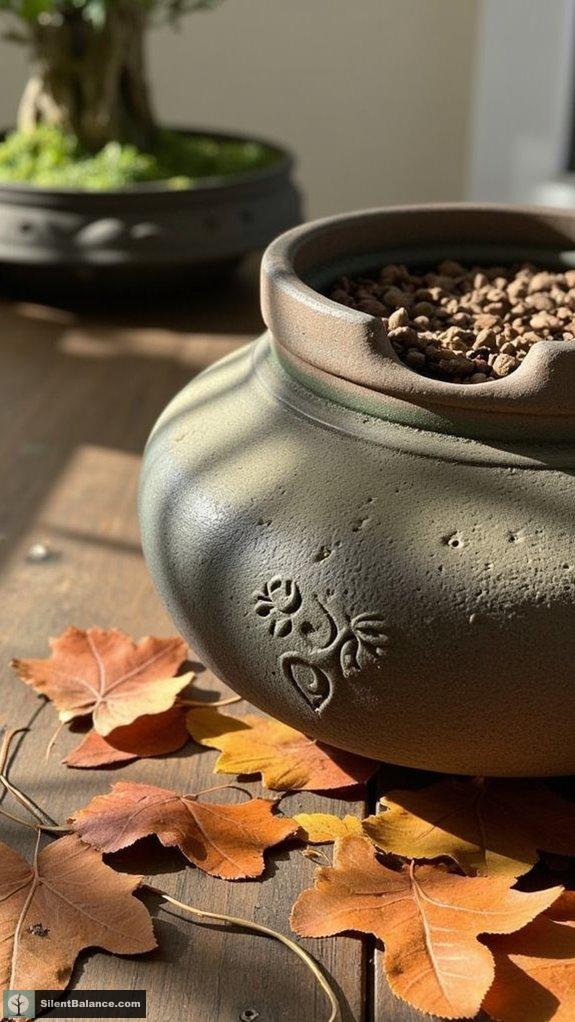
While diving into the world of bonsai pots, it’s hard not to notice how texture and patterns play crucial roles in their design.
Ever tried to choose a pot with the perfect texture? It’s an art! Texture techniques like etching or glazing add depth, creating an inviting sensory experience that draws us in. We craft our pots to communicate a story or evoke emotions.
Now, let’s talk pattern significance. The patterns can reflect nature or even cultural heritage, adding a dash of personality to your bonsai.
Think of the zing those complex designs bring!
Bonsai Tree Symbolism
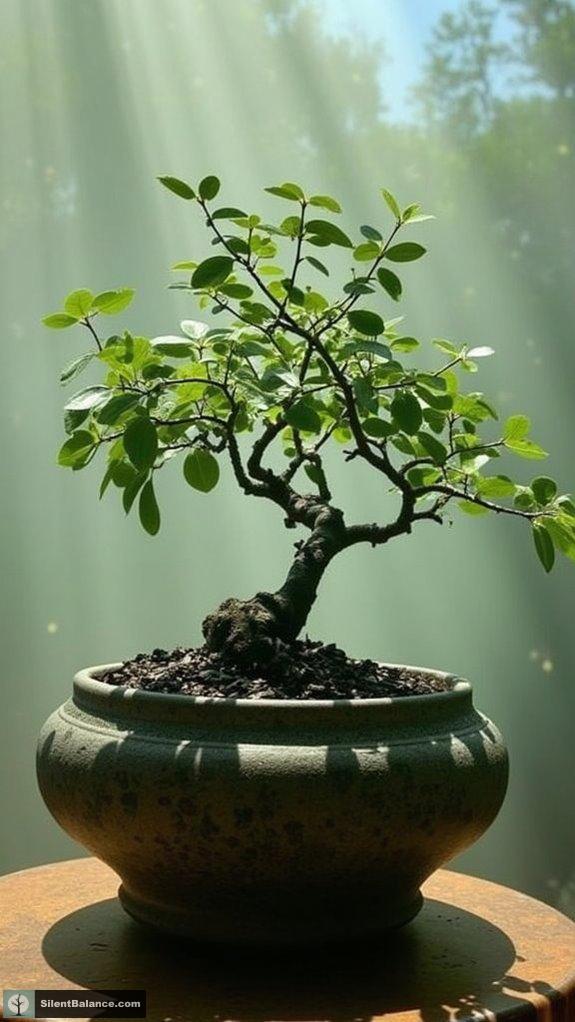
Bonsai isn’t just about the trees or their pots; it’s also rich with symbolism that speaks volumes about life and nature.
I’ve found that these miniature wonders tell stories of resilience, balance, and beauty, and here’s what they represent for many bonsai enthusiasts:
- Growth Symbolism: Each twist and turn in a bonsai reflects life’s journey.
- Harmony Representation: The way the tree interacts with its pot mirrors life’s delicate balance.
- Patience: Cultivating bonsai teaches us to embrace waiting.
- Strength: These tiny trees show how enduring roots can weather any storm.
- Connection: Every bonsai nurtures a bond with nature that brings peace.
Tree Symbolism
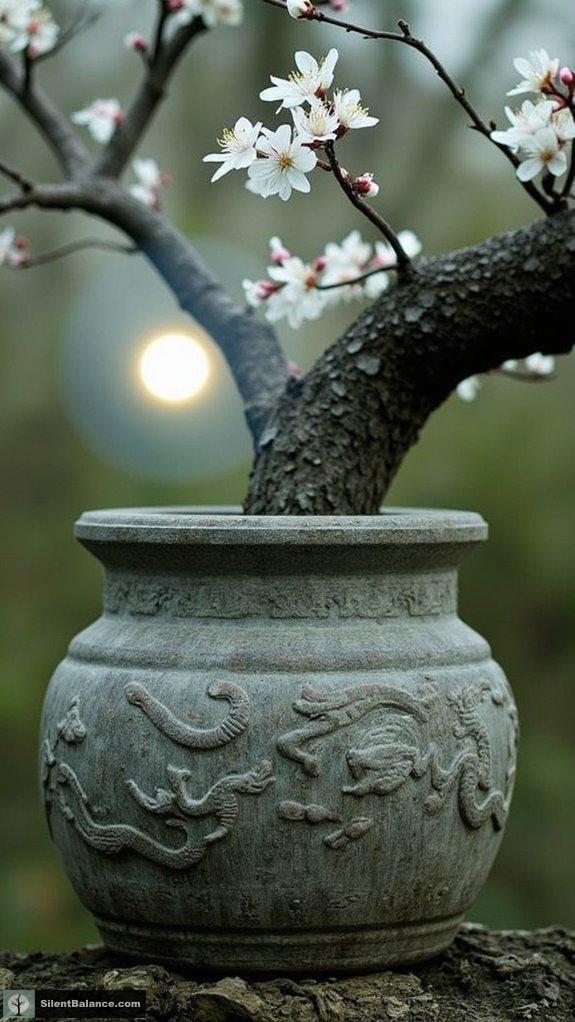
As you plunge into the world of bonsai, you quickly discover that tree symbolism is a vibrant tapestry woven from culture and nature.
Have you ever wondered about the deep-rooted significance behind tree meanings?
Have you ever explored the profound meanings that trees hold across cultures?
In bonsai culture, each species carries unique symbolic weight. For instance, the pine represents resilience and longevity, while cherry blossom signifies beauty and fleeting moments.
These cultural beliefs add layers of meaning to your bonsai journey.
When I tend to my trees, I reflect on these stories, allowing them to guide my care and style choices.
Embracing this symbolism not only enriches our connection with these miniature wonders, but it also empowers us to create a powerful, living expression of our ideals.
Isn’t that a remarkable way to cultivate control?
Questions and Answers
How Do I Choose the Right Pot for My Specific Bonsai Tree?
Choosing the right pot for your bonsai isn’t rocket science, but it can feel like maneuvering through a minefield.
First off, look at pot size; it should offer enough space for roots but not too much that it’s swimming in there.
As for pot shape, a low, wide pot works well for cascading styles, while upright trees call for taller pots.
Are There Any Modern Trends in Bonsai Pot Design?
Absolutely, there are exciting trends in bonsai pot design lately! I’ve noticed a real shift towards minimalist designs, emphasizing clean lines that let the bonsai shine.
Eco-friendly materials are also gaining traction. It’s great to see pots made from sustainable resources, right?
With the right pot, you not only showcase your tree but also make a statement.
Can I Use Non-Traditional Materials for Bonsai Pots?
Ever thought about shaking things up with your bonsai pots? You absolutely can use alternative materials!
Think wood, ceramic, or even recycled options—just make sure they hold up, as pot durability’s key.
I’ve seen some incredible creations with materials like concrete—who knew?
Just keep in mind, it’s about finding balance; your tree needs the right support and drainage.
How Do Bonsai Pots Affect Tree Growth and Health?
Bonsai pots are like the VIP lounge for our little trees. They dramatically influence pot drainage and soil aeration, both essential for strong growth.
Wanna keep your tree thriving? Choose a pot with drainage holes, that supports good airflow.
The right pot can prevent root rot, while also allowing for healthy moisture retention.
Ever heard of the term “root bound”? It’s a real party crasher in bonsai!
Keep that in check, and your tree will thank you!
What Maintenance Is Required for Traditional Bonsai Pots?
Ah, the noble art of pot maintenance—who knew pot cleaning could be so exhilarating?
First, scrub off any algae that thinks it can claim your pot as real estate. Seriously, it’s got to go!
Don’t forget pot drainage; it’s the lifeline for your tree!
Regularly checking those drainage holes means keeping your soil fresh and your roots happy.
A clean pot is a calm pot! Isn’t that what we all desire?
Summary
As we’ve explored, bonsai pots aren’t just vessels; they’re the canvas for a living sculpture. Just like a painter choosing the perfect frame, selecting a pot adds depth to your bonsai masterpiece. So, whether you’re drawn to earthy hues or complex patterns, recall that every choice matters. It’s all about harmonizing your tree’s spirit with the pot’s character. Ready to dig deeper into your bonsai journey? Grab your shears, and let’s create some magic together!

- Bonsai Placement Benefits for Room Harmony - November 8, 2025
- Why Use Air Layering to Propagate Bonsai Trees? - November 8, 2025
- 15 Stunning Acorn Wood Wall Art Ideas - November 8, 2025
