
The Art of Bonsai: A Living Connection to Nature
Bonsai design weaves a rich tapestry of culture, influenced by traditions from ancient China’s *penjing* to Japan’s refined artistry.
As I nurtured my first bonsai, a humble juniper, I realized each twist and turn in its branches reflected life’s journey.
In our blog, Silent Balance, we explore the symbolism of trees—how they embody growth, resilience, and harmony.
Every bonsai tells a story, a dance of nature captured in miniature form.
One crisp morning, I observed a friends’ bonsai during a chilly garden party. Its elegant lines reached toward the sun. I felt an instant connection.
That moment? Pure magic. I learned that bonsai isn’t just about shaping trees; it’s about connecting deeply with nature.
So, are you ready to uncover more styles that echo our world? Let’s embark on this adventure!
Quick Takeaways
- Bonsai originated from Chinese *penjing*, emphasizing symbolic miniature landscapes, later evolving into individual tree aesthetics in Japanese culture.
- Zen Buddhism influenced bonsai design by promoting concepts of wabi-sabi, highlighting beauty in imperfections and encouraging mindfulness in cultivation practices.
- Various bonsai styles, like Literati and Cascade, reflect specific cultural traditions and philosophical ideas, showcasing resilience and grace as their core themes.
- Regional practices have led to diverse techniques in bonsai artistry, enriching the aesthetic and cultural representations seen in different styles.
- Each bonsai tree style conveys deeper meanings, rooted in historical significance and cultural values that resonate with the artists’ personal experiences.
Historical Evolution of Bonsai From China to Japan
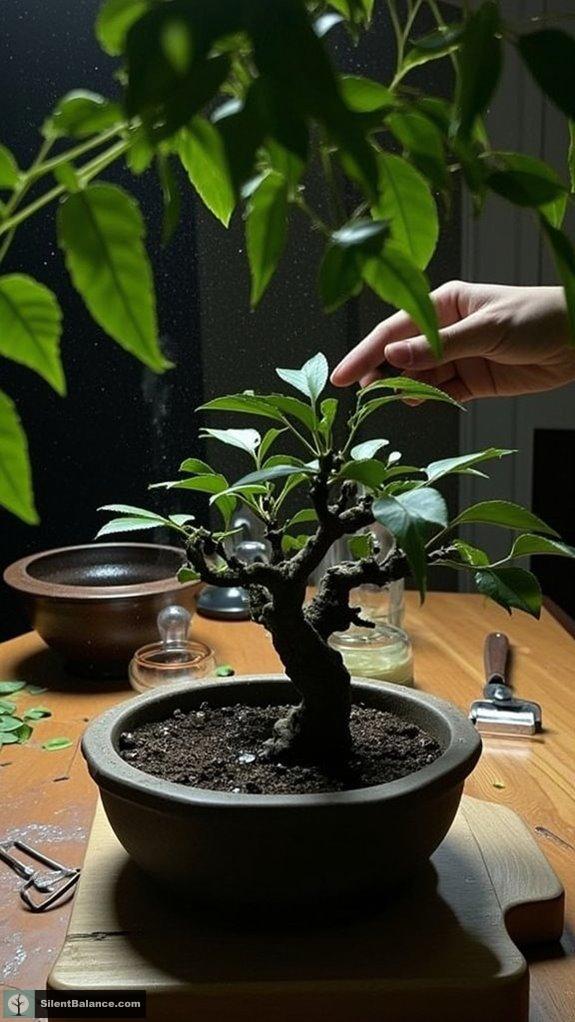
When you think of bonsai, do you picture serene little trees that evoke Zen calm, or do you conjure ancient terrain infused with mystical energy?
Bonsai’s journey kicks off in China around 210 B.C., where it was born as *penjing*, showcasing tiny settings teeming with symbolism and status.
Visualize gnarled trunks morphing into dragons, like nature’s art project!
Fast forward to Japan in the 12th century—thank you, Buddhist monks! Here, bonsai transformed into a sophisticated pursuit, focusing more on individual trees rather than whole settings.
With techniques like wabi-sabi, Japanese bonsai emphasized the beauty of imperfection, ultimately evolving into a symbol of prestige among Japanese aristocrats.
The Influence of Zen Buddhism on Bonsai Design
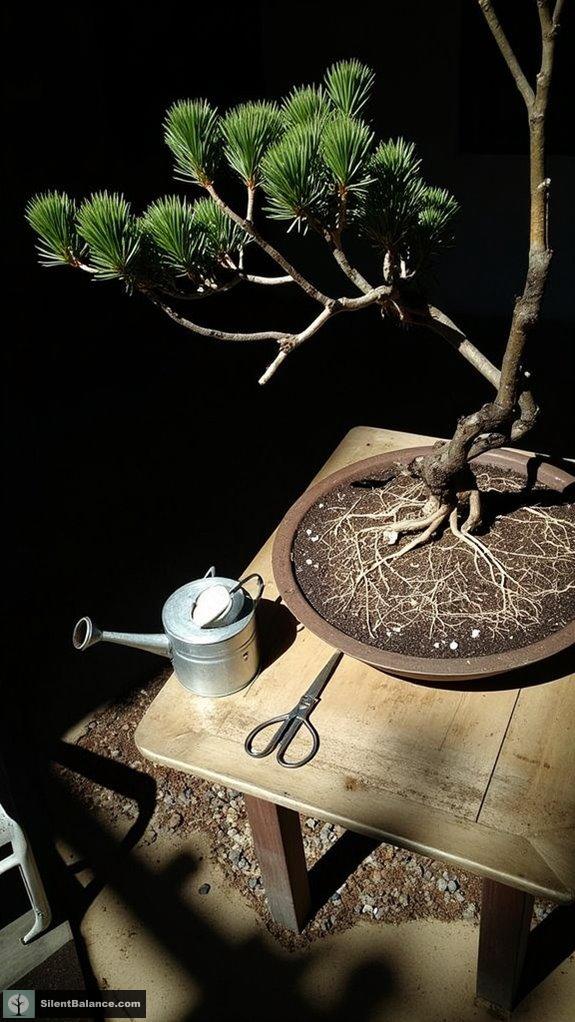
While exploring how Zen Buddhism shapes bonsai design, I can’t help but be struck by the serene and intentional beauty that emerges from this ancient practice.
Have you ever noticed how bonsai embodies the Zen principle of wabi-sabi? It celebrates imperfections, reminding us that life’s fleeting moments can be exquisite.
Bonsai encapsulates wabi-sabi, celebrating life’s fleeting imperfections and inviting us to find beauty in the transient.
Zen encourages patience and simplicity, urging us to cultivate trees without forcing rigid symmetry. Instead, we embrace asymmetry, creating flowing forms that resonate with natural, humble materials and natural harmony. This practice aligns with the concept of mindfulness through nature, where nurturing a bonsai allows us to connect deeply with our surroundings.
Bonsai isn’t merely an art but a “living meditation,” reflecting life’s constant changes.
Each tree, unique and never truly finished, invites us to appreciate the process over perfection.
Understanding the Literati (Bunjin) Style
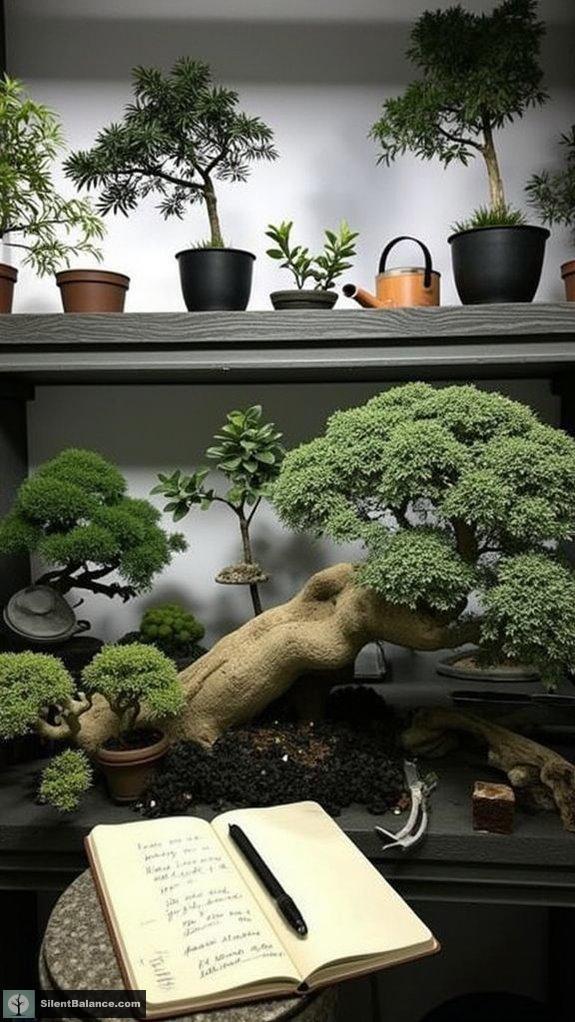
Zen principles breathe life and purpose into bonsai, encouraging personal expression and connection with nature. The Literati, or Bunjin, style stands out for its scholarly elegance and poetic touch.
Here’s what makes it truly unique:
- Minimalism: Literati bonsai exudes an understated beauty, showcasing slender trunks and airy foliage that whisper rather than shout.
- Dynamic Movement: With wavy trunks and sparse branches, I often find myself lost in the graceful dance of form and space.
- Cultural Legacy: Rooted in the artistic traditions of poets and scholars, it embraces simplicity as a means of deeper expression. This appeal to minimalist living encourages a more profound understanding of one’s relationship with the environment.
Exploring Japanese Nature-Inspired Bonsai Styles
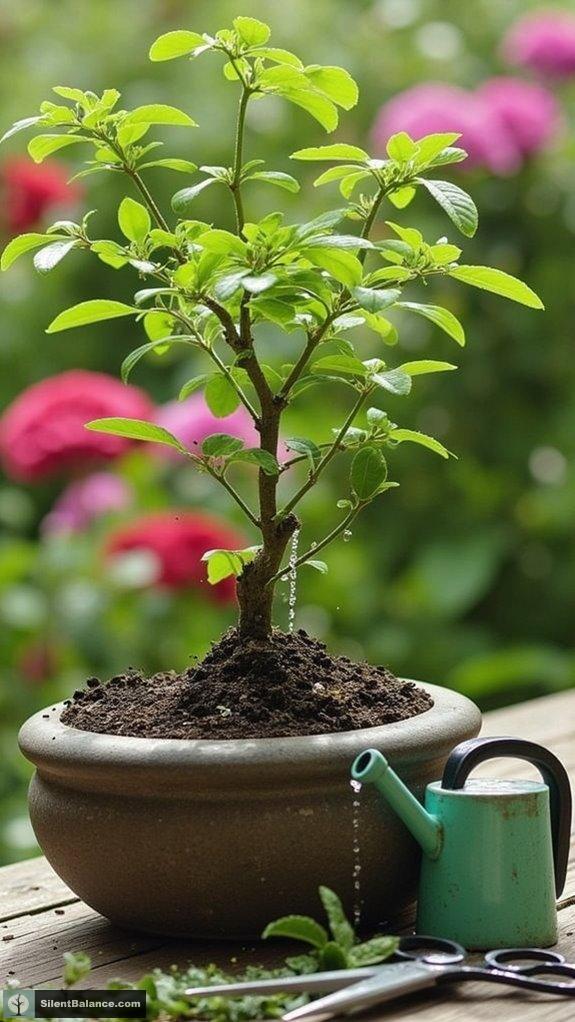
Diving into Japanese nature-inspired bonsai styles feels like stepping into a world where every twist, turn, and taper tells a story.
Take the Formal Upright Style, or Chokkan—it’s the straight shooter of bonsai, showcasing trees that shoot upward, embodying resilience against nature’s opponents.
The Formal Upright Style, Chokkan, stands tall, a testament to resilience, showcasing trees that soar against nature’s challenges.
Then, there’s the Informal Upright Style, or Moyogi. With its gentle “S” curves, it’s like the tree’s taking a graceful bow to life’s storms.
Ever heard of the Slanting Style, Shakan? It’s all about that wild, wind-swept look, embodying motion while keeping aesthetic balance.
And let’s not forget the dramatic Cascade Style, Kengai. It’s a visual delight, perfectly mimicking nature’s tug-of-war with gravity! The beauty of these styles lies in their natural harmony, which brings a sense of tranquility to the observer.
Which style speaks to you?
Symbolism in Different Bonsai Style Categories
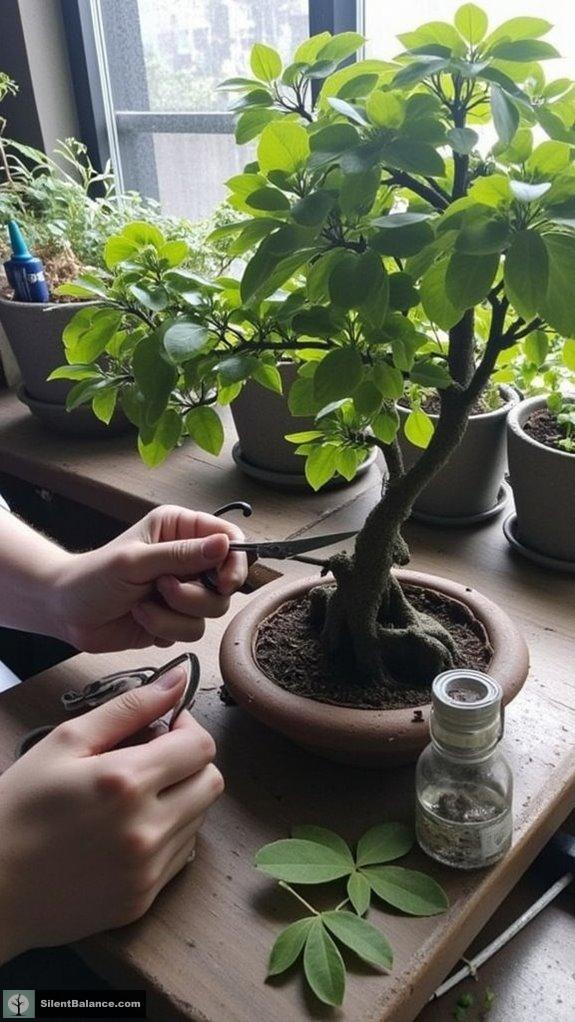
When it comes to bonsai, each design style is brimming with symbolism that goes beyond mere aesthetics and dives into the heart of life’s intricacies.
Have you ever stopped to think about what your chosen style says about you?
Here are three fascinating examples:
- Formal Upright Style (Chokan): This style symbolizes resilience, showcasing a robust trunk that stands strong against life’s storms.
- Cascade Style (Kengai): You’ll love how these trees express perseverance, audibly whispering tales of survival against gravity.
- Multi-Trunk Style (Kabudachi): Representing community and familial bonds, these trunks entwine beautifully, speaking volumes about connection amid diversity.
Provenance and Its Role in Cultural Heritage
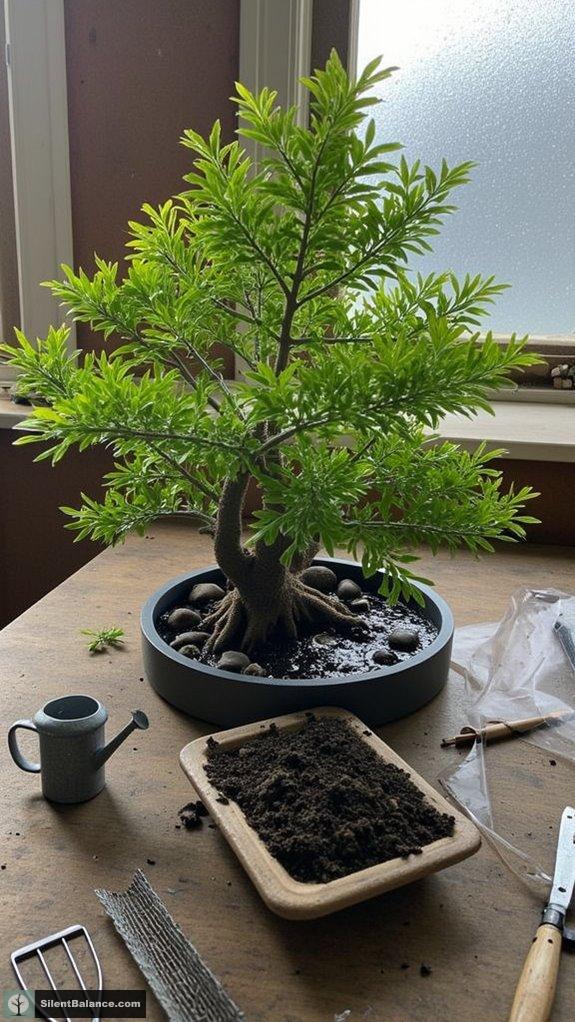
Provenance plays an essential role in the world of cultural heritage, where understanding the journey of an object can transform its value and meaning.
Ever wondered how a bonsai’s story enriches its presence? Here’s a glimpse:
| Aspect | Description | Emotional Connection |
|---|---|---|
| Origin | The roots of creation, where it all began. | Feeling the spirit of its maker. |
| Ownership History | Tracing hands that have cherished it. | Connecting with personal histories. |
| Cultural Significance | Impact on heritage and identity. | Embracing shared experiences. |
| Documentations | Evidence like exhibition records. | Honoring the journey and past narratives. |
| Restoration Potential | Possibilities for returning to original culture. | Cultivating ethical stewardship. |
As we explore these layers, we find a tapestry of meaning stitched into every bonsai adventure, don’t you think?
Cross-Cultural Adaptations in Modern Bonsai
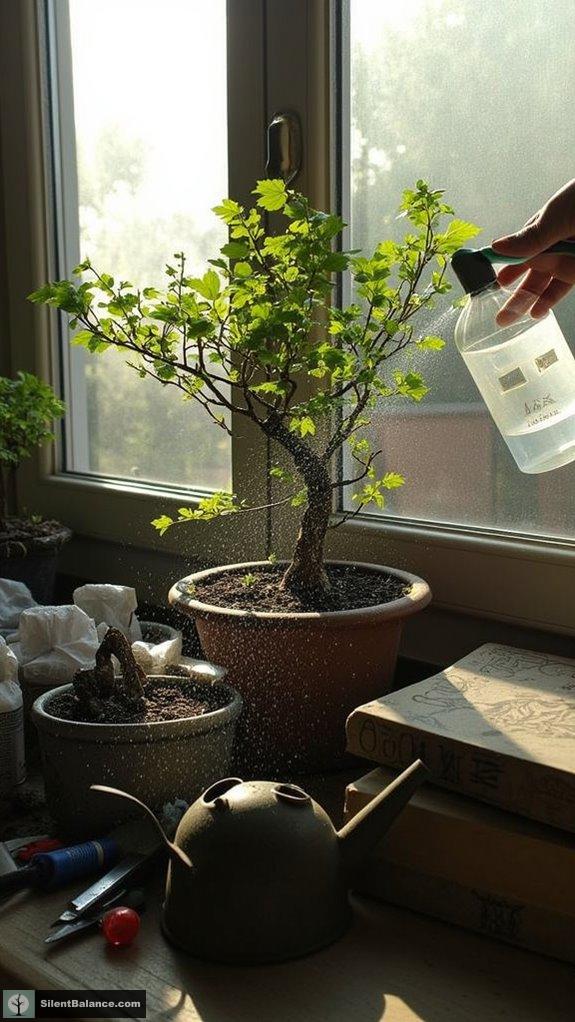
As we wander through the fascinating domain of bonsai, it’s clear that today’s adaptations are a colorful tapestry woven from various cultures.
Modern bonsai is all about pushing boundaries, blending techniques and aesthetics in exciting ways. Check this out:
- Fusion Techniques: Western artists combine traditional Japanese methods with local horticultural expertise, creating something entirely fresh.
- Multi-Element Designs: Inspired by Chinese Penjing, today’s bonsai includes rocks, waterways, and more, transforming individual tree displays into enchanting vistas.
- Innovative Pots: Who’d have thought mica pots, influenced by Korean designs, would elevate our displays? It’s a real game-changer!
Global Influence and Contemporary Bonsai Practices
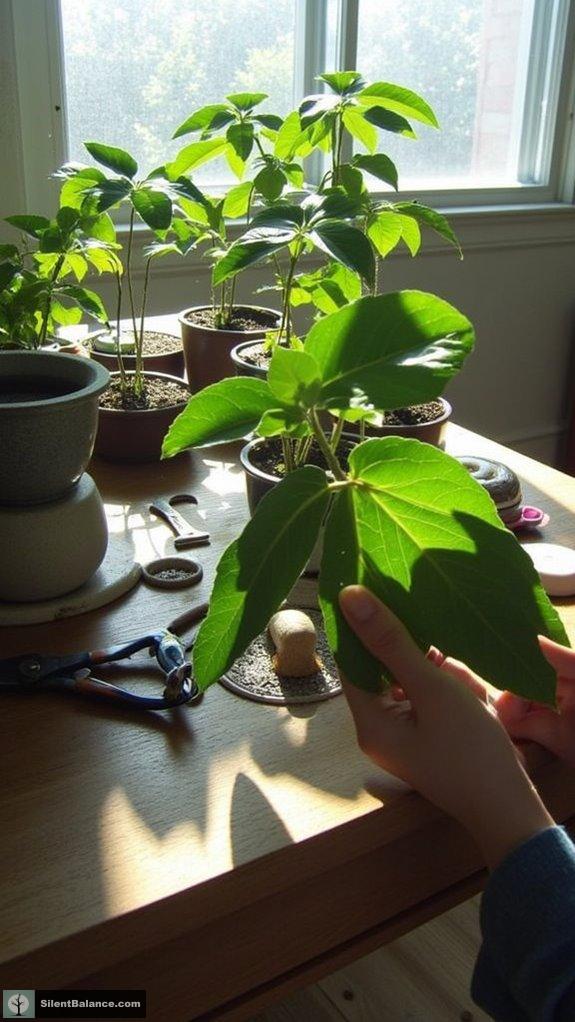
While bonsai might conjure images of serene Japanese gardens, it’s thrilling to see how this art form has transcended borders and morphed into a global phenomenon.
Did you know that bonsai first gained international attention in the late 19th century? Thanks to exhibitions and the curiosity of returning WWII soldiers, we now have over 300 global bonsai clubs showcasing diverse styles.
Artists worldwide are immersing local flora into their designs—think mangroves in the Philippines or pitanga trees in Brazil!
With precision tools and social media fueling cultivation techniques, it feels like a bonsai renaissance.
Who knew digital communities could democratize such a storied craft? So, are you ready to embrace this lively fusion of tradition and innovation? Let’s grow together!
Watering Frequency for Bonsais
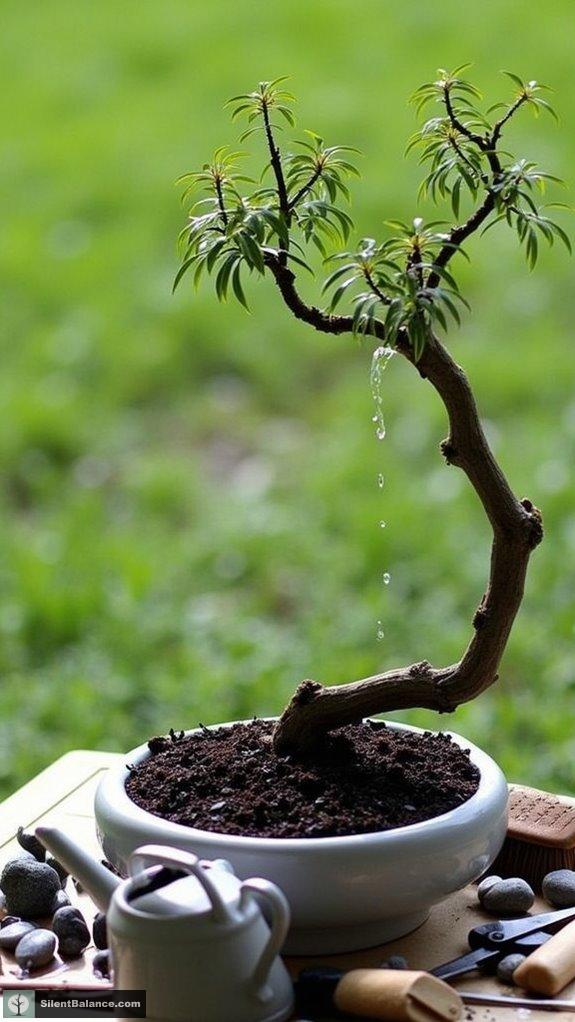
Getting the watering frequency just right for bonsais can feel a bit like trying to dance on a tightrope—too much or too little can spell disaster for your little green friends.
To keep them thriving, here are some key considerations:
To nurture your bonsai, pay attention to soil moisture and environmental factors for optimal care.
- Soil Moisture: Always check the top 1 cm of soil; if it feels dry, it’s time for a drink.
- Environmental Factors: Warmer weather means more sips, while seasonal changes can shift your schedule.
- Tree Characteristics: Smaller pots? They dry out quicker! Know your species and adjust accordingly.
Avoid the rigid schedule trap; let your bonsai guide you.
Just think of it as a dance—a little intuition goes a long way!
Significance of Tree Meanings
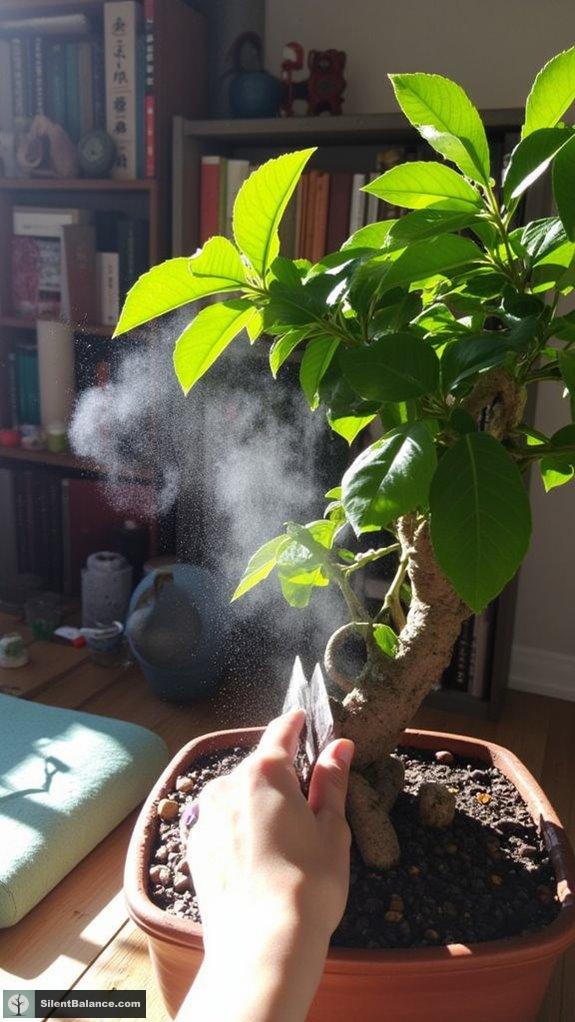
Nurturing a bonsai goes beyond the basics of watering and pruning—each tiny tree packs a punch when it comes to symbolism and meaning.
Did you know bonsai trees symbolize harmony, balance, and inner peace? Picture your beautiful little tree as a meditation tool, promoting a calm vibe in your space.
Different species bring unique meanings, like pine for longevity and cherry blossoms for the fleeting beauty of life. Picking your bonsai isn’t just horticulture; it’s like choosing your life mantra.
And let’s face it, who doesn’t need a daily reminder of patience and diligence? Every trim represents growth and respect for nature’s rhythm.
Questions and Answers
What Are the Best Tree Species for Beginners in Bonsai?
When diving into bonsai, I’d recommend starting with resilient species like Ficus or the charming Fukien Tea.
They thrive even if I forget to water them—trust me, I’ve had my moments!
Consider the Chinese Elm, too, for outdoor flair.
These trees are patient companions, allowing us to explore our creativity without total chaos.
Ready to shape your first masterpiece? Let’s get our hands dirty and bring these beauties to life!
How Do I Prune My Bonsai Tree Correctly?
Pruning your bonsai tree is like giving it a stylish haircut. You don’t want to go overboard, right?
Start by snipping away dead branches, and then focus on cutting back leaves to boost growth.
Remember, no more than a third of foliage at once—less stress is key!
Use concave cutters for those gnarly branches, and don’t forget to seal wounds to keep infections at bay.
Ready to shape your masterpiece?
What Type of Soil Is Ideal for Bonsai Trees?
Choosing the right soil for bonsai trees is vital, isn’t it?
I love using a mix of akadama, pumice, and lava rock, adjusting it based on the species.
A splash of lava rock enhances drainage, while akadama retains moisture—perfect for those thirsty roots!
Remember, a well-aerated bonsai happy hour is essential for root health.
When Is the Best Time to Repot a Bonsai?
Ah, the art of bonsai, a dance of timing and care! Ideally, I repot in early spring, right as my little tree wakes from slumber and starts to stretch.
Look for those tiny buds; they’re nature’s signal to get my hands dirty. Plus, each species has its quirks, so I’ve learned to watch closely.
What about you? When do you feel that urge to give your bonsai a fresh start? It’s a perfect time for rejuvenation!
How Can I Prevent Pests on My Bonsai Tree?
Preventing pests on your bonsai is all about smart strategies, my friend!
First, keep air flowing by spacing out those beauties, because humidity’s a pest magnet.
Don’t forget to give ’em a good wash with soapy water; it’s like a spa day for your trees!
Regular checks for sneaky bugs? Absolutely essential!
Plus, friendly ladybugs are a bonsai’s best mate against pests.
References
- https://www.bonsaiempire.com/origin/bonsai-history
- https://cincinnatibonsai.org/bonsai-tree-style-guide
- https://en.wikipedia.org/wiki/Bonsai_styles
- https://mbgna.umich.edu/styles-bonsai
- https://www.bonsainut.com/threads/the-legacy-and-culture-of-bonsai-provenance-exploring-the-roots-and-significance-of-iconic-trees.61251/
- https://thunderstruckbonsai.com/a-little-bonsai-history-for-beginners/
- https://mymodernmet.com/bonsai-tree-history/
- https://www.bonsaiempire.com/origin/
- https://deeperjapan.com/the-history-of-bonsai
- https://www.housebeautiful.com/design-inspiration/a36355034/japanese-zen-design/

- Bonsai Placement Benefits for Room Harmony - November 8, 2025
- Why Use Air Layering to Propagate Bonsai Trees? - November 8, 2025
- 15 Stunning Acorn Wood Wall Art Ideas - November 8, 2025
