

Can you really grow a bay laurel tree that thrives indoors *and* inspires your kitchen?
Absolutely—choose a hardy variety, use a large pot with drainage, well-draining soil, and water sparingly. It’s low-maintenance, aromatic, and doubles as living décor.
—
I once nurtured a bay laurel on my sunlit balcony, its leaves perfuming morning coffees and soups alike. It survived my “forgetful waterer” phase—because yes, neglect sometimes helps. At *Silent Balance*, we believe in the symbolism of trees not as clichés, but as quiet mentors. That bay tree? Still growing. Still grounding me.
—
A Bay Leaf, A Memory: When Nature Anchors You
My first bay laurel came after a chaotic move—boxes everywhere, zero calm. I potted it on instinct. Months later, clipping a leaf for risotto, I paused: this small thing had outlasted my stress. It wasn’t just herb gardening. It was quiet resilience. Just like the symbolism of trees teaches—growth doesn’t always shout. Sometimes, it seasons your soup.
Quick Takeaways
- Choose resilient bay laurel varieties suited for your space and desired symbolism, like victory or renewal.
- Plant in well-draining soil and use large, unglazed pots with proper drainage for healthy growth.
- Provide full sun with afternoon shade, water deeply every 2-3 weeks in summer, and reduce watering during dormancy.
- Prune regularly to shape the tree and remove unwanted branches, promoting airflow and vigor.
- Incorporate natural markers and symbolic elements to enhance decor and reflect growth, resilience, and achievement.
Choosing the Right Bay Laurel Varieties for Indoor Cultivation
Choosing the right bay laurel variety for indoor cultivation isn’t just about picking the prettiest or most popular—it’s about finding a tree that fits your vibe and space.
Select the bay laurel variety that matches your style and space, for a meaningful and thriving indoor herb.
You want aromatic leaves that pack a punch, perfect for growing indoors without demanding too much fuss.
Do you prefer a compact, slow-growing shrub or a miniature tree with striking bark and lush foliage? Think about symbolism too—bay laurel represents victory, renewal, and strength.
Adding a symbolic element like a small sprig of bay in your decor makes your space meaningful.
Want a fragrant, resilient companion that doubles as culinary goodness? Pick the variety that speaks to your heart!
Planting and Potting Your Bay Laurel Tree Properly
Getting your bay laurel rooted in its new home—whether in a pot or the garden—sets the stage for thriving growth and aromatic rewards. To do this right, choose soil with excellent drainage, preventing root rot and pest issues that can sneak in easily. Incorporating smart watering techniques can further ensure the soil stays properly moist without becoming waterlogged.
Do you want your tree to become a symbol of strength and renewal? Proper planting helps it develop resilience and beauty. Use large, unglazed pots with drainage holes, and get creative by adding decorative shards or pebbles. This not only keeps pests away but also nurtures harmonious growth. Keep in mind, a well-planted bay laurel is more than a culinary tool—it’s a living emblem of nature’s perpetual cycle. Supporting healthy growth involves understanding the importance of soil drainage, which plays a crucial role in the tree’s overall health.
Caring for Your Bay Laurel: Water, Light, and Climate Tips
Caring for your bay laurel isn’t just about watering and lighting—it’s about creating a thriving microclimate that lets this aromatic superstar truly shine. Think of it as fine-tuning its tropical vibe with proper watering—deep soakings every 2-3 weeks in summer, less during dormancy. Sunlight is a must: full sun with a touch of afternoon shade keeps leaves lush. Keep pest management in check; a healthy plant resists invaders naturally. When to harvest? It’s best during active growth when flavors are at their peak. Plus, add some symbolic charm: bay branches symbolize strength and renewal—perfect for creating a meaningful, flavorful decor statement! For an extra touch, understanding the selecting petrified wood for ritual foundations can add a mystical element to your garden space. Incorporating eco-friendly materials can enhance your garden’s sustainability and harmony with nature.
Shaping and Pruning Your Bay Laurel for Healthy Growth
Pruning your bay laurel isn’t just about trimming—it’s an art that shapes its form and promotes growth maintenance. Using smart pruning techniques, you’ll encourage vigorous, bushier growth and keep the tree healthy.
Want a sleek, single-stem look or a dense, ornamental hedge? Regularly remove root shoots and unwanted branches to control size and foster better airflow.
Think of your bay laurel as a living sculpture, symbolizing strength and renewal—perfect for elevating your space. Why settle for a wild bush when you can craft a personal piece of nature’s artistry?
Embrace pruning as a ritual of growth, beauty, and personal expression. Sustainable lifestyle principles can also guide how you care for and cultivate your bay laurel to ensure it thrives naturally.
Using Your Bay Laurel in the Kitchen and Creating a Living Herb Display
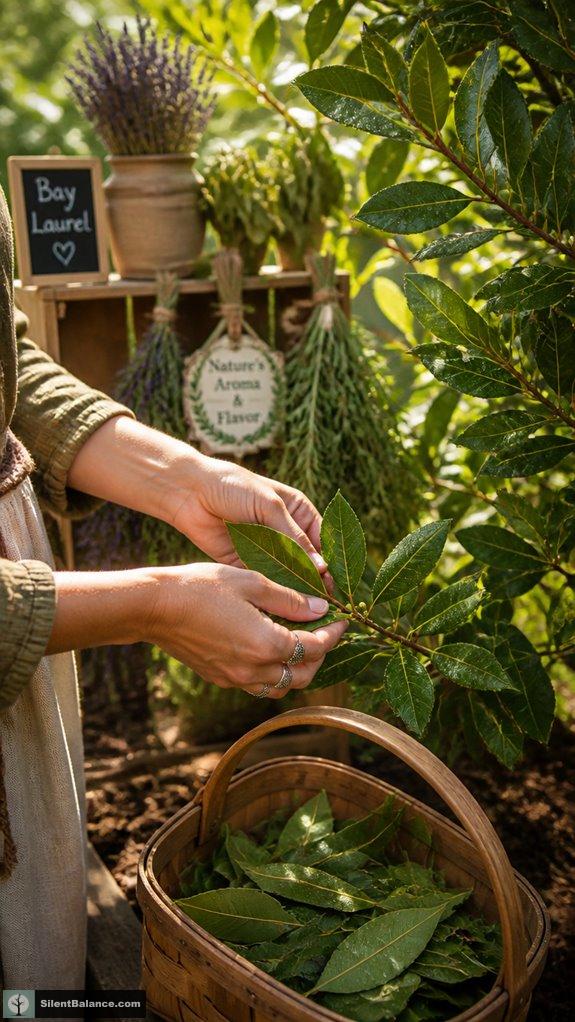
Envision slicing into a vibrant, fragrant bundle of bay leaves pulled fresh from your garden—does it get any more satisfying? You can elevate your cooking with bay laurel recipes, revealing aromatic benefits that bring depth to soups, stews, and sauces. Use whole leaves to infuse flavor or crumble for garnishing.
Create a living herb display that dazzles visually and smells divine.
- Incorporate sprigs into potpourri or wreaths for natural decor
- Hang dried leaves for rustic charm
- Use in culinary crafts like herb-infused oils
- Symbolize growth and renewal with rooted branches
- To enhance your display, consider mimicking forest floor light patterns at home to create a natural, dappled light environment that mimics outdoor settings.
Why not turn your garden bounty into flavorful artistry and meaningful decor?
Troubleshooting Common Problems With Indoor Bay Laurels
Indoor bay laurels can be charming, but they’re not immune to frustrations. If leaves yellow or drop, it might be pest problems like mealybugs or scale—time for pest management. Check under leaves, and use eco-friendly neem oil or insecticidal soap.
Poor soil health causes sluggish growth—enhance your soil with compost or organic amendments. Overwatering also stresses the tree, so let the soil dry between deep waters.
Proper pest control and soil care boost vigor and resilience. Haven’t you noticed how trees symbolize growth, strength, and protection? Use these symbols in your decor, and give your bay laurel the care it needs to thrive indoors, naturally. Additionally, famous palm trees in Mulholland Drive demonstrate how iconic trees can add character and ambiance to your space.
Tree Symbolism
Did you know that a simple bay laurel tree can hold powerful symbolic meaning? Throughout history, it’s been a symbol of victory, achievement, and protection. Its spiritual significance goes even deeper—think renewal, strength, and resilience. When you incorporate bay laurel into your decor, you’re not just adding greenery; you’re infusing your space with ancient wisdom.
A bay laurel tree symbolizes victory, renewal, strength, and resilience—bring ancient wisdom into your space with its timeless presence.
- Recognize the evergreen as a symbol of eternal life.
- Use bark and branches to evoke growth and renewal.
- Decorate with pinecones or twigs for strength.
This connection to life and continuity is echoed in the Tree of Life symbolism, which emphasizes interconnectedness and growth.
– Integrate bay leaves to honor achievement and protection.
To deepen your understanding, consider how the evergreen’s symbolism of life, growth, and fertility enhances the meaning of bay laurel in your space. Are you ready to layer your space with meaningful natural elements?
Custom Organic Herb Markers
When it comes to sprucing up your herb garden or kitchen space, custom organic herb markers are the perfect way to add a splash of personality and meaning. They make your herb harvest more meaningful and elevate garden design, turning practical into art.
Why settle for plain labels when you can craft markers with natural materials like bark, twigs, or driftwood? These elements symbolize growth, resilience, and renewal—perfect for celebrating your bay laurel’s journey.
Plus, personalized markers help you keep track of your culinary delights. Want your garden to reflect your style and values? Using symbolic, handcrafted markers adds depth and charm to your green haven.
Weather Patterns Influencing Growth
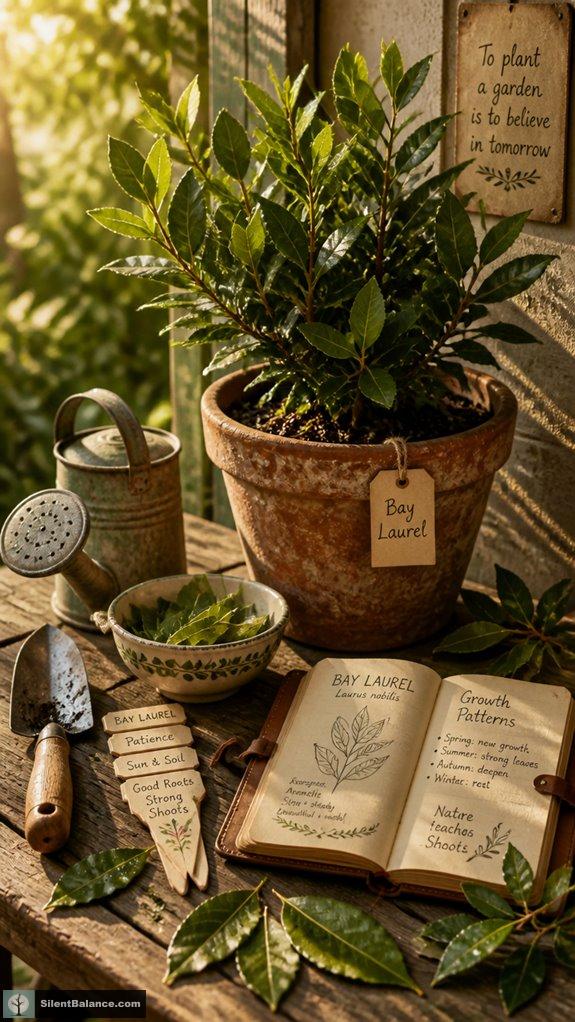
Weather patterns are the unwritten directors behind your bay laurel’s growth story. Seasonal temperature fluctuations and regional climate adaptability are key players. You’ll want to watch for:
Weather influences your bay laurel’s growth, from temperature swings to climate shifts—guiding its health and flavor.
- Frost threats in cooler microclimates
- Sudden heatwaves that stress leaves
- Humidity spikes encouraging pests
- Drought periods impacting growth
Are you noting that your tree’s health mirrors the natural rhythm around it? These weather cycles influence everything from leaf flavor to the tree’s size. Respecting these patterns guarantees lush, flavorful branches. Additionally, paying attention to regional climate adaptability helps predict how well your bay laurel will thrive in varying conditions. Monitoring weather patterns with satellite apps can provide valuable insights into shifts that might affect your tree’s health.
Think of weather as your silent partner—helping create a vibrant symbol of growth, strength, and renewal in your home decor. Plant rooted in understanding, you’ll master this green art!
FAQ
How Often Should I Prune My Bay Laurel for Optimal Leaf Production?
You should prune your bay laurel regularly, about every 6-8 weeks during active growth, to guarantee ideal leaf production. Routine pruning promotes bushiness, controls size, and guarantees a steady harvest of aromatic leaves.
Can Bay Laurel Grow Successfully in Low-Light Indoor Environments?
Think of indoor lighting as a guiding star for your bay laurel’s success; low-light conditions hinder growth, posing challenges. To master it, supplement with grow lights, mimicking sunlight, and nurture patience for thriving, flavorful leaves indoors.
What Are the Best Ways to Prevent Pests on Bay Laurel Trees?
You prevent pests on bay laurel trees by choosing pest-resistant varieties and applying natural pest deterrents like neem oil or insecticidal soap regularly. Maintain healthy growth and monitor for early signs to guarantee mastery in pest management.
How Do I Overwinter My Bay Laurel in Colder Climates?
To overwinter your bay laurel, provide winter protection through frost tolerance measures like insulating roots with mulch, wrapping the plant, and moving potted trees indoors before hard frosts. Guarantee warm, sunny spots for maximum growth.
Is It Safe to Use Bay Laurel Leaves for Culinary Purposes Year-Round?
Yes, you can use bay laurel leaves year-round for culinary purposes, leveraging their medicinal uses and aromatherapy benefits. Regular harvesting encourages growth and guarantees fresh, potent leaves that elevate dishes while providing soothing aromas and potential health benefits.
Summary
Now that you know how to nurture your bay laurel into a lush, fragrant crown, envision the stories it could tell—like Sarah’s living herb wall that became her Zen retreat. Wouldn’t it be great to turn your plant into a symbol of resilience and growth, echoing your own journey? Picking a bay laurel isn’t just about culinary flair; it’s about cultivating a living emblem of wisdom in your modern, biophilic space. Ready to grow your own story?
References
- https://veggiegardeningtips.com/bay-laurel-plants/
- https://ucanr.edu/site/uc-master-gardeners-santa-clara-county/bay-laurel
- https://www.gardenary.com/blog/how-to-grow-bay-laurel-at-home
- https://www.easytogrowbulbs.com/pages/bay-laurel-planting-guide
- https://www.youtube.com/watch?v=OLN503GEDno
- https://www.gardeningknowhow.com/edible/herbs/bay/sweet-bay-leaf-tree.htm
- https://www.fast-growing-trees.com/blogs/plant-care-guides/bay-laurel-planting-care

- 11 Best Luxury Sandalwood Candles for 2026 - June 19, 2026
- 11 Best Woven Wicker Gift Baskets for 2026 - June 19, 2026
- 11 Best High Powered Binoculars for 2026 - June 19, 2026
