
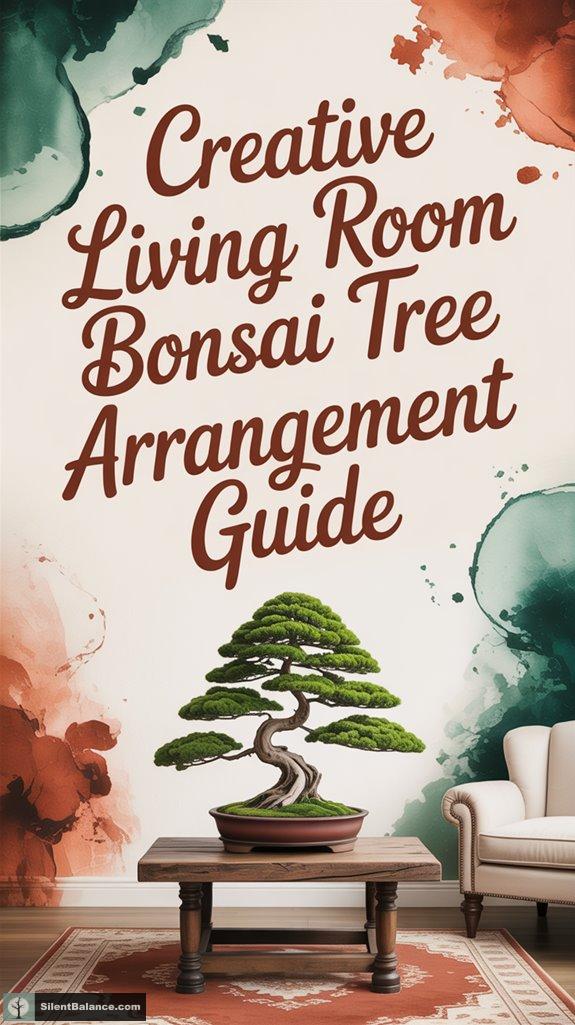
Looking to jazz up your living room with a bonsai? Start by placing it in a cozy spot where it can bask in that glorious sunlight—ideally, a south-facing window is your go-to! I love how a slanting style bonsai can add character, especially surrounded by natural elements like pebbles for extra flair. Just make sure to keep it slightly dry with regular misting. Intrigued about the perfect styles and placements? There’s so much more to explore!
Quick Takeaways
- Choose a south-facing window for optimal sunlight, ensuring your bonsai receives up to 18 hours of light, especially in winter.
- Integrate your bonsai with organic materials and colorful accessories to enhance the aesthetic appeal in your living room.
- Arrange bonsai with natural elements like pebbles or moss to create an inviting mini scene that complements your decor.
- Select pots that match or contrast with your living room’s color scheme and textures for a stylish display.
- Consider the overall room style: use Zen vibes with sand gardens or a minimalist look with a simple black pot for the bonsai.
Optimal Bonsai Placement for Sunlight and Growth
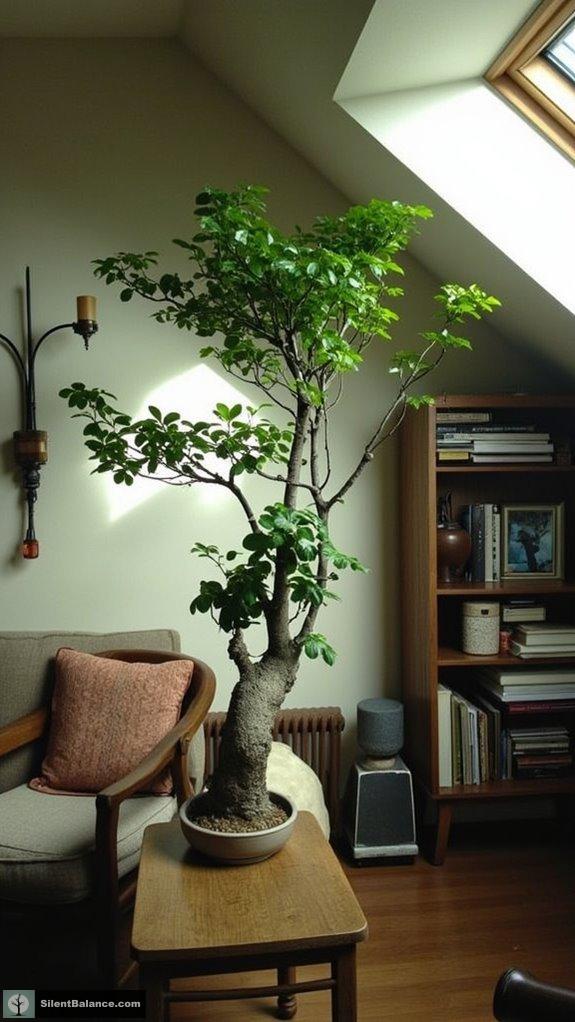
When it comes to bonsai, the right placement for sunlight is absolutely essential for your little leafy friend to thrive. Ever tried nurturing a Dwarf Jade indoors? It craves up to 18 hours of light, especially on those dreary winter days! Keeping your bonsai’s light requirements in mind, light intensity can vary between species and seasons.
Position your bonsai near south-facing windows for a sunbath that’ll make it grow like a champion. Alternate placements in east or west-facing windows are decent too, just don’t forget—light orientation matters! The majority of bonsai species require direct sunlight to flourish and experience optimal growth.
Position your bonsai by south-facing windows for optimal growth, while east or west options can work too—light orientation is key!
To keep things balanced, practice bonsai rotation—turn it regularly for even light distribution. This helps avoid those awkward, lopsided growths.
And hey, don’t let harsh midday rays scorch those precious leaves. Play it smart; filtered or bright indirect light keeps your bonsai happy and healthy!
Aesthetic Considerations for Modern Living Spaces
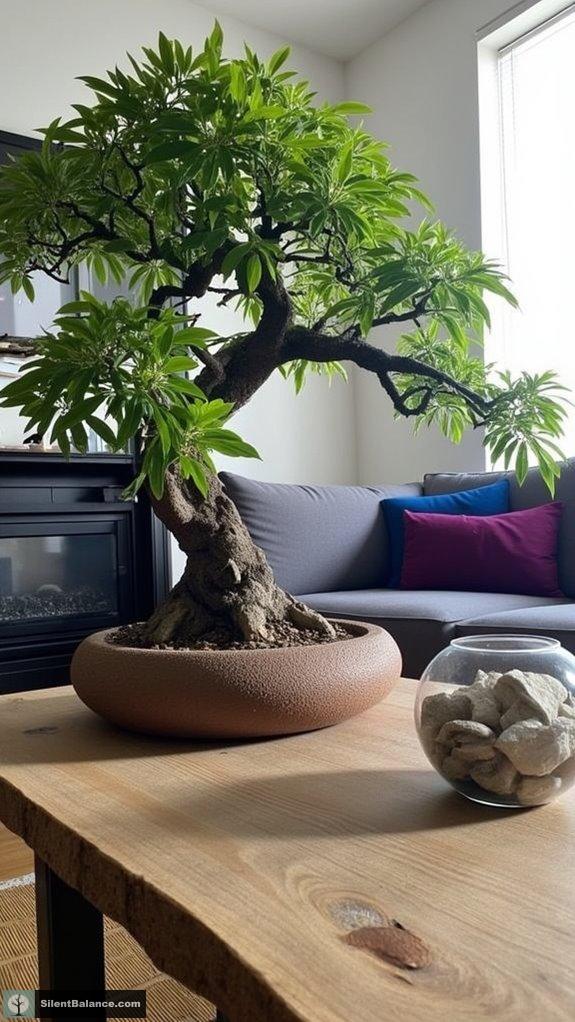
How do you make a bonsai pop in your living space while keeping harmony with modern aesthetics?
Embrace those aesthetic trends that celebrate organic materials, like reclaimed wood or bamboo, and your bonsai will thrive! Picture deep green leaves peeking from a textured pot, enhancing that cozy vibe. Did you know that bonsai arrangements can soften harsh architectural lines? Placing your bonsai near seating areas invites interaction, creating a “come hang out” atmosphere. In 2025, incorporating eco-friendly materials as part of your bonsai display can elevate the overall aesthetic. Using natural plant varieties not only adds visual interest but also complements the serene vibe that bonsai can bring. Why not experiment with colorful accessories? Jewel tones, like rich purples, contrast beautifully with vibrant foliage. Recall, a bent branch can mimic the curves of your furniture, unifying your space into a harmonious living masterpiece.
Creative Arrangements for Various Room Styles
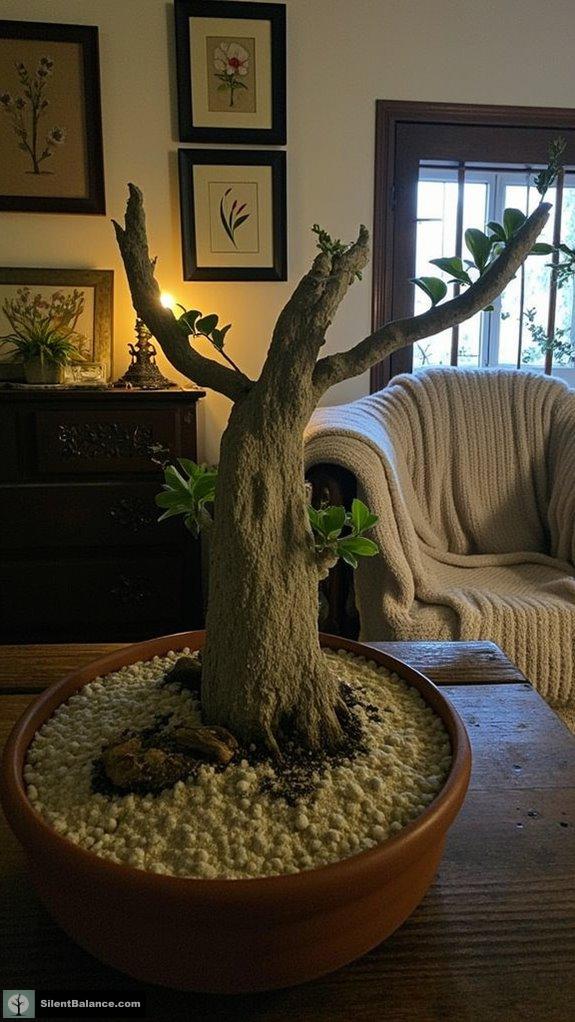
Wondering how to weave a bonsai masterpiece into your room’s unique vibe?
Let’s talk about bonsai aesthetics and cultural influences, shall we?
For a Zen retreat, place a Lavender Star surrounded by miniature sand gardens, creating tranquility. The addition of bonsai can enhance your space by symbolizing inner peace and harmony.
In a rustic space, opt for a rugged Cork Bark Jade on a sturdy wooden table—it’s like bringing nature inside!
For minimalist lovers, a sleek Aralia in a black pot can be the understated hero on a simple shelf.
If you’re feeling eclectic, why not showcase a slanting style bonsai atop your coffee table, paired with funky art?
Integrating Bonsai With Decorative Elements
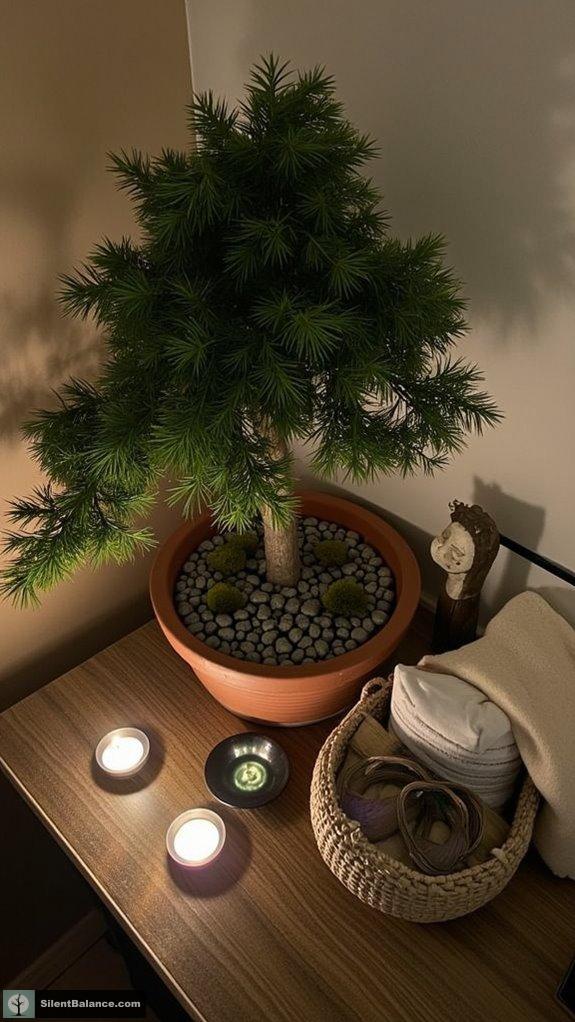
Integrating bonsai with decorative elements can truly elevate your space, bleeding charm into every corner.
I love how a thoughtfully arranged bonsai centerpiece can turn mundane moments into peaceful experiences.
Here’s what I typically do:
Consider arranging your bonsai with natural elements and thematic decor to create a serene and inviting atmosphere.
- Surround your bonsai with pebbles or moss to create a natural mini scene.
- Pair it with a small water feature, because who doesn’t love a little tranquility, right?
- Position it next to a Buddha statue to amplify those serene vibes and thematic elements.
- Use stylish pots that mesh with your decor—choosing textures or colors adds stunning decorative accents.
You’ll be amazed at how these unique combinations transform your bonsai into a living piece of art, inviting serenity right into your home!
Bonsai Care Techniques for Thriving Indoor Displays
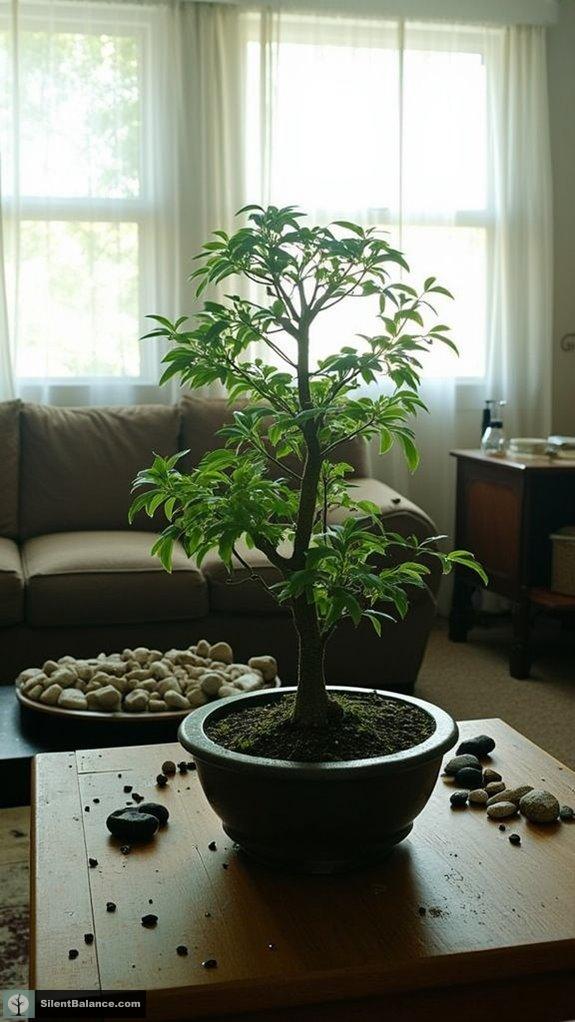
Taking care of a bonsai isn’t just a task; it’s like nurturing a miniature friend that thrives on your love and attention.
For ideal soil maintenance, I find that keeping it slightly dry, watering every 2-3 days (or whenever it feels cozy dry) works wonders.
And don’t overlook those humidity levels! Daily misting with a fine mister keeps the leaves luscious and happy.
You can even set up a humidity tray to create a tiny rainforest around your bonsai—just keep in mind, no soggy roots!
Stuck with low sunlight? Bright indirect light can save the day, but skip drafts that suck the moisture out.
Your bonsai deserves the best; give it a home full of love, and it’ll thrive!
Seasonal Considerations and Outdoor Placement Tips
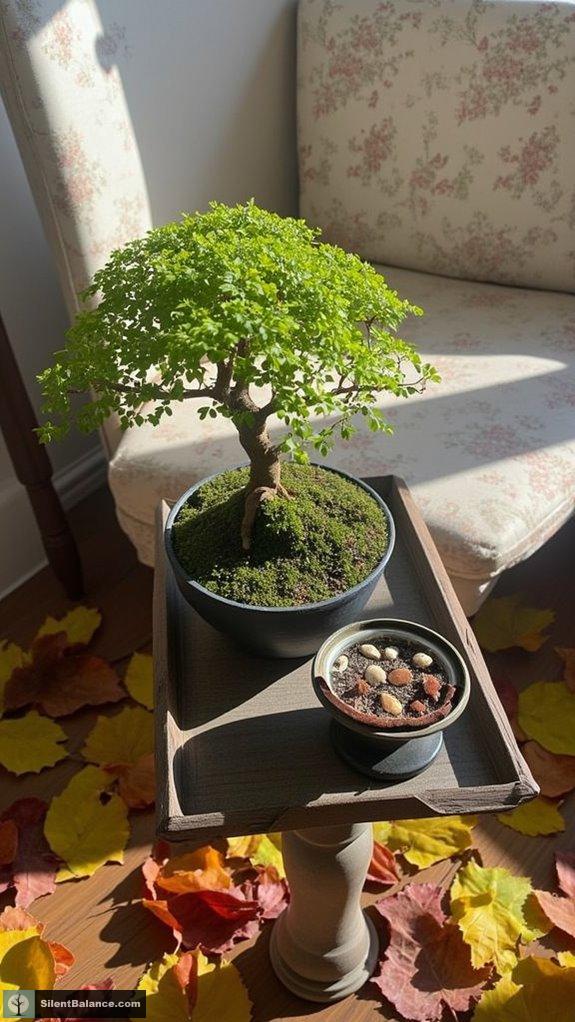
As you embrace the delightful journey of bonsai, understanding seasonal considerations and outdoor placement tips is key to ensuring your miniature tree friend thrives all year round.
Here are some vital outdoor considerations to keep in mind as the seasons change:
- Bright spots are essential: Your bonsai loves morning sun but needs afternoon shade to avoid burning.
- Humidity matters: Keep a humidity tray handy, especially during those dry summer months.
- Seasonal shifts require adjustments: Bring tropical species indoors when temperatures dip below 55°F (13°C).
- Protect from frost: Create a cozy nook with mulch or cold frames for sensitive varieties during winter chills.
Tree Symbolism
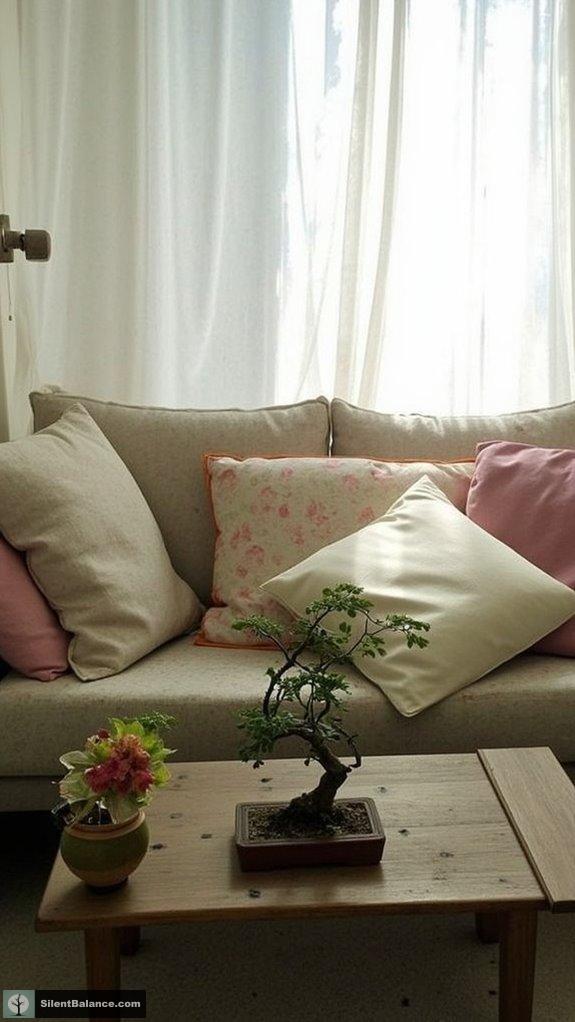
After enjoying the seasonal choreography of positioning your bonsai just right, it’s time to explore something equally fascinating: tree symbolism.
Did you know that different tree varieties, like the elegant Azalea, symbolize feminine beauty and abundance? It’s true! Each species carries its own cultural significance, from resilience and renewal to gentle reminders of life’s balance.
Bonsai embodies a miniature natural world, urging us to be mindful and patient in our daily lives.
Think of your bonsai as a “companion tree”—a silent yet profound teacher. It doesn’t just sit pretty; it whispers life lessons.
Bonsai Tree Symbolism
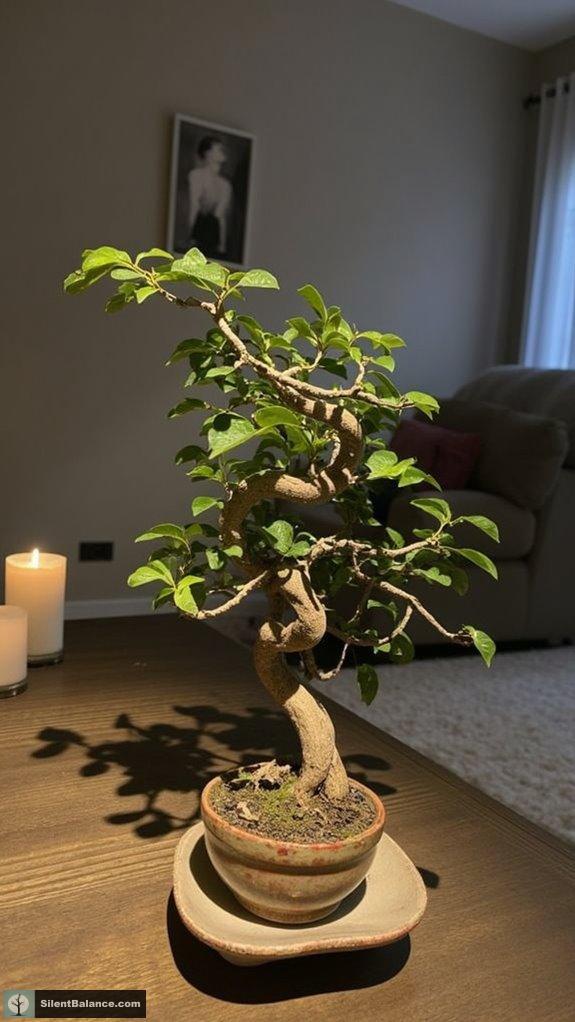
Bonsai tree symbolism is an enchanting blend of artistry and philosophy, inviting us to pause and reflect on deeper meanings.
These little trees pack a powerful punch in what they represent.
- They embody harmony, peace, and balance.
- They teach us about patience and resilience.
- They remind us of the beauty in imperfection.
- They foster emotional connections through mindful observation.
Each bonsai species has its own subtle message, like the elegant azalea symbolizing love and gentleness.
Isn’t it incredible how these miniature settings can remind us of life’s fragility and strength?
With bonsai, we not only cultivate trees, but also nurture emotional connections, making our living spaces much more than just décor.
Isn’t it time to bring some serenity into your home?
Questions and Answers
What Specific Tropical Species Are Best for Indoor Bonsai?
Envision bringing nature’s miniature masterpieces indoors! For tropical bonsai, I recommend species like Ficus, Fukien tea tree, and dwarf jade. They’re vibrant indoor species, easy to care for and sure to elevate any space’s ambiance.
How Can I Enhance Humidity for My Bonsai Indoors?
To enhance humidity for my bonsai, I use misting techniques regularly and set up humidity trays underneath pots. These methods create a vibrant, moisture-rich environment that helps my bonsai thrive beautifully indoors.
What Size Pot Is Ideal for Bonsai Trees?
Choosing the right pot’s like finding a home for a bonsai—fit matters! I always consider potting techniques and materials. Ideal sizes balance width, depth, and style for health and harmony—let’s innovate together in our bonsai journey!
How Often Should I Water My Indoor Bonsai?
I check my bonsai’s soil moisture daily; if it feels slightly dry, I water it. Adjusting water frequency based on species and conditions keeps my trees thriving, creating a vibrant indoor oasis I enjoy.
Can Bonsai Trees Thrive in Low-Light Conditions?
While bonsai trees can’t bask like sunflowers, they can thrive in low-light conditions with proper bonsai care. Ficus and Jade adapt well, meeting their light requirements, proving that creativity nurtures life even in shadows.
References
- https://www.veronneau.com/en/trends/indoor-decor-trends/top-5-bonsai-tree-ideas/
- https://abanahomes.com/blogs/news/bonsai-garden-ideas-all-bonsai-trees-in-one-place
- https://www.bonsaiempire.com/basics/bonsai-care/position
- https://thevietpotter.com/blogs/bonsai/bonsai-decoration-ideas
- https://cincinnatibonsai.org/bonsai-tree-style-guide
- https://bonsai2u.co.uk/how-much-sun-does-a-bonsai-tree-need/
- https://www.bonsaiempire.com/blog/grow-lights
- https://soltech.com/products/indoor-bonsai-care
- https://www.bonsaiboy.com/catalog/indoorbonsaicare.html
- https://bonsaibar.com/blogs/tree-care/light-requirements-for-your-dwarf-jade

- Bonsai Placement Benefits for Room Harmony - November 8, 2025
- Why Use Air Layering to Propagate Bonsai Trees? - November 8, 2025
- 15 Stunning Acorn Wood Wall Art Ideas - November 8, 2025
