
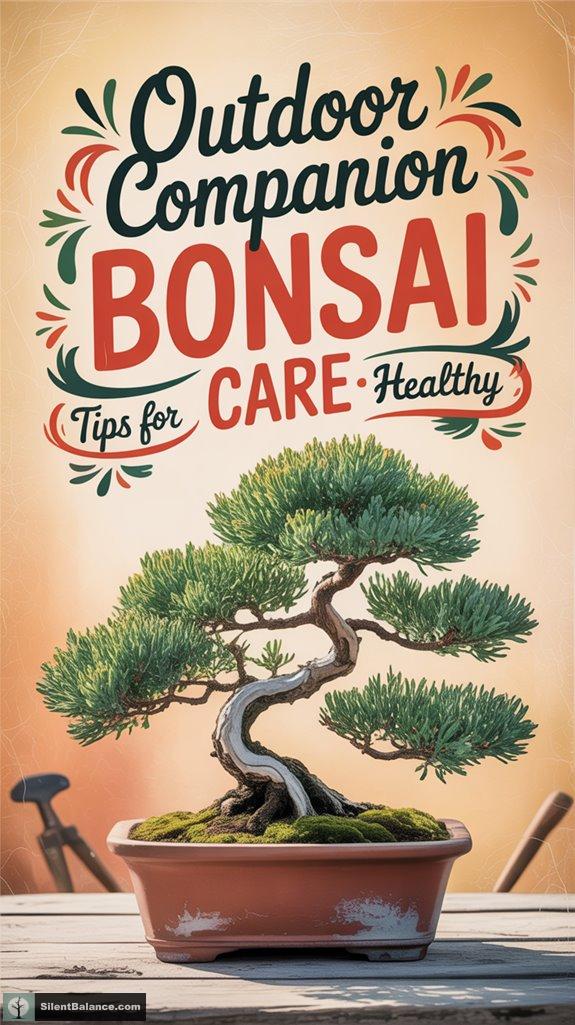
Cultivating Bonsai Bliss: Secrets to Outdoor Growth
Are you ready to watch your outdoor bonsai flourish? Let’s dive in!
When I first started caring for my bonsai, I was captivated by its symbolism as a tree of wisdom and patience. I spent countless hours researching and nurturing these miniature masterpieces on my blog, Silent Balance.
Proper sun exposure is crucial. Aim for 5-6 hours, but if it’s a Juniper, let it soak up 12-15 hours!
Watering? Just let that soil dry a bit before giving it a drink.
Balanced fertilizer in spring—think 10-10-10—and a gentle touch in winter keep the nutrients flowing in harmony.
And don’t forget regular pruning. A little snip here and there keeps them vibrant and shapely.
I recall one afternoon tending to my bonsai, a soft breeze swirling around me. As I pruned, noticed neighbors stopping to admire the tree’s elegance.
It reminded me how trees symbolize life’s constant growth and resilience. I began sharing those moments on Silent Balance, connecting with others who appreciate the beauty in these small marvels.
Together, let’s grow your bonsai into a thriving outdoor companion!
Quick Takeaways
- Position companion bonsai in a southeast-facing area to maximize sunlight exposure for healthy growth.
- Water bonsai only when the soil is slightly dry to maintain optimal moisture levels.
- Use a well-draining soil mix, like akadama and pumice, to ensure proper root health.
- Apply balanced fertilizers seasonally, adjusting the NPK ratio throughout the year for nutrient needs.
- Engage in regular pruning to shape the bonsai and promote a compact, attractive silhouette.
Optimal Sunlight Exposure for Outdoor Bonsai
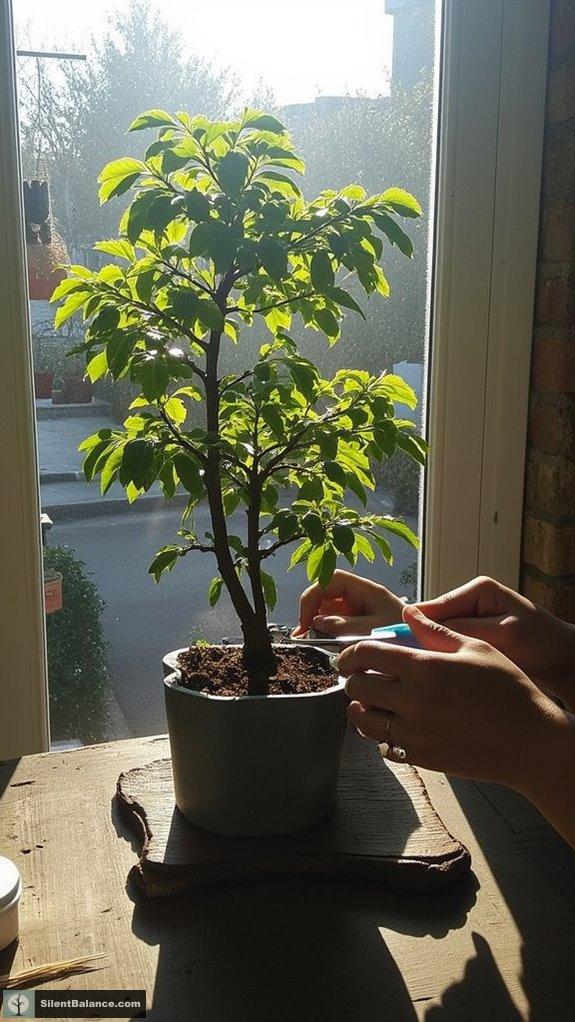
When it comes to nurturing your outdoor bonsai, understanding its sunlight needs is absolutely essential, right?
Most bonsai species thrive on 5-6 hours of sunshine daily, but juniper bonsai? They want a whopping 12-15 hours to really kick into high gear. Think of it like giving them a power-up! Correct sun exposure is vital for sustaining bonsai health.
Most bonsai love 5-6 hours of sun, but junipers crave a powerful 12-15 hours to thrive!
Now, if you live in a scorcher climate, those delicate leaves can get fried in the afternoon sun, so morning rays followed by a cozy afternoon shade work wonders.
Placement is key; a southeast-facing balcony can be a sweet sunny spot. Recall, too much sun can lead to leaf burn, while not enough can leave your bonsai looking like a sad sap—elongated, weak, and pest-prone.
Keep a close eye, and your bonsai will thrive!
Effective Watering Techniques and Soil Management
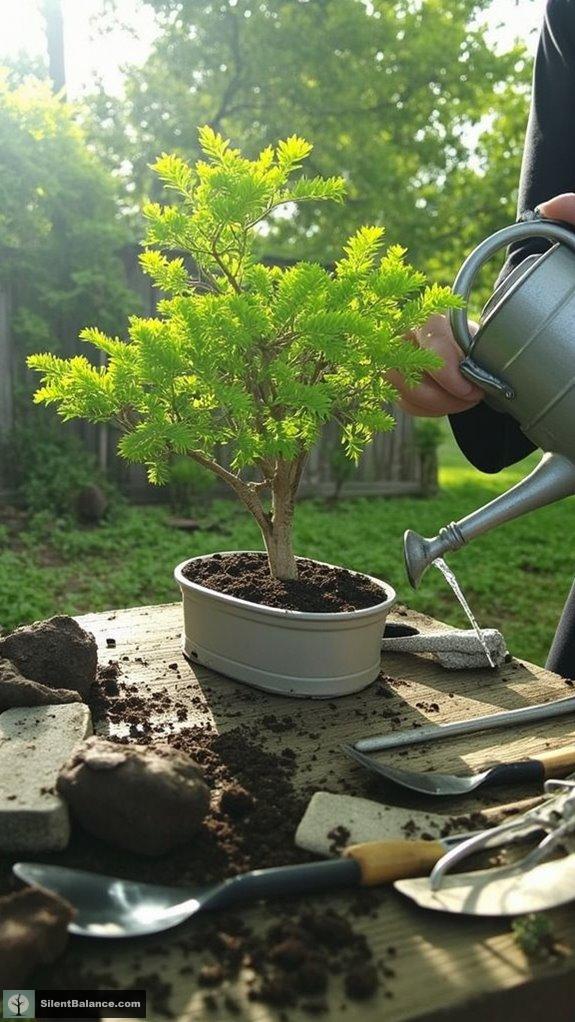
You’ve got the sunlight sorted for your outdoor bonsai, but let’s talk about another essential aspect that keeps your leafy companion flourishing—watering and soil management.
You want to make sure your bonsai’s roots are well-hydrated, but also gasp for air, right?
Here’s how I manage it:
- Water only when the soil feels slightly dry.
- Use top and bottom watering methods to saturate the roots.
- Employ a well-draining soil mix, like akadama and pumice. Additionally, specific care guidelines for outdoor bonsai species can help ensure they thrive in your unique environment. To create the ideal environment, consider the right soil types for your bonsai’s specific needs.
Nutritional Needs: Fertilization Practices
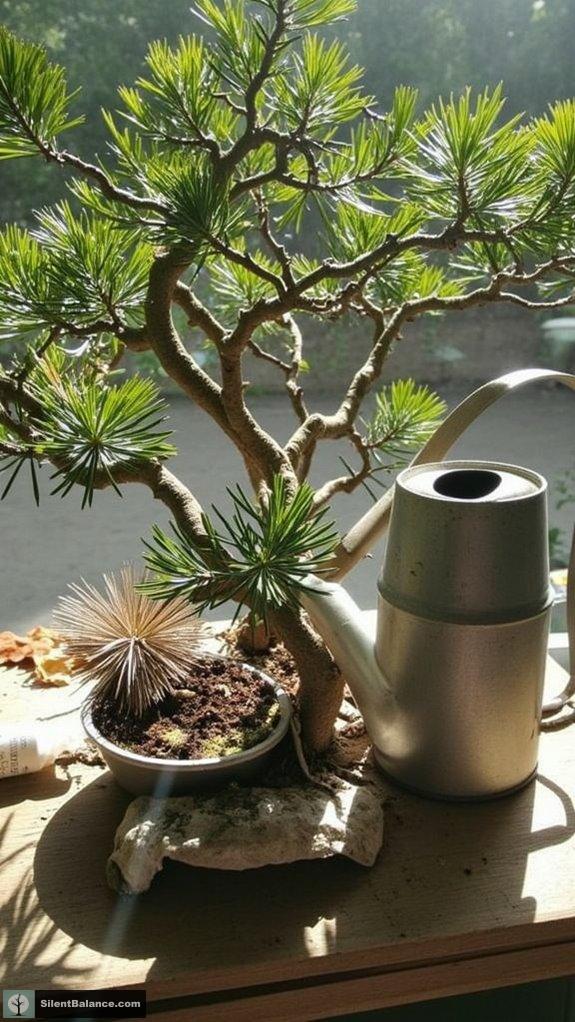
To guarantee your bonsai thrives, a solid understanding of its nutritional needs is key, especially when it comes to fertilization practices.
Isn’t it fascinating how balanced NPK fertilizers like 10-10-10 can be the secret sauce for your little green friend?
In spring, I love using nitrogen-rich options, like NPK 10-6-6, to kickstart healthy leaf development.
Throughout summer, I keep things balanced with NPK 6-6-6 to verify vibrancy.
As the seasons shift into autumn, I switch it up to NPK 3-6-6, prepping the roots for winter’s embrace.
And let’s not sleep on organic options, like Biogold; they provide a slow, steady nutrient release—perfect for that gentle bonsai touch.
It’s important to note that organic vs synthetic fertilizers can significantly impact the health and growth of your bonsai.
Recall, always read the labels and cater to your bonsai’s unique vibe!
Seasonal Care: Temperature and Protection
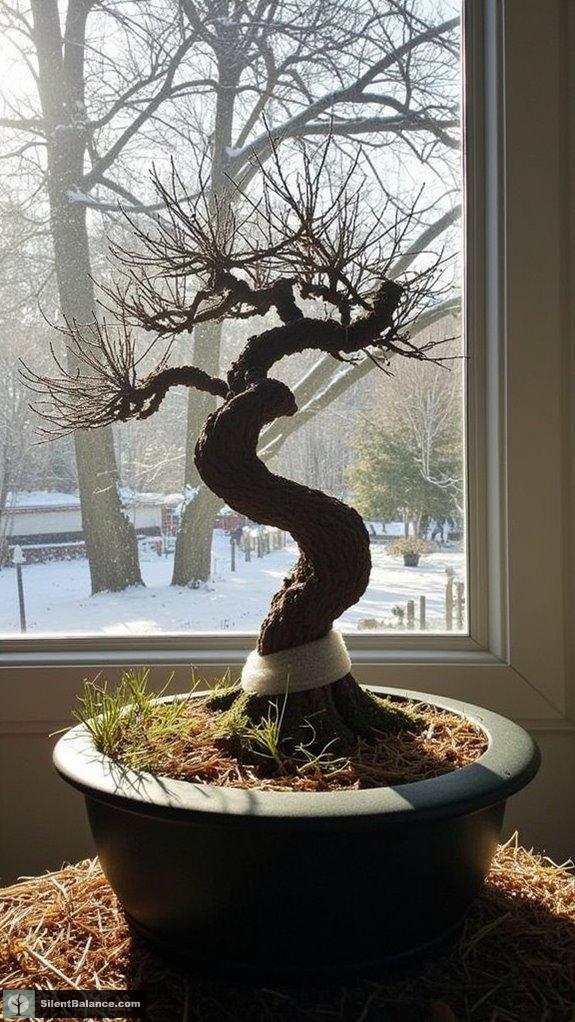
As winter draws near, protecting your bonsai becomes essential for ensuring its health and vigor.
You wouldn’t want your precious tree to suffer through the frosty nights, right?
Here are some stellar ways I keep my bonsai cozy:
- Wrap those pots in bubble wrap or burlap for root protection.
- Mulch the base with straw or pine needles—nature’s very own thermal blanket.
- Position your bonsai against a south-facing wall to soak up the sun.
- During this time, it’s also crucial to minimize fertilizer application since your bonsai is in a dormant state.
Enhancing Humidity for Thriving Bonsai
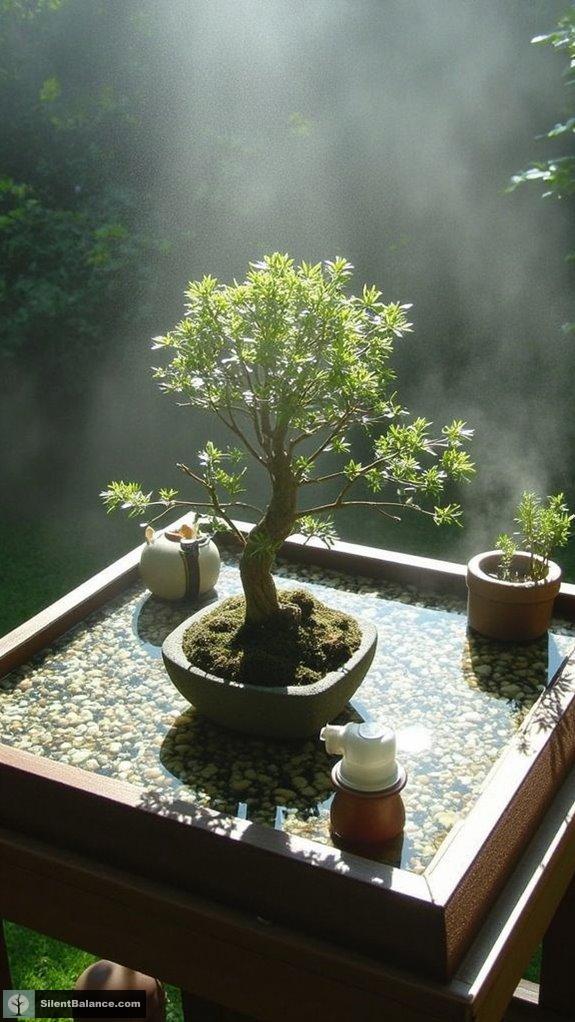
Humidity—it’s the unsung hero of bonsai health!
Maintaining the right humidity is like setting the stage for a bonsai’s performance. Most indoor bonsai love 50% to 60%, but outdoor companions thrive at around 40% to 50%.
Got a tropical buddy, like a Fukien Tea? They crave 50% to 70% humidity—talk about a diva!
To jazz things up, try humidity trays filled with water and pebbles, or give those leaves a revitalizing mist now and then.
Don’t forget; grouping your bonsai creates a little humidity haven due to their collective transpiration.
Ever considered a room humidifier? Just keep an eye, so it doesn’t turn into a swamp!
Pruning and Maintenance for Miniature Aesthetics
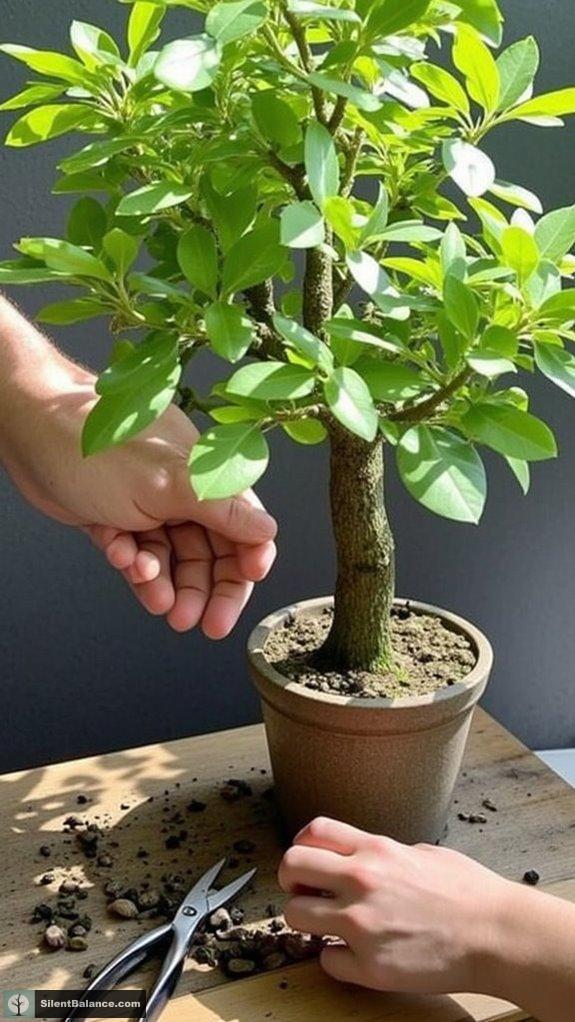
Pruning and maintenance aren’t just chores; they’re your secret tools for sculpting the miniature masterpiece that’s your bonsai!
With each snip and cut, you’ll mold your tree into a stunning creation. Think about it—without pruning, you’d have a wild, unruly plant instead of a refined masterpiece.
Here are key aspects to take into account:
- Root Pruning: Trim roots annually or biannually to keep them compact and promote healthy growth.
- Maintenance Pruning: Regularly remove damaged leaves and pinch back shoots to prevent elongation and maintain that perfect silhouette.
- Structural Pruning: Focus on defining symmetry by cutting back thick branches that disrupt your design.
Seasonal Pruning Techniques
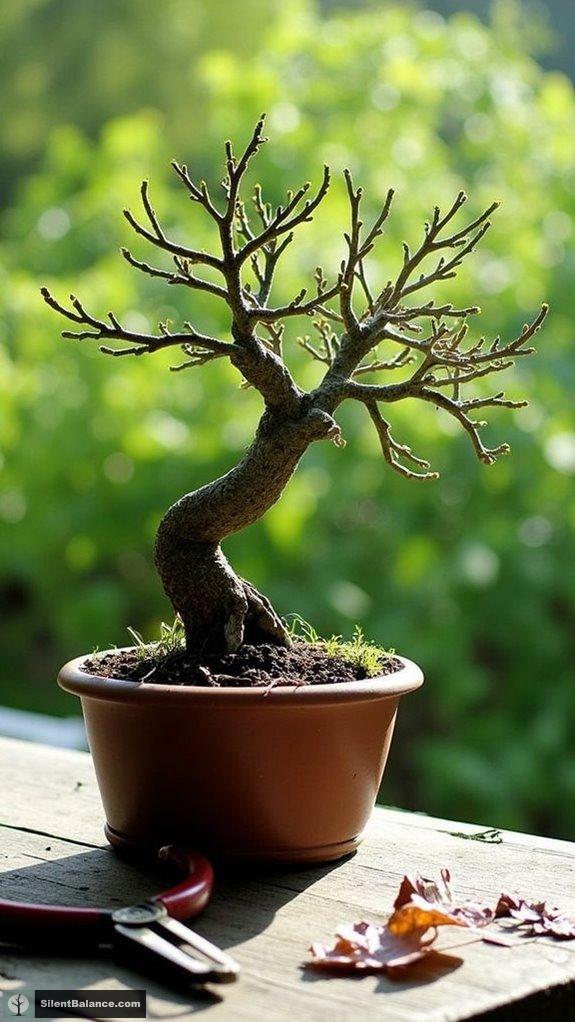
When it comes to bonsai care, seasonal pruning is like a dance with nature, where timing and technique make all the difference in cultivating a stunning miniature tree.
In late winter or early spring, I focus on structural pruning, shaping my tree as buds swell—a true artistry moment!
In late winter or early spring, I embrace structural pruning—crafting my bonsai’s silhouette as nature awakens!
As spring unfolds, I pinch new shoots, promoting dense branching—it’s like giving my bonsai a stylish haircut!
After summer, I carefully defoliate, encouraging smaller leaves; who doesn’t want a sleek look?
Late fall is all about redistributing growth energy post leaf-drop, preparing my little beauty for winter.
Cultural Significance of Trees
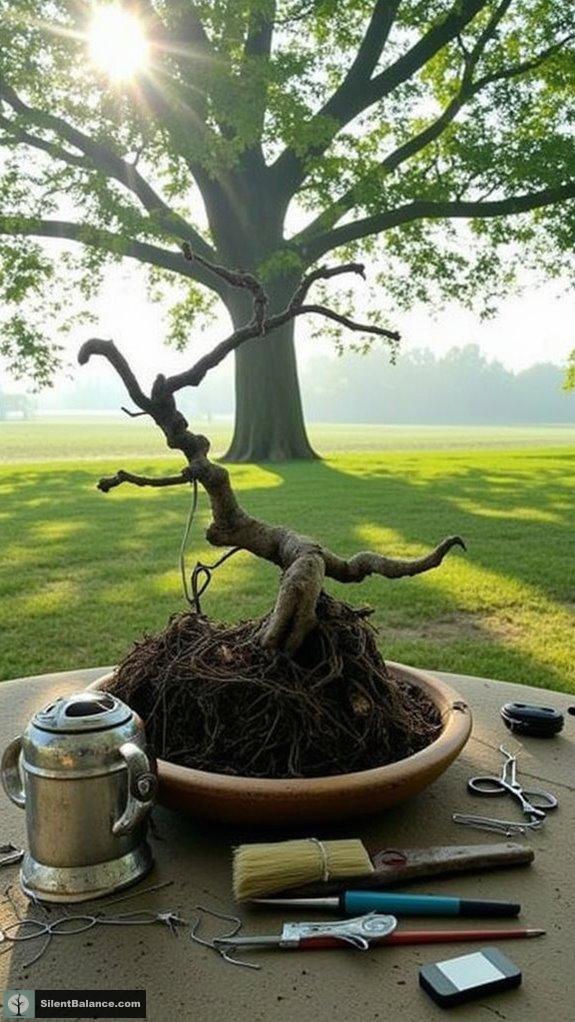
As I dig deeper into the cultural significance of trees, it becomes clear that these natural wonders resonate far beyond their physical presence. Trees symbolize a profound connection, acting as sacred spaces in our lives.
Consider these enchanting revelations:
- The Bodhi Tree, where enlightenment blossomed for Buddha, inspires a quest for wisdom.
- In Celtic traditions, oak trees are revered as guardians of strength and divine power.
- The Baobab, the “Tree of Life,” serves as a beacon of growth, endurance, and community.
Isn’t it amazing how trees not only provide shade but also embody stories that shape our cultures?
Next time you see a bonsai, keep in mind—you’re gazing at a mini marvel steeped in rich history!
Questions and Answers
Can Bonsai Thrive in Partial Shade or Indirect Light?
Absolutely, bonsai can thrive in partial shade or indirect light!
I’ve found that species like the Japanese Maple love this vibe, basking in soft, filtered sun. It’s all about balance—too much direct light can stress them.
Plus, keeping moisture levels in check is essential.
Have you ever seen a jade tree in low light? They rock it! Just keep in mind, a little sunlight goes a long way in keeping your bonsai happy and healthy!
How Do I Know When to Repot My Bonsai?
Looking at your bonsai, it raises a nail-biting question: When’s the right time to repot this beauty?
Check those roots first. Are they circling the pot like a stubborn dance partner? If so, it’s time to step in!
Mid-February to March is prime time, as your bonsai’s buds get restless.
Keep in mind, a healthy bonsai thrives on the right rhythm—don’t repot too often or too seldom, or you’ll stress your leafy friend!
What Common Pests Should I Look for on My Bonsai?
When it comes to pests, I’ve got my detective hat on! You’ll wanna keep an eye out for sneaky culprits like spider mites, those tiny arachnids love hanging out on leaf undersides.
Aphids? Oh, those pear-shaped troublemakers can really sap your bonsai’s energy and lead to a hot honeydew mess!
Don’t forget about vine weevils, which can wreak havoc on roots.
Stay sharp, my fellow bonsai enthusiast, and your trees will thrive!
Can Outdoor Bonsai Survive Indoors During Winter?
Bonsai buddy, can outdoor bonsai truly thrive indoors during winter? Well, not quite!
These little leaf legends need their much-deserved dormancy to dodge disaster. Indoors, they might skip this essential rest, risking their health and well-being. It’s like trying to party while everyone else is hibernating!
If you must bring them inside, aim for cool, consistent conditions—temperature’s key! Just keep in mind, they prefer outdoor vibes, so let them chill if you can.
What Tools Do I Need for Bonsai Shaping and Maintenance?
When it comes to bonsai shaping and maintenance, I’ve got my trusty toolkit at the ready!
You’ll need shears for precise cuts, concave cutters for those clean branch removals, and jin pliers for creating textured deadwood.
Don’t forget root rakes to untangle those stubborn roots and wire cutters for gentle shaping.
What’s more satisfying than seeing your bonsai masterpiece take shape?
Using the right tools is the difference between a good bonsai and a great one!
References
- https://bonsai2u.co.uk/everything-need-know-about-outdoor-bonsai-tree-care/
- https://www.youtube.com/watch?v=Gd10lsl8tQU
- https://www.bonsaiempire.com/tree-species/outdoor-bonsai
- https://brusselsbonsai.com/recommended-care/
- https://bonsaiwest.com/resources/bonsai-care/
- https://www.sungreenbonsai.com/post/understanding-bonsai-tree-sunlight-requirements-essential-tips-for-healthy-growth
- https://bonsai2u.co.uk/how-much-sun-does-a-bonsai-tree-need/
- https://www.bonsaibaime.com/bonsai-tree-after-care
- https://www.youtube.com/watch?v=AIt8piVt3P8
- https://www.youtube.com/watch?v=yMKjZKAoqH8

- Bonsai Placement Benefits for Room Harmony - November 8, 2025
- Why Use Air Layering to Propagate Bonsai Trees? - November 8, 2025
- 15 Stunning Acorn Wood Wall Art Ideas - November 8, 2025
