
Bonsai trees are like tiny teachers in the art of inner growth, urging us to embrace patience and commitment. Each delicate snip while pruning isn’t just for aesthetics; it’s a lesson in resilience. They remind us that perfection is overrated—wabi-sabi, anyone? Every twist and turn of these miniature wonders symbolizes our journey, revealing the beauty found even in our flaws. Intrigued? There’s so much more to explore about how these living art pieces reflect our personal transformation!
Quick Takeaways
- Bonsai trees symbolize patience; their slow growth teaches the value of time and commitment in personal development.
- The practice of mindful pruning illustrates the importance of nurturing inner strengths while letting go of unhelpful habits.
- Embracing the imperfections of bonsai reflects the wabi-sabi philosophy, encouraging acceptance and resilience in one’s personal journey.
- Caring for bonsai enhances mindfulness, fostering emotional awareness and reducing stress, which contributes to overall inner peace.
- Each success in bonsai cultivation serves as a reminder that transformation and growth stem from persistence and dedicated effort.
The Harmony Between Humans and Nature
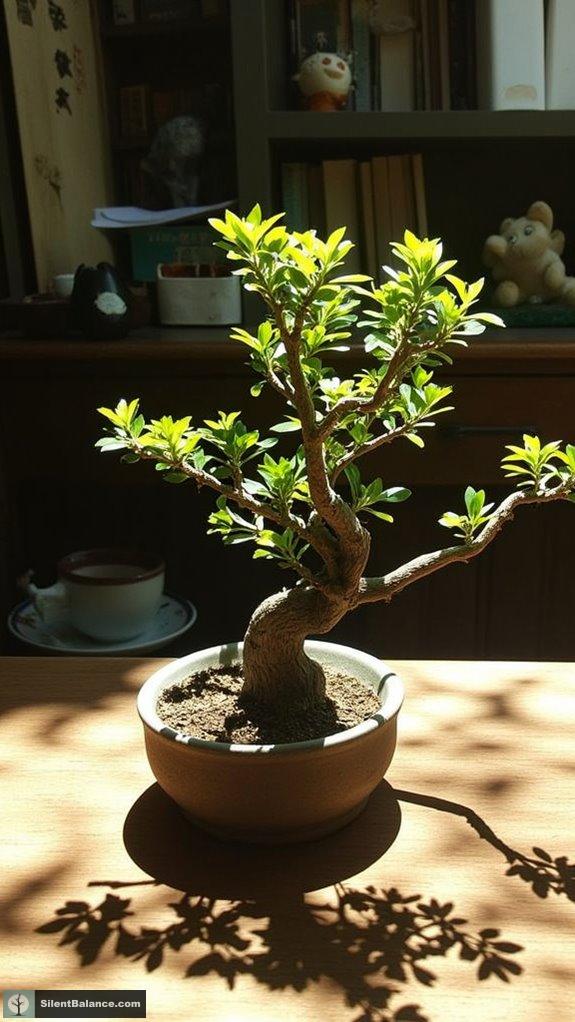
When we take a moment to really soak in nature’s beauty, it’s like our souls breathe in fresh air, and I can’t help but wonder—how can we maintain this harmony that seems so rare?
Consider bonsai trees, miniature masterpieces born from a delicate dance with nature. They thrive in a tiny pot, reminding us that human–nature relations is key. These trees are often supported by mycorrhizal networks, which illustrate how interconnected systems sustain life.
Have you ever appreciated how pruning shapes their beauty? This careful touch mirrors safeguarding our mental and physical health.
By embracing our symbiosis with nature, nurturing both inner growth and our environment, we can foster peace and enhance our resilience.
Why not cultivate this exquisite relationship today?
Cultivating Patience and Commitment
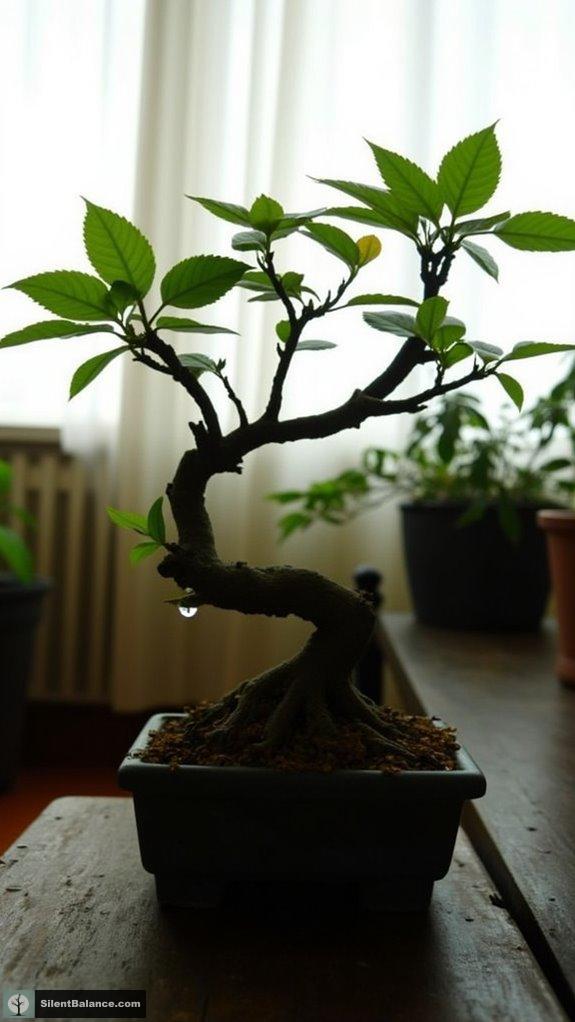
While I’ve often marveled at the stunning beauty of bonsai trees, what truly captivates me is the level of patience and commitment they demand.
Cultivating bonsai isn’t for the instant gratification crowd; it’s a slow dance of pruning and repotting.
When I meticulously snip a root, I’m committing to my little green friend’s health, understanding it’s not just trimming—it’s about nurturing. The art of bonsai involves continuous pruning that limits natural growth, teaching us to embrace patience over haste, which mirrors the slower growth found in nature that contributes to a tree’s unique character.
Have you ever felt time slow down while clip-clipping? Each deliberate cut teaches calm persistence.
In each careful clip, time unfolds, revealing patience and perseverance in the art of nurturing life.
As I water and care for my bonsai, I’m in it for the long haul, and oh, the growth that brings!
Embracing Imperfection and Wabi-Sabi
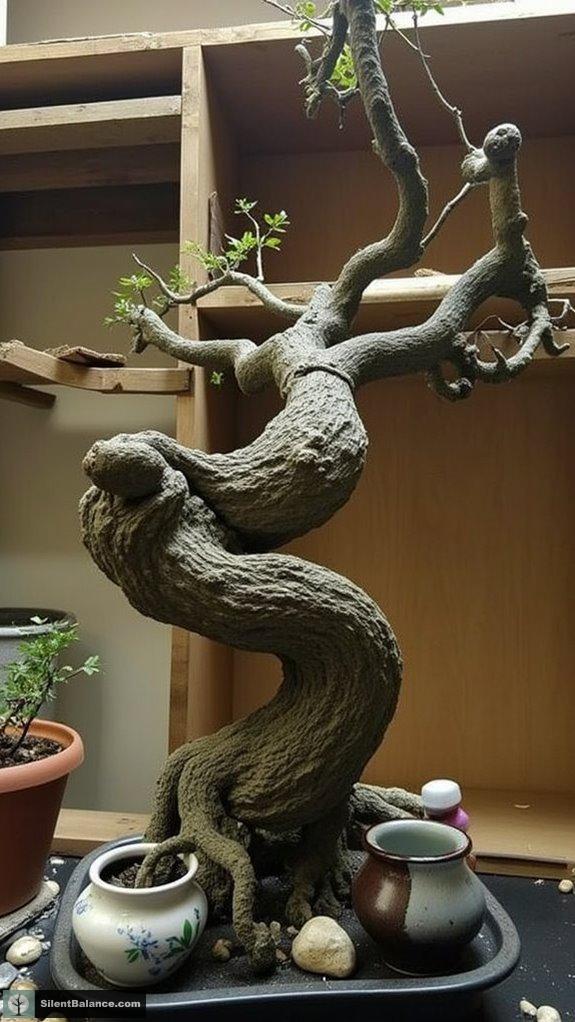
Embracing the philosophy of wabi-sabi feels like stepping into a beautiful, imperfect world, where the quirks of nature are celebrated rather than hidden away.
Ever noticed how bonsai trees strut their asymmetry with pride? Each irregular bend and twist tells a story of resilience, reminding us that perfection’s overrated.
You cultivate visual harmony through deliberate pruning—no cookie-cutter styles here!
Doesn’t it feel liberating to let go of aiming for that ‘perfect’ image we often chase? Wabi-sabi whispers to us: find beauty in the flawed, in the journey, and watch your spirit flourish alongside your bonsai.
Bonsai, as practiced in Chinese philosophy, serves as a conduit for personal and spiritual growth.
Embrace your unique narrative!
Reflecting Spiritual and Philosophical Principles
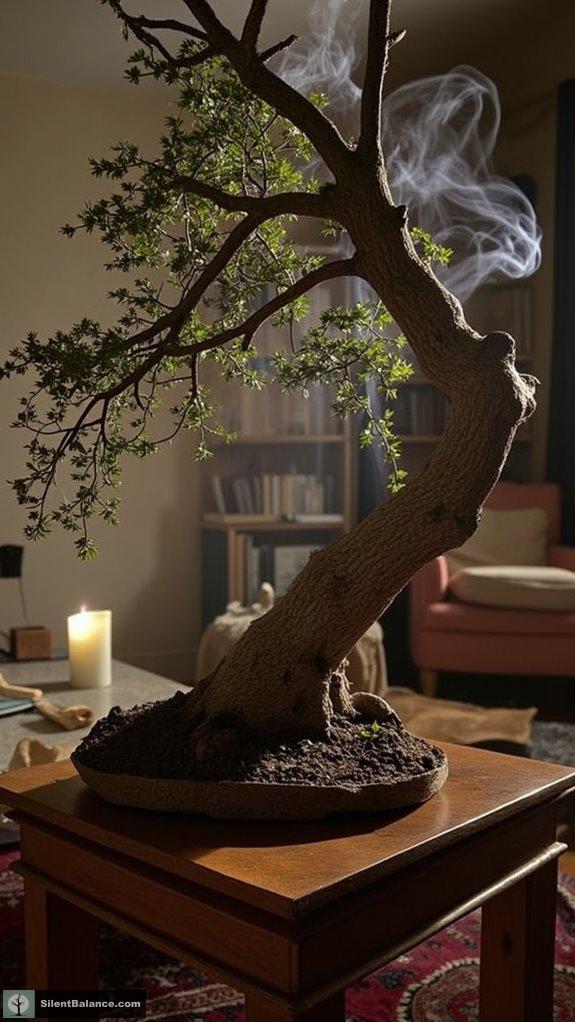
Bonsai trees aren’t just about tiny trunks and little leaves; they’re living symbols of spiritual connection and philosophical depth.
As I nurture my bonsai, I realize it reflects a profound harmony between nature and the human soul.
Each twist and turn of its branches embodies life’s cycles—growth, decay, and renewal.
Each bend and curve of its branches reflects the eternal dance of life—constant transformation through growth, decay, and renewal.
And let’s be honest, who doesn’t need a little balance?
Tending to these miniature wonders demands patience and discipline, mirroring our own quest for inner equilibrium.
Navigating Life’s Complexities Through Care
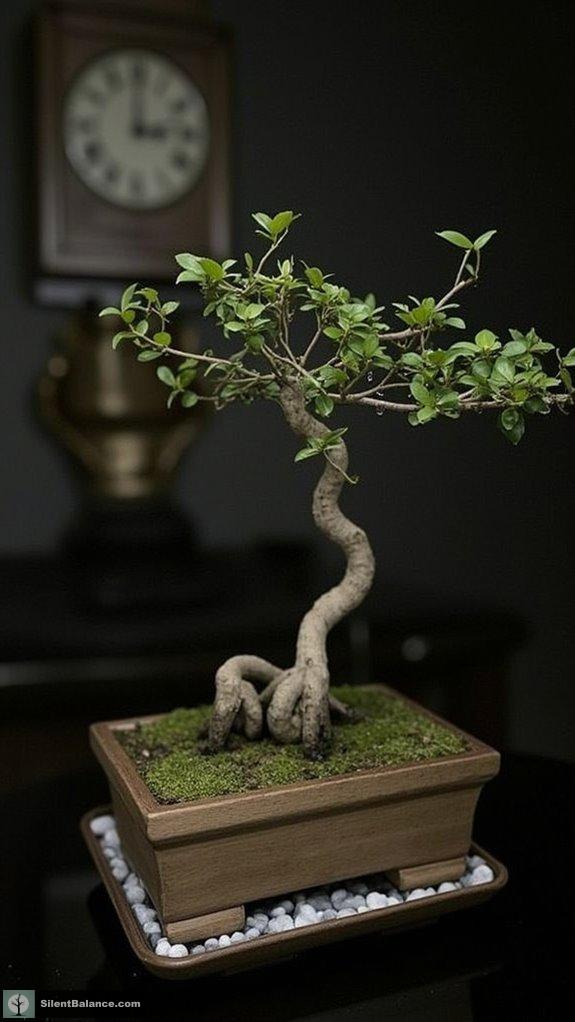
As I explore the art of bonsai care, I discover that maneuvering through life’s complexities often mirrors the meticulous process of cultivating these miniature trees.
Keeping these little wonders thriving demands precision, like regular watering and consistent pruning.
Ever thought about using a pebble tray for humidity? It’s a game-changer!
Balancing nurturing and limiting encourages mindful adaptation. Just like in life, we must embrace setbacks—like that branch that didn’t quite pan out.
Psychological Benefits of Bonsai Practice
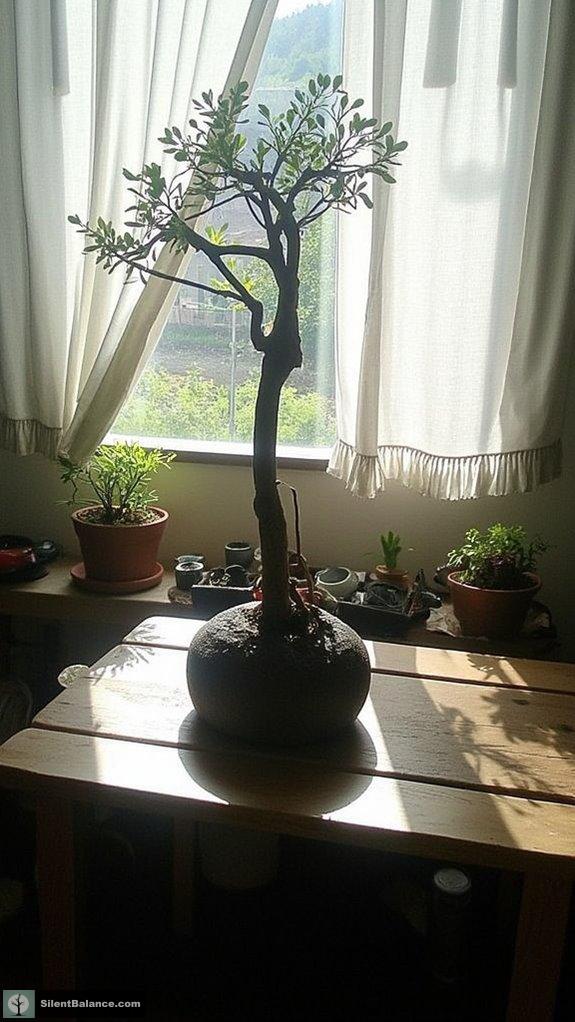
If you’ve ever cradled a tiny tree in your hands, you know that the art of bonsai practice offers much more than mere horticulture; it’s an immersive exploration into your psyche.
Cultivating these miniatures requires mindfulness, drawing your focus away from daily chaos. As you prune and shape, you’re not just crafting beauty; you’re also managing stress and cultivating emotional awareness.
Each step nurtures patience and resilience, boosting your self-esteem as you witness these little wonders thrive.
Isn’t it thrilling how a tiny tree can transform your mood and remind you that control lies within?
Artistic Expression in Bonsai Cultivation
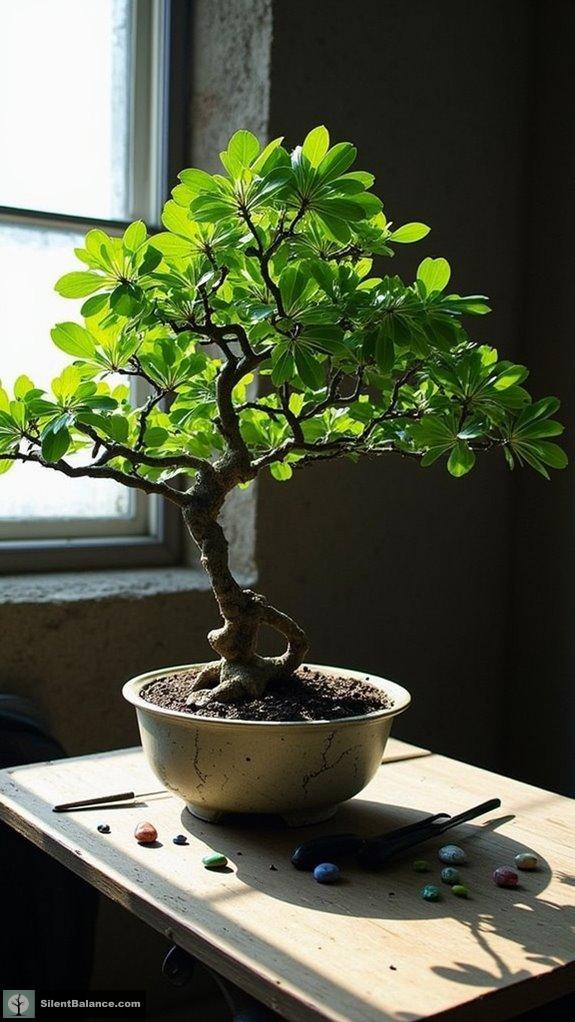
While delving into bonsai cultivation, you quickly discover it’s not just about the trees; it’s a canvas for your imagination and artistry.
With specialized tools like concave cutters and bonsai shears, you control every cut, guiding each branch like a maestro.
Master each cut with precision using specialized tools, orchestrating your bonsai’s growth like a skilled conductor.
Do you enjoy shaping your masterpiece? Wiring materials, like anodized aluminum, let you bend branches into artistic formations, a dance of creativity.
Choosing pots and accent elements enhances your composition, crafting a harmonious scene.
Metaphors for Personal Transformation and Growth
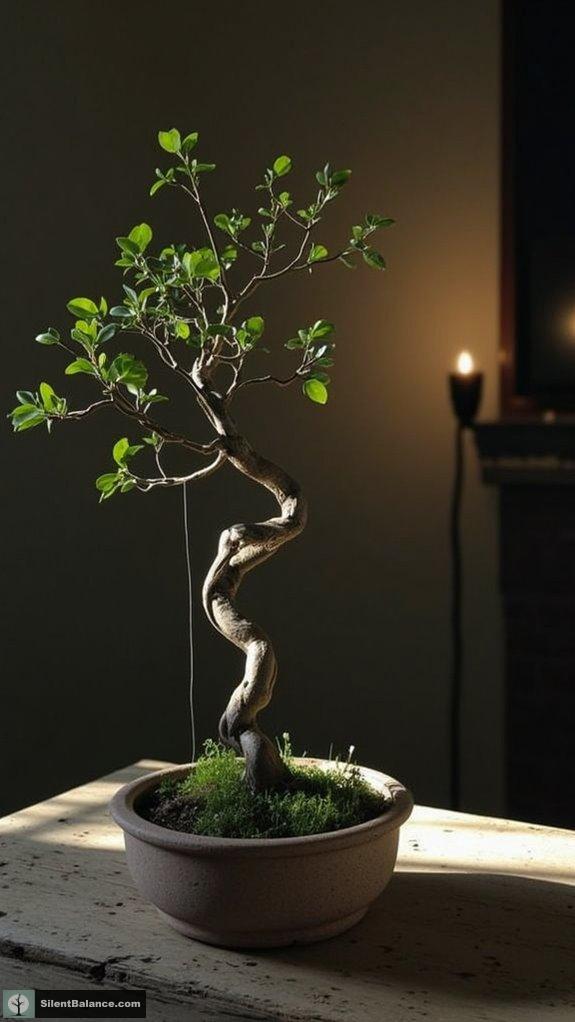
Bonsai trees aren’t just a feast for the eyes; they’re profound metaphorical teachers in personal transformation and growth.
When I think of bonsai, I see resilience packaged neatly in a pot. Like these tiny giants, we thrive despite constraints—do you feel that? Each pruning mirrors shedding limiting beliefs, while nurturing highlights our need for patience and focus.
Ever pruned a branch only to discover a new path? Growth isn’t always a sprint; it’s a dance between ambition and acceptance.
Bonsai Tree Symbolism
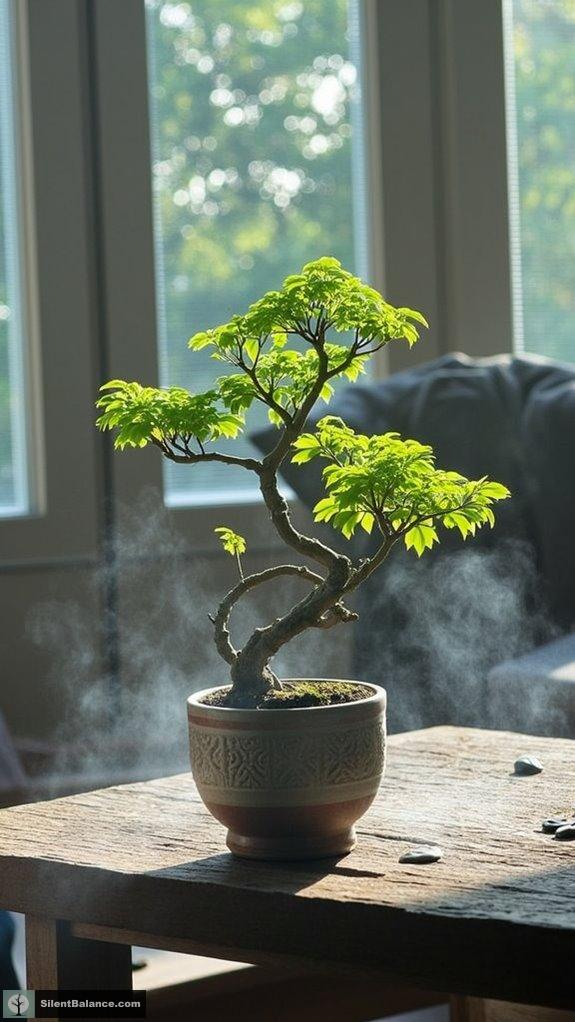
Anyone who’s ever paused to admire the elaborate beauty of a bonsai tree knows that these little wonders are so much more than just decorative plants.
They symbolize harmony, balance, and even resilience. When cultivating bonsai, I think of the patience it takes, like shaping a delicate Shimpaku juniper—don’t get me started on pruning!
Each species offers unique vibes; for instance, an azalea bonsai embodies feminine beauty and passion.
An azalea bonsai captures the essence of feminine beauty and passion, bringing a touch of elegance to any space.
So, when selecting your bonsai, aren’t you effectively curating a piece of meaningful serenity for your space?
In a chaotic world, bonsai remind us of the beauty in balance and mindfulness.
Tree Symbolism
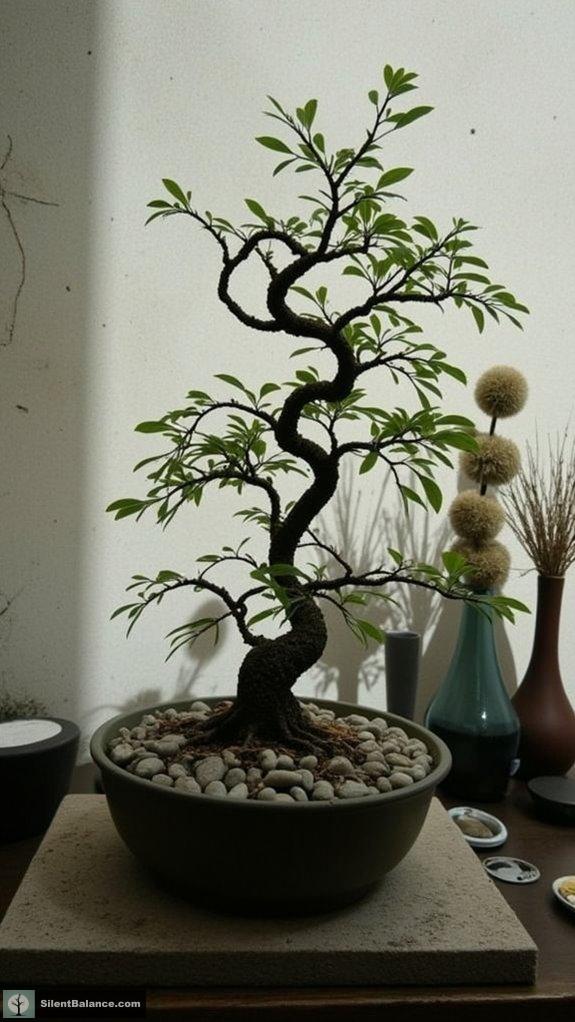
As you explore tree symbolism, you’ll discover that these magnificent giants hold profound meanings that resonate across cultures and centuries.
Have you ever considered how trees embody life, seamlessly linking heaven, earth, and water? They symbolize deep-rooted connections—anchoring us while reaching for the light.
Think of the biblical Tree of Life; it’s a guide for choices, representing spiritual truths and moral growth.
And let’s not forget their generosity, providing without expectation.
In bonsai culture, we embrace this connection, nurturing growth with precision. Isn’t it invigorating to realize these symbols reflect your own journey towards balance and transformation?
Questions and Answers
How Can I Start My Own Bonsai Tree Journey?
I know starting your bonsai journey can feel intimidating, but I suggest beginning with a pre-bonsai tree. This way, I can shape it more easily while enjoying immediate beauty and gaining valuable experience along the way.
What Type of Bonsai Tree Is Best for Beginners?
If you’re starting your bonsai journey, I recommend the Chinese Elm or Juniper. They’re hardy, adaptable, and forgiving of beginner mistakes, making it easy for you to cultivate your skills and create something beautiful.
How Do Climate and Environment Affect Bonsai Growth?
Oh, envision bonsais growing like superheroes, but climate and environment toss them curves! They thrive in ideal light and moisture, yet with neglect, they disappoint. I’ve learned that mastering their needs gives me control over their growth!
Can Bonsai Care Improve Emotional Well-Being?
I’ve found that caring for bonsai absolutely improves emotional well-being. Each moment spent pruning and nurturing these trees brings a sense of accomplishment, grounding me and fostering a positive outlook through patience and resilience.
Are There Specific Tools Needed for Bonsai Cultivation?
Absolutely, bonsai cultivation requires specific tools. I use pruning shears, concave branch cutters, and shaping wire to maintain my trees. Each tool’s purpose helps me refine my skills and achieve precise, desired forms in my bonsai.
References
- https://naturallybalanced.org/en/bonsai/
- https://hookedonbonsai.com/bonsai-trees-in-literature-symbolism-and-significance/
- https://daitool.com/blogs/daitool-blog/what-is-a-bonsai-tree-symbolism-care-and-tips-for-growing-your-own
- https://sendplants.com/blogs/news/the-meaning-symbolism-and-significance-of-bonsai-trees
- https://pmc.ncbi.nlm.nih.gov/articles/PMC10774321/
- https://www.researching.cn/articles/OJad4fdf135fc70640
- https://link.springer.com/article/10.1007/s12144-025-07707-0
- https://go.gale.com/ps/i.do?id=GALE|A459715411&sid=googleScholar&v=2.1&it=r&linkaccess=abs&issn=20955405&p=AONE&sw=w
- https://link.springer.com/article/10.1007/s11442-020-1750-7
- https://uhra.herts.ac.uk/id/eprint/10650/2/V2_Bonsai_a_life_in_balance._The_therapeutic_benefits_of_growing_bonsai_trees._.pdf

- Bonsai Placement Benefits for Room Harmony - November 8, 2025
- Why Use Air Layering to Propagate Bonsai Trees? - November 8, 2025
- 15 Stunning Acorn Wood Wall Art Ideas - November 8, 2025
