
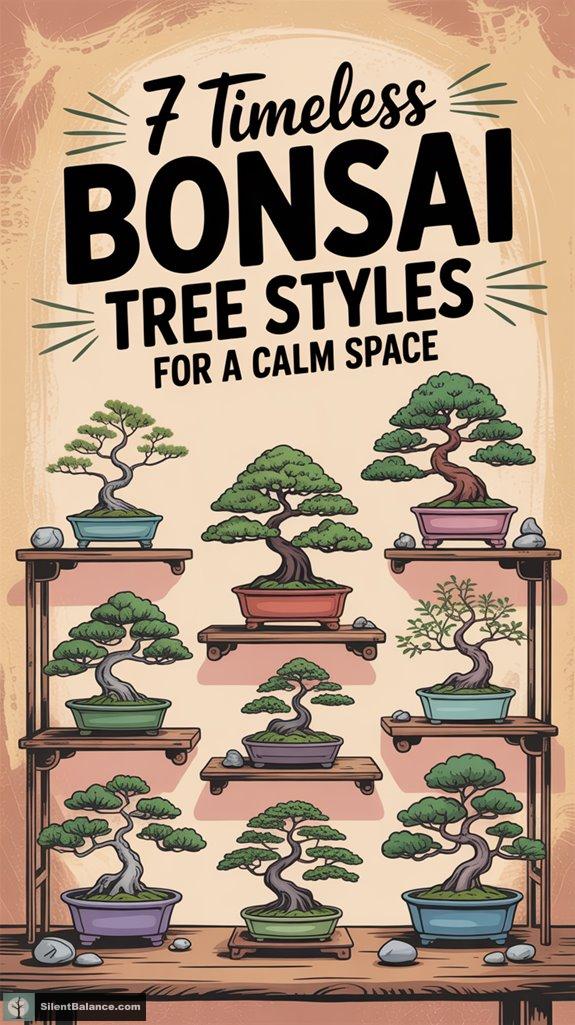
Bonsai trees have this magical ability to turn ordinary spaces into tranquil retreats. From the sharp elegance of the Formal Upright Style (Chokan) to the graceful curves of the Informal Upright Style (Moyogi), there’s so much to explore. Ever seen a Cascade Style (Kengai) that hangs breathtakingly? Or the dynamic Windswept Style (Fukinagashi) that tells a wind-swept story? Each style has its charm and symbolism, adding depth to your blossoming journey with bonsai.
Stick around, and you’ll discover even more fascinating revelations!
Quick Takeaways
- Formal Upright Style embodies balance and tranquility with its straight trunk, enhancing serene environments in any space.
- Informal Upright Style reflects nature’s harmony through graceful curves, promoting calmness with its asymmetrical beauty.
- Slanting Style portrays resilience through its leaning trunk, symbolizing tranquility and balance in Zen practice.
- Cascade Style provides dramatic visual impact and symbolizes endurance, adding an intriguing element to tranquil spaces.
- Windswept and Twin-trunk Styles invite creativity and narratives, enhancing the calming presence of bonsai artistry in your environment.
Formal Upright Style (Chokan)
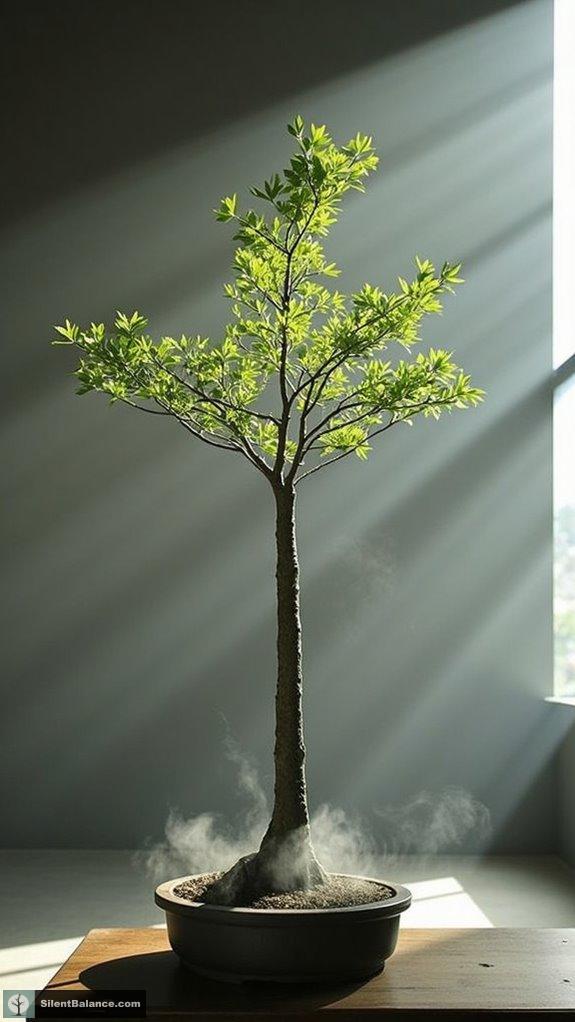
When you think of a bonsai tree, the Formal Upright Style, or Chokan as the pros say, probably pops into your mind first. This classic style showcases a single, straight trunk that tapers beautifully—a reflection of nature’s artistry.
Isn’t it fascinating how every branch gets a tad shorter as it rises? That’s a Chokan characteristic you’ll want to master.
Now, Chokan maintenance isn’t just about watering; it’s a long-term commitment. You’ll find yourself pruning, wiring, and repotting with patience, nurturing that epic vertical shape over years. The style embodies balance and symmetry, creating a peaceful presence in any space. Through spiritual symbolism, Chokan trees often represent strength and resilience, resonating deeply with ancient philosophies.
Imagine that serene silhouette—like a tree in zen mode, radiating balance.
Ready to embrace the Chokan journey? It’s about structure, elegance, and a little creative flair!
Informal Upright Style (Moyogi)
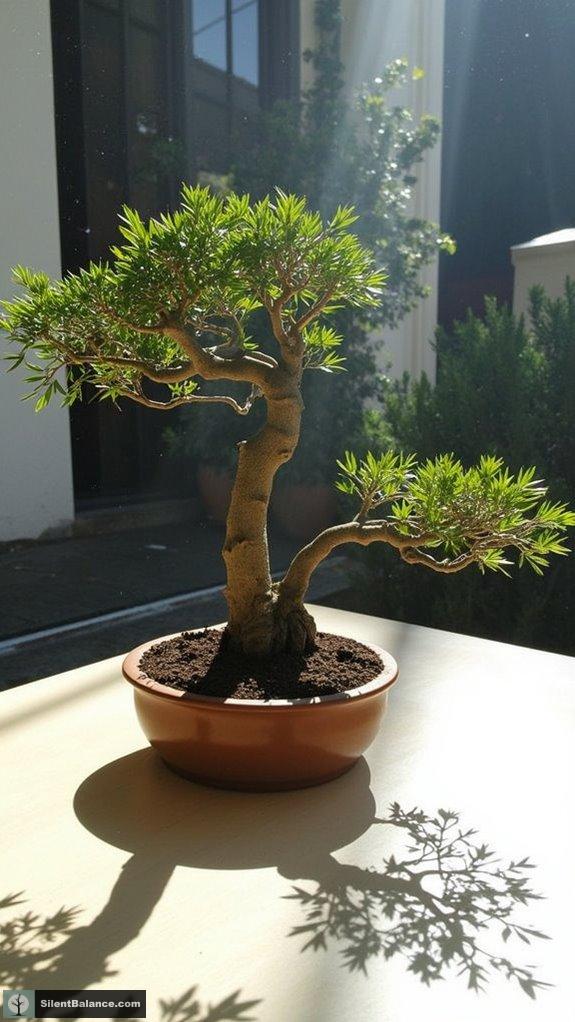
The Informal Upright Style, or Moyogi, is like nature’s gentle masterpiece—unfurling in elegant, graceful curves that dance along the trunk.
This style captures the essence of asymmetrical beauty, showcasing those lovely natural curves that we all admire in wild trees.
Imagine this:
- A trunk with gentle S-shaped curves, tapering elegantly.
- Branches that alternate sides, starting robustly and getting delicately lighter.
- Well-developed roots that radiate out, giving you that strong foundation.
- Height that strikes a perfect balance, anywhere from six to ten times its width!
Moyogi embodies resilience, adapting to nature’s whims, as each tree tells a story of harmony and expression. This style has evolved from its origins in ancient China to become beloved by modern bonsai enthusiasts everywhere, emphasizing the importance of natural stone harmony in creating a serene environment.
Isn’t that what we all crave in our tranquil spaces?
Slanting Style (Shakan)
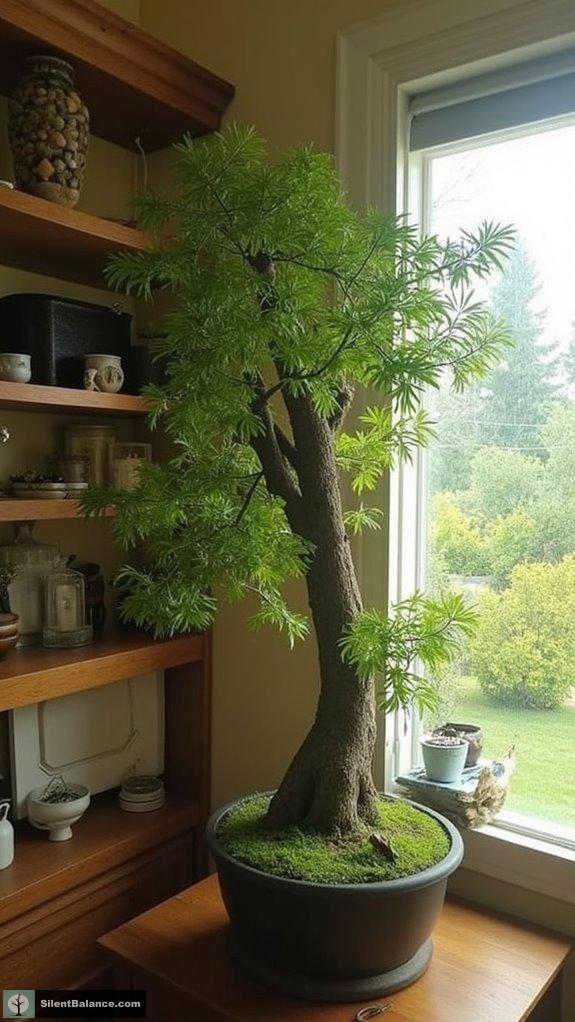
Embracing the essence of nature, the Slanting Style, or Shakan, offers a striking visual that captures the raw power of resilience.
This style showcases a trunk that leans considerably, radiating strength and grace, typically angled between 55° to 80°. Talk about shakan characteristics! The first branch emerges opposite the lean, giving it a dynamic balance that’s simply enchanting.
A Shakan tree leans gracefully, its trunk angled between 55° to 80°, showcasing resilience and enchanting balance.
The beauty of shakan aesthetics lies in its ability to reflect nature’s imperfections—trees swaying under the relentless forces of wind or gravity.
I love how this style speaks to survival and adaptability, making it perfect for conveying a sense of peace. Additionally, the symbolism of Zen bonsai highlights the tranquility and balance that such designs can bring to a living space.
Cascade Style (Kengai)
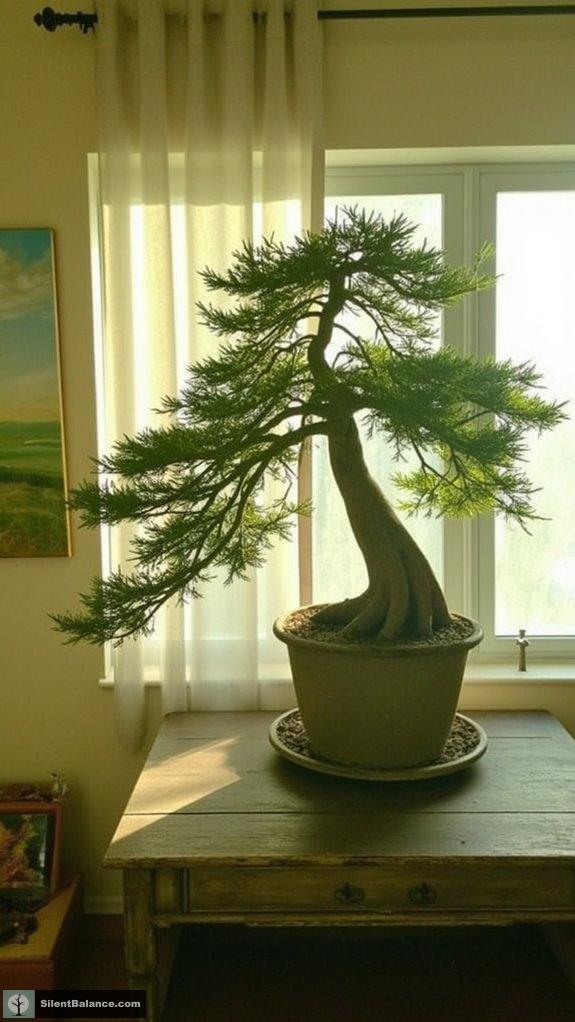
With a trunk that plunges dramatically below the pot’s rim, the Cascade Style, or Kengai, captivates bonsai enthusiasts with its breathtaking visual impact. It’s a triumphant tribute to the resilience of nature!
Imagine:
- A trunk bending gracefully in an S-shape, seeming to defy gravity.
- Branches extending horizontally, balancing that dramatic downward plunge.
- The crown sitting proudly above the pot, whispering tales of endurance.
- A tall pot cradling this masterpiece, embodying cascade aesthetics.
This style isn’t just beauty; it conveys cascade symbolism—nature’s tenacity against harsh elements.
It’s a thrilling challenge for any bonsai artist, requiring skill in wiring and pruning to capture that steady strength. Doesn’t that make you want to plunge into some Kengai magic?
Windswept Style (Fukinagashi)
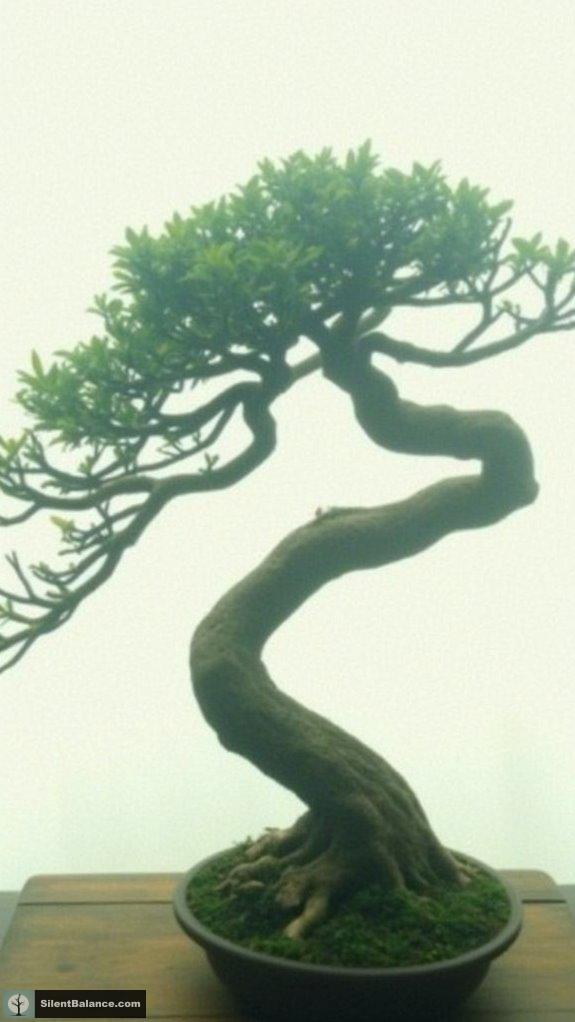
Windswept Style, or Fukinagashi, immerses you in a world where trees bend and twist, shaped lovingly by unyielding winds.
Have you ever envisioned a tree fighting against nature, all while embodying grace? This style represents that struggle beautifully, with trunks and branches leaning dramatically, creating stunning windswept aesthetics.
To achieve this effect, us bonsai artists apply precise techniques—pruning for flow, wiring branches to mimic wind’s influence, and positioning the bonsai asymmetrically. We want to evoke a sense of dynamism, don’t we?
In this style, coniferous species like pines shine, as they’re naturally suited for wind shaping.
Twin-trunk Style (Sokan)
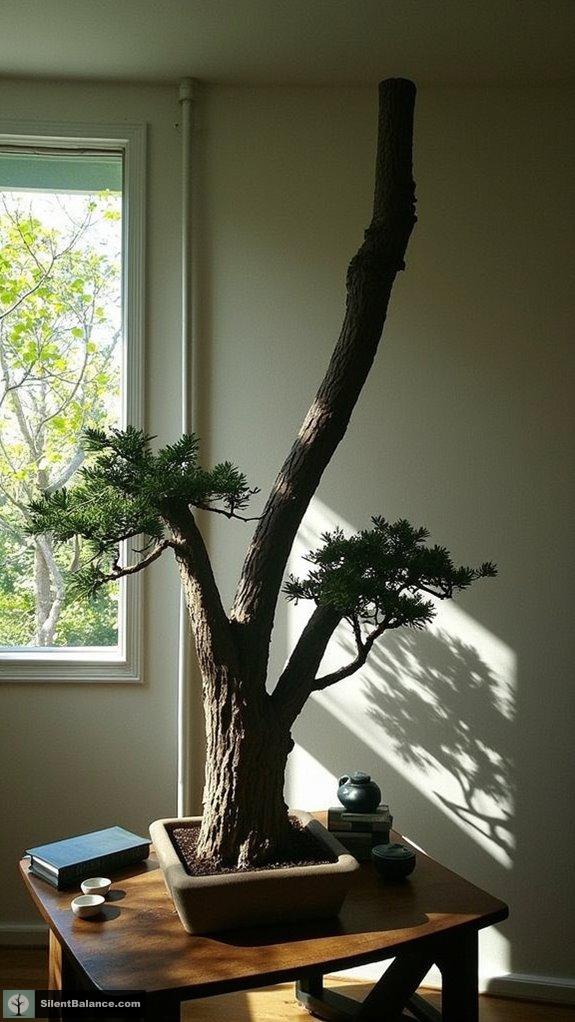
Whether you’re a seasoned bonsai veteran or just dipping your toes into this art, the Twin-trunk Style, or Sokan, offers a whole new dimension of beauty in bonsai cultivation. This style showcases trunk dynamics that create a powerful aesthetic appeal.
Imagine the scene:
- Two trunks, one dominant, reaching for the sky,
- A sharply V-shaped junction, clearly visible and harmonious,
- Branches extending in unison, but with their own flair,
- A common crown that whispers of nature’s concerto.
With Sokan, you’re crafting a narrative of balance and individuality. It invites stories of connection—think family ties—while beautifully showcasing resilience in nature.
Variations of Classic Styles
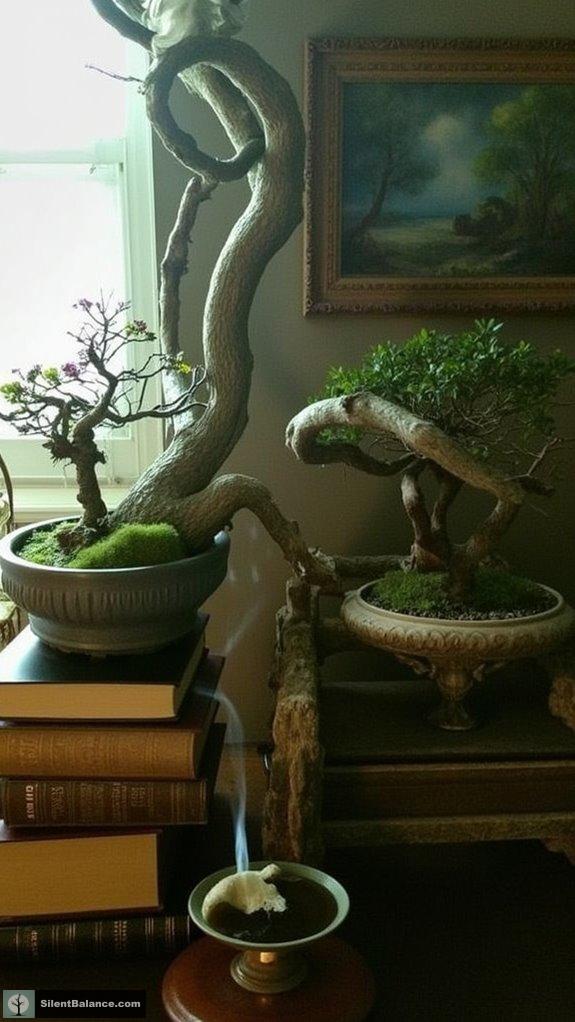
As I immerse myself in the world of bonsai, I can’t help but marvel at the incredible variations of classic styles that breathe life into this ancient art.
Take the Informal Upright Style, or Moyogi, with its lovely curves and balanced apex—perfect for those seeking elegance without the rigid structure of the Formal Upright, Chokkan.
Or the Literati Style, where less is more; minimal branches accentuate a twisted trunk, speaking to age and depth.
Style personalization opens the door to classic adaptations that reflect your unique vibe.
From the cascading Sem-cascade to the dramatic slanting Shakan, each style invites a playful flourish.
Why settle for ordinary when you can innovate? Let your bonsai sing your spirit!
Tree Symbolism
Diving into the symbolism of bonsai trees feels like entering a vibrant tapestry woven from culture, philosophy, and artistry.
Isn’t it fascinating how each tree can speak volumes about its origins and the emotional connection we share with them?
Check out these key themes:
- Balance: It reflects the harmony between nature and our intervention.
- Patience: These miniature masterpieces teach us that true growth takes time.
- Simplicity: Rooted in Zen philosophy, they remind us to focus on the essential.
- Tranquility: Bonsai embodies peace, making it an ideal calming element in any space.
As I explore these cultural interpretations, I can’t help but marvel at how bonsai evolves beyond mere aesthetics—becoming a profound symbol of life’s journey.
Bonsai Tree Symbolism
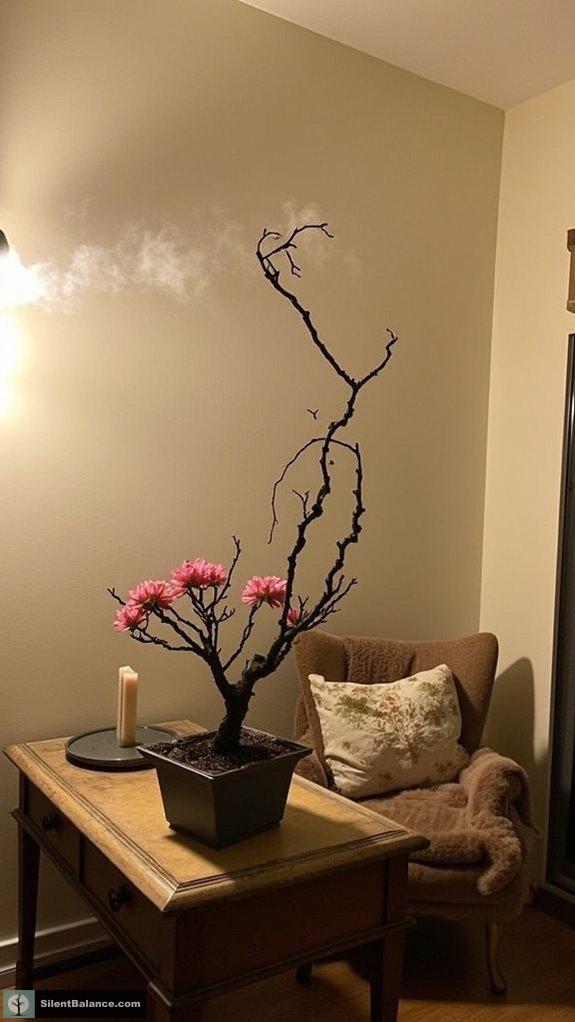
Bonsai trees aren’t just plants; they’re living embodiments of art, culture, and philosophy.
When diving into bonsai symbolism, it’s fascinating how each species carries its own unique message. Take the Azalea bonsai, for example—it’s not just a pretty face; it symbolizes feminine beauty and love. How cool is that?
Through mindful practices and attentive tree cultivation, I find they reflect our own emotional journeys, teaching us patience and resilience.
Historically, they represent balance and harmony, echoing Zen principles. Each bonsai technique I’ve learned enriches my artistic expression, guiding my personal growth.
And let’s not forget those gnarled forms—they remind us of life’s imperfections, showcasing beauty in fragility. Isn’t that powerful?
Bonsai truly encapsulates the essence of life!
Questions and Answers
How Do I Choose the Right Bonsai Style for My Space?
As the saying goes, “Good things come in small packages.” I consider my space aesthetics and bonsai style carefully, ensuring harmony between the tree’s form and my environment, creating beauty that inspires innovation and tranquility.
What Tools Do I Need for Bonsai Maintenance?
For effective bonsai maintenance, I always grab my pruning shears for precision cuts and bonsai scissors for delicate details. Plus, I keep a pruning saw handy for heavier work during bonsai repotting sessions.
How Often Should I Water My Bonsai Tree?
Watering my bonsai’s like juggling flaming swords—precision is key! I check soil moisture regularly, using effective watering techniques to keep the roots thriving without drowning. It’s all about finding that perfect balance, creating thriving beauty.
Can I Grow Bonsai Indoors or Outdoors?
I’ve discovered that indoor bonsai care suits tropical species, while outdoor bonsai thrive in their seasonal cycles. Choose wisely between indoor vs outdoor growth to guarantee your bonsai flourishes beautifully in your space.
What Are the Best Species for Beginner Bonsai Enthusiasts?
Growing a bonsai feels like cultivating a tiny universe. For beginners, I’d recommend species like Ficus and Chinese Elm; they thrive in ideal conditions, offering resilience and beauty—truly favorable companions for your journey into bonsai artistry.
References
- https://cincinnatibonsai.org/bonsai-tree-style-guide
- https://en.wikipedia.org/wiki/Bonsai_styles
- https://www.bonsaiempire.com/origin/bonsai-styles
- https://www.bbg.org/article/bonsai_styles
- https://brusselsbonsai.com/styles-of-bonsai/
- https://orchidrepublic.com/blogs/news/discovering-different-bonsai-styles
- https://longwoodgardens.org/blog/2023-05-17/beauty-bonsai-styles
- https://plantly.io/plant-care/different-bonsai-styles/
- https://www.indraprasthahorticulturesociety.com/chokan/
- https://www.bonsaiable.com/blog/informal-upright-bonsai

- Bonsai Placement Benefits for Room Harmony - November 8, 2025
- Why Use Air Layering to Propagate Bonsai Trees? - November 8, 2025
- 15 Stunning Acorn Wood Wall Art Ideas - November 8, 2025
