
To grow your bonsai into a little masterpiece, you’ve gotta start with the right soil mix. Think akadama, pumice, and maybe a chunk of lava rock for texture. Trust me, it’s all about that moisture retention without the soggy mess. Plus, add some charcoal to keep odors at bay—who wants a smelly bonsai? And don’t forget about drainage and aeration! Curious how to level up your fertilization game? Stick around, there’s so much more to explore!
Quick Takeaways
- Use a balanced mix of akadama, pumice, and lava rock to ensure optimal moisture retention and drainage for your bonsai trees.
- Amend your soil with organic matter like compost to enrich nutrients and promote healthy growth.
- Test and adjust soil pH to maintain a range of 6.0 to 7.0, catering to the specific needs of your bonsai species.
- Ensure good drainage and aeration by using well-draining pots and adding materials like grit or perlite to your soil mix.
- Fertilize bonsai every four to six weeks during the growing season using organic or balanced NPK fertilizers for healthy foliage and roots.
Understanding Soil Composition for Bonsai
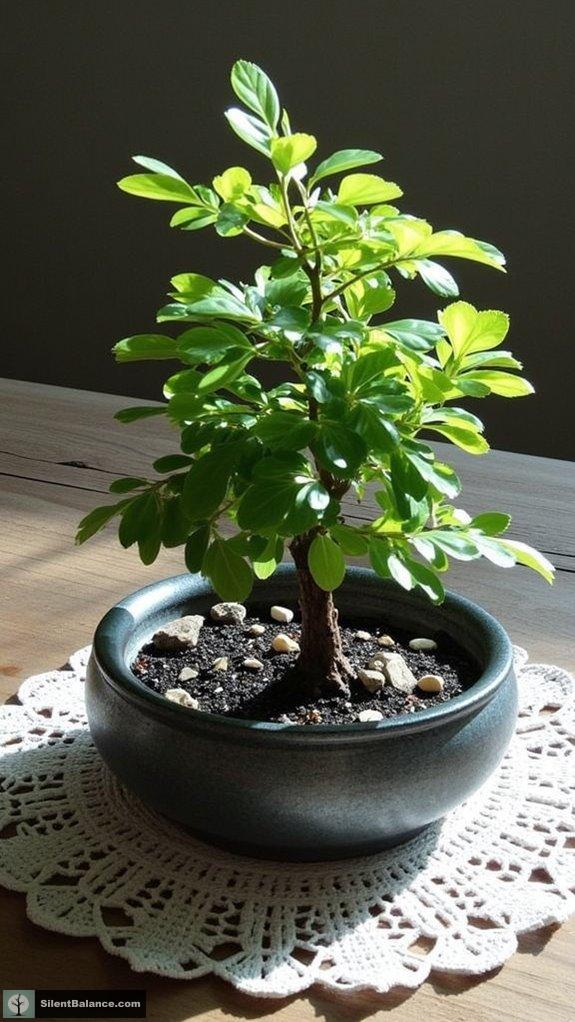
When it comes to bonsai, the right soil mix isn’t just a detail—it’s the secret sauce to thriving little trees.
You might be wondering which soil types are best, right? Well, it’s all about that magical balance of components. A good mix should promote moisture retention without drowning your roots.
Think about using akadama, pumice, or lava rock, each offering unique benefits. Akadama holds moisture, while pumice enhances drainage—it’s like a party for your bonsai! Additionally, the requirements may vary depending on tree style and its specific needs, so tailor your mix accordingly.
Do you want your tree to flourish or just survive? Choose wisely; a well-crafted soil mix equals thriving foliage and robust roots.
Essential Ingredients for an Optimal Bonsai Mix
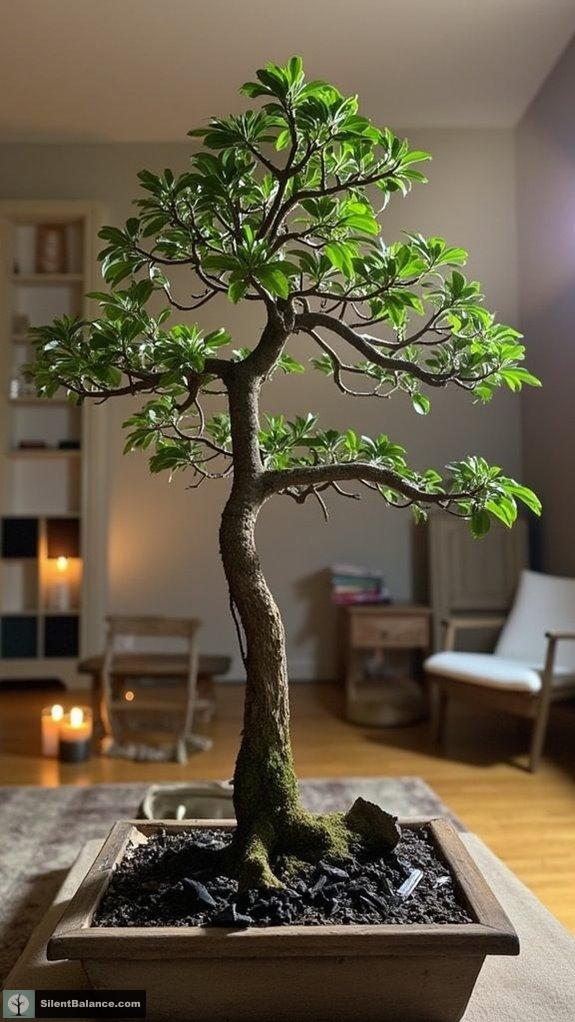
Crafting the perfect bonsai soil mix is like cooking a gourmet meal; you need just the right ingredients to create a masterpiece.
To achieve ideal soil retention, start with a quality base like akadama or pumice. These materials provide excellent drainage while holding moisture—exactly what your bonsai craves.
Next, consider adding charcoal; it not only prevents odors but also offers extra drainage, keeping the roots happy.
Don’t forget a bit of organic matter like compost or worm castings, which enriches the mix and feeds your little tree.
But here’s the kicker: balance is key! Too much of anything can throw your mix off, leaving you with a bonsai that just won’t thrive.
Adjusting Soil Ph for Healthier Growth
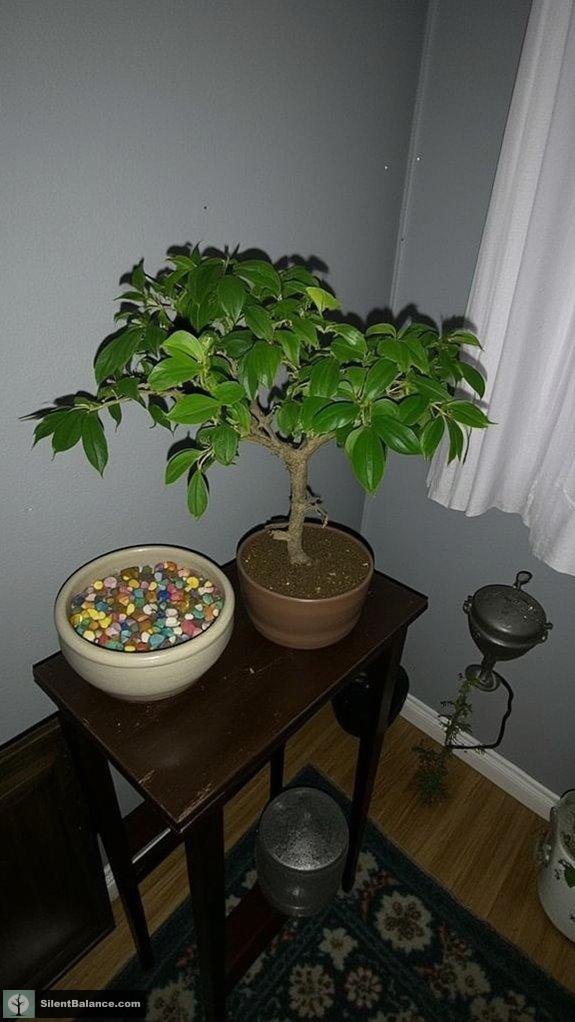
Getting the pH balance just right for your bonsai can feel like fine-tuning a musical instrument; it’s all about harmony!
I always start with pH testing to see where my soil stands. Ideally, I aim for a range between 6.0 and 7.0 for most species.
If it’s too acidic or alkaline, soul-searching soil amendments are your friends.
Consider incorporating limestone to raise pH or sulfur for lowering it. Just keep in mind, moderation is key; nobody likes a diva bonsai!
Have you ever thought about how different species react uniquely to soil pH? Some thrive in slightly different conditions.
Importance of Drainage and Aeration
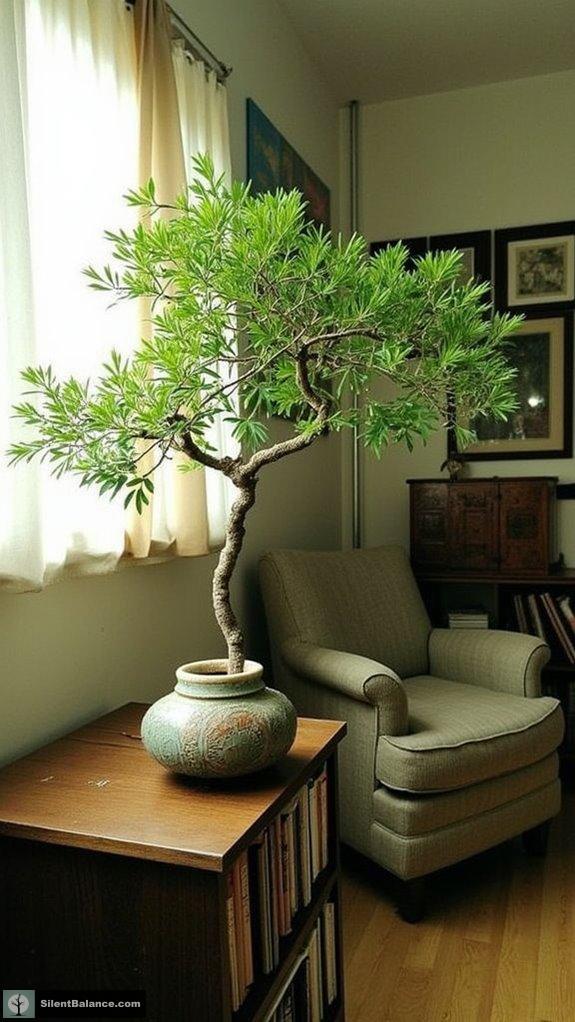
I’ve learned that good drainage helps excess water escape, allowing roots to breathe and soak up the moisture they actually need.
Trust me, after experimenting with various drainage techniques, I can say it’s a game-changer for your bonsai’s health.
Aeration benefits are equally important. They guarantee oxygen penetrates the soil, promoting robust root growth.
Ever struggled with a stagnant bonsai? You know then that compacted soil means a recipe for disaster!
Consider using a well-draining mix with grit or perlite to enhance aeration.
And let’s be real, nobody wants a soggy mess—yikes!
So, invest in quality drainage pots. Your bonsai will thank you, and you’ll finally feel like the bonsai master you aspire to be.
Ready to take control?
Fertilization Strategies for Indoor Bonsai Trees
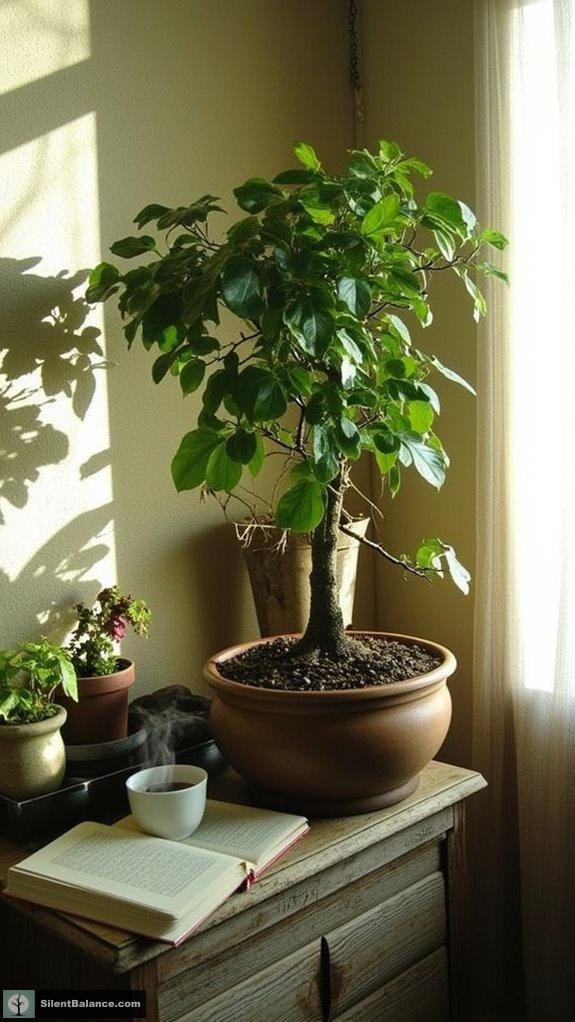
When it comes to keeping your indoor bonsai trees happy and healthy, one of the golden rules is never to underestimate the power of a good fertilization strategy.
Trust me, using the right fertilizer types can make a world of difference. Organic options like fish emulsion and worm castings are fantastic for those gentle little guys, while balanced NPK fertilizers provide a punch of nutrients when they’ve got the munchies.
The right fertilizers, like fish emulsion and balanced NPK, can truly nourish your bonsai and keep them thriving!
Don’t forget about nutrient frequency—your bonsai’s growth cycle needs that TLC! I normally recommend fertilizing every four to six weeks during the growing season; after all, isn’t it fun to watch them thrive? Additionally, pay attention to how your bonsai reacts to seasonal watering needs, as this can also influence their nutrient uptake.
Nurturing these miniature wonders takes a bit of finesse, but you’ve got this! Your bonsai will thank you with vibrant leaves and healthy growth.
Bonsai Tree Symbolism
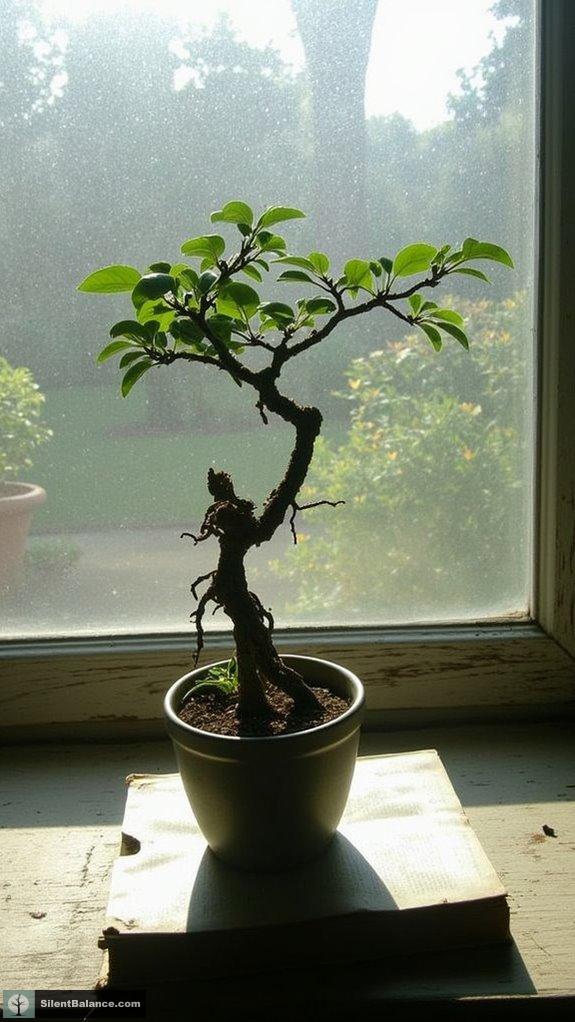
Bonsai trees aren’t just a feast for the eyes; they carry a deep symbolism that resonates with many cultures.
Have you ever considered the cultural significance behind these mini marvels? They embody patience, because let’s face it, cultivating such beauty takes time.
Plus, their spiritual meanings connect us with nature, reminding us of life’s cycles. In Japan, for instance, bonsai represents harmony, balance, and even longevity—how cool is that? In contrast, Chinese bonsai often symbolizes the search for immortality, highlighting the differences in spiritual interpretations between these two cultures.
Tree Symbolism
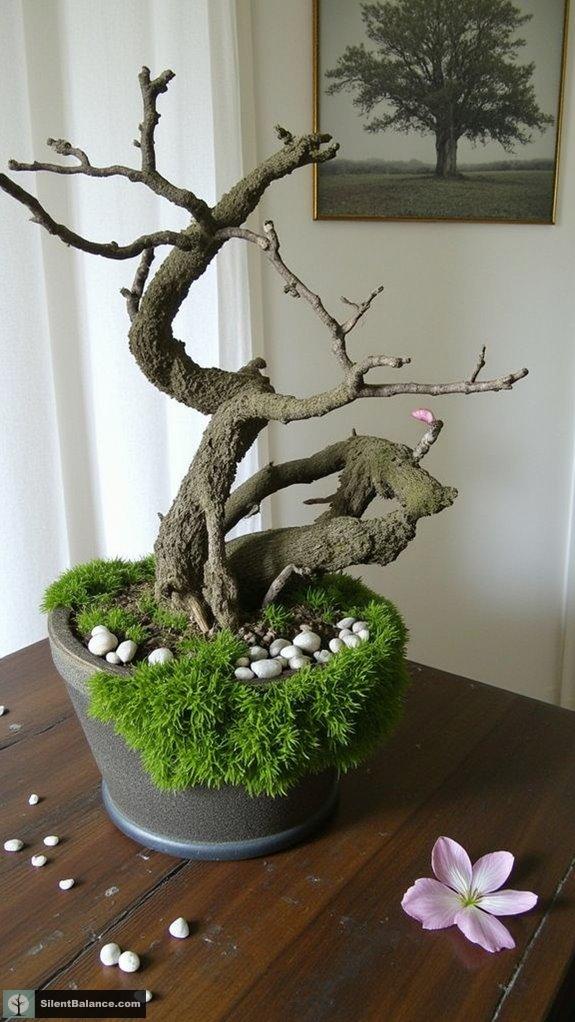
Trees, in all their glorious forms, have captivated human imagination for centuries.
Their cultural significance runs deep, impacting societies across the globe. Have you ever wondered why they symbolize strength and resilience? It’s all about balance, my friend. Each species carries unique spiritual meanings that resonate with us, offering solace and inspiration.
Trees hold profound cultural significance, symbolizing strength through their unique spiritual meanings that inspire and offer solace across societies.
For instance, the mighty oak symbolizes endurance, while the delicate cherry blossom embodies the beauty of life’s fleeting moments.
Choosing a bonsai tree isn’t just about aesthetics; it’s your chance to bring these powerful symbols into your space.
Questions and Answers
How Often Should I Repot My Bonsai Tree?
I usually repot my bonsai every couple of years, but it really depends on its growth.
Keep an eye out for signs of rootbound—like roots popping out of the drainage holes or circling the pot.
When you see those, it’s your bonsai’s way of saying, “Hey, I need more space!”
Repotting not only refreshes the soil but also gives your tree a chance to thrive.
Can I Use Garden Soil for My Bonsai?
Garden soil’s structure simply doesn’t meet the needs of our miniature marvels.
For bonsai bliss, we crave a precise soil composition that promotes proper drainage. Without that critical capability, water retention can spell disaster, suffocating roots faster than you can say “root rot.”
Instead, mix your own or buy a specialized blend—your bonsai deserves the best!
What Pests Affect Bonsai Soil Health?
Pests can be a real pain when it comes to bonsai soil health. I’ve dealt with critters like root aphids and fungus gnats that love to wreak havoc.
That’s why pest identification is essential! Keep your soil management game strong by regularly inspecting for these uninvited guests.
Trust me, even the tiniest pest can sap your bonsai’s vigor. Don’t let those bugs win—stay vigilant and keep your miniature forest thriving!
How Can I Tell if My Soil Is Too Compacted?
When you’re wondering if your soil’s too compacted, check the structure.
If it feels like concrete when you poke it, it’s time to loosen it up!
Healthy soil should retain moisture without turning into a brick.
Try the squeeze test: if it clumps together and doesn’t crumble, you’ve got a problem.
Your bonsai’s roots need space to breathe, so give them a hand.
After all, you want them thriving, right?
What Are Signs of Poor Soil Quality in Bonsai?
When I check my bonsai’s soil, I look for signs of poor quality like water pooling on the surface—yikes!
If the soil clumps and refuses to break apart, I know it’s time to address drainage issues.
Poor nutrient absorption can manifest as yellowing leaves, or if my tree is just looking sad and sluggish, it might be begging for better soil.
Isn’t it wild how much impact soil has on growth?
Summary
So, here’s the scoop: your bonsai’s success hinges on the right soil. It’s not just dirt, it’s a carefully crafted mix that supports life and growth, much like your favorite pair of sneakers supports your every step. Ever heard the saying “you are what you eat”? Well, in bonsai, “you are *where* you grow!” And keep in mind, it’s a journey—don’t fret if your little tree isn’t perfect right away; the real beauty lies in nurturing it along the way!

- Bonsai Placement Benefits for Room Harmony - November 8, 2025
- Why Use Air Layering to Propagate Bonsai Trees? - November 8, 2025
- 15 Stunning Acorn Wood Wall Art Ideas - November 8, 2025
