
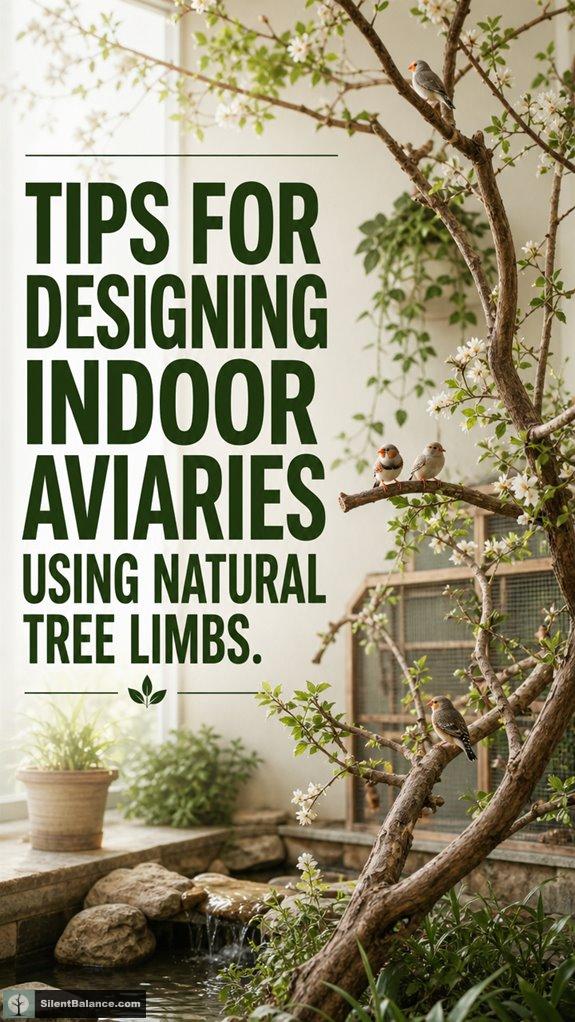
Can natural tree limbs transform an indoor aviary into something more meaningful?
Absolutely—they’re not just perches. They’re silent storytellers.
The Symbolism of Trees: More Than Just Branches
I once watched a rescue parrot, silent for years, finally sing—perched on a maple limb from my backyard. No store-bought plastic could’ve done that. At *Silent Balance*, we don’t just build aviaries—we grow them. Tree limbs carry the *symbolism of trees*: strength in oak, renewal in ash, resilience in maple. A pinecone isn’t decor. It’s memory. It’s home.
My neighbor laughed when I hauled a split birch through my living room. “Building a forest or a cage?” she said. Six months later, she brought her nephew—a quiet boy with worried eyes—to see the aviary. He didn’t speak much. Just sat. Watched. Then reached out and touched the bark. “This tree was scared once too,” he said.
Yeah. It was. Just like him. Just like all of us.
Quick Takeaways
- Select untreated, durable branches from natural, outdoor sources to ensure safety and longevity indoors.
- Thoroughly clean and securely fasten branches with knots and anchors to prevent accidents.
- Design multi-layered arrangements using natural branches to create a dynamic, enriching environment for birds.
- Incorporate natural elements like bark or pinecones for added symbolism and aesthetic appeal.
- Regularly inspect, clean, and rotate branches to maintain cleanliness and promote natural behaviors.
How to Choose Safe and Suitable Tree Limbs for Your Aviary
Ever wondered how to pick the perfect tree limbs that are both safe and stylish for your indoor aviary? It starts with choosing the right branch variety and knowing sourcing techniques.
Selecting safe, stylish branches begins with choosing natural, untreated sources from rural or outdoor environments.
Want sturdy perches? Pick ash, oak, or maple, which stand up to wear. Prefer something more flexible? Buddleja or crepe myrtle branches offer visual variety and ease of access.
Avoid urban-polluted trees—opt for branches sourced during rural hikes or from untreated fruit trees and willows.
Keep in mind, safe branches aren’t just practical; they’re symbols of growth, strength, and renewal—adding deeper meaning to your lush, nature-inspired sanctuary.
Are you ready to turn symbolism into style?
Tips for Preparing and Securing Tree Branches Safely
Preparing and securing tree branches for your indoor aviary isn’t just about safety — it’s about creating a thriving, natural oasis where your birds can truly flourish. Start with thorough branch cleaning, removing mold, pests, and pollutants.
Use tight knots to secure branches, ensuring they won’t wiggle or fall.
- Choose branches with graspable, tapering ends for variety
- Secure every knot deeply, avoiding loose ends
- Use durable anchors to prevent movement
- Incorporate leafy tips for chewing and stripping bark
- Balance branch sizes at different heights for natural harmony
Why settle for bland, uniform perches? Embrace the symbolism of growth and renewal created by natural branches, and let your aviary resonate with life! Incorporating natural elements can also stimulate your birds’ instincts and enrich their environment. Embracing stillness and slow movement can also inspire patience and attentiveness in your setup process, ensuring each element is thoughtfully placed for your birds’ well-being.
Designing a Beautiful and Functional Aviary Using Natural Tree Limbs
Designing a beautiful and functional aviary isn’t just about tossing in some branches and hoping for the best—it’s about creating an inviting mini-ecosystem that mirrors nature’s artistry.
Think of each branch as a symbol of growth and renewal, adding depth and meaning. Use bird-safe paints to brighten and customize the wood, making it more appealing and personal. Don’t forget branch sealing techniques to protect against pests and moisture—your feathered friends deserve a safe habitat.
Why settle for dull, uniform perches when you can craft a lively, layered terrain that sparks curiosity? Embrace the natural beauty of wood, bark, and twigs to transform your space into a sanctuary of safety and style.
How to Maintain and Care for Tree Limbs to Keep Your Birds Healthy
Caring for your tree limbs isn’t just about cleanliness — it’s about giving your feathered friends a safe, healthy playground that promotes their well-being and your peace of mind.
Regularly inspect for pests, mold, or fungi that can harm your birds. Clean branches with a gentle brush or water, avoiding harsh chemicals. Rotate and replace limbs to prevent boredom and encourage natural bird grooming behaviors.
Inspect for pests and mold regularly; clean branches gently to keep your birds safe and promote healthy grooming habits.
- Use bird-safe, untreated wood from trusted sources
- Always verify branches are free from pesticides
- Sanitize tools to prevent pest spread
- Monitor for signs of sickness or decay
- Incorporate symbolic elements like bark or pinecones to boost significance
Isn’t your bird’s health worth it?
Tree Symbolism
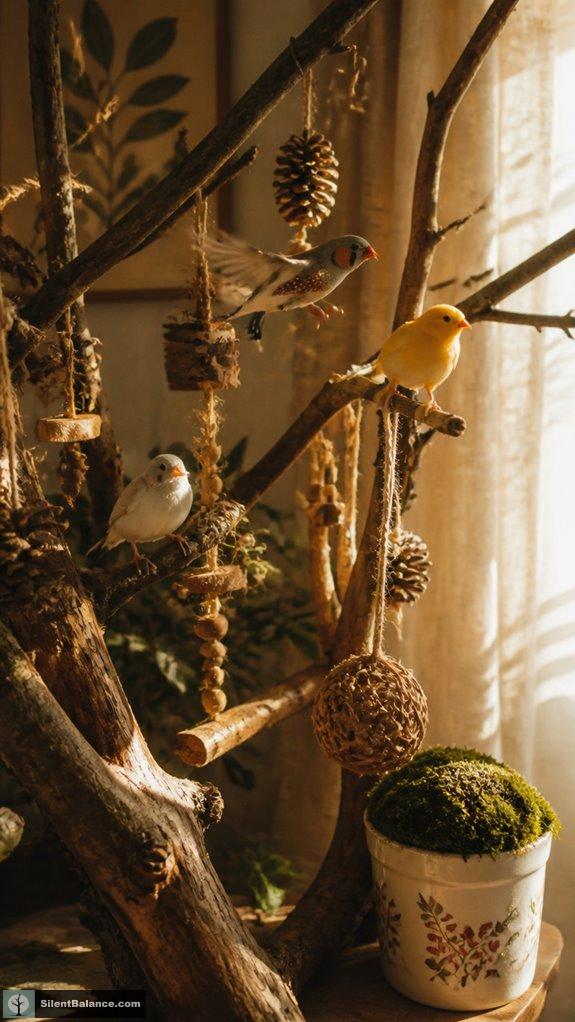
Have you ever stopped to think about the deeper meaning behind the trees and branches we use in our homes? Tree folklore and cultural significance run deep; they represent growth, strength, protection, and renewal.
When you incorporate branches or bark into your aviary, it’s more than decoration — it’s a symbol of life’s resilience. Think about ancient legends that link trees to wisdom or rebirth.
Using symbolic elements like pinecones, twigs, or gnarled bark adds layers of meaning, making your setup not just beautiful but meaningful. Embracing the symbolism of trees can help foster a sense of harmony and connection in your space.
Trees also symbolize immortality and spiritual growth, which can inspire a sense of eternal connection and enlightenment in your environment. Do you want your aviary to inspire or protect? Embracing tree symbolism might just do the trick.
Natural Wood Carving Tools
Natural wood carving tools aren’t just about making pretty shapes—they’re your secret weapon for transforming raw branches into artful, functional pieces for your aviary.
With the right tools, you can master artistic carving and bring a new dimension to your natural design. Ready to carve with confidence? Keep your tools sharp, clean, and well-maintained—poor tool care ruins your work faster than a squirrel on a nut.
Techniques like gouging, gouging, and sanding help shape branches with precision. Do you see your branches as future symbols of growth, strength, and renewal? Use carved details to deepen that meaning, creating a sanctuary that’s both beautiful and symbolic. Incorporating dimmable smart bridge kits can further enhance your space by allowing easy lighting control to highlight your craftsmanship.
Indoor Botanical Illumination Techniques
Step into the world of indoor botanical illumination, where light doesn’t just brighten a space—it transforms it. By understanding bird species preferences, you can select the perfect seasonal branches that mimic nature’s rhythms.
Why settle for static decor when seasonal branch selection can create a dynamic, living environment? Envision branches like spruce tips or cherry blossoms, symbolizing renewal and growth, adding meaning beyond aesthetics.
Use targeted lighting—spotlights, natural sunlight, adjustable LEDs—to emphasize these natural elements without overwhelming your feathered friends.
Isn’t it wonderful how thoughtful illumination turns a cage into a thriving, lively forest? It’s about merging beauty, symbolism, and habitat—your aviary’s secret sauce!
FAQ
How Often Should I Replace or Rotate Branches in My Aviary?
You should rotate branches every 4-6 weeks to guarantee healthy branch maintenance and pest prevention. Regularly inspect branches for mold, insects, or damage, replacing or sanitizing them promptly to keep your aviary safe and thriving.
Can I Incorporate Artificial Branches Alongside Real Ones?
Yes, you can incorporate artificial branches alongside real ones for artificial enhancement and visual variety. Guarantee seamless branch integration, secure attachments, and compatibility with natural branches to maintain a safe, stimulating environment that promotes natural behaviors.
What Are Signs That a Branch Is Unsafe or Deteriorating?
If a branch wobbles or feels brittle, it’s unsafe—indicating compromised stability. Look out for pest holes, mold, or fungi, which threaten pest prevention and signal deterioration, requiring immediate removal to maintain your aviary’s safety and health mastery.
How Do I Prevent Mites or Pests From Infesting Natural Branches?
You prevent pest infestation by routinely pest control and conducting thorough branch inspections, focusing on cracks, crevices, and bark. Quarantine new branches, clean them well, and use natural remedies or approved treatments to minimize risks effectively.
Are There Specific Tree Species Best for Certain Bird Types?
Choose crepe myrtles, apple, and eucalyptus for finches, while buddleja, ash, oak, pine, willow, and maple suit parrots and finches; select tree species based on bird compatibility, ensuring safe, sturdy branches for healthy, natural behaviors.
Summary
Visualize your indoor aviary becoming a living masterpiece, bursting with organic charm and deep symbolism—that’s not just decor; it’s a developing art form. Why settle for sterile walls when you can harness the ancient wisdom of gnarled, weathered branches infused with meaning? Embrace nature’s resilience, let its stories inspire, and watch your space transform into a sanctuary of renewal and rootedness. Ready to create something truly extraordinary—a home that whispers with the soul of the forest?
References
- https://mickaboo.org/newsletter/jul16/work/Indoor Aviary.pdf
- https://www.youtube.com/watch?v=5CyvmcwnxCE
- https://birdtricksstore.com/blogs/birdtricks-blog/how-to-use-natural-tree-branches-in-your-bird-s-cage
- https://freerangeparrots.org/2023/03/24/how-i-made-perch-trees-for-our-aviaries/
- https://www.youtube.com/watch?v=mwQOGNjwusU
- https://www.instructables.com/Walk-in-Bird-Aviary/
- https://www.youtube.com/watch?v=ij_hIfx8M00
- https://thefinchweekly.wordpress.com/2016/03/23/tips-for-starting-a-finch-aviary/
- https://www.cliffsnotes.com/study-notes/5573150
- https://www.coopsandcages.com.au/blog/basic-guide-to-setting-up-your-own-aviary/

- 11 Best Luxury Sandalwood Candles for 2026 - June 19, 2026
- 11 Best Woven Wicker Gift Baskets for 2026 - June 19, 2026
- 11 Best High Powered Binoculars for 2026 - June 19, 2026
