
Transform Your Space With Pyrographic Tree Art
Ever stared at a blank wall and wished it could tell a story? Pyrographic tree art breathes life into empty spaces, creating natural focal points that spark conversation and reflection.
I remember my first pyrography attempt—a scraggly oak that looked more like a lightning-struck tumbleweed. Twenty-seven burns later (not all on the wood), I mastered the delicate art of fire-etched trees.
At Silent Balance blog, we’ve explored how the symbolism of trees connects to our inner worlds—growth, resilience, and renewal all captured in scorched lines and textures.
The perfect tree art doesn’t just decorate. It resonates.
From Bark to Beauty: Real Transformations
My most meaningful pyrography piece emerged after a thunderstorm toppled my grandmother’s favorite maple. Rather than lose it completely, I salvaged a cross-section and burned its own growth rings into the wood—creating a meta-portrait of its life.
The piece now hangs in my entryway, a daily reminder that endings often hide beautiful beginnings. Visitors invariably reach out to trace the burned lines, connecting physically with the story embedded in wood.
Sometimes the most powerful art comes from what we’ve lost.
Quick Takeaways
- Experiment with layering techniques to create depth in tree bark textures, enhancing the storytelling aspect of your artwork.
- Incorporate mixed media elements like textile threads or metallic accents to add unique visual contrast to your tree designs.
- Utilize seasonal themes such as autumn leaves or winter branches to evoke emotions tied to nature’s cycles in your pyrographic art.
- Leverage negative space and silhouettes to enhance the composition of your tree art, promoting tranquility and inviting reflection.
- Engage with fellow artists for inspiration, sharing interpretations of tree motifs that celebrate themes of strength and renewal in your work.
Emphasizing Unique Tree Bark Textures
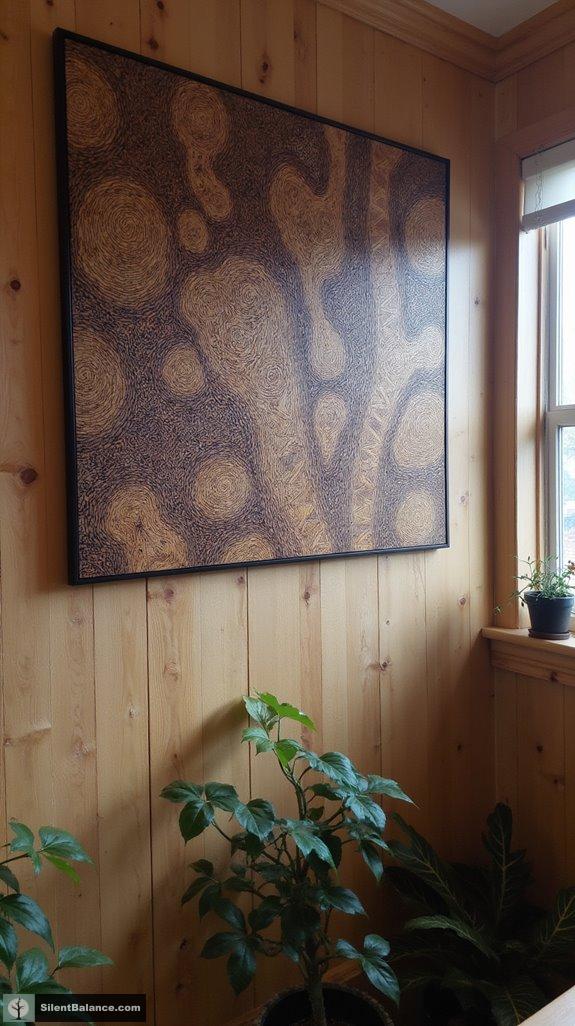
When you plunge into the world of pyrography, don’t you just love how each piece of wood tells its own unique story?
Creating bark textures can be a magical experience, transforming your work into a rich tapestry of natural beauty. Think about chunky, cracked, or smooth surfaces; each one enhances visual contrast. You can use zigzag or swirling strokes to mimic those irregular ridges and patterns that you’d find outdoors. By layering these strokes, you bring depth and dimension to your art, making it as lively as nature itself. And let’s not forget, trees symbolize growth and strength. Wood selection is essential, as different types can yield varying results in texture and depth. Additionally, the rough bark texture of older trees can provide a unique depth that reflects life’s challenges and resilience.
Layering Shadows for Depth Creation
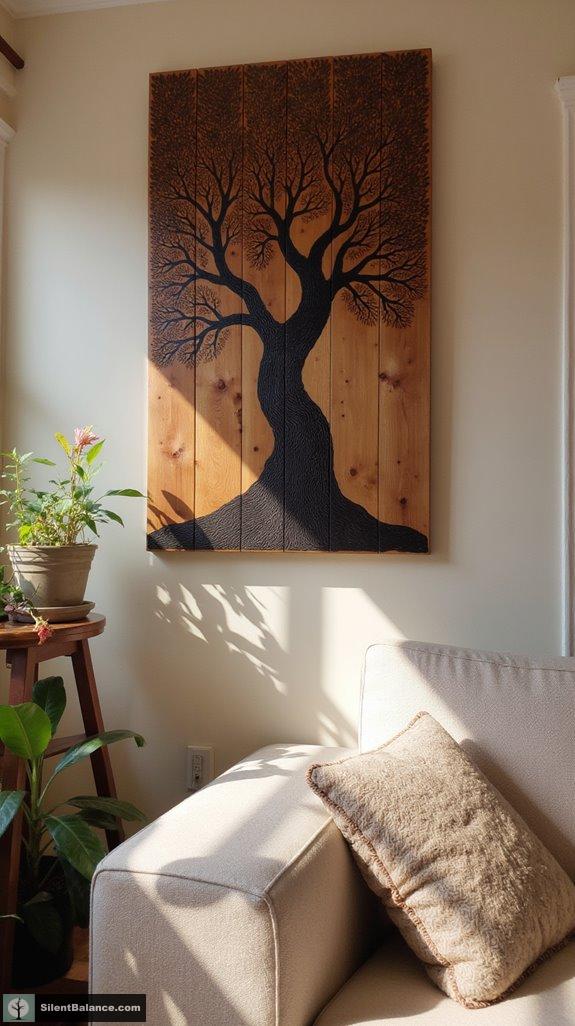
Layering shadows can transform your pyrographic tree art into a stunning masterpiece, as it adds depth and dimension that truly brings your design to life.
Embrace these beautiful elements:
- The journey of light and shadow reflects the growth and resilience of trees.
- Each layer of shadow tells a story, connecting you to nature’s magic.
- Depth perception enhances not just your art, but also the feelings it evokes.
Utilize shading techniques and stroke patterns for incredible textural contrast. Master heat control to create seamless gradient shifts while ensuring shadow intensity feels just right.
Take your time with layering methods, allowing patience to guide you. After all, isn’t it magical how your art can embody such powerful tree symbolism—growth, strength, and renewal—right at home? Additionally, consider how the spiritual significance of trees in various cultures can deepen your connection to your artwork.
Incorporating Mixed Media Elements
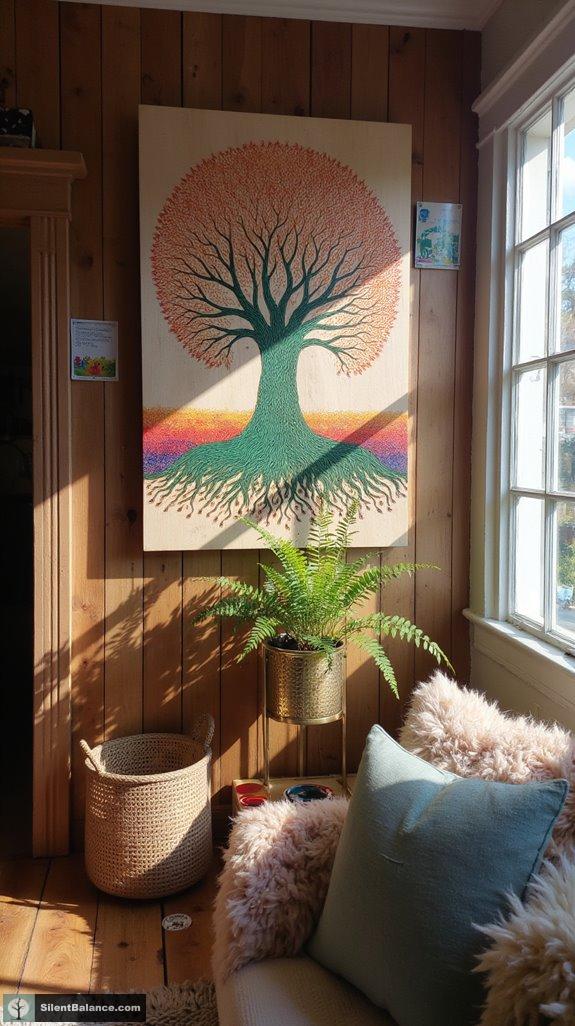
Once your pyrographic masterpiece radiates with layers of rich shadows and depth, it’s time to amp up your design game with some mixed media magic.
Why not invite textile integration into your art? Picture how threads can weave through drilled holes, complementing your burnt designs and adding a delightful texture.
Embrace textile integration by weaving colorful threads through drilled holes, enhancing your pyrographic designs with delightful texture.
Or consider metallic accents—like glimmers of gold or silver—bringing a luxurious pop to your piece. These shimmering finishes highlight details, making your artwork dance in the light.
Combine vibrant acrylic paint for color contrasts with woven threads and sparkling finishes.
This playful blend transforms your piece, breathing life into elements of strength, renewal, and protection that trees symbolize. Moreover, the Bodhi tree serves as a powerful reminder of interconnectedness and the spiritual growth potential inherent in nature.
Balancing Negative Space With Silhouettes
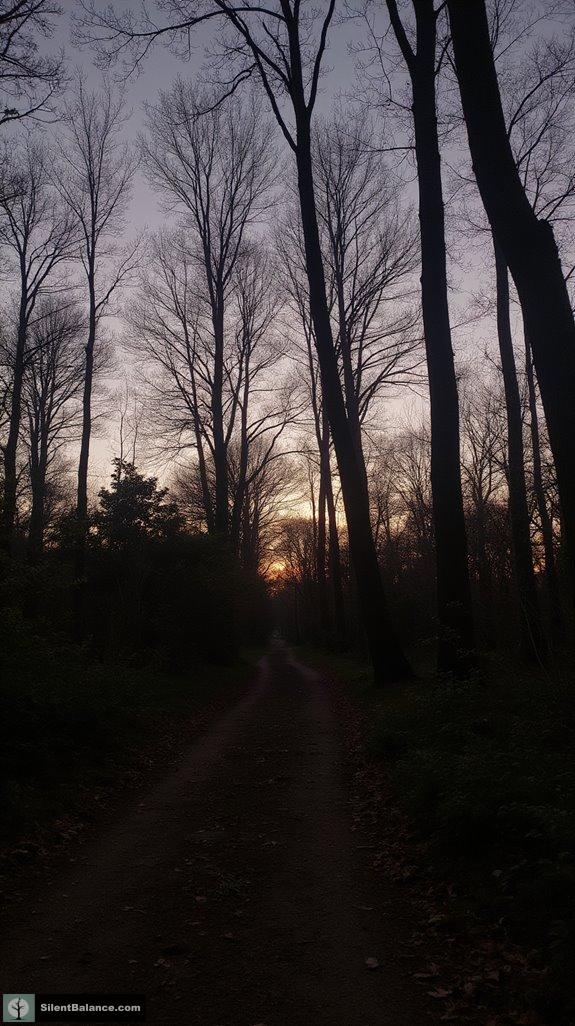
While you might think of tree art as just a simple representation of nature, balancing negative space with silhouettes can transform your piece into something much deeper and more meaningful.
By thoughtfully playing with the silhouette interplay, you can create dynamic shapes that capture attention and stir emotions. Consider these elements:
- Evoking solitude through spaciousness, inviting reflection.
- Instilling tranquility with a balanced composition, letting viewers breathe.
- Telling stories by contrasting bold silhouettes against gentle backgrounds.
When you leave unburned areas, you allow the eye to rest, emphasizing your trees and infusing your artwork with richness.
Experimenting With Varying Branch Angles
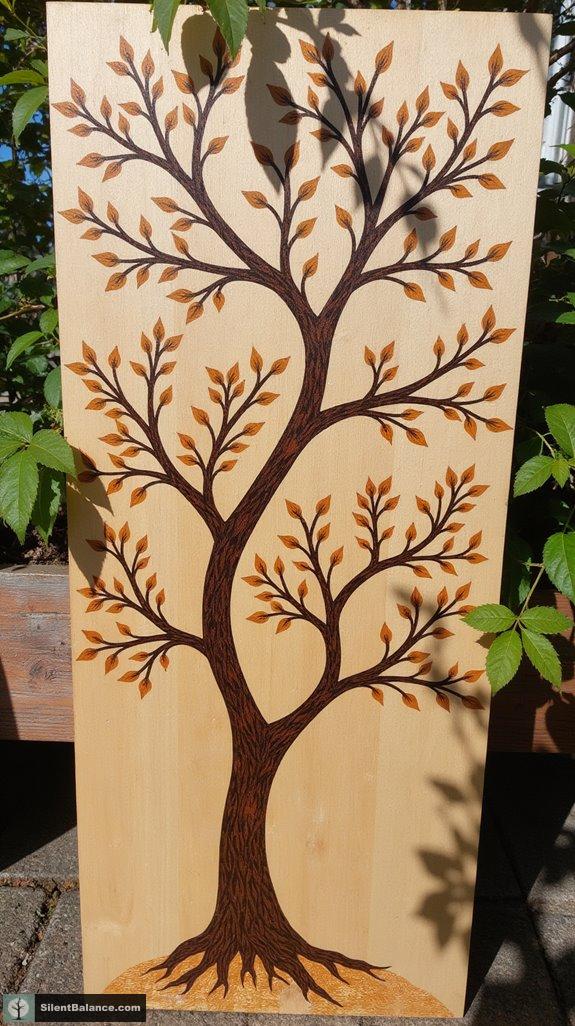
When you immerse yourself in experimenting with varying branch angles, you’re not just adding realism to your pyrographic trees—you’re also inviting a world of symbolism into your decor.
Think about it: each twist and curve reflects growth and strength, celebrating nature’s beauty in your home.
By employing branch curvature, you create an exquisite asymmetrical design that turns heads and tells stories.
Wouldn’t it be delightful to coax those shorter twigs upward, while allowing longer branches to sway downward, mimicking a gentle breeze?
This playful nature of design adds depth and texture, making your tree art truly enchanting.
Designing Seasonal Tree Themes
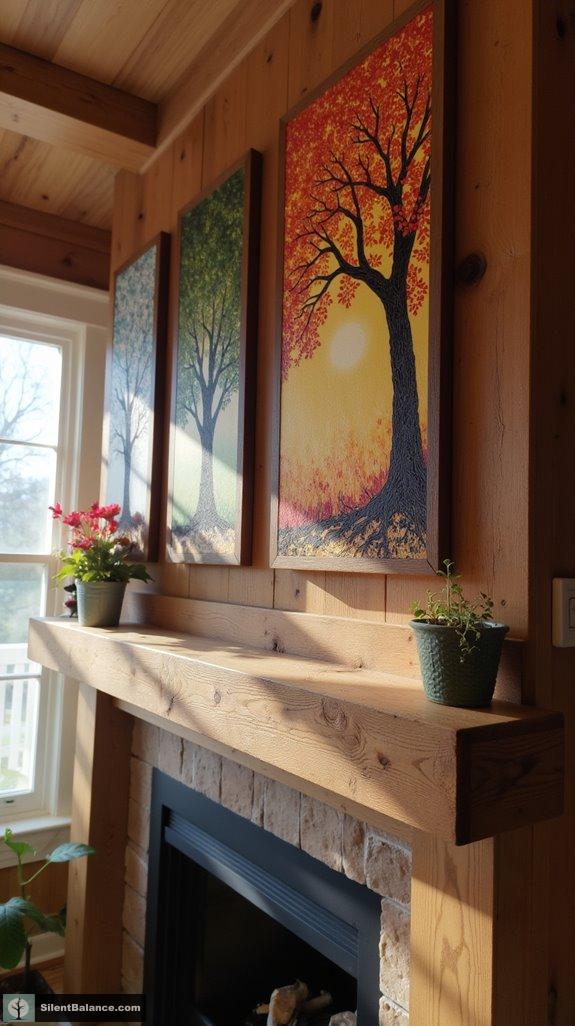
Designing seasonal tree themes can elevate your pyrographic art from simple décor to a meaningful expression of nature’s cycles.
Emphasizing different seasons with color symbolism and seasonal motifs creates a rich visual story. Think about:
- Winter’s bare branches, touched by frost, evoking a serene quiet.
- Spring’s budding leaves, bursting with life and renewal, symbolizing hope.
- Autumn’s vibrant hues, as leaves fall gracefully to signify change.
These themes not only showcase the beauty of seasons but also invite deeper connections with nature.
Seasonal themes in art not only celebrate nature’s beauty but also foster a profound connection to its rhythms.
Wouldn’t it be lovely to have art that reflects the warmth of summer sun or the crispness of winter air in your home?
Release your creativity by blending these motifs with personal meanings—you’ll create something truly intimate and special.
Creating Rustic Roots and Forest Floors
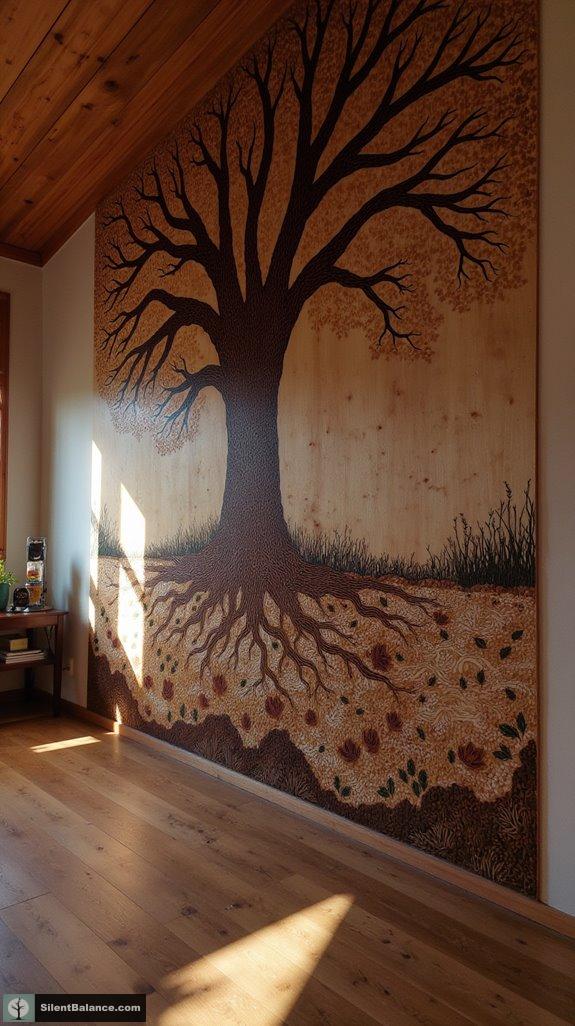
Creating rustic roots and forest floors in your pyrographic art not only brings the beauty of nature indoors but also connects your decor to deeper meanings.
Have you ever thought about how much tree symbolism enhances your space?
Utilizing rooting methods that mimic organic growth makes your designs feel alive. Use varying pressures and shades of brown to create depth in those roots, tapering outward like they do in nature.
For the forest floor textures, mix horizontal and zigzag strokes to represent leaves and grasses, adding random elements like pebbles or twigs for authenticity.
Integrating these elements ties your tree art into a beautiful narrative of growth, strength, and renewal.
Isn’t it amazing how nature inspires so much calm in our lives?
Utilizing Temperature Variations for Effects
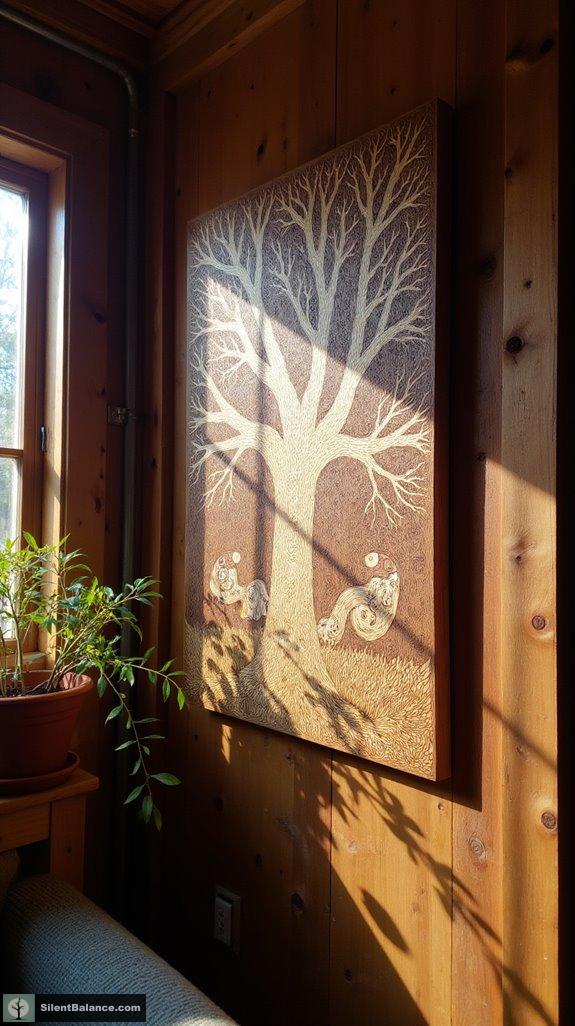
Temperature variations aren’t just about heating things up; they’re the secret sauce in transforming your pyrographic art into a rich, textured tapestry.
By mastering temperature modulation techniques, you can explore incredible effects in your woodwork. Here’s how:
- Control shading intensity for warmth or drama.
- Achieve smooth gradients with consistent movements.
- Create deep, rich textures that feel alive.
Imagine the joy of sculpting every curve and grain in your piece while honoring the tree’s symbolism of growth and strength.
Sculpt each curve and grain, celebrating the tree’s rich symbolism of growth and strength in your artistry.
As you adjust your heat settings, think about the stories the wood has held. Isn’t it magical to think you’re adding your own narrative through art?
Embrace these techniques, and let your creativity flourish!
Translating Photographic References Into Art
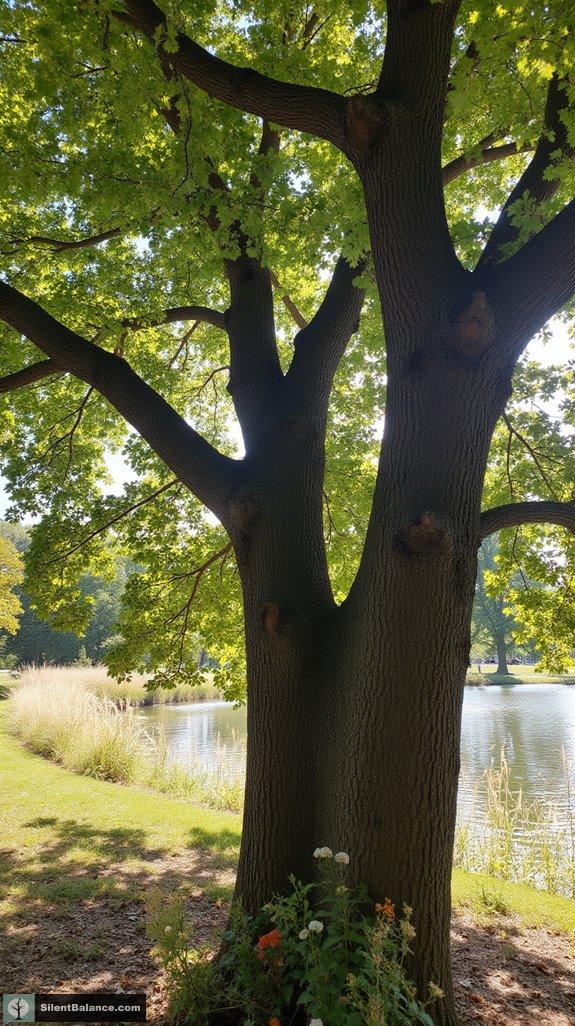
When you immerse yourself in translating photographic references into your pyrographic art, you’re not just re-creating an image; you’re telling a story that’s been waiting to be told.
Consider your photographic selection techniques carefully. Look for compositions that spark your creativity and allow for elaborate details.
Using tracing methods, like graphite transfer paper, can help position those little details just right, steering clear of any freehand mishaps.
Don’t forget to simplify complex scenes into manageable sections, focusing on major light and shadow areas.
Are you ready to convey the strength and renewal of trees through your art?
Let each line you burn connect meaningfully to your decor, enhancing the stories that the natural world tells.
Integrating Background Scenes for Context
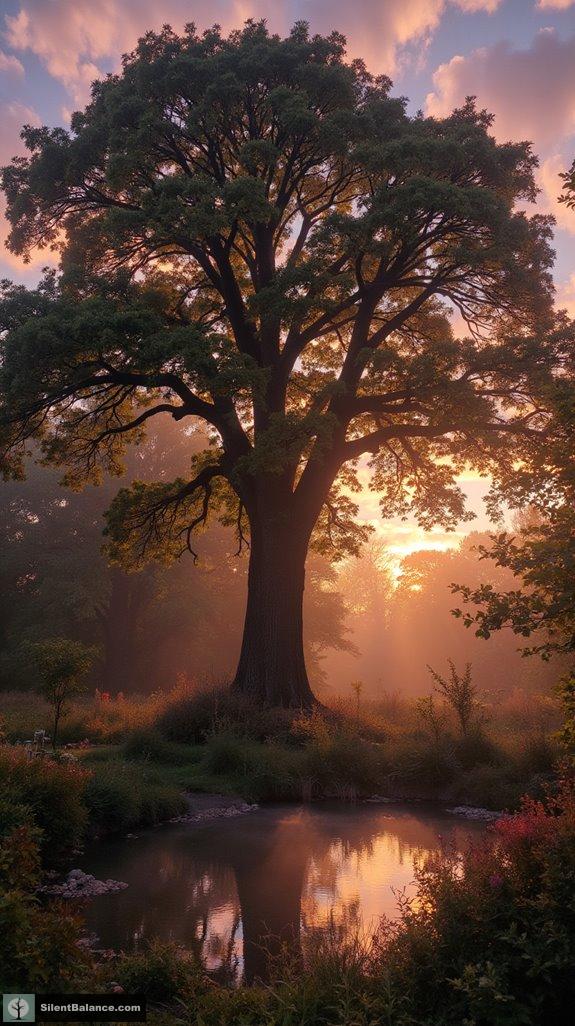
Integrating background scenes in your pyrographic art not only enhances visual appeal but also brings out the deeper meanings behind tree symbolism in home decor.
Think about it: what feelings do you want to evoke?
Consider the emotions you wish to inspire through your art.
- A sense of tranquility with soft, muted tones?
- The warmth of nostalgia through rustic details?
- An air of mystery through shadowy contrasts?
By utilizing background layering and incorporating atmospheric viewpoint, you’ll create a natural depth that speaks volumes.
Start by burning your foreground trees first, then move to the background. Play with varied motions and heat settings, allowing light and shadow to dance beautifully across your canvas.
This isn’t just art; it’s a storytelling tapestry of growth, strength, and renewal waiting to fill your home with meaning.
How to Make Wood Burning Tree Branch Sculptures
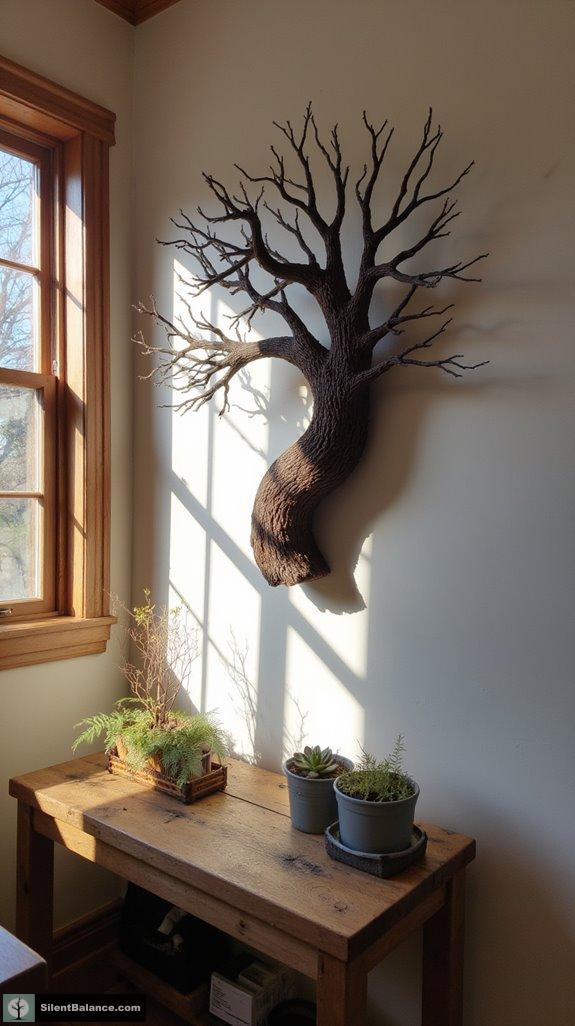
Bring the natural beauty of tree branches to life through the enchanting art of wood burning. Crafting sculptural tree branch art infuses your home with the tranquility of the forest.
Start by selecting smooth, untreated hardwood like basswood or birch for ideal burning results. Use pyrography tools with fine-point tips to add complex details, from textured bark to delicate twigs. Vary the thickness and depth of your burns to create a layered, dimensional effect.
Sculpt organically flowing branches that twist and turn, capturing the wild elegance of nature. This meditative practice allows you to channel the energy of the trees, weaving their stories into stunning, one-of-a-kind works of art.
Nature-Inspired Design Elements
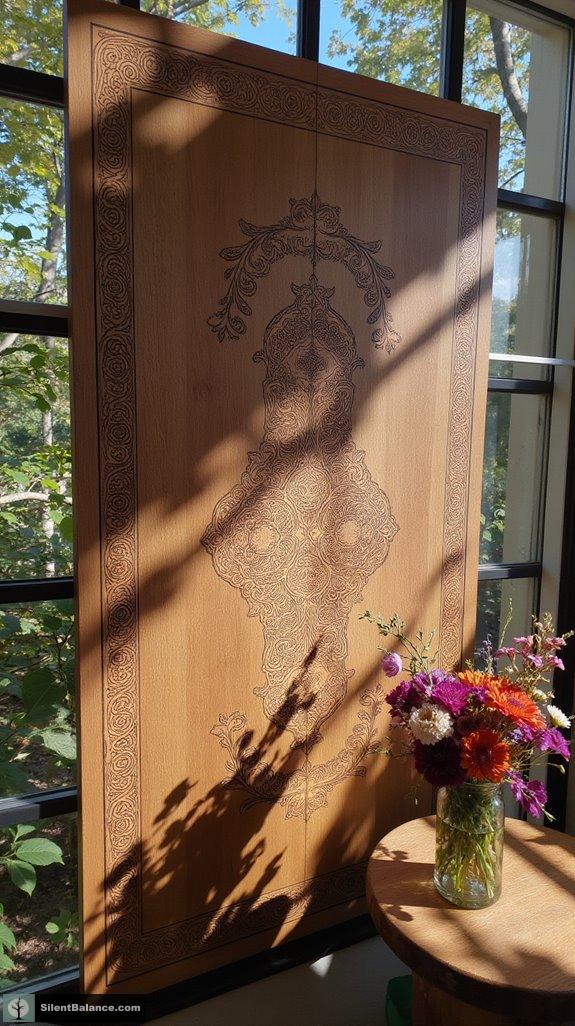
Nature brings a treasure trove of inspiration, especially when it comes to decorating your home. Why not embrace elements that evoke growth and renewal?
- Leaf patterns whisper tranquility.
- Bird motifs sing of freedom.
- Floral symbolism connects you to the earth.
In your pyrographic art, think about the wooden surfaces you choose and the meticulous surface preparation required.
Utilize artistic techniques like layering and shading to bring your designs to life. Incorporate insect designs or geometric shapes for that extra visual pop!
Don’t forget the power of community sharing; engaging with fellow artists can inspire unique interpretations.
When you adorn your space with nature-inspired elements, you create not just decor, but reflections of strength, protection, and the spirit of the trees.
FAQ
What Safety Precautions Should I Take While Pyrographing?
When pyrographing, think fire safety like a superhero! Wear protective gear like a P95 mask and goggles. Keep your workspace tidy and never leave hot tools unattended to guarantee a safe, enjoyable experience.
How Can I Clean My Pyrography Tools After Use?
After use, clean your pyrography tools using gentle brush techniques. Store them carefully, ensuring they’re protected from damage. This way, you’ll maintain their performance and enjoy a seamless experience during your next creative session.
What Type of Wood Is Best for Beginners?
For beginners, ideal woods like basswood and aspen shine with soft textures and fine grains. They let your pyrography tools glide effortlessly, making it easier to create beautiful designs without the frustration of uneven burns.
Can I Use Colored Pencils on Burnt Wood?
Absolutely, you can use colored pencils on burnt wood. Employ colored pencil techniques to create beautiful burnt wood effects. Just guarantee your surfaces are prepared properly, allowing those colors to blend harmoniously with your art’s exquisite details.
How Do I Maintain Consistency in Burn Strokes?
To maintain consistency in burn strokes, focus on uniform stroke techniques and gentle pressure. Pay attention to burn depth by adjusting heat and speed, creating smooth shifts that bring your artwork to life with warmth.
References
- https://www.instructables.com/Wood-burning-101-Techniques-and-Tricks/
- https://www.youtube.com/watch?v=_7gkakVTMM4
- https://www.youtube.com/watch?v=I1tOFKDbtTQ
- https://pyrographymadeeasy.com/2022/01/11/pyrography-techniques-basic-burn-strokes-wood-burning-tutorial/
- https://www.instructables.com/Pyrography-or-How-to-Wood-Burn-Art/
- https://mymodernmet.com/pyrography-wood-burning-art/
- https://www.burnsavvy.com/wood-burning-techniques.html
- https://www.youtube.com/watch?v=TdgC4FJjOo8
- https://pyrographymadeeasy.com/2021/10/12/pyrography-techniques-tips-for-smooth-burn-results-wood-burning-tutorial/
- https://www.youtube.com/watch?v=itknYwkOIZ8
- https://www.youtube.com/watch?v=yaYSqp1Ebyo
- https://www.youtube.com/watch?v=YguI95X_YpU
- https://www.youtube.com/playlist?list=PLIo_xYe_nK53wMunccXlNFJz14eIJtkH9
- https://pyrographymadeeasy.com/2019/02/22/pyrography-shading-techniques-to-get-smooth-gradient-color-in-wood-burning/
- https://www.youtube.com/watch?v=EGItvhG05fg
- https://truart.co/2018/05/22/shading-technique/
- https://briansloanartist.com/new-mixed-media-artwork-pyrography-acrylic-paint/
- https://www.woodburncorner.com/burnblog/alternative-meduims-to-use-with-pyrography
- https://discover.hubpages.com/art/WoodburningCentral
- https://www.youtube.com/watch?v=Dpk6GBoZt_0

- 11 Best Luxury Sandalwood Candles for 2026 - June 19, 2026
- 11 Best Woven Wicker Gift Baskets for 2026 - June 19, 2026
- 11 Best High Powered Binoculars for 2026 - June 19, 2026
