

Unleashing the Art of Bonsai Propagation
Ever thought about turning a simple cutting into a living masterpiece? Bonsai propagation is where your dreams begin!
Growing up, I remember my grandfather teaching me the symbolism of trees. Each one told a story. He shared secrets on nurturing cuttings—healthy little snippets yearning for life. His wisdom inspired our blog, Silent Balance, where we empower others to discover this tranquil journey.
To succeed, snatch healthy 2 to 4 inch cuttings.
Mix them in well-draining soil with perlite and peat moss.
Maintain a cozy climate of 65°F to 80°F, and adore them with humidity and dappled light.
Once, I stuck a cutting I swore had no chance, only for it to flourish! Talk about resilience.
Let these little plants remind you—great things grow from tiny beginnings.
Quick Takeaways
- Select healthy, vigorous cuttings from the last growth cycle, ideally 2 to 4 inches long with well-developed buds.
- Prepare a suitable soil mix comprising eight parts perlite, one part peat moss, and one part vermiculite for optimal drainage and moisture retention.
- Maintain a warm environment between 65°F to 80°F with high humidity and moderate light exposure for effective rooting.
- Utilize rooting hormones like IBA to stimulate root growth and consider using heel cuttings for increased success rates.
- Halve the leaf area of cuttings to reduce transpiration and promote healthier root development.
Selecting Healthy Cuttings
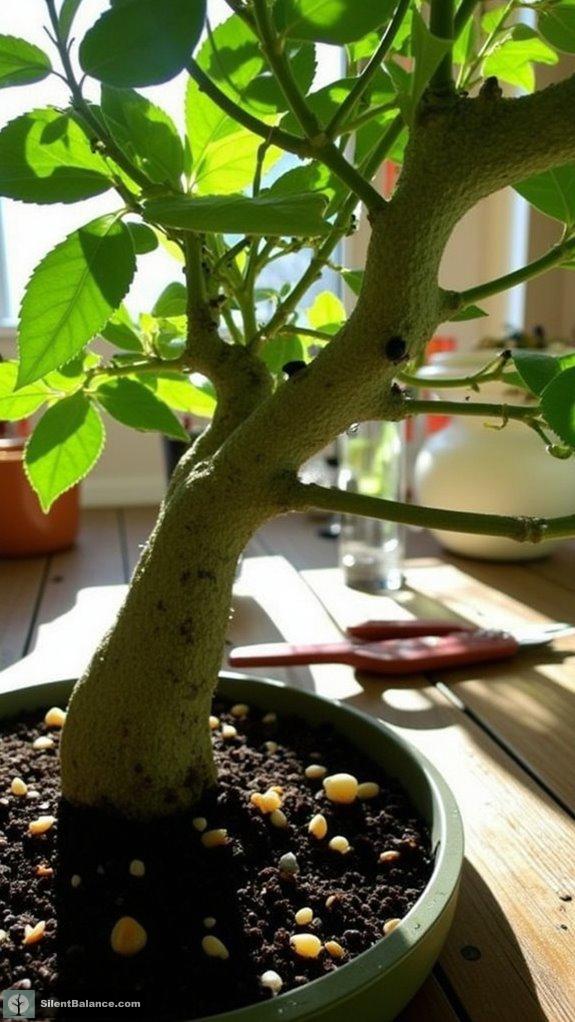
When it comes to bonsai propagation, selecting healthy cuttings is like choosing the crème de la crème from your garden; it sets the foundation for your bonsai success. I’m always on the hunt for those vigorous branches, the ones bursting with life, preferably from the last growth cycle. Who wants old, brittle wood anyway? Aim for cuttings around 2 to 4 inches with a thickness of about 1/8 inch—no thick boys allowed! Oh, and check for well-developed buds; they’re like the cherry on top for your future bonsai masterpiece. Additionally, maintaining cultural symbolism in your bonsai care will enhance your connection with the plant. Timing’s key too—the ideal bonsai spring and summer are your golden hours.
Preparing Cuttings for Propagation
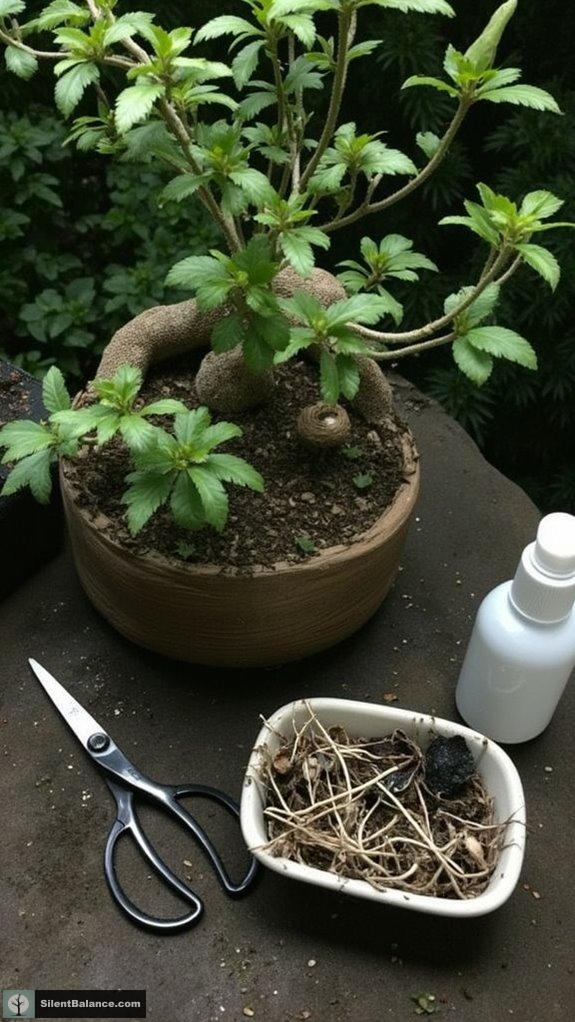
Preparing your cuttings for propagation is like setting the stage for an enchanting bonsai performance—you want everything to be just right before the show begins.
First, aim for cuttings between 2 to 4 inches long, ideally around 1/8 inch thick. Thicker pieces can be tempting, but they often get stage fright and don’t root well. Ideal cutting size is crucial for ensuring successful rooting. It’s also important to choose a suitable soil mix that provides the necessary specific nutrients critical for rooting success.
Consider heel cuttings, too; those little tail-end pieces of older wood can give your cuttings an edge.
Don’t forget leaf management! Cutting the leaf area in half slows transpiration—kind of like a bonsai spa day.
Choosing the Right Planting Medium
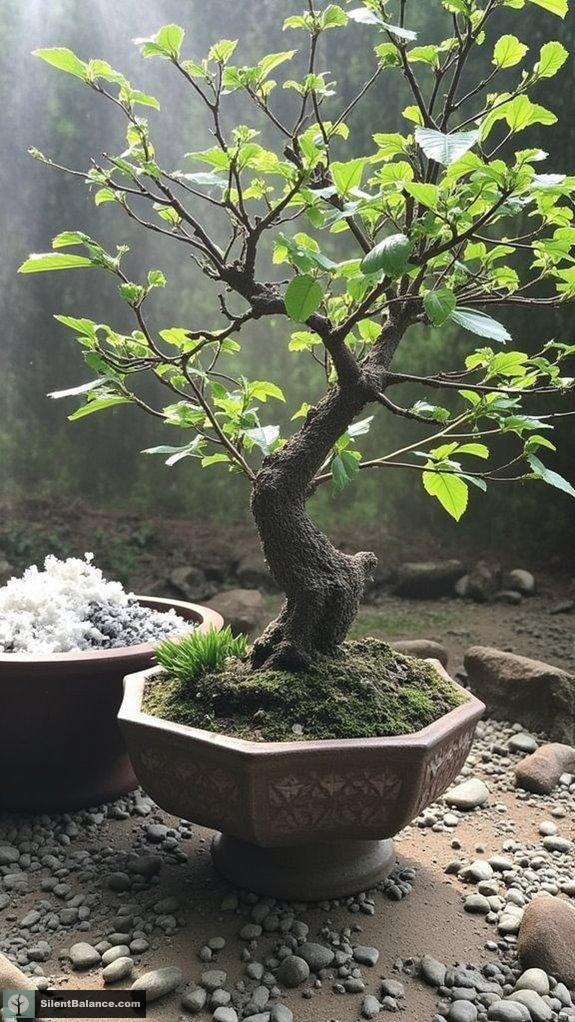
Choosing the right planting medium can truly make or break your bonsai propagation success.
You want something that drains well but still retains enough moisture. Think of it as a high-wire act between drowning your cuttings and turning them into shriveled little twigs. Remember that outdoor bonsai trees require specific care as they thrive in different conditions than traditional houseplants.
Check out this handy reference:
| Component | Benefits |
|---|---|
| Perlite | Great aeration and lightweight |
| Peat Moss | Moisture retention superstar |
| Vermiculite | Nutrient and water holder |
| Orchid Bark | Provides stability and drainage |
When mixing, aim for eight parts perlite, one part peat moss, and one part vermiculite. That’s the sweet spot for keeping those roots happy. Recall, bonsai dreams need a solid base!
Creating an Ideal Environment for Rooting
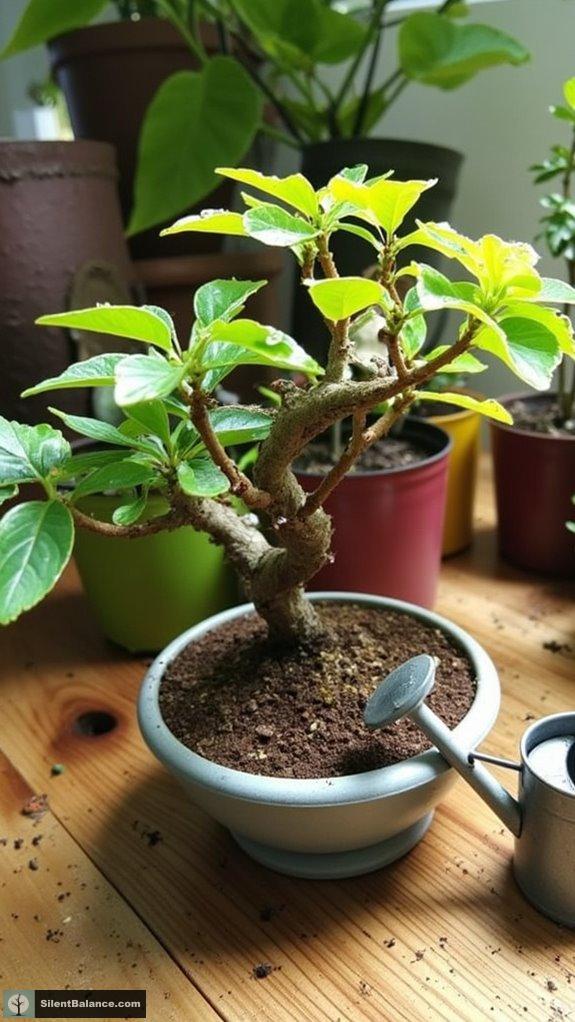
Creating an ideal environment for rooting can truly feel like alchemy; it’s where the magic of bonsai propagation begins. Think of it as crafting a luxurious spa day for your cuttings.
First, let’s talk temperatures—aim for that sweet spot of 65°F to 80°F. Recall, a little bottom heat works wonders, just don’t overcook those babies!
Humidity? Yes, please! High humidity keeps cuttings happy but avoid waterlogged chaos—nobody likes swamp vibes.
And light exposure? Moderate, dappled light is your bestie here. Think of it as a warm hug, not a sunburn!
With proper attention to aeration and careful moisture balance, you’re laying the foundation for successful rooting. Are you ready to make magic happen?
Enhancing Root Development Techniques

Enhancing root development techniques is like pushing the turbo button on your bonsai propagation journey—so let’s dive right in!
First off, have you tried root pruning? It’s a game-changer! Vertical roots may just be following orders, but redirecting them to grow laterally encourages that coveted nebari, or root flare.
Root pruning is your secret weapon—redirect those vertical roots to create a stunning nebari and watch your bonsai flourish!
And don’t overlook rooting hormones, like IBA! A sprinkle can catapult your cuttings into root action, speeding up success like a racecar at a finish line.
Have you considered air pruning? That magic occurs when roots hit the pot edges and start branching like crazy, instead of getting tangled.
With a few innovative tweaks, you’re setting the stage for a robust, balanced bonsai. Ready to rev up your propagation game?
Alternative Methods of Propagation
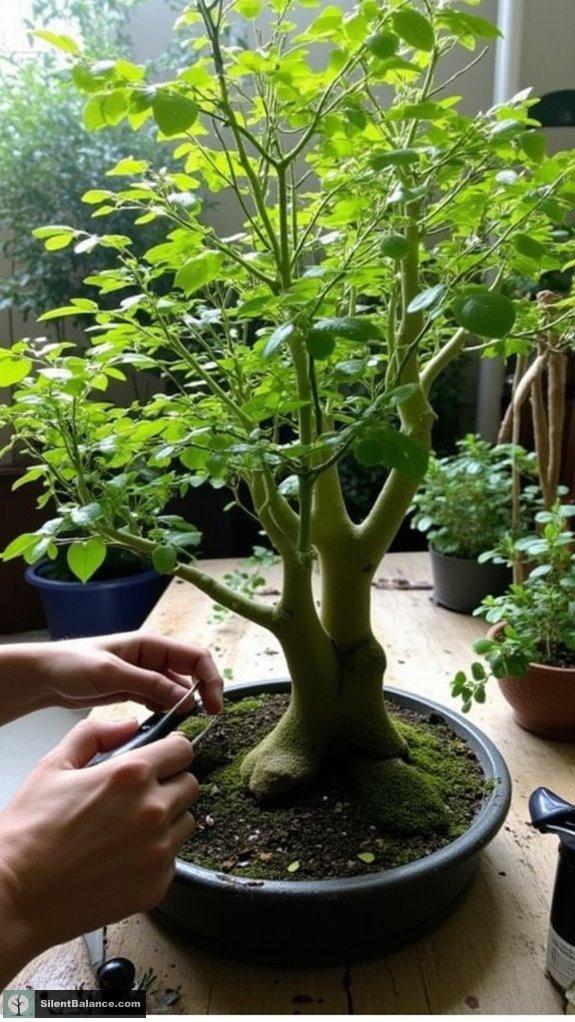
When it comes to bonsai propagation, exploring alternative methods can be a thrilling adventure, and believe me, it’s more rewarding than binge-watching your favorite show!
Have you ever tried air layering? It’s like giving your bonsai a high-speed train to root town! Just peel a ring of bark, apply rooting hormone, and wrap that branch in moss.
In 4–8 weeks, you’ll have a brand-new plant ready to pot.
And let’s not overlook seed propagation, which offers quirky genetic diversity—talk about a bonsai buffet!
Sure, it takes patience, but watching your little seedling become a mighty bonsai is pure magic.
Developing and Training Young Bonsai Plants
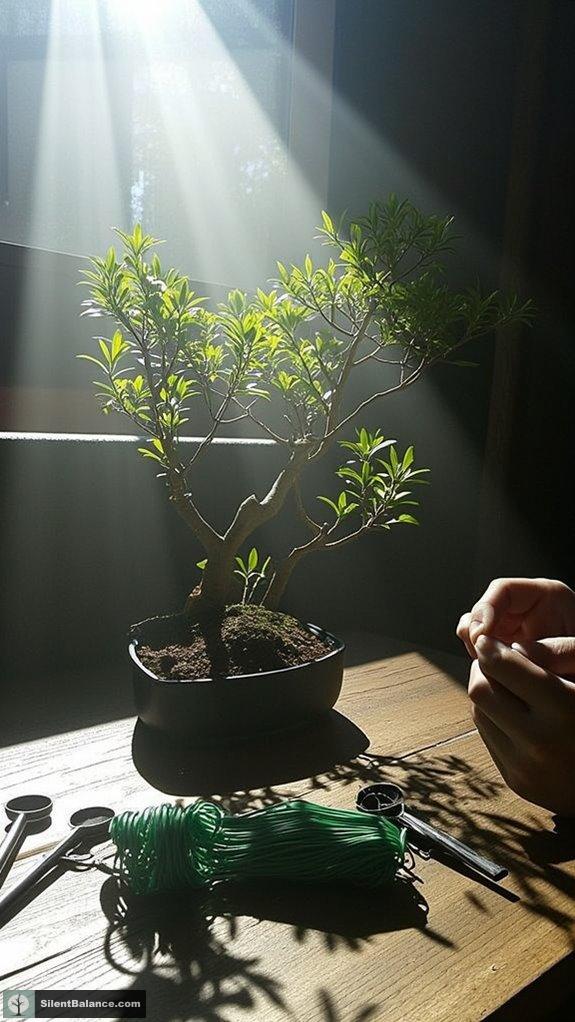
Developing and training young bonsai plants isn’t just a task; it’s an art form that combines patience, creativity, and a sprinkle of finesse.
Ever tried shaping a tree with just a pair of scissors and some wire? Welcome to bonsai!
Pruning is your secret weapon—shape that trunk with a bit of structural pruning in spring, using concave cutters to promote healing.
Wiring’s like giving your branches a little yoga session—twist and bend them into your desired shape, but don’t forget to remove the wire before it bites!
What about foliage? Pinch back those vibrant new buds to cultivate denser pads.
The journey of bonsai is endless—are you up for the challenge? Let’s create something extraordinary together!
Watering Frequency for Bonsais
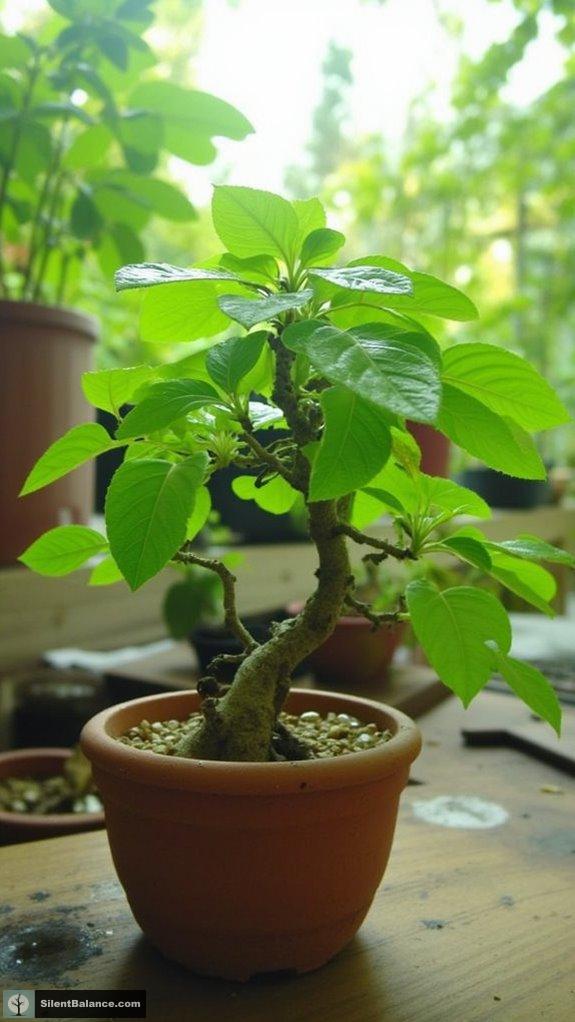
So, how do you figure out the best watering frequency? It’s a bit of an art, really. I’ve found that the secret’s in the soil and the tree’s needs, not a strict schedule. Here’s how I approach it:
- Only water when the soil feels dry to the touch.
- Adjust based on species, pot size, and climate.
- Watch for signs like wilting leaves to gauge urgency.
During scorching summer days, I might water up to three times!
Yet in winter, I ease off to avoid waterlogging.
Placement matters too, whether your bonsai’s basking indoors or flirting with the sun outside.
Keep in mind, each bonsai has its own quirky personality—get to know them, and you’ll be on the right track!
Cultural Significance of Trees
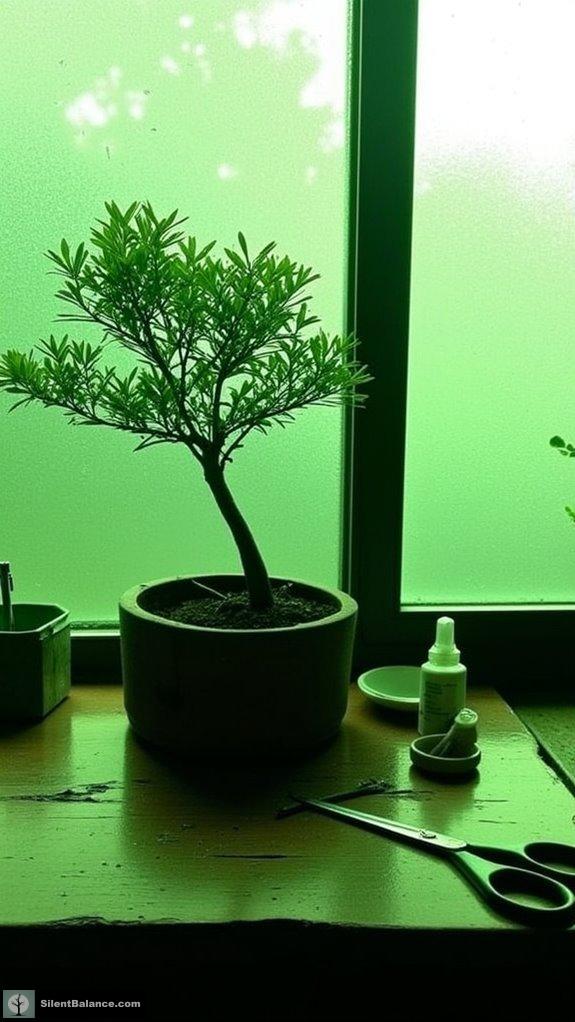
Trees hold a powerful cultural significance across the globe, and let me tell you, it’s fascinating!
From the sacred Bodhi Tree in Buddhism, where enlightenment was sparked, to the mighty Oak revered by the Celts, trees are living symbols of wisdom and endurance.
Take the Banyan Tree in Hinduism—it’s tied to Vishnu, embracing notions of immortality.
The Banyan Tree symbolizes immortality in Hinduism, deeply connected to the divine essence of Vishnu.
Recall those epic tales of Yggdrasil? Connecting nine worlds, it’s the ultimate cosmic connector.
And let’s not forget the Baobab, the “Tree of Life” in Africa—a literal embodiment of sustenance and shelter.
Questions and Answers
How Do I Choose Between Softwood and Hardwood Cuttings?
Choosing between softwood and hardwood cuttings can spark a debate, but it doesn’t have to be intimidating.
I often go for softwood when I want quick results, especially with tender plants.
If I’m patient, though, hardwood is my go-to for sturdier species like fig or wisteria.
Think about what’s in your bonsai garden; do you need instant gratification, or are you ready for a long-term commitment?
Each method has its charm!
Can I Propagate Bonsai From Seeds Instead of Cuttings?
Absolutely, you can propagate bonsai from seeds!
It’s a rewarding journey, though it takes patience. Think about it—watching those tiny seeds transform into miniature trees is pure magic.
Just soak ‘em, stratify if needed, and then plant.
Sure, the wait can stretch over years, but you’ll end up with unique shapes and styles, all your own.
Want to create a one-of-a-kind masterpiece? Start with seeds, and let nature do its thing!
What Is the Best Time of Year for All Species?
Oh, let’s talk timing!
For most species, spring and summer are your go-to seasons for cutting propagation. Visualize those fresh buds bursting with life, right? That’s when they’re most enthusiastic to root.
Deciduous trees thrive in early spring, while conifers prefer late spring.
Tropical varieties love summer, basking in warmth for successful growth.
Just steer clear of frost or scorching heat. Gotta give those cuttings the best shot to flourish! Ready to dig in?
How Long Does It Take for Cuttings to Root?
So, how long does it take for cuttings to root?
Well, it can vary quite a bit! Most of my cuttings take about 4 to 6 weeks under ideal conditions.
But if I’ve got a Satsuki Azalea? I might be waiting a few months.
Temperature and humidity play a big role, too—night temps above 15 °C really help.
Got a favorite species you’re trying? Let’s dig into that together!
What Are the Signs of Successful Rooting in Cuttings?
Oh, the elusive signs of successful rooting! It’s almost like waiting for a surprise party that doesn’t happen.
But when it does, you’ll see those dazzling white roots peeking through, and new shoots bursting forth, revealing your cutting’s secret.
Check for firm roots, no mushiness, and vibrant leaves; think of them as your plant’s celebration dance!
And if you’re not smelling something funky, you’ve got yourself a rooting rock star, my friend!
References
- https://bonsaibar.com/blogs/tree-care/propagating-your-dwarf-jade
- https://www.pubs.ext.vt.edu/426/426-601/426-601.html
- https://www.herons.co.uk/Video-Tutorials/How-to-Propogate-Bonsai–Make-Cuttings/
- https://www.youtube.com/watch?v=bIogcjtaQMw
- https://www.bonsaiempire.com/basics/cultivation/from-cuttings
- https://www.bonsaiempire.com/basics/styling/pruning
- https://www.youtube.com/watch?v=X1A8SfXfZ-U
- https://wazakurajapan.com/blogs/news/leaf-pruning-cutting-thinning-bonsai-care-routine
- https://www.youtube.com/watch?v=QtgAuV5VhKY
- https://www.youtube.com/watch?v=APlP93nr5FE

- 11 Best Luxury Sandalwood Candles for 2026 - June 19, 2026
- 11 Best Woven Wicker Gift Baskets for 2026 - June 19, 2026
- 11 Best High Powered Binoculars for 2026 - June 19, 2026
