
Mastering Propagation for Your Bonsai Collection
Want to elevate your bonsai collection? Let me share my best secrets with you!
A few years ago, I stumbled into the world of bonsai.
Inspired by the symbolism of trees, I wanted to create beauty in every tiny leaf.
Through our blog, Silent Balance, I’ve shared lessons learned about cuttings, water rooting, and air layering.
It’s fascinating how simple techniques can turn a twig into a breathtaking art form.
Remember, every tree has a story to tell.
I vividly recall propagating my first bonsai.
Nervously, I snipped a cutting and watched it transform over weeks, realizing the patience it requires.
That moment taught me more than just propagation—it was about nurturing life!
Let’s dig in and make your bonsai dreams blossom.
Quick Takeaways
- Cuttings: Utilize 2-4 inch cuttings from healthy branches during appropriate seasonal timing to enhance rooting success in various tree species.
- Water Rooting: Place semi-hardwood cuttings in sterilized water, ensuring indirect sunlight for 6 hours daily, to promote root development.
- Air Layering: Use the girdling technique on branches to develop roots while still attached to the parent tree, encapsulated in moist sphagnum moss.
- Grafting: Join different plant parts to create a new tree, benefiting from unique characteristics of both parent plants, enhancing diversity in bonsai collections.
- Soil Mixtures: Employ well-draining soil blends suitable for bonsai, ensuring consistent moisture levels and preventing root rot during propagation.
Propagation From Cuttings

When it comes to creating your own bonsai, propagation from cuttings is one of the most rewarding routes you can take. First, grab a sharp tool and make those cuttings, ideally between 2-4 inches long. Go for a 45-degree angle—trust me, it minimizes damage.
After that, strip the leaves from the bottom half to keep moisture in, and consider wounding the base to stimulate those roots! It’s a game-changer for species like Malus and Acer. Most trees easily propagated with cuttings are deciduous and some conifers. Using rooting hormone can enhance the success rate of your cuttings as well.
Timing is everything, so spring and summer are your golden windows. Keep a warm, humid environment for those little guys, and don’t shower them in direct sunlight just yet.
Sounds fun, right? So, roll up those sleeves, and let’s get propagating!
Water Rooting Method
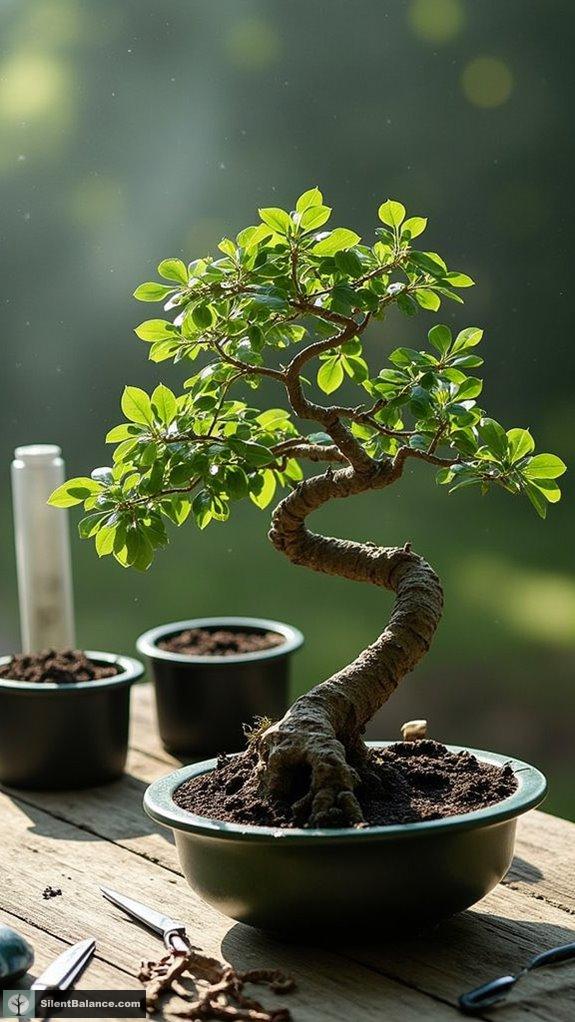
Diving into the world of water rooting is an exciting venture, especially if you’re itching to propagate some new bonsai friends. This technique is a breeze, perfect for beginners and seasoned growers alike. Start by selecting healthy cuttings, like those from ficus or Japanese maple. Want to enhance root growth? Simply shave the bark!
Here’s a quick glance at some essentials:
| Step | Details |
|---|---|
| Cutting Selection | Young semi-hardwood stems preferred |
| Light Exposure | Indirect sunlight for 6 hours |
| Water Quality | Use clean, sterilized water |
| Monitoring Rooting | Remove decayed parts to avoid contamination |
Soon, roots will sprout! So why not give it a shot? Your bonsai masterpiece awaits!
Air Layering Technique
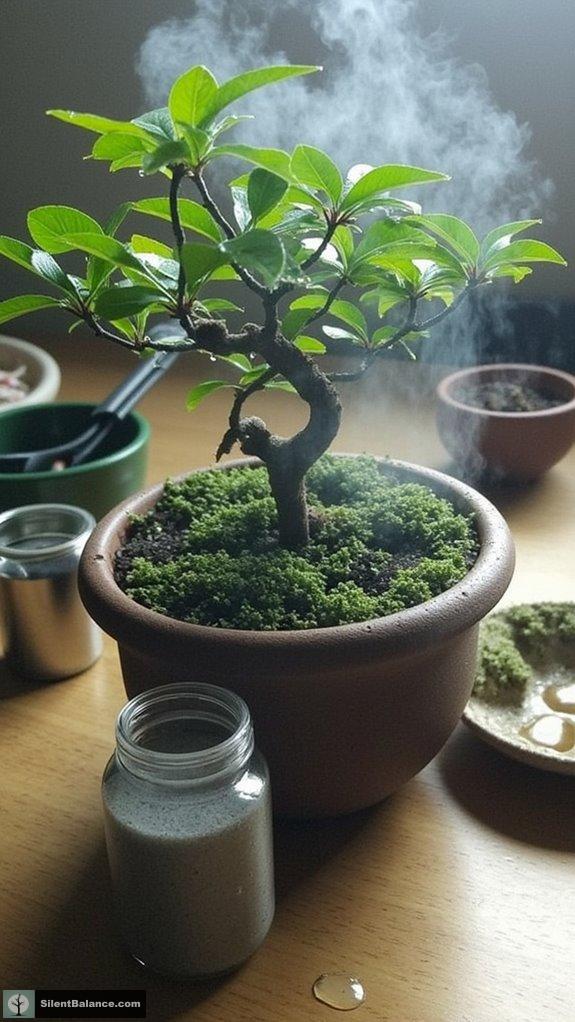
Air layering is truly a fascinating method for bonsai propagation, and I can’t wait to share it with you!
Picture this: you’re coaxing roots to form on a branch still attached to the parent tree. How cool is that?
One popular method is the girdle or ring technique, where I remove a strip of bark all around the branch—just the right amount to expose the cambium, which encourages root growth. This method often produces the best results due to the complete removal of cambium, which is essential for effective root formation. Air layering not only allows for microcosm metaphors in bonsai art but also helps in understanding the intricate balance of nature.
I love wrapping that area with moist sphagnum moss and securing it with clear plastic. It’s like a cozy little nest for the roots!
Don’t forget a sprinkle of rooting hormone to give them a boost.
Patience is key; in about six weeks, you could have a new bonsai tree ready to pot!
Timing and Selection of Cuttings
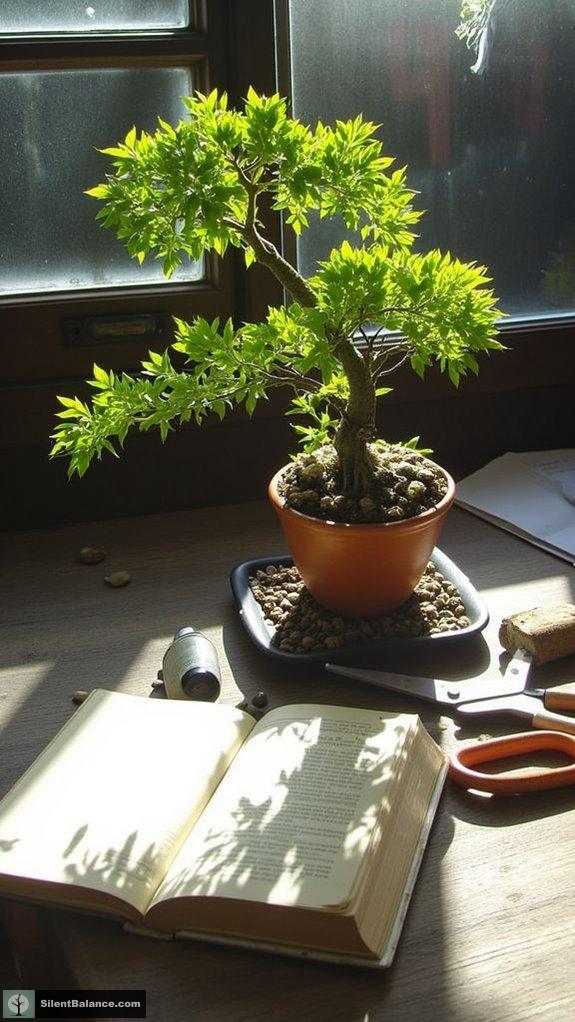
Timing’s everything, isn’t it? Understanding when to take cuttings can truly make or break your bonsai propagation journey. Typically, spring and summer are prime for most bonsai, but late summer and winter are great for hardwood cuttings.
Check out this table for a quick reference:
| Cutting Type | Best Timing |
|---|---|
| Softwood | Spring to Early Summer |
| Semi-Hardwood | Mid-Season |
| Hardwood | Late Summer to Winter |
| Specific Species | Depends on the Variety |
Aim for cuttings that are 2-4 inches long and disease-free for the best results. Recall, a little node goes a long way for some species! So, let’s get cutting and watch our bonsai dreams flourish!
Use of Rooting Hormones and Mediums
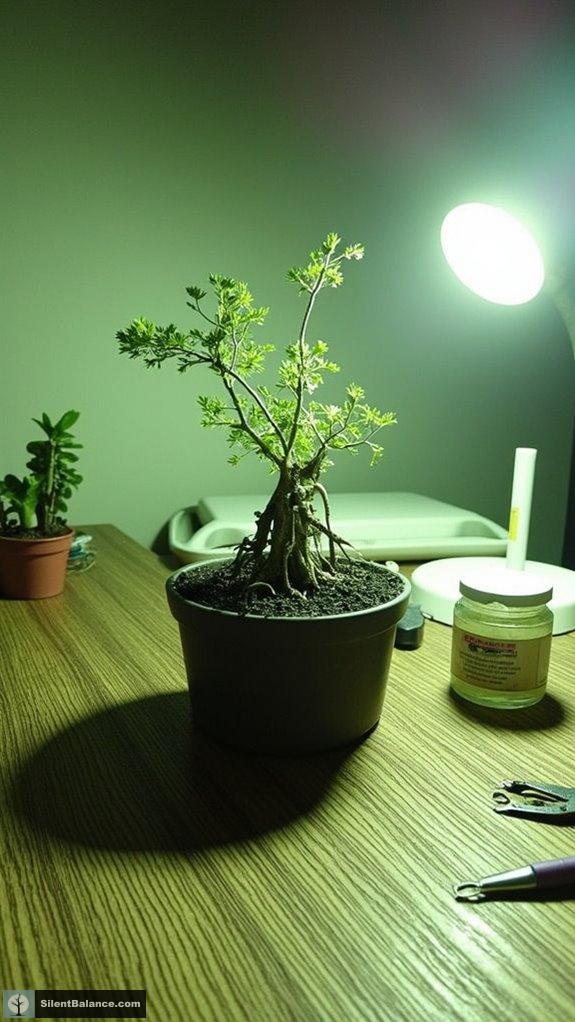
When it comes to bonsai propagation, the right rooting hormone and medium can take your success from zero to hero!
I’ve experimented with various rooting hormones, and let me tell you, Indole-3-butyric acid (IBA) in both gel and powder forms works wonders.
The secret? It’s all about applying it correctly and choosing the right conditions—water, light, and a good medium!
Success in bonsai propagation hinges on proper application and the right conditions—think water, light, and a stellar medium!
For ideal results, I love using a 50/50 mix of orchid bark and sphagnum peat moss. This combo keeps moisture just right, ensuring my cuttings are happy little campers.
Oh, and don’t overlook heel cuttings—those beauties can rack up rooting success rates up to 95%! Using grow lights can also enhance the propagation process by providing the necessary light conditions for optimal growth.
Post-Propagation Care
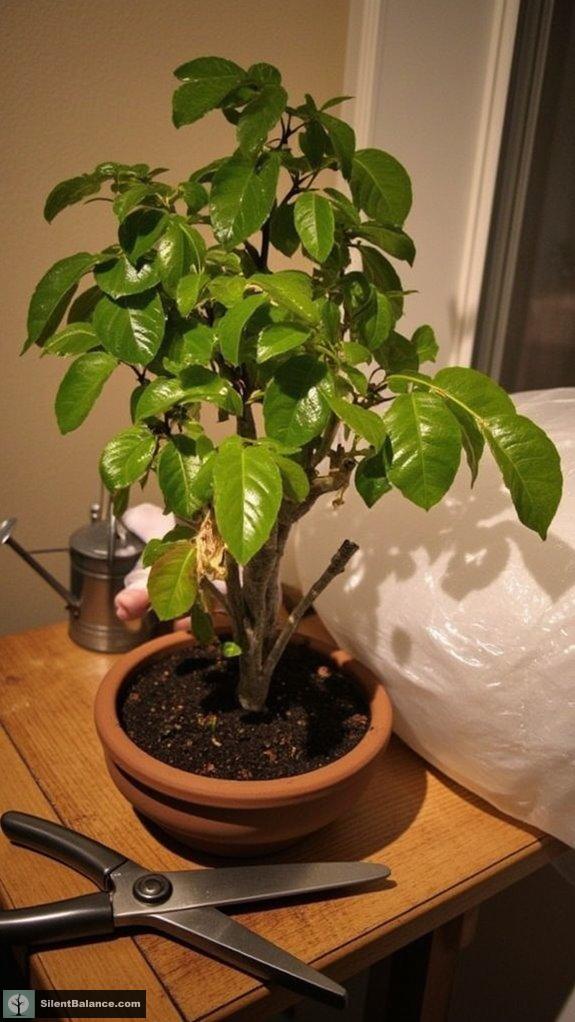
Caring for your bonsai after propagation is essential if you want those little beauties to thrive and shine!
Let’s explore some key strategies to keep your new friends on the right growth path:
- Maintain consistent soil moisture without drowning those roots—trust me, they can’t swim!
- Use a clear plastic bag or humidity dome to mimic tropical vibes and reduce leaf stress.
- Check for pests and diseases regularly; nobody wants unwanted party crashers ruining their bonsai gatherings.
- Prune any damaged branches promptly to promote clean, healthy growth; think of it as bonsai hairstyling!
Styling Techniques for New Bonsai
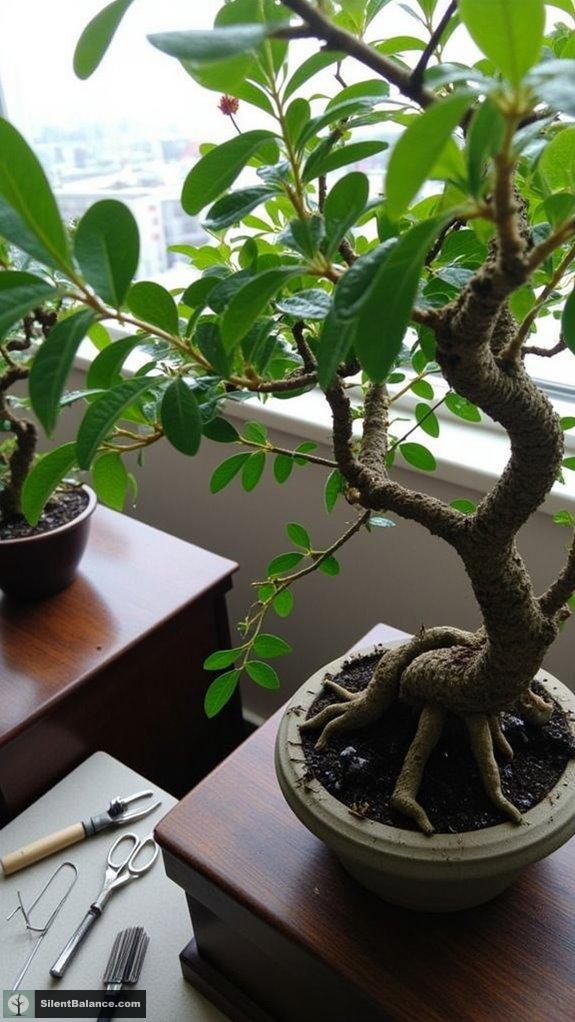
Styling up your new bonsai is where the magic happens, transforming a simple sapling into a stunning piece of living art!
You’ll want to start with structural pruning to establish that perfect silhouette. Don’t be shy about removing those larger branches; it’s essential for shaping. Aim to trim about one-third of the foliage, and save the heavy root work for another time—your bonsai needs some TLC!
Now, let’s talk wiring. It’s the secret sauce for bending branches into beautiful arcs or even the dramatic Windswept look.
Just keep in mind to remove the wire once the branches hold their position; we don’t want any “wire marks” ruining our masterpiece!
Watering Frequency Adjustments
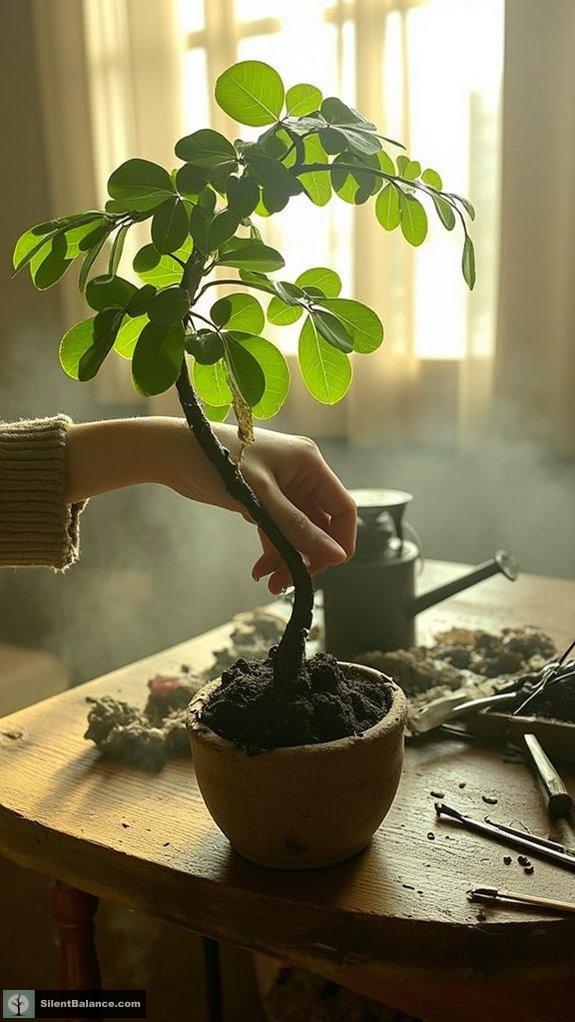
Adjusting your watering frequency is essential for keeping your bonsai vibrant and thriving—after all, hydration is key!
So, you might wonder how often to water. Here’s my take:
- Always check your soil first; only water when it’s dry to the touch.
- Monitor your bonsai daily; environmental conditions change its watering needs.
- Guarantee deep hydration by soaking until water seeps out the pot’s holes.
- Adjust for size: smaller pots dry faster, so they’ll need more frequent watering.
Embracing these practices not only keeps your bonsai robust but also elevates your bonsai game to an art form.
Cultivating these habits not only nurtures your bonsai’s health but also transforms your bonsai journey into a captivating art.
Trust me, once you master this, your trees will sing like a zen symphony—impressive, right?
Cultural Significance of Trees
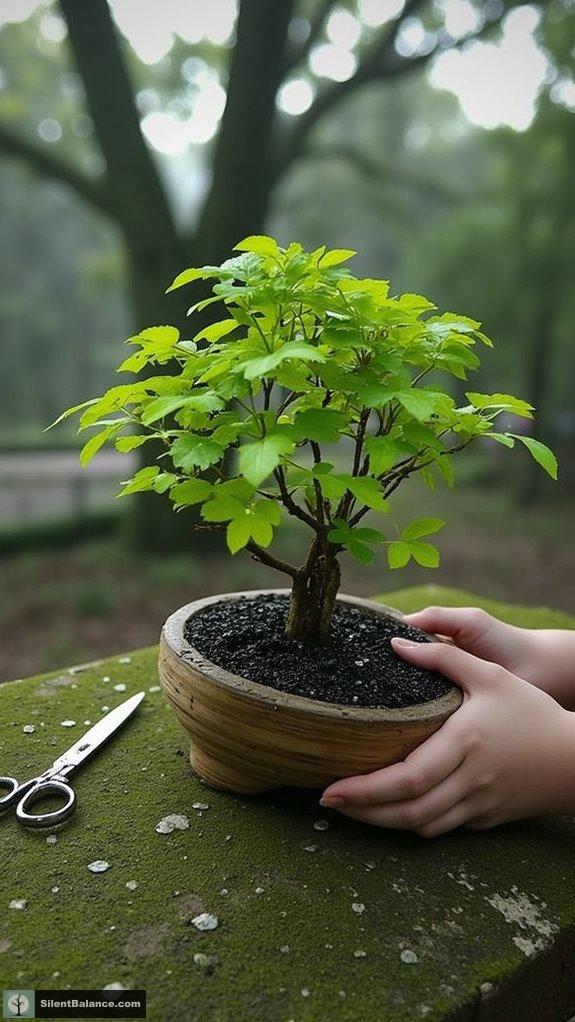
As I sit back and reflect on the rich tapestry of cultures around the globe, it’s fascinating how trees play such pivotal roles in our collective stories.
Take the Bodhi Tree, for instance—this iconic symbol of wisdom is where Siddhartha Gautama found enlightenment.
Isn’t it amazing how the Oak, revered in Celtic lore, stands tall as a mascot for strength?
Then there’s the Baobab, the “Tree of Life,” which embodies resilience and nourishment in African cultures.
And don’t forget the Norse myth of Yggdrasil, connecting worlds like an ancient network!
Trees aren’t just wood and leaves; they’re the heartbeat of our heritage, weaving through our rituals, connecting past and future—like a bonsai rooted in its pot, yet reaching for the sky.
Questions and Answers
What Tools Do I Need for Bonsai Propagation?
When tackling bonsai propagation, I’m all about the right tools.
You’ll need sharp pruning shears for clean cuts, wire cutters for shaping, and trimming shears for delicate snips. Don’t forget root hooks for untangling those cute little roots, and shaping wire to train your branches.
Why settle for anything less?
Keep your game strong with disinfectants to avoid introducing any uninvited plant guests.
Ready to dig in? Your bonsai deserves the best!
How Can I Prevent Pests During Propagation?
Alright, let’s tackle that pesky pest problem!
First, I keep my tools sterile; no one wants unwelcome visitors crashing the propagation party!
Spacing cuttings for airflow is essential—it’s like giving them fresh air. I also keep a watchful eye, inspecting daily—catching those critters early makes all the difference.
And don’t forget to quarantine new cuttings. It’s like the VIP section for healthy growth.
Ready to propagate without the pest drama? Let’s make it happen!
What Temperature Is Best for Rooting Cuttings?
When it comes to rooting cuttings, I’ve found that maintaining that sweet spot around 75°F is the ticket! This temperature jumpstarts root growth, making your little saplings thrive.
Think of it as a cozy blanket for their roots.
But be careful! Too much heat can stress them out. So, keep an eye on the conditions, switch things up after they root, and you’ll have a mini bonsai forest in no time! Sounds fun, right?
Can I Propagate Bonsai Indoors?
Absolutely, you can propagate bonsai indoors! I’ve found species like Ficus thrive in cozy indoor setups.
By keeping humidity high and temperatures around 20–25°C (68–77°F), you’re setting the stage for success.
Water rooting or snipping cuttings works wonders, especially if you’re patient.
Just keep in mind, good light and well-draining soil are essential.
Who knew turning your living space into a bonsai nursery could be so rewarding—and yes, a little bit messy too?
How Do I Know When to Repot My Bonsai?
Knowing when to repot your bonsai can be a game-changer!
If you spot roots circling the pot or popping out of drainage holes, it’s time—your tree’s feeling cramped.
Another telltale sign? Water zooming through the soil faster than a squirrel on espresso.
Look for stunted growth, too.
If your tree’s plants are looking a bit sluggish, don’t wait—give it a fresh start!
What’s stopping you from giving your bonsai a new home?
References
- https://www.herons.co.uk/Video-Tutorials/How-to-Propogate-Bonsai–Make-Cuttings/
- https://www.youtube.com/watch?v=QtgAuV5VhKY
- https://www.youtube.com/watch?v=bIogcjtaQMw
- https://www.youtube.com/watch?v=ZxivvwyQbvU
- https://www.bonsaiempire.com/basics/cultivation/from-cuttings
- https://www.evergreengardenworks.com/cuttings.htm
- https://bonsaitonight.com/how-to-grow-bonsai-from-seed-or-cutting/
- https://www.youtube.com/watch?v=xaHOLrj3WWc
- https://www.youtube.com/watch?v=fLXjAy0R7JA
- https://www.ausbonsai.com.au/forum/viewtopic.php?t=20437

- 11 Best Luxury Sandalwood Candles for 2026 - June 19, 2026
- 11 Best Woven Wicker Gift Baskets for 2026 - June 19, 2026
- 11 Best High Powered Binoculars for 2026 - June 19, 2026
