
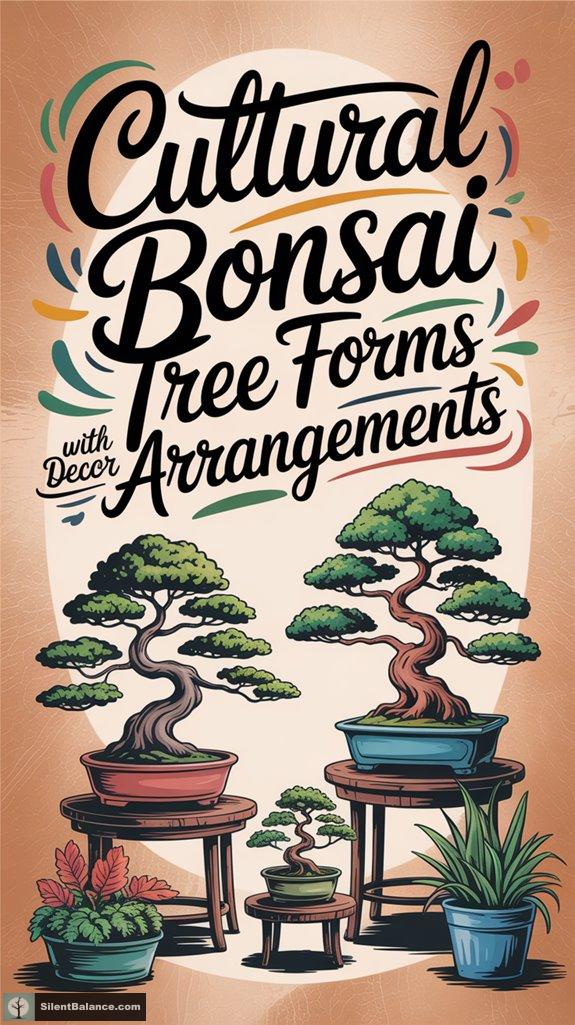
The Bonsai Connection: More Than Just a Tree
Bonsai trees are not just miniature plants; they carry deep symbolism. Each style—whether it’s the serene Chokkan or the playful Moyogi—speaks volumes about balance and harmony in life.
I remember the day I acquired my first bonsai. It was a small, elegant Juniper, and I was immediately captivated by its intricate beauty. I named it “Whisper,” reflecting how it quietly transformed my space.
At our blog, Silent Balance, we explore these magical transformations. A well-placed accent plant can create visual magic. Remember, the pot is key; it should harmonize with your tree’s essence. Who wouldn’t enjoy blooms that echo the changing seasons while inspiring mindfulness?
Each style imparts a unique vibe, drawing us into nature’s embrace. The symbolism of trees encourages us to cultivate patience and nurturing. Can you feel the connection? It’s profound.
Incorporating these elements not only beautifies your home but adds layers of meaning. Let the bonsai story unfold in your space. Embrace the calm.
Quick Takeaways
- Formal Upright (Chokkan) bonsai suits minimalist decor like small stone lanterns to enhance symmetry and order.
- Informal Upright (Moyogi) thrives with asymmetrical decor and organic stones that reflect playful curves.
- Twin-Trunk Style (Sokan) benefits from subtle accents and shallow pots to emphasize harmony between the trunks.
- Seasonal themes enrich bonsai displays; spring decor highlights renewal, while fall elements represent maturity.
- Proper pot selection, including materials and color, enhances the overall aesthetic and health of the bonsai.
Key Characteristics of Popular Bonsai Styles
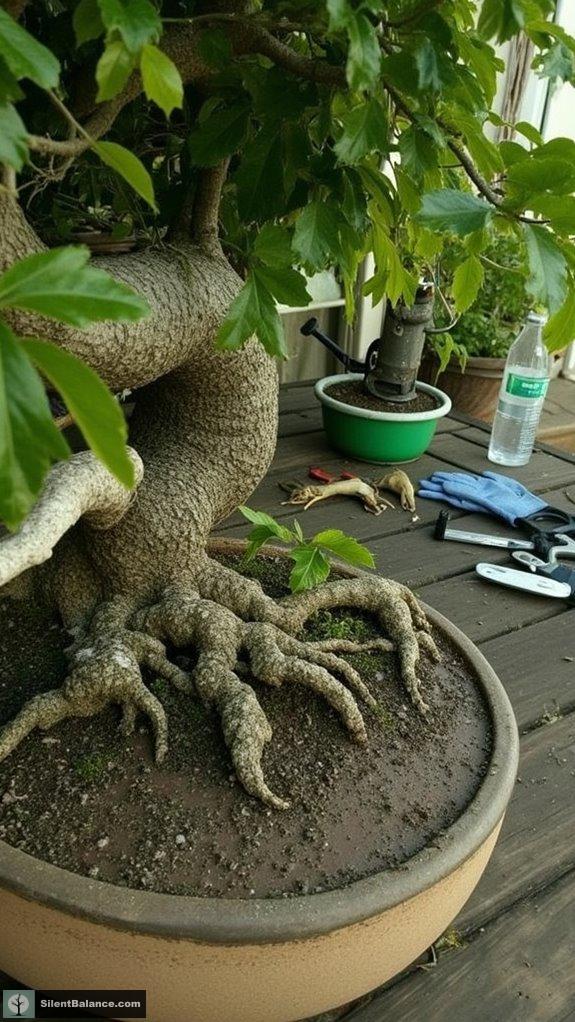
When we immerse ourselves in the enchanting world of bonsai, it’s like peeling back the layers of a rich, cultural onion. Each style has its own personality. Take the Formal Upright (Chokkan), with a straight trunk and symmetrical branches—it’s the poster child for order. Additionally, the presence of winter deadwood symbolism adds an intriguing layer to this style, highlighting the beauty in age and resilience. Then there’s the Informal Upright (Moyogi), with its playful curves, mimicking trees swaying in the breeze. Don’t forget the Slanting Style (Shakan)—it leans at an angle, like it’s dancing under pressure! Additionally, the Single-Trunk Styles showcase the beauty of distinct trunk orientations and shapes that reflect natural growth conditions. And let’s chat about the Twin-Trunk Style (Sokan), representing harmony—like a parent and child duo. Lastly, the Windswept Style (Fukinagashi)—it’s a lesson in resilience against life’s stormy challenges. Which style speaks to your bonsai soul?
Choosing the Right Decor for Different Bonsai Forms
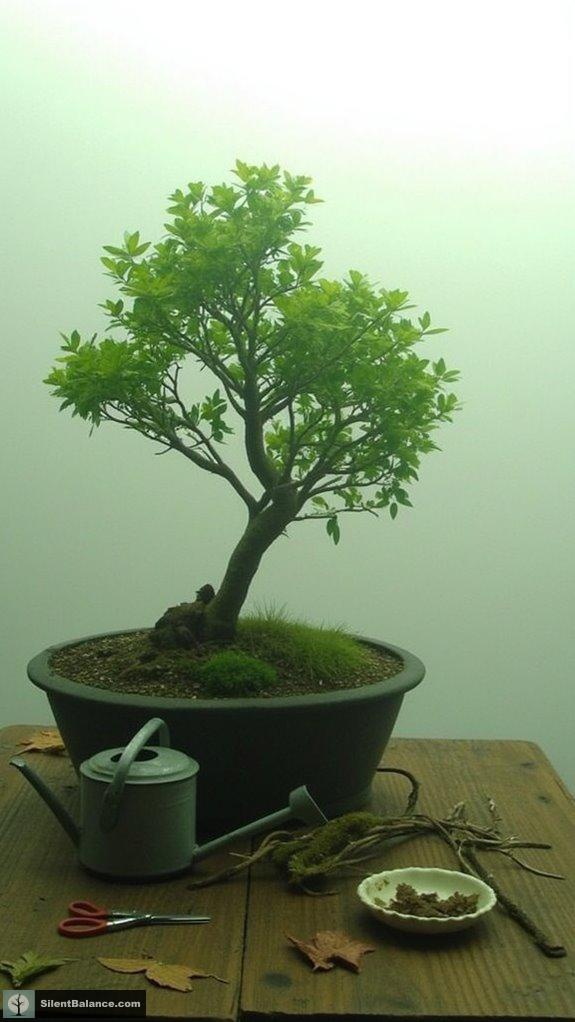
Choosing the right decor for your bonsai forms is like finding the perfect dance partner—it’s all about balance and harmony! For a Chokkan, I love minimalist, symmetrical decor, like small stone lanterns. They emphasize the tree’s elegance without stealing the spotlight. Formal Upright style is a great choice for showcasing the art of tapering in your decor choices.
Now, if you’re styling a Moyogi, think asymmetry! Organic stones and seasonal decor can elevate that graceful, S-shaped beauty, as symmetry and asymmetry are key principles in the art of bonsai.
Multi-trunk trees? Go for shallow pots and subtle accents, letting the trunks shine.
Want a forest vibe with your Yose-ue bonsai? Try staggered rocks and natural moss.
And for those Literati styles? Less is definitely more—let that magnificent trunk take center stage!
Accent Plants and Their Role in Bonsai Arrangements
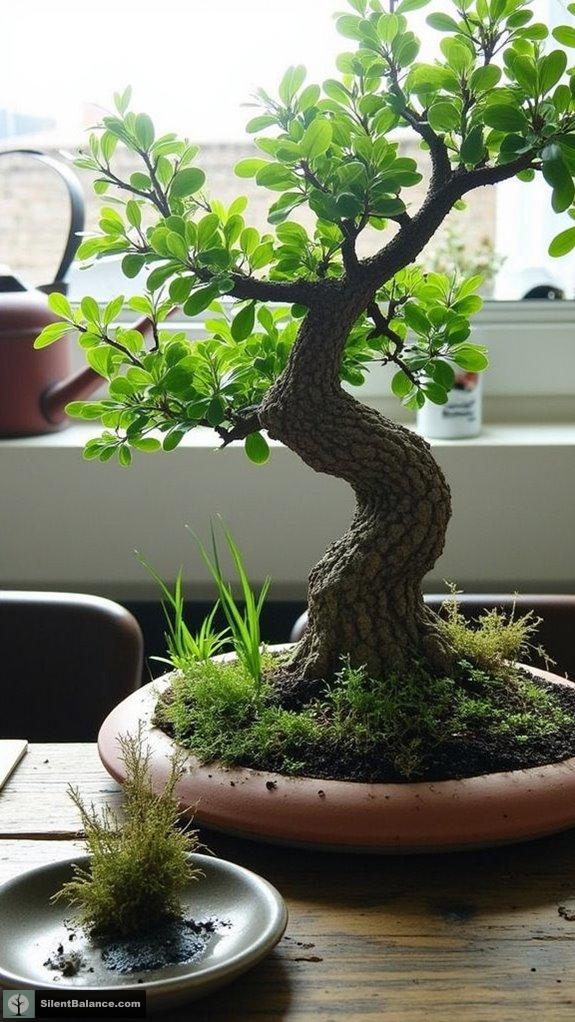
Accent plants in bonsai arrangements? Absolutely! These little companions can transform your display from ordinary to extraordinary with just a few well-chosen options.
Consider these key benefits:
- They amplify visual balance, often placed strategically to draw the eye towards the bonsai’s best features.
- Their seasonal blooms or contrasting textures add a dynamic flair, like a pop of color or a soft whisper of greenery.
- They harmonize with the bonsai, typically featuring compact forms that maintain scale and enhance the overall composition.
I can’t emphasize enough the importance of choosing the right accent plants that coexist seamlessly with your bonsai.
Trust me, a well-thought-out accent can elevate your display into a living masterpiece!
Pot Selection: Enhancing Aesthetics and Functionality
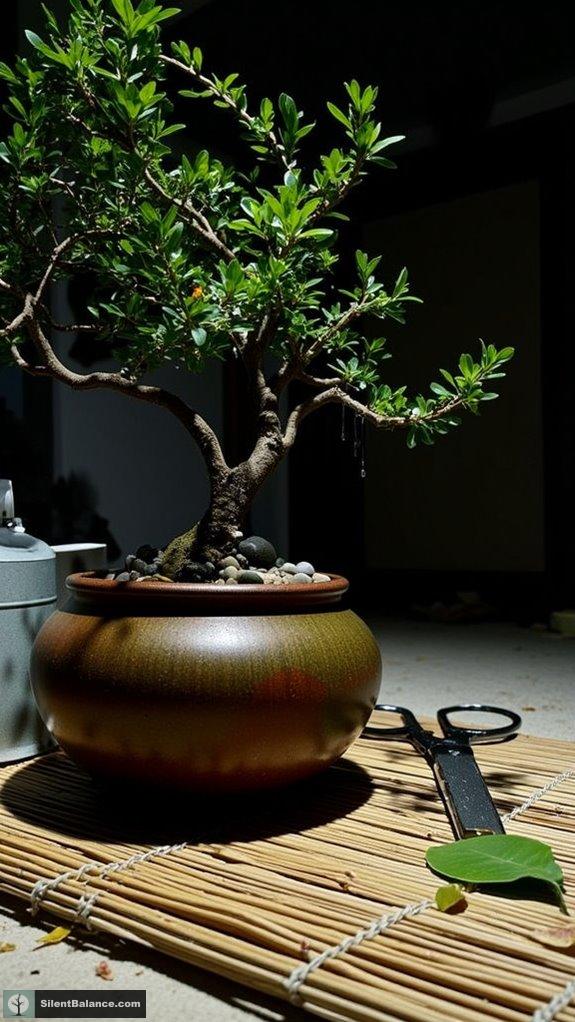
Selecting the right pot for your bonsai is as essential as the tree itself, and it can make all the difference between a ho-hum display and a breathtaking showcase.
Think about it: your pot’s material can either promote healthy roots or, let’s be honest, sabotage your green buddy. Ceramic or porcelain offers durability and proper drainage, while oversized pots? No thanks!
The right pot material can nurture your bonsai or hinder its growth—ceramic is your best friend!
Proportion matters too. A pot should be roughly two-thirds the height of your tree, keeping that visual balance intact.
And don’t forget about color and texture! Earth tones can enhance your conifer’s hearty vibe, while smooth, glazed pots bring out the best in flowering beauties. Additionally, selecting unique bonsai pot styles for zen decor can elevate the overall aesthetic impact of your arrangement.
Seasonal Themes in Bonsai Display and Decor
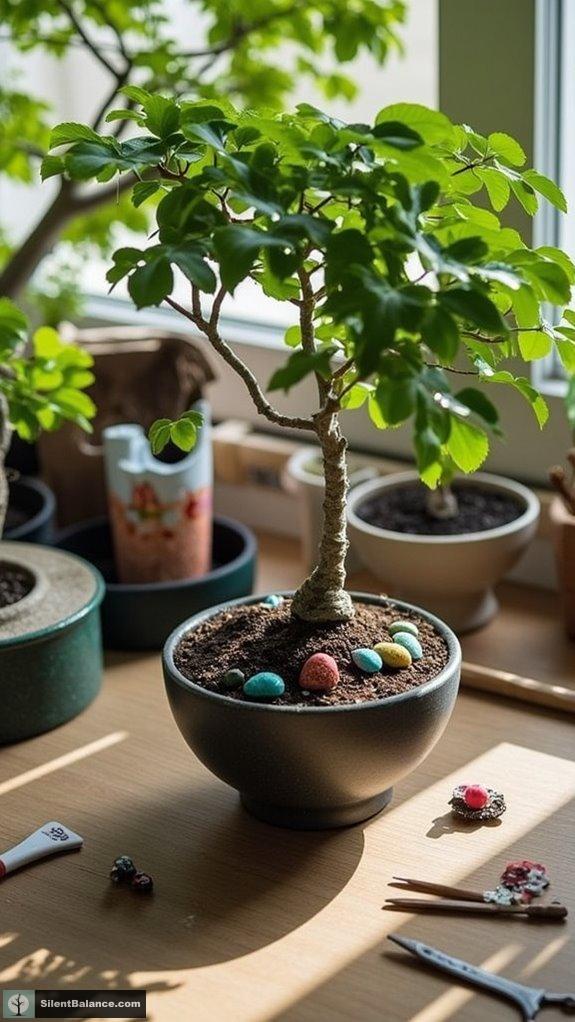
It’s amazing how much personality a bonsai can take on, and seasonal themes in display and décor are like the cherry blossoms on top.
By embracing these seasonal changes, we can showcase the tree’s story more vividly.
Here are three exciting ideas for enhancing your display:
- In spring, add fresh blooms or lush greenery to echo renewal and importance.
- For fall, drape fallen leaves around your bonsai to embody maturity and the beauty of impermanence.
- In winter, minimalist elements like bare branches or smooth stones can convey an elegant tranquility.
Each seasonal theme not only enriches the aesthetic but also ties your bonsai to nature’s profound cycles—making your art truly dynamic.
Isn’t that just delightful?
Watering Frequency and Technique
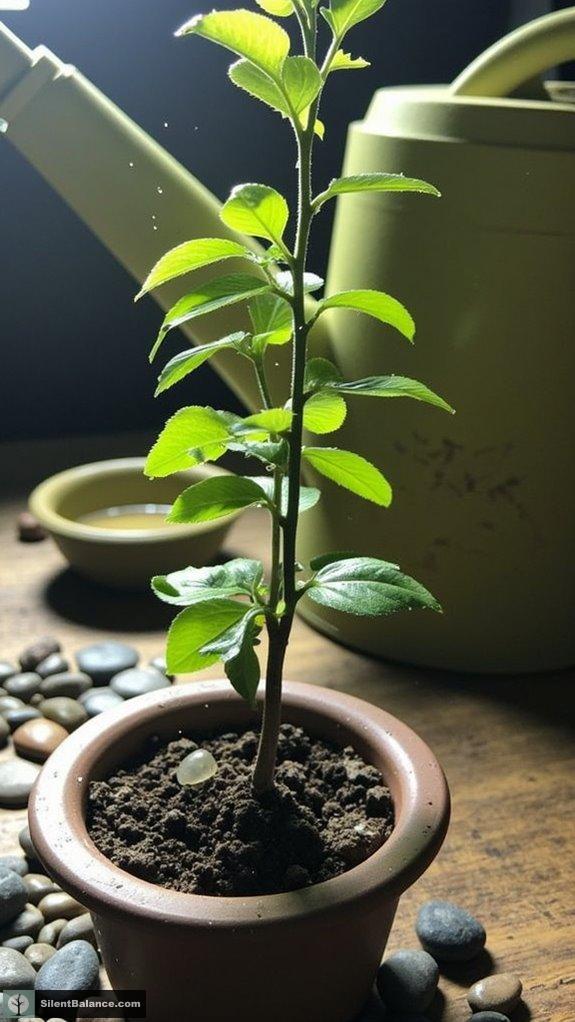
While nurturing a bonsai, you’ll quickly find that understanding the right watering frequency and technique is essential for keeping your little tree healthy and thriving.
Isn’t it fascinating how each season brings unique watering demands? In summer, my outdoor bonsai sometimes begs for three drinks a day! I often soak the pot for deep dryness or water from above, letting it drain well.
And don’t get me started on those tiny pots—they dry out faster than a sunbaked Sahara!
I like to check the top inch of soil, feeling for moisture; you’ll know when it’s time to water.
Plus, mist-spraying foliage not only hydrates but cleans. Just keep that spray away from flowering beauties to avoid a wilted floral disaster!
Cultural Significance of Trees
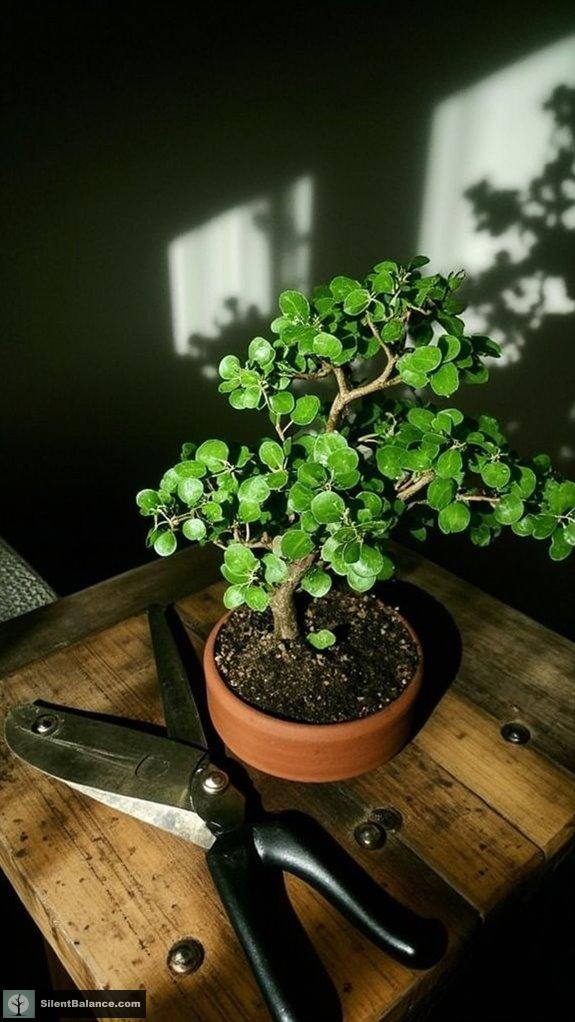
Trees hold a fascinating presence in cultures worldwide, and their significance alongside bonsai trees is particularly profound.
Trees resonate deeply across cultures, with bonsai embodying profound significance and history in unique artistic expressions.
In bonsai culture, trees aren’t just plants; they’re living expressions of history and philosophy. When I think about their cultural resonance, I envision:
- Miniature trees symbolizing status in ancient China, reflecting spiritual depth.
- Zen aesthetics blossoming in Japan, where bonsai inspire harmony and patience.
- Costumed practitioners showcasing elaborate bonsai in annual exhibitions, elevating these little wonders to art.
These tiny titans carry stories of sacrifice and beauty, imbuing our spaces with nature’s essence.
Isn’t it amazing how a small tree can evoke such grand concepts? The language of bonsai, from “wabi-sabi” to “hachi no ki”, just adds to the allure.
Questions and Answers
How Do I Maintain the Health of My Bonsai Tree?
Maintaining your bonsai is like dancing with a partner—you’ve got to keep in sync!
Water when the soil’s nearly dry, but don’t drown it, or you’ll face root rot’s wrath.
Repot every few years to avoid root overcrowding, and use bonsai-specific soil for that perfect drainage.
Prune regularly for shape and health.
It’s all about balance and attention to detail.
Trust me, soon you’ll be the proud parent of a thriving bonsai!
What Are the Best Tools for Bonsai Care and Maintenance?
When it comes to bonsai care, having the right tools is essential, right?
I swear by pruning shears for those precise trims.
And don’t forget branch cutters—thicker branches need extra love!
You’ll also want root shears to prevent those pesky soil dulls.
And hey, tweezers for the tiny details? A lifesaver when removing dead leaves.
Trust me, investing in these tools will elevate your bonsai game—keeping your trees healthy and happy!
Can Bonsai Trees Thrive Indoors Year-Round?
Picture your indoor bonsai as a miniature tree of life, breathing energy into your space.
Yes, they can thrive indoors year-round, especially if you choose tropical varieties like Ficus or Fukien Tea.
With the right light, humidity, and care, you’re basically creating a little slice of nature in your home.
Ever thought of catching some sun by that south-facing window? Your green buddy will thank you!
Happy bonsai-ing!
How Often Should I Fertilize My Bonsai?
I’ve found that fertilizing my bonsai every two weeks during the growing season works wonders.
For deciduous trees, you might want to get a little more enthusiastic and fertilize weekly when they’re really pushing growth, stopping when those leaves start to drop.
Think of it like a buffet; they need a good feast to thrive!
And keep in mind, too much food can cause trouble—watch for those brown leaf edges!
What Are Common Pests Affecting Bonsai Trees?
Did you know that nearly 70% of bonsai enthusiasts encounter pest problems at some point?
It’s true! Spider mites and aphids are infamous culprits, causing havoc by sucking sap and leaving honeydew behind.
Identifying these sneaky pests can save your bonsai from decline. Inspect those leaves regularly—after all, no one likes uninvited guests!
Recall, treating your bonsai with care today means healthier growth tomorrow. Got any pest horror stories? I’d love to hear them!
References
- https://cincinnatibonsai.org/bonsai-tree-style-guide
- https://www.bonsaiempire.com/origin/bonsai-styles
- https://en.wikipedia.org/wiki/Bonsai_styles
- https://www.bbg.org/article/bonsai_styles
- https://www.bokksu.com/blogs/news/bonsai-the-delicate-art-of-japanese-miniature-trees
- https://orchidrepublic.com/blogs/news/discovering-different-bonsai-styles
- https://thevietpotter.com/blogs/bonsai/bonsai-decoration-ideas
- https://www.youtube.com/watch?v=QoejyuUoWoo
- https://bonsaimadesimple.com/bonsai-accent-plants/
- https://abanahomes.com/blogs/news/how-to-select-bonsai-accent-plants-an-ultimate-guide-to-bonsai-accent-plants

- 11 Best Luxury Sandalwood Candles for 2026 - June 19, 2026
- 11 Best Woven Wicker Gift Baskets for 2026 - June 19, 2026
- 11 Best High Powered Binoculars for 2026 - June 19, 2026
