
When you think about Zen bonsai tree arrangements, you’re really tapping into a world of harmony and meaning. Each twist of its branches speaks to the beauty of imperfection, embracing that wabi-sabi vibe we love. It’s all about patience—like nurturing your inner peace! And let’s face it, who wouldn’t appreciate a living piece of art that symbolizes balance? Keep your bonsai container stylish and minimalist, and you’ll discover more about this tranquil practice. Curious about how tree symbolism plays a role?
Quick Takeaways
- Zen bonsai arrangements embody harmony by reflecting nature’s balance and interconnectedness through carefully crafted shapes and asymmetrical designs.
- Each bonsai’s unique form tells a story, emphasizing the beauty of imperfections and the principles of wabi-sabi.
- The right container enhances visual symmetry, allowing the bonsai to resonate with Zen energy and promote mindfulness.
- Mindful placement within a living space creates a serene environment, fostering contemplation and connection to nature.
- Seasonal care practices nurture both the bonsai and the cultivator’s spiritual journey, emphasizing patience and growth.
The Essence of Zen Philosophy in Bonsai
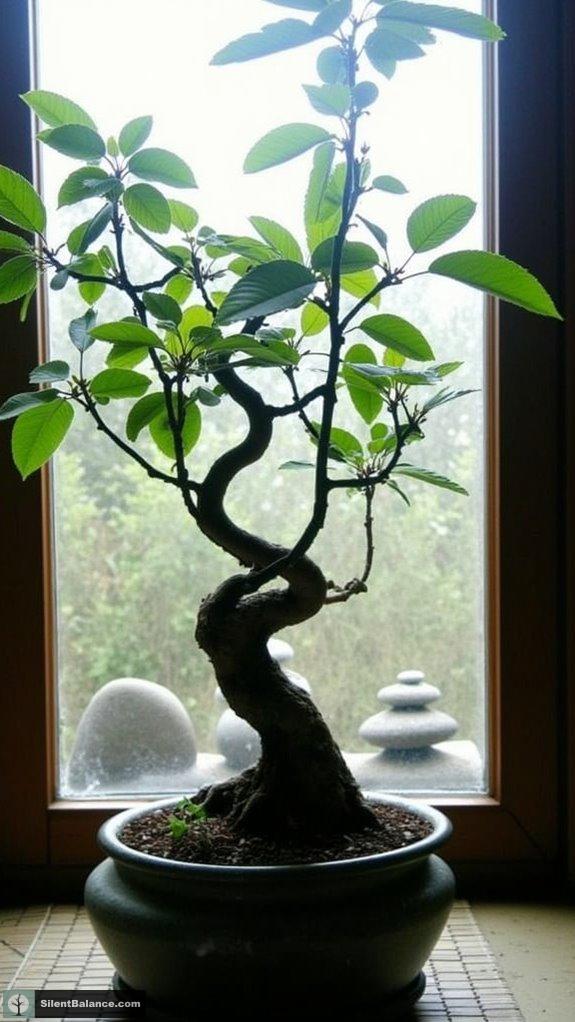
When I first stumbled into the world of bonsai, I was captivated by how this ancient art form embodies the core tenets of Zen philosophy. Each tiny tree isn’t just a plant; it’s a portal to Zen mindfulness and spiritual growth. Bonsai’s beauty lies in Wabi-sabi aesthetics, where imperfections tell stories. Have you ever noticed how a gnarled trunk can evoke deep emotions? By tending to these miniature wonders, I connect with nature in ways I never expected. The slow, deliberate practice fosters patience and humility—qualities our fast-paced lives often overlook. In each snip and twist, I embrace life’s fluidity and the art of letting go. Did you know that the art of cultivation requires patience, skill, and dedication from the cultivator? Bonsai provides a unique spiritual significance as cultivators seek harmony with nature. Isn’t it amazing how a simple bonsai can encapsulate such profound lessons?
Embracing Asymmetry for Natural Balance
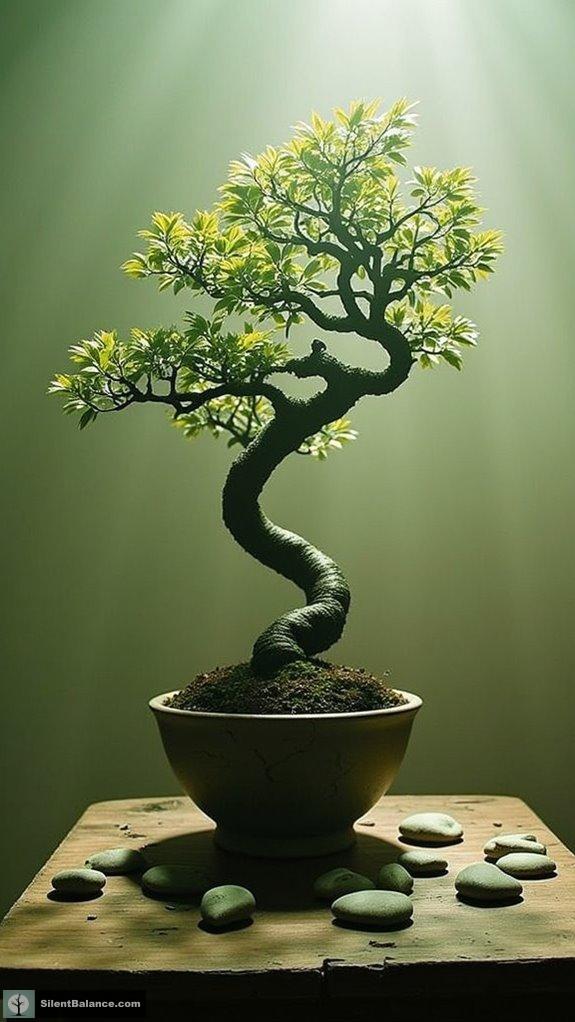
Embracing asymmetrical beauty transforms your bonsai into a living masterpiece, showcasing dynamic tension that sings of life and spontaneity. Think of it like a jazz solo—imperfect yet enchanting!
By playing with branch placement and irregular shapes, we create visual intrigue, inviting viewers to connect with the essence of nature.
Have you noticed how negative space dances with the forms? It’s all about balance, folks!
In bonsai, we celebrate the quirky and unexpected, echoing the Zen philosophy of wabi-sabi. This art form demands cultivating patience as we nurture our trees, teaching us to appreciate the slow unfolding of beauty in life’s imperfections.
Choosing the Right Container: A Reflection of Harmony
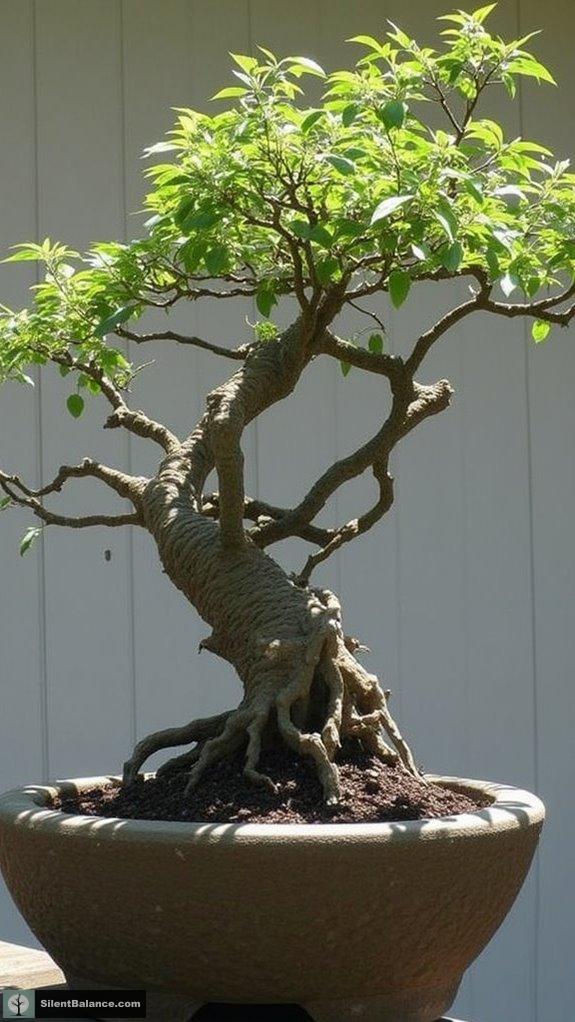
How much thought have you given to choosing the right container for your bonsai? It’s not just about pot aesthetics; it’s a reflection of harmony with your tree’s essence.
Believe me, the right container can elevate your bonsai game. Here’s what I consider:
The perfect container can truly transform your bonsai into a work of art.
- Shape – Does it match your tree’s character? Strong trees need rugged pots, while delicate ones thrive in dainty designs.
- Size – Balance is key! A small pot emphasizes your tree’s beauty.
- Texture & Color – Choose subdued tones that complement foliage. Earthy or matte finishes often work wonders.
In the world of bonsai, your container selection isn’t just functional; it’s a visual serenade that resonates with the tranquil energy of Zen. The process of choosing a container offers a chance for spiritual reflection that deepens your connection to the art of bonsai.
Displaying Bonsai: Minimalism and Tranquility
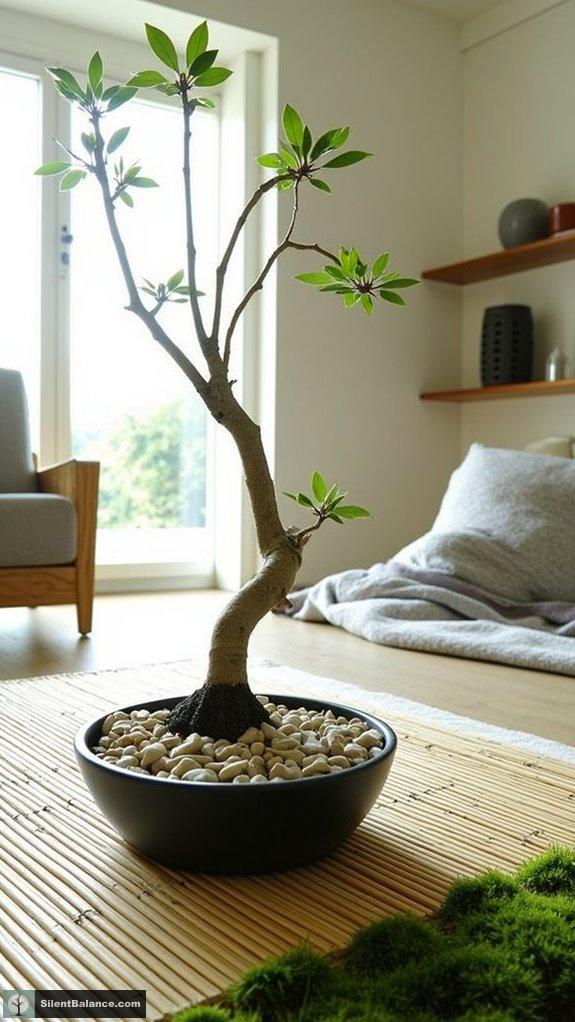
As you’re about to commence on the delightful journey of displaying your bonsai, think of it as creating a mini Zen sanctuary rather than just setting a plant on a shelf.
Prioritize your display placement, aiming for bright indirect sunlight, good air circulation, and moderate temperatures.
Make sure your bonsai has enough breathing space around it—minimalism is key! This uncluttered setting allows visual focus on your tree’s unique personality, enhancing its natural beauty.
Let’s talk aesthetics too—remember asymmetry brings life. Position your bonsai at or just below eye level; it’s like giving it a VIP spot at the gallery!
Finally, adorn with pebbles or moss, ensuring nothing overpowers your little green masterpiece. Isn’t that a fulfilling way to honor nature?
Seasonal Care Practices for Spiritual Growth
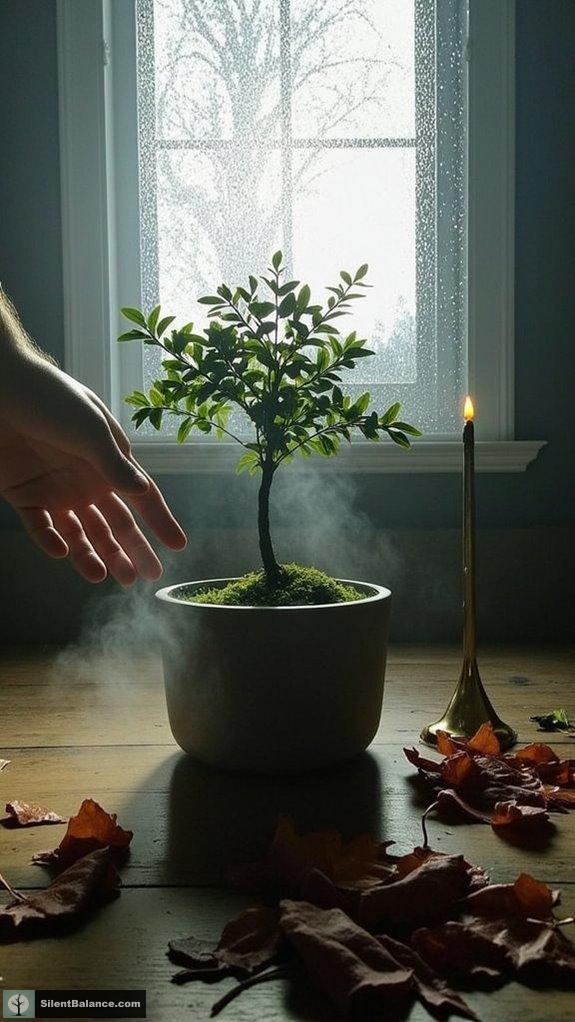
When it comes to nurturing your little tree, seasonal care isn’t just a chore—it’s an essential ritual that enhances both your bonsai’s health and your own spiritual growth.
Embracing the seasonal shifts leads to profound connection.
Here’s how to practice mindful maintenance to elevate your journey:
- Water Wisely: Adjust your watering schedule with the seasons—no waterlogging in spring, but a hearty drink in summer.
- Feed with Intention: Use balanced fertilizer in spring and summer, switching to low-nitrogen in autumn to prep roots for winter.
- Inspect and Protect: Regularly check for pests, clearing debris to keep your bonsai thriving.
Each mindful act fuels not only your bonsai’s resilience but also nurtures your inner zen. Isn’t that spectacular?
The Interconnectedness of Tree, Cultivator, and Environment
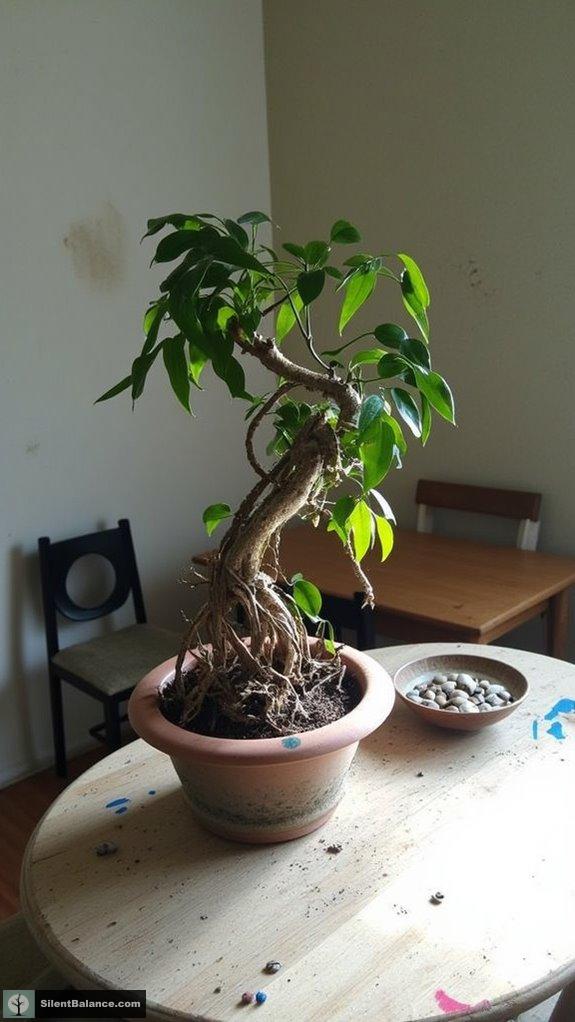
Every bonsai tells a story, one woven tightly between the tree, its cultivator, and the environment it grows in.
As a cultivator, I cherish this deep connection. It’s not just about snipping leaves; it’s a dance with nature, responding to environmental influences like soil, light, and weather.
Have you ever watched a tree sway with the wind? That’s pure resilience!
Each wave of change teaches me patience—and let’s face it, humility—but isn’t that the beauty of bonsai?
I adapt my care techniques, inspired by nature’s rhythms, embracing asymmetry and imperfection.
And trust me, it’s more than just horticulture; it’s continuous mindfulness practice.
Symbolic Meanings of Different Bonsai Styles
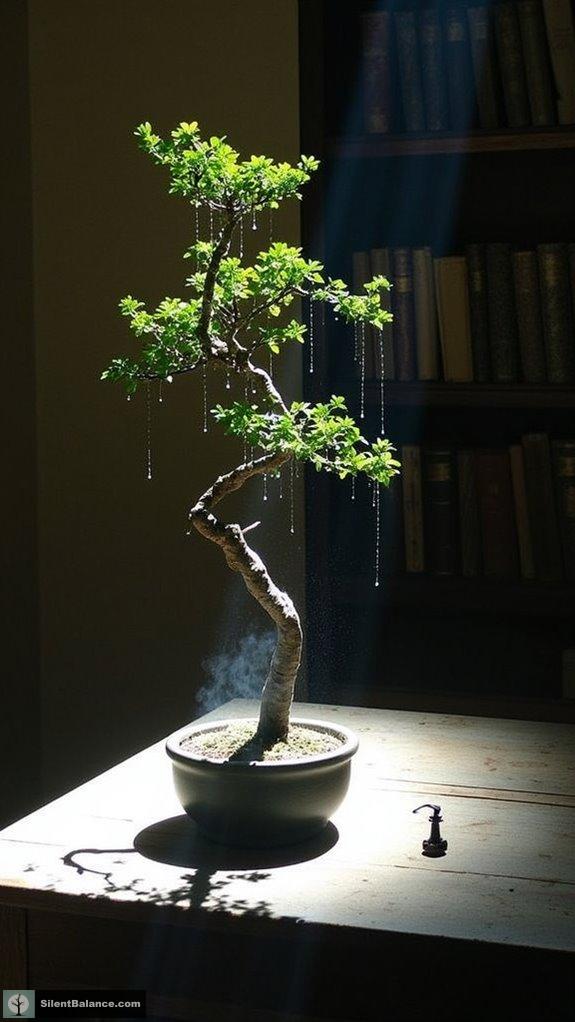
There’s a special magic in bonsai styles, each one whispering stories and carrying deep symbolic meanings. As I explore these miniature wonders, I can’t help but appreciate their cultural significance while contemplating their symbolic expressions.
Here are three styles that really illustrate this:
- Formal Upright (Chokkan) – Represents unyielding strength and moral character, with its stable, tapering trunk.
- Informal Upright (Moyogi) – Celebrates adaptability, showcasing an elegant dance between flexibility and resilience.
- Slanting (Shakan) – Embodies the struggle of life, demonstrating how beauty can emerge through adversity.
These trees aren’t just plants; they’re living reflections of life’s complexities, reminding us that beauty often grows in the face of challenges.
Bonsai trees embody life’s intricacies, showcasing how beauty flourishes amidst adversity and challenges.
Isn’t that inspiring?
Tree Symbolism
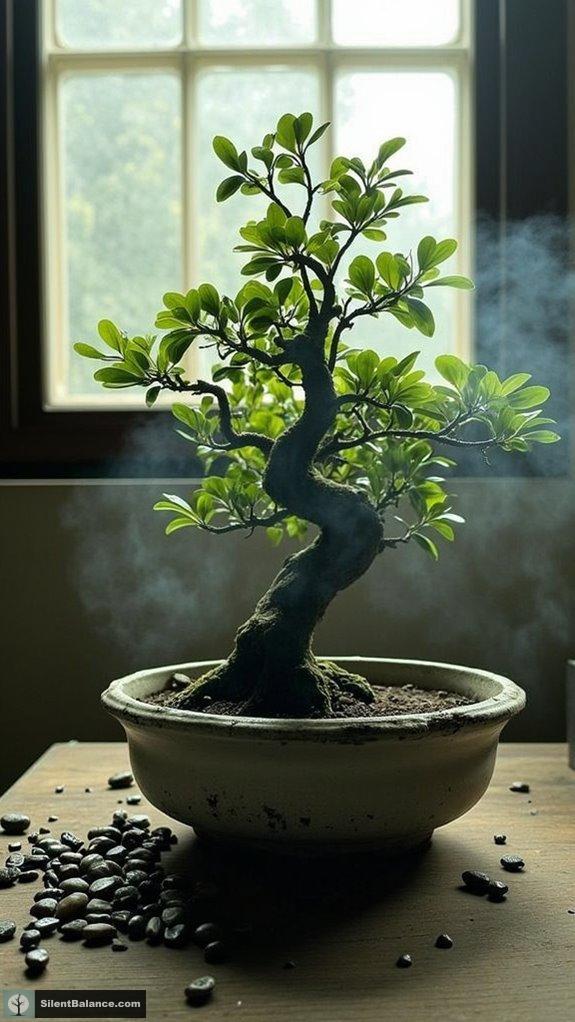
As I plunge into the world of bonsai, it’s evident that tree symbolism is more than just a casual nod—it’s a profound connection.
These tiny titans carry deep tree messages; each branch and leaf shared volumes about balance and perseverance.
Isn’t it wild how a small tree can mirror life’s complex growth metaphor?
For example, the intentional asymmetry captures the beauty of imperfection, reminding us of wabi-sabi—the art of finding beauty in what’s imperfect and transient.
Each bonsai mirrors a spiritual journey, inviting contemplative moments and highlighting our interconnection with nature.
So, as you explore bonsai cultivation, consider how your little tree can reflect your growth, patience, and the ongoing dance between chaos and harmony in life.
What stories will your bonsai tell?
Bonsai Tree Symbolism
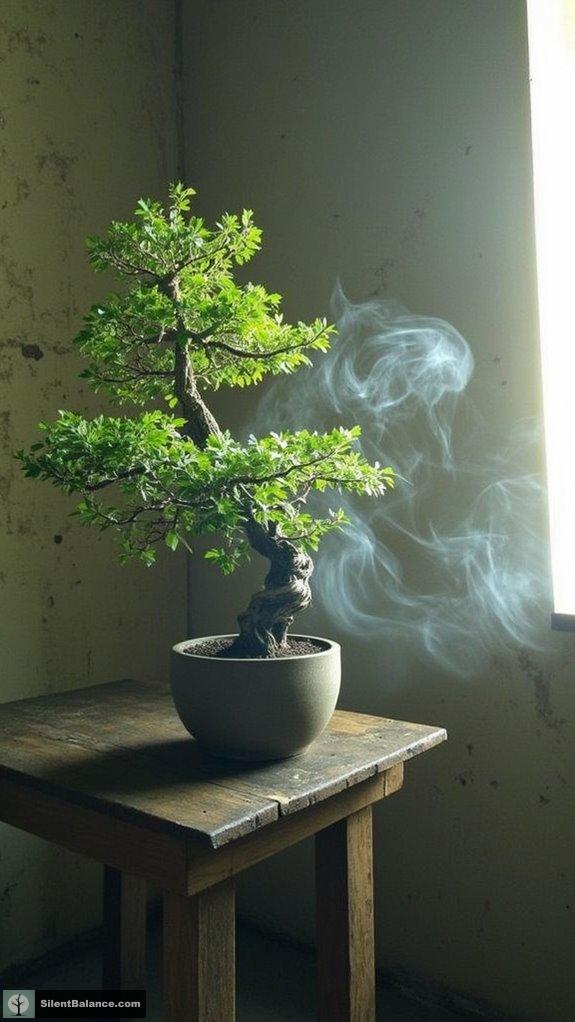
When we immerse ourselves in the enchanting world of bonsai tree symbolism, it’s clear that these miniature marvels do more than just sit pretty—they connect us to deeper meanings and philosophies.
Bonsai symbolism exemplifies nature balance through their elaborate designs, inviting us to ponder life’s complexities. Here’s what they represent:
- Harmony and Peace: Each twist and turn of a bonsai branch reveals nature’s equilibrium, leading us to internal tranquility.
- Patience and Endurance: Cultivating these trees teaches us that true beauty blossoms over time, fostering resilience.
- Transformation and Renewal: Different species signify new beginnings, echoing life’s cycles and our personal growth.
Questions and Answers
How Long Does It Take to Grow a Bonsai Tree?
Growing a bonsai tree takes years, typically 5 to mature and 10-15 for full development. By exploring innovative growing methods, I can enhance growth potential, ensuring my tree thrives well into its impressive lifespan.
Can Any Tree Species Be Used for Bonsai?
While the world of bonsai is vast like a river’s winding path, not all tree species thrive as bonsai varieties. I’ve discovered that choosing the right species transforms a simple tree into an artistic gem.
What Tools Are Essential for Bonsai Cultivation?
When I cultivate bonsai, I rely on essential tools showcasing innovative pruning techniques and precise soil selection. Quality shears and concave cutters help shape trees, while root tools guarantee a healthy environment for growth.
Are There Specific Bonsai Care Rituals to Follow?
Did you know consistent bonsai care rituals can boost growth by 30%? I find the ritual importance of specific care techniques—like mindful watering and precise pruning—crucial for nurturing my tree’s health and connecting deeply with nature.
How Do I Reset a Bonsai After Years of Neglect?
To reset your neglected bonsai, I recommend using repotting techniques to refresh the soil and pruning methods to stimulate new growth. I’ve found patience and consistent care lead to vibrant recovery over time.
References
- https://en.wikipedia.org/wiki/Bonsai_aesthetics
- https://bigthink.com/thinking/bonsai-tree-care-secret-philosophy/
- https://orchidrepublic.com/blogs/news/where-to-display-your-bonsai-for-zen-and-success
- https://indoor-bonsai-care.muragon.com/entry/277.html
- https://mother-nature.ca/a-beginners-guide-to-the-art-of-bonsai/
- https://www.indoorgreens.in/blogs/free-press-journal-articles/unlock-natures-zen-how-bonsai-cultivation-brings-harmony-to-your-life
- https://zenbird.media/what-is-bonsai/
- https://greengoddess.com/the-zen-of-bonsai-cultivating-tranquility-in-miniature-landscapes/
- https://www.youtube.com/watch?v=NTpSzBoGfyw
- http://tomikiaikido.blogspot.com/2013/08/zen-aesthetic-principles-in-budo.html

- 11 Best Luxury Sandalwood Candles for 2026 - June 19, 2026
- 11 Best Woven Wicker Gift Baskets for 2026 - June 19, 2026
- 11 Best High Powered Binoculars for 2026 - June 19, 2026
