
When it comes to bonsai trees, understanding their light needs is a game-changer! Most subtropical and tropical species thrive in 1,000 to 5,000 lux, so positioning them by a south or west-facing window is key. If you’ve got low-light champs like Ficus or Chinese Elm, they’ll do just fine in a north-facing spot. Don’t forget about supplementing with full-spectrum LEDs if needed! Curious about the best practices for layout and care? There’s so much more to explore!
Quick Takeaways
- Tropical bonsai species thrive in 1,000 to 5,000 lux and require 12 to 15 hours of daily light for optimal growth.
- Ficus bonsai is ideal for low-light conditions; position near a north-facing window for indirect light.
- Use full-spectrum LED grow lights 6-12 inches above bonsai to supplement natural light and avoid leaf damage.
- Rotate bonsai weekly to ensure even light distribution, considering species like Dwarf Jades which prefer morning sun.
- Monitor for signs of insufficient (yellowing leaves) or excessive light (browning edges) to adjust placement as needed.
Light Requirements for Subtropical and Tropical Bonsai Species
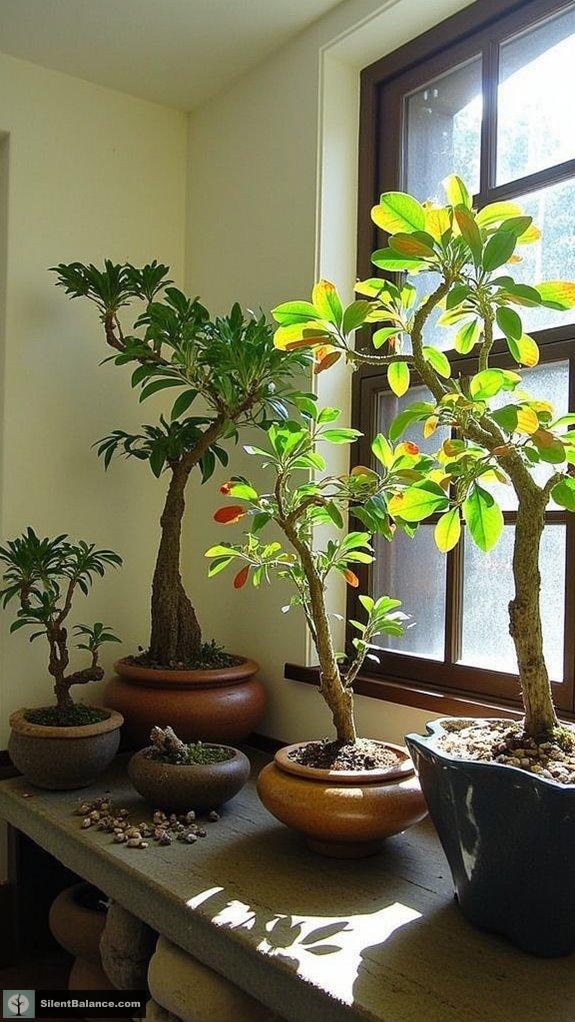
When it comes to caring for subtropical and tropical bonsai species, understanding their light needs is vital for fostering robust growth and vibrant foliage.
These beauties thrive in intensity between 1,000 and 5,000 lux—think of it as their sunbathing sweet spot!
These stunning plants flourish in light levels of 1,000 to 5,000 lux— their ideal sunbathing zone!
Can you believe they need around 12 to 15 hours of daily light? Tropical bonsai need 12-15 hours of light, which is crucial for their growth and health. Additionally, the seasonal changes affecting tree growth symbolize different stages of development, much like our bonsai’s needs throughout the year.
If you’re relying on natural sources, placing them by a south- or west-facing window is a smart move, especially in winter.
Got low-light conditions? Don’t fret—supplement with grow lights.
With species light preferences varying, knowing your Ficus requires bright, indirect light, whereas your budding Bougainvillea can handle a bit of afternoon sun is vital.
Understanding Low-Light Tolerant Bonsai for Indoor Environments
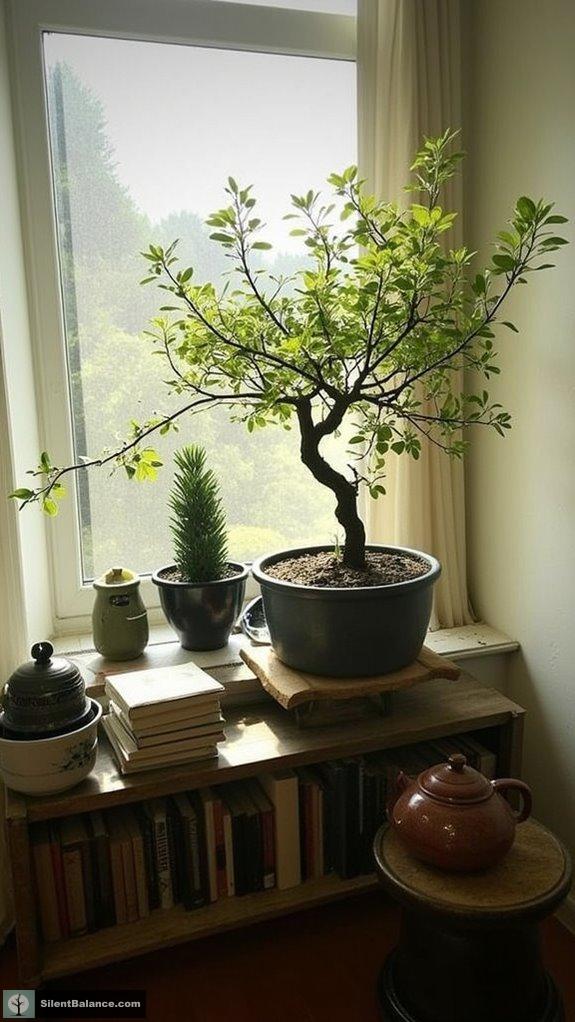
Many bonsai enthusiasts may not realize that several species thrive beautifully even in less-than-ideal lighting situations.
For instance, Ficus bonsai is a superstar when it comes to low-light conditions, handling the indoor dryness like a champ. Indoor bonsai can be quite resilient when paired with the right care strategies.
But let’s not forget about Jade or Carmona (Fukien Tea), which also embrace indoor adaptations, just like the understated Chinese Elm.
Wondering about species variations?
Hawaiian Umbrella and Sweet Plum are excellent choices, too! Most bonsai species thrive with 5-6 hours of sunlight daily, just envision placing them near that north-facing window, where they’d bask in soft, indirect light—perfect for preventing leaf burns!
Maintaining humidity is key for these low-light warriors, but they’ll reward your care with stunning foliage.
Best Practices for Using Artificial Lighting With Bonsai
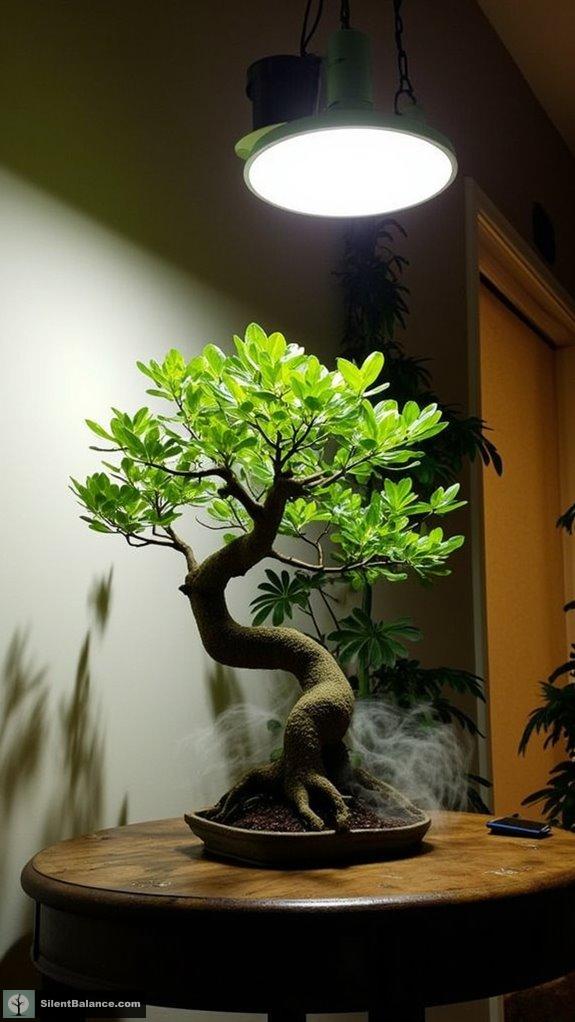
To release the full potential of your bonsai, artificial lighting is like that secret sauce that can elevate your indoor gardening game.
Using full-spectrum LED grow lights is a game-changer! They mimic the natural light spectrum and promote photosynthesis like a champ.
Full-spectrum LED grow lights are a total game-changer, perfectly mimicking natural light to supercharge photosynthesis!
When positioning them, I keep my lights about 6-12 inches above the tree, ensuring I don’t roast those precious leaves.
And hey, for tropical species, I aim for 12-15 hours of light, because who doesn’t love a good sunbath?
Mix things up by placing your bonsai near natural light sources, using that innovative grow light as a supplement—it’s a win-win!
Interestingly, the role of mother trees in forests indicates how essential a balance of light and ecosystems is for thriving plants.
Got a favorite technique? I’d love to hear what works for you!
Signs of Insufficient and Excessive Light Exposure
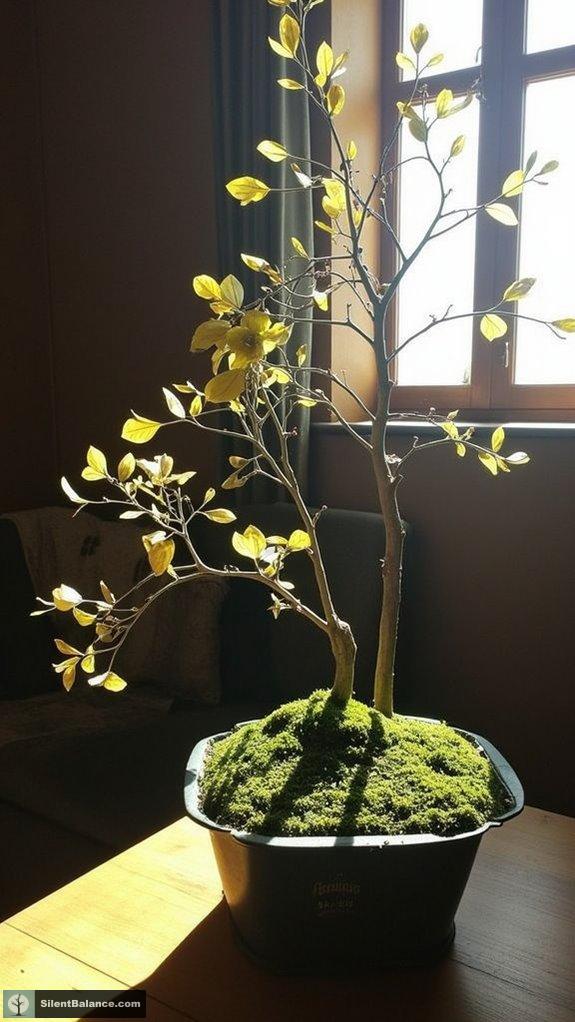
Understanding the signs of insufficient and excessive light exposure in bonsai trees is like cracking the code to a healthier, happier tree.
Let’s face it, light stress can be a real culprit.
If I spot yellowing leaves or leggy growth, it screams for more light, right?
On the flip side, browning edges and wilting leaves give away too much shine.
Keep an eye on those growth patterns because they tell all!
Think about your Juniper, craving full sun, yet succumbing to needle scorch when overexposed.
Those mottled colors and uneven growth? It’s nature’s way of whining, “Help me out!”
Design Tips for Positioning Indoor Bonsai for Optimal Light
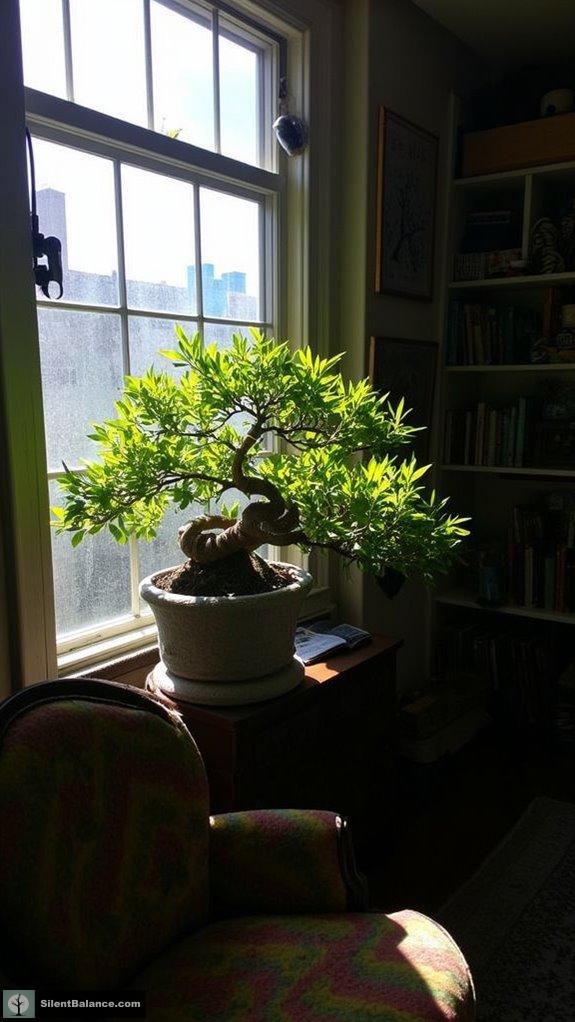
When I’m setting up my indoor bonsai, I can’t help but feel like a proud artist prepping a canvas, and the light is my paint! To achieve the best positioning, I place my bonsai near a south-facing window for maximum light exposure, ensuring they soak up those rays.
I also keep an eye on the light intensity—4 to 8 hours of bright indirect light works wonders.
Don’t forget to rotate your bonsai weekly. Ever seen a tree in the wild leaning awkwardly towards the sun? No thanks!
Lastly, be mindful of your species’ light preferences. Dwarf Jades love morning sun but hate the scorcher of afternoon rays.
Happy bonsai means happy me! 🌿
Monitoring and Adjusting Light for Bonsai Health and Growth
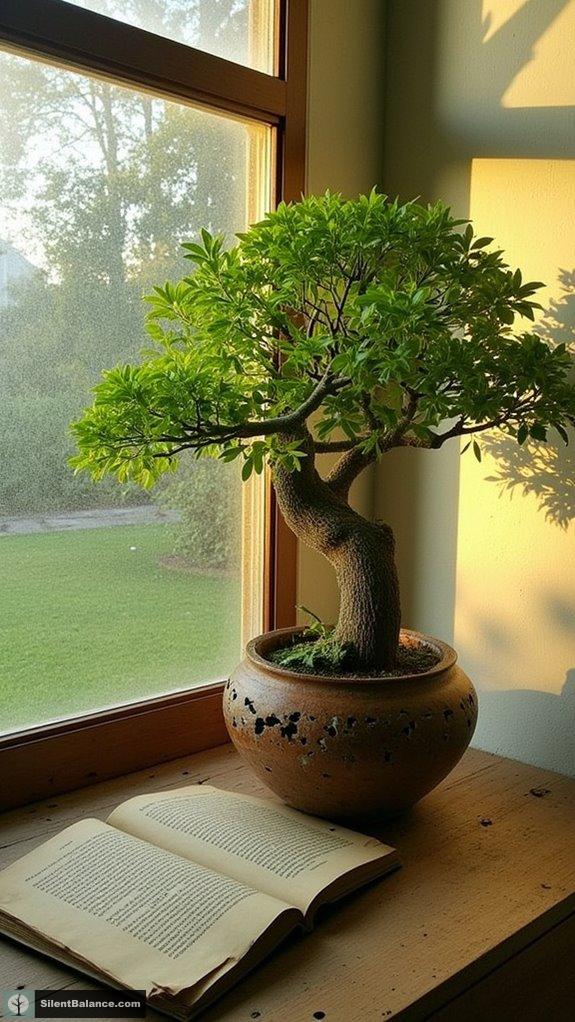
Mastering the light game is where many bonsai aficionados really shine.
When it comes to monitoring light intensity, I’m all about keeping an eye on those 12-14 hours of daily exposure. Your bonsai craves that consistent cycle!
Don’t forget about seasonal adjustments; winter means less light for temperate species, while tropical buddies enjoy bright, indirect rays.
Have you ever noticed your leaves drooping or turning colors? That’s your plant’s way of saying, “Hey, I need a change!”
Rotating your bonsai weekly helps distribute light evenly—no more leggy growth!
And by positioning your lights about 6-12 inches above, you’re ensuring they’re getting optimized light without getting scorched.
Tree Symbolism
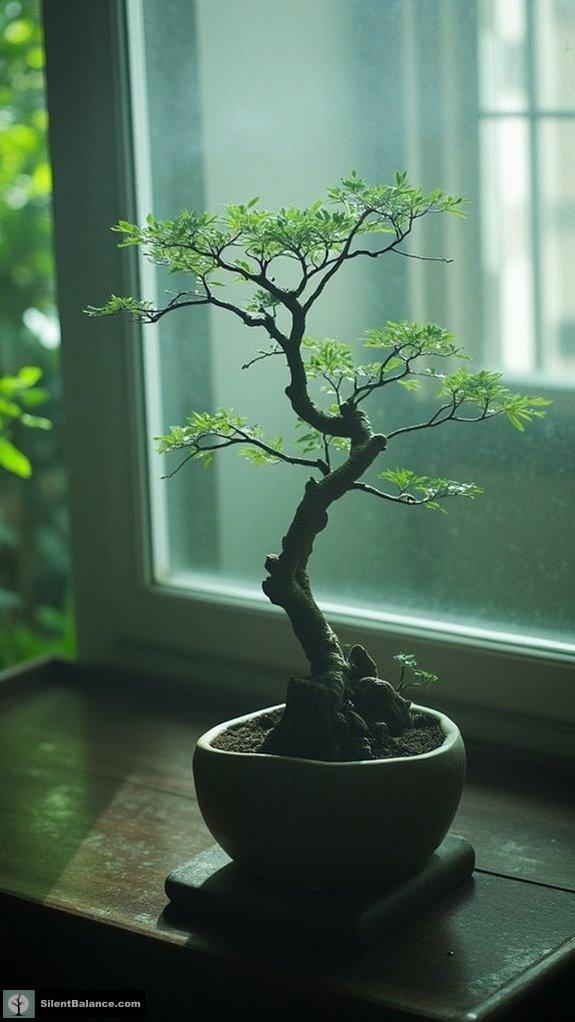
Bonsai trees aren’t just tiny plants; they’re living symbols packed with meaning that reflect various cultural philosophies.
Each species embodies unique traits, from the longevity of Pine bonsai to the fleeting beauty of Cherry blossoms.
Isn’t it fascinating how tree diversity in bonsai art reflects harmony and balance?
For instance, Japanese bonsai invites us to find Zen in simplicity, while Chinese penjing encapsulates the universe’s vastness.
And let’s not forget those resilient Junipers, offering protection, or the determined Ficus, thriving indoors with charm.
What about a Dwarf Jade? It promises prosperity, a delightful Feng Shui touch!
Bonsai Tree Symbolism

As we explore the symbolism of bonsai, it becomes clear that these miniature marvels extend far beyond mere aesthetics. Each bonsai speaks a language of harmony, balance, and peace, inviting you to a space of bonsai meditation.
These living pieces of art encourage you to slow down and embrace life’s transience, reminding us that beauty exists in patience and the meticulous shaping process.
Want to add a personal touch? Consider species-specific symbolism—an Azalea bonsai brings feminine elegance and vulnerability, perfect for nurturing love.
Embrace the wisdom they carry, and let bonsai art flourish in your space, connecting your inner self with nature.
Isn’t it fascinating how a tiny tree can encapsulate such profound life lessons?
Questions and Answers
What Are the Best Bonsai Species for Beginners?
If you’re starting with bonsai, I recommend easy care species like Ficus and Jade. They’re popular bonsai choices for beginners, as they adapt well to indoor conditions and require minimal maintenance. You’ll love them!
How Often Should I Water My Bonsai Tree?
So, you’re asking how often to water your bonsai? Well, if only it were as simple as a magic wand! I rely on my watering techniques, monitoring the humidity requirements instead of sticking to a dull schedule.
When Is the Best Time to Repot a Bonsai?
The best time for repotting my bonsai is late winter. I consider seasonal considerations to guarantee minimal stress and utilize innovative repotting techniques that enhance root health, setting the stage for vibrant growth in spring.
Can Bonsai Trees Be Grown Outdoors Year-Round?
I’ve successfully grown bonsai outdoors year-round by ensuring proper seasonal care and adapting to local outdoor conditions. With the right species, you can fully appreciate the beauty of these miniature trees throughout the seasons.
What Tools Are Essential for Bonsai Tree Maintenance?
When maintaining my bonsai, I’ve found precision tools like concave pruners essential for effective pruning techniques. I also explore different fertilizer types to guarantee my trees thrive while minimizing stress during care.
References
- https://abanahomes.com/blogs/news/all-about-grow-light-best-grow-lights-for-your-bonsai-in-2024
- https://bonsaiandbrewstudio.com/blogs/news/light-for-your-bonsai-tree
- https://bonsaishop.com.au/2021/09/22/bonsai-tree-care-how-much-light-do-bonsai-trees-need/
- https://bonsai2u.co.uk/how-much-sun-does-a-bonsai-tree-need/
- https://www.bonsaiempire.com/forum/help-me/9300-need-help-on-lighting-requirements-for-indoor-bons
- https://www.bonsaiempire.com/blog/grow-lights
- https://soltech.com/products/indoor-bonsai-care
- https://www.familytreenursery.com/bonsai.html
- https://www.lovemybonsai.com/blogs/bonsai/7-indoor-bonsai-trees-that-thrive-in-low-light-environments
- https://www.bonsaiempire.com/tree-species/indoor-bonsai

- 11 Best Luxury Sandalwood Candles for 2026 - June 19, 2026
- 11 Best Woven Wicker Gift Baskets for 2026 - June 19, 2026
- 11 Best High Powered Binoculars for 2026 - June 19, 2026
