
Creating an indoor bonsai garden is like nurturing your own little slice of nature! Start by finding that cozy south-facing window for ideal light—trust me, your bonsai will thank you! Water them with a two-step approach, using a balanced fertilizer in the growing season to boost their health. Don’t forget about soil; a mix of akadama, pumice, and lava rock works wonders. And if you’re still curious about bonsai’s rich symbolism and display tips, there’s more to explore!
Quick Takeaways
- Position bonsai near a south-facing window for optimal light exposure, ensuring 4-8 hours of bright, indirect light daily.
- Use a bonsai soil mix with akadama, pumice, and lava rock for proper drainage and airflow to the roots.
- Water thoroughly and check soil moisture daily, applying balanced liquid fertilizer every two weeks during the growing season.
- Incorporate minimalist design principles with accent pieces like stones or moss to create aesthetic harmony in your gardening space.
- Maintain a clutter-free environment and display bonsai at or just below eye level for an engaging visual experience.
Choosing the Right Location for Your Indoor Bonsai
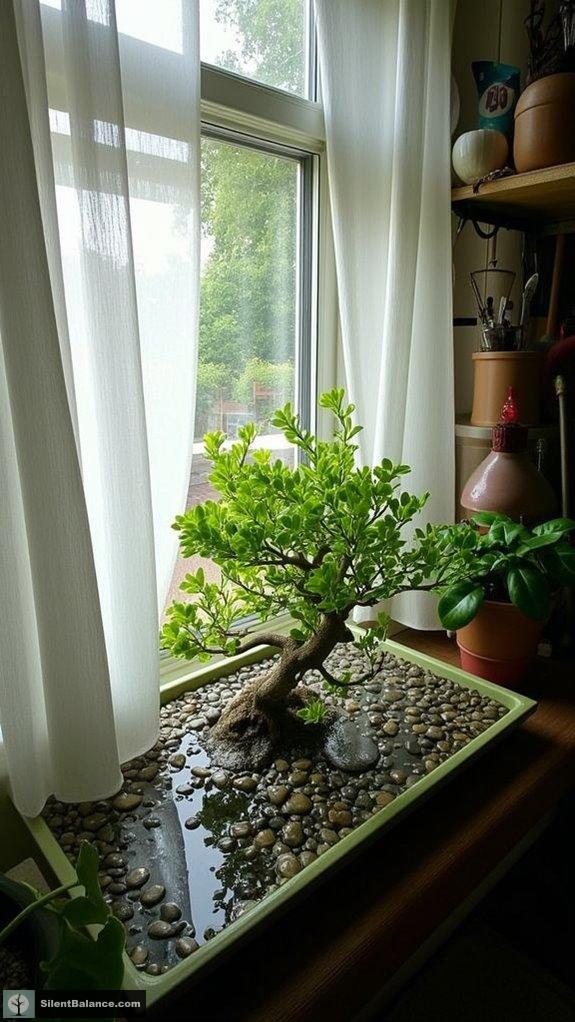
When it comes to choosing the right location for your indoor bonsai, think of it as finding the perfect perch for your leafy friend, because, let’s face it, these little green gems thrive in the spotlight—literally!
A cozy south-facing window is like a VIP lounge for your bonsai, bathing it in the best light. Light intensity drops significantly just a few feet away from windows, so make sure to keep your bonsai close to capture those rays.
Don’t forget about humidity levels; no one likes dry air, right? Use humidity trays or regularly mist to keep that tropical vibe alive.
And what about air circulation? Placing your bonsai away from drafts guarantees it can breathe easy, thriving without temperature tantrums.
Essential Care Techniques for Indoor Bonsai
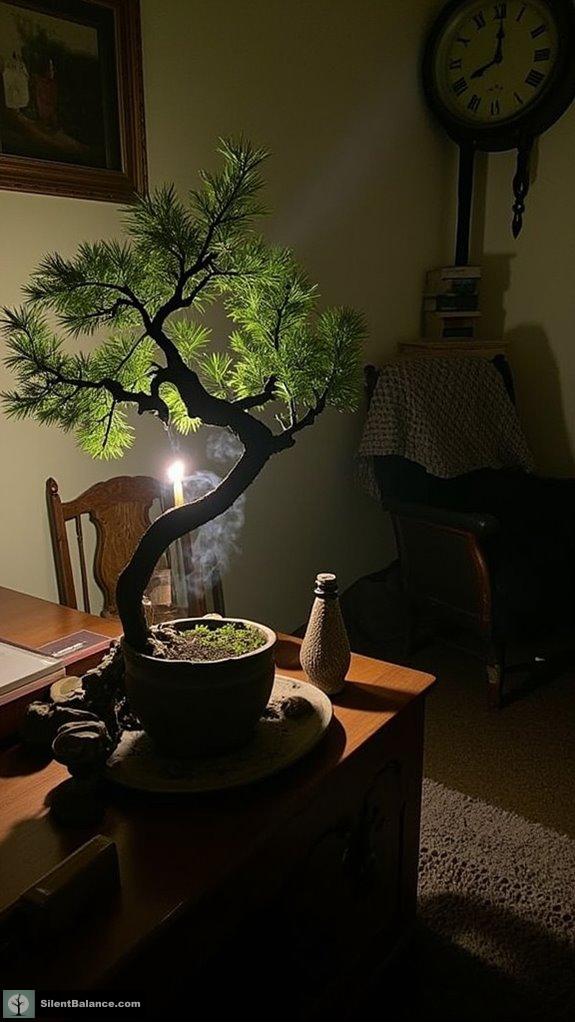
Now that you’ve found the perfect spot for your indoor bonsai, let’s get down to the nitty-gritty of care techniques that will keep your little green companion thriving.
First up, watering techniques: I like to check soil moisture daily—if the surface feels slightly dry, it’s time to water. Keep in mind that regular watering is essential due to the small pots that bonsai trees are often planted in. Indoor bonsai are typically more sensitive to environmental changes, so monitor their conditions closely.
Check your bonsai’s soil daily; if it feels dry on top, it’s time to give it a drink!
Go for a two-step approach: give it a good drink, wait a minute, then water again for deep root hydration.
For fertilizing tips, use a balanced liquid fertilizer every two weeks during the growing season. Just keep in mind, don’t fertilize stressed trees or during dormancy—let’s not force growth when the light’s low!
Keep an eye on those roots and enjoy the journey; bonsai care is a dance, and you’re leading!
Lighting Requirements for Different Bonsai Species
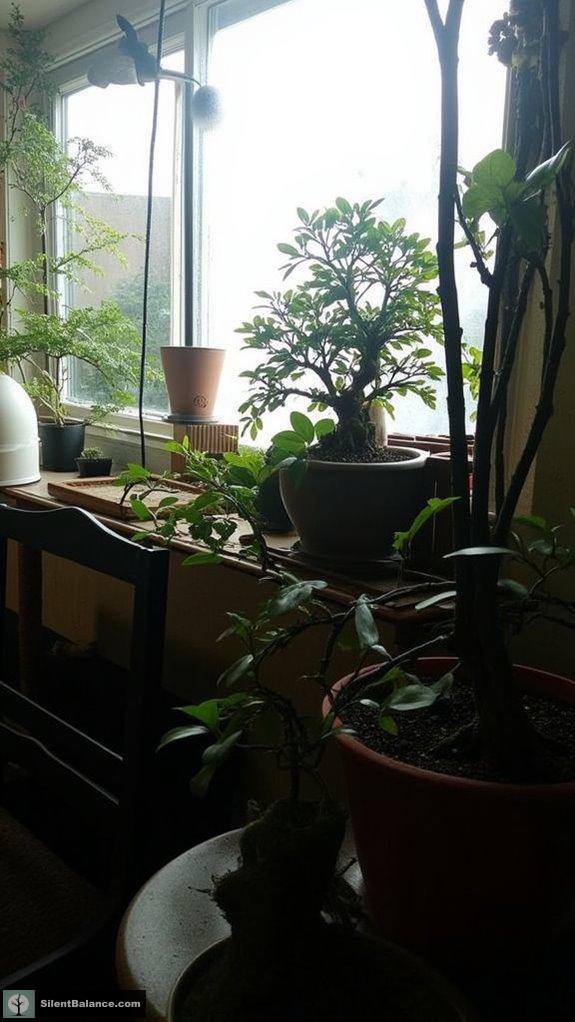
If you thought you could just toss your trusty green buddy on any shelf and call it a day, think again!
Lighting is everything when it comes to bonsai, and each species has its own vibe.
Most indoor bonsai crave 4-8 hours of bright, indirect light daily—think south-facing windows for a sunny boost.
Take the Dwarf Jade, for instance; it loves up to 18 hours of light exposure in winter!
But be careful—direct sunlight can scorch its delicate leaves.
Fukien Tea bonsai? It thrives with 6-8 hours of bright, indirect light and a bit of humidity. Additionally, regular root pruning is essential for maintaining a healthy bonsai and promoting proper growth.
Soil and Potting Considerations for Indoor Bonsai
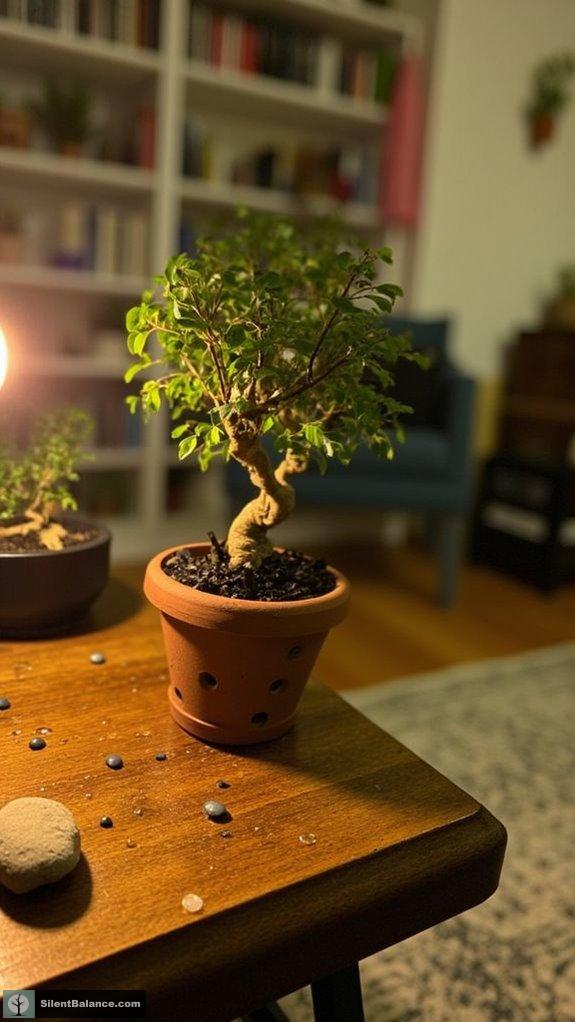
Choosing the right soil and potting strategy for your indoor bonsai can feel like traversing a labyrinth of options, but don’t sweat it!
Finding that perfect bonsai soil mix is key. Think akadama, pumice, and lava rock—these materials balance water retention, drainage, and aeration like pros. Tipping your mix for deciduous or coniferous species can make all the difference in growth. Additionally, seasonal care is essential for optimizing the growth and health of your bonsai.
Now, let’s chat potting techniques. Good drainage is non-negotiable—no one wants root rot crashing the party! In the indoor scene, pots with plenty of holes reign supreme; they help your bonsai breathe.
Pruning and Shaping Your Indoor Bonsai
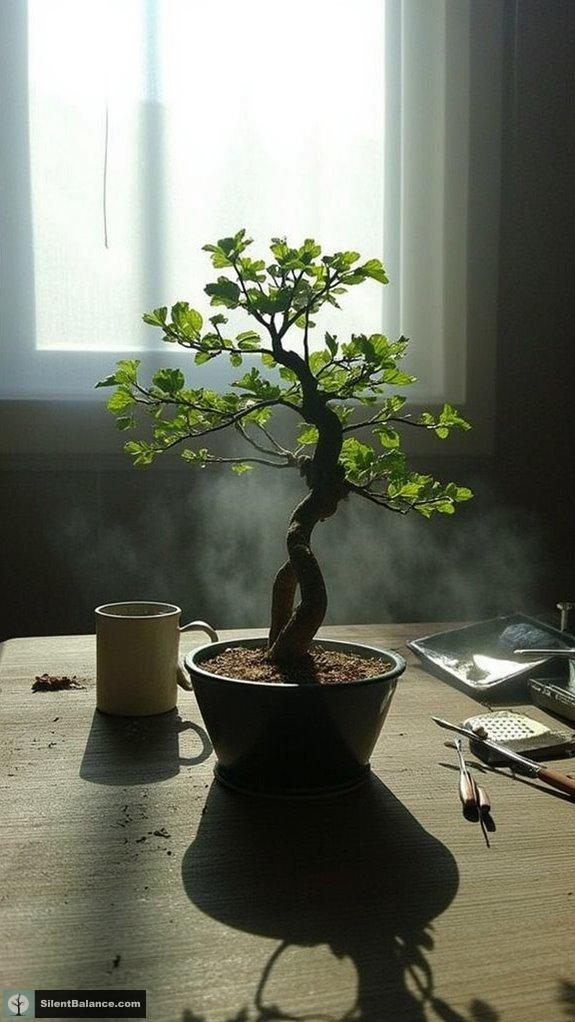
Pruning and shaping your indoor bonsai is like coaxing a masterpiece from a block of stone—there’s artistry in every snip and twist!
I love using different pruning techniques to sculpt my trees into stunning bonsai shapes. Start with maintenance pruning to keep that refined look, then switch to structural pruning for a vibrant framework.
Timing? Think spring or fall for major cuts, and always follow up by sealing any wounds—you wouldn’t want a tropical tree getting sick, right?
Spring or fall is prime time for major cuts—seal those wounds to keep your tropical tree thriving!
Wiring complements your snips, helping those trunks and branches maintain their desired curves.
And hey, don’t forget the magic of pinching new growth; it keeps things bushy and full. So grab those concave cutters, and let’s create some leafy wonders!
Creating a Balanced Aesthetic in Your Indoor Garden
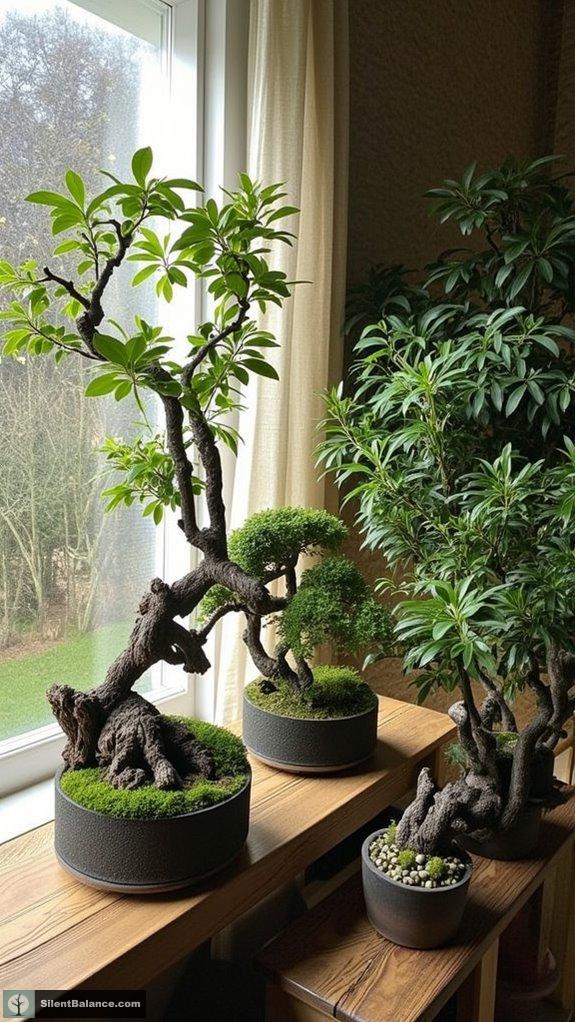
After shaping those bonsai beauties into works of art, it’s time to step back and see how they play together in your indoor garden.
You want to create aesthetic harmony, don’t you?
By embracing minimalist design, I avoid clutter and make certain every piece has purpose.
Asymmetrical balance gives your garden that relaxed, natural vibe while making use of negative space to let each bonsai shine.
Let’s not forget contrasting textures; they really enhance visual flow and keep things lively.
I strategically arrange them for ideal viewing angles—who doesn’t love a good eye-level experience?
Incorporating these elements crafts a tranquil ambiance, inviting admiration and reflection.
Enhancing Indoor Air Quality for Bonsai Health
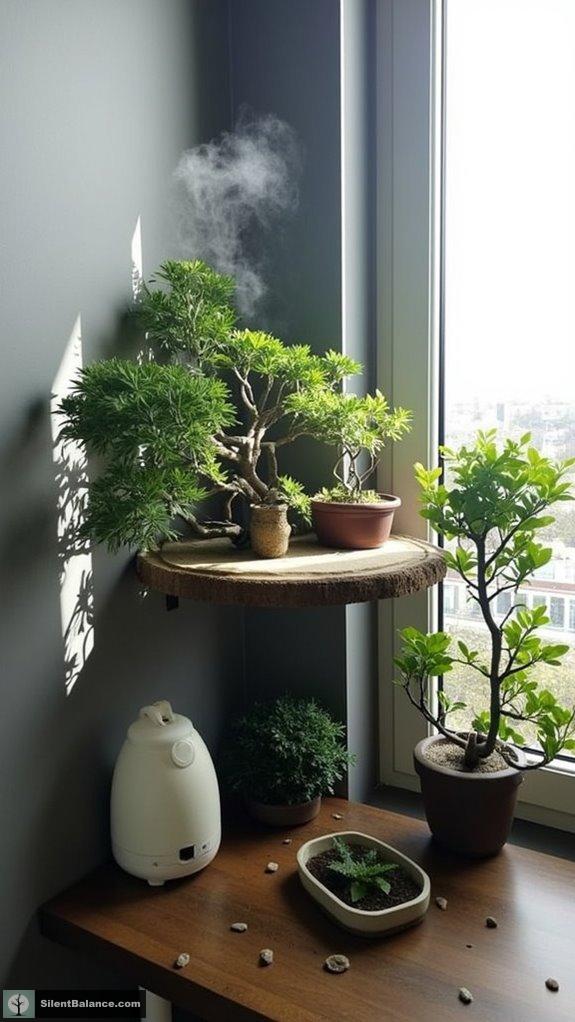
While many folks think of bonsai as just charming little trees sitting on a shelf, they actually play an essential role in enhancing indoor air quality, which is important for their health—and ours!
These tiny titans engage in air purification through photosynthesis, absorbing carbon dioxide while boosting oxygen levels. Envision your room feeling fresher, almost like a mini forest!
Bonsai also help in humidity management. As they transpire, they release moisture, preventing that parched, static-electricity-filled air we often dread.
Bonsai contribute to humidity control, releasing moisture to combat dry, static-filled air for a more comfortable indoor environment.
Mixing species can create a little micro-ecosystem, improving pollutant absorption and enriching your living space.
Symbolism and Cultural Significance of Bonsai
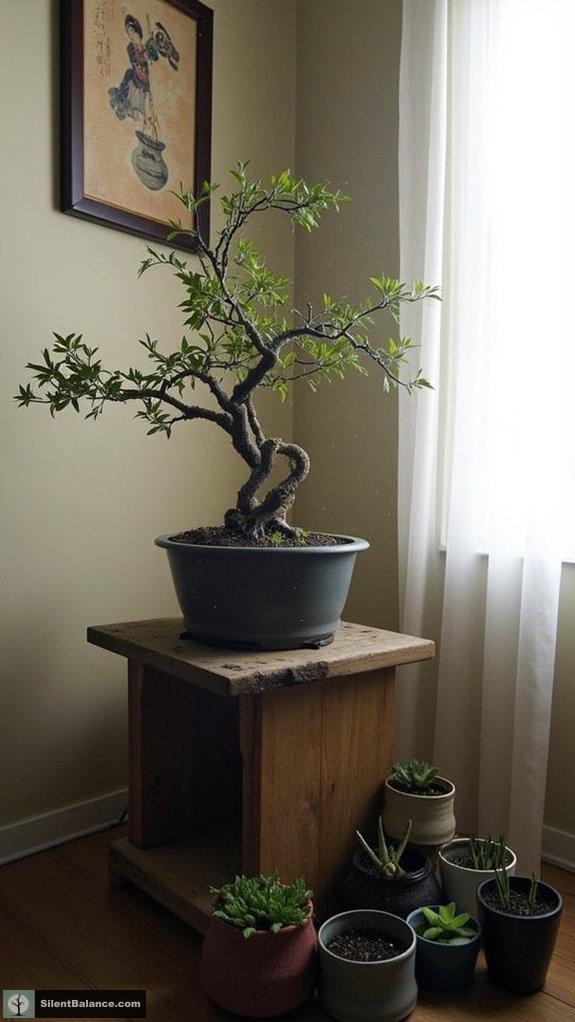
When you plunge into the world of bonsai, it’s like stepping into a domain where art meets philosophy, don’t you think? Rooted deeply in cultural traditions, bonsai embodies spiritual harmony, reminding us that nature and human efforts can coexist beautifully.
Originating from ancient Chinese *penjing*, these miniature trees represent both elite status and a refined connection to nature. The journey to Japan saw bonsai morph into a Zen staple, symbolizing patience and the power of reflection.
So, every twist and turn of your bonsai’s branches tells a story of perseverance, much like life itself.
Isn’t it fascinating how these little trees can evoke such depth? They’re more than just decor; they’re a living embodiment of art, meditation, and a balance we all crave.
Tips for Displaying Your Indoor Bonsai Effectively
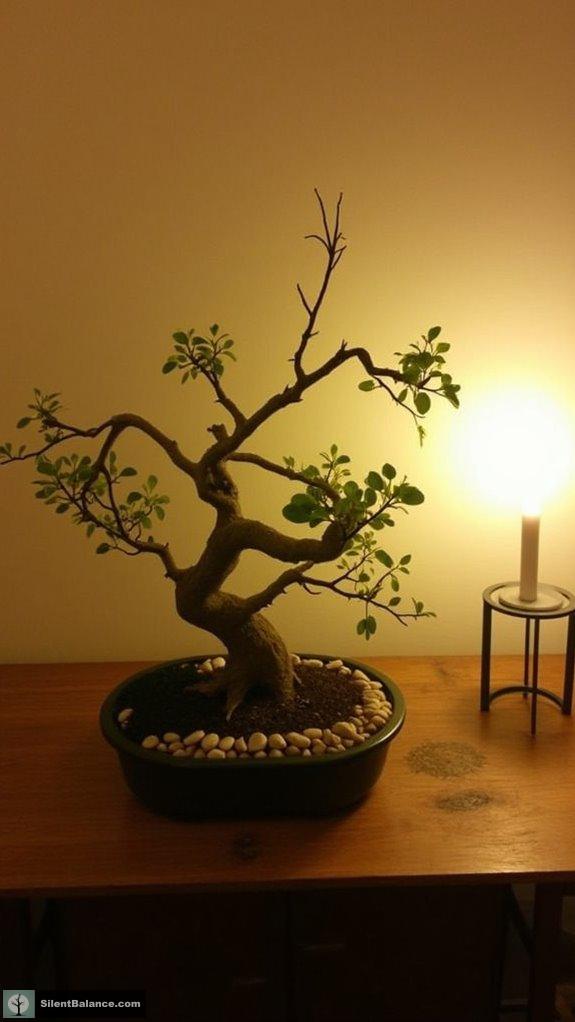
Displaying your indoor bonsai isn’t just about finding a spot; it’s an art form in itself!
To maximize display aesthetics, position your bonsai at or just below eye level. Isn’t it amazing how a well-framed tree can pull you into its zen world?
Keep backgrounds subtle, avoiding anything too busy that steals the show.
Using decorative stands can elevate your bonsai, but be mindful—they shouldn’t overshadow your masterpiece.
Consider incorporating a few accent pieces like small stones or moss, but keep it minimalist to avoid clutter.
And don’t forget to light it right!
Rotate your bonsai regularly for even growth and create a microclimate free from drafts.
Ready to showcase your little green wonder? Let’s get decorating!
Tree Symbolism
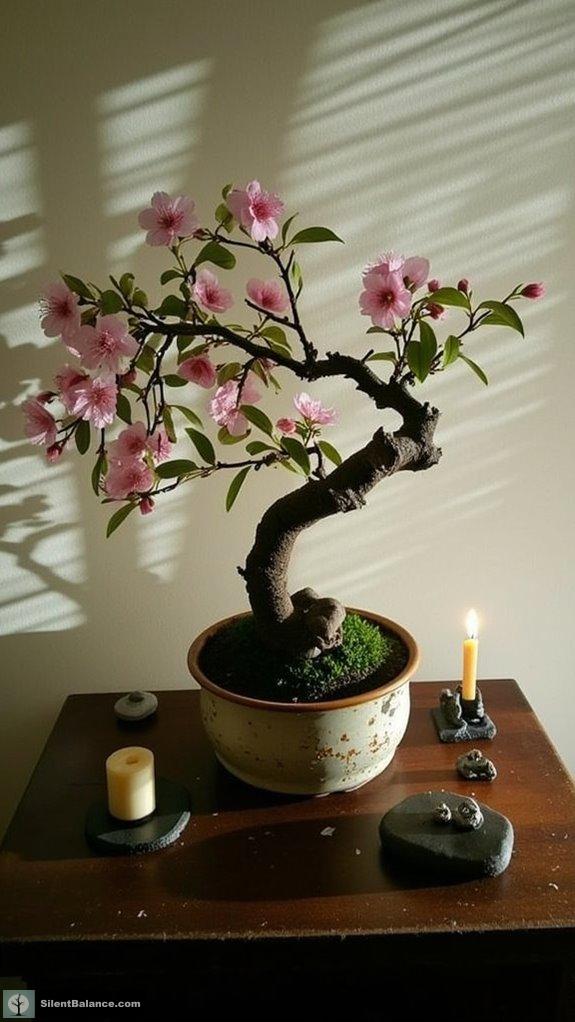
Have you ever paused to contemplate the deeper meanings behind those carefully cultivated bonsai trees?
Bonsai meaning goes beyond aesthetics; it’s an ancient art steeped in historical significance. These living sculptures first emerged in China over 1,300 years ago, where they symbolized potted environments for the elite.
Yet, when Buddhist monks brought them to Japan, bonsai transformed into a universal symbol of balance, harmony, and simplicity.
Each species carries its own wisdom. For instance, a pine bonsai? Think longevity and resilience, while the cherry blossom whispers of renewal and fleeting beauty.
Bonsai Tree Symbolism
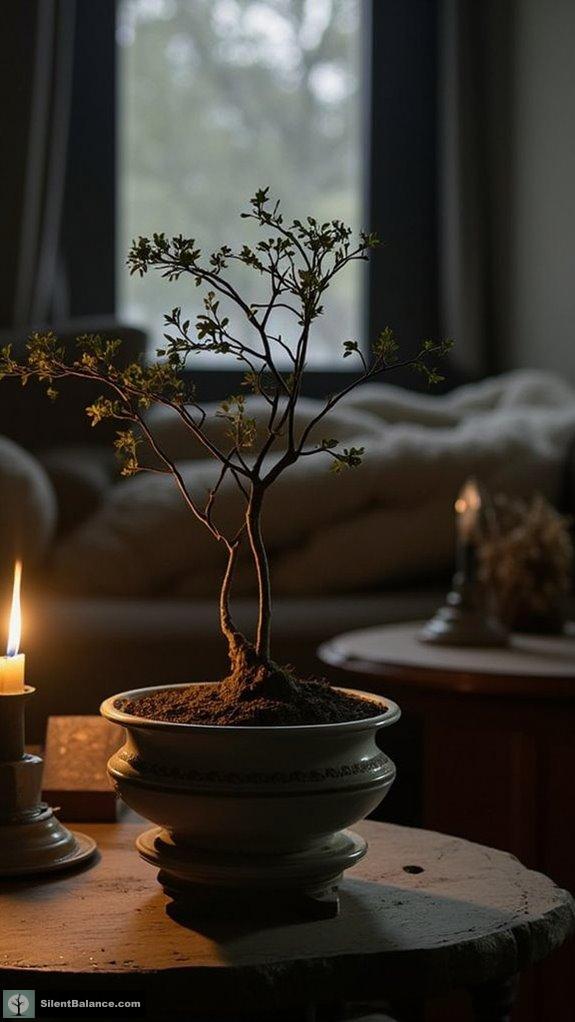
Bonsai trees are more than just miniatures of nature; they embody rich layers of symbolism that speak to both the heart and mind.
Bonsai trees embody profound symbolism, inviting us to connect with nature’s essence and explore the depths of our own existence.
These exquisite living art forms represent harmony, balance, and an unyielding patience, inviting us to embrace the slow journey of nurturing. Can you feel the zen vibes?
Originating from ancient cultures, bonsai intertwines with spiritual aspects, reminding us to live mindfully and authentically.
Picture the delicate azalea, symbolizing feminine grace, or the twisted trunks—strong despite adversity—teaching us resilience.
They’re not just ornamental; they’re companions that resonate energy and foster reflections on life’s transience.
Isn’t it awe-inspiring to think these small wonders can encapsulate profound cultural meanings while enhancing our indoor sanctuaries?
Questions and Answers
Can I Use Regular Potting Soil for Bonsai?
I wouldn’t use regular potting soil for bonsai. It lacks the right drainage and aeration, essential for healthy roots. Instead, I prefer bonsai soil, specifically designed to meet the unique needs of these trees.
How Often Should I Rotate My Bonsai for Even Growth?
I rotate my bonsai like it’s a prized sculpture, ensuring growth symmetry thrives! I’ll spin it every 1-2 days indoors, adjusting with the seasons. Keeping light balanced is like crafting an artistic masterpiece in nature.
What Decorations Can Complement My Indoor Bonsai Garden?
To complement my indoor bonsai garden, I like using decorative stones and feng shui elements. They create balance and harmony, enhancing the aesthetic appeal and energy flow, making my space feel innovative and inviting.
Is Misting Beneficial for Indoor Bonsai Trees?
I’ve found misting beneficial for my indoor bonsai trees, especially with the right misting frequency. It really boosts humidity levels, keeping the leaves healthy and vibrant while enhancing my plant’s overall vigor. It’s a simple yet effective technique!
Can Bonsai Trees Be Kept in Low-Light Areas?
I know it seems challenging, but bonsai can thrive in low-light areas! While they do have specific light requirements, certain indoor plants like Ficus and Jade adapt well, adding elegance to your innovative space.
References
- https://www.youtube.com/watch?v=l4bIcLXbvWg
- https://www.bonsaigalinou.com/en/blog/japanese-garden-n54
- https://miyagibonsai.co.uk/blog/bonsai-basics/bonsai-tree-for-beginners-cultivating-your-miniture-garden/
- https://www.bonsaiempire.com/blog/bonsai-garden
- https://www.bonsaiempire.com/basics/
- https://www.bonsaiempire.com/basics/bonsai-care/position
- https://www.bonsaiboy.com/catalog/indoorbonsaicare.html
- https://www.kaizenbonsai.com/pages/establishing-your-indoor-bonsai
- https://bonsairesourcecenter.com/how-to-pick-the-right-location-for-bonsai-to-grow/
- https://www.greenthumb.com/learning-how-to-care-for-bonsai-plants/

- 11 Best Luxury Sandalwood Candles for 2026 - June 19, 2026
- 11 Best Woven Wicker Gift Baskets for 2026 - June 19, 2026
- 11 Best High Powered Binoculars for 2026 - June 19, 2026
