

When it comes to bonsai soil and nutrient needs, each style has its quirks. Tropical bonsai adore humidity and need a mix of akadama and pumice for drainage. Coniferous species love slightly acidic soil packed with organic matter. Deciduous trees crave nitrogen and potassium for leafy glory, while flowering bonsai thrive on rich compost. And let’s not forget about succulents—those little guys prefer a gritty blend to avoid root rot. Curious to explore the art of bonsai further?
Quick Takeaways
- Tropical bonsai require a well-draining mix of akadama, pumice, and organic materials for moisture retention and drainage.
- Coniferous bonsai thrive in slightly acidic soil with organic materials like pine bark and inert particles for aeration.
- Deciduous bonsai need balanced nutrients like nitrogen, potassium, and phosphorus to maintain healthy foliage and strong root systems.
- Flowering bonsai benefit from a blend of akadama, pumice, river sand, and organic compost for moisture, structure, and nutrients.
- Succulent bonsai demand well-draining soil with components like coarse sand and perlite to prevent root rot, ensuring proper moisture control.
Tropical Bonsai Soil Requirements
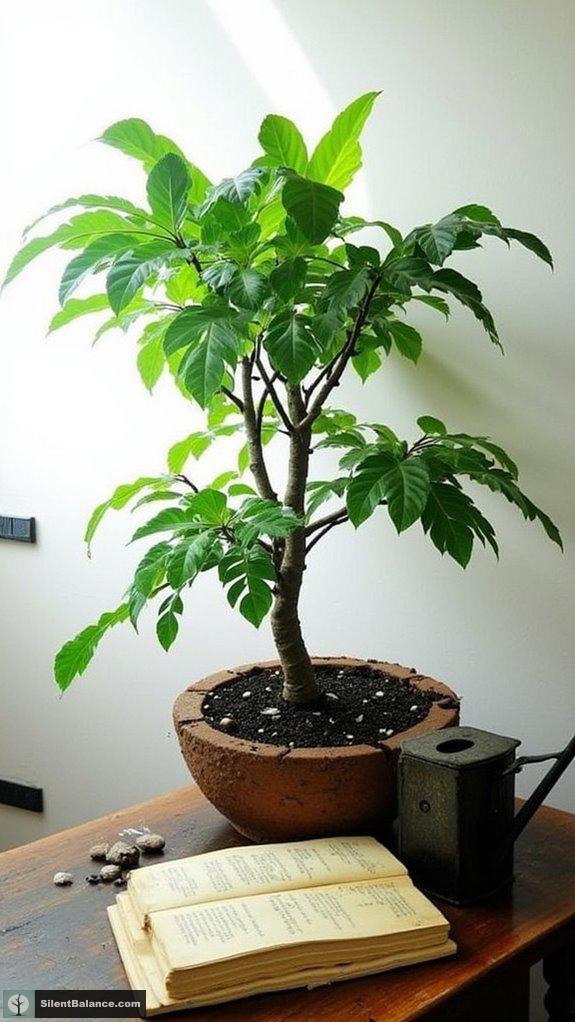
When you start your bonsai journey, understanding the soil needs of tropical bonsai trees is essential, especially since they thrive in a warm, humid environment.
Tropical bonsai soil isn’t just any garden mix; you need a blend that offers moisture retention while ensuring good drainage. Think about it: if you’re keeping your tree happy, you need to mimic its native conditions, right?
A well-draining mix of akadama, pumice, and organic materials works wonders.
Too much water retention? You’ll deal with root rot—yikes!
Want your tree to flourish? Check moisture levels regularly, because tropical trees love their drinks but can’t swim!
Coniferous Bonsai Soil Preferences
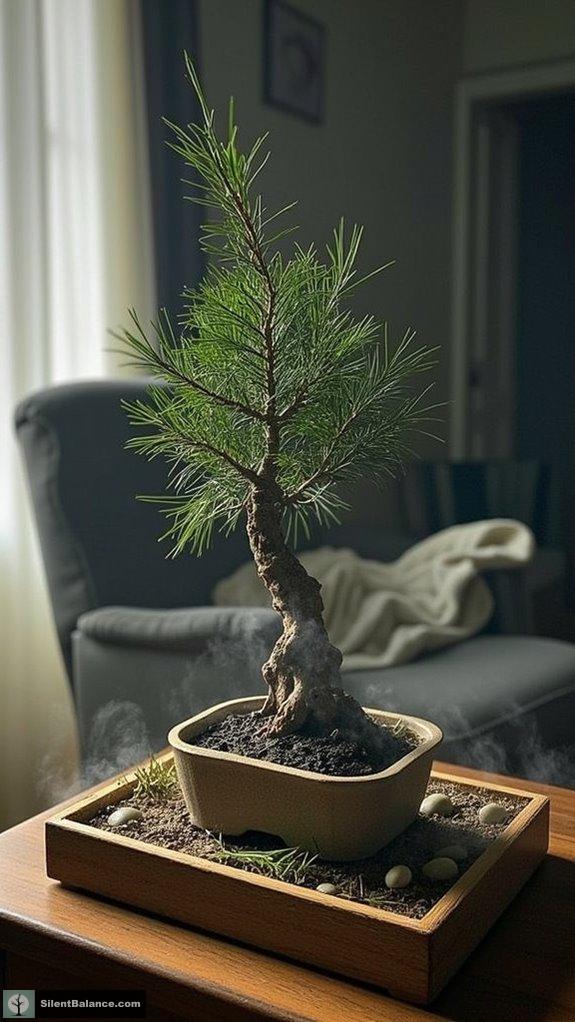
Shifting gears from tropical bonsai to coniferous species involves understanding their specific soil preferences, which are quite distinct.
To create the perfect soil composition for your coniferous bonsai, consider these four essentials:
- Well-draining aggregate – Think akadama or pumice that allows excess water to escape, preventing root rot.
- Organic material – Use pine bark or cypress mulch to help maintain moisture while providing that nutrient balance they crave.
- Inert particles – Incorporate items like lava rock for aeration, giving roots room to breathe.
- pH balance – Aim for a slightly acidic mix, ideally between 5.5 and 6.5, to keep those conifers thriving.
Additionally, understanding the symbolism of bonsai can enhance your appreciation of these remarkable trees, as they embody a deep connection to nature across various cultures.
With the right mix, your bonsai will flourish like the beauty it is!
Ready to dig in?
Deciduous Bonsai Nutrient Needs
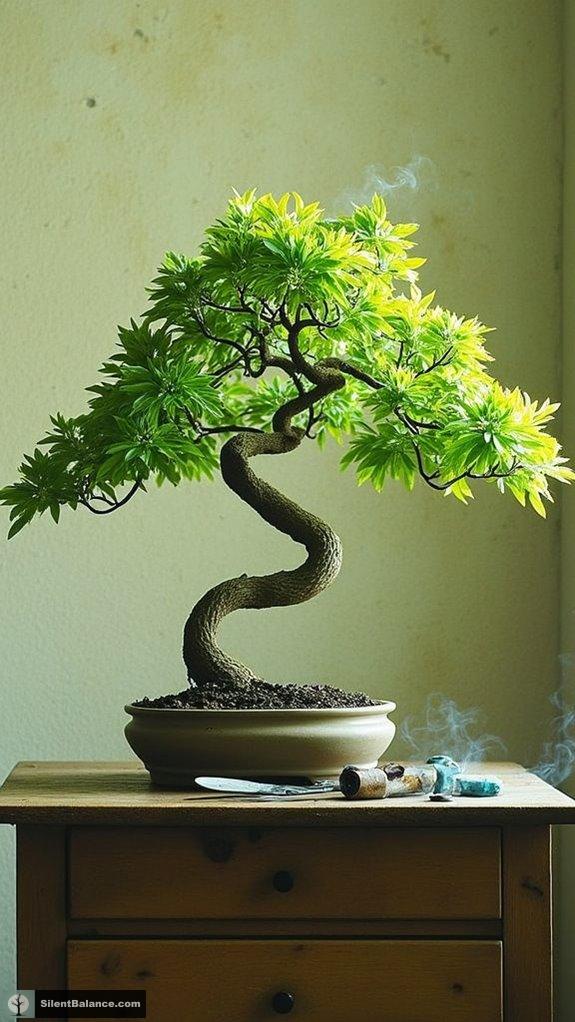
To truly nurture your deciduous bonsai, you need to get a grip on their unique nutrient needs, or risk leaving your leafy companion feeling a bit under the weather.
These trees thrive on the right balance of leaf nutrients to boost foliage health. Think of it as feeding your bonsai a salad bar—rich in nitrogen and balanced with potassium and phosphorus. This helps keep those vibrant leaves popping!
And don’t overlook root health. A strong root system is essential for nutrient uptake, so a quality soil blend enhances that aspect.
Are you ready to take charge? Pay attention to your bonsai’s responses. With a bit of effort and keen observation, you’ll master the art of feeding your greens and watch them flourish!
Flowering Bonsai Soil Composition
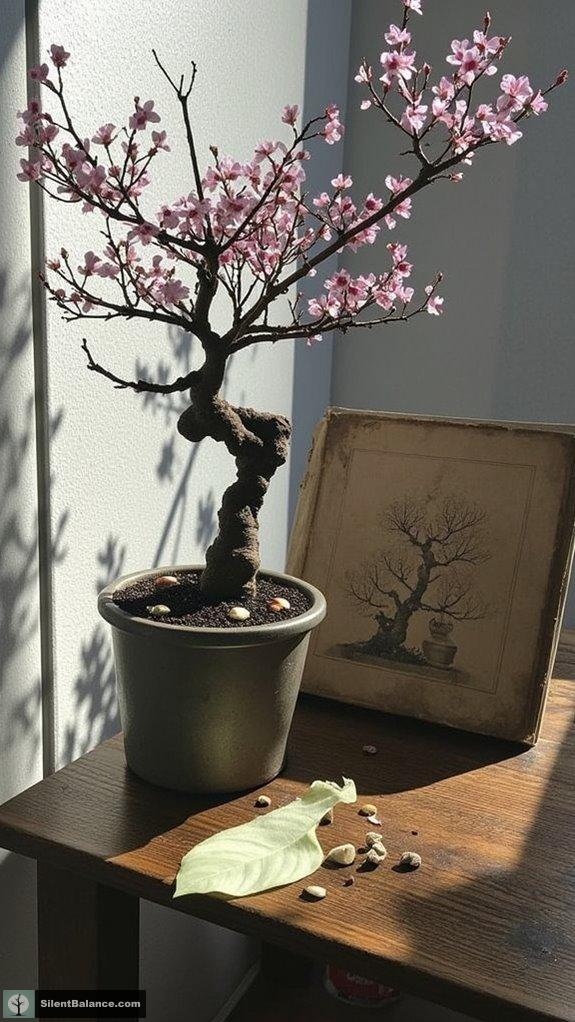
While it’s true that any bonsai can thrive in the right soil, flowering bonsai have specific requirements that’ll make their vibrant blooms really pop.
You want to guarantee they’ve the perfect mix for those stunning flowers to flourish.
Here’s a quick breakdown of what I use for my flowering bonsai soil composition:
- Akadama: This clay aggregate retains moisture, offering just enough drainage.
- Pumice: A lightweight volcanic rock, it provides excellent aeration, preventing root rot.
- River Sand: Adds structure to the mix, guaranteeing good drainage, because soggy roots are a big no-no!
- Organic Compost: A soil amendment that fuels growth with rich nutrients.
In addition to this blend, seasonal care is vital in ensuring your flowering bonsai thrives year-round.
With this blend, your flowering bonsai can sway to their own rhythm, boasting vibrant displays that’ll catch everyone’s eye!
Succulent Bonsai Care and Soil Types
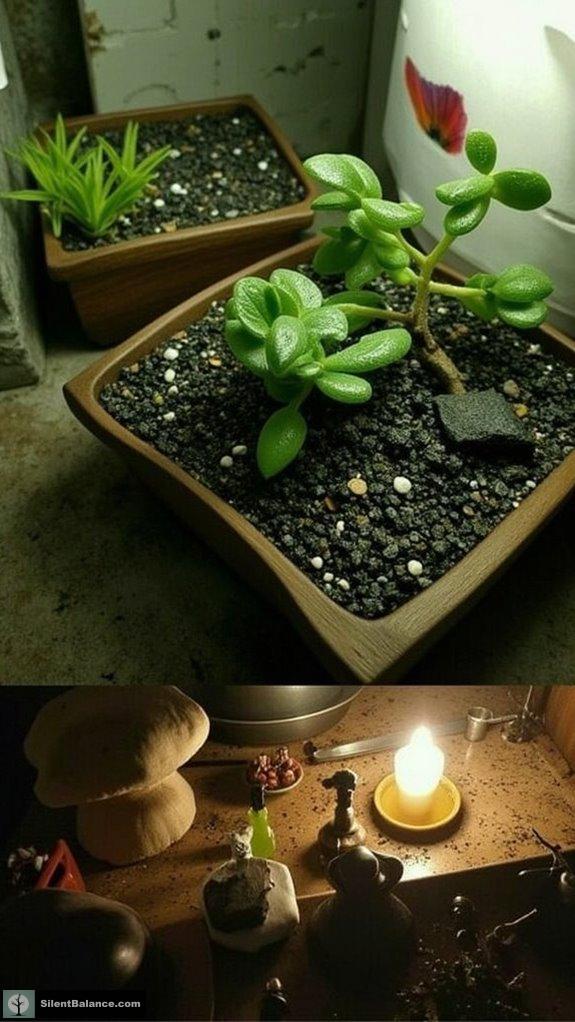
Caring for succulent bonsai isn’t just a hobby; it’s a delightful journey that begins with the right soil type.
Caring for succulent bonsai is a rewarding adventure that starts with selecting the perfect soil blend.
When considering different succulent types—like jade or haworthia—I’ve found that the right soil mixtures are essential.
You want a well-draining blend, including components like coarse sand, perlite, and even volcanic rock. Trust me; the right mix will keep those roots happy and thriving.
But what about those pesky root rot concerns? Fear not! A well-balanced soil not only aids in moisture control but also gives you that comforting sense of control over your plant’s health. It’s crucial to understand that proper moisture control is key to avoiding common issues like overwatering.
After all, every little detail matters in the world of bonsai, and with the right soil, your succulent bonsai journey will truly shine.
Water Retention and Drainage for Bonsai
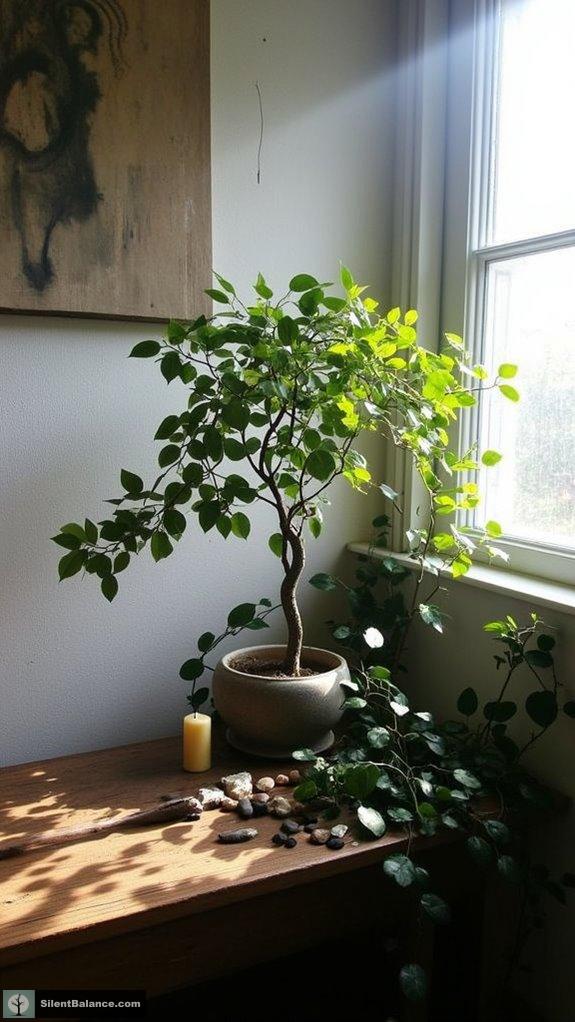
Water retention and drainage are the dynamic duo of bonsai success, playing an essential role in the health of your beloved trees. If you want to master water absorption and guarantee your bonsai thrives, here’s what you need to keep in mind:
- Soil Composition: Use a mix of Akadama, pumice, and lava rock for prime balance.
- Pot Size: Choose the right pot size—the too-big or too-small debate can be a real nail-biter!
- Draining Holes: Make sure your pots have proper drainage techniques; those little holes are life-savers.
- Watering Routine: Develop a consistent watering schedule—no one likes to be thirsty, especially your bonsai!
Seasonal Fertilization Strategies for Different Styles
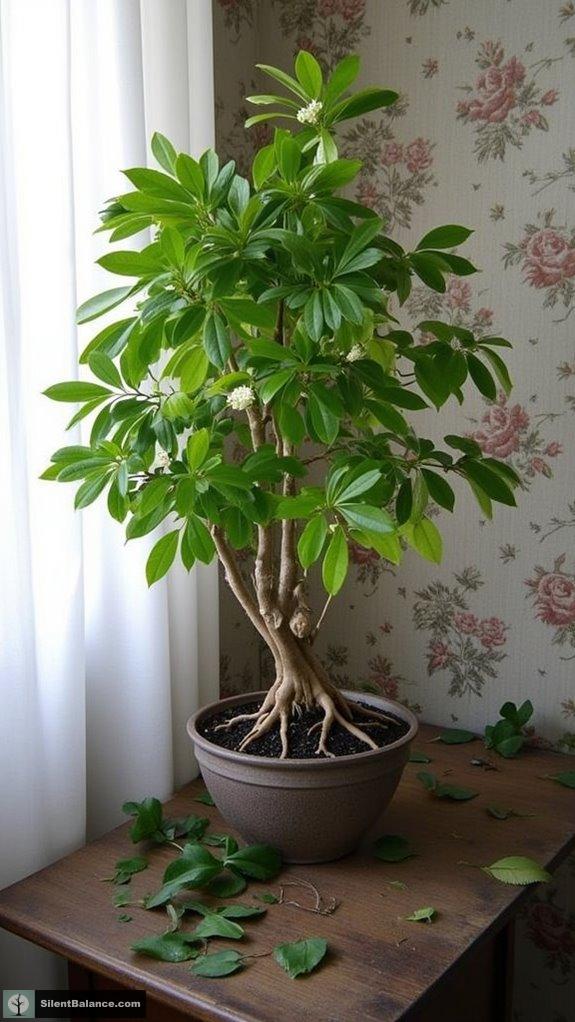
Getting the right soil and drainage isn’t the only task that’ll keep your bonsai looking lush; understanding seasonal fertilization strategies plays just as significant a role in nurturing these miniature wonders.
During spring, I make a vigorous fertilizer application to support new growth. For deciduous styles, it’s all about that nitrogen boost!
Spring is a time for vigor—boost your deciduous bonsai with a hearty dose of nitrogen for flourishing new growth!
In contrast, summer calls for a balanced approach—think NPK ratios.
As fall approaches, I reduce the frequency, focusing on phosphorus for root strength and winterhardiness.
But wait! Have you ever wondered how your specific tree species reacts to these changes?
Each style has its own rhythm and needs, so embrace the art of seasonal growth. Recall, your bonsai’s health isn’t a one-size-fits-all gig; it’s a dance of nurturing!
Bonsai Tree Symbolism

While many might see a bonsai simply as a miniature tree, its symbolism runs deep—infusing our lives with rich meanings and cultural heritage that span centuries.
In my journey with bonsai, I’ve discovered several key aspects of their cultural significance and spiritual meaning:
- Harmony with Nature: A bonsai reflects the balance between nature and human creativity.
- Longevity: These trees often symbolize enduring life, inviting us to reflect on our own legacies.
- Patience: Cultivating bonsai teaches us the art of waiting, reminding us that growth takes time.
- Personal Growth: Each twist and turn of the branches mirrors our life’s complexities.
Isn’t it fascinating how these little trees can hold such profound meanings?
Tree Symbolism
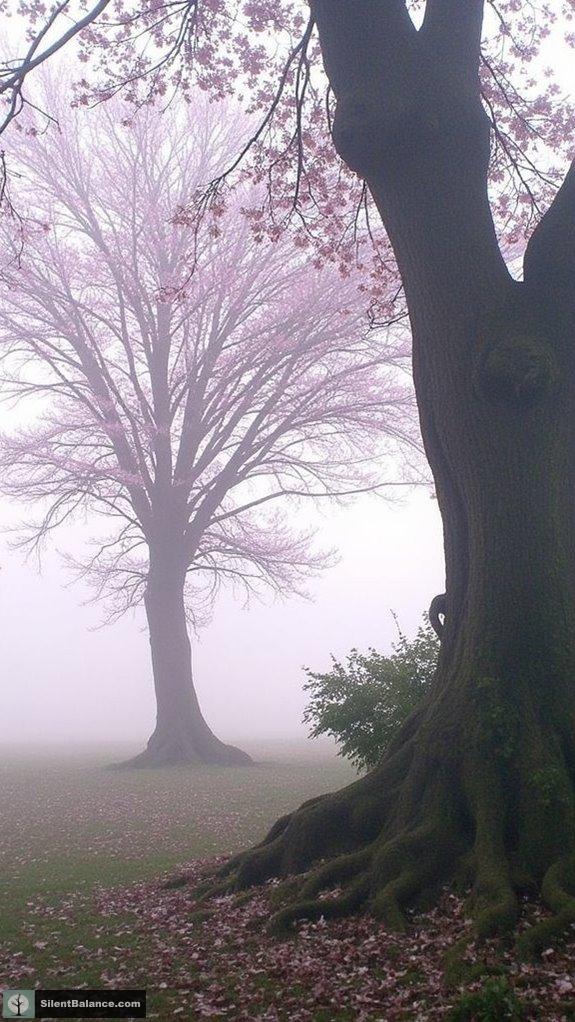
When you think about trees, have you ever paused to contemplate how they embody a language all their own?
I’ve always felt that trees aren’t just plants; they hold immense cultural significance and offer a personal connection that resonates deeply within us. Each tree tells a story—symbolizing strength, wisdom, or resilience.
Take, for instance, the cherry blossom; it represents the fleeting nature of life, a poignant reminder to appreciate the present moment.
Or consider the mighty oak, symbolizing endurance and stability—perfect for our busy, chaotic lives.
Questions and Answers
Can I Use Regular Garden Soil for Bonsai Trees?
You might be tempted to use regular garden soil for your bonsai, but I’ve learned that it just doesn’t cut it.
The soil composition isn’t right—it lacks the drainage requirements essential for these little champs!
Bonsai trees thrive on a mix designed for aeration, allowing roots to breathe and avoid rot.
Trust me, investing in quality bonsai soil will guarantee your tree’s health and happiness.
Your bonsai deserves the best, right?
How Often Should I Repot My Bonsai?
Repotting your bonsai is like giving it a fresh pair of shoes—it’s essential for its growth!
I usually repot my bonsai every 1 to 3 years, depending on its species and growth. The frequency matters for ideal bonsai health, ensuring roots have room to breathe and flourish.
Are your roots getting cramped? If so, it’s time! Keep an eye on your little green friend and watch it thrive; happy roots mean a happy bonsai!
What Ph Level Is Ideal for Bonsai Soil?
The ideal pH balance for bonsai soil typically ranges from 6.0 to 7.5.
I’ve found that this slightly acidic to neutral range is perfect for most species. It helps your little tree absorb nutrients properly, ensuring it thrives.
Pay attention to your soil composition, though; mix in some Akadama or pumice for better drainage.
You’ll be amazed at how a simple adjustment can rejuvenate your bonsai game.
Isn’t nature just fantastic?
Are There Specific Fertilizers for Different Bonsai Styles?
You know how a chef chooses spices for a dish? That’s pretty much how we pick fertilizers for bonsai growth!
Different styles of bonsai often thrive on specific fertilizer types. For instance, a cascading style might enjoy a balanced ratio, while a formal upright could benefit from higher nitrogen.
It’s all about giving your little green friend exactly what it craves.
How Do I Test Soil Drainage for Bonsai?
To test soil drainage for your bonsai, I use a simple drainage method that’s pretty reliable.
First, I water the soil thoroughly and then watch how fast it drains. If it puddles or takes ages, your soil composition might be off. A mix with good drainage typically includes akadama or pumice.
Got any other styles you’re curious about? Let’s keep our mini trees thriving together!
Happy bonsai-ing!
Summary
So, caring for your bonsai isn’t just about the soil—it’s a whole lifestyle! Think of it like tuning a vintage sports car; every little detail matters! Just like each bonsai style has its quirks, from the wild roots of a tropical to the stoic conifer, nurturing them makes you part of a unique club. So, roll up your sleeves, dig into the dirt, and let’s grow these tiny trees into grand living art! Are you ready to dig deep? 🌱

- 11 Best Luxury Sandalwood Candles for 2026 - June 19, 2026
- 11 Best Woven Wicker Gift Baskets for 2026 - June 19, 2026
- 11 Best High Powered Binoculars for 2026 - June 19, 2026
