

Hey there, bonsai aficionado! Watering using the immersion method is a great way to hydrate your little green buddy. Just pop that pot in a basin of water for about 10-15 minutes—yes, that’s right, no more soggy feet for the roots! Be sure your pot’s snug, and use a quality soil mix that retains moisture. After immersion, check that soil daily—think of it as a hydration routine for your leafy friend. Curious about avoiding common mishaps?
Quick Takeaways
- Immerse the bonsai pot in water for 5-10 minutes to ensure thorough moisture penetration without risking root rot.
- Use a well-draining soil mix to maintain moisture while preventing soggy roots during the immersion process.
- Select an appropriately sized container to support healthy root growth, balancing space and fit for optimal plant health.
- Conduct daily soil moisture checks after immersion to promptly address any drying issues and maintain tree vitality.
- Fertilize the bonsai about a week after watering, using balanced nutrients for overall health and growth support.
Understanding the Immersion Method
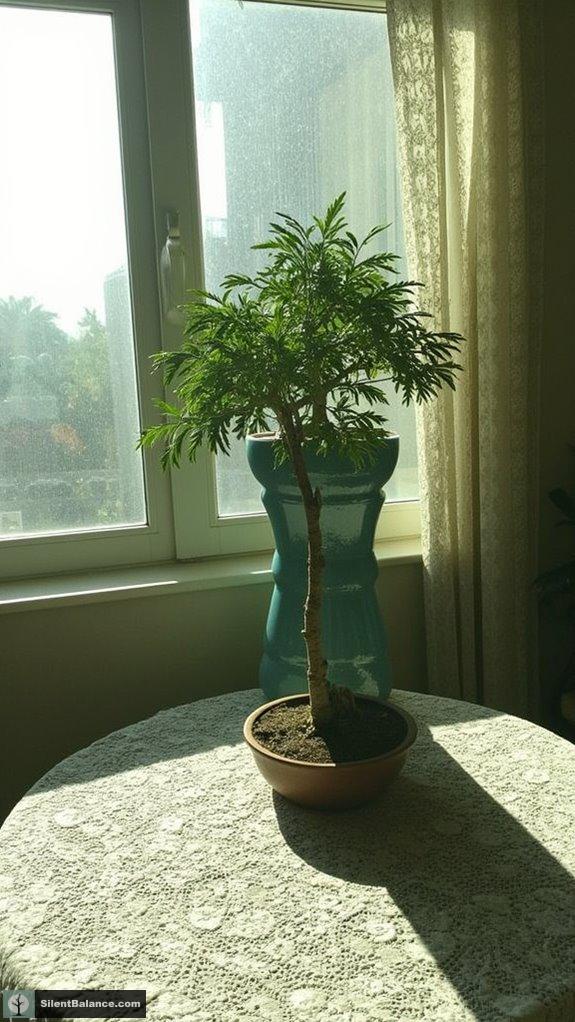
When it comes to watering bonsai, the immersion method is often touted as one of the most reliable techniques—I’d say it’s a top three method for sure!
With this approach, you’re in control. Just submerge your bonsai pot in a basin of water for about 10-15 minutes.
What’re the immersion benefits? For starters, it guarantees even moisture penetration, preventing dry spots. Plus, it’s a fantastic way to remove air bubbles that could mess with your watering technique.
Does your tree respond well to moist conditions? You bet! This method is particularly great for compacted soils, letting you quench that thirst efficiently. Additionally, outdoor bonsai thrive in conditions that mimic their natural environment, which often includes consistent humidity levels.
Plus, who doesn’t love a little bit of bonsai magic at work? Give it a whirl! Your little green friend will appreciate it!
Choosing the Right Container
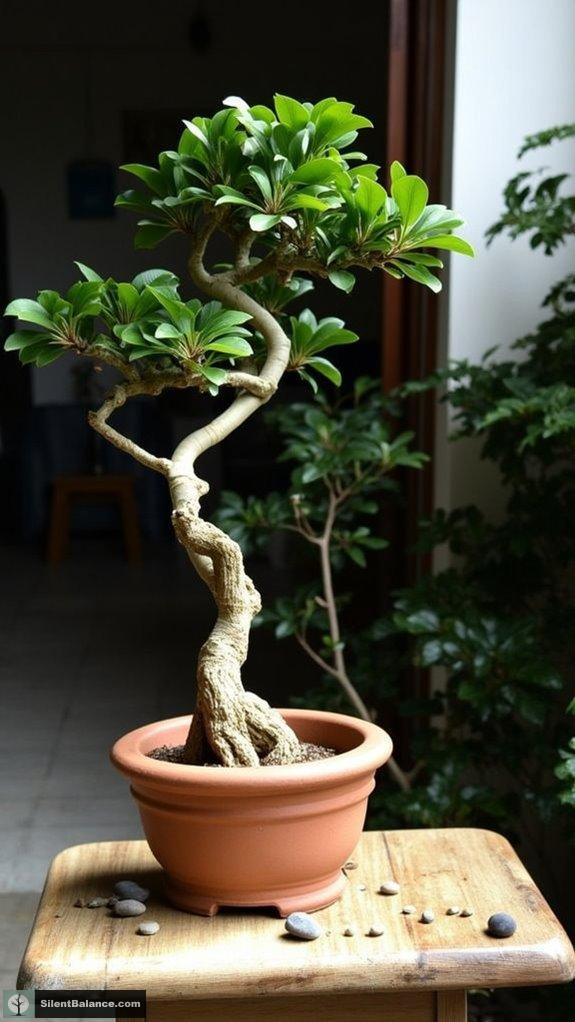
Selecting the right container for your bonsai is an essential step in cultivating a thriving mini tree. You want to think carefully about both container materials and size.
For instance, clay pots are classic; they breathe wonderfully, allowing your roots to thrive. Plastic, on the other hand, mightn’t be as aesthetic but can keep moisture levels consistent—who doesn’t love efficiency?
But let’s talk size! Too big, and the roots might get lazy; too small, and they might feel cramped.
Keep in mind, bonsai love just enough room to breathe but not too much where they lose focus. Additionally, using the right container can enhance home prosperity by aligning the energy of your plants with your living space.
Preparing Your Bonsai for Immersion
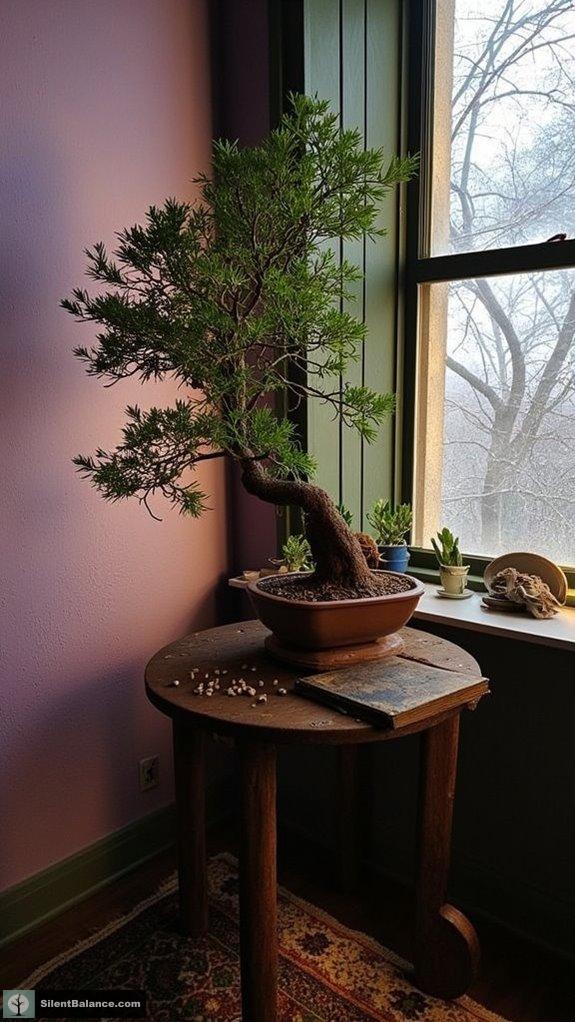
Preparing your bonsai for immersion is like getting ready for a big spa day—everything has to be just right.
First, let’s talk about bonsai potting. Your tree needs a stable, well-fitting home. A pot that’s too big? Nah, that’s just going to lead to soggy roots. Too small? Poor baby won’t have room to grow.
Next up, soil selection. You want a mix that retains moisture but drains well. Think a well-balanced diet—if it’s too rich, your tree might just get lazy. It’s best to use a quality bonsai soil mixture that promotes healthy root growth and moisture retention.
Don’t forget to inspect the roots; if they’re cramped, give ‘em some space.
It’s all about balance, folks!
Duration of Immersion
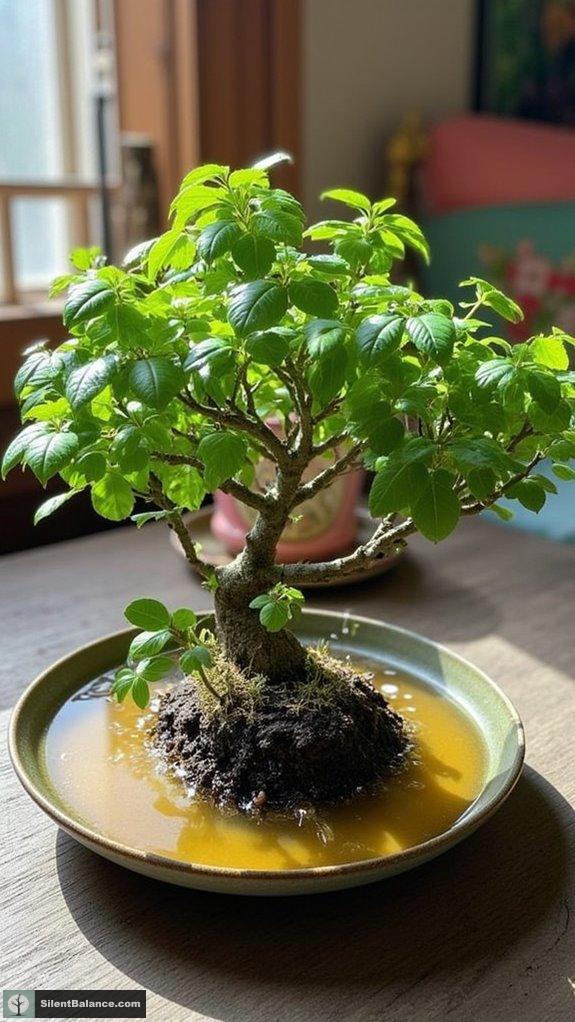
Though it might seem like a simple task, the duration of immersion can truly make or break your bonsai’s hydration routine.
When it comes to immersion timing, I’ve learned that 5 to 10 minutes is generally best. This timeframe guarantees that your bonsai achieves maximum water saturation without risking root rot. You’re in control here!
Have you ever tested the soil after immersion? I recommend gently slipping a finger into the soil; if it feels moist, you’ve nailed it! If it’s still dry, you might need just a few more minutes.
Post-Immersion Care
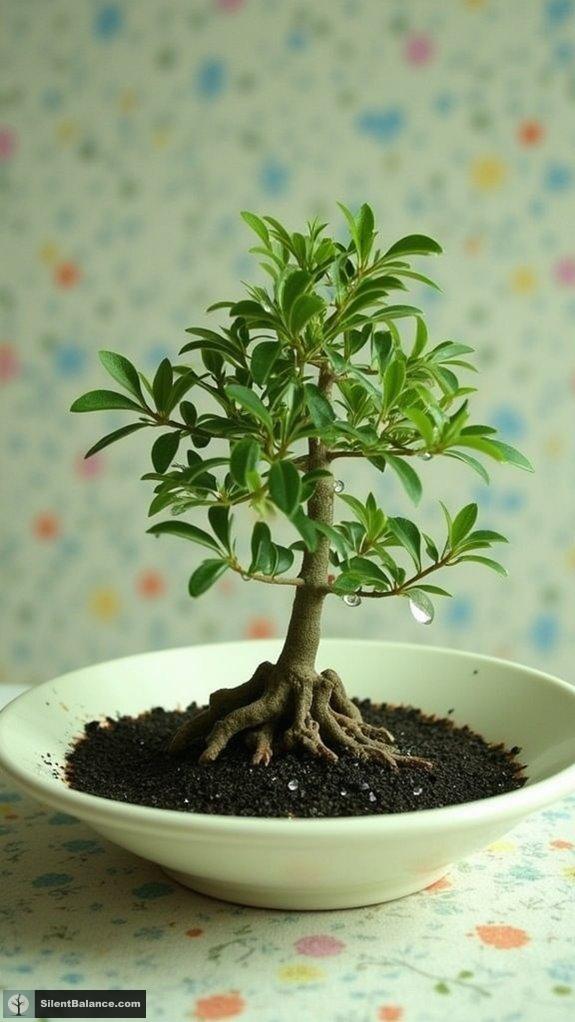
After that thorough immersion session, it’s time to think about what happens next.
You’ve got to keep an eye on your bonsai during post-immersion monitoring. This is where the real finesse comes into play, right? Check the soil moisture daily—don’t let it dry out too fast, or your little tree could get cranky.
And let’s talk about bonsai fertilization. Timing’s everything! About a week after watering, I like to give my bonsai a balanced fertilizer.
It’s like a little energy drink for them.
Common Mistakes to Avoid
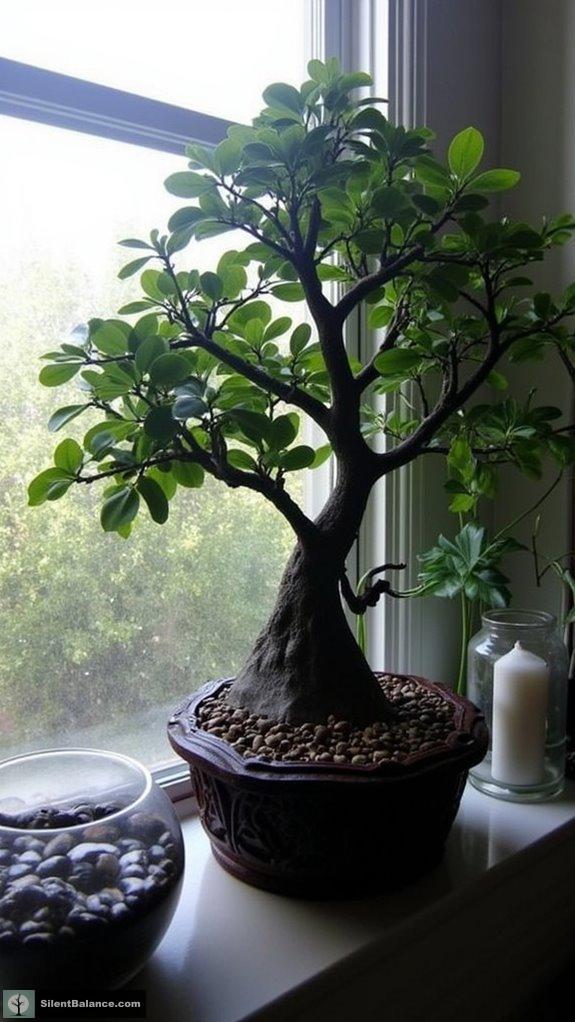
It’s easy to trip up when you’re getting the hang of bonsai care, and trust me, I’ve seen it happen! One common mistake is facing overwatering issues—many of us think more water equals happier trees, but that’s not the case.
Timing matters too; watering at the wrong time can stress your bonsai, especially if it’s still drying out.
Keep an eye on the moisture level and keep in mind the “drench and drain” mantra! You want that perfect balance between hydration and oxygen for the roots.
Don’t let impatience ruin your progress—patience is key in bonsai cultivation.
Stick to the schedule, observe your tree, and you’ll cultivate a masterpiece instead of a disaster. Now, isn’t that the goal?
Bonsai Tree Symbolism
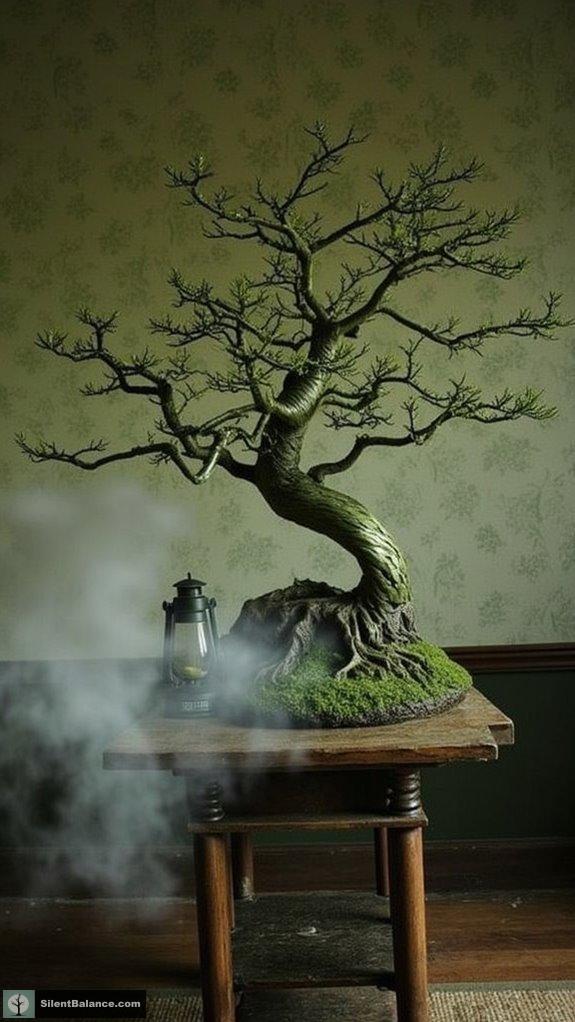
When you think of a bonsai tree, what comes to mind? For me, it evokes the deep symbolic meaning and cultural significance rooted in Japanese tradition.
These tiny trees are more than just ornamental pieces; they reflect mastery, patience, and balance.
Each bonsai embodies a connection between nature and human control, an art form perfected over decades.
Have you ever noticed how every twist and turn in the branches tells a story?
Whether it’s a pine, maple, or cherry, these miniature marvels symbolize longevity, harmony, and resilience.
In bonsai culture, we call it “living art” because it teaches us the art of nurturing life while embracing nature’s whims.
Tree Symbolism
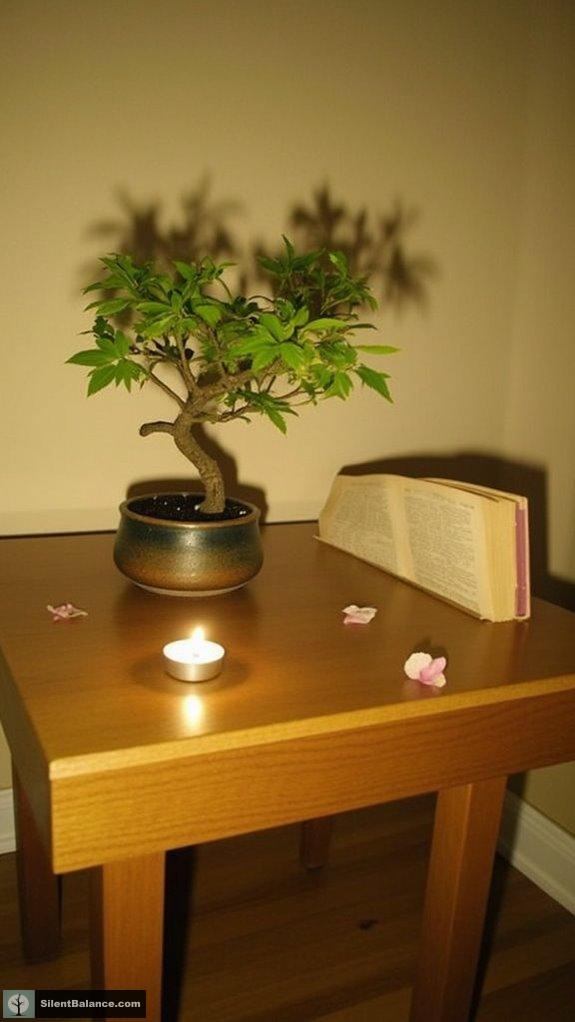
As I plunge into the fascinating domain of tree symbolism, I can’t help but marvel at how different species tell their own stories—each a vibrant chapter in the grand narrative of life.
Take, for instance, the majestic oak, symbolizing strength and endurance.
Or the elegant cherry blossom, embodying fleeting beauty and renewal.
Each tree has its own growth significance, tapping into rich cultural meanings that resonate across generations.
In bonsai culture, we cherish these symbols, integrating them into our practices.
Who doesn’t want their mini-tree to act as a personal totem, a bit of nature’s wisdom condensed into one living piece?
Questions and Answers
Can All Bonsai Species Use the Immersion Method?
Can all bonsai species use the immersion method? Well, not quite. Some bonsai species, like Ficus or Juniper, absolutely thrive with this technique.
Others, such as delicate maples or azaleas, might prefer a gentler approach.
It’s essential to know your tree’s needs. Experimenting with water techniques can feel like an art form, don’t you think?
I’m always here to chat about what works best for your little green friends!
How Often Should I Use the Immersion Method?
When it comes to watering frequency, I’ve found that using the immersion method about once a week works wonders for bonsai health.
You want to keep the soil consistently moist, not soggy. But hey, isn’t it just like us humans? Too much or too little can cause issues!
Just dip those roots in water until bubbles stop rising, and watch your little tree thrive! It’s magic, I swear! 🌳
Can I Combine Immersion With Other Watering Techniques?
Can I mix different watering techniques? Absolutely!
Combining methods can be a game-changer. I often use immersion as my go-to, but I might follow up with a gentle spray to keep humidity levels up.
You can tailor your watering schedules based on your bonsai’s needs, experimenting with what works best. Just like a fine bonsai, the care routine should be artfully crafted, not left to chance.
What Water Temperature Is Best for Immersion?
When it comes to water temperature for immersion, I’ve found that warmer water, around room temperature, creates the ideal conditions for your bonsai.
Cold water can shock the roots, while really hot water could risk damage.
I usually aim for that sweet spot, about 65-75°F, balancing warmth and comfort.
Ever tried soaking in a nice warm bath? Your bonsai deserves that cozy treatment too!
Trust me; your tree will thank you.
Is It Necessary to Fertilize After Immersion Watering?
Did you know that healthy bonsai can absorb nutrients up to 50% more effectively after a good watering session?
After immersion watering, I’d say fertilizing isn’t strictly necessary but can be beneficial for ideal growth. Since nutrient absorption skyrockets, adding a balanced fertilizer can work wonders.
Just be mindful of fertilizer frequency; overdoing it can stunt your tree’s impressive progress.
Isn’t it thrilling to wield that power over your bonsai?
Summary
So, there you have it! Watering your bonsai with the immersion method is like giving your tree a rejuvenating spa day; it’ll leave it feeling refreshed and ready to thrive. Just keep in mind to pick the right container, watch the clock, and avoid overindulging. Your little green friend will show its gratitude with vibrant leaves and strong roots. Now, let’s make those bonsai dreams come true—your tree deserves it! Ready to plunge in?

- 11 Best Luxury Sandalwood Candles for 2026 - June 19, 2026
- 11 Best Woven Wicker Gift Baskets for 2026 - June 19, 2026
- 11 Best High Powered Binoculars for 2026 - June 19, 2026
