

When it comes to bonsai care, spotting signs of underwatering or overwatering is essential for keeping your little green marvel alive. If leaves get dry, crispy, or curl up like they’re trying to hide from the world, it’s time for some hydration. On the flip side, those yellowing leaves and mushy roots scream overwatering. Have you checked that soil moisture? A finger test can save your bonsai from distress. Let’s explore watering techniques tailored for your bonsai species!
Quick Takeaways
- Look for dry, curled, or yellowing leaves as indicators of underwatering in bonsai trees.
- Inspect the soil; if it feels bone-dry, the tree requires immediate watering.
- Signs of overwatering include yellowing leaves, leaf drop, and mushy, foul-smelling roots.
- Regular monitoring of soil moisture helps prevent root rot and other serious issues.
- Establish a consistent watering routine, adjusting for seasonal changes to ensure optimal health.
Signs of Underwatered Bonsai Trees
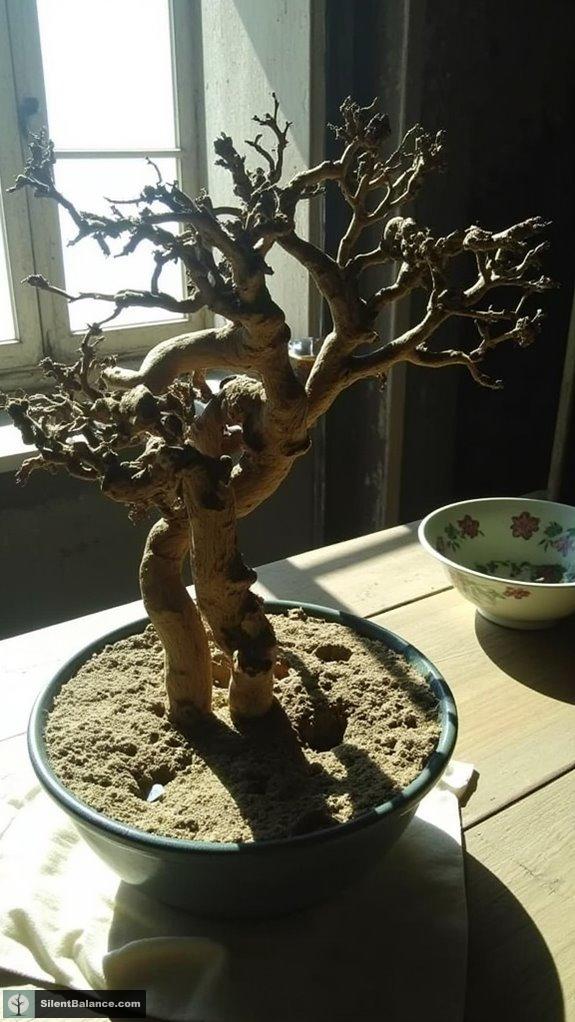
When you’re nurturing a bonsai tree, you mightn’t always realize that underwatering can be just as detrimental as overwatering.
I’ve certainly learned that the hard way. Dry leaves are a telltale sign that your precious tree might be crying out for water.
Dry leaves are clear signals from your bonsai, reminding you to keep it hydrated.
Have you ever noticed them curling up or yellowing? It’s like your bonsai giving you a gentle nudge, saying, “Hey, I need some hydration!”
Don’t overlook soil inspection, either. When you dig your fingers in and find that the soil’s bone-dry, it’s a clear indicator that it’s time to step up your watering game.
Signs of Overwatered Bonsai Trees

It’s easy to get carried away with excitement when caring for a bonsai tree, but overwatering can create more problems than you might think.
If your tree’s leaves turn yellow and start dropping like autumn leaves, you might be drowning it.
Too much water can also lead to root rot, often mistaken for overwatering myths. Trust me, it’s not a pretty sight!
Are you noticing mushy roots or a foul smell?
These are clear signs that your bonsai is gasping for air.
Good bonsai care means knowing your tree’s needs and making adjustments. Remember, ancient bonsai practices promote a balanced approach to nurturing your tree.
Keep in mind, it’s not about showering it with love, but nurturing it wisely.
Impact of Underwatering on Bonsai Health
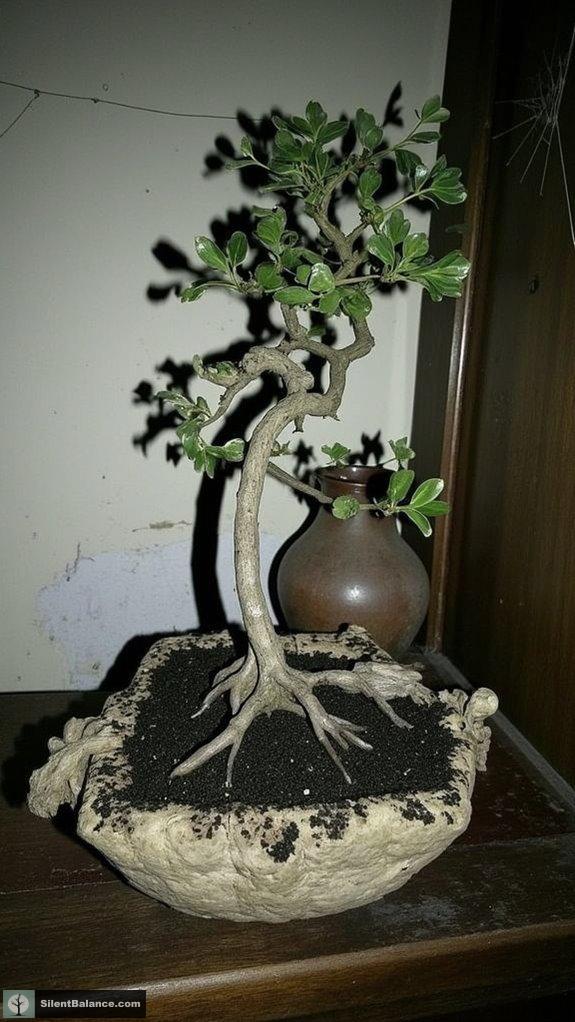
Underwatering can be alarming for your bonsai, leading to significant issues. When the sap starts to dry, the root’s health suffers. Without proper moisture retention, your miniature masterpiece becomes stressed, leading to a struggle for survival.
Here are some effects of underwatering:
- Roots shrink and may start rotting due to lack of hydration.
- Leaves curl, crisp, and may even drop, signaling distress.
- Growth slows, stunting the beauty you’ve tirelessly shaped.
In addition, proper seasonal watering is essential to prevent these issues, ensuring your bonsai remains vibrant and healthy throughout the year.
Isn’t it heartbreaking to see your beloved tree suffer? Let’s keep those roots happy and well-watered for a flourishing bonsai!
Impact of Overwatering on Bonsai Health
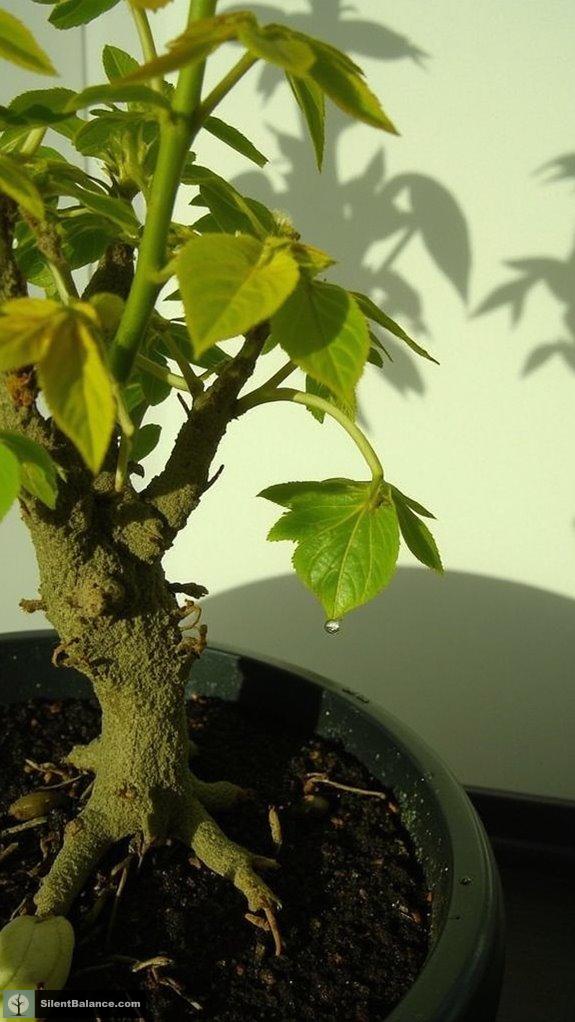
While we often think of watering as simply quenching a bonsai’s thirst, overwatering can be just as devastating as neglecting your little tree.
Picture this: you’ve pampered your bonsai, giving it love and attention, but too much water can lead to root rot. That’s the silent killer that lurks beneath the soil.
The impact of drought is painfully obvious, but overwatering sneaks up on you, suffocating your plant.
You might notice yellowing leaves, mushy roots, or even unexpected leaf drop—yikes! Moreover, certain bonsai species are inherently more low-maintenance species and therefore may be more susceptible to the effects of overwatering.
Best Practices for Watering Bonsai Trees
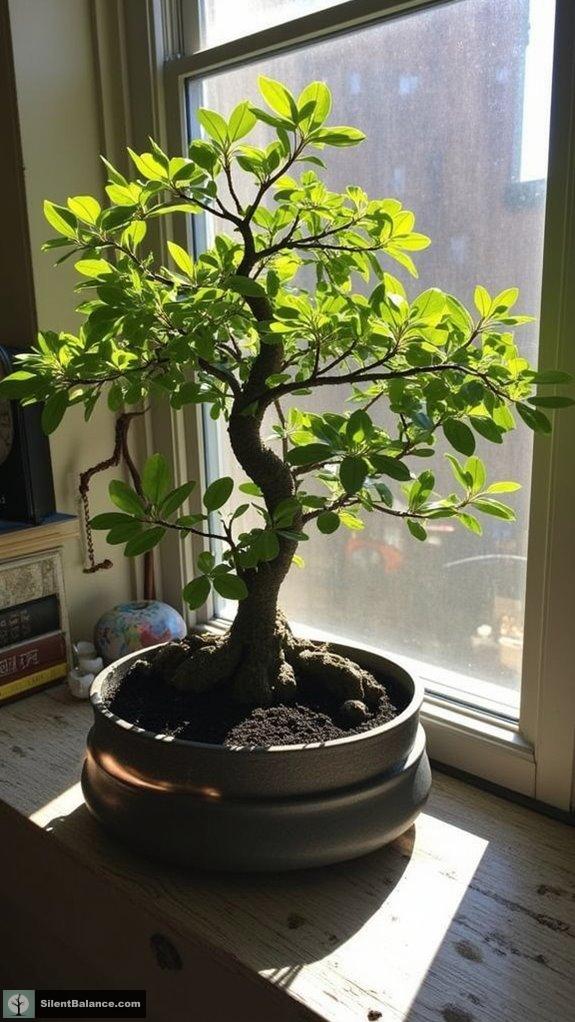
When caring for bonsai trees, the art of watering is really where the magic happens. A well-timed watering schedule can be the key to thriving miniatures. I’ve learned it’s all about observing soil moisture—being in tune with your tree’s needs is vital.
Here are some best practices to elevate your watering game:
- Test soil moisture with your finger; the top inch should feel slightly dry.
- Water thoroughly until it drains out the pots’ holes—don’t let it sit in puddles!
- Adjust your schedule seasonally; indoor trees often need less in winter.
Control over your watering guarantees your bonsai flourishes. Keep in mind, it’s an intimate dance of care! Are you ready to become your tree’s hydration guru?
Adjusting Watering Techniques for Different Bonsai Species
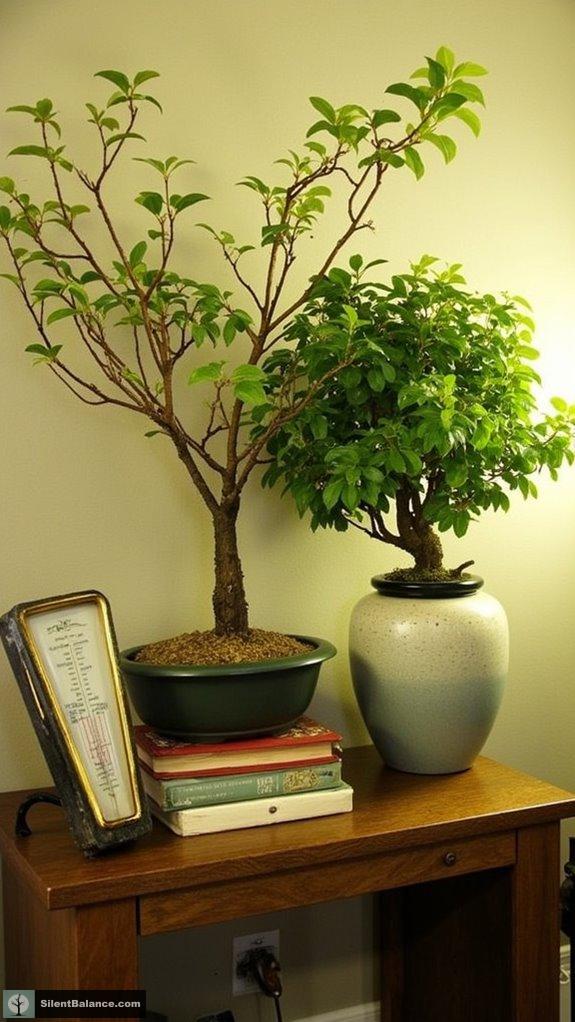
Watering isn’t one-size-fits-all, especially when you’re juggling various bonsai species that each come with their own quirks and characteristics.
Let’s get real—some species crave moisture like they just ran a marathon, while others practically roll their eyes at a little drizzle. Knowing their species specific needs is essential!
For instance, your Juniper might prefer a dry-out period, whereas a tropical Ficus thrives on consistent humidity.
By adjusting your watering schedules to cater to these differences, you’ll wield the power of precision care.
Ever tried a moisture meter? Game-changer!
Bonsai Tree Symbolism
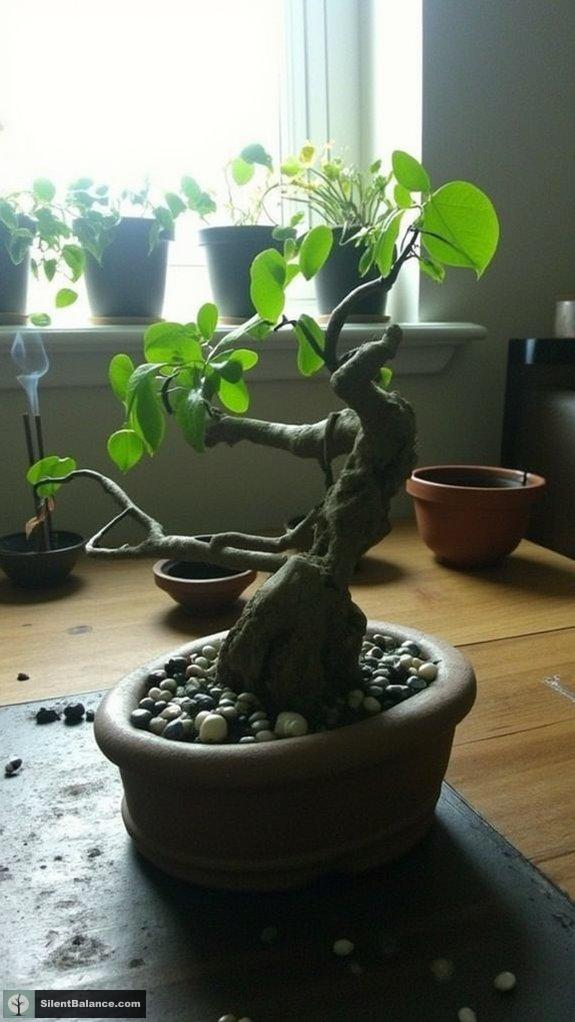
Bonsai trees aren’t just a feast for the eyes; they hold deep meanings and symbolize various philosophies, making them treasured companions for gardeners like us.
Their cultural significance is profound, reflecting our inner thoughts and beliefs. When I nurture my bonsai, I feel a personal connection that transcends mere gardening.
Here are a few key symbols often associated with bonsai:
- Wisdom: The meticulous art of bonsai teaches patience and foresight.
- Harmony: Each tree represents balance, evoking tranquility in our often chaotic lives.
- Resilience: They remind us that beauty can emerge from adversity, like those twisted trunks.
Tree Symbolism
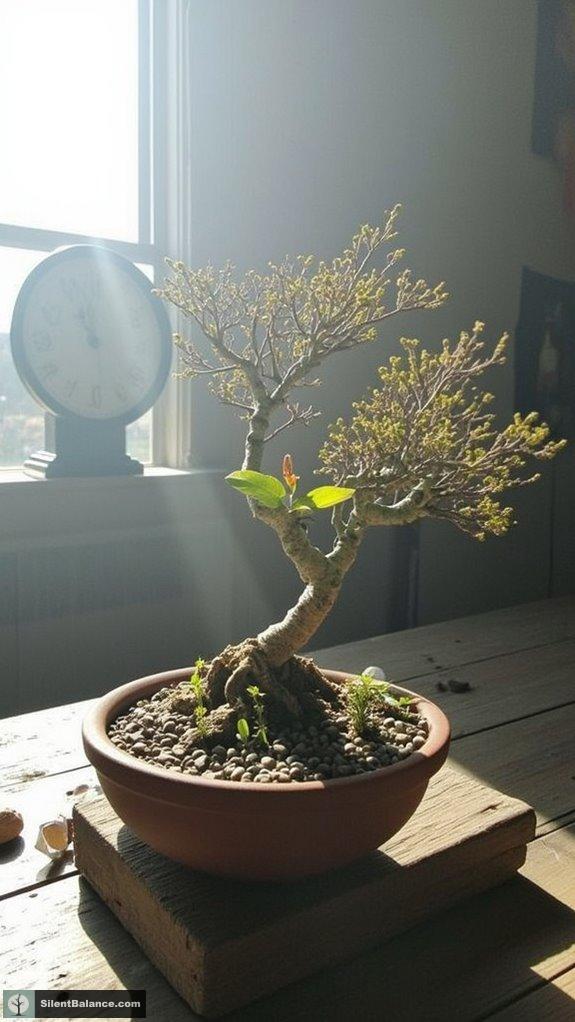
Trees aren’t just towering giants in our terrains; they’re also powerful symbols that resonate deeply in various cultures.
Don’t you love how tree meanings can shift from one tradition to another? For instance, in some cultures, the oak stands for strength and endurance, while the willow embodies flexibility and resilience.
These tree symbolisms carry immense cultural significance, reflecting values, beliefs, and life lessons.
Envision a bonsai representing harmony—it’s not just a pretty plant, it’s a conversation starter!
If you’re looking to incorporate tree lore into your bonsai journey, consider what each species signifies.
Why not let your tiny tree reflect your aspirations and dreams?
After all, nurturing your bonsai isn’t just about watering; it’s an artful way to express who you are!
Questions and Answers
How Often Should I Check My Bonsai Tree’S Moisture Level?
I check my bonsai tree’s moisture levels about once a week, but it really depends on its needs.
Is the tree thriving, or is it sulking? I gauge the soil’s dampness with my finger; if it’s too dry, I step up my watering frequency.
Recall, every bonsai’s different—some love being a bit more thirsty while others prefer to stay drier. Staying attentive helps keep my little green friend healthy and happy!
Can Bonsai Trees Survive Without Any Water for a Few Days?
So, can bonsai trees survive without any water for a few days? While they do have some bonsai drought resistance, it’s risky!
These little green buddies thrive on consistent care, so I wouldn’t push my luck.
Utilizing proper water retention techniques can help, but a few days without water might stress them out.
Why chance it when a quick check could save your tree’s leafy glory?
Stay vigilant, my fellow bonsai lover!
What Tools Can Help Me Measure Soil Moisture Effectively?
When it comes to measuring soil moisture, I’ve found moisture meters and soil probes to be lifesavers.
These nifty tools give me precise readings, ensuring my bonsai trees get just the right amount of hydration.
Ever had that panic moment wondering if your tree’s roots are parched or swimming?
With a moisture meter in hand, those worries fade away!
Trust me, investing in these tools is like having a bonsai buddy for life.
Are There Specific Bonsai Species More Prone to Overwatering?
Think of bonsai species like kids on a playground—some thrive on chaos while others wilt under too much attention.
If you’re eyeing species selection, keep in mind that tropical varieties, like Ficus, are prone to overwatering.
I always follow strict watering guidelines. Do you recall to check soil moisture before you drench them?
It’s all about striking the right balance—too much love can drown their spirit.
Happy pruning!
Can Underground Pests Affect the Watering Needs of My Bonsai Tree?
Underground pests can wreak havoc on your bonsai’s watering needs.
If you’ve got pesky critters munching on roots, they can disrupt nutrient uptake and soil health, making it harder for your tree to absorb water.
So, keep an eye out for signs of invasion.
Regular pest control is your best friend here.
Have you noticed any wilting or yellowing?
Those could be signs to dig a little deeper—literally!
Summary
In wrapping up, recall to mind your miniature marvels—your bonsai trees thrive on a balanced watering routine. So, keep an eye out for telltale signs of thirst or drowning distress. By tuning into their needs, you’ll transform your bonsai experience from baffling to beautiful. It’s all about that perfect pour, folks! With a bit of careful care, you can cultivate a enchanting canopy of calm, cherished trees that bring tranquility to your space. Happy bonsai-ing!

- 11 Best Luxury Sandalwood Candles for 2026 - June 19, 2026
- 11 Best Woven Wicker Gift Baskets for 2026 - June 19, 2026
- 11 Best High Powered Binoculars for 2026 - June 19, 2026
