
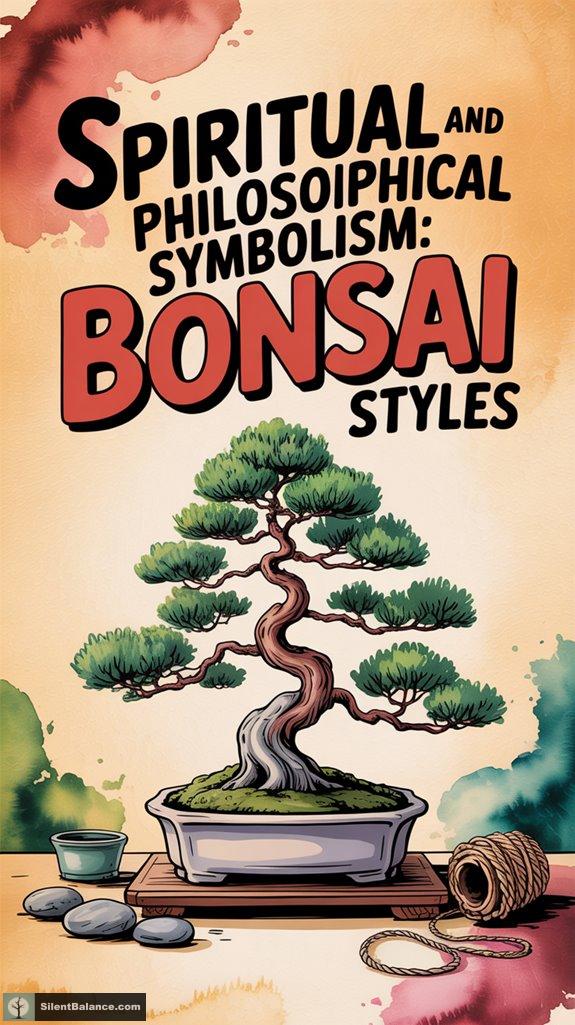
When I think about bonsai styles, I’m struck by their deep spiritual and philosophical symbolism. Each form tells its own story—like the resilient cascade, bending gracefully amidst adversity, or the formal upright, standing strong and moral. Have you ever noticed how the slanting style teaches us flexibility? Bonsai isn’t just cute plants; it’s a life lesson wrapped in leaves and bark. Curious about how these styles can transform your space or mindset? Stick around for more revelations!
Quick Takeaways
- Formal Upright Style: Symbolizes moral strength and stability, reflecting the importance of integrity in one’s personal and spiritual journey.
- Cascade Style: Represents resilience, showcasing the ability to thrive despite challenges and obstacles encountered along the path of life.
- Slanting Style: Emphasizes adaptability, encouraging flexibility in the face of change and the ability to navigate life’s uncertainties gracefully.
- Windswept Style: Embodies grace under pressure, illustrating how one can maintain balance and poise even amid life’s turbulent circumstances.
- Group Planting Style: Reflects community and connection, highlighting the significance of relationships and support systems in the growth and resilience of individuals.
The Essence of Bonsai: Harmony and Nature’s Balance
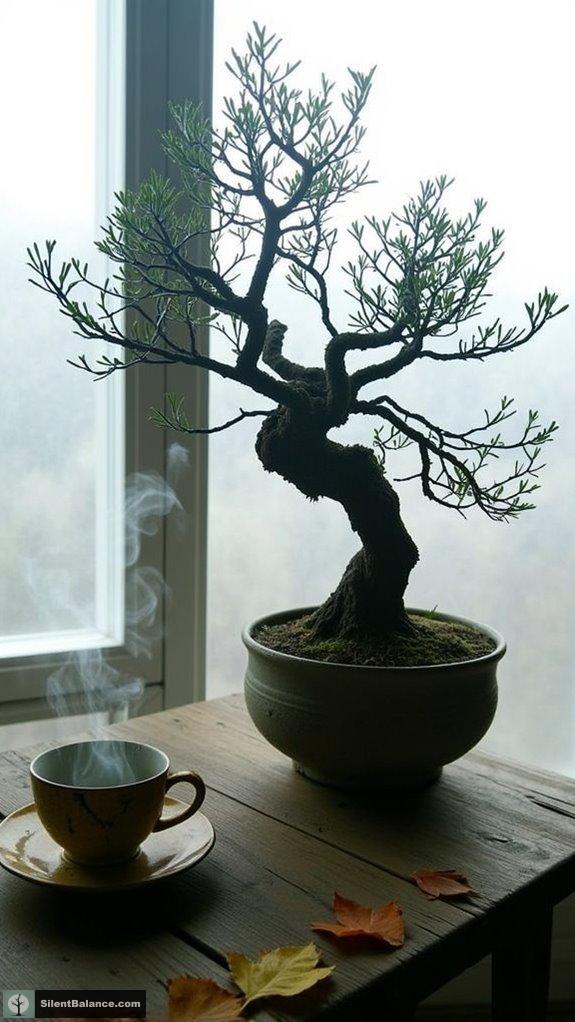
When you step into the enchanting world of bonsai, you can’t help but notice it’s a dance of harmony and balance, whispering secrets of nature in every twisted branch and delicately pruned leaf.
Isn’t it mesmerizing how each tree embodies a rich tapestry of life? The rough bark juxtaposed with smooth lines, thick branches cradling delicate foliage—each element beautifully represents the coexistence of humanity and nature. This intricate art reflects the timeless connection between nature and artistic human expression, inviting us to appreciate the beauty in every moment. The spiritual significance of bonsai varies between cultures, with Japanese and Chinese traditions illustrating different philosophies.
Whether you’re learning the art of “jin” or carefully shaping a “shari,” you engage in a dynamic conversation with your bonsai. It’s all about balance—between nurturing and autonomy, size and shape.
In a way, we’re all in this together, embracing the artistry of nature’s design while crafting our little ecosystems. Isn’t that just delightful?
Zen Influence: Meditation and Spiritual Relaxation Through Bonsai
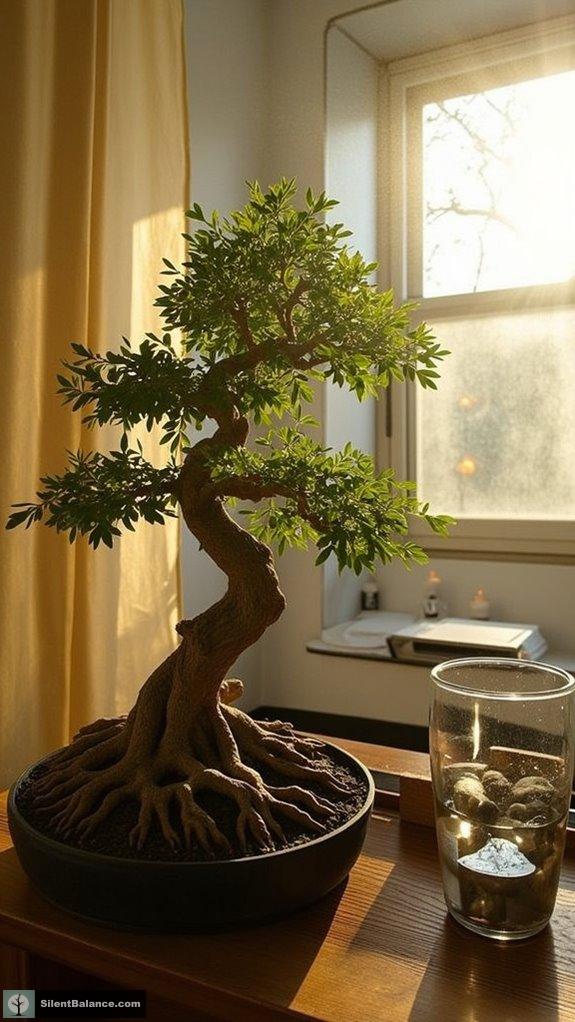
Exploring bonsai isn’t just about shaping tiny trees; it’s like inviting a little piece of Zen into your life.
Picture this: as you prune those delicate branches, you’re not just cutting back; you’re engaging in active meditation. Feel that focus pull you into the moment, slicing through life’s chaos like a clean cut through soft bark.
Each twist of wire, each careful trim, embodies the Zen art of simplicity and natural beauty. Can you sense the familiar rhythm? The practice of shaping bonsai emphasizes spiritual significance, as each tree represents a unique experience and journey.
Bonsai cultivators understand that this is a dance of patience and growth, where the tree mirrors life’s cycles. The practice of bonsai cultivates interconnectedness of life, don’t you think?
Philosophical Reflections: Life Lessons Encapsulated in Bonsai Styles
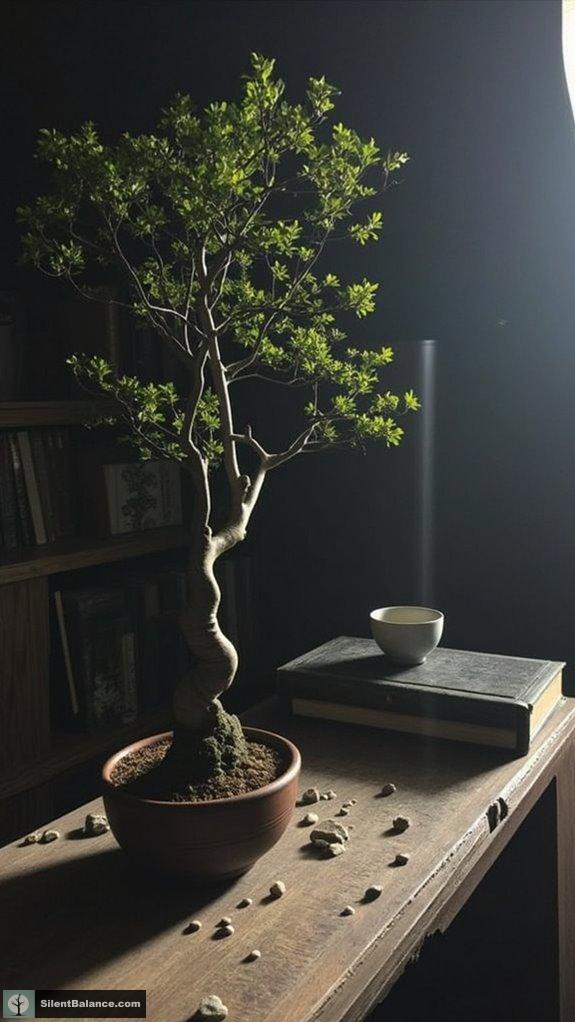
Bonsai cultivation isn’t just about tending tiny trees—it’s a profound journey that offers rich life lessons wrapped in the art of shaping nature.
Through years of nurturing, I’ve learned patience as I watched my little companions transform, reminding me that growth takes time.
Ever had a plan go sideways? Bonsai teaches resilience when branches break unexpectedly, pushing me to adapt just like in life.
Embracing wabi-sabi, I’ve come to appreciate the beauty in imperfections, like my own quirky quirks.
To me, these tiny trees echo life’s ebb and flow, prompting reflection on our delicate balance with nature.
Isn’t it fascinating how this humble art can mirror our lives?
Through bonsai, we cultivate more than just trees; we nurture our spirits, too.
Specific Symbolism: Meanings Behind Different Bonsai Styles
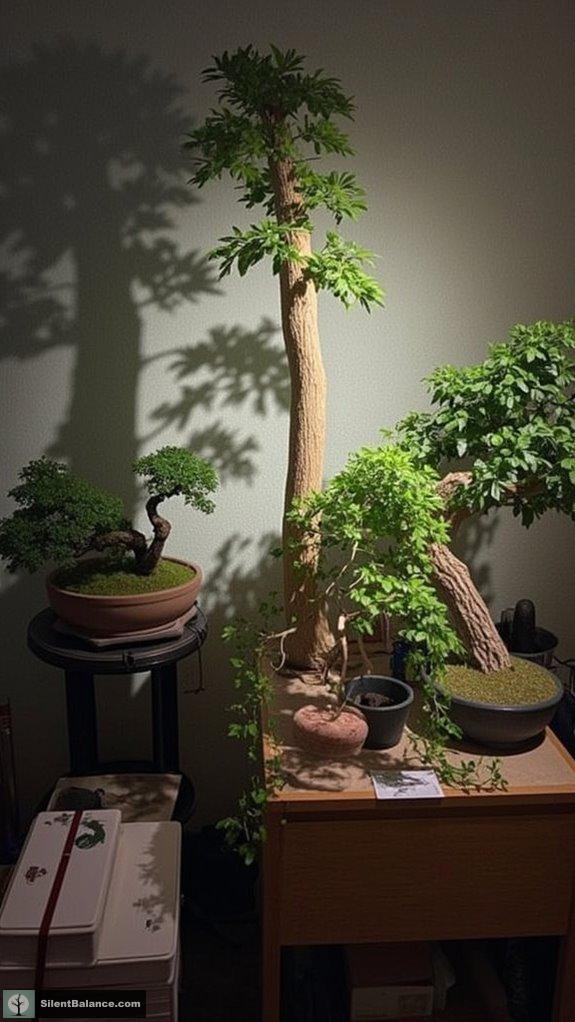
Diving into the world of bonsai styles opens a fascinating dialogue about the deeper meanings they carry.
Take the Formal Upright style, for instance. It’s like a steadfast soldier—strong, balanced, and oh-so-moral. You can almost sense its heroism!
Now, consider the Cascade style. It’s the ultimate comeback kid, mirroring resilience against nature’s tossing winds. Isn’t that a beautiful reminder of our own struggles?
The Slanting style? It’s all about flexibility, a real-life metaphor for traversing chaos.
And let’s not forget the Windswept style, embodying grace under pressure.
Finally, Group Planting speaks to our need for community. Who doesn’t crave that connection?
These styles aren’t just trees; they’re whispers of wisdom waiting for you to discover!
Life Stages Represented in Bonsai Form
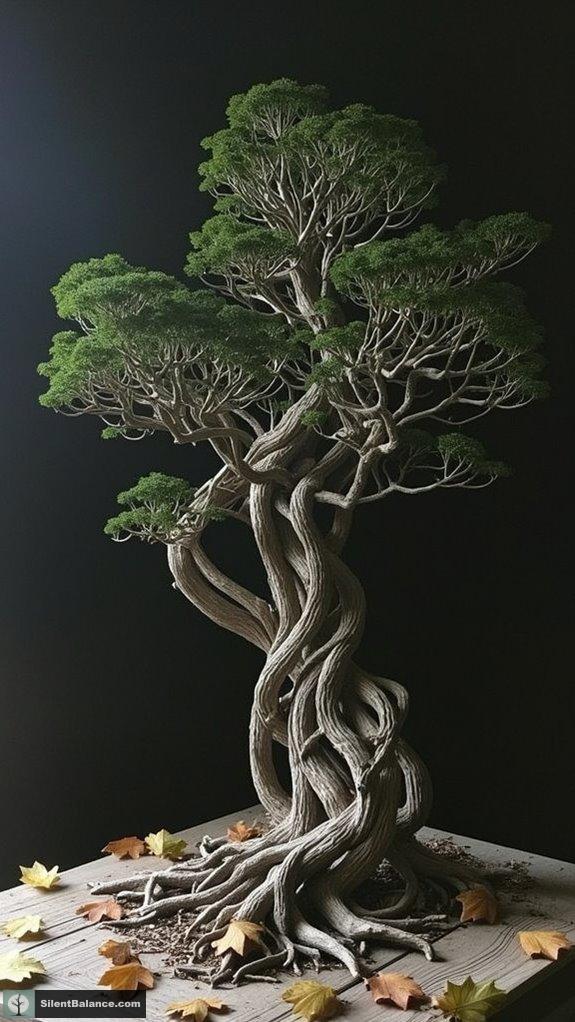
Have you ever noticed how a bonsai tree can reflect the stages of life like a living art piece? It’s fascinating, isn’t it?
Young bonsai embody potential and innocence, with delicate branches that whisper of new beginnings.
As it matures, the tree grows a strong trunk and complex branches, radiating stability and self-mastery — kind of like a midlife crisis gone right!
Then, there are the gnarled, twisted trunks of old bonsai that reflect wisdom and perseverance, wearing their scars like badges of honor.
Each shape tells a story through its resilience, whether it’s a windswept style battling external pressures or a cascading form evoking gentle decline.
Isn’t it breathtaking how these tiny trees mirror our journey through life?
Feng Shui and Energy Flow: Enhancing Spaces With Bonsai
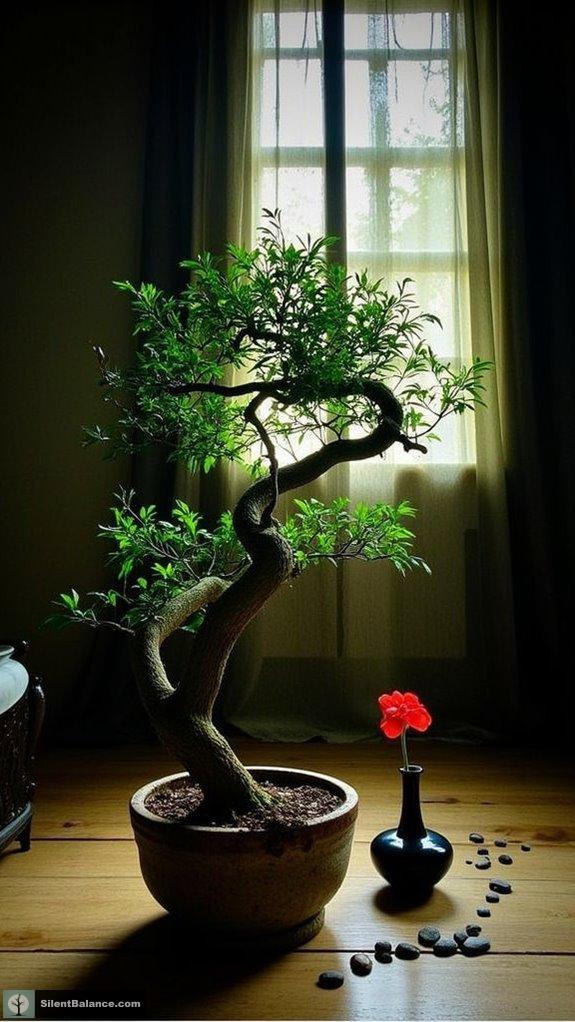
Creating a tranquil oasis with bonsai can turn your space into a vibrant haven for positive energy.
Imagine placing your bonsai in the eastern or southeastern corners of your home, perfectly aligned with the Bagua map. How about avoiding cluttered spaces that disrupt energy flow?
Just picture a beautifully serene room where chi flows seamlessly around your little tree. And let’s not forget the elemental balance! Pop a fiery red flower nearby to spark passion and ground your bonsai in a lovely earthy pot.
The right placement matters, so let’s steer clear of those harsh straight lines. Instead, favor gentle curves that allow energy to flow smoothly.
Doesn’t that sound enchanting? Your bonsai could be the key to a thriving, harmonious atmosphere.
Cultural Heritage: The Historical Significance of Bonsai Styles
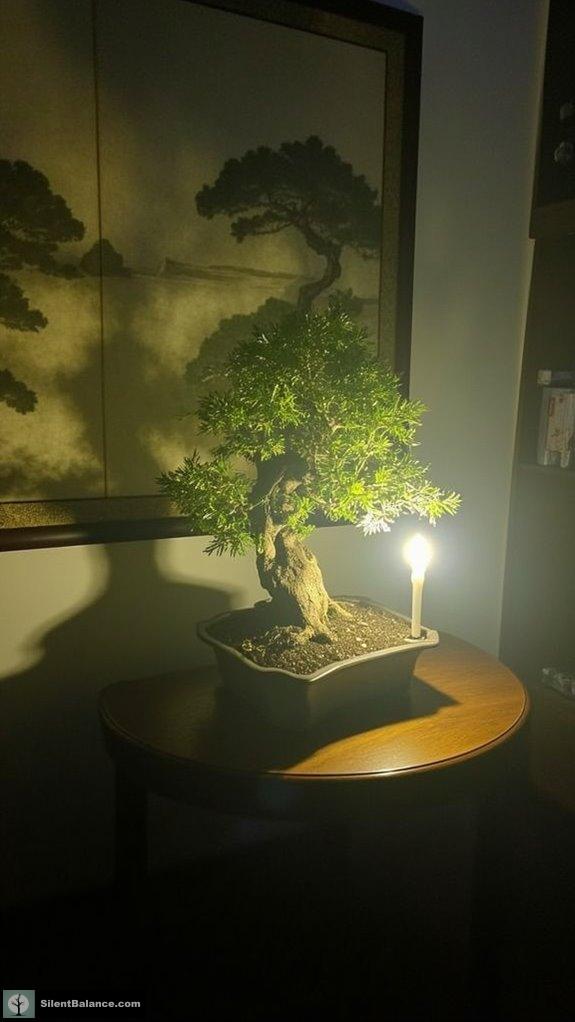
While many might think of bonsai simply as cute little trees in pots, there’s so much more to these remarkable living sculptures—think of them as tiny universes that encapsulate cultural history and artistic evolution!
Originating from ancient Chinese pun-sai, bonsai blossomed in Japan during the Kamakura period, where Zen monks crafted their unique styles. How cool is that?
By the 14th century, bonsai transformed into a revered art form, spreading from temples to imperial courts.
With influences from diverse social classes, even the Meiji Emperor showcased “giant bonsai” to flaunt national pride!
Bonsai’s art evolved through categorization based on trunk shape, from upright styles to graceful cascades.
Isn’t it fascinating how these little trees tell such grand stories?
Bonsai Tree Symbolism
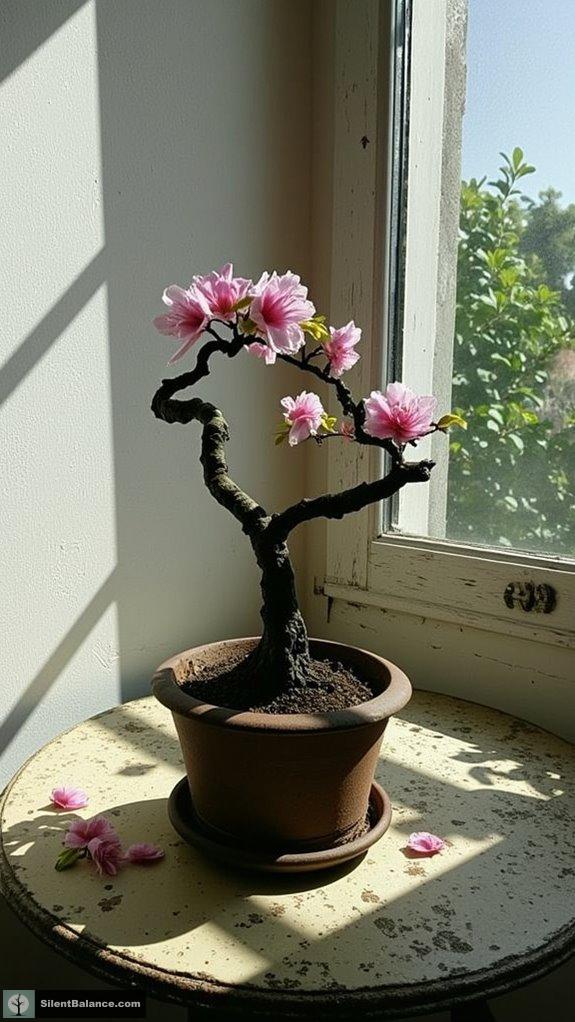
If you ever find yourself in the enchanting world of bonsai, you’ll quickly discover that these tiny trees are much more than mere decorations; they’re rich in symbolism and meaning.
Each bonsai carries a unique story, embodying concepts like harmony and balance. Can you visualize a tree that represents patience and perseverance? That’s what bonsai does!
Take the azalea bonsai, for example—it’s a stunning emblem of feminine beauty and love, perfect for nurturing those delicate qualities in any space.
When I gaze at a twisted trunk or an aged bark, it reminds me of resilience and the journey of life.
Bonsai is more than cultivation; it’s a living representation of growth, connection, and the endless pursuit of inner peace.
Tree Symbolism
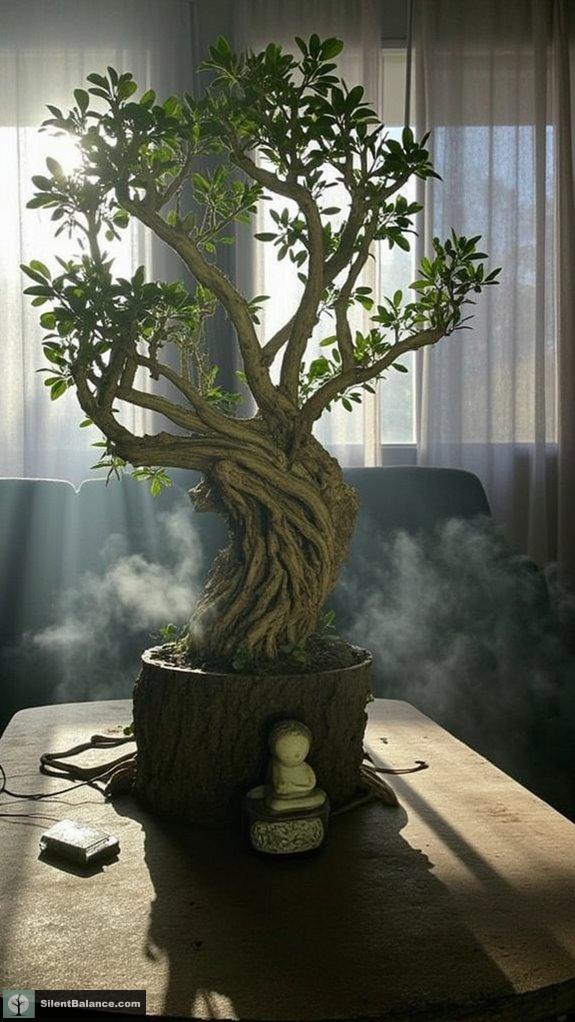
When you think about trees, it’s easy to overlook their profound symbolism, but these towering wonders are like nature’s poetic narrators, weaving stories of life, connection, and transformation.
Have you ever felt that rush of peace under a grand oak or seen the grace of a weeping willow? Trees are embodiments of resilience, grounding us in stability while urging us to reach for spiritual heights.
They resonate with the cycle of life, echoing birth, death, and rebirth, much like the elaborate art of bonsai itself. In the bonsai world, terms like “jin” (deadwood) and “shari” (exposed trunk) remind us of the beauty in imperfection.
Ultimately, trees charmingly teach us about unity, strength, and finding balance in our own lives.
Questions and Answers
How Do I Care for a Bonsai Tree Spiritually?
Caring for my bonsai intertwines tranquility and growth. As I nurture its branches, I embrace my own journey through mindfulness and presence, finding peace within the delicate balance between creating beauty and accepting imperfection.
Can Bonsai Styles Affect Emotional Well-Being?
Absolutely, I’ve felt the emotional benefits of bonsai gardening firsthand. Nurturing these trees reduces my stress, increases my patience, and brings a sense of accomplishment that enhances my mood and overall well-being. It’s truly transformative.
What Are the Best Bonsai Species for Beginners?
When I started with bonsai, I found Ficus and Jade perfect for beginners. Their resilience and low maintenance made my journey enjoyable. You’ll love how they adapt beautifully to indoor spaces with bright light.
How Does the Climate Influence Bonsai Growth?
Have you ever marveled at how the climate shapes growth? I’ve noticed that temperature, humidity, and sunlight directly impact my bonsai’s health; choosing species suited to my local environment has made all the difference.
Are There Specific Rituals for Nurturing Bonsai?
Absolutely, I find nurturing my bonsai is all about establishing rituals. I consistently observe its growth, breathe deeply while tending to it, and dedicate moments to appreciate its beauty, creating a meaningful connection in the process.
References
- https://www.bonsaidirect.co.uk/bonsai-tree-symbolism-tree-of-life-meaning/
- https://www.karmaandluck.com/blogs/news/bonsai-tree-meaning-benefits-history
- https://mymodernmet.com/bonsai-tree-history/
- https://bonsai2u.co.uk/the-meaning-of-bonsai/
- https://www.youtube.com/watch?v=0_q0ijlFQ9g
- https://www.lovemybonsai.com/blogs/bonsai/the-art-of-bonsai-unlocking-the-timeless-beauty-and-serenity-of-miniature-trees
- https://www.youtube.com/watch?v=SP9WBzOoy7M
- https://www.huntington.org/spotlight/bonsai-0
- https://bonsaimirai.com/blog/harmony-transition
- https://www.yorkshirebonsai.co.uk/blogs/news/the-origins-of-bonsai-a-journey-through-time-and-culture
- https://cannabonsai.com/a-short-history-of-bonsai/
- https://bigthink.com/thinking/bonsai-tree-care-secret-philosophy/
- https://greengoddess.com/the-zen-of-bonsai-cultivating-tranquility-in-miniature-landscapes/
- https://www.bonsaiempire.com/origin/bonsai-history
- https://www.idyl.co.in/blogs/blog/bonsai-training-that-combines-technique-philosophy
- https://bonsaiko.com/5-life-lessons-from-bonsai/
- https://www.ourfriendlyworldpodcast.com/the-bonsai-tree-on-nature-and/
- https://wazakurajapan.com/blogs/news/introduction-to-japanese-bonsai-and-wabi-sabi
- https://flowers.it/en/blogs/tutto-sui-fiori/il-significato-del-bonsai-e-del-ficus-ginseng-un-viaggio-nel-simbolismo-e-nella-spiritualita
- https://hookedonbonsai.com/bonsai-trees-in-literature-symbolism-and-significance/

- 11 Best Luxury Sandalwood Candles for 2026 - June 19, 2026
- 11 Best Woven Wicker Gift Baskets for 2026 - June 19, 2026
- 11 Best High Powered Binoculars for 2026 - June 19, 2026
